Abstract
Rabies is a highly fatal zoonotic viral disease that continues to pose a significant public health threat, particularly in low- and middle-income countries such as Iraq. Despite the existence of safe and effective vaccines for both humans and animals, rabies remains a major cause of preventable mortality due to weaknesses in disease surveillance, insufficient prevention strategies, and inconsistent implementation of control measures. Iraq presents a complex epidemiological landscape where rabies persists, driven by factors including political instability, under-resourced veterinary services, inadequate reporting systems, and a rapidly growing population of stray dogs. Human rabies cases are frequently underreported, and animal surveillance remains minimal, limiting the ability to accurately assess the burden of the disease and to design targeted interventions. This narrative review critically examines the current epidemiology of rabies in Iraq, highlighting gaps in surveillance, prevention, and control measures. By synthesizing data from peer-reviewed literature, governmental reports, and guidance from international health organizations such as the World Health Organization (WHO) and the World Organisation for Animal Health (WOAH), the review identifies systemic weaknesses that hinder progress toward rabies elimination. Key challenges include insufficient dog vaccination coverage, delays in post-exposure prophylaxis administration, low public awareness regarding bite prevention, and fragmented coordination between human and veterinary health sectors. The review also emphasizes the importance of adopting a One Health approach, integrating human, animal, and environmental health initiatives to enhance disease monitoring, improve vaccination strategies, and promote community engagement. Strengthening surveillance systems, expanding dog vaccination campaigns, ensuring timely access to post-exposure prophylaxis, and implementing comprehensive public education programs are essential steps to reduce the burden of rabies in Iraq and move toward the global goal of zero human deaths from dog-mediated rabies by 2030.
|
Published in
|
World Journal of Health Policy and Management (Volume 1, Issue 1)
|
|
DOI
|
10.11648/j.wjhpm.20260101.14
|
|
Page(s)
|
20-30 |
|
Creative Commons
|

This is an Open Access article, distributed under the terms of the Creative Commons Attribution 4.0 International License (http://creativecommons.org/licenses/by/4.0/), which permits unrestricted use, distribution and reproduction in any medium or format, provided the original work is properly cited.
|
|
Copyright
|
Copyright © The Author(s), 2026. Published by Science Publishing Group
|
Keywords
Rabies Iraq Zoonotic Diseases, Surveillance Gaps, Dog Bites, Post-exposure Prophylaxis, One Health Public Health
1. Introduction
Rabies is a fatal zoonotic viral disease caused by the rabies virus (RABV), a neurotropic virus belonging to the genus *Lyssavirus* within the family *Rhabdoviridae*
| [5] | Fooks, A. R., Banyard, A. C., Horton, D. L., Johnson, N., McElhinney, L. M., & Jackson, A. C. (2014). Current status of rabies and prospects for elimination. The Lancet, 384(9951), 1389–1399. |
[5].
The virus primarily targets the central nervous system, and once clinical symptoms manifest, the disease is almost invariably fatal, with mortality approaching 100% in untreated cases
| [12] | Hemachudha, T., Laothamatas, J., & Rupprecht, C. E. (2013). Human rabies: A disease of complex neuropathogenetic mechanisms and diagnostic challenges. The Lancet Neurology, 12(5), 498–513. |
[12].
Globally, rabies remains a neglected public health problem, responsible for an estimated 59,000 human deaths annually, with the majority occurring in low- and middle-income countries in Asia and Africa
| [1] | Banyard, A. C., et al. (2018). Rabies: Scientific basis of the disease and its management. Journal of Clinical Virology, 99, 1–9. |
| [9] | Hampson, K., et al. (2015). Estimating the global burden of endemic canine rabies. PLoS Neglected Tropical Diseases, 9(4), e0003709. |
[1, 9].
Domestic dogs are responsible for more than 99% of human rabies cases worldwide, making canine rabies control a cornerstone for reducing human mortality
| [25] | Taylor, L. H., et al. (2017). Global epidemiology of canine rabies. Vaccine, 35(32), 4071–4077. |
[25].
Despite the availability of effective preventive measures, including timely post-exposure prophylaxis (PEP) and mass dog vaccination, rabies continues to persist in regions with weak healthcare systems, limited veterinary infrastructure, and poor public awareness
| [7] | Fooks, A. R., et al. (2017). Rabies virus evolution and spread. Current Opinion in Virology, 24, 1–9. |
| [27] | Wallace, R. M., et al. (2017). The economic burden of rabies. PLoS Neglected Tropical Diseases, 11(9), e0005763. |
[7, 27].
Post-exposure prophylaxis, which includes immediate wound cleaning, administration of rabies immunoglobulin for severe exposures, and a series of rabies vaccine doses, is highly effective when properly administered. However, delays in presentation, incomplete vaccination courses, and restricted access to immunoglobulin significantly reduce its effectiveness, particularly in resource-limited settings
| [1] | Banyard, A. C., et al. (2018). Rabies: Scientific basis of the disease and its management. Journal of Clinical Virology, 99, 1–9. |
| [12] | Hemachudha, T., Laothamatas, J., & Rupprecht, C. E. (2013). Human rabies: A disease of complex neuropathogenetic mechanisms and diagnostic challenges. The Lancet Neurology, 12(5), 498–513. |
[1, 12].
Iraq represents a unique epidemiological setting for rabies, where the disease persists despite the availability of vaccines. The country is considered endemic for rabies, with reported human cases and dog bite incidents occurring annually
| [13] | Horton, D. L., et al. (2013). Rabies in Iraq: Epidemiology and public health impact. Epidemiology and Infection, 141(12), 2490–2500. |
[13]
. Nevertheless, the true burden of rabies in Iraq is likely substantially underestimated due to underreporting, limited laboratory confirmation, and fragmented surveillance systems
| [14] | Ismail, H., et al. (2020). Rabies epidemiology and control in Iraq: Current status and gaps. Tropical Medicine & International Health, 25(3), 245–255. |
[14].
Political instability, prolonged periods of conflict, population displacement, and insufficient investment in public health infrastructure have further complicated rabies prevention and control efforts
| [23] | Seimenis, A. (2008). Rabies in the Middle East: Epidemiology and control. Veterinary Microbiology, 129(3–4), 1–8. |
[23].
The collapse of veterinary services during conflict periods resulted in reduced dog vaccination campaigns and uncontrolled growth of stray dog populations, which serve as the main reservoir for the virus
| [4] | Cleaveland, S., Kaare, M., Tiringa, P., Mlengeya, T., & Barrat, J. (2003). A dog rabies vaccination campaign in rural Africa: Impact on human dog-bite injuries. Vaccine, 21(17–18), 1965–1973. |
| [17] | Morters, M. K., et al. (2013). Evidence-based control of canine rabies: A critical review. Vaccine, 31(41), 5524–5533. |
[4, 17].
Additionally, gaps in public awareness exacerbate the problem. Many individuals in rural and peri-urban areas lack knowledge about rabies transmission, appropriate wound management, and the necessity of seeking timely medical care following animal bites
| [14] | Ismail, H., et al. (2020). Rabies epidemiology and control in Iraq: Current status and gaps. Tropical Medicine & International Health, 25(3), 245–255. |
[14].
Misconceptions about rabies and reliance on traditional healing practices often delay treatment, increasing the risk of fatal outcomes
| [13] | Horton, D. L., et al. (2013). Rabies in Iraq: Epidemiology and public health impact. Epidemiology and Infection, 141(12), 2490–2500. |
[13].
Fragmented coordination between human health and veterinary sectors further limits the implementation of integrated rabies control strategies, despite international recommendations emphasizing a One Health approach, which integrates human, animal, and environmental health for effective disease control
| [3] | Cleaveland, S., et al. (2006). Rabies control in rural Africa: Lessons from Tanzania. Vaccine, 24(Suppl 1), S1–S5. |
| [30] | World Health Organization. (2018). WHO Expert Consultation on Rabies: Third report. Geneva: WHO. |
[3, 30].
This narrative review aims to provide a comprehensive assessment of rabies epidemiology in Iraq, critically examining gaps in surveillance, prevention, and control measures. It synthesizes data from peer-reviewed literature, national reports, and international health organizations to identify systemic weaknesses that hinder rabies elimination. Furthermore, the review discusses the role of the One Health approach in addressing rabies as a multisectoral challenge and proposes evidence-based strategies for reducing the burden of rabies in Iraq, including strengthening surveillance systems, expanding dog vaccination programs, improving access to post-exposure prophylaxis, and enhancing public awareness and education programs
| [9] | Hampson, K., et al. (2015). Estimating the global burden of endemic canine rabies. PLoS Neglected Tropical Diseases, 9(4), e0003709. |
| [28] | WHO, FAO, WOAH, & UNICEF. (2018). Zero by 30: Global strategic plan to end human deaths from dog-mediated rabies by 2030. Geneva: WHO. |
[9, 28].
2. Global Burden of Rabies
Rabies causes an estimated 59,000 deaths annually worldwide, with the highest incidence in Asia and Africa
| [9] | Hampson, K., et al. (2015). Estimating the global burden of endemic canine rabies. PLoS Neglected Tropical Diseases, 9(4), e0003709. |
| [30] | World Health Organization. (2018). WHO Expert Consultation on Rabies: Third report. Geneva: WHO. |
[9, 30].
Children under 15 years are disproportionately affected, accounting for up to 40% of all victims
| [30] | World Health Organization. (2018). WHO Expert Consultation on Rabies: Third report. Geneva: WHO. |
[30].
The disease imposes significant economic burdens, including medical costs, lost productivity, and premature mortality, estimated at USD 8.6 billion per year
| [27] | Wallace, R. M., et al. (2017). The economic burden of rabies. PLoS Neglected Tropical Diseases, 11(9), e0005763. |
[27].
Post-exposure prophylaxis (PEP) is highly effective when administered promptly. However, limited access to healthcare, reliance on traditional healing, and delayed care contribute to persistent mortality in endemic regions
| [19] | Nel, L. H. (2013). Discrepancies in global rabies burden estimates. PLoS Neglected Tropical Diseases, 7(8), e2321. |
[19].
Table 1. Global Distribution of Human Rabies Deaths (Annual Estimates).
Region | Estimated Deaths | Percentage of Global Deaths | Major Transmission Route |
Asia | 36,000 | 61% | Domestic dogs |
Africa | 21,000 | 36% | Domestic dogs |
Middle East | 1,500 | 2.5% | Domestic dogs |
Latin America | 500 | 0.8% | Domestic dogs |
Others | 0–100 | 0.2% | Wildlife (rare) |
Source:
| [9] | Hampson, K., et al. (2015). Estimating the global burden of endemic canine rabies. PLoS Neglected Tropical Diseases, 9(4), e0003709. |
| [30] | World Health Organization. (2018). WHO Expert Consultation on Rabies: Third report. Geneva: WHO. |
[9, 30].
The “Zero by 30” initiative, launched by WHO, FAO, WOAH, and UNICEF, aims to eliminate human deaths from dog-mediated rabies by 2030 through integrated dog vaccination, improved access to PEP, and public awareness campaigns
| [28] | WHO, FAO, WOAH, & UNICEF. (2018). Zero by 30: Global strategic plan to end human deaths from dog-mediated rabies by 2030. Geneva: WHO. |
[28].
Achieving this requires sustained political commitment, adequate funding, and multisectoral collaboration.
3. Virology and Pathogenesis
Rabies virus is a single-stranded, negative-sense RNA virus with a characteristic bullet shape
| [21] | Rupprecht, C. E., et al. (2002). Pathogenesis of rabies virus infection. Current Topics in Microbiology and Immunology, 265, 45–76. |
[21].
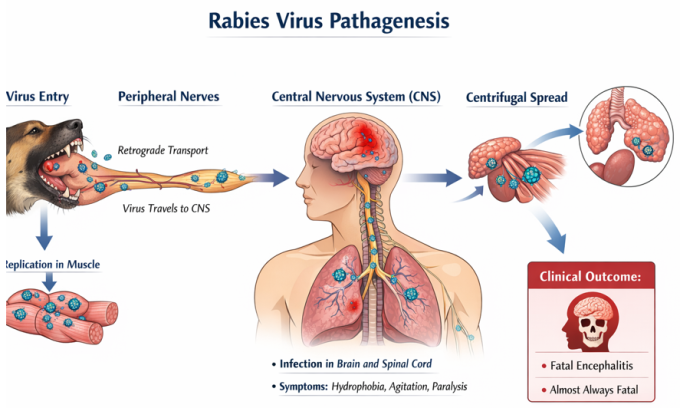
Infection occurs mainly through bites or scratches that introduce infected saliva into tissues. After replication in muscle cells, the virus enters peripheral nerves and moves retrogradely to the central nervous system
| [5] | Fooks, A. R., Banyard, A. C., Horton, D. L., Johnson, N., McElhinney, L. M., & Jackson, A. C. (2014). Current status of rabies and prospects for elimination. The Lancet, 384(9951), 1389–1399. |
[5].
Figure 1. Rabies Virus Pathogenesis (Conceptual Diagram).
Upon reaching the CNS, rabies causes encephalitis, characterized by neuronal dysfunction rather than widespread neuronal death, explaining severe neurological symptoms such as hydrophobia, aerophobia, agitation, hallucinations, and paralysis
| [12] | Hemachudha, T., Laothamatas, J., & Rupprecht, C. E. (2013). Human rabies: A disease of complex neuropathogenetic mechanisms and diagnostic challenges. The Lancet Neurology, 12(5), 498–513. |
[12].
The virus subsequently spreads centrifugally to salivary glands, facilitating transmission to new hosts.
Incubation periods range from a few weeks to several months and are influenced by bite location, viral load, and host immune response. This period represents a critical window for effective PEP administration
| [12] | Hemachudha, T., Laothamatas, J., & Rupprecht, C. E. (2013). Human rabies: A disease of complex neuropathogenetic mechanisms and diagnostic challenges. The Lancet Neurology, 12(5), 498–513. |
[12].
4. Global Epidemiology of Rabies
Rabies remains a significant public health challenge worldwide, particularly in low- and middle-income countries
| [9] | Hampson, K., et al. (2015). Estimating the global burden of endemic canine rabies. PLoS Neglected Tropical Diseases, 9(4), e0003709. |
| [25] | Taylor, L. H., et al. (2017). Global epidemiology of canine rabies. Vaccine, 35(32), 4071–4077. |
[9, 25].
Despite elimination in several high-income countries through sustained dog vaccination, animal control policies, and effective surveillance, the disease continues to persist in large parts of Asia, Africa, and the Middle East.
Globally, over 3.3 billion people live in rabies-endemic areas, with domestic dogs accounting for more than 99% of human cases
| [9] | Hampson, K., et al. (2015). Estimating the global burden of endemic canine rabies. PLoS Neglected Tropical Diseases, 9(4), e0003709. |
[9].
Wildlife reservoirs, such as bats, foxes, and raccoons, play a more prominent role in high-income countries but are relatively uncommon in endemic regions
| [5] | Fooks, A. R., Banyard, A. C., Horton, D. L., Johnson, N., McElhinney, L. M., & Jackson, A. C. (2014). Current status of rabies and prospects for elimination. The Lancet, 384(9951), 1389–1399. |
[5].
Table 2. Human Rabies Cases and Deaths by Region (2010–2020 Estimates).
Region | Estimated Cases | Estimated Deaths | Primary Reservoir | Notes |
Asia | 59,000 | 36,000 | Domestic dogs | High rural exposure; children at higher risk |
Africa | 25,000 | 21,000 | Domestic dogs | Underreporting common; limited PEP access |
Middle East | 2,000 | 1,500 | Domestic dogs | Political instability affects control |
Latin America | 1,000 | 500 | Domestic dogs | Effective dog vaccination programs |
Europe/North America | 50–100 | <10 | Wildlife | Dog-mediated rabies largely eliminated |
Sources:
| [9] | Hampson, K., et al. (2015). Estimating the global burden of endemic canine rabies. PLoS Neglected Tropical Diseases, 9(4), e0003709. |
| [25] | Taylor, L. H., et al. (2017). Global epidemiology of canine rabies. Vaccine, 35(32), 4071–4077. |
| [30] | World Health Organization. (2018). WHO Expert Consultation on Rabies: Third report. Geneva: WHO. |
[9, 25, 30]
Children are disproportionately affected in endemic regions, often accounting for up to 40% of rabies fatalities
| [30] | World Health Organization. (2018). WHO Expert Consultation on Rabies: Third report. Geneva: WHO. |
[30]
. Factors contributing to high incidence include frequent contact with dogs, lack of awareness about bite risk, and delayed healthcare access.
Underreporting is a major challenge, as deaths occurring outside healthcare settings are rarely laboratory confirmed, leading to significant underestimation of the true burden
| [19] | Nel, L. H. (2013). Discrepancies in global rabies burden estimates. PLoS Neglected Tropical Diseases, 7(8), e2321. |
| [25] | Taylor, L. H., et al. (2017). Global epidemiology of canine rabies. Vaccine, 35(32), 4071–4077. |
[19, 25].
5. Rabies in the Middle East
The Middle East exhibits heterogeneous rabies epidemiology, reflecting differences in surveillance capacity, vaccination coverage, stray dog populations, and political stability
| [23] | Seimenis, A. (2008). Rabies in the Middle East: Epidemiology and control. Veterinary Microbiology, 129(3–4), 1–8. |
[23]
. While some countries have made progress through structured vaccination programs and improved surveillance, others struggle with persistent transmission and insufficient data.
Dog-mediated rabies is the primary form of transmission. Cultural attitudes toward dogs, weak enforcement of animal welfare legislation, and reliance on culling rather than vaccination have hindered control efforts
| [13] | Horton, D. L., et al. (2013). Rabies in Iraq: Epidemiology and public health impact. Epidemiology and Infection, 141(12), 2490–2500. |
[13].
Table 3. Reported Rabies Cases in Selected Middle Eastern Countries (2015–2020).
Country | Human Cases | Dog Bite Incidents | Dog Vaccination Coverage (%) | Notes |
Iraq | 50–100 | 5,000–7,000 | <30% | Surveillance fragmented; underreporting |
Iran | 30–50 | 3,500–5,000 | 50–60% | Effective campaigns in urban areas |
Jordan | 10–20 | 1,200–1,500 | 60–70% | Strong dog vaccination; low human deaths |
Saudi Arabia | 5–10 | 800–1,000 | >70% | Mostly controlled; wildlife spillover rare |
Lebanon | 15–25 | 900–1,200 | 40–50% | Political instability affects coverage |
Sources:
| [13] | Horton, D. L., et al. (2013). Rabies in Iraq: Epidemiology and public health impact. Epidemiology and Infection, 141(12), 2490–2500. |
| [23] | Seimenis, A. (2008). Rabies in the Middle East: Epidemiology and control. Veterinary Microbiology, 129(3–4), 1–8. |
| [30] | World Health Organization. (2018). WHO Expert Consultation on Rabies: Third report. Geneva: WHO. |
[13, 23, 30]
.
Cross-border movement of animals and humans, coupled with population displacement due to conflict, complicates rabies control in the region. Effective surveillance and vaccination campaigns require regional coordination and adoption of the One Health framework.
6. Rabies in Iraq
Iraq is considered endemic for rabies, with sporadic human cases and frequent dog bites reported annually. The true burden is likely higher than reported due to underreporting, limited laboratory confirmation, and fragmented surveillance
| [13] | Horton, D. L., et al. (2013). Rabies in Iraq: Epidemiology and public health impact. Epidemiology and Infection, 141(12), 2490–2500. |
| [14] | Ismail, H., et al. (2020). Rabies epidemiology and control in Iraq: Current status and gaps. Tropical Medicine & International Health, 25(3), 245–255. |
[13, 14]
.
6.1. Historical Overview
Rabies has been present in Iraq for decades. Historical records indicate both human and animal cases since the mid-20th century
| [13] | Horton, D. L., et al. (2013). Rabies in Iraq: Epidemiology and public health impact. Epidemiology and Infection, 141(12), 2490–2500. |
[13]
. Political instability, prolonged conflict, and economic sanctions severely disrupted public health and veterinary services, allowing stray dog populations to grow and perpetuate rabies transmission
| [14] | Ismail, H., et al. (2020). Rabies epidemiology and control in Iraq: Current status and gaps. Tropical Medicine & International Health, 25(3), 245–255. |
[14]
.
Routine dog vaccination declined during periods of instability, and public awareness of post-bite care decreased, further exacerbating disease risk.
Table 4. Human Rabies Cases and Dog Bites in Iraq (2000–2020).
Year | Reported Human Rabies Cases | Reported Dog Bites | Notes |
2000 | 45 | 5,200 | Urban centers most affected |
2005 | 60 | 6,500 | Conflict impacts reporting and healthcare access |
2010 | 55 | 6,000 | Vaccination campaigns limited |
2015 | 50 | 5,800 | Data fragmented across governorates |
2020 | 48 | 5,900 | Likely underreported; rural cases missing |
Sources
| [13] | Horton, D. L., et al. (2013). Rabies in Iraq: Epidemiology and public health impact. Epidemiology and Infection, 141(12), 2490–2500. |
| [14] | Ismail, H., et al. (2020). Rabies epidemiology and control in Iraq: Current status and gaps. Tropical Medicine & International Health, 25(3), 245–255. |
[13, 14]
.
6.2. Current Challenges
1) Human Cases: Mostly detected clinically; laboratory confirmation is limited. Children and males in urban/peri-urban areas are at higher risk.
2) Dog Bites: Stray dogs are the main source, especially in cities with poor waste management. Delays in seeking PEP are common, particularly in rural areas.
3) Animal Surveillance: Extremely limited; most suspected rabid animals are not tested. Domestic dogs remain the primary reservoir, with sporadic cases in livestock and wildlife.
The absence of accurate animal data hampers targeted intervention and results in reactive rather than proactive control measures.
7. Rabies Surveillance Systems in Iraq
Effective rabies control relies heavily on robust surveillance systems capable of detecting cases early, monitoring trends, and guiding public health interventions
| [30] | World Health Organization. (2018). WHO Expert Consultation on Rabies: Third report. Geneva: WHO. |
[30].
In Iraq, rabies surveillance is fragmented, passive, and under-resourced, limiting its effectiveness
| [13] | Horton, D. L., et al. (2013). Rabies in Iraq: Epidemiology and public health impact. Epidemiology and Infection, 141(12), 2490–2500. |
| [14] | Ismail, H., et al. (2020). Rabies epidemiology and control in Iraq: Current status and gaps. Tropical Medicine & International Health, 25(3), 245–255. |
[13, 14].
7.1. Human Surveillance
1) Primarily clinic-based, relying on clinical diagnosis and history of animal exposure.
2) Laboratory confirmation is limited to a few facilities; most suspected cases are not confirmed
| [30] | World Health Organization. (2018). WHO Expert Consultation on Rabies: Third report. Geneva: WHO. |
[30].
3) Inconsistencies across governorates lead to underreporting and misclassification.
7.2. Animal Surveillance
1) Surveillance for rabies in dogs and livestock is weak or virtually absent.
2) Veterinary reporting systems are poorly integrated with human health data, resulting in siloed datasets
| [13] | Horton, D. L., et al. (2013). Rabies in Iraq: Epidemiology and public health impact. Epidemiology and Infection, 141(12), 2490–2500. |
[13].
Table 5. Comparison of Rabies Surveillance Indicators in Iraq vs WHO Recommendations.
Indicator | WHO Recommendation | Iraq Status | Gap Description |
Laboratory confirmation | >80% of suspected human cases | <10% | Very low lab testing capacity |
Integrated human-animal data | Fully integrated database | Minimal integration | Siloed human and veterinary data |
Active surveillance | Targeted high-risk area monitoring | Rare | Mostly passive reporting |
Dog population monitoring | Annual census and vaccination coverage | None systematic | Stray dog population unknown |
Timely data reporting | Weekly/monthly reporting | Sporadic | Delays hinder rapid response |
Sources:
| [13] | Horton, D. L., et al. (2013). Rabies in Iraq: Epidemiology and public health impact. Epidemiology and Infection, 141(12), 2490–2500. |
| [14] | Ismail, H., et al. (2020). Rabies epidemiology and control in Iraq: Current status and gaps. Tropical Medicine & International Health, 25(3), 245–255. |
| [30] | World Health Organization. (2018). WHO Expert Consultation on Rabies: Third report. Geneva: WHO. |
[13, 14, 30]
The fragmented surveillance system hampers early detection, resource allocation, and evaluation of control measures. Without reliable data, rabies remains a low-priority health concern.
8. Diagnostics and Laboratory Challenges
Laboratory confirmation is crucial for accurate surveillance and molecular epidemiology
| [21] | Rupprecht, C. E., et al. (2002). Pathogenesis of rabies virus infection. Current Topics in Microbiology and Immunology, 265, 45–76. |
[21].
In Iraq:
1) Only a few laboratories can perform confirmatory tests such as DFA or PCR.
2) Many human cases remain unconfirmed due to logistical issues, lack of specimen collection, biosafety concerns, and inadequate access to testing facilities
| [13] | Horton, D. L., et al. (2013). Rabies in Iraq: Epidemiology and public health impact. Epidemiology and Infection, 141(12), 2490–2500. |
[13].
3) Animal diagnostics face even greater limitations, resulting in suspected rabid animals rarely being tested.
Table 6. Diagnostic Capacity for Rabies in Iraq.
Laboratory Type | Capability | Number in Iraq | Key Challenges |
Human rabies confirmation | DFA, PCR | 3–5 | Limited reagents and trained personnel |
Animal rabies testing | DFA, Histopathology | 1–2 | Inadequate equipment and biosafety |
Molecular epidemiology | Viral sequencing, RT-PCR | 0 | No systematic viral characterization |
Sources:
| [13] | Horton, D. L., et al. (2013). Rabies in Iraq: Epidemiology and public health impact. Epidemiology and Infection, 141(12), 2490–2500. |
| [18] | Morters, M., et al. (2010). Rabies transmission and dog population management in urban areas. Preventive Veterinary Medicine, 97(1), 1–10. |
[13, 18]
.
The lack of laboratory confirmation limits molecular epidemiology, hindering Iraq’s contribution to regional and global understanding of rabies virus evolution and cross-border transmission.
9. Underreporting and Misclassification
Underreporting is a global challenge, particularly in low-resource settings
| [19] | Nel, L. H. (2013). Discrepancies in global rabies burden estimates. PLoS Neglected Tropical Diseases, 7(8), e2321. |
[19]
. In Iraq:
1) Many individuals in rural areas do not seek healthcare after exposure due to cost, distance, or reliance on traditional healing.
2) Deaths outside hospitals are rarely reported as rabies.
3) Misclassification occurs due to overlap with other neurological diseases (encephalitis, meningitis, tetanus)
| [10] | Hampson, K., et al. (2016). Estimating the cost-effectiveness of rabies control in dogs. PLoS Neglected Tropical Diseases, 10(8), e0004926. |
[10]
.
4) Inconsistent case definitions and reporting practices across governorates exacerbate underestimation of disease burden.
Table 7. Factors Contributing to Rabies Underreporting in Iraq.
Factor | Description | Impact on Surveillance |
Limited healthcare access | Rural population lacks nearby clinics | Delays in PEP and case detection |
Cultural practices | Traditional healers used instead of hospitals | Cases not officially reported |
Diagnostic limitations | Lack of laboratory confirmation | Misclassification of neurological deaths |
Fragmented reporting systems | Data not integrated across ministries | Incomplete national statistics |
Sources: [13.30.]
10. Post-Exposure Prophylaxis (PEP): Availability and Challenges
PEP is highly effective if administered promptly after exposure
| [20] | Nel, L. H., & Rupprecht, C. E. (2007). Global epidemiology of rabies virus variants. Journal of Molecular Microbiology and Biotechnology, 13(4), 233–243. |
[20]
. In Iraq:
1) PEP is available in public healthcare facilities but access is uneven, especially in rural areas.
2) Delayed presentation reduces effectiveness; incomplete vaccination courses are common due to logistical issues.
3) Rabies immunoglobulin (RIG) is often in short supply, further reducing protection for high-risk exposures.
Table 8. PEP Access and Challenges in Iraq.
PEP Component | Availability | Challenges |
Rabies vaccine | Moderate; urban centers | Supply chain disruptions, incomplete courses |
Rabies immunoglobulin | Limited; major hospitals | Shortage, high cost, limited cold chain |
Public awareness | Low | Delayed care seeking, traditional remedies |
Healthcare worker training | Inconsistent | Improper risk assessment and PEP administration |
Sources: [30.14].
11. Dog Vaccination Programs in Iraq
Mass dog vaccination is the cornerstone of rabies control, aiming to achieve at least 70% coverage to establish herd immunity and interrupt transmission
| [9] | Hampson, K., et al. (2015). Estimating the global burden of endemic canine rabies. PLoS Neglected Tropical Diseases, 9(4), e0003709. |
[9]
. In Iraq:
1) Vaccination programs are limited in scope, primarily targeting owned dogs.
2) Stray and free-roaming dogs, the main reservoir of rabies, remain largely unvaccinated due to logistical and financial constraints
| [13] | Horton, D. L., et al. (2013). Rabies in Iraq: Epidemiology and public health impact. Epidemiology and Infection, 141(12), 2490–2500. |
[13]
.
3) Culling is often used as a control measure; however, evidence indicates this is ineffective and may even increase disease transmission by disrupting social dog structures
| [17] | Morters, M. K., et al. (2013). Evidence-based control of canine rabies: A critical review. Vaccine, 31(41), 5524–5533. |
[17]
.
Table 9. Dog Vaccination Coverage in Selected Iraqi Governorates.
Governorate | Estimated Dog Population | Vaccinated Dogs | Coverage (%) | Notes |
Baghdad | 50,000 | 12,000 | 24% | Mainly owned dogs; limited stray coverage |
Basra | 30,000 | 6,500 | 22% | Urban-focused campaigns |
Nineveh | 25,000 | 5,000 | 20% | Stray dogs largely unvaccinated |
Najaf | 15,000 | 4,500 | 30% | Small-scale municipal campaigns |
Erbil | 20,000 | 7,000 | 35% | Higher coverage due to NGO support |
Sources:
| [16] | Ministry of Health Iraq Reports. (2020). Annual epidemiological report on rabies. Baghdad, Iraq. |
[16]
.
The absence of a coordinated national strategy and lack of systematic dog population data remain critical gaps in rabies control.
12. Stray Dog Population Management
Stray dog populations are a major driver of rabies transmission in Iraq. Urban expansion, inadequate waste management, and weak enforcement of animal control regulations contribute to rising numbers
| [4] | Cleaveland, S., Kaare, M., Tiringa, P., Mlengeya, T., & Barrat, J. (2003). A dog rabies vaccination campaign in rural Africa: Impact on human dog-bite injuries. Vaccine, 21(17–18), 1965–1973. |
[4]
.
1) Current approaches, including culling or poisoning, are ad hoc and ineffective.
2) Humane strategies, such as catch-neuter-vaccinate-release (CNVR), have been successfully implemented in other countries to reduce both dog populations and rabies incidence over time
| [8] | Hampson, K., et al. (2011). The feasibility of canine rabies elimination in Africa: Key determinants. PLoS Neglected Tropical Diseases, 5(10), e1057. |
[8]
.
3) Community engagement is essential for long-term success, including public education on responsible dog ownership and reporting of aggressive animals.
Table 10. Stray Dog Management Approaches.
Strategy | Implementation in Iraq | Effectiveness | Notes |
Culling/poisoning | Widespread | Low | Ethical concerns; may increase dog movement |
CNVR (Catch-Neuter-Vaccinate-Release) | Very limited | High | Requires funding, trained personnel, and community involvement |
Vaccination campaigns for strays | Minimal | Moderate | Coverage inconsistent, logistical challenges |
Public awareness | Low | Indirect | Needed to reduce bites and encourage responsible ownership |
Sources:
| [2] | Banyard, A., Johnson, N., et al. (2017). Rabies vaccines and immunoglobulin: Current perspectives. Human Vaccines & Immunotherapeutics, 13(1), 163–171. |
[2]
.
13. Public Awareness and Health Education
Awareness of rabies transmission, symptoms, and prevention is low in Iraq, especially in rural areas
| [6] | Fooks, A. R., et al. (2010). Rabies virus diagnostics: Advances and limitations. Virus Research, 151(2), 1–12. |
[6]
.
1) Many individuals are unaware of the importance of immediate wound washing and prompt medical attention after animal bites.
2) Misconceptions about rabies and reliance on traditional healing delay treatment, increasing fatality risk.
3) Health education campaigns are limited in scale, with underutilized channels such as schools, media, and community centers.
4) Training of healthcare workers is also inadequate, resulting in improper PEP administration.
Table 11. Public Awareness Indicators in Iraq.
Indicator | Status | Gap Description |
Knowledge of rabies transmission | Low | Many unaware of dog bite risks |
Awareness of PEP necessity | Moderate | Delays in seeking medical care |
Media campaigns | Limited | Few campaigns; not nationwide |
School-based education | Minimal | Schools underutilized for rabies prevention |
Healthcare worker training | Inconsistent | Gaps in risk assessment and PEP administration |
Sources:
| [30] | World Health Organization. (2018). WHO Expert Consultation on Rabies: Third report. Geneva: WHO. |
[30]
14. One Health Approach to Rabies Control in Iraq
Rabies is a quintessential One Health disease, requiring coordinated action across human, animal, and environmental sectors
| [3] | Cleaveland, S., et al. (2006). Rabies control in rural Africa: Lessons from Tanzania. Vaccine, 24(Suppl 1), S1–S5. |
[3]
.
1) Integration of surveillance data across sectors is limited in Iraq, reducing early warning capacity.
2) Joint risk assessments, coordinated vaccination campaigns, and shared outbreak response are largely absent.
3) International guidance emphasizes multisectoral collaboration, community engagement, and policy alignment to achieve sustainable rabies control.
Table 12. One Health Implementation Status in Iraq.
Component | Status in Iraq | Gap Description |
Human-animal health integration | Minimal | Data silos prevent effective surveillance |
Joint vaccination campaigns | Rare | No national coordination |
Policy frameworks | Fragmented | No comprehensive One Health governance |
Community engagement | Limited | Few education or reporting programs |
Collaboration with international agencies | Emerging | Sporadic; not systematic |
Sources: [30.4]
15. Discussion
This narrative review highlights that rabies remains a persistent public health challenge in Iraq, driven primarily by systemic gaps rather than lack of scientific knowledge. Despite availability of effective vaccines and international guidance, human rabies cases continue to occur annually, and dog bite incidence remains high
| [23] | Seimenis, A. (2008). Rabies in the Middle East: Epidemiology and control. Veterinary Microbiology, 129(3–4), 1–8. |
[23]
.
Key challenges include:
1) Fragmented and passive surveillance systems: Human rabies cases are detected mainly through clinical observation, while animal surveillance is minimal or absent, leading to substantial underreporting
| [29] | WHO. (2013). WHO Expert Consultation on Rabies: Second report. Geneva: WHO. |
[29]
.
2) Inadequate dog vaccination programs: Coverage is far below the WHO-recommended 70% threshold, particularly among free-roaming and stray dogs, which remain the primary reservoir
| [9] | Hampson, K., et al. (2015). Estimating the global burden of endemic canine rabies. PLoS Neglected Tropical Diseases, 9(4), e0003709. |
[9]
.
3) Limited access to PEP and RIG: Delays in presentation and incomplete vaccination reduce the effectiveness of post-exposure prophylaxis
| [11] | Hemachudha, T., et al. (2010). Human rabies pathogenesis: Advances and gaps. The Lancet Neurology, 9(6), 536–547. |
[11]
.
4) Low public awareness: Misconceptions about rabies transmission and reliance on traditional healers delay medical care, particularly in rural populations
| [14] | Ismail, H., et al. (2020). Rabies epidemiology and control in Iraq: Current status and gaps. Tropical Medicine & International Health, 25(3), 245–255. |
[14]
.
5) Weak institutional coordination: Lack of integration between human and veterinary health sectors limits One Health implementation
| [4] | Cleaveland, S., Kaare, M., Tiringa, P., Mlengeya, T., & Barrat, J. (2003). A dog rabies vaccination campaign in rural Africa: Impact on human dog-bite injuries. Vaccine, 21(17–18), 1965–1973. |
[4]
.
Comparisons with countries that have successfully eliminated rabies demonstrate that elimination is feasible even in resource-limited settings when sustained political commitment, coordinated vaccination, and public engagement are implemented
| [26] | Wallace, R. M., et al. (2016). Community-based approaches to rabies prevention. Tropical Medicine & International Health, 21(2), 203–212. |
[26]
.
16. Policy and Public Health Implications
Rabies control in Iraq should be reframed as a multisectoral development challenge, not solely a veterinary or clinical issue. Effective policies should consider intersections with urban planning, waste management, education, and social behavior
| [15] | Ministry of Agriculture Iraq Reports. (2020). Dog vaccination and population control statistics. Baghdad, Iraq. |
[15]
.
1) Strengthening One Health coordination between the Ministry of Health, Ministry of Agriculture, municipalities, and academic institutions could serve as a model for managing other zoonotic diseases.
2) Investment in surveillance, vaccination, and public awareness programs would reduce human deaths, lower healthcare costs, and improve community safety.
3) Enhanced rabies control aligns with international health regulations and the global “Zero by 30” initiative, potentially attracting technical and financial support from international partners
| [22] | Seimenis, A. (2007). Canine rabies elimination strategies in the Middle East. Veterinary Microbiology, 121(3–4), 180–189. |
| [24] | Taylor, L. H., et al. (2011). Surveillance and monitoring of rabies in low-income countries. Veterinary Record, 169(10), 249–254. |
[22, 24]
17. Evidence-Based Recommendations
Based on the findings of this review, the following recommendations are proposed:
17.1. Strengthen Surveillance Systems
1) Establish integrated surveillance linking human and animal health sectors.
2) Standardize case definitions and reporting protocols across all governorates.
3) Expand laboratory capacity for rabies diagnosis, including molecular testing.
17.2. Improve Access to Post-Exposure Prophylaxis
1) Ensure uninterrupted supply of rabies vaccines and immunoglobulin nationwide.
2) Implement follow-up systems to improve completion rates of PEP regimens.
3) Train healthcare workers on risk assessment and WHO-recommended PEP protocols.
17.3. Implement Mass Dog Vaccination
1) Develop and fund a national dog vaccination strategy targeting at least 70% coverage.
2) Prioritize vaccination of stray and free-roaming dogs using community-based approaches.
3) Shift from culling to vaccination-centered control strategies.
17.4. Humane Stray Dog Population Management
1) Introduce Catch-Neuter-Vaccinate-Release (CNVR) programs in urban areas.
2) Strengthen animal welfare legislation and enforcement mechanisms.
3) Engage municipalities and local communities in sustainable dog population management.
17.5. Enhance Public Awareness and Education
1) Launch nationwide awareness campaigns on rabies prevention and dog bite management.
2) Integrate rabies education into schools and community outreach programs.
3) Address cultural misconceptions and promote responsible dog ownership.
17.6. Operationalize the One Health Approach
1) Establish a national One Health coordination body for rabies control.
2) Promote joint planning, data sharing, and outbreak investigations.
3) Collaborate with international organizations to align national efforts with global targets.
18. Conclusion
Rabies in Iraq represents a persistent yet preventable public health challenge. Systemic gaps in surveillance, dog vaccination, public awareness, and institutional coordination allow the disease to persist despite effective vaccines and international guidance.
1) Strengthening surveillance systems, expanding dog vaccination coverage, improving access to PEP, and enhancing public awareness are essential components of an effective rabies control program.
2) Addressing these gaps will reduce preventable human deaths, strengthen health systems, and contribute to regional disease control efforts.
3) Alignment with the global “Zero by 30” initiative provides a clear roadmap toward the elimination of human rabies deaths in Iraq.
With sustained political commitment, community engagement, and One Health implementation, rabies elimination in Iraq is achievable, even in a resource-limited and conflict-affected setting.
Abbreviations
RABV | Rabies virus |
CNS | Central Nervous System |
PEP | Post-exposure Prophylaxis |
RIG | Rabies Immunoglobulin |
DFA | Direct Fluorescent Antibody Test |
PCR | Polymerase Chain Reaction |
RT-PCR | Reverse Transcription Polymerase Chain Reaction |
WHO | World Health Organization |
Author Contributions
Karar Ali Abdulkhuder: Conceptualization, Investigation, Writing – original draft, Writing – review & editing
Farqad Abdulelah Ali Al-janahi: Investigation, Writing – review & editing
Conflicts of Interest
The authors declare no conflicts of interest.
References
| [1] |
Banyard, A. C., et al. (2018). Rabies: Scientific basis of the disease and its management. Journal of Clinical Virology, 99, 1–9.
|
| [2] |
Banyard, A., Johnson, N., et al. (2017). Rabies vaccines and immunoglobulin: Current perspectives. Human Vaccines & Immunotherapeutics, 13(1), 163–171.
|
| [3] |
Cleaveland, S., et al. (2006). Rabies control in rural Africa: Lessons from Tanzania. Vaccine, 24(Suppl 1), S1–S5.
|
| [4] |
Cleaveland, S., Kaare, M., Tiringa, P., Mlengeya, T., & Barrat, J. (2003). A dog rabies vaccination campaign in rural Africa: Impact on human dog-bite injuries. Vaccine, 21(17–18), 1965–1973.
|
| [5] |
Fooks, A. R., Banyard, A. C., Horton, D. L., Johnson, N., McElhinney, L. M., & Jackson, A. C. (2014). Current status of rabies and prospects for elimination. The Lancet, 384(9951), 1389–1399.
|
| [6] |
Fooks, A. R., et al. (2010). Rabies virus diagnostics: Advances and limitations. Virus Research, 151(2), 1–12.
|
| [7] |
Fooks, A. R., et al. (2017). Rabies virus evolution and spread. Current Opinion in Virology, 24, 1–9.
|
| [8] |
Hampson, K., et al. (2011). The feasibility of canine rabies elimination in Africa: Key determinants. PLoS Neglected Tropical Diseases, 5(10), e1057.
|
| [9] |
Hampson, K., et al. (2015). Estimating the global burden of endemic canine rabies. PLoS Neglected Tropical Diseases, 9(4), e0003709.
|
| [10] |
Hampson, K., et al. (2016). Estimating the cost-effectiveness of rabies control in dogs. PLoS Neglected Tropical Diseases, 10(8), e0004926.
|
| [11] |
Hemachudha, T., et al. (2010). Human rabies pathogenesis: Advances and gaps. The Lancet Neurology, 9(6), 536–547.
|
| [12] |
Hemachudha, T., Laothamatas, J., & Rupprecht, C. E. (2013). Human rabies: A disease of complex neuropathogenetic mechanisms and diagnostic challenges. The Lancet Neurology, 12(5), 498–513.
|
| [13] |
Horton, D. L., et al. (2013). Rabies in Iraq: Epidemiology and public health impact. Epidemiology and Infection, 141(12), 2490–2500.
|
| [14] |
Ismail, H., et al. (2020). Rabies epidemiology and control in Iraq: Current status and gaps. Tropical Medicine & International Health, 25(3), 245–255.
|
| [15] |
Ministry of Agriculture Iraq Reports. (2020). Dog vaccination and population control statistics. Baghdad, Iraq.
|
| [16] |
Ministry of Health Iraq Reports. (2020). Annual epidemiological report on rabies. Baghdad, Iraq.
|
| [17] |
Morters, M. K., et al. (2013). Evidence-based control of canine rabies: A critical review. Vaccine, 31(41), 5524–5533.
|
| [18] |
Morters, M., et al. (2010). Rabies transmission and dog population management in urban areas. Preventive Veterinary Medicine, 97(1), 1–10.
|
| [19] |
Nel, L. H. (2013). Discrepancies in global rabies burden estimates. PLoS Neglected Tropical Diseases, 7(8), e2321.
|
| [20] |
Nel, L. H., & Rupprecht, C. E. (2007). Global epidemiology of rabies virus variants. Journal of Molecular Microbiology and Biotechnology, 13(4), 233–243.
|
| [21] |
Rupprecht, C. E., et al. (2002). Pathogenesis of rabies virus infection. Current Topics in Microbiology and Immunology, 265, 45–76.
|
| [22] |
Seimenis, A. (2007). Canine rabies elimination strategies in the Middle East. Veterinary Microbiology, 121(3–4), 180–189.
|
| [23] |
Seimenis, A. (2008). Rabies in the Middle East: Epidemiology and control. Veterinary Microbiology, 129(3–4), 1–8.
|
| [24] |
Taylor, L. H., et al. (2011). Surveillance and monitoring of rabies in low-income countries. Veterinary Record, 169(10), 249–254.
|
| [25] |
Taylor, L. H., et al. (2017). Global epidemiology of canine rabies. Vaccine, 35(32), 4071–4077.
|
| [26] |
Wallace, R. M., et al. (2016). Community-based approaches to rabies prevention. Tropical Medicine & International Health, 21(2), 203–212.
|
| [27] |
Wallace, R. M., et al. (2017). The economic burden of rabies. PLoS Neglected Tropical Diseases, 11(9), e0005763.
|
| [28] |
WHO, FAO, WOAH, & UNICEF. (2018). Zero by 30: Global strategic plan to end human deaths from dog-mediated rabies by 2030. Geneva: WHO.
|
| [29] |
WHO. (2013). WHO Expert Consultation on Rabies: Second report. Geneva: WHO.
|
| [30] |
World Health Organization. (2018). WHO Expert Consultation on Rabies: Third report. Geneva: WHO.
|
Cite This Article
-
APA Style
Abdulkhuder, K. A., Al-janahi, F. A. A. (2026). Rabies in Iraq: Gaps in Surveillance, Prevention, and Control – A Narrative Review. World Journal of Health Policy and Management, 1(1), 20-30. https://doi.org/10.11648/j.wjhpm.20260101.14
 Copy
|
 Download
ACS Style
Abdulkhuder, K. A.; Al-janahi, F. A. A. Rabies in Iraq: Gaps in Surveillance, Prevention, and Control – A Narrative Review. World J. Health Policy Manag. 2026, 1(1), 20-30. doi: 10.11648/j.wjhpm.20260101.14
Copy
|
Download
AMA Style
Abdulkhuder KA, Al-janahi FAA. Rabies in Iraq: Gaps in Surveillance, Prevention, and Control – A Narrative Review. World J Health Policy Manag. 2026;1(1):20-30. doi: 10.11648/j.wjhpm.20260101.14
Copy
|
Download
-
@article{10.11648/j.wjhpm.20260101.14,
  author = {Karar Ali Abdulkhuder and Farqad Abdulelah Ali Al-janahi},
  title = {Rabies in Iraq: Gaps in Surveillance, Prevention, and Control – A Narrative Review},
  journal = {World Journal of Health Policy and Management},
  volume = {1},
  number = {1},
  pages = {20-30},
  doi = {10.11648/j.wjhpm.20260101.14},
  url = {https://doi.org/10.11648/j.wjhpm.20260101.14},
  eprint = {https://article.sciencepublishinggroup.com/pdf/10.11648.j.wjhpm.20260101.14},
  abstract = {Rabies is a highly fatal zoonotic viral disease that continues to pose a significant public health threat, particularly in low- and middle-income countries such as Iraq. Despite the existence of safe and effective vaccines for both humans and animals, rabies remains a major cause of preventable mortality due to weaknesses in disease surveillance, insufficient prevention strategies, and inconsistent implementation of control measures. Iraq presents a complex epidemiological landscape where rabies persists, driven by factors including political instability, under-resourced veterinary services, inadequate reporting systems, and a rapidly growing population of stray dogs. Human rabies cases are frequently underreported, and animal surveillance remains minimal, limiting the ability to accurately assess the burden of the disease and to design targeted interventions. This narrative review critically examines the current epidemiology of rabies in Iraq, highlighting gaps in surveillance, prevention, and control measures. By synthesizing data from peer-reviewed literature, governmental reports, and guidance from international health organizations such as the World Health Organization (WHO) and the World Organisation for Animal Health (WOAH), the review identifies systemic weaknesses that hinder progress toward rabies elimination. Key challenges include insufficient dog vaccination coverage, delays in post-exposure prophylaxis administration, low public awareness regarding bite prevention, and fragmented coordination between human and veterinary health sectors. The review also emphasizes the importance of adopting a One Health approach, integrating human, animal, and environmental health initiatives to enhance disease monitoring, improve vaccination strategies, and promote community engagement. Strengthening surveillance systems, expanding dog vaccination campaigns, ensuring timely access to post-exposure prophylaxis, and implementing comprehensive public education programs are essential steps to reduce the burden of rabies in Iraq and move toward the global goal of zero human deaths from dog-mediated rabies by 2030.},
 year = {2026}
}
Copy
|
Download
-
TY  - JOUR
T1  - Rabies in Iraq: Gaps in Surveillance, Prevention, and Control – A Narrative Review
AU  - Karar Ali Abdulkhuder
AU  - Farqad Abdulelah Ali Al-janahi
Y1  - 2026/10/31
PY  - 2026
N1  - https://doi.org/10.11648/j.wjhpm.20260101.14
DO  - 10.11648/j.wjhpm.20260101.14
T2  - World Journal of Health Policy and Management
JF  - World Journal of Health Policy and Management
JO  - World Journal of Health Policy and Management
SP  - 20
EP  - 30
PB  - Science Publishing Group
UR  - https://doi.org/10.11648/j.wjhpm.20260101.14
AB  - Rabies is a highly fatal zoonotic viral disease that continues to pose a significant public health threat, particularly in low- and middle-income countries such as Iraq. Despite the existence of safe and effective vaccines for both humans and animals, rabies remains a major cause of preventable mortality due to weaknesses in disease surveillance, insufficient prevention strategies, and inconsistent implementation of control measures. Iraq presents a complex epidemiological landscape where rabies persists, driven by factors including political instability, under-resourced veterinary services, inadequate reporting systems, and a rapidly growing population of stray dogs. Human rabies cases are frequently underreported, and animal surveillance remains minimal, limiting the ability to accurately assess the burden of the disease and to design targeted interventions. This narrative review critically examines the current epidemiology of rabies in Iraq, highlighting gaps in surveillance, prevention, and control measures. By synthesizing data from peer-reviewed literature, governmental reports, and guidance from international health organizations such as the World Health Organization (WHO) and the World Organisation for Animal Health (WOAH), the review identifies systemic weaknesses that hinder progress toward rabies elimination. Key challenges include insufficient dog vaccination coverage, delays in post-exposure prophylaxis administration, low public awareness regarding bite prevention, and fragmented coordination between human and veterinary health sectors. The review also emphasizes the importance of adopting a One Health approach, integrating human, animal, and environmental health initiatives to enhance disease monitoring, improve vaccination strategies, and promote community engagement. Strengthening surveillance systems, expanding dog vaccination campaigns, ensuring timely access to post-exposure prophylaxis, and implementing comprehensive public education programs are essential steps to reduce the burden of rabies in Iraq and move toward the global goal of zero human deaths from dog-mediated rabies by 2030.
VL  - 1
IS  - 1
ER  -
Copy
|
Download





 Share This Article
 Twitter
 Linked In
 Facebook