Research Article | | Peer-Reviewed

Geology, Geochemistry and Genetic Affinity of Ilmenite Occurrences in Campoo-Bissaula, Southeast Adamawa Massif Northeast Nigeria

Received: 16 January 2026     Accepted: 12 February 2026     Published: 4 March 2026
Views:       Downloads:
Abstract

Campoo-Bissaula covers an area of about 72 km2 and is located within 7° 02ˈ and 7° 05ˈ N and 10° 22ˈ and 10° 27ˈ E on the southeastern part of Adamawa Massif, northeast Nigeria. The rock types in the study area are predominantly banded gneiss, diorite and syeno diorite with basalt occurring as subordinate. Mineral resources include amethyst, rutile, ilmenite, hematite, etc. Ilmenite occurs along a structurally controlled River at Campoo-Bissaula (River Akpo) trending E - W (0800). This paper seeks to unfold the geology, geochemistry and genetic affinity of ilmenite (FeTiO3) occurrences in the study area. Field mapping was carried out by road, river/stream and compass traversing. Stream sediments were taken randomly upstream along the stream. Soil samples were carried out at the banks of the river while samples of the host rocks were taken from all the different rock exposures around the river. Geochemical analysis of stream sediments was carried out at the NGRL, Kaduna using AAS while rock and soil samples were carried out at ACMES Lab, Canada using ICP-MS. The geochemical data revealed enrichment of Fe2O3 and TiO2 in diorite, syeno diorite and basalt as well as soils and stream sediments around the study area. Diorite has mean concentration of 12.51 wt.% (Fe2O3) and 2.63 wt.% (TiO2); syeno diorite has 10.92 wt.% (Fe2O3) and 0.91 wt.% (TiO2) and basalt has 13.34 wt.% and 4.04 wt.% of Fe2O3 and TiO2. The soil has mean concentration of 11.94 wt.% (Fe2O3) and 9.28 wt.% (TiO2) while the stream sediments have 36.52 wt.% (Fe2O3) and 44.82 wt.% (TiO2). Ilmenite (FeTiO3) concentration in the area is dominated in the stream sediments which constitutes 51.52 wt.%; host rocks has 8.76 wt.% and soils is 12.48 wt.% respectively. Some physical properties of the ilmenite (FeTiO3) include submetallic to metallic luster, black colour, hardness of 5.5 and specific gravity of 4.7. The occurrences and the genetic affinity/source of Ilmenite (FeTiO3) occurrences in the area can be ascribed to the unroofing and subsequent denudation of the iron-rich rocks whose origin is related to the evolution of mafic magma that arose during melting of the mantle. This possibly highlights the relevance of significant alteration of host rocks in the evolutionary history of the ilmenite (FeTiO3) occurrences in Campoo-Bissaula area. Ilmenite (FeTiO3) is mostly used to produce titanium metal, synthetic rutile, pigments, alloys and powders.

Published in American Journal of Applied Scientific Research (Volume 12, Issue 1)
DOI 10.11648/j.ajasr.20261201.14
Page(s) 25-38
Creative Commons

This is an Open Access article, distributed under the terms of the Creative Commons Attribution 4.0 International License (http://creativecommons.org/licenses/by/4.0/), which permits unrestricted use, distribution and reproduction in any medium or format, provided the original work is properly cited.

Copyright

Copyright © The Author(s), 2026. Published by Science Publishing Group

Keywords

Campoo-Bissaula, Massif, Alteration, Occurrences, Unroofing, Affinity, Evolution, Ilmenite

1. Introduction
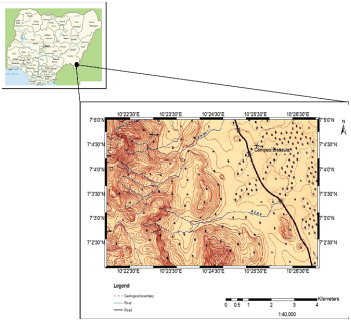
The study area is located within 7° 02ˈ and 7° 05ˈ N and 10° 22ˈ and 10° 27ˈ E and covers an area of about 72km2 (Figure 1). It is situated on the southeastern part of Adamawa Massif which is clearly a continuous unit with Oban Massif in the south and Hawal Massif in the north, but superficially or shallowly splited by two depressions - the Yola arm of the Upper Benue Trough in the north and the Mamfe embayment in the south. Campoo-Bissaula is bounded by the Cameroun Massif to the east while the Middle Benue Trough bounds it to the west. The Bamenda Massif which consists of Cameroon Volcanic Line extending from the islands in the Gulf of Guinea through Mount Cameroon and the Bamenda Highlands bounds it to the southeast. The general elevation of the study area ranges from 225m to over 800m. Campoo-Bissaula is fairly accessible through Takum - Ussa - Tutua - Nyido - Kufai - Yaadi - Campoo - Gatari - Bissaula roads. It is within the humid tropics affected mainly by the southwest rain bearing winds and by the northeast trade (harmattan) winds which are dry and dust-laden . The climatic condition in the area consists of two distinct seasons, the wet/rainy season (April - October) and the dry season (November to March). Campoo-Bissaula encompasses derived Savanna vegetation cover. Rivers Akpo, Tambari and some others in the study area empty their contents into River Donga situated at the northern part of the study area which rises from the Cameroun Highlands.
The geology and mineral resources of southern Adamawa Massif of Nigeria’s eastern Basement Complex is the least studied in the country. Most of geological works done in the area are essentially preliminary in nature. On the other hand, because of the paucity of research work on this massif, there is always a tendency to infer the geology of Adamawa Massif from that of the well-studied Oban Massif which has often led to erroneous conclusions. However, described the geology of southern Adamawa Massif as consisting predominantly of migmatitic-gneiss, banded gneiss, granite gneiss, Porphyroblastic gneiss, Charnockite, Older Granites and intrusive rocks . Mineral resources in the study area according to include amethyst, beryl, aquamarine, rutile, ilmenite, hematite, etc.
Ilmenite (FeTiO3) occurs as a black mineral with submetallic to metallic luster and is mostly used to produce titanium metal, synthetic rutile, pigments, alloys and powders. This paper is aimed at unfolding the geology geochemistry and genetic affinity of ilmenite occurrences in Campoo-Bissaula. This study is important to the Government of Nigeria as it diversify its revenue from oil base to mineral resources sector of the economy.
Figure 1. Topographic map of the study area Modified after .
2. Materials and Methods
Geological tools (Brunton compass, GPS, hammer and chisel, hand lens, etc.) were used in the field. Topographic, ternary imageries, magnetic lineament and digital elevation maps of the area were assembled and studied. Field mapping was carried out by road, river/stream and compass traverses. About 50 centimeters (cm) deep soil and stream sediment sampling were carried out randomly up stream and by the plains while rock samples were collected from different lithologic units. A total of twenty-two samples were collected for geochemical analysis in the study area. These are; three each from the four lithologic units and five each from stream sediments and soil. The collected rock samples were screened and washed to remove clogged mud and other unwanted particles. Leather hand cloves and craft paper were used to carry soil and stream sediments samples. Geochemical analysis of the stream sediments and ilmenite were carried out at the National Geoscience Research Laboratory, (NGRL) Kaduna using Atomic Absorption Spectrometry (AAS) while rock and soil samples analysis were carried out at ACMES Lab Canada using Inductively Couple Plasma-Mass Spectrometry (ICP-MS). Statistical plot, petrology and geochemical software (PetroGraph software version 2 beta) were used to plot some geochemical data while Arc GIS was used to plot spatial distribution map of iron oxide and titanium oxide respectively.
3. Results
3.1. Lithologic Units
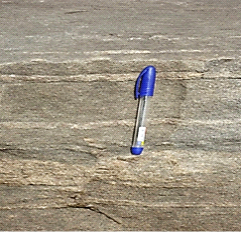
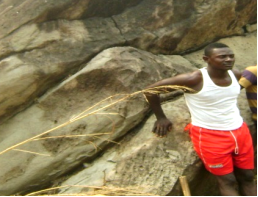
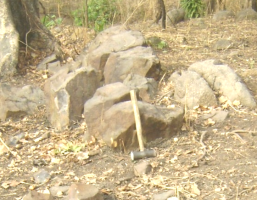
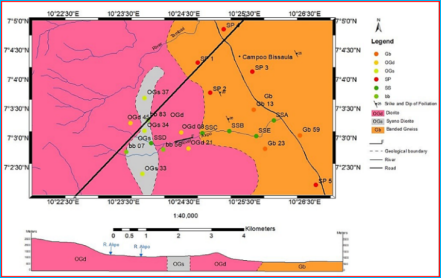
Geologic mapping of the study area revealed that the area is underlain by the Pre-Cambrian Basement Complex rocks. The major (mappable) rock units in the area are banded-gneiss (Figure 2), syeno-diorite (Figure 3) and diorite (Figure 4). Unmappable outcrop of basalt is presented in Figure 5. Quartz veins and aplite also characterize the major outcrops. The geologic map of the study area is presented in Figure 6.
Figure 2. Banded gneiss.
Figure 3. Syeno diorite.
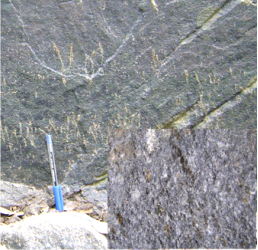
Figure 5. Basalt dyke.
NOTE: Gb (Banded Gneiss), OGd (Diorite), OGs (Syeno diorite), bb (Basalt), SS (Stream Sediments), SP (Soil Sample)

Download: Download full-size image

Figure 6. Geological map (with sampling points) of the area.
3.2. Structure (Fault)
Structurally controlled river (River Akpo) trending 0800 (E – W) occurred within the diorite, syeno-diorite and the banded gneiss in the study area (Figure 1). The river contains occurrences of ilmenite.
3.3. Geochemistry
Geochemical result is presented in Tables 1-3. Banded-gneiss is represented by (Gb), Diorite (OGd), Syeno-diorite (OGs) and Basalt (bb).
Table 1. Major oxide compositions of the rocks.

Sample/ oxides%

Gb 13

Gb 23

Gb 59

OGd 08

OGd 21

OGd 45

OGs 33

OGs 34

OGs 37

bb 07

bb 56

bb 83

SiO2

69.9

67.58

68.6

61.6

58.4

56.64

58.28

60.17

56.33

47

46.5

4.65

Al2O3

14.06

10.29

10.69

11.78

10.55

13.84

15.6

14.7

14.4

14

15.5

17.5

MgO

0.08

3.2

4.52

4.17

4.03

4.74

0.63

0.44

0.83

7

6.7

5.38

TiO2

1.87

1.45

1.87

1.64

1.74

3.51

0.9

0.7

1.14

4.6

5

2.53

Na2O

3.4

5.65

4.57

4.7

2.4

2.85

5.6

3.9

3.51

3.2

3

2

K2O

5.6

4.45

3.89

2.7

2.26

1.77

4.2

5.3

4.75

2

2.2

2.9

SO3

0.1

<0.04

<0.04

0.1

0.1

0.4

<0.10

<0.10

<0.10

<0.10

<0.10

<0.10

Fe2O3

3.39

4.07

3.49

11.97

11.83

13.77

9.8

10.2

12.75

14.2

14.4

11.3

CaO

0.49

2.51

2.38

4.69

7.79

4.94

3.6

3.6

4.92

7.5

6.3

9.25

P2O5

0.68

0.1

0.05

0.07

0.39

0.84

0.39

0.4

0.72

0.07

0.05

0.09

LOI

0.42

0.51

0.64

0.43

0.42

0.62

0.6

0.57

0.59

0.4

0.41

2.45

Total

99.99

99.5

100.7

100.97

99.89

99.57

99.98

99.98

99.94

99.97

100

99.9

NOTE: Gb (Banded gneiss), OGd (Diorite), OGs (Syeno diorite), bb (Basalt),
Table 2. Compositions and mean values of major oxide in stream sediments at River Akpo (wt.%).

Oxides/ Sample wt.%

SCA

SCB

SCC

SCD

SCE

Total

Mean

SiO2

9.0

8.7

9.1

9.0

8.9

44.7

8.94

Al2O3

0.59

0.6

0.6

0.54

0.56

2.89

0.58

K2O

0.23

0.23

0.22

0.24

0.25

1.17

0.23

CaO

0.15

0.14

0.17

0.16

0.15

0.77

0.15

Fe2O3

36.25

36.4

36.45

36.5

37

183

36.52

Bi2O3

0.091

0.091

0.088

0.09

0.09

0.45

0.09

ZnO

0.027

0.026

0.023

0.024

0.02

0.12

0.03

MnO

1.03

1.04

1.03

1.05

1.04

5.19

1.04

TiO2

44.76

44.78

44.8

44.88

44.9

224

44.82

Nb2O3

0.094

0.094

0.09

0.092

0.09

0.46

0.09

PbO

0.13

0.12

0.15

0.12

0.12

0.64

0.13

HfO2

0.23

0.2

0.22

0.23

0.22

1.1

0.22

ZrO2

4.06

4.0

3.8

4.02

4.05

19.9

3.99

Ta2O3

0.043

0.039

0.037

0.044

0.04

0.2

0.04

P2O5

3.0

2.9

2.7

2.9

2.5

14

2.8

CeO2

0.29

0.27

0.28

0.24

0.26

1.34

0.27

SeO2

0.019

0.019

0.02

0.021

0.02

0.1

0.02

Total

99.99

99.65

99.78

100.2

100

450

99.95

Note: SC (Stream Sediments)
Table 3. Major oxide composition and mean values in soils around River Akpo (wt.%).

Oxides/Samples wt.%

SS1

SS2

SS3

SS4

SS5

Total

Mean

SiO2

65.1

68.2

60.3

63.2

64.1

321

64.2

Al2O3

5.78

4.87

6.88

4.23

5.78

27.5

5.51

MgO

0.27

0.22

1.27

0.77

0.3

2.83

0.57

K2O

2.23

2.67

3.42

2.82

2.83

14.0

2.79

Na2O

0.16

0.19

0.87

1.56

1.66

4.44

0.89

CaO

0.63

1

1.63

0.93

0.63

4.82

0.96

Fe2O3

11.6

9.72

14.4

12.2

11.8

59.7

11.9

MnO

0.11

0.21

0.16

0.27

0.17

0.92

0.18

TiO2

9.64

8.38

8.64

10.0

9.69

46.4

9.28

P2O5

0.17

0.14

0.47

0.27

0.19

1.24

0.25

LOI

2.43

2.33

2.03

2.12

2.43

11.3

2.27

Total

98.0

97.9

100.

98.4

99.6

494

98.8

Note. SS (Soil Sample)
4. Discussion of Results
4.1. Airborne Geophysical Data Interpretation
4.1.1. Qualitative Interpretation of Airborne Magnetic Data
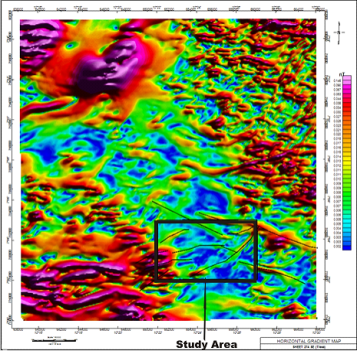
Figure 7. Horizontal Gradient Map of the area.
Horizontal gradient (Hgrad) data generated from the Total Magnetic Field Intensity revealed moderate to low magnetic response within the study area. Most lineaments trend in NE - SW though some E – W and NW - SE trending structures were also observed (Figure 7). The structures revealed by the magnetic signature are in conformity with the drainage pattern such as the channel along which river Akpo flows.
4.1.2. Qualitative Interpretation of Airborne Lineament Data
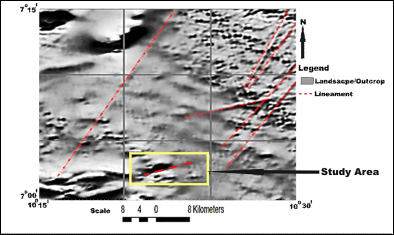
Figure 8. Magnetic Lineament Map of the area.
Interpretations of magnetic lineament imagery of the study area reveal weak magnetic lineaments trending mostly NE – SW with few E – W. The magnetic lineament along which River Akpo flows shows weak enrichment in magnetic minerals (Figure 8).
4.1.3. Qualitative Interpretation of Airborne Radiometric Data
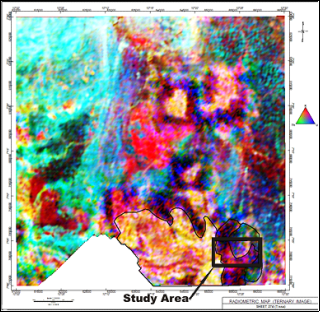
A ternary image produced from airborne radiometric data shows at least four lithological units in the study area (Figure 9). The western part of the area with highest elevation was observed to be rich in potassium with almost equal content of thorium and uranium. This zone encompasses the diorite and the syeno-diorite, suspected to be highly weathered. Also, towards the eastern part is another body of rock but with higher concentration of potassium. This rock body coincided with banded gneiss. Down the slope is an area relatively enriched in uranium. The zone with the high uranium content is suspected to be a depositional area (Ilmenite) in which materials flowing from the top is being deposited.
Figure 9. Radiometric Ternary Image.
4.1.4. Digital Elevation Model
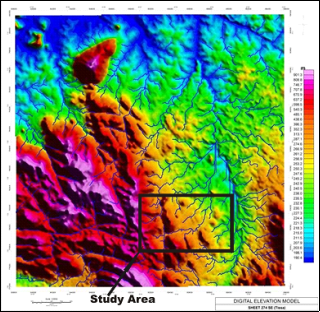
Digital Elevation Model (DEM) revealed the elevation in the study area ranges from about 225 meters (m) at the north-eastern corner to over 800m above sea level at the southwestern corner (Figure 10). Surface water within the area flows from the western part where elevation is highest towards the east. The flow is through fractures within rocks thereby carrying rock debris including minerals from the primary source, transport them for a short distance and later deposit them where the flow velocity is low. River Akpo which flows from the west to the east takes off from the high range of over 800m above sea level, passes through two hills before changing its course to NNE as it heads towards river Donga to empty its contents. This process led to the denudation and subsequent deposition of ilmenite along River Akpo.
4.2. Ground Truthing
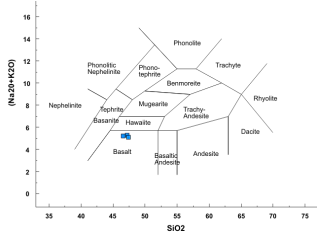
Ground truthing revealed four lithologic units in the study area. These are banded gneiss, syeno-diorite, diorite and basalt. Figures 11 and 12 show the classification of the rocks based on Total Alkali vs. Silica (TAS) plot after .
Figure 10. Digital elevation model map of the area.
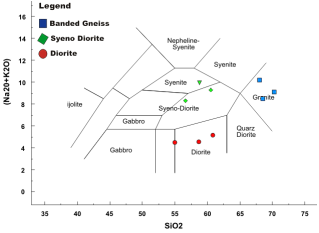
Figure 11. TAS plot for banded gneiss, syeno diorite and diorite after .
Figure 12. TAS plot for basalt after .
4.2.1. Banded Gneiss
Figure 13. Banded gneiss under cross polar.
(Note: Bt-Biotite, Qz-Quartz, Pl-Plagioclase, Px-Pyroxene, Mc-Microcline)
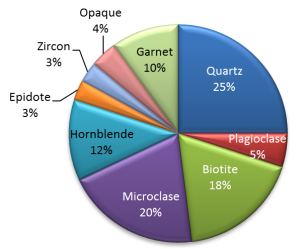
Banded gneiss occurs mostly as low-lying outcrop, medium - coarse grained and constitutes both homogenous and inhomogeneous discrete bands with clear boundary of leucocratic and melanocratic portions (Figure 2). The alternating felsic bands range from 2 to 3cm across and consist of abundant quartz and feldspar, muscovite and plagioclase minerals. The mafic bands range from 10 – 20cm depending on the outcrop. The mafic bands are black and consist of mostly biotite, plagioclase and Opaque (ferromagnesian). The rock exhibits varying degrees and trend of weak foliations marked by varied sizes, amounts and orientation of feldspar porphyroblasts. The rock evolved from the metamorphism of granite by anatexis (Figure 11). Structures associated with the rock unit are fractures, faults and folds. Mineral modes of banded gneiss under cross polar include quartz, plagioclase, biotite, microcline, hornblende and opaque (Figure 13). Other minor minerals are epidote and zircon. Plagioclase is of oligoclase to andesine (An25-30), often very coarse and heteroblastic with albite twinned minerals. Microcline and quartz are the dominant minerals. Microcline feldspar is colourless with grid twinning commonly showing strain effects. Some grains are poikiloblastic with quartz. Quartz is fine to medium grained, lobate and consists of elongate grains with sutured grain boundaries associated with subgrain development. It is strongly undulose, and occasionally forms mortar texture, dihedral angle, and pull-apart texture. Biotite is brown, idioblastic, elongated or segmented. Epidote has very high relief and shows birefringence colours of 2nd order green. Garnet appeared prismatic, black to dark brown in colour and occurs as anhedral to subhedral grains with common irregular fracture outlines. Most of the grains lack cleavage. The average modal compositions are presented in Figure 14.
Figure 14. Modal composition of banded gneiss.
4.2.2. Syeno-diorite
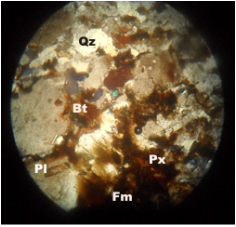
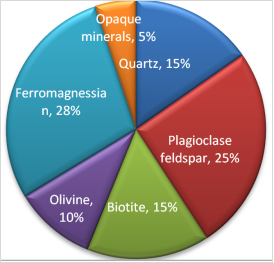
This rock occurs fractured, relatively homogenous, medium grained and grey to black (Figure 3). Mineral constituents include plagioclase, alkali feldspars, biotite, quartz and ferromagnesian. It is also peraluminous because the molecular proportion of aluminium oxide is greater than that of sodium oxide and potassium oxide combined. It is associated with some structures which include fractures. The rock is mostly spherodically weathered at the base of hills. Under plain polarized light, quartz is colourless, low relief, anhedral in shape, slightly fractured but not altered and is devoid of cleavage. Grain size ranges from 0.5 x 0.3 to 4.3 x 3.1 mm and have no inclusions rather have sharp contacts/boundaries with other mineral grains. Plagioclase is colourless to cloudy in appearance, low relief, have one directional cleavage and grain size ranges from 0.6 x 0.4 to size almost occupying the field of view. It is not fractured but shows signs of alteration due to inclusions of quartz and biotite grains in some feldspar grains. Biotite is reddish brown in colour, pleochroic from reddish brown to light brown, subhedral to euhedral in shape and has a perfect cleavage along direction of long axis of the grain. Olivine is light to lemon green, pleochroic from lemon green to light pink and anhedral in shape. It has high relief and irregular cracks occupied by opaque mineral. Quartz under cross polar (Figure 15) exhibits interference colour of gray to white on rotation of stage and showing 1st order birefringence. It lacks twinning but exhibits undulose extinction. Plagioclase shows interference colour of gray to cloudy and some gray and white lines alternation showing 1st order birefringence. Twinning is polysynthetic, some combining simple and multiple twinning and goes into extinction at 31o. Biotite exhibits interference colour of brown to purplish green with birefringence of 2nd order. It lacks twinning but exhibits straight extinction. Olivine shows interference colour of lemon green to purple with birefringence of 3rd order. It is devoid of twinning but exhibits oblique extinction. Ferromagnesian shows reddish colour under plane and cross polarized light probably depicting iron oxide. Opaque occurs as accessory minerals which are mottled in colour under cross polarized light but slightly pinkish to colourless under plane polarized light. Modal composition is presented in Figure 16.
Figure 15. Syeno diorite under cross polar.
(Note: Fm-Ferromagnesian, Px-Pyroxene, Bt-Biotite, Qz-Quartz, Pc-Plagioclase)
4.2.3. Diorite
It outcropped as a holocrystalline sub-round to round boulders of different sizes and shapes. The rock is dark grey to dense black, speckled, medium to coarse grained and consists of quartz, plagioclase feldspars and ferromagnesian minerals (Figure 4). The ferromagnesian minerals forms aggregates and stringers filling the spaces between cryst of quartz and feldspars giving the rock a dioritic appearance. Cross-cutting features are quartz veins, joints and pegmatite veins.
Figure 16. Modal composition of syeno diorite.
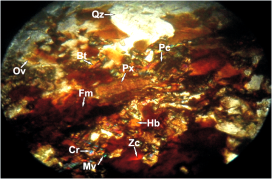
Figure 17. Photomicrograph of diorite under cross polar (x20).
(Note: Ov-Olivine, Fm-Ferromagnesian, Cr-Cordierite, Mv-Muscovite, Zc-Zircon, Hb-Hornblende, Px-Pyroxene, Bt-Biotite, Qz-Quartz, Pc-Plagioclase)
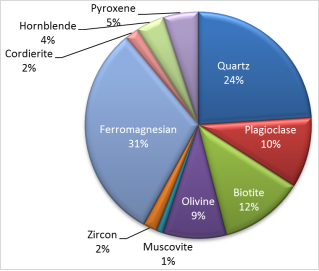
Under cross polar (Figure 17), quartz is colourless, anhedral in shape, medium grained, slightly fractured (but not altered), lacks cleavage and inclusions. It exhibits sharp contacts/boundaries with other minerals grains, low relief and shows interference colors of 1st order birefringence of gray to white. No twining was observed and goes into undulose extinction. Plagioclase feldspar is colourless to cloudy in appearance, has low relief and has no directional cleavage and fracture but shows signs of alteration due to inclusions of quartz and biotite grains. Interference colour is gray to cloudy with some gray and white lines alteration indicating polysynthetic twining, some combining simple and multiple twining. Extinction angle is 310 which place it as andesine. Biotite is reddish brown in colour, pleochroic from reddish brown to light brown, subhedral to euhedral in shape with perfect cleavage along direction of long axis of the grain. It has interference colour of brown to purplish green with 2nd order birefringence. It lacks twining and exhibits straight extinction. Olivine is anhedral in shape showing irregular cracks occupied by opaque mineral. It has high relief, pleochroic and shows interference colors of light brown to lemon green with 3rd order birefringence. No twining and exhibits oblique extinction. Zircon occurs mainly as inclusions in feldspar and quartz as an accessory mineral which are mottled in colour under polarized light but slightly pinkish to colourless under plane polar. Ferromagnesian minerals appear reddish dark to dark brown and are pleochroic. Average modal composition is presented in Figure 18.
Figure 18. Average modal compositions of diorite.
4.2.4. Basalt
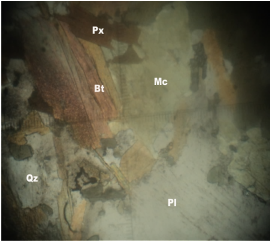
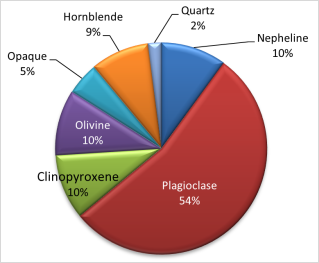
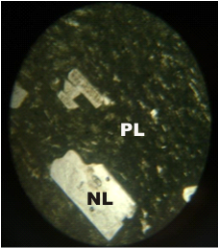
Basalt occurs randomly both as irregularly fragmented boulders and massive dykes within the diorite and syeno diorite rocks (Figure 5). The relative abundance of basalt in the area can be ascribed to the proximity of the area to the Cameroon volcanic line. It is black and shows some olivine phenocryst within the matrix of the rock in hand specimen. has reported the occurrences of olivine-bearing basalt in southern Cameroon which is adjacent to this study area. The fragmented boulders are in different sizes and shapes ranging between 1-2 meters wide while the massive types are mostly 2-3 m wide and both are several meters long. The relics of basaltic flows, represented by boulders and black soil, are found in the rivers and low-lying plains. Most of the basaltic dykes’ trends between 30°E and 75° E. The rocks are spheroidically affected by weathering. Mineral modes under microscope are composed of plagioclase, micro grains of olivine, augite, biotite and iron-titanium. Under cross polar (Figure 19), nepheline is identified by its poor basal section, euhedral glassy crystals, white to colourless grains, lack of cleavage and its hexagonal (rectangular) prismatic sections that are nearly square. It is randomly distributed in groundmass of plagioclase feldspars. It has low relief and goes into parallel extinction. Other mineral in the rock includes phenocryst of pyroxene and plagioclase which appeared within a pulverized groundmass. The pyroxene goes into oblique extinction at an angle of 290 an indication of clinopyroxene. Plagioclase feldspar is recognized by its bold faint albite twining, elongate laths and anorthite composition of An38-54 (andesine to labradorite) an observation consistent with . Quartz is colourless and goes into undulose extinction. Olivine is brownish, hexagonal or spindle shaped. Hornblende appeared lath, strongly pleochroic and goes into oblique extinction at an angle of 160. Opaque also occur in minor amounts. The average modal compositions are presented in Figure 20.
(Note: NL-Nepheline, Pl-Plagioclase)

Download: Download full-size image

Figure 19. Basalt under cross polar.
Figure 20. Modal composition of basalt.
4.3. Structures
A fault trending E - W (080°) occurred within the lithologic units in the study area. The fault gave rise to River Akpo which is mineralized with ilmenite. The structure is in conformity with airborne geophysical data quantitatively interpreted above.
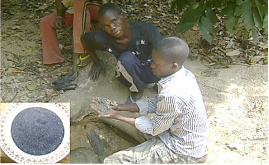
4.4. Occurrences and Mineralization of Ilmenite
Ilmenite (FeTiO3) occurs as a heavy black grains’ placer deposit along structurally controlled E – W trending River Akpo. It is easily recognized by its black colour with a submetallic to metallic luster (Figure 21). The average width of the river is about 9 meters and several kilometers long. The occurrences of iron-rich rocks and the influence of the host rock on mineral deposit are responsible for the secondary mineralization in the area. The secondary mineralization was achieved by the high volume of water (rainfall) in the area which moves through the faulted and fractured rocks in such a way to maintain equilibrium with the full set of the original minerals. Subsequently, the reaction of the host rocks with the fluid led to weathering, erosion, dispersion and distribution within sediments. It is then segregated, transported downstream along the river channel (because there is progressive enrichment in the concentration of ilmenite up stream) and concentrated in the river systems as “heavy mineral sands” because of its relatively high specific gravity and resistance to weathering. "Black sand prospecting" has long been a method of finding heavy mineral placer deposits. This has been suggested for many such deposits like the coastal beach sands and rivers of Odisha, Andhra Pradesh, Tamil Nadu, and Kerala States . These observations possibly highlight the relevance of significant alteration of host rocks in the evolutionary history in the formation of economically important alluvial ilmenite deposits in Campoo-Bissaula. Large reserves of ilmenite deposits are still preserved in the area. Ilmenite is mostly used to produce titanium metal, synthetic rutile, pigments, alloys and powders.
Figure 21. Stream sediments containing ilmenite at River Akpo (insert Panned ilmenite at River Akpo).
4.5. Compositional Features
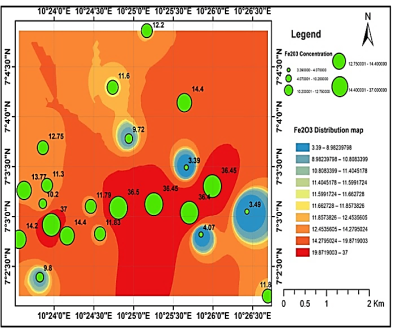
Figure 22. Spatial distribution map of Fe2O3.
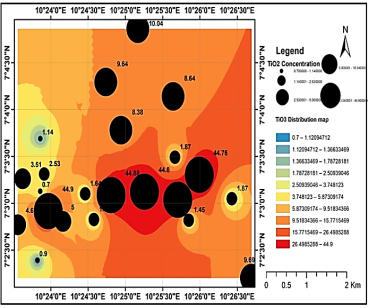
A total of twenty-two sampling points were established and sampled (Figure 6). Three samples were collected from each of the rock units, five samples each were collected from the stream sediments and soils around the study area. The geochemical data as plotted on spatial distribution map of the area revealed that there is consistent and persistent enrichment of Fe2O3 and TiO2 in all the host rocks and soils around the mineralized area except banded gneiss (Figures 22 and 23). Table 1 shows that the concentration of Fe2O3 and TiO2 in diorite ranges from 11.97 wt.% – 13.77 wt.% and 1.64 wt.% - 3.51 wt.%; syeno-diorite has 9.8 wt.% - 12.75 wt.% of Fe2O3 and 0.7 wt.% - 1.14 wt.% of TiO2; basalt has concentration ranges from 11.3 wt.% - 14.4 wt.% of Fe2O3 and 2.53 wt.% - 5.00 wt.% of TiO2. The mean concentration of Fe2O3 and TiO2 in stream sediments is 36.52 wt.% and TiO2 44.92 wt.% (Table 2). Soil samples have mean concentration of 11.94 wt.% (Fe2O3) and 9.29 wt.% of TiO2 (Table 3). The mean compositions in the iron-rich rocks are 13.3 wt.% (Fe2O3) and 4.04 wt.% (TiO2) for basalt; 12.51 wt.% (Fe2O3) and 2.63 wt.% (TiO2) for diorite; 10.92 wt.% (Fe2O3) and 1.70 wt.% (TiO2) for syeno-diorite (Figure 24). The mean concentration of Fe2O3 and TiO2 in stream sediments are 36.52 wt.% and 44.82 wt.% while soil has 11.94 wt.% (Fe2O3) and 9.28 wt.% (TiO2) respectively (Figure 24). The weight percentages of Fe2O3 and TiO2 which constitute the components of ilmenite from the above data show anomaly in all the rocks and soils when compared with crustal abundance of Fe2O3 (2.6 wt.%) and TiO2 (0.8 wt.%). From the above data, the mean composition of ilmenite (FeTiO3) in stream sediments (River Akpo) is 51.52 wt.%, host rocks 8.76 wt.% and soils 12.48 wt.% respectively (Figure 25). Some physical properties of the ilmenite include submetallic to metallic luster, black in colour, hardness of 5.5, specific gravity of 4.7 and weakly magnetic streak.
Figure 23. Spatial distribution map of TiO2.
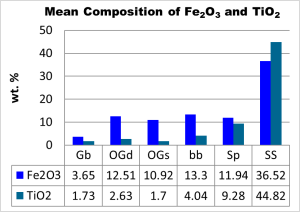
Figure 24. Mean concentration of Fe2O3 and TiO2 (FeTiO3) in iron rich rocks, stream and soil.
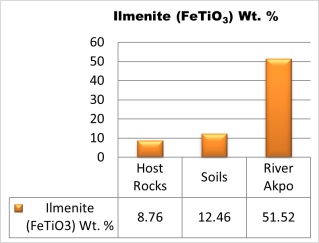
In host rocks soils and stream sediments (R. Akpo)

Download: Download full-size image

Figure 25. Mean concentration of Ilmenite (FeTiO3).
4.6. Genetic Affinity
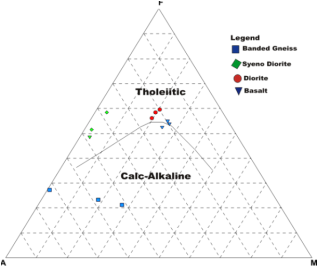
All rocks originate from the magma by melting and cooling. Once a melt is created and begins to rise, it may further interact with the surrounding wall rock before solidification on the earth surface as extrusive rocks or beneath the earth surface as intrusive rocks. The melt is composed of elements which are grouped as lithophile, siderophile and chalcophile. The major elemental oxide variations in rocks are consistent with the minerals that are present and the order in which they crystalize. In the study area, the rock units found are banded gneiss, basalt, diorite and syeno-diorite. Alkaline – Iron – Magnesium (AFM) diagram after for basalt, diorite, syeno-diorite and banded gneiss shows that all the rocks favour tholeiitic series except banded gneiss which favours calc-alkaline series (Figure 26). has reported the occurrences of basaltic dike swarms in southern Cameroon (which is adjacent the study area) to be tholeiitic. Tholeiitic rocks suggest iron-rich rocks showing enrichment in iron while calc-alkaline rocks are enriched in silica, sodium and potassium. The plotting of the banded gneiss in granite field on the Total – Alkali - Silica (TAS) after in Figure 11 suggest evolvement from protolith of granite suites by anatexis which is in agreement with the findings of . On the other hand, the high potassium calc-alkaline affinity and the enrichment of K2O and high SiO2 content and deficiency in iron in banded gneiss indicate alkalinity and suggest continental crust affinity. Basalt, diorite and syeno-diorite show great anomaly in iron and titanium content which suggest that these rocks are rich in iron. This enrichment of Fe2O3 and TiO2 in these rocks indicates undersaturation of SiO2, basicity of the rock and mantle source or mixing of mantle and crustal component in their magmatic source . reported that the basalts in the study area are Mid-Oceanic Ridge Basalt (MORB) which suggests that the magma that produced the basalt emanates from mid-oceanic ridge as a result of seafloor mountain system formed by plate tectonics that occurred along a divergent plate boundary. This gave rise to mantle upwelling in response to plate separation where the melt rises as magma at the linear weakness between the separating plates, and emerges as lava. The Mid-Ocean Ridge is often home to rising hydrothermal fluids which yields hydrous andesitic magmas which ascend into the mid to upper crustal region where they stall and crystallize to produce a body of iron-rich rocks . Diorite could also result from partial melting of mafic rock. On the other hand, the close similarities in some of the elemental oxides in some of the rocks such as diorite and syeno diorite could be attributed to evolution from the same magma during crystallization and differentiation (that is, co-magmatic). Therefore, the source of Ilmenite mineralization can be ascribed to the unroofing and subsequent denudation (weathering) of the iron rich rocks (basalt, quartz diorite and syeno diorite) in the study area.
Figure 26. AFM plot for the rocks in the study area after .
5. Conclusions
River Akpo in Campoo-Bissaula is mineralized with ilmenite. The source of the secondary mineralization can be attributed to the abundance of iron-rich rocks of basalt, diorite and syeno-diorite. The mineralization was made possible by unroofing and subsequent denudation of the iron-rich rocks. The iron rich rocks have strong affinity to magma evolved from the mantle or the mixture of the mantle and crust during evolution. The similarities in the geochemical composition of diorite and syeno diorite suggest co-magmatic in origin.
Abbreviations

NGSA

Nigerian Geological Survey Agency

NGRL

National Geosciences Research Laboratory

AAS

Atomic Absorption Spectrometry

ICP-MS

Inductively Couple Plasma Mass Spectrometry

Acknowledgments
The author wants to acknowledge the support of Nigerian Geological Survey Agency (NGSA) for making available most of the data used for this research. I also appreciate Mr. Kaka Imam (Director, Geophysics), Mr. Silas Yakubu (Technical Assistant to the DG), Mr. S. Maspalma, Miss Yinka Makinde and host of others at NGSA for their inputs.
Funding
This work is supported by partial funding from Nigerian geological Survey Agency through some analysis of rocks in its laboratory.
Author Contributions
Julius Bajabu Kwache: Conceptualization, Resources, Data curation, Methodology
Data Availability Statement
The data is available from the corresponding author or Modibbo Adama University Yola Adamawa State Nigeria upon reasonable request.
Conflicts of Interest
The author has not declared any conflicts of interests.
References
[1] Nwajide CS (2013). Geology of Nigeria’s Sedimentary Basins. CSS Bookshops Limited, 4th Floor, Bookshop House, 50/52, Lagos Nigeria. pp. 564.
[2] Nigerian Geological Survey Agency (NGSA) Annual Reports (2010). Published by Nigerian Geological Survey Agency. Pp. 34.
[3] Kwache JB (2019). The Geology and Petrogenesis of the Rocks of Southeast Tissa Adamawa Massif Northeast Nigeria. A thesis submitted to Department of Geology, School of Physical Sciences in partial fulfillment of the requirements for the award of the Degree of Doctor of Philosophy in Economic Geology and Mineral Exploration of the Modibbo Adama University of Technology, Yola. Unpublished. 252 Pp.
[4] Federal Surveys (1968). Topographic map of Tissa sheet 274. Published by Directorate of Overseas Survey for Nigerian Government.
[5] Cox KJ, Bell JD, Pankhurst RJ (1979). The interpretation of igneous rocks. George Allen and Unwin Ltd, London, p 450.
[6] Tchouankoue JP, Wambo NAS, Dongmo AK, Wörner G (2012). Petrology, Geochemistry, and Geodynamic Implications of Basaltic Dyke Swarms from the Southern Continental Part of the Cameroon Volcanic Line, Central Africa. The Open Geology Journal, 2012, 6, 72-84.
[7] Obiora SC, Okunlola OA (2012). Petrography of Igneous and Metamorphic Rocks (Laboratory Work and Analysis) Field Mapping Best Practice Manual. 19 p. Unpublished.
[8] Rao DS, Sengupta D (2014). Electron Microscopic Studies of Ilmenite from the Chhatarpur Coast, Odisha, India, and Their Implications in Processing. Hindawi Publishing Corporation Journal of Geochemistry Volume 2014, Article ID 192639.
[9] Irvine TN, Baragar WRA (1971). A guide to the chemical classification of the common volcanic rocks. Can. J. Earth Sci. 8, 523-548.
[10] Girei BM (2005). Geology, Geochemistry and Petrogenesis of Granite Suites and Pegmatites in the Northern Part of Mandara Hills Gwoza Sheet 114, Northeastern Nigeria. An MSc. Thesis submitted to the School of Postgraduate Studies, Ahmadu Bello University, Zaria. 160 p.
[11] Brophy JG (2008). A study of rare earth element (REE)–SiO2 variations in felsic liquids generated by basalt fractionation and amphibolite melting: a potential test for discriminating between the two different processes. Contrib Mineral Petrol.
Cite This Article
  • APA Style

    Kwache, J. B. (2026). Geology, Geochemistry and Genetic Affinity of Ilmenite Occurrences in Campoo-Bissaula, Southeast Adamawa Massif Northeast Nigeria. American Journal of Applied Scientific Research, 12(1), 25-38. https://doi.org/10.11648/j.ajasr.20261201.14

    Copy | Download

    ACS Style

    Kwache, J. B. Geology, Geochemistry and Genetic Affinity of Ilmenite Occurrences in Campoo-Bissaula, Southeast Adamawa Massif Northeast Nigeria. Am. J. Appl. Sci. Res. 2026, 12(1), 25-38. doi: 10.11648/j.ajasr.20261201.14

    Copy | Download

    AMA Style

    Kwache JB. Geology, Geochemistry and Genetic Affinity of Ilmenite Occurrences in Campoo-Bissaula, Southeast Adamawa Massif Northeast Nigeria. Am J Appl Sci Res. 2026;12(1):25-38. doi: 10.11648/j.ajasr.20261201.14

    Copy | Download

  • @article{10.11648/j.ajasr.20261201.14,
      author = {Julius Bajabu Kwache},
      title = {Geology, Geochemistry and Genetic Affinity of Ilmenite Occurrences in Campoo-Bissaula, Southeast Adamawa Massif Northeast Nigeria},
      journal = {American Journal of Applied Scientific Research},
      volume = {12},
      number = {1},
      pages = {25-38},
      doi = {10.11648/j.ajasr.20261201.14},
      url = {https://doi.org/10.11648/j.ajasr.20261201.14},
      eprint = {https://article.sciencepublishinggroup.com/pdf/10.11648.j.ajasr.20261201.14},
      abstract = {Campoo-Bissaula covers an area of about 72 km2 and is located within 7° 02ˈ and 7° 05ˈ N and 10° 22ˈ and 10° 27ˈ E on the southeastern part of Adamawa Massif, northeast Nigeria. The rock types in the study area are predominantly banded gneiss, diorite and syeno diorite with basalt occurring as subordinate. Mineral resources include amethyst, rutile, ilmenite, hematite, etc. Ilmenite occurs along a structurally controlled River at Campoo-Bissaula (River Akpo) trending E - W (0800). This paper seeks to unfold the geology, geochemistry and genetic affinity of ilmenite (FeTiO3) occurrences in the study area. Field mapping was carried out by road, river/stream and compass traversing. Stream sediments were taken randomly upstream along the stream. Soil samples were carried out at the banks of the river while samples of the host rocks were taken from all the different rock exposures around the river. Geochemical analysis of stream sediments was carried out at the NGRL, Kaduna using AAS while rock and soil samples were carried out at ACMES Lab, Canada using ICP-MS. The geochemical data revealed enrichment of Fe2O3 and TiO2 in diorite, syeno diorite and basalt as well as soils and stream sediments around the study area. Diorite has mean concentration of 12.51 wt.% (Fe2O3) and 2.63 wt.% (TiO2); syeno diorite has 10.92 wt.% (Fe2O3) and 0.91 wt.% (TiO2) and basalt has 13.34 wt.% and 4.04 wt.% of Fe2O3 and TiO2. The soil has mean concentration of 11.94 wt.% (Fe2O3) and 9.28 wt.% (TiO2) while the stream sediments have 36.52 wt.% (Fe2O3) and 44.82 wt.% (TiO2). Ilmenite (FeTiO3) concentration in the area is dominated in the stream sediments which constitutes 51.52 wt.%; host rocks has 8.76 wt.% and soils is 12.48 wt.% respectively. Some physical properties of the ilmenite (FeTiO3) include submetallic to metallic luster, black colour, hardness of 5.5 and specific gravity of 4.7. The occurrences and the genetic affinity/source of Ilmenite (FeTiO3) occurrences in the area can be ascribed to the unroofing and subsequent denudation of the iron-rich rocks whose origin is related to the evolution of mafic magma that arose during melting of the mantle. This possibly highlights the relevance of significant alteration of host rocks in the evolutionary history of the ilmenite (FeTiO3) occurrences in Campoo-Bissaula area. Ilmenite (FeTiO3) is mostly used to produce titanium metal, synthetic rutile, pigments, alloys and powders.},
     year = {2026}
    }
    

    Copy | Download

  • TY  - JOUR
    T1  - Geology, Geochemistry and Genetic Affinity of Ilmenite Occurrences in Campoo-Bissaula, Southeast Adamawa Massif Northeast Nigeria
    AU  - Julius Bajabu Kwache
    Y1  - 2026/03/04
    PY  - 2026
    N1  - https://doi.org/10.11648/j.ajasr.20261201.14
    DO  - 10.11648/j.ajasr.20261201.14
    T2  - American Journal of Applied Scientific Research
    JF  - American Journal of Applied Scientific Research
    JO  - American Journal of Applied Scientific Research
    SP  - 25
    EP  - 38
    PB  - Science Publishing Group
    SN  - 2471-9730
    UR  - https://doi.org/10.11648/j.ajasr.20261201.14
    AB  - Campoo-Bissaula covers an area of about 72 km2 and is located within 7° 02ˈ and 7° 05ˈ N and 10° 22ˈ and 10° 27ˈ E on the southeastern part of Adamawa Massif, northeast Nigeria. The rock types in the study area are predominantly banded gneiss, diorite and syeno diorite with basalt occurring as subordinate. Mineral resources include amethyst, rutile, ilmenite, hematite, etc. Ilmenite occurs along a structurally controlled River at Campoo-Bissaula (River Akpo) trending E - W (0800). This paper seeks to unfold the geology, geochemistry and genetic affinity of ilmenite (FeTiO3) occurrences in the study area. Field mapping was carried out by road, river/stream and compass traversing. Stream sediments were taken randomly upstream along the stream. Soil samples were carried out at the banks of the river while samples of the host rocks were taken from all the different rock exposures around the river. Geochemical analysis of stream sediments was carried out at the NGRL, Kaduna using AAS while rock and soil samples were carried out at ACMES Lab, Canada using ICP-MS. The geochemical data revealed enrichment of Fe2O3 and TiO2 in diorite, syeno diorite and basalt as well as soils and stream sediments around the study area. Diorite has mean concentration of 12.51 wt.% (Fe2O3) and 2.63 wt.% (TiO2); syeno diorite has 10.92 wt.% (Fe2O3) and 0.91 wt.% (TiO2) and basalt has 13.34 wt.% and 4.04 wt.% of Fe2O3 and TiO2. The soil has mean concentration of 11.94 wt.% (Fe2O3) and 9.28 wt.% (TiO2) while the stream sediments have 36.52 wt.% (Fe2O3) and 44.82 wt.% (TiO2). Ilmenite (FeTiO3) concentration in the area is dominated in the stream sediments which constitutes 51.52 wt.%; host rocks has 8.76 wt.% and soils is 12.48 wt.% respectively. Some physical properties of the ilmenite (FeTiO3) include submetallic to metallic luster, black colour, hardness of 5.5 and specific gravity of 4.7. The occurrences and the genetic affinity/source of Ilmenite (FeTiO3) occurrences in the area can be ascribed to the unroofing and subsequent denudation of the iron-rich rocks whose origin is related to the evolution of mafic magma that arose during melting of the mantle. This possibly highlights the relevance of significant alteration of host rocks in the evolutionary history of the ilmenite (FeTiO3) occurrences in Campoo-Bissaula area. Ilmenite (FeTiO3) is mostly used to produce titanium metal, synthetic rutile, pigments, alloys and powders.
    VL  - 12
    IS  - 1
    ER  - 

    Copy | Download

Author Information