2. Materials and Methods
2.1. Study Area and Climatic Background
The proposed photovoltaic energy-yield forecasting algorithm was developed and tested for the climatic conditions of the Fergana Valley, Uzbekistan. The selected region is located at approximately 40.4° N latitude and is characterised by pronounced seasonal variability in solar radiation, ambient temperature and cloudiness. This makes the region suitable for evaluating the influence of solar geometry and month-specific atmospheric correction factors on photovoltaic generation.
The study uses long-term meteorological and solar-radiation characteristics of the region as the climatic basis for seasonal calibration. In particular, monthly average global horizontal irradiance values and cloudiness-related attenuation effects were used to adjust the theoretical clear-sky irradiance obtained from solar-position calculations. The original manuscript identifies the NASA Surface Meteorology and Solar Energy database for the 1983–2005 period and regional meteorological information for the Fergana Valley as the basis for deriving seasonal correction factors.
The need for such correction arises because solar-position models describe the deterministic astronomical component of irradiance, whereas real PV production is also affected by atmospheric transparency, cloud cover, aerosols and seasonal meteorological conditions. Therefore, in this study, the clear-sky theoretical irradiance is not used directly as the final input for PV power estimation; instead, it is modified by monthly atmospheric correction coefficients.
Table 1. Main geographical and climatic input parameters used in the study.
Parameter | Symbol | Value/description | Unit |
Study region | | Fergana Valley, Uzbekistan | |
Latitude | φ | ≈40.4 | degree |
Simulation horizon | | 8760 | h |
Climatic data basis | | Long-term monthly solar-radiation and meteorological data | |
Main correction type | (Km) | Monthly atmospheric correction factor | |
Reference simulation tool | | PVsyst | |
2.2. Photovoltaic System Configuration
The algorithm was applied to a representative fixed-tilt bifacial photovoltaic installation. The selected PV module was a bifacial monocrystalline silicon module with a rated power of 585 Wp. The module surface was oriented with a tilt angle of β = 35° and an azimuth angle of approximately γ = 13° west of south. The ground albedo was taken as ρ = 0.25, representing a moderately reflective ground surface. The nominal operating cell temperature was assumed to be NOCT = 45°C, consistent with typical crystalline-silicon module performance modelling.
The adopted system configuration is summarized in
Table 2. These parameters define the geometric, optical and thermal boundary conditions of the analytical calculation. They also ensure that the proposed model and the PVsyst reference simulation are compared under equivalent design assumptions.
Table 2. PV system parameters used in the analytical model and PVsyst validation.
Parameter | Symbol | Value | Unit |
Module type | | Bifacial monocrystalline silicon | |
Rated module power | (Pnom) | 585 | Wp |
Tilt angle | β | 35 | degree |
Azimuth angle | γ | ≈13 west of south | degree |
Ground albedo | ρ | 0.25 | |
Nominal operating cell temperature | NOCT | 45 | °C |
Time step | Δt | 1 | h |
Annual simulation period | | 8760 | h |
2.3. General Structure of the Forecasting Algorithm
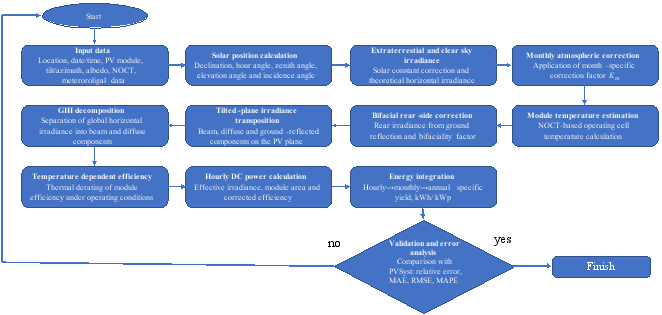
The proposed method is organized as a sequential hourly calculation pipeline. For each hour of the reference year, the model first calculates the solar-position parameters, then estimates extraterrestrial and horizontal irradiance, applies monthly atmospheric correction, separates global radiation into direct and diffuse components, transposes irradiance onto the tilted PV plane, adds the bifacial rear-side contribution, corrects module efficiency for operating temperature and finally integrates hourly power into monthly and annual energy yield.
Figure 1. Flowchart of the proposed solar-position-based seasonal PV energy forecasting algorithm.
The calculation sequence is as follows:
1. determination of the day number and local solar time;
2. calculation of solar declination, hour angle, zenith angle and incidence angle;
3. estimation of extraterrestrial irradiance and clear-sky horizontal irradiance;
4. application of monthly atmospheric correction factors;
5. decomposition of global horizontal irradiance into beam and diffuse components;
6. transposition of irradiance from the horizontal plane to the tilted PV plane;
7. estimation of rear-side irradiance for bifacial modules;
8. calculation of module temperature using the NOCT-based approach;
9. correction of PV efficiency for temperature effects;
10. calculation of hourly direct current (DC) power output;
11. aggregation of hourly values into monthly and annual energy yield;
12. validation against PVsyst simulation outputs.
This structure was selected because it preserves the physical transparency of the calculation while requiring fewer input data than advanced machine-learning or numerical weather prediction approaches.
2.4. Analytical Modelling Procedure for Solar Irradiance and PV Energy Yield
The first stage of the algorithm determines the Sun’s apparent position for each hourly time step. The extraterrestrial irradiance normal to the solar beam is calculated as:
where, Gsc = 1367 Wm-2 is the solar constant and n is the day number of the year.
The solar declination angle is determined by:
where, δ is expressed in degrees.
The hour angle is calculated as:
where, ts is the local solar time in decimal hours.
The solar zenith angle is obtained from:
where, φ is the site latitude.
The solar elevation angle is then:
For a tilted PV surface, the angle of incidence between the direct solar beam and the module plane is calculated by:
here,
β is the module tilt angle and γ is the surface azimuth angle. This formulation allows the model to account for the effect of both tilt and azimuth on the incident beam irradiance
.
Estimation and decomposition of global horizontal irradiance
The extraterrestrial horizontal irradiance is calculated as:
For daylight hours, the clearness index is defined as:
where Gh is the global horizontal irradiance after atmospheric correction.
To separate the global horizontal irradiance into beam and diffuse components, the Erbs-type diffuse fraction correlation may be used. PVsyst documentation also identifies the Erbs model as a simple and effective clearness-index-based approach for estimating the diffuse horizontal irradiance fraction from global horizontal irradiance
| [2] | Erbs, D. G., Klein, S. A., & Duffie, J. A. (1982). Estimation of the diffuse radiation fraction for hourly, daily and monthly-average global radiation. Solar Energy, 28(4), 293–302.
https://doi.org/10.1016/0038-092X(82)90302-4 |
[2]
.
The diffuse fraction is expressed as:
Then:
and the beam horizontal component is calculated as:
This decomposition is required because beam, diffuse and reflected radiation interact differently with a tilted PV surface.
Transposition of irradiance onto the tilted PV plane
The total front-side irradiance incident on the tilted PV plane is calculated as the sum of beam, diffuse and ground-reflected components:
The beam component on the tilted plane is:
where the beam tilt factor is:
The diffuse component is estimated using the isotropic sky approximation:
The ground-reflected component is calculated as:
Thus, the total plane-of-array irradiance becomes:
The isotropic diffuse model was selected to keep the algorithm analytically simple and suitable for preliminary engineering calculations
| [3] | Perez, R., Seals, R., Ineichen, P., Stewart, R., & Menicucci, D. (1987). A new simplified version of the Perez diffuse irradiance model for tilted surfaces. Solar Energy, 39(3), 221–231.
https://doi.org/10.1016/S0038-092X(87)80031-2 |
[3]
. However, this simplification is also a source of uncertainty, especially under partly cloudy conditions. More advanced transposition models, such as the Perez model, are commonly used for estimating plane-of-array irradiance from horizontal irradiance data; Sandia PVPMC describes the Perez model as a widely used approach for tilted-plane irradiance estimation, while PVsyst documentation notes that PVsyst provides Hay-Davies and Perez transposition options
| [17] | PVsyst SA. PVsyst documentation: Physical models, irradiation transposition, bifacial systems and performance ratio. Available at:
https://www.pvsyst.com/help/ Accessed: 06 May 2026. |
[17]
.
For this reason, the selected PVsyst transposition model must be explicitly reported in the validation setup.
Monthly atmospheric correction
The key methodological feature of the present algorithm is the introduction of monthly atmospheric correction factors. These coefficients account for the difference between theoretical clear-sky irradiance and the long-term monthly solar-radiation regime of the Fergana Valley.
For each month m, the corrected global horizontal irradiance is defined as:
where is the theoretical clear-sky horizontal irradiance obtained from solar-position calculations and Km is the monthly atmospheric correction factor.
The monthly correction factor is determined as:
where is the long-term observed or database-derived monthly mean daily global horizontal irradiation and is the corresponding clear-sky monthly mean daily irradiation calculated by the solar-position model.
This approach allows the model to retain the deterministic astronomical structure of solar radiation while correcting its magnitude according to the regional seasonal atmospheric conditions. Winter months are expected to have lower correction factors because of lower solar elevation and increased cloudiness, whereas summer months are expected to approach clear-sky conditions more closely.
For the Fergana city case study, monthly atmospheric correction factors were calculated as the ratio between the observed or database-derived monthly mean daily global horizontal irradiation and the theoretical clear-sky irradiation obtained from solar-geometry calculations. The geographical coordinates of Fergana city were taken as approximately 40.384° N latitude and 71.784° E longitude. The correction coefficient Km therefore represents the combined seasonal influence of cloudiness, atmospheric transparency, aerosol loading and regional climatic attenuation on the available solar radiation.
Table 3. Monthly atmospheric correction factors used in the proposed algorithm.
Month | Clear-sky irradiation, , kWh/m2·day | Observed/database irradiation, , kWh/m2·day | Correction factor, (Km) |
January | 4.09 | 2.25 | 0.550 |
February | 5.58 | 2.83 | 0.507 |
March | 7.50 | 3.28 | 0.437 |
April | 9.59 | 4.19 | 0.437 |
May | 11.02 | 5.45 | 0.495 |
June | 11.63 | 6.71 | 0.577 |
July | 11.34 | 6.84 | 0.603 |
August | 10.18 | 6.82 | 0.670 |
September | 8.29 | 6.03 | 0.728 |
October | 6.20 | 3.90 | 0.629 |
November | 4.46 | 2.49 | 0.559 |
December | 3.70 | 1.98 | 0.535 |
The obtained correction factors indicate a pronounced seasonal variation in atmospheric attenuation. The lowest values were obtained in March–April, where transitional cloudiness and atmospheric instability reduce the effective radiation relative to the theoretical clear-sky potential. Higher correction factors in August–September indicate more favorable atmospheric transparency and stable solar conditions. Therefore, the use of a single annual correction coefficient would be insufficient for reliable seasonal PV energy-yield forecasting in the Fergana region.
Bifacial rear-side irradiance model
For bifacial PV modules, the rear side contributes additional energy yield by absorbing radiation reflected from the ground. in the proposed simplified model, the rear-side irradiance is estimated as:
where ρ is the ground albedo and Fv is the rear-side view factor between the module and the ground surface.
The effective irradiance available for bifacial power generation is then calculated as:
where ηrear is the bifaciality factor, defined as the ratio of rear-side to front-side efficiency.
This simplified treatment is suitable for preliminary energy-yield forecasting, but it does not resolve rear-side irradiance non-uniformity, row-to-row shading or detailed ground-reflection geometry. recent bifacial PV studies show that rear-side irradiance modelling depends strongly on albedo, view-factor assumptions and system geometry
| [13] | d’Alessandro, V., Daliento, S., Dhimish, M., & Guerriero, P. (2024). Albedo Reflection Modeling in Bifacial Photovoltaic Modules. Solar, 4(4), 660-673.
https://doi.org/10.3390/solar4040031 |
| [14] | Campos, R. A., Braga, M., Pires, A. M., Hohmann, M., Ovaitt, S., & Rüther, R. (2025). Comparative analysis of rear irradiance modeling methods for bifacial PV systems on single-axis trackers under varying albedo conditions. Solar Energy, 302, 114007.
https://doi.org/10.1016/j.solener.2025.114007 |
[13, 14]
; therefore, more detailed view-factor or ray-tracing models may be required for final engineering design
.
Module temperature and efficiency correction
The operating temperature of the PV module was estimated using a NOCT-based empirical model:
where Tc is the cell temperature, Ta is the ambient air temperature and Geff is the effective irradiance incident on the module surface.
The NOCT approach is widely used because it requires only ambient temperature, irradiance and the manufacturer-reported NOCT value. According to the PV module temperature modelling literature, the NOCT/Ross formulation is one of the simplest explicit approaches for estimating module operating temperature, with the standard NOCT reference conditions commonly associated with 800 W/m² irradiance, 20°C ambient temperature, 1 m/s wind speed and open-rack mounting conditions
| [21] | Ross, R. G. (1976). Interface design considerations for terrestrial solar cell modules. Proceedings of the 12th IEEE Photovoltaic Specialists Conference, 15-18 November 1976, Baton Rouge, LA, 1976, pp, 801-806. |
| [22] | Aoun, N. (2022). Methodology for predicting the PV module temperature based on actual and estimated weather data. Energy Conversion and Management: X, 14, 100182.
https://doi.org/10.1016/j.ecmx.2022.100182 |
[21, 22]
. Previous studies have shown that module temperature and heat dissipation conditions significantly influence PV energy yield
| [15] | Leonardi, M., Corso, R., Milazzo, R. G., Connelli, C., Foti, M., Gerardi, C., Bizzarri, F., Privitera, S. M. S., & Lombardo, S. A. (2022). The Effects of Module Temperature on the Energy Yield of Bifacial Photovoltaics: Data and Model. Energies, 15(1), 22. https://doi.org/10.3390/en15010022 |
| [16] | Pretorius, J. and Nielsen, S. (2025), Understanding Heat Dissipation Factors for Fixed-Tilt and Single-Axis Tracked Open-Rack Photovoltaic Modules: Experimental Insights. Prog Photovolt Res Appl, 33: 326-343.
https://doi.org/10.1002/pip.3852 |
[15, 16]
.
The temperature-dependent module efficiency is calculated as:
where ηref is the module efficiency under Standard Test Conditions and γ is the temperature coefficient of power. For crystalline-silicon modules, γ is negative; therefore, an increase in cell temperature reduces module efficiency.
This correction is necessary because high summer irradiance increases potential generation, but simultaneously raises cell temperature and causes thermal derating. Without temperature correction, summer energy production would be systematically overestimated.
Electrical power and energy-yield calculation
For the purpose of annual and monthly energy-yield forecasting, the instantaneous DC power output per unit installed capacity is calculated using an efficiency-based model:
where Am is the active module area.
For normalized energy-yield analysis, the output can be expressed per unit installed peak power:
Hourly energy production is then calculated as:
where Δt = 1 h.
Monthly energy yield is obtained by summing hourly values within each month:
where Nm is the number of hourly time steps in month m.
Annual energy yield is calculated as:
The specific annual yield is expressed as:
with units of kWh/kWp.
In this revised methodology, the single-diode equation is not used as the primary computational basis for annual energy-yield forecasting. This is intentional. The study aims to develop a transparent seasonal energy-yield algorithm rather than a detailed I–V curve model. If the single-diode model is retained in the manuscript, then diode saturation current, series resistance, shunt resistance, ideality factor and maximum power point extraction procedure must also be reported. Otherwise, the efficiency-based DC power model is more consistent with the declared scope of the paper.
2.5. PVsyst Reference Simulation
PVsyst was used as the reference engineering simulation environment because it provides established procedures for PV performance assessment, irradiance transposition and loss modelling
| [17] | PVsyst SA. PVsyst documentation: Physical models, irradiation transposition, bifacial systems and performance ratio. Available at:
https://www.pvsyst.com/help/ Accessed: 06 May 2026. |
[17]
. Its use as a validation reference is supported by previous studies assessing PVsyst simulation accuracy under outdoor operating conditions
| [18] | Guerrero, I., del Cañizo, C., & Yu, Y. (2025). Accuracy of PVSyst Simulations in the Reproduction of the Yield Performance of Multicrystalline, Monocrsytalline and Monocasting Modules in Outdoor Conditions. SiliconPV Conference Proceedings, 2. https://doi.org/10.52825/siliconpv.v2i.1299 |
[18]
.
For reproducibility, the PVsyst simulation setup must report the following parameters.
Table 4. PVsyst reference simulation settings.
Parameter | Value / setting |
Location | Fergana Valley, Uzbekistan |
Latitude | ≈40.4° N |
Module type | Bifacial monocrystalline silicon |
Rated module power | 585 Wp |
Tilt angle | 35° |
Azimuth angle | ≈13° west of south |
Ground albedo | 0.25 |
Meteorological dataset | NASA Surface Meteorology and Solar Energy database, 1983–2005 |
Transposition model | Perez anisotropic transposition model |
Thermal model | NOCT-based module-temperature model; NOCT = 45°C |
Simulation time step | Hourly |
Output indicators | Monthly and annual specific yield, kWh/kWp |
The annual yield predicted by the proposed algorithm was compared with the annual specific yield obtained from PVsyst. In the original manuscript, the proposed model gives approximately 1860 kWh/kWp, while the PVsyst reference value is 1859 kWh/kWp. However, to make the validation scientifically stronger, annual agreement alone is insufficient. Monthly comparison and error metrics must also be reported.
2.6. Validation Metrics and Error Analysis
To quantify the agreement between the proposed analytical algorithm and PVsyst, the following deterministic error metrics were used. Solar forecasting studies commonly apply MAE, MBE, RMSE and related normalized indicators to evaluate forecasting accuracy across different time scales
.
The mean bias error is:
where Emodel,i is the monthly energy yield predicted by the proposed algorithm and Eref,i is the corresponding PVsyst reference value.
The mean absolute error is:
The root mean square error is:
The mean absolute percentage error is:
The relative monthly deviation is calculated as:
The annual relative deviation is:
Table 5. Monthly validation of the proposed algorithm against PVsyst.
Month | Proposed algorithm, kWh/kWp | PVsyst, kWh/kWp | Absolute error, kWh/kWp | Relative error,% |
January | 81 | 84 | 3 | -3.57 |
February | 99 | 101 | 2 | -1.98 |
March | 141 | 134 | 7 | +5.22 |
April | 164 | 160 | 4 | +2.50 |
May | 194 | 191 | 3 | +1.57 |
June | 211 | 214 | 3 | -1.40 |
July | 220 | 224 | 4 | -1.79 |
August | 216 | 220 | 4 | -1.82 |
September | 199 | 198 | 1 | +0.51 |
October | 168 | 159 | 9 | +5.66 |
November | 96 | 99 | 3 | -3.03 |
December | 71 | 75 | 4 | -5.33 |
Annual | 1860 | 1859 | 1 | +0.05 |
The monthly validation results demonstrate that the proposed analytical algorithm reproduces the PVsyst reference simulation with acceptable accuracy over the entire annual cycle. The annual specific yield estimated by the proposed method was 1860 kWh/kWp, while the PVsyst reference value was 1859 kWh/kWp, corresponding to an annual relative deviation of only 0.05%. Monthly deviations remained within the range of approximately 0.5–5.7%. The highest discrepancies were observed in March and October, which may be attributed to increased variability of atmospheric transparency and cloudiness during transitional seasons. This confirms that the proposed seasonal correction approach is suitable for preliminary engineering assessment, although higher-resolution meteorological data would be required for more precise short-term forecasting.
Table 6. Summary of validation error metrics.
Metric | Value |
MBE, kWh/kWp | 0.08 |
MAE, kWh/kWp | 3.92 |
RMSE, kWh/kWp | 4.43 |
MAPE,% | 2.87 |
Maximum monthly relative error,% | 5.66 |
Annual relative deviation,% | 0.05 |
Assumptions and model limitations
The proposed method is intended for preliminary engineering assessment and seasonal energy-yield forecasting. Therefore, several simplifying assumptions were adopted.
First, the diffuse component was calculated using an isotropic sky approximation. This makes the model computationally simple but may introduce errors under partly cloudy conditions, especially during transitional months. Second, the monthly atmospheric correction factors represent average seasonal behavior and do not reproduce stochastic daily weather fluctuations. Third, the bifacial rear-side irradiance model uses a simplified albedo-view-factor approach and does not explicitly resolve rear-side irradiance non-uniformity, row spacing, module elevation or shading effects. Fourth, the NOCT-based temperature model provides an approximate estimate of module temperature and does not explicitly include wind speed or mounting-specific convective heat transfer.
Despite these limitations, the model is suitable for rapid estimation of annual and monthly PV energy yield when detailed measured production data are unavailable. Its main advantage is that each calculation step has a clear physical meaning and can be independently checked, adjusted or replaced by a more detailed sub-model if higher accuracy is required.
3. Results and Discussions
The proposed solar-position-based seasonal forecasting algorithm was applied to the Fergana city case study over a complete annual simulation period using an hourly calculation step. The obtained results demonstrate that photovoltaic energy generation in the studied region is governed by a pronounced seasonal structure resulting from the combined influence of solar geometry, atmospheric transparency, module temperature and bifacial rear-side irradiance. The calculated annual global horizontal irradiation was approximately 1736 kWh/m², indicating a favorable solar-energy potential for photovoltaic applications; however, its monthly distribution was highly non-uniform. During the summer period, particularly in June–August, high solar elevation, longer daylight duration and relatively stable atmospheric conditions produced the highest radiation levels, with July daily irradiation reaching approximately 7–8 kWh/m²·day. In contrast, winter months showed substantially lower irradiation because of reduced solar altitude, shorter daylight duration and increased atmospheric attenuation, with January values decreasing to approximately 2–3 kWh/m²·day
| [12] | Rakhimov, E. Y., Avezova, N. R., Emamgholizadeh, S. et al. Assessment of the Technical Potential of PV Stations on the Example of the Fergana Valley. Part II: Analysis of Sunny, Partly Cloudy and Cloudy Days. Appl. Sol. Energy 60, 346–356 (2024). https://doi.org/10.3103/S0003701X24602199 |
[12]
.
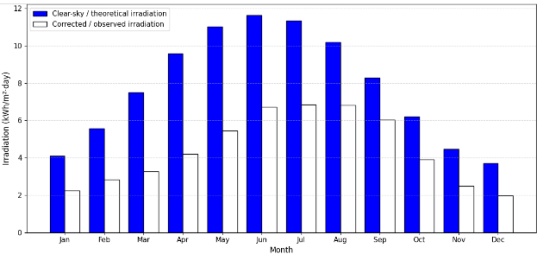
Figure 2. Monthly clear-sky and corrected irradiation for Fergana city.
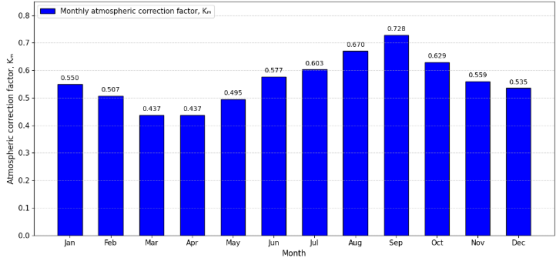
Figure 2 compares the theoretical clear-sky irradiation with the corrected irradiation values for the Fergana city case study. The difference between the two datasets demonstrates the effect of seasonal atmospheric attenuation and confirms the need for monthly correction factors in solar-position-based PV energy-yield forecasting. This seasonal contrast confirms that annual-average radiation indicators alone are insufficient for reliable PV energy-yield forecasting in the Fergana region. The use of monthly atmospheric correction factors improved the physical realism of the model by adapting the theoretical clear-sky radiation curve to the actual seasonal radiation regime. The correction coefficients reported in
Table 3 varied considerably throughout the year, with the lowest values occurring in March and April and the highest value in September, showing that atmospheric attenuation cannot be represented by a constant annual coefficient.
Figure 3. Monthly atmospheric correction factors for the Fergana city case study.
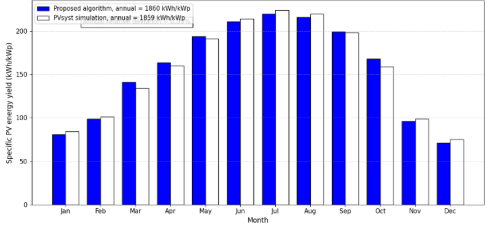
Figure 3 illustrates the monthly atmospheric correction factor K
m for the Fergana city case study. The results show that atmospheric attenuation varies substantially during the year and cannot be represented by a single annual coefficient. The lowest values were observed in March and April, while the highest value was obtained in September, confirming the importance of seasonal correction in solar-position-based PV energy-yield forecasting. After the corrected irradiance was transposed onto the tilted PV plane and adjusted for bifacial rear-side contribution and NOCT-based thermal effects, the predicted monthly PV energy yield followed the expected seasonal pattern. The highest specific yield was obtained in July, reaching approximately 220 kWh/kWp, while June and August also exceeded 210 kWh/kWp. The lowest monthly yield was obtained in December, at approximately 71 kWh/kWp.
Figure 4. Monthly specific PV energy yield predicted by the proposed analytical algorithm and simulated in PVsyst for the Fergana city case study.
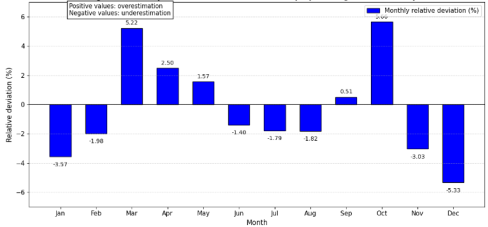
Figure 4 compares the monthly specific PV energy yield predicted by the proposed analytical algorithm with the corresponding PVsyst simulation results. The close agreement between the two datasets confirms that the proposed method can reproduce the seasonal distribution of PV generation with acceptable accuracy. The use of PVsyst as the reference simulation environment is justified by its established engineering modelling framework
| [17] | PVsyst SA. PVsyst documentation: Physical models, irradiation transposition, bifacial systems and performance ratio. Available at:
https://www.pvsyst.com/help/ Accessed: 06 May 2026. |
[17]
and by previous studies evaluating its accuracy in reproducing outdoor PV yield performance
| [18] | Guerrero, I., del Cañizo, C., & Yu, Y. (2025). Accuracy of PVSyst Simulations in the Reproduction of the Yield Performance of Multicrystalline, Monocrsytalline and Monocasting Modules in Outdoor Conditions. SiliconPV Conference Proceedings, 2. https://doi.org/10.52825/siliconpv.v2i.1299 |
[18]
. The largest deviations occur in transitional months, where atmospheric variability and diffuse-radiation uncertainty are more pronounced. The proposed algorithm predicted an annual specific yield of 1860 kWh/kWp, while the PVsyst reference simulation gave 1859 kWh/kWp, corresponding to an annual absolute difference of only 1 kWh/kWp and a relative deviation of approximately 0.05%. Since annual agreement alone may conceal compensating monthly errors, the monthly validation results in
Table 5 were also analysed. The maximum positive deviations occurred in March and October, reaching approximately +5.22% and +5.66%, respectively, while the largest negative deviation was observed in December, at approximately −5.33%. These discrepancies are physically reasonable because transitional months are characterised by higher variability in cloudiness, diffuse-radiation fraction and atmospheric transparency.
Figure 5. Monthly relative deviation between the proposed analytical algorithm and PVsyst for the Fergana city case study.
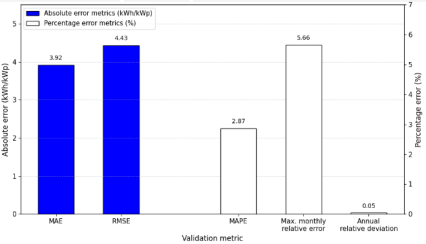
Figure 5 presents the monthly relative deviation between the proposed analytical algorithm and the PVsyst reference simulation. The results show that the monthly deviations remain within an acceptable range, with the highest positive deviations observed in March and October and the largest negative deviation observed in December. This pattern confirms that the main discrepancies occur during transitional months, when atmospheric variability and diffuse-radiation uncertainty are more pronounced.
The use of several validation indicators is consistent with recommended practice in solar-power forecasting assessment, where a single metric may not fully describe model performance across seasonal time scales
. The error metrics reported in
Table 6 further confirm the reliability of the proposed method: the mean absolute error was 3.92 kWh/kWp, the root mean square error was 4.43 kWh/kWp, and the mean absolute percentage error was 2.87%. The mean bias error was close to zero, indicating that the model does not have a significant systematic tendency to overestimate or underestimate monthly PV generation.
Figure 6 summarizes the validation error metrics of the proposed analytical algorithm. The MAE and RMSE values indicate that the absolute monthly deviations remain moderate, while the MAPE value confirms acceptable monthly-scale accuracy.
Figure 6. Summary of validation error metrics for the proposed analytical algorithm compared with the PVsyst reference simulation.
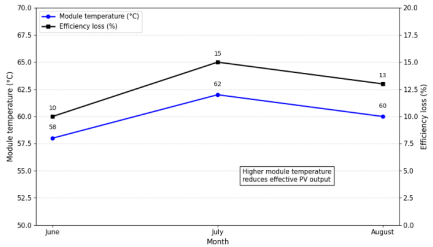
The very low annual relative deviation shows that the proposed method reproduces the annual PV energy yield with high agreement relative to the PVsyst reference simulation. The temperature-correction component had a noticeable effect during the summer months. Although June, July and August provided the highest irradiance levels, elevated module temperature reduced the electrical conversion efficiency; according to the model assumptions, the thermal derating effect may reach approximately 10–15% relative to Standard Test Conditions.
Figure 7. Estimated influence of module temperature on PV performance during summer months for the Fergana city case study.
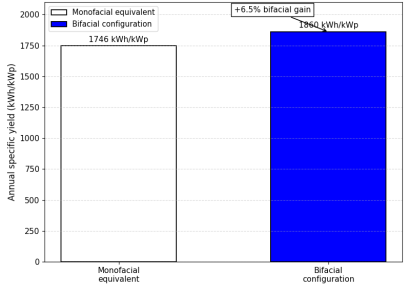
Figure 7 illustrates the estimated influence of module temperature on PV performance during the summer months. The results show that although solar radiation is highest in June–August, the operating temperature of the module also rises significantly, causing thermal derating of electrical efficiency. This behavior is consistent with previous studies showing that module temperature and heat dissipation conditions significantly influence PV energy yield
| [15] | Leonardi, M., Corso, R., Milazzo, R. G., Connelli, C., Foti, M., Gerardi, C., Bizzarri, F., Privitera, S. M. S., & Lombardo, S. A. (2022). The Effects of Module Temperature on the Energy Yield of Bifacial Photovoltaics: Data and Model. Energies, 15(1), 22. https://doi.org/10.3390/en15010022 |
| [16] | Pretorius, J. and Nielsen, S. (2025), Understanding Heat Dissipation Factors for Fixed-Tilt and Single-Axis Tracked Open-Rack Photovoltaic Modules: Experimental Insights. Prog Photovolt Res Appl, 33: 326-343.
https://doi.org/10.1002/pip.3852 |
| [22] | Aoun, N. (2022). Methodology for predicting the PV module temperature based on actual and estimated weather data. Energy Conversion and Management: X, 14, 100182.
https://doi.org/10.1016/j.ecmx.2022.100182 |
[15, 16, 22]
. This confirms that irradiance-only forecasting would overestimate summer energy generation unless module-temperature effects are explicitly included. The bifacial correction also increased the estimated annual yield compared with a monofacial equivalent. For the adopted ground albedo of ρ = 0.25, the rear-side contribution increased annual generation by approximately 5–8%, confirming that bifacial gain should not be ignored in annual PV yield assessment.
Figure 8 compares the annual specific energy yield of the bifacial PV configuration with a monofacial equivalent. The results show that rear-side irradiance increases the annual yield by approximately 6.5%, which falls within the estimated 5–8% bifacial gain range. This confirms that rear-side generation should be included in annual PV energy-yield forecasting, especially when bifacial modules are used. The obtained bifacial gain is physically reasonable because rear-side generation is governed by albedo, rear irradiance distribution, view factor and system geometry
| [13] | d’Alessandro, V., Daliento, S., Dhimish, M., & Guerriero, P. (2024). Albedo Reflection Modeling in Bifacial Photovoltaic Modules. Solar, 4(4), 660-673.
https://doi.org/10.3390/solar4040031 |
| [14] | Campos, R. A., Braga, M., Pires, A. M., Hohmann, M., Ovaitt, S., & Rüther, R. (2025). Comparative analysis of rear irradiance modeling methods for bifacial PV systems on single-axis trackers under varying albedo conditions. Solar Energy, 302, 114007.
https://doi.org/10.1016/j.solener.2025.114007 |
[13, 14]
.
Figure 8. Contribution of bifacial rear-side generation to annual PV energy yield for the Fergana city case study.

Overall, the results show that the proposed algorithm provides an engineering-grade approximation of PV energy generation for the Fergana city case study by combining deterministic solar-position calculations, monthly atmospheric correction, tilted-plane irradiance transposition, bifacial rear-side gain and NOCT-based thermal derating. The remaining deviations relative to PVsyst are mainly associated with simplified diffuse-radiation modelling and the use of monthly average atmospheric correction factors rather than fully stochastic hourly meteorological sequences; therefore, further improvement should focus on higher-resolution atmospheric inputs, more advanced diffuse-radiation transposition and detailed bifacial irradiance modelling. The remaining deviations relative to PVsyst are mainly associated with simplified diffuse-radiation modelling
| [3] | Perez, R., Seals, R., Ineichen, P., Stewart, R., & Menicucci, D. (1987). A new simplified version of the Perez diffuse irradiance model for tilted surfaces. Solar Energy, 39(3), 221–231.
https://doi.org/10.1016/S0038-092X(87)80031-2 |
[3]
, clearness-index-based decomposition
| [2] | Erbs, D. G., Klein, S. A., & Duffie, J. A. (1982). Estimation of the diffuse radiation fraction for hourly, daily and monthly-average global radiation. Solar Energy, 28(4), 293–302.
https://doi.org/10.1016/0038-092X(82)90302-4 |
[2]
, simplified rear-side bifacial representation
| [13] | d’Alessandro, V., Daliento, S., Dhimish, M., & Guerriero, P. (2024). Albedo Reflection Modeling in Bifacial Photovoltaic Modules. Solar, 4(4), 660-673.
https://doi.org/10.3390/solar4040031 |
| [14] | Campos, R. A., Braga, M., Pires, A. M., Hohmann, M., Ovaitt, S., & Rüther, R. (2025). Comparative analysis of rear irradiance modeling methods for bifacial PV systems on single-axis trackers under varying albedo conditions. Solar Energy, 302, 114007.
https://doi.org/10.1016/j.solener.2025.114007 |
[13, 14]
, empirical module-temperature estimation
| [21] | Ross, R. G. (1976). Interface design considerations for terrestrial solar cell modules. Proceedings of the 12th IEEE Photovoltaic Specialists Conference, 15-18 November 1976, Baton Rouge, LA, 1976, pp, 801-806. |
| [22] | Aoun, N. (2022). Methodology for predicting the PV module temperature based on actual and estimated weather data. Energy Conversion and Management: X, 14, 100182.
https://doi.org/10.1016/j.ecmx.2022.100182 |
[21, 22]
, and the difference between the proposed analytical model and the detailed PVsyst simulation framework
| [17] | PVsyst SA. PVsyst documentation: Physical models, irradiation transposition, bifacial systems and performance ratio. Available at:
https://www.pvsyst.com/help/ Accessed: 06 May 2026. |
[17]
.