
The effectiveness of Aloe Vera (AV) gum extract as a corrosion-inhibiting and self-healing agent in alkyd-based coatings was investigated in the present study with the aim of developing environmentally friendly protective coatings. To identify the active chemical constituents responsible for corrosion inhibition, phytochemical screening of the AV gum extract was carried out and revealed the presence of bioactive compounds capable of enhancing coating performance. In this work, both urea-formaldehyde (UF) and melamine-formaldehyde (MF) resins were employed as wall materials for the encapsulation of the AV gum extract through microencapsulation techniques. The prepared microcapsules were characterized using Fourier Transform Infrared Spectroscopy (FTIR) to confirm successful encapsulation and the presence of functional groups associated with the extract and polymer matrices. In addition, the surface morphology and dispersion of the microcapsules within the alkyd coating matrix were examined using Scanning Electron Microscopy (SEM). Experimental design analysis and outdoor immersion tests demonstrated that the AV gum extract exhibited remarkable anticorrosion efficiency, improved barrier performance, and effective self-healing capability on damaged or scribed coating surfaces. The coatings containing AV-loaded UF microcapsules showed superior performance compared to MF-based systems. Overall, the study established that Aloe Vera gum extract can serve as an effective, sustainable, and low-cost additive for producing eco-friendly self-healing alkyd-based anticorrosive coatings without reliance on expensive synthetic co-reactants.
| Published in | American Journal of Polymer Science and Technology (Volume 12, Issue 1) |
| DOI | 10.11648/j.ajpst.20261201.11 |
| Page(s) | 1-16 |
| Creative Commons |
This is an Open Access article, distributed under the terms of the Creative Commons Attribution 4.0 International License (http://creativecommons.org/licenses/by/4.0/), which permits unrestricted use, distribution and reproduction in any medium or format, provided the original work is properly cited. |
| Copyright |
Copyright © The Author(s), 2026. Published by Science Publishing Group |
Self-healing, Anti-corrosive, Aloe Vera Gum Extract, Alkyd-based Coatings
Factor | -α | -1 | 0 | 1 | +α |
|---|---|---|---|---|---|
UF-Aloe or MF-Aloe | 0 | 1 | 5 | 9 | 10 |
Days (time) | 7 | 10 | 18 | 25 | 28 |
Characteristic group | MF+Aloe Vera | UF+Aloe Vera | Remarks |
|---|---|---|---|
C=O stretching | 1803 | 1815 | Strong acid halide |
N-H stretching | 3500 | 3450 | Medium primary amide |
O-H bending | 1390 | 1320 | Medium Phenol |
C=O stretching | 1680 | 1650 | Strong secondary amide |
O-H stretching | 3326 | 3316 | Strong carboxylic acid |
C-H stretching | 2855 | 2922 | CH2 group |
Run | A: MF-Aloe | B: Time | weight loss | |
|---|---|---|---|---|
mg | days | mg | Residual | |
1 | 5 | 18 | 0.089 | -0.0002 |
2 | 0 | 18 | 0.248 | -0.0008 |
3 | 9 | 10 | 0.067 | -0.0015 |
4 | 5 | 18 | 0.089 | -0.0006 |
5 | 5 | 18 | 0.089 | -0.0008 |
6 | 10 | 18 | 0.053 | 0.0007 |
7 | 1 | 10 | 0.184 | -0.0006 |
8 | 5 | 18 | 0.088 | -0.0018 |
9 | 9 | 25 | 0.062 | 0.0007 |
10 | 1 | 25 | 0.256 | 0.0017 |
11 | 5 | 18 | 0.093 | 0.0034 |
12 | 5 | 28 | 0.137 | -0.0017 |
13 | 5 | 7 | 0.097 | 0.0016 |
Run | A: UF-Aloa | B: Time | weight loss | |
|---|---|---|---|---|
mg | days | mg | Residual | |
1 | 5 | 18 | 0.072 | 0.0002 |
2 | 0 | 18 | 0.154 | 0.0000 |
3 | 9 | 10 | 0.037 | 0.0004 |
4 | 5 | 18 | 0.071 | -0.0001 |
5 | 5 | 18 | 0.072 | 0.0003 |
6 | 10 | 18 | 0.048 | -0.0002 |
7 | 1 | 10 | 0.124 | 0.0002 |
8 | 5 | 18 | 0.071 | -0.0003 |
9 | 9 | 25 | 0.059 | -0.0001 |
10 | 1 | 25 | 0.140 | -0.0002 |
11 | 5 | 18 | 0.072 | -0.0000 |
12 | 5 | 28 | 0.084 | 0.0002 |
13 | 5 | 7 | 0.057 | -0.0004 |
Source | Std. Dev. | R² | Adjusted R² | Predicted R² | PRESS | |
|---|---|---|---|---|---|---|
Linear | 0.0320 | 0.8148 | 0.7777 | 0.6769 | 0.0179 | |
2FI | 0.0312 | 0.8418 | 0.7890 | 0.5922 | 0.0225 | |
Quadratic | 0.0020 | 0.9995 | 0.9991 | 0.9978 | 0.0001 | Suggested |
Cubic | 0.0018 | 0.9997 | 0.9993 | 0.9995 | 0.0000 | Aliased |
Source | Std. Dev. | R² | Adjusted R² | Predicted R² | PRESS | |
|---|---|---|---|---|---|---|
Linear | 0.0135 | 0.8809 | 0.8571 | 0.7803 | 0.0033 | |
2FI | 0.0142 | 0.8814 | 0.8419 | 0.7071 | 0.0045 | |
Quadratic | 0.0003 | 0.9999 | 0.9999 | 0.9997 | 4.692E-06 | Suggested |
Cubic | 0.0002 | 1.0000 | 1.0000 | 0.9997 | 4.022E-06 | Aliased |
Source | Sum of Squares | df | Mean Square | F-value | p-value | |
|---|---|---|---|---|---|---|
Model | 0.0551 | 5 | 0.0110 | 2641.15 | < 0.0001 | significant |
A-MF-Aloa | 0.0425 | 1 | 0.0425 | 10195.32 | < 0.0001 | |
B-Days | 0.0019 | 1 | 0.0019 | 458.18 | < 0.0001 | |
AB | 0.0015 | 1 | 0.0015 | 355.10 | < 0.0001 | |
A² | 0.0076 | 1 | 0.0076 | 1815.46 | < 0.0001 | |
B² | 0.0014 | 1 | 0.0014 | 346.87 | < 0.0001 | |
Residual | 0.0000 | 7 | 4.169E-06 | |||
Lack of Fit | 0.0000 | 3 | 4.662E-06 | 1.23 | 0.4092 | not significant |
Pure Error | 0.0000 | 4 | 3.800E-06 | |||
Cor Total | 0.0551 | 12 | ||||
Adeq precision | 145.47 | |||||
Source | Sum of Squares | df | Mean Square | F-value | p-value | |
|---|---|---|---|---|---|---|
Model | 0.0152 | 5 | 0.0030 | 34681.87 | < 0.0001 | significant |
A-UF-Aloa | 0.0127 | 1 | 0.0127 | 1.448E+05 | < 0.0001 | |
B-Days | 0.0007 | 1 | 0.0007 | 8293.41 | < 0.0001 | |
AB | 8.367E-06 | 1 | 8.367E-06 | 95.24 | < 0.0001 | |
A² | 0.0018 | 1 | 0.0018 | 20425.58 | < 0.0001 | |
B² | 7.730E-08 | 1 | 7.730E-08 | 0.8800 | 0.3794 | |
Residual | 6.149E-07 | 7 | 8.784E-08 | |||
Lack of Fit | 3.869E-07 | 3 | 1.290E-07 | 2.26 | 0.2233 | not significant |
Pure Error | 2.280E-07 | 4 | 5.700E-08 | |||
Cor Total | 0.0152 | 12 | ||||
Adeq precision | 320.55 | |||||
AV | Aloe Vera |
UF | Urea Formaldehyde |
MF | Melanin Formaldehyde |
| [1] | Hasnat, A., A. Moheman, and M. A. Usmani, Alkyd resins: Versatile bio-based coating materials, in Vegetable Oil-Based Polymers and their Surface Applications. 2024, Elsevier. p. 93-107. |
| [2] | Ahmed, S., Alkyds from vegetable oils for surface application, in Vegetable Oil-Based Polymers and their Surface Applications. 2024, Elsevier. p. 33-50. |
| [3] | Ifijen, I. H., et al., Review on solvents based alkyd resins and water borne alkyd resins: impacts of modification on their coating properties. Chemistry Africa, 2022. 5(2): p. 211-225. |
| [4] | Ghani, R. S. M., A review of different barriers and additives to reduce boron movement in boron dual treated wood. Progress in Organic Coatings, 2021. 160: p. 106523. |
| [5] | Holmberg, K., Applications of surfactants in paints, in Surfactants in Polymers, Coatings, Inks and Adhesives. 2020, Blackwell. p. 152-179. |
| [6] | Kyei, S. K., et al., Natural polyhydroxy resins in surface coatings: a review. Journal of Coatings Technology and Research, 2022. 19(3): p. 775-794. |
| [7] | Arukalam, I. O., et al., Inhibition of sulfate-reducing bacteria influenced corrosion on hydrophobic poly (dimethylsiloxane) coatings. Journal of Materials Science & Technology, 2020. 52: p. 198-206. |
| [8] | Yang, Y., et al., Construction of iodine vacancy-rich BiOI/Ag@ AgI Z-scheme heterojunction photocatalysts for visible-light-driven tetracycline degradation: transformation pathways and mechanism insight. Chemical Engineering Journal, 2018. 349: p. 808-821. |
| [9] | Nahlé, A., et al., UAE neem extract as a corrosion inhibitor for carbon steel in HCl solution. International Journal of Corrosion, 2010. 2010. |
| [10] | Kasshanna, S. and P. Rostron, Novel synthesis and characterization of vegetable oil derived corrosion inhibitors. J. Mater. Environ. Sci, 2017. 8(12): p. 4292-4300. |
| [11] | Kumar, N., et al., Characterization of aloe vera gel-based edible coating with orange peel essential oil and its preservation effects on button mushroom (Agaricus bisporus). Food and Bioprocess Technology, 2023. 16(12): p. 2877-2897. |
| [12] | Minwuyelet, T., M. MogesSewalem, and M. Gashe, Review on therapeutic uses of Aloe vera. Global J Pharmacol, 2017. 11(2): p. 14-20. |
| [13] | Pandey, A. and S. Singh, Aloe Vera: A Systematic Review of its Industrial and Ethno-Medicinal Efficacy. International Journal of Pharmaceutical Research & Allied Sciences, 2016. 5(1). |
| [14] | YADAV, A., U. SINGH, and R. CHARAN, 1. Texture analysis of aleo vera-a review by anuj yadav, upendra singh and ravi charan. International research journal of chemistry, 2018. 20: p. 1 to 8-1 to 8. |
| [15] | Adlakha, K., B. Koul, and A. Kumar, Value-added products of Aloe species: Panacea to several maladies. South African Journal of Botany, 2021. |
| [16] | Verma, C., et al., Principles and theories of green chemistry for corrosion science and engineering: design and application. Green Chemistry, 2024. 26(8): p. 4270-4357. |
| [17] | Akhoondinasab, M. R., M. Akhoondinasab, and M. Saberi, Comparison of healing effect of aloe vera extract and silver sulfadiazine in burn injuries in experimental rat model. World journal of plastic surgery, 2014. 3(1): p. 29. |
| [18] | Liang, J., et al., Aloe vera: a medicinal plant used in skin wound healing. Tissue Engineering Part B: Reviews, 2021. 27(5): p. 455-474. |
| [19] | Jamil, M., et al., Review effect of aloe vera on wound healing: Review: Effect of aloe vera on wound healing. Biological Sciences-PJSIR, 2020. 63(1): p. 48-61. |
| [20] | Kashanian, M., et al., Evaluation of the effect of vitamin E on pelvic pain reduction in women suffering from primary dysmenorrhea. The Journal of reproductive medicine, 2013. 58(1-2): p. 34-38. |
| [21] | Oryan, A., S. Monazzah, and A. Bigham-Sadegh, Bone injury and fracture healing biology. Biomedical and environmental sciences, 2015. 28(1): p. 57-71. |
| [22] | Eghdampour, F., et al., The impact of Aloe vera and calendula on perineal healing after episiotomy in primiparous women: a randomized clinical trial. Journal of caring sciences, 2013. 2(4): p. 279. |
| [23] | Somboonwong, J., et al., Therapeutic effects of Aloe vera on cutaneous microcirculation and wound healing in second degree burn model in rats. Journal of the Medical Association of Thailand= Chotmaihet thangphaet, 2000. 83(4): p. 417-425. |
| [24] | Adil, M. F., et al., Zinc alleviates cadmium toxicity by modulating photosynthesis, ROS homeostasis, and cation flux kinetics in rice. Environmental Pollution, 2020. 265: p. 114979. |
| [25] | Ergul, A., et al., Impact of comorbidities on acute injury and recovery in preclinical stroke research: focus on hypertension and diabetes. Translational stroke research, 2016. 7: p. 248-260. |
| [26] | Hajhashemi, V., A. Ghannadi, and A. Heidari, Anti-inflammatory and wound healing activities of Aloe littoralis in rats. Research in Pharmaceutical Sciences, 2012. 7(2): p. 73. |
| [27] | Surjushe, A., R. Vasani, and D. Saple, Aloe vera: a short review. Indian journal of dermatology, 2008. 53(4): p. 163. |
| [28] | Heidarieh, M., et al., Effects of dietary Aloe vera on growth performance, skin and gastrointestine morphology in rainbow trout (Oncorhynchus mykiss). Turkish Journal of Fisheries and Aquatic Sciences, 2013. 13(2). |
| [29] | Mehdipour, M., B. Ramezanzadeh, and S. Arman, Electrochemical noise investigation of Aloe plant extract as green inhibitor on the corrosion of stainless steel in 1 M H2SO4. Journal of Industrial and Engineering Chemistry, 2015. 21: p. 318-327. |
| [30] | Ardakani, E. K., E. Kowsari, and A. Ehsani, Imidazolium-derived polymeric ionic liquid as a green inhibitor for corrosion inhibition of mild steel in 1.0 M HCl: Experimental and computational study. Colloids and Surfaces A: Physicochemical and Engineering Aspects, 2020. 586: p. 124195. |
| [31] | Benzidia, B., et al., Investigation of green corrosion inhibitor based on Aloe vera (L.) Burm. F. for the protection of bronze B66 in 3% NaCl. Anal. Bioanal. Electrochem., 2019. 11: p. 165-177. |
| [32] | Vashi, R. and H. Chaudhari, The study of aloe-vera gel extract as green corrosion inhibitor for mild steel in acetic acid. Int J Innov Res Sci Eng Tech, 2017. 6(11): p. 22081-22091. |
| [33] | Ayoola, A., et al., Inhibitive corrosion performance of the eco-friendly aloe vera in acidic media of mild and stainless steels. Journal of Bio-and Tribo-Corrosion, 2020. 6: p. 1-13. |
| [34] | Jithendra, P., et al., Biopolymer collagen-chitosan scaffold containing Aloe vera for chondrogenic efficacy on cartilage tissue engineering. International Journal of Biological Macromolecules, 2023. 248: p. 125948. |
| [35] | Kaczmarek-Szczepańska, B., et al., Development and Characterization of Biocompatible Chitosan-Aloe Vera Films Functionalized with Gluconolactone and Sorbitol for Advanced Wound Healing Applications. ACS Applied Materials & Interfaces, 2025. |
| [36] | Al–Asadi, A. A., et al., Effect of an Aloe Vera As a Natural Inhibitor on The Corrosion of Mild Steel in 1 wt.% NaCl. Int J Eng Technol, 2015. 2(06). |
| [37] | Ong, G., R. Kasi, and R. Subramaniam, A review on plant extracts as natural additives in coating applications. Progress in Organic Coatings, 2021. 151: p. 106091. |
| [38] | Lu, T., et al., Advances in controlled release of microcapsules and promising applications in self-healing of asphalt materials. Journal of Cleaner Production, 2021. 294: p. 126270. |
| [39] | Xiao, Z., et al., Application of microencapsulation technology in silk fibers. Journal of Applied Polymer Science, 2022. 139(25): p. e52351. |
| [40] | Arukalam, I. O., I. O. Madu, and E. Y. Ishidi, High performance characteristics of Lupinus arboreus gum extract as self-healing and corrosion inhibition agent in epoxy-based coating. Progress in Organic Coatings, 2021. 151: p. 106095. |
| [41] | Njoku, C. N., et al., Optimizing maleic anhydride microcapsules size for use in self‐healing epoxy‐based coatings for corrosion protection of aluminum alloy. Materials and Corrosion, 2018. 69(9): p. 1257-1267. |
| [42] | Arukalam, I. O., et al., Exploitation of natural gum exudates as green fillers in self-healing corrosion-resistant epoxy coatings. Journal of Polymer Research, 2020. 27: p. 1-12. |
| [43] | Jadhav, R. S., D. G. Hundiwale, and P. P. Mahulikar, Synthesis and characterization of phenol–formaldehyde microcapsules containing linseed oil and its use in epoxy for self‐healing and anticorrosive coating. Journal of applied polymer science, 2011. 119(5): p. 2911-2916. |
| [44] | Atkin, R., et al., Preparation of aqueous core/polymer shell microcapsules by internal phase separation. Macromolecules, 2004. 37(21): p. 7979-7985. |
| [45] | Ladeira, B., C. Custodio, and J. Mano, Core-shell microcapsules: Biofabrication and potential applications in tissue engineering and regenerative medicine. Biomaterials Science, 2022. |
| [46] | Rajeswari, R., et al., Aloe vera: the miracle plant its medicinal and traditional uses in India. Journal of Pharmacognosy and Phytochemistry, 2012. 1(4): p. 118-124. |
| [47] | Furkan, M., et al., Aloe emodin, an anthroquinone from Aloe vera acts as an anti aggregatory agent to the thermally aggregated hemoglobin. Spectrochimica Acta Part A: Molecular and Biomolecular Spectroscopy, 2017. 179: p. 188-193. |
| [48] | Akev, N., E. Candoken, and S. E. Kuruca, Comparative study on the anticancer drug potential of a lectin purified from aloe vera and aloe-emodin. Asian Pacific Journal of Cancer Prevention: APJCP, 2020. 21(1): p. 99. |
| [49] | Mandrioli, R., et al., Determination of aloe emodin in Aloe vera extracts and commercial formulations by HPLC with tandem UV absorption and fluorescence detection. Food Chemistry, 2011. 126(1): p. 387-393. |
| [50] | Reza Nazifi, S. M., et al., Antioxidant properties of Aloe vera components: a DFT theoretical evaluation. Free Radical Research, 2019. 53(8): p. 922-931. |
| [51] | Oyeoka, H. C., et al., Packaging and degradability properties of polyvinyl alcohol/gelatin nanocomposite films filled water hyacinth cellulose nanocrystals. Journal of Bioresources and Bioproducts, 2021. 6(2): p. 168-185. |
| [52] | Li, X., et al., Recent progress in hydrogels combined with phototherapy for bacterial infection: A review. International Journal of Biological Macromolecules, 2024: p. 133375. |
APA Style
Madu, I. O., Arukalam, I. O., Oyeoka, H. C., Okpechi, V. U., Madu, M. C., et al. (2026). Exploration of Aloe Vera Gel Extract as a Bio-based Additive for Self-healing and Anti-corrosive Performance in Alkyd Resin Coatings. American Journal of Polymer Science and Technology, 12(1), 1-16. https://doi.org/10.11648/j.ajpst.20261201.11
ACS Style
Madu, I. O.; Arukalam, I. O.; Oyeoka, H. C.; Okpechi, V. U.; Madu, M. C., et al. Exploration of Aloe Vera Gel Extract as a Bio-based Additive for Self-healing and Anti-corrosive Performance in Alkyd Resin Coatings. Am. J. Polym. Sci. Technol. 2026, 12(1), 1-16. doi: 10.11648/j.ajpst.20261201.11
@article{10.11648/j.ajpst.20261201.11,
  author = {Izuchukwu Odinakachi Madu and Innocent Okechi Arukalam and Henry Chukwuka Oyeoka and Victor Ugochukwu Okpechi and Miracle Chisom Madu and Remy Uche},
  title = {Exploration of Aloe Vera Gel Extract as a Bio-based Additive for Self-healing and Anti-corrosive Performance in Alkyd Resin Coatings},
  journal = {American Journal of Polymer Science and Technology},
  volume = {12},
  number = {1},
  pages = {1-16},
  doi = {10.11648/j.ajpst.20261201.11},
  url = {https://doi.org/10.11648/j.ajpst.20261201.11},
  eprint = {https://article.sciencepublishinggroup.com/pdf/10.11648.j.ajpst.20261201.11},
  abstract = {The effectiveness of Aloe Vera (AV) gum extract as a corrosion-inhibiting and self-healing agent in alkyd-based coatings was investigated in the present study with the aim of developing environmentally friendly protective coatings. To identify the active chemical constituents responsible for corrosion inhibition, phytochemical screening of the AV gum extract was carried out and revealed the presence of bioactive compounds capable of enhancing coating performance. In this work, both urea-formaldehyde (UF) and melamine-formaldehyde (MF) resins were employed as wall materials for the encapsulation of the AV gum extract through microencapsulation techniques. The prepared microcapsules were characterized using Fourier Transform Infrared Spectroscopy (FTIR) to confirm successful encapsulation and the presence of functional groups associated with the extract and polymer matrices. In addition, the surface morphology and dispersion of the microcapsules within the alkyd coating matrix were examined using Scanning Electron Microscopy (SEM). Experimental design analysis and outdoor immersion tests demonstrated that the AV gum extract exhibited remarkable anticorrosion efficiency, improved barrier performance, and effective self-healing capability on damaged or scribed coating surfaces. The coatings containing AV-loaded UF microcapsules showed superior performance compared to MF-based systems. Overall, the study established that Aloe Vera gum extract can serve as an effective, sustainable, and low-cost additive for producing eco-friendly self-healing alkyd-based anticorrosive coatings without reliance on expensive synthetic co-reactants.},
 year = {2026}
}
TY  - JOUR
T1  - Exploration of Aloe Vera Gel Extract as a Bio-based Additive for Self-healing and Anti-corrosive Performance in Alkyd Resin Coatings
AU  - Izuchukwu Odinakachi Madu
AU  - Innocent Okechi Arukalam
AU  - Henry Chukwuka Oyeoka
AU  - Victor Ugochukwu Okpechi
AU  - Miracle Chisom Madu
AU  - Remy Uche
Y1  - 2026/06/04
PY  - 2026
N1  - https://doi.org/10.11648/j.ajpst.20261201.11
DO  - 10.11648/j.ajpst.20261201.11
T2  - American Journal of Polymer Science and Technology
JF  - American Journal of Polymer Science and Technology
JO  - American Journal of Polymer Science and Technology
SP  - 1
EP  - 16
PB  - Science Publishing Group
SN  - 2575-5986
UR  - https://doi.org/10.11648/j.ajpst.20261201.11
AB  - The effectiveness of Aloe Vera (AV) gum extract as a corrosion-inhibiting and self-healing agent in alkyd-based coatings was investigated in the present study with the aim of developing environmentally friendly protective coatings. To identify the active chemical constituents responsible for corrosion inhibition, phytochemical screening of the AV gum extract was carried out and revealed the presence of bioactive compounds capable of enhancing coating performance. In this work, both urea-formaldehyde (UF) and melamine-formaldehyde (MF) resins were employed as wall materials for the encapsulation of the AV gum extract through microencapsulation techniques. The prepared microcapsules were characterized using Fourier Transform Infrared Spectroscopy (FTIR) to confirm successful encapsulation and the presence of functional groups associated with the extract and polymer matrices. In addition, the surface morphology and dispersion of the microcapsules within the alkyd coating matrix were examined using Scanning Electron Microscopy (SEM). Experimental design analysis and outdoor immersion tests demonstrated that the AV gum extract exhibited remarkable anticorrosion efficiency, improved barrier performance, and effective self-healing capability on damaged or scribed coating surfaces. The coatings containing AV-loaded UF microcapsules showed superior performance compared to MF-based systems. Overall, the study established that Aloe Vera gum extract can serve as an effective, sustainable, and low-cost additive for producing eco-friendly self-healing alkyd-based anticorrosive coatings without reliance on expensive synthetic co-reactants.
VL  - 12
IS  - 1
ER  -
Department of Polymer and Textile Engineering, Nnamdi Azikiwe University, Awka, Nigeria
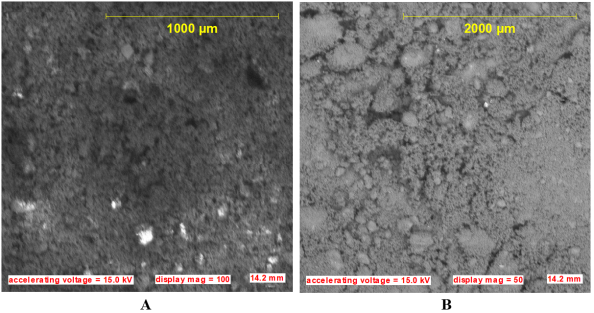
Figure 1. SEM images of (A) MF+Aloe vera and (B) UF+Aloe vera.
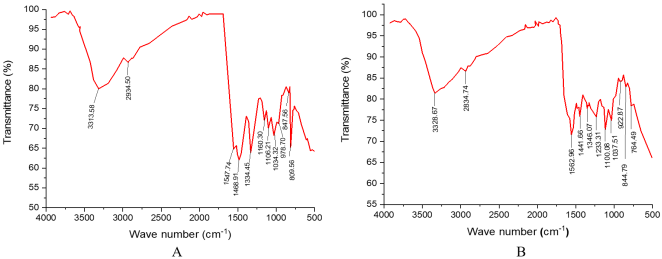
Figure 2. FTIR Spectra of (A) UF+Aloe Vera and (B) MF+Aloe Vera.
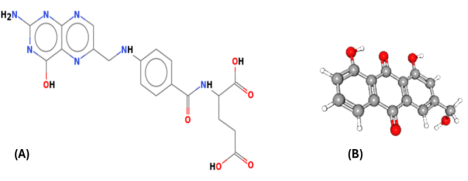
Figure 3. (A) Folic acid and (B) 1, 8-dihydroxy-3-(hydroxymethyl) anthracene-9, 10-dione (Aloe Emodin).
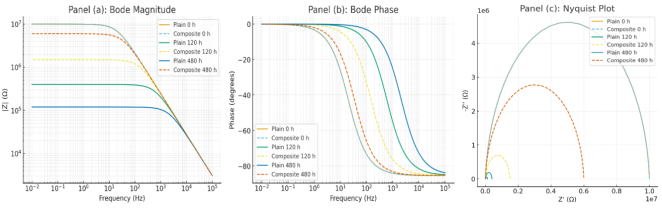
Figure 4. Electrochemical Impedance Spectroscopy (EIS) response of plain and microcapsule-loaded composite coatings after immersion in 3.5 wt% NaCl solution for different exposure times. (a) Bode impedance modulus |Z| as a function of frequency, showing a continuous reduction in low-frequency impedance for the plain coating, while the composite coating retains significantly higher |Z| values at prolonged immersion. (b) Bode phase angle plots illustrating the evolution of dielectric behavior; the composite coating maintains a broader and more stable capacitive region compared to the plain coating. (c) Nyquist plots indicating a progressive decrease in charge-transfer resistance (R₍ct₎) for the plain coating, whereas the composite coating exhibits an increase in R₍ct₎ at extended immersion times, confirming effective self-healing behavior.
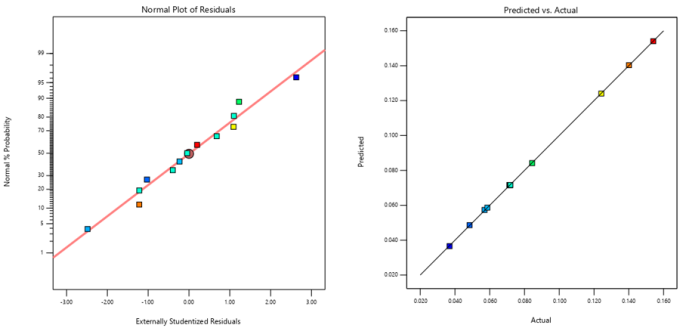
Figure 5. Normal plot and the predicted versus actual values plot for weight loss of UF-Aloe alkyd coatings.
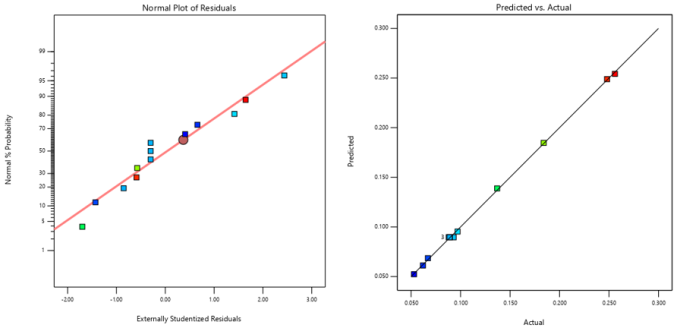
Figure 6. MF-Normal plot and the predicted versus actual values plot for weight loss of MF-Aloe alkyd coatings.
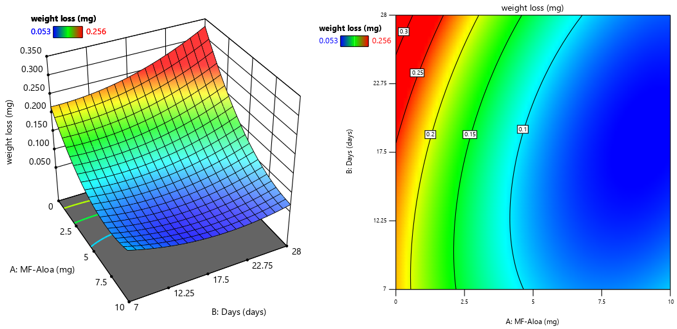
Figure 7. 3D and contour plots showing the effect of MF-Aloe dosage and Time (days) on weight loss of MF-Aloe alkyd coatings.
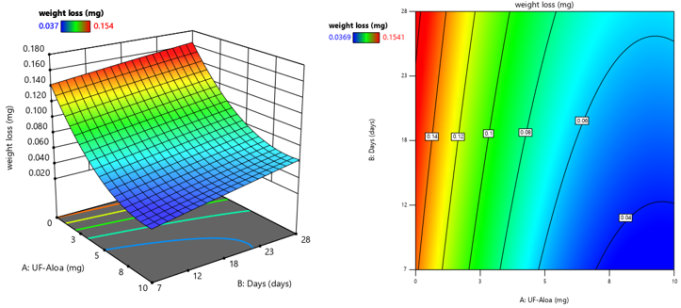
Figure 8. 3D and contour plots showing the effect of UF-Aloe dosage and Time (days) on weight loss of UF-Aloe alkyd coatings.
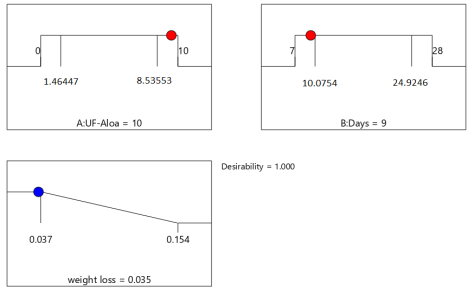
Figure 9. Optimized values of the quadratic model for corrosion weight loss using Aloe Vera extract.
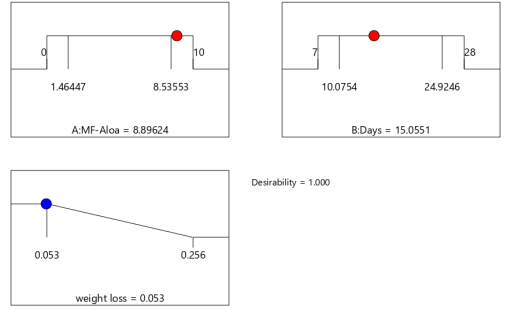
Figure 10. Optimized values of the quadratic model for corrosion weight loss using Aloe Vera extract.
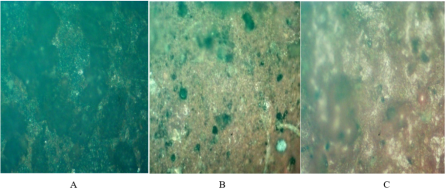
Figure 11. Optical microscopic view of (A) plain coating without microcapsule, (B) MF+Aloe Vera and (C) UF+Aloe Vera of mild steel.
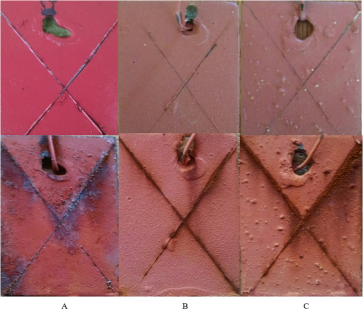
Figure 12. Pictoral image of the (A) plain coating without microcapsule, (B) MF+Aloe Vera and (C) UF+Aloe Vera of mild steel after 30 days of immersion.

Information



 Share This Article
 Twitter
 Linked In
 Facebook
 Copy
Copy Download