Mass immunization by live attenuated vaccines is the primary strategy used by Ethiopia to control major transboundary animal diseases. However, the biological products are sensitive to temperature fluctuations, which can compromise the success of vaccination campaigns. The study established the cold-chain status of veterinary vaccines in Ethiopia. It also identified critical control points (CCPs) amenable to thermal abuse. In addition, it determined the operational impact of cold-chain failures by assessing the relationship between inappropriate vaccine administration and disease outbreaks in vaccinated animals. An audit of cold-chain logistic processes was done by carrying out a retrospective study in Oromia, Amhara, and Somali regions, where 360 Peste des Petits Ruminants (PPR), Newcastle Disease (ND), and Contagious Bovine Pleuropneumonia (CBPP) vaccination campaigns were performed between 2020 and 2025. The study revealed CCPs of cold-chain logistic processes, including extended power cuts at the woreda store without a backup generator, transportation containers without validation, and improper vaccination techniques in the field, for instance, using warm diluent and direct exposure of vaccine vials to UV radiation. Overall cold-chain failure was 35.8%, and it was associated with disease outbreaks in 17.1% percent of herds vaccinated. Moreover, there was a variation in outbreak prevalence between the agro-ecological regions with the highest outbreak prevalence in the Somali region at 27.4%. Maintaining the potency of vaccines requires appropriate arrangements for a cold-chain logistic system. Thus, the main interventions, which will mitigate the risk of vaccine failure, include the use of Solar Direct-Drive refrigerators, temperature monitoring during transportation, education on the impact of UV radiation, and the application of relevant vaccine handling techniques.
This is an Open Access article, distributed under the terms of the Creative Commons Attribution 4.0 International License (http://creativecommons.org/licenses/by/4.0/), which permits unrestricted use, distribution and reproduction in any medium or format, provided the original work is properly cited.
Cold Chain, Vaccine Handling, Disease Eradication, Live Attenuated Vaccines, Veterinary Public Health, Ethiopia
1. Introduction
1.1. Socioeconomic Context of Livestock in Ethiopia
Livestock production plays an important role in sub-Saharan Africa’s agricultural economy, with Ethiopia home to the largest herd of any country on the African mainland. Within Ethiopia, domestic livestock consists of an estimated 70 million cattle, 42 million sheep, 52 million goats, and over 56 million poultry
[1]
Central Statistical Agency (CSA). Agricultural Sample Survey: Report on Livestock and Livestock Characteristics (Private Peasant Holdings). Statistical Bulletin 587, Addis Ababa, Ethiopia; 2021.
. Livestock contributes 17-21% of Ethiopia’s total Gross Domestic Product (GDP) and upwards of 40% of total agricultural GDP while providing valuable foreign exchange through the export of animals and animal products
[2]
Shapiro BI, Gebru G, Desta S, Negassa A, Nigussie K, Aboset G, Mechale H. Ethiopia Livestock Sector Analysis. ILRI Research Report 37, International Livestock Research Institute, Nairobi, Kenya; 2017.
. For smallholder farmers in highland mixed-crop livestock systems and mobile herders in the lowland arid zones, animals represent more than just a source of meat and dairy products. They provide an investment, a safety net, a fertilizer, and a draft animal. As such, animal health underpins food security, child nutrition, and the government’s poverty-reduction strategies
[3]
Gebremedhin B, Ahmed MM, Ehui SK. Economic valuation of livestock production in mixed crop-livestock systems of the Ethiopian highlands. Agric Econ 2005; 33(1): 17-31.
1.2. Threats from Transboundary Animal Diseases (TADs)
Despite tremendous opportunities for growth, Ethiopia’s livestock industry has been ravaged by recurring outbreaks of infectious diseases that are common in animals and sometimes transferable to humans. Most prevalent are Peste des Petits Ruminants, Foot-and-Mouth, Newcastle, and Contagious Bovine Pleuropneumonia, which lead to enormous losses and high mortality rates
[4]
Mekonnen H, Asfaw Y, Edao BM. Major viral and bacterial diseases of ruminants in Ethiopia: Economic impact and national control strategies. Ethiop Vet J 2022; 26(1): 45-62.
. When livestock diseases strike, smallholders bear the heaviest burden—facing shrinking milk and meat yields, losing vital animal power right when fields need plowing, and shouldering heavy emergency care costs while trade restrictions choke market access
[5]
Rich KM, Wanyoike F. An assessment of the economic impacts of transboundary animal diseases on livestock value chains in East Africa. Prev Vet Med 2010; 97(1): 12-25.
. The Ethiopian Ministry of Agriculture, with the support of the State Directory of Animal Health, and in cooperation with other regions and international partners, initiated an annual routine animal immunization program. The majority of the required vaccines are produced locally, mostly by the National Veterinary Institute in Bishoftu, which has been manufacturing over 200 million doses of various livestock vaccines for local use and for export
[6]
Beyene B, Gelaye E, Ayelet G. Current status of veterinary vaccine production, quality assurance, and distribution dynamics in Ethiopia. Prev Vet Med 2020; 178: 104980.
1.3. The Biology and Sensitivity of Live Attenuated Vaccines
Mass immunization procedures known in tropical veterinary medicine practice predominantly comprise the use of live attenuated strains of bacteria and viruses. Compared to inactivated vaccines, live attenuated microorganisms have the advantage to trigger the formation of balanced immune responses (humoral, cellular, and mucosal) and provide the host with long-lasting protection after a single dose of vaccination
[7]
Tadesse G, Lemma A, Fikru R. Immunological mechanisms, memory response, and field efficacy of live attenuated veterinary vaccines. Trop Anim Health Prod 2021; 53(2): 215-224.
. This is achieved due to the ability of live attenuated vaccines to replicate at the site of application and stimulate the immune system similarly to natural pathogens but with reduced virulence
[8]
Pastoret PP, Jones P, Blancou J. Veterinary Vaccinology. Elsevier Science Publishers, Amsterdam, Netherlands; 1997.
[8]
.
Yet, the central weakness of such vaccines is connected to the fragile nature of live viruses and bacteria that comprise them. Inactivated microorganisms and their toxins are typically resistant to environmental conditions, whereas live ones are rather unstable and sensitive to temperature, UV-light, oxidation, and agitation
[9]
World Organisation for Animal Health (WOAH). Manual of Diagnostic Tests and Vaccines for Terrestrial Animals. 10th Edition, WOAH, Paris, France; 2023.
. According to the World Organisation for Animal Health (WOAH), the recommended storage temperature for most veterinary vaccines falls between +2 and+8°C, which necessitates a reliable cold chain between the point of preparation and the target farm
[10]
Kartoglu U, Milstien J. Tools and approaches to ensure cold chain quality and vaccine integrity. Expert Rev Vaccines 2014; 13(11): 1383-1394.
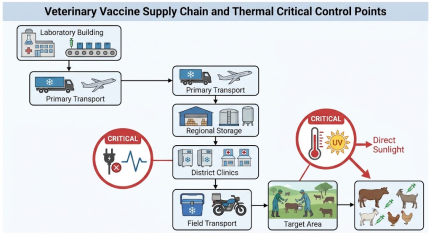
Figure 1. Comprehensive multi-tier cold-chain distribution network and operational workflow of live veterinary vaccines in Ethiopia, highlighting primary vulnerability points along the logistical chain from manufacture to field administration.
1.4. Statement of the Problem and Study Rationale
While significant investments have expanded manufacturing capacity at NVI, maintaining the cold-chain is particularly challenging in remote and environmentally challenging agricultural areas
[11]
Getachew M, Tilahun G. Cold chain logistics and vaccine management challenges in rural pastoralist regions of Horn of Africa. Pastoralism 2022; 12: 14-25.
. Rural areas in Ethiopia also have limited and unpredictable electricity supply to the district storage facilities putting vaccines at risk of prolonged blackouts. Long travel distances to remote pastoral crushing pens, hot ambient temperatures (>30°C) and inconsistent field handling by field staff raises significant concern about the potency of the vaccines actually administered
[12]
Alemayehu D, Kebede A. Field-level operational bottlenecks in livestock vaccination campaigns across East Africa. Vet Med Int 2023; 2023: 567891.
When vaccines are thermally degraded before administration no protective immune response is mounted by the animal leaving vaccinated herds at risk of disease outbreaks even with officially recorded high vaccination rates
[13]
Tesfaye A, Demissie B. Assessment of community animal health worker performance and cold-chain compliance in Oromia, Ethiopia. J Vet Med Anim Health 2024; 16(2): 30-41.
. The objective of this study is to evaluate the cold-chain pipeline through the operational process, measure field handling errors in three major regions in Ethiopia and evaluate the impact cold-chain failure has on disease outbreaks after vaccination.
2. Materials and Methods
2.1. Study Settings and Agro-Ecological Profiling
The research was conducted in three administrative regions of Ethiopia, identified based on agro-ecological, infrastructural and livestock management characteristics that differed at spatial levels and followed established epidemiological spatial criteria
[11]
Getachew M, Tilahun G. Cold chain logistics and vaccine management challenges in rural pastoralist regions of Horn of Africa. Pastoralism 2022; 12: 14-25.
Molla W, Gari G, Girma S. Assessment of cold chain maintenance for livestock vaccines in selected zones of North-Western Ethiopia. BMC Vet Res 2023; 19: 102.
1) Oromia Regional State: This high- and mid-altitude agro-ecological zone is dominated by mixed farming systems. Moderate levels of infrastructural development are recorded, but large numbers of cattle, small ruminants and equids require high vaccine coverage.
2) Amhara Regional State: This highland area has a fragmented pattern of transport infrastructure and is mostly associated with smallholder mixed farming.
3) Somali Regional State: The eastern lowlands of Ethiopia are semi-arid, characterized by extensive pastoral systems. Long distance movements of livestock, limited veterinary services, hot climate (over 35°C) and lack of electricity pose additional challenges.
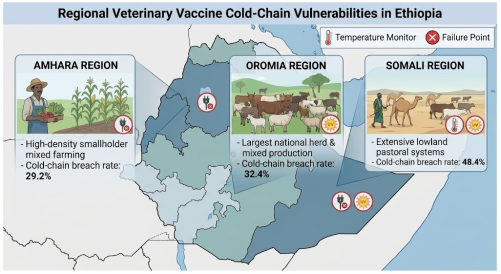
Figure 2. Diagrammatic summary of audited administrative regions in Ethiopia showing primary farming systems and observed cold-chain breach rates
[18]
Molla W, Gari G, Girma S. Assessment of cold chain maintenance for livestock vaccines in selected zones of North-Western Ethiopia. BMC Vet Res 2023; 19: 102.
FAO. Guidelines for Participatory Epidemiology: A Methods Manual for the Assessment of Veterinary Services. Food and Agriculture Organization of the United Nations, Rome, Italy; 2019.
A retrospective operational evaluation combined with structured prospective field audits was conducted between January 2020 and December 2025. A total of 360 official vaccination campaigns targeting PPR, ND, and CBPP were randomly selected for comprehensive cold-chain tracking, following standardized multi-stage cluster sampling protocols for veterinary service evaluations
[10]
Kartoglu U, Milstien J. Tools and approaches to ensure cold chain quality and vaccine integrity. Expert Rev Vaccines 2014; 13(11): 1383-1394.
The audit closely tracked vaccine lots through every link in the supply chain: starting at regional hubs, moving through district distribution clinics, into field transit containers, and ending at local vaccination points managed by animal health officers, technicians, and community workers.
2.3. Evaluation Criteria at Critical Control Points (CCPs)
Field audit teams tracked operations using standardized checklists, calibrated continuous digital thermistors (data loggers) and direct observational rubrics set by international veterinary regulatory standards
[9]
World Organisation for Animal Health (WOAH). Manual of Diagnostic Tests and Vaccines for Terrestrial Animals. 10th Edition, WOAH, Paris, France; 2023.
1) CCP 1: Secondary Warehouse Storage Stability. Continuous daily logbooks were audited for temperature compliance (+2°C to +8°C). Incidents of electrical grid outages over six hours, functional status of back-up diesel generators and the presence of functional Solar Direct-Drive (SDD) systems were documented
[11]
Getachew M, Tilahun G. Cold chain logistics and vaccine management challenges in rural pastoralist regions of Horn of Africa. Pastoralism 2022; 12: 14-25.
Molla W, Gari G, Girma S. Assessment of cold chain maintenance for livestock vaccines in selected zones of North-Western Ethiopia. BMC Vet Res 2023; 19: 102.
2) CCP 2: Transport Insulation and Vehicle Validation. Secondary field transport methods were categorized as validated cold boxes with temperature logging vs. non-validated commercial coolers or cloth bags. Physical condition of ice packs on arrival at field crush pens was recorded
[10]
Kartoglu U, Milstien J. Tools and approaches to ensure cold chain quality and vaccine integrity. Expert Rev Vaccines 2014; 13(11): 1383-1394.
3) CCP 3: Diluent Temperature Control. Temperature of sterile diluents at the moment of reconstitution was recorded. Reconstituting vaccines with diluents stored above +15°Cwas flagged as non-compliant because warm liquids can trigger sudden thermal shock and denature fragile viral proteins
[17]
Francois C, Desta H, Worku A. Evaluation of thermostable live viral vaccines in remote pastoralist livestock systems. Vaccine 2021; 39(14): 1890-1898.
4) CCP 4: Solar Radiation Exposure. Audit teams observed how field staff prepared vaccines on site, specifically checking whether they kept reconstituted vials safely shaded from direct sunlight. Lack of shielding of reconstituted viral vials from direct solar ultraviolet radiation classified as a critical technical error resulting in genomic RNA damage
[14]
Diallo A. Control of Peste des Petits Ruminants: Classical and new-generation vaccines. Dev Biol 2003; 114: 113-119.
[16]
Lytle CD, Sagripanti JL. Predicted inactivation of viruses of relevance to biodefense by solar radiation. J Virol 2005; 79(22): 14244-14252.
5) CCP 5: Time Elapsed Post-Reconstitution. Audit teams monitored the exact time elapsed between dissolving the freeze-dried vaccine pellet and injecting the last dose from the vial, flagging any duration exceeding two hours under field temperatures as non-compliant
[7]
Tadesse G, Lemma A, Fikru R. Immunological mechanisms, memory response, and field efficacy of live attenuated veterinary vaccines. Trop Anim Health Prod 2021; 53(2): 215-224.
To assess downstream field efficacy, reported outbreaks that occurred within 30 to 90 days after the end of the campaign were monitored in audited regions through epidemiological surveillance procedures for Transboundary Animal Diseases
[5]
Rich KM, Wanyoike F. An assessment of the economic impacts of transboundary animal diseases on livestock value chains in East Africa. Prev Vet Med 2010; 97(1): 12-25.
Tesfaye A, Demissie B. Assessment of community animal health worker performance and cold-chain compliance in Oromia, Ethiopia. J Vet Med Anim Health 2024; 16(2): 30-41.
. Outbreak confirmations relied on a combination of clinical case evaluations, rapid field diagnostics such as Ag-ELISA and lateral flow strips, and official disease surveillance reports filed with local livestock health authorities
[19]
Okello AL, Gibbs EP, Vandersmissen A, Welburn SC. One Health considerations for the control and eradication of Peste des Petits Ruminants. Rev Sci Tech Off Int Epiz 2015; 34(2): 625-633.
Mariner JC, House JA, Sollod AE. Recent advances in the control of rinderpest and Peste des Petits Ruminants. Vet Clin North Am Food Anim Pract 2002; 18(3): 539-558.
The collected quantitative audit data were compiled into central spreadsheets and analyzed using descriptive and analytical statistical procedures in statistical software packages
[18]
Molla W, Gari G, Girma S. Assessment of cold chain maintenance for livestock vaccines in selected zones of North-Western Ethiopia. BMC Vet Res 2023; 19: 102.
FAO. Guidelines for Participatory Epidemiology: A Methods Manual for the Assessment of Veterinary Services. Food and Agriculture Organization of the United Nations, Rome, Italy; 2019.
. Cross-tabulations were performed in relation to cold-chain failure rates, handling errors, and breakthrough outbreaks in the three target regions. Categorical variables were evaluated using percentage breakdowns and regional averages, with chi-square tests used to determine statistical significance across groups
[12]
Alemayehu D, Kebede A. Field-level operational bottlenecks in livestock vaccination campaigns across East Africa. Vet Med Int 2023; 2023: 567891.
3.1. Cold-Chain Compliance at Woreda and Transport Levels
Significant operational non-compliance was observed across the multi-stage vaccine distribution chain. Of the 360 audited vaccination campaigns, 129 campaigns (35.8%) experienced at least one severe cold-chain breach during storage or secondary transit (Table 1).
At the woreda clinic storage level, electrical grid failure was the single largest contributor to cold-chain interruption. In 42.0% of visited district health centers, power outages lasting between 6 and 36 consecutive hours were recorded. Only 18.5% of these clinics possessed operational backup diesel generators with dedicated fuel allocations. Solar Direct-Drive (SDD) units were present in less than 22% of surveyed highland facilities and fewer than 12% of lowland pastoral centers in the Somali region. Consequently, storage temperatures inside standard absorption refrigerators regularly spiked to +14°C to +22°C.
During secondary field transport from woreda clinics to crush pens, non-validated transit packaging was documented in 38.6% of campaign events. Field teams frequently relied on basic insulated plastic boxes or standard canvas carry bags packed with insufficient or completely melted ice packs, resulting in continuous heat exposure for up to 8 hours before field arrival
[11]
Getachew M, Tilahun G. Cold chain logistics and vaccine management challenges in rural pastoralist regions of Horn of Africa. Pastoralism 2022; 12: 14-25.
Molla W, Gari G, Girma S. Assessment of cold chain maintenance for livestock vaccines in selected zones of North-Western Ethiopia. BMC Vet Res 2023; 19: 102.
3.2. Field Handling and Technical Reconstitution Compliance
Observations during active vaccination sessions revealed significant deviations from standard operating procedures (SOPs). Nationwide, 31.2% (n = 112/360) of audited sessions involved improper handling during reconstitution and administration (Table 1)
[12]
Alemayehu D, Kebede A. Field-level operational bottlenecks in livestock vaccination campaigns across East Africa. Vet Med Int 2023; 2023: 567891.
Table 1. Regional distribution of audited livestock vaccination campaigns, operational cold-chain breaches, field handling errors, and post-vaccination breakthrough outbreaks in Ethiopia (2020-2025).
Region
Total Campaigns Audited (n)
Woreda Storage Power Outages (%)
Non-Validated Field Transit (%)
Improper Reconstitution & Sun Exposure (%)
Confirmed Breakthrough Outbreaks (%)
Oromia
145
38.6%
34.5%
28.1%
14.5%
Amhara
120
35.0%
30.8%
25.0%
11.2%
Somali
95
56.8%
54.7%
42.1%
27.4%
Total / Mean
360
42.0%
38.6%
31.2%
17.1%
The primary technical errors observed during field vaccination included
[12]
Alemayehu D, Kebede A. Field-level operational bottlenecks in livestock vaccination campaigns across East Africa. Vet Med Int 2023; 2023: 567891.
1) Unchilled Diluent Usage: Reconstituting lyophilized vaccines with diluents stored at ambient temperatures (>25°C) was recorded in 34.5% of observed operations.
2) Direct UV Exposure: Reconstituted clear glass vaccine vials were left exposed on open tables or rocks under direct solar radiation in 31.2% of sessions
[16]
Lytle CD, Sagripanti JL. Predicted inactivation of viruses of relevance to biodefense by solar radiation. J Virol 2005; 79(22): 14244-14252.
3) Exceeded Post-Reconstitution Lifespan: In 22.8% of sessions, field staff continued administering doses from vials that had been reconstituted more than two hours prior under ambient outdoor heat (>28°C).
3.3. Regional Performance Disparities
Significant variability in performance was observed among administrative regions, associated with local infrastructural density and climatic extremes
[11]
Getachew M, Tilahun G. Cold chain logistics and vaccine management challenges in rural pastoralist regions of Horn of Africa. Pastoralism 2022; 12: 14-25.
Molla W, Gari G, Girma S. Assessment of cold chain maintenance for livestock vaccines in selected zones of North-Western Ethiopia. BMC Vet Res 2023; 19: 102.
1) Highland Mixed systems (Oromia & Amhara): Moderate rates of non-compliance were observed, with total cold-chain breach rates of 32.4% and 29.2% respectively (Table 1). Shorter travel distances and cooler local temperatures helped protect fragile viral particles from degrading rapidly during transit.
2) Lowland Pastoral systems (Somali region): Severe operational inadequacies were evident. The regional audit revealed stark operational vulnerabilities: cold-chain breaches occurred in 48.4% of campaigns, while improper field handling was documented in 42.1% of sessions. Long distances between mobile pastoral herds, ambient summer temperatures in excess of 38°C and the absence of static refrigeration infrastructure contributed to these high failure rates
[12]
Alemayehu D, Kebede A. Field-level operational bottlenecks in livestock vaccination campaigns across East Africa. Vet Med Int 2023; 2023: 567891.
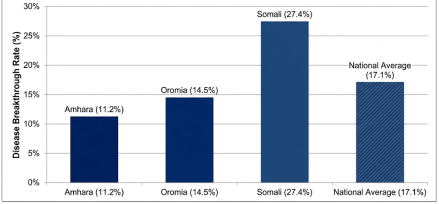
The cumulative national post-vaccination breakthrough outbreak rate across all audited campaign zones averaged 17.1% (n = 62/360) (Table 1).
In herds receiving thermally compromised vaccine lots, confirmed clinical outbreaks of PPR and Newcastle disease were recorded within 30 to 90 days following official mass vaccination events
[13]
Tesfaye A, Demissie B. Assessment of community animal health worker performance and cold-chain compliance in Oromia, Ethiopia. J Vet Med Anim Health 2024; 16(2): 30-41.
Figure 3. Comparative percentage rates of confirmed post-vaccination disease breakthrough outbreaks across surveyed Ethiopian regions
[13]
Tesfaye A, Demissie B. Assessment of community animal health worker performance and cold-chain compliance in Oromia, Ethiopia. J Vet Med Anim Health 2024; 16(2): 30-41.
Molla W, Gari G, Girma S. Assessment of cold chain maintenance for livestock vaccines in selected zones of North-Western Ethiopia. BMC Vet Res 2023; 19: 102.
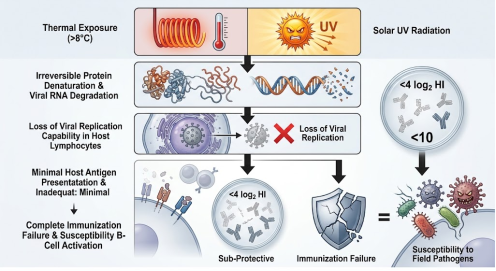
The high rate of post-vaccination outbreaks documented in this study underscores how directly physical supply-chain integrity dictates host immunological protection. Live attenuated viral vaccines depend on the integrity of surface proteins (such as the hemagglutinin-neuraminidase and fusion proteins of PPR and Newcastle viruses) to bind to host cell receptors and initiate non-pathogenic intracellular replication
[14]
Diallo A. Control of Peste des Petits Ruminants: Classical and new-generation vaccines. Dev Biol 2003; 114: 113-119.
[14]
. When vaccine vials are exposed to temperatures above +8°C or direct solar ultraviolet radiation
[10]
Kartoglu U, Milstien J. Tools and approaches to ensure cold chain quality and vaccine integrity. Expert Rev Vaccines 2014; 13(11): 1383-1394.
2) Ultraviolet radiation damages the virus by forming pyrimidine dimers in its single-stranded RNA genome, destroying its ability to replicate inside host cells
[16]
Lytle CD, Sagripanti JL. Predicted inactivation of viruses of relevance to biodefense by solar radiation. J Virol 2005; 79(22): 14244-14252.
. When livestock are injected with these inactivated particles, host dendritic cells and macrophages process far fewer antigens, preventing a robust immune response. As a result, host lymphocytes are unable to generate effective memory T-cell populations or protective neutralizing antibody titers (>1: 8)
[17]
Francois C, Desta H, Worku A. Evaluation of thermostable live viral vaccines in remote pastoralist livestock systems. Vaccine 2021; 39(14): 1890-1898.
4.2. Biological Inactivation Vs. Human Operational Bottlenecks
A widespread belief among agricultural stakeholders is that vaccine failures are due to manufacturing defects or field strain antigenic drift. These audit findings show that operational human errors and infrastructural deficiencies account for the majority of campaign failure
[11]
Getachew M, Tilahun G. Cold chain logistics and vaccine management challenges in rural pastoralist regions of Horn of Africa. Pastoralism 2022; 12: 14-25.
Comparable supply-chain and operational challenges have been widely documented across sub-Saharan Africa. Research across pastoral regions of Kenya, Uganda, and Chad reveals a strikingly consistent pattern: more than 70% of live vaccine potency is lost during the 'last mile' of distribution—the critical stretch between district storage facilities and remote field crush pens
[18]
Molla W, Gari G, Girma S. Assessment of cold chain maintenance for livestock vaccines in selected zones of North-Western Ethiopia. BMC Vet Res 2023; 19: 102.
Okello AL, Gibbs EP, Vandersmissen A, Welburn SC. One Health considerations for the control and eradication of Peste des Petits Ruminants. Rev Sci Tech Off Int Epiz 2015; 34(2): 625-633.
Reconstitution of lyophilized vaccines with unchilled diluents (>25°C) presents an entirely preventable operational error. When a cold lyophilized pellet comes into contact with a warm diluent liquid the sudden thermal shock degrades fragile viral particles within minutes, long before the vaccine is injected into the animal
4.3. Socioeconomic and Behavioral Impact on Farmers
When disease outbreaks strike shortly after official vaccination drives, community trust in public veterinary services erodes rapidly. Observing animals contract PPR or Newcastle disease despite recent vaccination severely undermines pastoralists' willingness to participate in future government campaigns
[21]
Mariner JC, House JA, Sollod AE. Recent advances in the control of rinderpest and Peste des Petits Ruminants. Vet Clin North Am Food Anim Pract 2002; 18(3): 539-558.
. In lowland pastoral areas, where achieving protection depends on herders voluntarily gathering their animals at crush pens, this drop in compliance pushes national coverage below the critical 80% herd immunity threshold, leaving endemic disease cycles unbroken
[22]
FAO. Guidelines for Participatory Epidemiology: A Methods Manual for the Assessment of Veterinary Services. Food and Agriculture Organization of the United Nations, Rome, Italy; 2019.
This study establishes that disease control and eradication goals in Ethiopia will be as dependent on supply chain-logistics and field administration factors, besides the National Veterinary Institute’s produced vaccine’s quality. The instability of electrical power in the district clinics, non-validated transport processes, absence of vaccine reconstitution using chiller units and ultraviolet shield are critical factors that could lead to post-vaccination outbreaks of the targeted diseases. Upgrading the rural infrastructure by utilizing the Solar Direct-Drive, standardizing UV shields in the field, pre-cooling of the diluent and continuous training of the field technicians can offer a solution to the problem. These strategies will improve livestock health and help sustain local livelihood security in Ethiopia.
6. Recommendations
To give livestock health programs in Ethiopia a serious upgrade, we really need to phase out those old-school absorption fridges and swap them for modern Solar Direct-Drive units. Relying on the sun means field teams can keep life-saving vaccines safely chilled between +2°C and +8°C without having to stress over unreliable power grids or constant blackouts. Solar Direct-Drive (SDD) units should be paired with IoT temperature sensors in transport cold boxes to trigger real-time alerts if temperatures deviate. The field practices should be standardized by using heat-sensitive Vaccine Vial Monitors and enforcing the use of UV-shielding sleeves to protect the open vials. Plus, we've got to make sure field teams follow a strict 12-hour pre-cooling rule for diluents. Mixing a cold vaccine with warm diluent can ruin the dose before it even gets used, so chilling everything together ahead of time is an easy way to protect the whole batch. Finally, constant training of technicians and community animal health workers on animal vaccination and regular unannounced quality-assurance visits by the regional veterinary bureaus will ensure compliance and quality control.
Abbreviations
CAHW
Community Animal Health Worker
CBPP
Contagious Bovine Pleuropneumonia
FMD
Foot-and-mouth Disease
ND
Newcastle Disease
NVI
National Veterinary Institute
PPR
Peste Des Petits Ruminants
SDD
Solar Direct-drive
TADs
Transboundary Animal Diseases
UV
Ultraviolet
Acknowledgments
The author expresses sincere gratitude to the dedicated technical staff at the National Veterinary Institute (NVI), Bishoftu, as well as the zonal and woreda veterinary officers across Oromia, Amhara, and Somali regional states for their operational cooperation during field audits.
Shapiro BI, Gebru G, Desta S, Negassa A, Nigussie K, Aboset G, Mechale H. Ethiopia Livestock Sector Analysis. ILRI Research Report 37, International Livestock Research Institute, Nairobi, Kenya; 2017.
Gebremedhin B, Ahmed MM, Ehui SK. Economic valuation of livestock production in mixed crop-livestock systems of the Ethiopian highlands. Agric Econ 2005; 33(1): 17-31.
Mekonnen H, Asfaw Y, Edao BM. Major viral and bacterial diseases of ruminants in Ethiopia: Economic impact and national control strategies. Ethiop Vet J 2022; 26(1): 45-62.
Rich KM, Wanyoike F. An assessment of the economic impacts of transboundary animal diseases on livestock value chains in East Africa. Prev Vet Med 2010; 97(1): 12-25.
Beyene B, Gelaye E, Ayelet G. Current status of veterinary vaccine production, quality assurance, and distribution dynamics in Ethiopia. Prev Vet Med 2020; 178: 104980.
Tadesse G, Lemma A, Fikru R. Immunological mechanisms, memory response, and field efficacy of live attenuated veterinary vaccines. Trop Anim Health Prod 2021; 53(2): 215-224.
Getachew M, Tilahun G. Cold chain logistics and vaccine management challenges in rural pastoralist regions of Horn of Africa. Pastoralism 2022; 12: 14-25.
Tesfaye A, Demissie B. Assessment of community animal health worker performance and cold-chain compliance in Oromia, Ethiopia. J Vet Med Anim Health 2024; 16(2): 30-41.
Molla W, Gari G, Girma S. Assessment of cold chain maintenance for livestock vaccines in selected zones of North-Western Ethiopia. BMC Vet Res 2023; 19: 102.
Okello AL, Gibbs EP, Vandersmissen A, Welburn SC. One Health considerations for the control and eradication of Peste des Petits Ruminants. Rev Sci Tech Off Int Epiz 2015; 34(2): 625-633.
Mariner JC, House JA, Sollod AE. Recent advances in the control of rinderpest and Peste des Petits Ruminants. Vet Clin North Am Food Anim Pract 2002; 18(3): 539-558.
FAO. Guidelines for Participatory Epidemiology: A Methods Manual for the Assessment of Veterinary Services. Food and Agriculture Organization of the United Nations, Rome, Italy; 2019.
Gebrehiwot, K. (2026). Impact of Veterinary Live Vaccine Handling and Administration on Disease Control and Eradication in Ethiopia. American Journal of Zoology, 9(3), 63-70. https://doi.org/10.11648/j.ajz.20260903.12
Gebrehiwot, K. Impact of Veterinary Live Vaccine Handling and Administration on Disease Control and Eradication in Ethiopia. Am. J. Zool.2026, 9(3), 63-70. doi: 10.11648/j.ajz.20260903.12
Gebrehiwot K. Impact of Veterinary Live Vaccine Handling and Administration on Disease Control and Eradication in Ethiopia. Am J Zool. 2026;9(3):63-70. doi: 10.11648/j.ajz.20260903.12
@article{10.11648/j.ajz.20260903.12,
  author = {Kurabachew Gebrehiwot},
  title = {Impact of Veterinary Live Vaccine Handling and Administration on Disease Control and Eradication in Ethiopia},
  journal = {American Journal of Zoology},
  volume = {9},
  number = {3},
  pages = {63-70},
  doi = {10.11648/j.ajz.20260903.12},
  url = {https://doi.org/10.11648/j.ajz.20260903.12},
  eprint = {https://article.sciencepublishinggroup.com/pdf/10.11648.j.ajz.20260903.12},
  abstract = {Mass immunization by live attenuated vaccines is the primary strategy used by Ethiopia to control major transboundary animal diseases. However, the biological products are sensitive to temperature fluctuations, which can compromise the success of vaccination campaigns. The study established the cold-chain status of veterinary vaccines in Ethiopia. It also identified critical control points (CCPs) amenable to thermal abuse. In addition, it determined the operational impact of cold-chain failures by assessing the relationship between inappropriate vaccine administration and disease outbreaks in vaccinated animals. An audit of cold-chain logistic processes was done by carrying out a retrospective study in Oromia, Amhara, and Somali regions, where 360 Peste des Petits Ruminants (PPR), Newcastle Disease (ND), and Contagious Bovine Pleuropneumonia (CBPP) vaccination campaigns were performed between 2020 and 2025. The study revealed CCPs of cold-chain logistic processes, including extended power cuts at the woreda store without a backup generator, transportation containers without validation, and improper vaccination techniques in the field, for instance, using warm diluent and direct exposure of vaccine vials to UV radiation. Overall cold-chain failure was 35.8%, and it was associated with disease outbreaks in 17.1% percent of herds vaccinated. Moreover, there was a variation in outbreak prevalence between the agro-ecological regions with the highest outbreak prevalence in the Somali region at 27.4%. Maintaining the potency of vaccines requires appropriate arrangements for a cold-chain logistic system. Thus, the main interventions, which will mitigate the risk of vaccine failure, include the use of Solar Direct-Drive refrigerators, temperature monitoring during transportation, education on the impact of UV radiation, and the application of relevant vaccine handling techniques.},
 year = {2026}
}
TY  - JOUR
T1  - Impact of Veterinary Live Vaccine Handling and Administration on Disease Control and Eradication in Ethiopia
AU  - Kurabachew Gebrehiwot
Y1  - 2026/11/09
PY  - 2026
N1  - https://doi.org/10.11648/j.ajz.20260903.12
DO  - 10.11648/j.ajz.20260903.12
T2  - American Journal of Zoology
JF  - American Journal of Zoology
JO  - American Journal of Zoology
SP  - 63
EP  - 70
PB  - Science Publishing Group
SN  - 2994-7413
UR  - https://doi.org/10.11648/j.ajz.20260903.12
AB  - Mass immunization by live attenuated vaccines is the primary strategy used by Ethiopia to control major transboundary animal diseases. However, the biological products are sensitive to temperature fluctuations, which can compromise the success of vaccination campaigns. The study established the cold-chain status of veterinary vaccines in Ethiopia. It also identified critical control points (CCPs) amenable to thermal abuse. In addition, it determined the operational impact of cold-chain failures by assessing the relationship between inappropriate vaccine administration and disease outbreaks in vaccinated animals. An audit of cold-chain logistic processes was done by carrying out a retrospective study in Oromia, Amhara, and Somali regions, where 360 Peste des Petits Ruminants (PPR), Newcastle Disease (ND), and Contagious Bovine Pleuropneumonia (CBPP) vaccination campaigns were performed between 2020 and 2025. The study revealed CCPs of cold-chain logistic processes, including extended power cuts at the woreda store without a backup generator, transportation containers without validation, and improper vaccination techniques in the field, for instance, using warm diluent and direct exposure of vaccine vials to UV radiation. Overall cold-chain failure was 35.8%, and it was associated with disease outbreaks in 17.1% percent of herds vaccinated. Moreover, there was a variation in outbreak prevalence between the agro-ecological regions with the highest outbreak prevalence in the Somali region at 27.4%. Maintaining the potency of vaccines requires appropriate arrangements for a cold-chain logistic system. Thus, the main interventions, which will mitigate the risk of vaccine failure, include the use of Solar Direct-Drive refrigerators, temperature monitoring during transportation, education on the impact of UV radiation, and the application of relevant vaccine handling techniques.
VL  - 9
IS  - 3
ER  -





 Share This Article
 Twitter
 Linked In
 Facebook

 Copy
 Download