Research Article | | Peer-Reviewed

Determinants of Market Supply Along the Apple Market Chain: In Case of Sinan District, East Gojjam Zone, Ethiopia

Received: 31 July 2025     Accepted: 20 February 2026     Published: 14 March 2026
Views:       Downloads:
Abstract

Commercializing smallholder farmers in the fruit production is an indispensable path to boost the household income and economic growth in Ethiopia. Apple is the main source of income in Sinan district. However, the district faces various production and marketing problems of apple. Therefore, the study was designed to analysis market chain of apple specifically to identify the determinants of apple supply to the market and to assess of market structure, conduct and performance of apple in Sinan district, East Gojjam zone, Ethiopia. The study used data from primary and secondary sources. A random sampling procedure was used to draw a sample of 121 apple producers. Multiple linear regression model and marketing margin were used to analysis the collected data. The market concentration ratio (37.8%) of the four largest firms was shown that the market structure were weak oligopolistic nature in the study area. The market margin shows that retailers were taken the highest market margin from the available actors. The output of OLS model shows that man equivalent, land size, market distance, access to market information, experience and frequency of extension contact were the key variables influencing the amount of apple provided to the market. The authors suggest that the government and concerned bodies should develop market information delivery system, aware farmers to use land efficiently and wisely, build better roads in apple growing areas and allow access for transport vehicles to cut down transportation expense and product damage during the route to market.

Published in Innovation Economics (Volume 1, Issue 1)
DOI 10.11648/j.iecon.20260101.17
Page(s) 64-80
Creative Commons

This is an Open Access article, distributed under the terms of the Creative Commons Attribution 4.0 International License (http://creativecommons.org/licenses/by/4.0/), which permits unrestricted use, distribution and reproduction in any medium or format, provided the original work is properly cited.

Copyright

Copyright © The Author(s), 2026. Published by Science Publishing Group

Keywords

Apple, Marketing Chain, Multiple Linear Regression, Sinan District

1. Introduction
In moving from subsistence farming towards market-oriented production system, the role of well-functioning market and marketing system is substantial. Well-functioning markets benefit both the producers and consumers by reducing market channels, market margins and the transaction costs involved, there by potentially lowering prices to consumers and simultaneously raising prices to producers, so improving the market & marketing system is necessary. The continuous improvements of the agricultural output market system need competition, establishment of standardization and grading, improvement of the information system, high cooperatives involvement, improve the private investor’s participation and increase government involvement during market failure in the marketing system .
Agriculture plays an important role for economic growth, poverty reduction and ensure food security. In the global it contributes 4% of GDP and 27% of employment opportunity in 2021 accordingly, in our country Ethiopia, agriculture is the backbone of the economy. It contributes 32.5% of GDP, 80% of export value and 72.7% of job opportunities .
Even if the agricultural sector plays a great role, it has been hindered by a range of constrains which include land degradation, low technological inputs, weak institutions, and lack of appropriate and effective agricultural policies and strategies. And it is typically characterized by subsistence smallholder farming system . The sector primarily produce raw, unprocessed agricultural products with little or none of the value additions that could have increased employment and incomes, so the contribution has not been as significant as might have been expected.
At the international level, the marketing of fresh fruit is more and more affected by global market, the change of the consumption pattern of consumer, and the complexity agricultural supply . According to International Trade Center 2018, Apple is produced around the world and it ranks third among the traded fresh fruit globally. In terms of economic significance it comes fourth place next to citrus, grapes and bananas. Globally, the production is exceed 701 million tons annually . It is composed of vitamins, calcium, phosphorus, potassium, and organic acids and contributes excellent health benefits by reducing the occurrence of various disease such as cancer .
According to Zhichao Wu and Chen Pan , China is the leading apple producer country in the world in terms of apple production, area coverage and yield of apple and the country produce more than 30% of the global total apple produced. Apple can be eaten raw or used as an important ingredient in many desserts. It is also recommended consuming apple daily due to excellent health benefits. Crucially apple production significantly contributes to rising the living standards, increasing income and generating employment opportunities .
The cultivation of apples is increasing in various regions of the country, leading to rising demand for apple in both the local and central markets in Ethiopia . Currently, there is increased interest and consideration in highland fruits (temperate fruits) in most highlands of Ethiopia as commodities that can provide opportunities for livelihoods and development like apple . Despite having the appropriate agro ecology and irrigation resources Ethiopia imported high amount of apple fruit aboard. In 2016, 1,328 tons of apple fruit which worth 1,776,000 US dollar were imported. Furthermore, the import volume is increases by 27% annually . On the paradox, the domestic price of apples is lower than that of imported ones. This could deter domestic growers of apples.
Bezabih and Hadera stated that the cultivation of horticultural crop including fruit and vegetable are influenced by seasonal variation and price of the product related to production surplus. During the production time the prices of the product go down, where as in the off-season price are high. The situation is get worse by unbalance of demand and supply, rapid perishability characteristics of the products and lack of appropriate storage facilities. Their perishability and bulkiness nature fruits requires appropriate storage, transportation, packaging and handling mechanisms starting from harvesting up to end user since. To keep the quality of fruit it also needs the cooperation and collaboration of all actors along the fruit .
Marketing of fruit crops has complex due to its perishability, seasonality and bulkiness nature. This leads to high and fluctuating consumer prices and unfair share of the retailer’s price to producers and other marketing actors. Apple is one of the fruits that has perishable by nature and high demandable fruit in the region as well as in the country. However, the demand and the supply of apple fruit to the market is unbalanced since, at the peak season the fruit is surplus while in the off season there is deficit. The marketing of apple is a complex phenomenon and the pattern of the market is different from other agricultural product .
Sinan district is potential in apple production in East Gojjam zone relatively from another district in the zone. In the district, apple are the most important food and revenue source. Due to the fruit testiness, lack of packaging material, perishability nature and ineffective marketing strategy, households are forced to consume the fruit rather than sell it. Despite the fact that apple have the capacity to be produced and a cash source in Sinan woreda, growers have not supplied the market with the anticipated quantity of apple. Seasonal variation affect the district's market surplus of apples, with an excess suply during harvest.
Many scholars, including Wudineh et al , Tamirat et. ., Gebrerufael et al . and Lemlem, . were studying apples in Ethiopia. However, no one has seen the factors influencing the supply and the market structure, conduct and performance of apple marketing in the study area. Thus the study was focus on identifying determinants of smallholders’ apple supplier and to assess structure-conduct-performance of apple market to fill the existing research and information gaps in the study area.
2. Literature Review
Basic Concept and Definition
Market: Different authors define marketing in different ways. According to Barakade et al . a market is a point, or a place or sphere within which price-making force operates and in which exchanges of title tend to be accompanied by the actual movement of the goods affected. According to Kohl & Uhl . market is an arena for organizing and facilitating business activities and for answering the basic economic questions: what to produce, how much to produce, how to produce, and how to distribute.
Marketing is the most vital driving force of economic development and contains a guiding and simulating impact on production and delivery of agricultural commodity. The agricultural marketing system helps to improve income and livelihood of agrarian societies .
Marketing channels: Are a path in which agricultural products move from farmer to users of the product. The channels of agricultural products vary from one commodity to other commodity, depending on the quantity to be moved, the form of consumer demand and degree of regional specialization in production, in which some commodity may require short channel while others may require long channel .
Market chain: Describes various links that connect all the players/actors and activities involved in the movement of agricultural goods from production to consumption. Market chain analysis is an analysis of marketing problems in the market systems which tackle chain actors. Market chain analysis includes both the production and marketing aspect that is marketing is depends on production and there is strong chain or linkage between the two. The farmers get farm inputs from the market to perform production activities and inversely the market gets final agricultural products from the farmers . Market chain defines the flow of commodities from producers to consumers that brings into place economic agents who perform complementary functions with the aim of satisfying both producers and consumers .
Benyam & Abatneh, used multiple linear regression models to identify the determinants of quantity supplied of banana to the market. The result of the model showed that education level of the household head, market information, distance to the market, and extension service are variable that significantly influence the marketable supply of banana by household.
Market chain analysis: Identifies and describes all points in the chain (producers, traders, transporters, processors, consumers), prices in and out at each point, functions performed at each point/ who does what?, market demand/ rising, constant, declining, approximate total demand in the channel, market constraints and opportunities for the products .
Marketed surplus: Refers to the actually marketed quantities of the produce without consideration of repurchase quantity. Marketed surplus is that quantity of the produce which the producer farmer actually sells in the market without the consideration of his requirements for family consumption, farm needs, feeds, payment in kind and others. Marketed surplus will be higher when the farmer retains less of the produce than his requirements for home and farm needs. This would be true especially for small and marginal farmers. nature of crops, size of output, consumption habit and size of family, size of holdings, level of debt and economic status of producer; price level of the produce commodities and availability of storage facilities are factors that determine the size of marketed surplus . Marketed surplus is a practical ex-post concept and refers to part of the marketable surplus which is marketed by the producer .
Market structure conduct performance (s-c-p)
According to Lee, . SCP paradigm consists of three elements such as, market structure which is the variables that are used to describe market structure include seller concentration, degree of product differentiation and barriers of entry; Conduct refers to a firm's behavior which is the variables used to capture firm behavior include pricing strategies, collusion, advertising, research and development and capacity investment and also Some have interpreted conduct as whether firms collude or compete; and Performance refers to outcome or equilibrium assessed in terms of allocated efficiency which is the variables mostly used to measure performance are profitability and price cost margin.
Empirical Review
Factors affecting quantity supply to the market by farmers.
Different scholars identify the determinants of quantity supply of agricultural commodity by the farmer.
Berhanu, applied Tobit (censored) regression model to identify the determinates of avocado quantity sold to the market. The result of the model shows that access to market information affect the intensity avocado market /quantity sold/ positively and significantly. While distance to the market affect intensity of avocado to the market negatively and significantly. by using multiple linear regression (MLR) model Yaregal indicated that use of improved seed, distance to the nearest market, frequency of extension contacts, size of land allocated for potato production and yield were significantly determined the quantity of potato supplied to market. However, from those mentioned significant variables, only distance to the nearest market was significantly and negatively affected the market supply of potato.
Aemro, also identified that education level of the household, access to market, access to market information and price of onion determine quantity of onion supplied to market and the quantity supply of tomato were education level of the household head, experience on tomato production and price of tomato by applying multiple linear regression model. Out of this variable access to market affect negatively and positively the quantity supply of onion to the market while the rest variable affects positively and significantly.
Ayelech, run OLS regression to analyze factors affecting the market supply of fruits. The result of the model shows that market supply is affected by education level of household heads, quantity of fruit produced, fruit production experience, extension contact, lagged price and distance to market are the factors affect quantity supplied to the market positively and significantly.
Alemnew, Also revealed that agricultural experience, access to credit, yield, land size, current year and lagged prices are the significant variable that influences the quantity supply of pepper to the market.
Similarly, Adugnaw, Run OLS model to identify determinants of market supply of teff. the result of the model showed that family size (active labor force), number of oxen owned, land allocated for teff, frequency of extension contacts, lagged price, quantity of fertilizer used and access to market information were positively and significantly influenced amount of teff supplied to the market.
By using Heckman Model Derib et al., identified that education level, active labor, farming experience, quantity of avocado produced and market information variables were the significant factors that affect quantity supply of avocado. According to them all of the variable influences positively except the level of education to the quantity supplied of avocado to the market. They explained that the reason for the negative influence of educational level on the quantity supplied of avocado to the market were, The more the family is headed by an educated person the more the family will be aware of the nutritional value of avocado and the tendency to supply to the market likely to decrease.
Fayera &Benyam showed that age of household head, distance from known nearest market center, sex of the household head, adult equivalent, and portion area allocated for potato production, quantity of potato produced, access to market information and access to extension services by using OLS estimation. From this variable age of the household head and distance to market affect negatively and significantly.
Benyam & Abatneh, used multiple linear regression models to identify the determinants of quantity supplied of banana to the market. The result of the model showed that education level of the household head, market information, distance to the market, and extension service are variable that significantly influence the marketable supply of banana by household.
Similarily, by using OLS Selamawit et al., showed that sex of household, land allocated for mango, distance to nearest market, farm experience, extension service, price information, and family labor were significantly determined marketed supply of mango. from this variable. From this variable sex of household and family labor were negative influnce while the remianing variable were positive influence on the quantity supplied of avocado to the market.
Yimer, employed OLS regression analysis to identify factors affecting fruit supply in the market. He found that education level of household head, market information, access to extension services, quantity of fruit produced were factors that significantly affect the quantity of fruit supplied to the market positively while distance to market affects the supply negatively.
3. Materials and Methods
Description of the Study Area
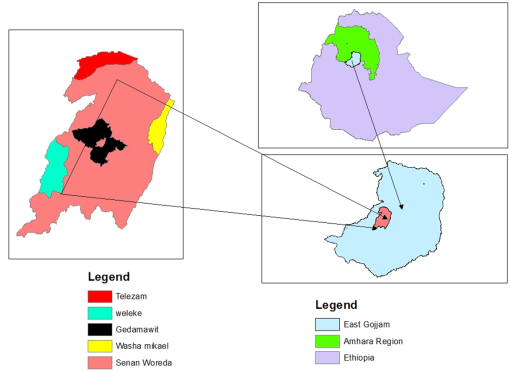
Figure 1. map of the study area.
Sinan is one of the 21 woreda in the East Gojjam zone of the Amhara National Regional State. The district is bounded to the North by Bebugn, to the South by Guzamn, to the West by Machackel and East by Debay tilat gin. Which is far from 27 km from Debre Markos, the East Gojjam Zone capital; 292 km from Bahir Dar, the Amhara Region capital; and 325km from Addis Ababa Ethiopia's capital city. The woreda's town is Erebugebeya. The district has 17 rural kebele and two town kebeles.
Data types, Source and Methods of Data Collection
Primary and secondary data source were used to gather both quantitative and qualitative data. Questionnaire and structured interview methods of data collection were employed to collect primary source of data from apple growers and traders. On the other hand to support the primary source of data secondary source of data from published and unpublished documents were executed for this study.
Procedures for Sampling and Calculating Sample Size
Multistage sampling procedures were applied in this investigation. Based on its potential for production, the Sinan woreda was chosen from the East Gojam zone in the first stage purposively. In the second step four apple producing kebeles were chosen at random from among the district's 19 kebeles. Lastly using Yamane’s (1967) sample size determination formula, 121 sample households were randomly selected based on probability proportional to size. As a result the sample size was determined using the following formula:
n = N/1+N (e)2
6918/1+6918(0.09)2=121
Where, n = sample size
N =population size (total number of apple producer farmers in the production year of 2019/2020)
e = level of precision or margin of error desired in the study
Table 1. sample size of apple producer from selected kebeles.

Sample kebele

Number of apple producer HHH

Sample household

Proportion in%

Gedamawit

516

39

32

WashaMikael

220

17

14

Telezam

396

30

25

Wolekie

472

35

29

Total

1604

121

100

Source (own computation from WAO, 2023)
On the base of apple flow sample trader was taken from Erebugebeya and Debre Markos town since the two towns are the main site of apple marketing. Based on the information obtained from zone trade and industry number of apple wholesalers in Erebugebeya is 4 and 3 in Debre Markos town respectively. As a result, census survey was used from the two town that is the whole 7 wholesalers was used for the study. However, due to lack of absence of recorded list of population of retailer and collector and the opportunistic behavior of the retailer, purposive sampling was used to select sample retailers from the two town that is 10 retailer from Erebugebeya and 8 from Debre Markos town purposively, while 3 collectors was selected from Erebugebeya by using snow ball sampling techniques.
Methods of Data Analysis
Descriptive statistics like frequency, percentage, mean and standard deviation was used to examine and describe demographic, socio-economic and institutional characteristics of sample respondents.
Market performance
Market Performance refers to the economic results that flow from the industry as each firm pursues its particular line of conduct. Marketing efficiency is essentially for the degree of market performance. The two approaches to measure marketing performance are: marketing margin and marketing costs . Marketing margin is one of the commonly used measures of the performance of a marketing system. It is defined as the difference between the price the consumers pay and the price the producers receive . Market margins are often used to work out the efficiency of marketing system and traders. Market margins are price spread comprises of two elements (1) explicit costs paid for the performance of various marketing functions and (2) profit of the market intermediaries. To determine the market performance gross marketing margin was used since to calculate the net marketing margin it was difficult to obtain the implict cost.
TGMM=PC-PPPC*100
GMMP=PC-TGMMPC*100
Where, TGMM –total gross marketing margin
Pc -consumer price
pp- producer price
GMMP- gross marketing margin of producer: which is the proportion of price paid by concumer that belong to producer.
A Multiple linear regression model was used to determine the variable influencing the market supply of apple. Since all farmers in the study area offered their apple fruits to the market, multiple linear regression model were used for the study in order to identify the factors that affect the quantity of apple that farmers supply to the market. This was done due to the model's applicability and simplicity to study objective. The multiple linear regression models were specified as:
Yi=β0 + β1X1+ β2X2+ β3X3+ β4X4+ βkXk+ Ui
Where, Yi is the amount of apples provided to the market
β0 is the intercept constant
βk is an estimated vector of explanatory variables' coefficient
Xk is an explanatory variable vector
Ui is disturbance term
Assumption of the model
The parameter estimates of the OLS model are not Best Linear Unbiased Estimator (BLUE) when the assumptions of the Classical Linear Regression model (CLR) are broken. Therefore, it is crucial to use the problem detecting methods to determine whether the variables influencing the supply of apples to the market exhibit multicollinearity, heteroscedasticity and omitted variables.
Test for Multicollinarity: Gujarati, defines multicollinearity as a situation in which there is a high degree of correlation between the explanatory variables. Therefore to determine whether the multicollinarity problem existed, the Variance Inflation Factor (VIF) was employed.
Variance inflation factor: detect existence of multicollinearity problems
VIF(Xi)=1/(1-Rj2)
Where, Rj2= the determination coefficient when the variable Xj is regressed on the other explanatory variables.
VIF (Xi) = Variance Inflation factor of the ith variable
According to Gujarati (2003) a variable is considered strongly collinear if its VIF value is a variable exceeds 10, which will occur if Rj2 greater than 0.90.
Test of heteroscedasticity: several test statistics are available to identify heteroscedasticity. Park, Breusch-Pagan, Godfrey, White’s testes and Koenker-Bassett test of heteroscedasticity are a few of them. Nonetheless, Gujarati, assert that there is no set criteria for choosing the most appropriate heteroscedasticity test. Thus in order to identify heteroscedasticity issue the Breusch-Pagan test was employed due to its simplicity.
The goodness of fit of the model: how well the model fit the data was determined using coefficient of determination (R2) and adjusted R square (R2adj). R2 was used for the model fitness and adjusted R square to determine the percentage the dependent variable variation that can be attributed to the explanatory variable or independent.
Table 2. the variable utilized in multiple linear regression model.

Variable

Notation

Type of variable

Measurement

Expected effect

Quantity supplied to the market

QS

Continuous

Quintal

Independent variable

Land alloted for apple

LAND

Continuous

Hectare

+ve

Distance to the nearest market

DSTMKT

Continuous

Walking hours

-ve

Access to market information

ACCMKT

Dummy

1if yes, 0 no

+ve

Sex of the household head

SEX

Dummy

1 if male, 0 otherwise

+ve

Family size

FAMSZ

Continuous

Man equivalent

+ve

Age of the household head

AGHH

Continuous

Year

-ve/+ve

Off/non-farm income

OFFIN

Dummy

1if yes, 0 no

+ve

Livestock holding

TLU

Continuous

tropical livestock unit

+ve

Frequency of extension contact

FEXC

Continuous

Number

+ve

Distance from training center

DSFTC

Continuous

Walking minutes

-ve

Level of education of the household head

EDU

Categorical

0 if not read and write, 1 if read and write, 2 if attend primary school, 3 if attend secondary school, 4 attends preparatory and above

+ve

Source: own design 2023
4. Results and Discussion
Demographic Characteristics of Apple Producers
Table 2 below indicated that out of 120 samples respondent 87.5% of sample household heads were male and the remaining 12.5% were female household heads. This implies that most of the sample apple farmers were found to be male headed. In terms of marital status 93.3% apple producer sample household head were married, 5% windowed and the rest 1.7% were divorced in the study area. This implies that most apple producer household heads were married in the district. Regarding to the educational level of sample producer household head 42.5%, 38.3%, 12.5%, and 6.7 were can not write and read, write and read, primary school and were secondary school respectively. Educational level of the sample respondent is believed to be important to determine the readiness of the household head to accept new technologies and idea. Hence more educated household head has expected to use good agricultural practice and increase their productivity of apple. The average age of the respondent in the study area was 48.91 years with the minimum year of 26 and maximum 75 years. And the age deviation of the respondent was 9.933 years. This implied that most respondents were in the age of productive stage. In the study area, the average experience of the household head was 7.3 years with the minimum 4 years and the maximum of 12 years of production. This indicated that the household heads were not that much more experienced in apple production because the maximum experience is 12 years.
Table 3. Demographic characteristics of sample producer household heads.

Variable

Frequency

Percent

Sex of household head

Male

105

87.5

Female

15

12.5

Total

120

100

Marital status

Single

0

0

Married

12

93.3

Divorced

6

5

Windowed

2

1.7

Total

120

100

Educational level

Do not write and read

51

42.5

Write and read

46

38.3

Primary school

15

12.5

Secondary school

8

6.7

Total

120

100

Non/off farm income

Yes

20

16.3

No

100

83.3

Total

120

100

Variable

N

Minimum

Maximum

Mean

Std. Deviation

Age

120

26

75

48.91

9.933

family size

120

1.3

8

3.92

1.605

Experience

120

4

12

7.3

1.858

Source own survey result 2023
Socio-demographic Characteristics of Sample Apple Trade
The demographic characteristics of sample traders were described in terms of sex, educational level, marital status, religion, age, family size and apple trading experience. The survey result of the study shown that, 60.7% apple trader was female while the remaining 39.3 traders were male. Out of the total female traders, 57.1 and 72.2 were wholesalers and retailers respectively. This implied that female participation in wholesale and retail market apple trade were higher than male traders of apple. Regarding to education, out of 28 sample traders, 10.7% cannot read and write, 14.3% can read and write and attend primary education, 25% were attend secondary school and the rest 35.7% of sample apple trader were attend preparatory and above education level. This indicate that almost 60% sample traders were attended secondary and above school. About marital status, the result of the study revealed that 46.4% were single 35. 7% were married, 7.2 divorced and 10.7 were window. From the total apple trader in the study area, 92.9% sample trader was Christian follower and the remaining 7.1 were Muslim follower. The average size of family size was 3 with standard deviation of 1.66. With respect to apple trade experience, traders have less experience in apple trading which is one year up to 5-year experience with on average 3-year experience.
Table 4. Socio-demographic characteristics of sample apple trade.

Variable

Collector

Wholesaler

Retailer

Total

N

%

N

%

N

%

N

%

Sex

Female

-

4

57.1

13

72.2

17

60.7

Male

3

100

3

42.9

5

27.8

11

39.3

Educational status

Can’t read and write

-

-

-

3

16.7

3

10.7

Read and write

-

1

14.3

3

16.7

4

14.3

Primary school

1

33.3

2

28.6

1

5.6

4

14.3

Secondary school

-

-

-

-

7

38.9

7

25

Preparatory and above

2

66.7

4

57.1

4

22.2

10

35.7

Marital status

Single

3

100

4

57.1

6

33.3

13

46.5

Married

-

-

3

42.9

7

38.9

10

35.7

Divorced

-

-

2

11.1

2

7.1

Window

-

-

3

16.7

3

10.7

Religion

Christian

3

100

7

100

16

88.9

26

92.9

Muslim

-

-

2

11.1

2

7.1

Mean

Std

Mean

Std

Mean

Std

Mean

Std

Age

30.3

4.9

37.1

9.1

34.6

8.8

34.8

8.5

Family size

1.7

1.2

4

1.9

2.9

1.5

3

1.7

Apple trade experience

2.7

0.57

3.8

1.1

2.9

1.1

3

1.1

Source: own survey result, 2023
Analysis of Apple Market Structure, Conduct and Performance
Structure, conduct and performance approach were used to evaluate the degree of competition, behavior of the marketing actors and performance of apple markets in the study area.
Analysis of Market Structure of Apple
Market structure is the organizational characteristics of the market which influence the competition and pricing, trader behaviors and the performance of the market. For this study, apple market structure was evaluated in terms of concentration ratio, market transparency and barrier to entry.
Degree of market concentration
Market concentration measured by the number and size of firms existing in the market. The extent of concentration represents the dominance of an individual firm or a group of firms over the buying and selling of the produce. Overall, the higher the level of market concentration, and the less competitive the market is.
The first four traders with the largest volume of apple handled were used for the calculation of market concentration ratio of apple traders to analyse the types of market structure. It was computed by taking the total quantity of apple purchased in the survey year.
As shown on the appendix part Table 8, the concentration ratio of the four largest sample apple traders was 37.8%. This indicated that the top four traders handled between 33% and 50% of the apple market. Hence, according to Kohls and Uhl rule of thumb, the market structure of apple was a weak oligopoly which implies that in the study area apple market deviate the competitive nature of market structure. Hence, there is market imperfection of apple marketing in the study area since few traders dominate and control the market.
Table 5. Market concentration of apple traders.

No of trader (X)

% of trader (X/28)

Quantity purchased within a year in quantal (Y)

Total purchase in quantal (Z=X*Y)

% purchase share (Si=Z/5602)

%cumulative ∑Si share

1

3.6

600.00

600.00

10.7

10.7

1

3.6

540.00

540.00

9.6

20.3

1

3.6

500.00

500.00

8.9

29.2

1

3.6

480.00

480.00

8.6

37.8

1

3.6

450.00

450.00

8

45.8

1

3.6

420.00

420.00

7.5

53.3

1

3.6

400.00

400.00

7.1

60.4

1

3.6

180.00

180.00

3.2

63.6

1

3.6

160.00

160.00

2.7

66.3

1

3.6

150.00

150.00

2.7

69

1

3.6

140.00

140.00

2.5

71.5

1

3.6

130.00

130.00

2.3

73.8

1

3.6

122.00

122.00

2.2

76

1

3.6

114.00

114.00

2

78

1

3.6

112.00

112.00

2

80

1

3.6

110.00

110.00

2

82

1

3.6

106.00

106.00

1.9

83.9

1

3.6

104.00

104.00

1.9

85.8

1

3.6

100.00

100.00

1.8

87.6

1

3.6

97.00

97.00

1.7

89.3

1

3.6

86.00

86.00

1.5

90.8

1

3.6

84.00

84.00

1.5

92.3

1

3.6

80.00

80.00

1.4

93.7

1

3.6

78.00

78.00

1.4

95.1

1

3.6

75.00

75.00

1.3

96.4

1

3.6

70.00

70.00

1.2

97.6

1

3.6

64.00

64.00

1.1

98.7

1

3.6

50.00

50.00

0.9

99.6

28

100.0

5602

5602

100

100

Source: own survey result 2023
Market transparency (market information flow): Is the availability of relevant market information to apple market participant. According to the focus group discussion and key informant interview; due to lack of reliable market information, lack of linkage among apple market participant, lack of accessibility of transportation and advertisement, apple market are non-transparent in the study area. This is agreed with the finding of Yaregal, who found that access to timely market information on price of a product and demand of consumers plays a crucial role to increase their revenue and to reduce financial loss of both producers and traders.
According to the survey result, out of 120 farmers sample respondent 59.2% was have no market information to sold apple while the rest 40.8% have market information. And 46.5%, 22.5% and 31% of sample respondent were obtained market information from traders, personal observation and other farmers, respectively. Compared to farmers all traders have market information before purchasing of apple. This suggests that there is no well-established system of dissemination of market information in the study because there are no agents and other media that circulate market information regularly for apple market participant. Hence, the market structure was not transparent in the study area.
Barrier to entry to apple market
Barrier of entry is the other mechanism to identify market structure. When apple traders were entering or exit easily the market is competitive, while entry and exit is difficult the market structure is imperfect. Table 6 shown that apple trades were limited by the following factors:
Lack of capital: according to the survey result 53.6% sample traders had a barrier of capital to run apple trading. From the total trader collectors, wholesalers and retailers 66%, 57.2% and 59% of face problem of capital respectively. Hence, to handle reasonable quantity of apple, traders need sufficient amount of money that assists their business to operate smoothly and continuously. Relatively apple required higher money to run apple trading than other crops in the study area. As a result, traders are restricted to enter apple trading.
Competition of unlicensed trader: based on the finding of the survey apple traders hindered by competition of unlicensed trader. In the study area 100% of wholesalers and 27.7% retailers have license while the remaining 72.3 retailer and all collectors are not licensed. Table 6 shown that 14.3% of wholesaler and 16.6% of retailers were faced a barrier of the entry of apple, due to competition of unlicensed apple trader particularly at the peak of production season. Even if fruit and vegetable trade license is easy task, traders were not volunteering to take the license due to lack of strong restriction and the seasonality nature of apple. As a result, the licensed trader was not interested to trade apple and the new comer also fear this case.
Lack of continuous supply: According to the survey result, continuous supply throughout the year was the key factors that limit the entry of traders in apple marketing. About 71.4%, 33.3% and 16.6% of wholesalers, retailers and collectors reported that lack of continues supply throughout the year was hinder the entry of apple trading activity respectively.
Experience: Trade experience refers to the number of years that traders practiced in trading activity since experience plays vital role in decision making activity and know how about reducing business risk. However, the traders’ survey result showed that, traders had an average experience of 3 years in apple trading with minimum 1 year and maximum 5-years of experience in apple trading in the study area. This implied that there was a barrier to entry in apple trading with respect to years of experience because apple traders had not well experienced and there was no wider gap of experience among traders in apple trading.
Table 6. Barriers of entry to apple marketing.

Entry barrier

Collector

Wholesaler

Retailer

Total

N

%

N

%

N

%

N

%

Lack of capital

2

66.7

4

57.2

9

50

15

53.6

computation of un licensed trader

-

-

1

14.3

3

16.6

4

14.3

lack of continuous supply

1

33.3

5

71.4

3

16.6

9

32.1

Source: own survey result 2023
Conduct of Apple Marketing
Market conduct refers to the exchange practice and pricing behavior of the marketing firms that make up the industry to examine the influence of the existing market structure on the market conduct and the bargaining power of marketing actors in the marketing system .
Market conduct deals the behavior of market chain actor with respect to various aspects of trading strategies such as buying and selling strategy, mode of payment and other characteristics of farmer households and traders in apple market.
Producer pricing strategy: With regard to selling strategy of producer, the survey output revealed that 29.2% of sample farmer household heads reported that selling price was set by buyers. And 25% respondents reported that selling price was set through negotiation. The remaining 23.3% and 22.5% of sample producer reported that the selling price of apple was set by market and themselves, respectively. All of the sample farmer household heads confirmed that price was the determining factor which influences them for whom to sell apple among the buyer. Thus, the result show that producer have less bargaining power to decide the price of apple in the market. According to the sample respondent the selling system was based on cash payment or hand to hand cash payment as soon as they sold.
Purchasing and selling strategy sample traders
The survey result revealed that the majority 75% of sample trader was set the decision of apple price by themselves. The rest 7.1%, 7.1%, and 10.7% sample trader respondents were reported that the selling price of apple was made by buyer, negotiation, and market respectively.
With respect to purchasing price of traders, the result of the study indicated that 64.3% of the sample traders was set the buying price by themselves. And 21.4%, 10.7%and 3.6% of sample traders were set the purchase price by negotiation, seller and market, respectively. Thus, market conduct in the study area was deviate the competitive market because producers had no bargaining power for price decision while traders have power to set buying and selling price of apple which mean producers were price taker where as traders were price maker in the study area.
Market Performance
Market performance of apple was estimated based on level of market margins and accompanying marketing costs.
Marketing cost
Table 7 show different types of marketing cost related to the transaction of apple by collectors, wholesalers and retailers in the study area. The result revealed that the highest cost was incurred by wholesalers which is 164.5 birr per quintal of apple followed by retailer who incurred 60.5 birr per quintal of apple. This because of wholesalers incur cost for storage, packaging and labor cost for packaging of the product. According to Table 7 packaging was the highest cost for wholesalers and retailers which account 55 and 23 birr per quintal respectively. Collectors spent highest cost for transportation and wastage loss.
Table 7. purchasing and selling strategy of apple traders.

Cost item in birr

Collector

Wholesaler

Retailer

Packaging material cost

13

55

23

Labor cost for packaging

-

8

-

Loading and unloading cost

10

10

8

Transport cost

17

28

16

Storage cost

49

Telephone cost

1

1.5

0.6

License and tax

-

2.28

0.8

Wastage loss

15

10.72

12

Total cost

56

164.5

60.4

Source: Source: own survey result 2023
Market margin analysis of apple
To determine the market performance of apple in the study area, marketing margin was used. As shown in Table 8, the total gross market margin was highest in channel two and three which is 40.6% each followed by channel five which accounts 39.55% of consumer prices. However, the lower total gross market margin was observed in channel four which accounts 34.5% of consumer price. The producer share (gross marketing margin of the producer) was highest in channel five and four which taken 71.5% and 65.5% of consumer price respectively, while lowest in channel three and two which was 59.4% of consumer price. From traders, retailers obtained the higher gross marketing margin, which is 28% of the consumers’ price in channel five and the lowest margin was in channel four and five (20%) of consumer price. With respect to wholesaler, the highest gross market margin was in channel four. And collectors obtained highest market margin from channel two.
Gross profit was done for traders alone not for producer due to difficulty of obtaining data on producer’s production and marketing costs to assess producers’ profitability and the nature of apple time taken to give output. Therefore, as shown in Table 8 retailer was get higher gross profit which accounts ETB 800 per quintal in channel five who purchased directly from producer and sell to consumers. Collectors have got the least gross profit in channel three.
Table 8. apple marketing margin for different actors.

Marketing actors

Birr/qt

I

II

III

IV

V

Producer

Selling price

2681

1867

1867

2059

2247

GMMP (%)

100

59.4

59.4

65.5

71.5

Collector

Purchasing price

-

1867

1867

-

-

Marketing costs

-

56

78

Selling price

-

2297

2155

Gross profit

-

374

210

GMMC

13.7

9.2

Wholesaler

Purchasing price

-

-

2155

2059

Marketing cost

164.5

164.5

Selling price

2686

2686

Gross profit

366.5

462.5

GMMW

16.9

20

Retailer

Purchasing price

2297

2525

2525

2247

Marketing cost

82

60.4

60.4

96

Selling price

3143

3143

3143

3143

Gross profit

764

5576

557.6

800

GMMR

27

20

20

28.5

TGMM

100

40.6

40.6

34.5

39.5

Source: own survey result 2023
Determinants of Quantity of Apple Supplied to the Market
Since all sample respondents in the study area were supplied with apple for the market during the survey year, a multiple linear regression model was employed to determine the factors influencing quantity supplied of apple to the market. In order to meet the fundamental assumption of classical linear regression (CLR) all the proposed explanatory variable for the existence multicollinearity, heteroscedasticity and omitted variable test were verified using the VIF, Breusch pagan and ovtest, respectively, prior to the multiple linear regression model being run.
In order to determine the factors influencing the quantity supplied to the market, eleven explanatory variables were used. Six of the eleven variables had a substantial positive and negative impact on the quantity supplied of apple. These factors include accessibility to market information, family size, distance to market, land size, and frequency of extension contact and experience of apple production.
Table 9. OLS estimation results of determinants of quantity of apple supplied to the market.

Variables

Coef.

Robust Std. Err.

T-value

P>t

Constant

-4.283

2.377

-1.80

0.074*

SEXHH

.286

1.018

0.28

0.779

AGHH

-.017

.029

-0.57

0.572

ACCMKT

1.53

.733

2.08

0.040**

EDU

read and write

.21

.834

0.25

0.801

primary school

-1.267

1.25

-1.01

0.313

secondary school

.857

1.379

0.62

0.536

FAMSZ

.695

.299

2.32

0.022**

DSTMKT

-.579

.236

-2.45

0.016**

TLU

-.068

.215

-0.32

0.751

OFFIN

.441

.886

0.50

0.620

LAND

60.671

11.729

5.17

0.000***

FREXC

.763

.293

2.61

0.010**

EXPR

.538

.276

1.95

0.053*

DSFTC

.001

.015

0.09

0.929

Number of observations

120

F (14, 105)

22.94

Prob > F

0.0000

R-squared

0.723

Note: the dependent variable was quantity supplied of apple to the market
***, ** and * were the significant at 1%, 5% and 10% level respectively.
Source: own survey 2023
Access to market information: at the 5% significant level this variable has a positive and significant impact on the amount of apples provided to the market. Because market information aids in farmers decision making, it lower risk and uncertainty associated with the market and help them choose the appropriate selling price and timing. Based on the study's findings, apple farmers who receive market information typically have an increase in apple supply to the market of 1.53 quintals more than those who do not. This result is consistent with the research conducted by Nega and Samuel, who revealed a positive and significant relationship between market information and the supply of mango fruit on the market.
Family size: the man equivalent was used to measure this variable. At 5% significant level, the variable had a positive and significant effect on the number of apple supplied to the market. By nature, apple is a labor-intensive crop which required labors to produce and marketing of apple starting from seedling preparation up to post harvesting stage. In fact, labor has a factor of production, farmers who have more man equivalent, they produced large amount of apple and supplied high amount of apple to the market. The model output therefore showed that, while holding the other significant variable constant, an increase in man equivalent by one unit would result in an increase in the quantity provided by 0.695 quintals. This result is consistent with that of Gizachew and Ebrahim, who found that family size favorable and significant impact on the supply of red pepper and tomato, respectively. However, larger family size requires larger amounts for consumption. Found that family size influenced negatively and significantly the quantity supplied of onion to the market. But apple is a cash crop and the price are high they may not consume, there for it was expected to affect positively the quantity of apple to the market and wholesaler market.
Distance to market: the amount of apple supplied was negatively and significantly impacted by the distance to market at a significant level of 5%. According to the findings, while another important variable remained unchanged, the amount of apple supplied decreased by 0.579 quintals for one walking hours that farmers spent walking distance from the nearest market. Thus, farmers living farther away from the market may experience more spoiling, and the increased transaction costs associated with apple marketing lead to a reduction in the amount of apples delivered to the markets. This result was in line with the finding of Ayelech , Addisu and Ebrahim , who reported that market distance had a negative and significant influence on the quantity supply of avocado, potato, and tomato, respectively.
Land allotted for apple production: the findings indicates that, at 1% significant level, the amount of land allotted for apple production has a positive and significant influence on the volume of apples provided to the market. The coefficients positive sign suggests that an increase in the amount of apple produced and supplied to the market corresponds with the size of the area allotted for apple production. The result implied that on average, farmer household heads allocate additional one hector of land to apple production, the quantity supplied of apple increase by 60.671 quintal when another significant variable were constant. The finding was consistent with Yaregal . and Addisu . who found that land size had an important and a positive impact on the amount of potato and onion supplied to the market, respectively.
Frequency of extension contact: at a 5% significant level, the frequency of extension contact had a positive and significant influence on the amount of apple supplied to the market. Farmer house hold heads had frequent extension contact with DA, the quantity supplied of apple will increased. Furthermore, farmers that communicate with extension agents on a regular basis have greater access to information and can adopt more advanced technologies, which can boost apple output and market availability. The findings indicated that if all other significant variable remain unchanged, an annual increase of one day in the frequency of extension contact would result by 0.763 quintal increase in the supply of apple to the market. This suggested that when farmers have contact with DAs the apple production will increased and the market supply of apple will be increased. Farmers need training related to production of apple to irrigate, pruning, thinning, picking and packaging of apple fruit to deliver to market. As a result, frequent extension contact is crucial factors for apple production and marketing. This finding is consistent with the research done by Ayelech . who revealed that extension service has a positive and significant factor for mango supply to the market.
Apple production experience: As it was hypothesized, experience significantly and favorably affected the amount of apples supplied at 10% significant level. Since farmers have experienced, they produced large amount of apple and supply high volume of apple to the market. And also, farmers have more experience in apple production they accept new technology easily and find market information. The study's findings shows that if all other variable constant and farmers gain one years of expertise in producing apples, the amount of apple provided to the market will rise by 0.0.538 quintals. This outcome was consistent with the finding of Ayelech and Ram, who illustrated that experience positively influences the amount of avocado and papaya provided to the market, respectively.
5. Limitation of the Study and Areas for Further Research
Due to time, financial and other resource constraints, the data and information for this study were collected only in the selected (four) kebeles of the district. As it is a new crop in Ethiopia, it is difficult to show the progress of apple productivity from year to year at the national and zonal level due to lack of recorded data on the potential of apple at the national and regional level. During data collection, lack of accurate and timely information on socio-economic aspects of apple producers due to unwillingness of the respondents is another challenge of the study.
Areas for further research: Our research focuses on the supply side specifically the supply in the farmers market and not on the demand side or the consumer side, so other researchers the collaboration and cooperation’s of all stakeholders. Thus, more research should be done to examine the apple value chain both nationally and in the study area.
6. Conclusion and Recommendation
Conclusion
The result of descriptive statistics shown the average total land size of apple producer household heads in the study area was 1.02 hectares with the minimum of 0.25 hectare and maximum of 3 hectare. While the average land allocated to apple by sample producer household heads was 0.06 with maximum 0.28 and minimum 0.002 hectors respectively. This indicates that farmers allocated very small land for apple production.
The concentration ratio, transparency (market information) and barrier to entry indicated the the market structure of apple in the study area was deviate from competitative market structur, hence the market structure in the study area was inefficient. And also, market conduct in the study area was deviate the competitive market because producers had no bargaining power for price decision while traders have power to set buying and selling price of apple.
Based on the result of multiple linear regression model, the amount of apple supplied to the market was favorably and significantly impacted by family size, land, and the availability of market information. On the amount of apple supplied to the market in the research area, distance to market has a negative and significant impact. The amount of land allotted to apple farming is the most significant factors determining apple supply, which is followed in order by the number of extension contact, market distance, family size, availability of market information and apple farming expertise.
Recommendation
The study's conclusions have led to the following policy implications and recommendations, which aim to boost the amount of apples are provided to the market.
Apple market structure in the study area is characterized by weak oligopoly, barriers of entry and non-transparent market information were deviates from the competitive market structure and the conduct of the market also indicated that producers are price taker while traders are price maker. Therefore, to enhance bargaining power of farmers and other interested traders who want to enter in apple trading trade and industry office, the government and another concerned bodies should attentively follow up apple traders and adjust the market structure by delivering updated market information, creating linkages and facilitating the establishment of farmer organization for collective marketing and support through training program to enable producers to negotiate more effectively with traders.
According to the econometric model, the most significant factors positively influencing the supply of apples to the market is land size. Therefore, the extension-research-farmers (FREG) should work close on intensification of apple tree given the limited land size.
The study's finding suggested that market supply of apples was positively and considerably impacted by experience in apple growing. As a result, public extension system should strengthen the existing extension system through making FTC practical.
Frequency of extension contact affects quantity of apple positively: Since apple production is new for the district it needs apple specialized experts and frequent extension contact to produced apple. Therefore, the government should hire horticulture experts, encourage and motivate the extension agents to contact farmers frequently to provide market driven advice.
The amount of apple supply is positively impacted by availability of market information. The provision of accurate and timely information improve producers bargaining power to negotiate with buyers of their produce regarding to price decision. However, there is no well-organized market information system, which distributes information to all apple farmers equally. Therefore, the modern source of information through ICT infrastructure plus electric access augmented by the indigenous information system should be strengthened.
Family size (man equivalent) affects apple supply to the market positively. Apple production requires labor force for continuous flow up starting from seedling preparation up to picking of the fruit since apple is a labor-intensive crop. Therefore, government should encourage and strengthened the sector to absorb unemployed rural labors.
Distance to market affect quantity supplied of apple negatively. Therefore, the government and the concerned body should improve roads and road networks to production areas to enhance apple supply, provide transport vehicle access that reduce the time spent to reach the market and to reduce product damage and transportation costs.
Abbreviations

FAO

Food and Agriculture Organization

FTC

Farmer Training Center

NBE

National Bank of Ethiopia

MLRM

Multiple Linear Regression Model

OLS

Ordinary Least Square

SCP

Structure Conduct Performance

Acknowledgments
The authors express their gratitude to the Sinan woreda agricultural development specialist and sample respondent for their assistance and cooperation during data collection process.
Author Contributions
Mamaru Abebe Ayalew: Conceptualization, Data curation, Formal Analysis, Investigation, Methodology, Software, Visualization, Validation, Writing – original draft, Writing – review & editing
Seblewongiel Solomon Worku: Data curation, Resource, Software, Writing – review & editing, Investigation, Resources, Software, Supervision
Funding
The authors had not received any funds for this study.
Data Availability Statement
The authors declare that datasets used and/or analyzed during the current study are available from the authors up on reasonable request.
Conflicts of Interest
The authors declare that they have no competing interests.
References
[1] Addisu, H. (2016). Value Chain Analysis of Vegetables: The Case of Ejere District, West Shoa Zone, Oromia National Regional State of Ethiopia. MSc Thesis, Haramaya University, Haramaya.
[2] Adugnaw, A. (2017). Analysis of Teff (Eragrostis tef) Market Chain: The Case of Hulet Ej Enese District, East Gojam Zone, Amhara Region, Ethiopia. MSc Thesis, Haramaya University.
[3] Alagh, M. (2014). Assessment of Marketed and Marketable Surplus of Major Foodgrains in Gujarat. Centre for Management in Agriculture Indian Institute of Management, Ahmedabad.
[4] Aklilu, A. (2015). Institutional Context For Soil Resources Management in Ethiopia. a Review.
[5] Alemnew, A. (2010). Market Chain Analysis of Red Pepper: the case of Bure Woreda, West Gojjam zone, Amhara National Regional State, Ethiopia. MSc Thesis, Haramaya University.
[6] Alfredo Iriarte, Pablo Yáñez, Pablo Villalobos, Carlos Huenchuleo, Ricardo Rebolledo-Leiva. (2021). Carbon footprint of southern hemisphere fruit exported to Europe: The case of Chilean apple to the UK. Journal of Cleaner Production, 293.
[7] Aemro, W. (2018). Vegetable Market Chain Analysis in Mecha District, West Gojjam Zone, Amhara National Regional State. Archives of Current Research International, 15(4), 5-11.
[8] Ayelech, T. (2011). Market Chain Analysis of Fruits for Gomma Woreda, Jimma Zone, Oromia National Regional State. Haramaya University.
[9] Barakade, A., Lokhande, T., & Todkari, G. (2011). Economics of onion cultivation and it’s marketing pattern in Satara District of Maharashtra. International Journal of Agriculture Sciences, 3(3).
[10] Benyam, T., & Abatneh, T. (2019). Value Chain Analysis of Banana in Mizan Aman Town of Benchi Maji Zone, Southwest Ethiopia. International journal of Horticulture, Agriculture and Food science (IJHAF), 3(1).
[11] Berhanu, M. (2011). Avocado value chain analysis in Jimma zone. MSc Thesis, Haramaya University.
[12] Bezabih E. and Hadera, G. (2007). Constraints and opportunities of horticulture production and marketing in Eastern Ethiopia. Dry Lands Coordination Group Report (46). Grensen 9b. Norway.
[13] Birhanu, t. (2017). Analysis of dairy marketing chain: in the case of Gondar city. Amhara region, Ethiopia. University of Gondar.
[14] Debela, A. (2013). Analysis of Onion Marketing: The Case of Fentalle Woreda, East Shewa Zone, Oromia National Regional State, Ethiopia. M. Sc. Thesis, Haramaya University.
[15] Derib, W., Leake, G., & Tihitina, A. (2014). Avocado Producers’ Market Participation in ‘Damot Gale’ and ‘Boloso Bombe’. Journal of Economics and Sustainable Development, 5(15).
[16] Ebrahim Endris. (2018). Analysis of Vegetables Market Chain: The Case of Habru District, North Wollo Zone, Amhara Regional State, Ethiopia. MSc Thesis, Haramaya University.
[17] Fayera, B., & Benyam, T. (2019). Market chain analysis for potato: A case study in Masha District, Southwestern Ethiopia. Journal of Economics and International Business Management, 7(3).
[18] Fetena, S., Sabura, S., Agena, A., Guchie, G., Woldesenbet, F., & Belete, Y. (2014). Survey on Apple Production and Variety Identification in Chencha District of Gamo Gofa Zone, Southern Ethiopia. Journal of Agriculture.
[19] Firdous Ahmad Wan, Dr. Manoj Songara. (2019). Problems and constraints in marketing and production of apple crop in himachal pradesh. european journal of research p. 161-169.
[20] Food and Agriculture Organization of the United Nations (FAO). (2021). World Food and Agriculture - Statistical Yearbook 2021. Rome.
[21] Gebrerufael, G., Mesfin, M., Melkamu, M., & Tora, A. (2014). Empirical Study on Apple Production, Marketing and its Contribution to Household Income in Chencha District of Southern Ethiopia. Scholarly Journal of Agricultural Science.
[22] Getahun, K., Eskinder, y., & Desalegn, A. (2017). Market Chain Analysis of High value Fruits in Bench Maji Zone, Southwest Ethiopia. International Journal of Marketing Studies, 9.
[23] Gizachew, W. (2018). Analysis of Red Pepper Value Chain: The Case of Weberma District, West Gojam Zone of Amhara National Regional State, Ethiopia. MSc Thesis, Haramaya university.
[24] Gousoddin, Miyan, J., & Kumar, A. (2017). Supply Chain Management of Fruits: A Case Study on Marketing Channels of Mango in Bidar District, Karnataka. IRA-International Journal of Management & Social Sciences, 08.
[25] Gujarati, D. (2003). Basic Econometrics. 4th Edition. Tata McGraw-Hill Publishing Company Limited, New Delhi, India.
[26] Hailu, N. (2010). Cereal Market Performance of Mekelle Market, Tigray, Ethiopia. MA thesis, Mekelle University.
[27] Islam, M. M. (2001). Marketing system of marine fish in Bangladish. Bangladish Journal of Agricultural Economics. Bangladish Journal of Agricultural Economics., 127-142.
[28] Kohl, R., & Uhl, J. (2002). Principle of Marketing. New Delhi: S. Chand & Company Ltd.
[29] Kohls, R. L., & Uhl, J. (1985). Marketing of Agricultural Product (fifth edition ed.). NewYork, USA: McMillan.
[30] Lee, C. (2007). SCP, NEIO and Beyond. Nottingham University.
[31] Lemlem Ayichew. (2019). Determinants of Apple Based Agroforestry Technology Adoption in Lay Gayint District Northwestern Ethiopia. International Journal of Research in Agriculture and Forestr, 6(1).
[32] Muluken, M. (2014). Value Chain Analysis of Fruits for Debub Bench Woreda, Bench Maji Zone. MA thesis, Mekelle University.
[33] (National Bank of Ethiopia (NBE), (2021). Annual report of 2020/21.
[34] Nega Mathewos and Samuel Elias. (2016). Supply Chain Analysis of Avocado and Mango Fruits in Gedeo Zone. Industrial Engineering Letters, 6(9).
[35] Ram, B. (2017). Value chain analysis of papaya in Bilaspurdistrict of Chhattisgarch. M. Sc. Thesis.
[36] Shah, V. D., & Makwana, M. (2013). Marketed and Marketable Surplus of Major Food grains in Rajasthan. Sardar Patel University.
[37] Selamawit, M., Dubale, A., Chigign, A., Aklok, Z., & Yonnas, A. (2019). Value chain analysis of fruits: The case of mango and avocado producing smallholder farmers in Gurage Zone, Ethiopia. Journal of Development and Agricultural Economics, 11(5).
[38] Simon Mada Mbovora, Cousin Musvosvi, and Edmore Gasura. (2021). Morphological Diversity among Accessions of Apple Tree (Malus × Domestica Borkh). Advances in Agriculture.
[39] Singh, R., Mishra, S., & Shikh, S. A. (2017). A Study about area and production ofapple in JJammu and kashmr. International Journal For Research In Agricultural And Food Science, 3(4).
[40] Solomon, A., Zemedu, L., & Gebremdhin Berhanu. (2017). Analysis of Market Structure, Conduct and Performance of Beef Cattle: The Case of Dugda District, East Shoa Zone, Oromia Regional State, Ethiopia. Journal of Biology, Agriculture and Healthcare, 7(5).
[41] Tamirat, G., & Muluken, P. (2018). Analysis of Apple Fruit Value Chain in Southern Ethiopia; the Case of Chencha District. Greener Journal of Plant Breeding and Crop Science, 6.
[42] Tilahun, M. (2018). Woolly Apple Aphid, Eriosoma lanigerum Hausmann, Management Using Non Synthetic Insecticides on Apple Orchard Central Highlands of Ethiopia. International Journal of Agriculture and Biosciences.
[43] Wan, F. A., & Songara, i. (2019). Problems and constraints in marketing and production of apple crop in Himachalpradesh. European Journal of Research, 3(-).
[44] Wani, F. A., & Songara, M. (2017). Production and Marketing of Apple in Himachal Pradesh: An Empirical Study. International Journal of Research Culture Society, 1(10).
[45] Wudineh, G., Tesfaye, A., Mamo, T., & Ferede, S. (2018). Apple Value Chain Analysis in the Central Highlands of Ethiopia. International Journal of Agriculture Innovations and Research, 7(1), 134-142.
[46] Yaregal, T. (2018). Potato Market Chain Analysis: The Case of Sekela District, West Gojjam Zone, Amhara National Regional State, Ethiopia. MSc Thesis, Haramaya University, Haramaya.
[47] Yimer, A. (2015). Factors Affecting Fruit Supply in the Market: The Case of Habru Woerda, North Wollo, Ethiopia. European Journal of Business and Management,
[48] Zhichao Wu and Chen Pan. (2021). IOP Conference Series: Earth and Environmental Science.
Cite This Article
  • APA Style

    Ayalew, M. A., Worku, S. S. (2026). Determinants of Market Supply Along the Apple Market Chain: In Case of Sinan District, East Gojjam Zone, Ethiopia. Innovation Economics, 1(1), 64-80. https://doi.org/10.11648/j.iecon.20260101.17

    Copy | Download

    ACS Style

    Ayalew, M. A.; Worku, S. S. Determinants of Market Supply Along the Apple Market Chain: In Case of Sinan District, East Gojjam Zone, Ethiopia. Innov. Econ. 2026, 1(1), 64-80. doi: 10.11648/j.iecon.20260101.17

    Copy | Download

    AMA Style

    Ayalew MA, Worku SS. Determinants of Market Supply Along the Apple Market Chain: In Case of Sinan District, East Gojjam Zone, Ethiopia. Innov Econ. 2026;1(1):64-80. doi: 10.11648/j.iecon.20260101.17

    Copy | Download

  • @article{10.11648/j.iecon.20260101.17,
      author = {Mamaru Abebe Ayalew and Seblewongiel Solomon Worku},
      title = {Determinants of Market Supply Along the Apple Market Chain: In Case of Sinan District, East Gojjam Zone, Ethiopia},
      journal = {Innovation Economics},
      volume = {1},
      number = {1},
      pages = {64-80},
      doi = {10.11648/j.iecon.20260101.17},
      url = {https://doi.org/10.11648/j.iecon.20260101.17},
      eprint = {https://article.sciencepublishinggroup.com/pdf/10.11648.j.iecon.20260101.17},
      abstract = {Commercializing smallholder farmers in the fruit production is an indispensable path to boost the household income and economic growth in Ethiopia. Apple is the main source of income in Sinan district. However, the district faces various production and marketing problems of apple. Therefore, the study was designed to analysis market chain of apple specifically to identify the determinants of apple supply to the market and to assess of market structure, conduct and performance of apple in Sinan district, East Gojjam zone, Ethiopia. The study used data from primary and secondary sources. A random sampling procedure was used to draw a sample of 121 apple producers. Multiple linear regression model and marketing margin were used to analysis the collected data. The market concentration ratio (37.8%) of the four largest firms was shown that the market structure were weak oligopolistic nature in the study area. The market margin shows that retailers were taken the highest market margin from the available actors. The output of OLS model shows that man equivalent, land size, market distance, access to market information, experience and frequency of extension contact were the key variables influencing the amount of apple provided to the market. The authors suggest that the government and concerned bodies should develop market information delivery system, aware farmers to use land efficiently and wisely, build better roads in apple growing areas and allow access for transport vehicles to cut down transportation expense and product damage during the route to market.},
     year = {2026}
    }
    

    Copy | Download

  • TY  - JOUR
    T1  - Determinants of Market Supply Along the Apple Market Chain: In Case of Sinan District, East Gojjam Zone, Ethiopia
    AU  - Mamaru Abebe Ayalew
    AU  - Seblewongiel Solomon Worku
    Y1  - 2026/03/14
    PY  - 2026
    N1  - https://doi.org/10.11648/j.iecon.20260101.17
    DO  - 10.11648/j.iecon.20260101.17
    T2  - Innovation Economics
    JF  - Innovation Economics
    JO  - Innovation Economics
    SP  - 64
    EP  - 80
    PB  - Science Publishing Group
    UR  - https://doi.org/10.11648/j.iecon.20260101.17
    AB  - Commercializing smallholder farmers in the fruit production is an indispensable path to boost the household income and economic growth in Ethiopia. Apple is the main source of income in Sinan district. However, the district faces various production and marketing problems of apple. Therefore, the study was designed to analysis market chain of apple specifically to identify the determinants of apple supply to the market and to assess of market structure, conduct and performance of apple in Sinan district, East Gojjam zone, Ethiopia. The study used data from primary and secondary sources. A random sampling procedure was used to draw a sample of 121 apple producers. Multiple linear regression model and marketing margin were used to analysis the collected data. The market concentration ratio (37.8%) of the four largest firms was shown that the market structure were weak oligopolistic nature in the study area. The market margin shows that retailers were taken the highest market margin from the available actors. The output of OLS model shows that man equivalent, land size, market distance, access to market information, experience and frequency of extension contact were the key variables influencing the amount of apple provided to the market. The authors suggest that the government and concerned bodies should develop market information delivery system, aware farmers to use land efficiently and wisely, build better roads in apple growing areas and allow access for transport vehicles to cut down transportation expense and product damage during the route to market.
    VL  - 1
    IS  - 1
    ER  - 

    Copy | Download

Author Information