1. Introduction
1.1. Background Information
The AfCFTA is the biggest free trade area in the world based on the number of member countries. As such, it considerably strengthens Africa’s trading position in the international market by increasing its role in global supply chains. It was conceived and implemented within the confines of an evolving global economic order – one characterized by growing circulation of labor, capital, and products and services following the close of the Second World War. The AfCFTA’s establishment is a significant achievement in a six-stage implementation framework of regional integration (RI) articulated in Article VI of the 1991 treaty in Abuja, which set the stage for an African Economic Community (AEC)
. The AfCFTA was promulgated on January 1, 2021. By September 2022, 54 countries had inked the agreement while 43 had deposited approval instruments. The agreement is being gradually enforced to include least developed countries (LDCs). According to
, the AfCFTA intends to accelerate prosperity and success in Africa via intra-African trade by removing 97% of tariff lines on products and services. Efforts to unify the continent can be traced back to 1963, when Haile Selassie, then Emperor of Ethiopia, hosted newly-independent African countries to form the Organization of African Unity (OAU). Under the African Union (AU), which succeeded the Organization of African Unity (OAU) in 2002, membership increased to the present 55
. Under the AfCFTA, member states voted to expunge 90 percent of their tariffs on products for 5-15 years, based on whether a member state is ranked as a developing or LDC. Differentiated and special treatment is accorded to LDCs
. 10 percent of merchandise labelled as exempted or sensitive could be excluded or liberalized from any tariff cuts over longer durations.
1.2. Problem Statement
Hersi, A. A. et al.
| [27] | Hersi, A. A., Alasow, A. A., & Omar, M. (2025). Economic integration and trade performance: Assessing the effectiveness of the East African Community as a trade bloc. Cogent Economics & Finance, 13.
https://doi.org/10.1080/23322039.2025.2516712 |
[27]
contend that while the AfCFTA’s potential benefits, especially in terms of enhancing RI and making Africa more alluring for foreign direct investment (FDI) from in and outside the continent, its provisions on investment, market access, and trade facilitation are yet to be fully implemented. Additionally, for the AfCFTA to achieve its potential, its rules must yield complementary interventions regarding trade and investment and better public-private engagement
| [27] | Hersi, A. A., Alasow, A. A., & Omar, M. (2025). Economic integration and trade performance: Assessing the effectiveness of the East African Community as a trade bloc. Cogent Economics & Finance, 13.
https://doi.org/10.1080/23322039.2025.2516712 |
[27]
. These aspirations face serious legal and regulatory challenges at national, regional, and continental levels, as evident in Kenya, Egypt, Morocco, and South Africa
| [27] | Hersi, A. A., Alasow, A. A., & Omar, M. (2025). Economic integration and trade performance: Assessing the effectiveness of the East African Community as a trade bloc. Cogent Economics & Finance, 13.
https://doi.org/10.1080/23322039.2025.2516712 |
[27]
. According to
, as it stands, there are many items that are yet to ironed out. Political support and goodwill at the highest levels of policymaking are needed to implement the AfCFTA effectively. Historically, however, inadequacies such as shortsighted strategies, coupled with deficient political goodwill, legal tools and frameworks, and technical skills have hampered adoption, operationalization, and mainstreaming of RI initiatives and trade agreements. For instance, as of March 2021, Kenya was conducting an implementation strategy evaluation of the AfCFTA, illustrating that it is yet to accept the reality that it would have to expend time and resources to enable comprehensive implementation of the agreement.
1.3. Research Gap
The body of work on RI in Africa and the AfCFTA is expansive and continues expanding. However, there is a marked deficit in empirical investigations evaluating the AfCFTA’s real effect on trade, as well as the contextual legal and regulatory hindrances faced by partner states. As a matter of fact, most current studies emphasize conceptual assumptions and frameworks instead of actual challenges and outcomes. In this sense, this study plugs this deficit by presenting a thorough and nuanced deconstruction of the AfCFTA's successes and the barriers that must be tackled for effective roll-out, especially in relation to Kenya, Egypt, Morocco, and South Africa.
1.4. Research Objectives
1) To explore the extent to which the AfCFTA has improved intra-African trade in Kenya, Egypt, Morocco, and South Africa since its implementation.
2) To examine the primary legal and regulatory challenges faced by these countries in fully implementing the AfCFTA.
3) To investigate how these challenges, affect the overall effectiveness of the AfCFTA in achieving its objectives in these case study countries.
4) To discuss specific measures that can be proposed to the Kenyan government to overcome these challenges and enhance the success of the AfCFTA.
1.5. Significance and Contribution of the Study
This research contributes to a paradigmatic shift in the conceptualization and assessment of the success of regional trade agreements. In contrast to the traditional scholarly and policy focus on trade volume as the main measure of integration success, this paper asserts that legal and regulatory convergence between member states is the first measure of regional trade performance, with trade volume rightly being viewed as a by-product of convergence and not a standalone measure of success. Based on
| [26] | Peters, B. G. (2019). Institutional theory in political science: The new institutionalism. Edward Elgar Publishing. |
[26]
’s institutional theory, the paper illustrates that institutional path dependence, which is the persistent effect of colonial legal legacies, national regulatory capacity, and administrative customs, is the key factor defining the extent and sustainability of RI. The evidence in Kenya, Egypt, Morocco, and South Africa shows that where legal and regulatory structures are not in harmony, trade volume growth is weak and can be undone by protectionism and unable to generate sustainable integration. On the other hand, in those countries where institutional alignment is advancing, i.e., harmonized rules of origin, coordinated customs processes, and compatible regulatory frameworks, trade flows are naturally occurring and do not need artificial stimulation by preferential mechanisms in isolation
| [28] | Rodrik, D. (2000). Institutions for high-quality growth: What they are and how to acquire them. Studies in Comparative International Development, 35(3), 3-31.
https://doi.org/10.1007/BF02699764 |
[28]
. The paper contributes to RI theory in three important ways. It, first, criticizes the current paradigm of trade-centric evaluation by showing that trade volume is not a cause but a symptom of successful integration a downstream consequence of institutional convergence and not an independent indicator of success. Second, it transports the institutional theory to the African continental background, demonstrating how the spaghetti bowl of inter-regional memberships and a differentiation of legal traditions described in the literature introduces path-dependent barriers that cannot be overcome by the tariff reduction by itself
| [34] | Maliszewska, M., Mensbrugghe, D., Pereira, M., Osorio-Rodarte, I., & Ruta, M. (2020). The African Continental Free Trade Area: Economic and distributional effects.
https://doi.org/10.1596/978-1-4648-1559-1 |
[34]
. Third, it provides a different analytical framework where the legal-regulatory alignment is the variable of interest and the failure to integrate is more accurately diagnosed and more specific policy interventions are implemented. This research adds to the expanding literature that involves paying more attention to the institutional basis of the African economic integration by reformulating the relationship between institutional convergence and trade performance
| [10] | Debrah, Y. A., Olabode, O. E., Olan, F., & Nyuur, R. B. (2024). The African Continental Free Trade Area (AfCFTA): Taking stock and looking ahead for international business research. Journal of International Management, 30(2), Article 101120.
https://doi.org/10.1016/j.intman.2024.101120 |
| [14] | Fon, R., Getachew, Y. S., & Mol, M. J. (2025). Turning the African Continental Free Trade Area into an international business success story: Lessons from inside and outside Africa. AIB Insights. https://doi.org/10.46697/001c.137462 |
[10, 14]
. It shows that the ultimate success of the AfCFTA should not only be measured by the level of goods movement between member states within its initial years but rather by the level of harmonization of regulations, the effectiveness of dispute settlement systems, and the sustainability of the institutional structures that the member states will build.
2. Literature Review
2.1. Theoretical Framework
2.1.1. Neo-Functionalism
Neo-functionalism, which began with
and was later developed by scholars like
| [20] | Lindberg, L. N. (1963). The political dynamics of European economic integration. Stanford University Press. |
| [29] | Schmitter, P. C. (1970). A revised theory of regional integration. International Organization, 24(4), 836-868.
https://doi.org/10.1017/S0020818300017549 |
[20, 29]
, is the view that integration in the regions is inherently fragmented but self-reinforcing, whereby national governments, having become tangled in regional obligations, are relieved of emerging tensions by granting wider mandates to regional institutions
| [21] | Manglik, R. (2023). Sociological theories and concepts. EduGorilla Publications. |
[21]
.
This study will use the spillover, the main idea of neo-functionalism, to show how integration in one industry creates functional pressures to integrate in other related industries, which develops a logic that leads to increased continental integration. It will highlight how, once a member state makes a commitment to reduce tariffs as part of the AfCFTA (Phase I), it inevitably experiences regulatory friction points in the form of inconsistent customs procedures, differing product standards, and irregular licensing requirements that can be resolved only with further alignment in other areas. This generates exactly the dynamic that this study finds, as the volume of trade created by the removal of tariffs reveals gaps in legal-regulatory coherence, creating pressure on the very alignment that must be quantified as the key measure of integration success. Regional bureaucrats and interest groups, as
| [21] | Manglik, R. (2023). Sociological theories and concepts. EduGorilla Publications. |
[21]
describes, use these inescapable impacts to demand further integration, and citizens are increasingly placing demands on regional institutions, increasing the likelihood that economic integration will lead to political cooperation. In this paper, this understanding clarifies why the alignment process is disproportionate-accelerating in areas where the pressure of the private sector is compounded with the interest of the state, halting in areas where domestic constituencies oppose it or where institutional spillovers are prevented by protectionist policies, as seen in South African immigration and trade policies
| [1] | Mhonyera, G., & Meyer, D. F. (2023). The Impact of AfCFTA on welfare and trade: Nigeria and South Africa in light of core export competences. Sustainability, 15(6), 5090.
https://doi.org/10.3390/su15065090 |
[1]
. The theory also offers critical instruments of analysis of how legal-regulatory alignment is both the outcome of and a precondition to sustainable trade expansion
.2.1.2. Institutionalism
The central argument presented in this study, which is that legal-regulatory alignment is the core quantifier of regional trade success, is based on institutionalism. This framework, based on the new institutionalism tradition developed by
, and further developed by
| [26] | Peters, B. G. (2019). Institutional theory in political science: The new institutionalism. Edward Elgar Publishing. |
[26]
, argues that institutions, defined as the formal rules, informal norms and enforcement mechanisms, organize political and economic behavior to provide results that are sustained over time in path-dependent processes. Institutionalism also focuses on the way existing structures limit and enable action, unlike the rational choice theories, which attribute importance to the agency of individuals, establishing enduring patterns which are difficult to change quickly.
Institutionalism offers the analytical tool in this paper to explain why legal-regulatory alignment should be the forerunner of sustainable trade expansion. Institutions are the conduits between continental commitments and national implementation; where institutional structures are feeble, disjointed, or inconsistent across jurisdictions, even the most ambitious trade arrangements have a modest impact
| [28] | Rodrik, D. (2000). Institutions for high-quality growth: What they are and how to acquire them. Studies in Comparative International Development, 35(3), 3-31.
https://doi.org/10.1007/BF02699764 |
[28]
. The theory’s focus on path dependence is why Kenya, Egypt, Morocco, and South Africa, despite their shared dedication to the AfCFTA, develop a stark regulatory divergence due to their different legal traditions (common law in Kenya and South Africa; civil law in Egypt and Morocco) and colonial histories
| [34] | Maliszewska, M., Mensbrugghe, D., Pereira, M., Osorio-Rodarte, I., & Ruta, M. (2020). The African Continental Free Trade Area: Economic and distributional effects.
https://doi.org/10.1596/978-1-4648-1559-1 |
[34]
. The success of the AfCFTA not only needs regulative convergence (unified laws and regulations that govern trade) but also normative convergence (what trade officials, customs agents, and businesses expect should govern trade) and cognitive convergence (what people understand by rules of origin, dispute settlement, and compliance requirements). Institutionalism therefore determines that the level of trade is not a measure of success in itself but a result of institutional convergence. This reframing shifts the focus of analysis out of aggregate trade statistics and on to institutional underpinnings that enable sustainable trade to exist- that is exactly the theoretical contribution that this research proposes.
2.1.3. Intergovernmentalism
This framework revolves around two core assumptions. First, that states are the primary actors in global politics, and are – boundedly or minimally – rational players. Second, that global interdependence fosters demand, and international institutions promote international cooperation
| [6] | Bickerton, C. J., Hodson, D., & Puetter, U. (2022). The new intergovernmentalism: States and supranational actors in the post-Maastricht Era. Oxford University Press. |
[6]
. These hypotheses are shared with rationalist institutionalism, an offshoot of international relations (IR) theory. There are two types of intergovernmentalism, realist and liberal, which present different yet congruent assumptions concerning the need for integration. The realist variant emerges from a national interest shaped by the state and fundamentally comprising protection of state security and autonomy
| [6] | Bickerton, C. J., Hodson, D., & Puetter, U. (2022). The new intergovernmentalism: States and supranational actors in the post-Maastricht Era. Oxford University Press. |
[6]
. On the other hand, the overriding domain of liberal intergovernmentalism (LI) is low politics, which consists of market-correcting and market-making policies. LI adheres to a liberal concept of preference development, which theorizes that state preferences signal the power and interests of societal formations, moderated by local political institutions.
Just like in earlier studies by
| [6] | Bickerton, C. J., Hodson, D., & Puetter, U. (2022). The new intergovernmentalism: States and supranational actors in the post-Maastricht Era. Oxford University Press. |
[6]
, this study uses intergovernmentalism to argue that states are the leading players in RI, which they use to leverage their national economic and security interests in relation to regional interdependence. The theory is also be useful in underscoring the assumption that intergovernmental talks engender integration outcomes, which symbolize regional inclinations and power dynamics. In stressing the dominant influence of national identity, governments, and state sovereignty, the theory imports key IR assumptions to regional integration theory (RIT).
2.2. Empirical Literature Review
According to
| [34] | Maliszewska, M., Mensbrugghe, D., Pereira, M., Osorio-Rodarte, I., & Ruta, M. (2020). The African Continental Free Trade Area: Economic and distributional effects.
https://doi.org/10.1596/978-1-4648-1559-1 |
[34]
, the earliest efforts to unite Africa economically go as far back as the late 19
th century. In this regard, the AfCFTA is just the latest major initiative to achieve the AU’s goal of forging an AEC. Africa has undergone five economic integration stages:
1) The earliest moves to forge subregional economic blocks (1889-1979).
2) Efforts towards a legally binding agreement (1979-1991).
3) Pursuits of trading sub-regions (1991-2006).
4) Initiatives to justify African economic integration (2006-2015).
5) Towards the AfCFTA (2015-2018).
The first stage comprised subregional, small-scale attempts that arose from the Pan-African movement’s political manifesto
| [34] | Maliszewska, M., Mensbrugghe, D., Pereira, M., Osorio-Rodarte, I., & Ruta, M. (2020). The African Continental Free Trade Area: Economic and distributional effects.
https://doi.org/10.1596/978-1-4648-1559-1 |
[34]
. The second stage yielded the first systematic strategy for integrating Africa and anticipated a legally sound continental framework to enforce that plan. During the third phase, countries ratified the Abuja Treaty, also referred to as the Treaty Establishing an AEC, which put law above politics to ensure that member states adopted the agreed framework. In the fourth phase, countries elected to accelerate integration via the Boosting Intra-African Trade (BIAT) framework. In 2013, the AU launched Agenda 2063, a master plan and framework for transforming the continent in the next 50 years.
| [34] | Maliszewska, M., Mensbrugghe, D., Pereira, M., Osorio-Rodarte, I., & Ruta, M. (2020). The African Continental Free Trade Area: Economic and distributional effects.
https://doi.org/10.1596/978-1-4648-1559-1 |
[34]
argues that this blueprint, added to the AU’s decision to form a Continental Free Trade Area (CFTA) by 2017, was game-changing because it envisioned “an integrated, prosperous, and peaceful Africa, driven by its own citizens, representing a dynamic force in the international arena”. It derives from African Renaissance and Pan-Africanist ideals. Delegates began formal negotiations in 2015, culminating in the July 7th, 2019 launch of the AfCFTA’s operational phase, which included a Pan-African Payment and Settlement System (PAPSS) managed by the Afreximbank
| [34] | Maliszewska, M., Mensbrugghe, D., Pereira, M., Osorio-Rodarte, I., & Ruta, M. (2020). The African Continental Free Trade Area: Economic and distributional effects.
https://doi.org/10.1596/978-1-4648-1559-1 |
[34]
. In August 2020, the AfCFTA Secretariat, which promulgated the AfCFTA GTI in Accra that triggered the Agreement, came into being.
2.3. Success of/Support for the AfCFTA
The possible economic benefits of the AfCFTA, such as the proliferation of SMEs, gross domestic product (GDP) increase, increase in efficiency, and trade volumes, are widely reported in the literature
| [4] | Armel, D. K. (2020). Understanding the African Continental Free Trade Area: Beyond “single market to Africa’s rejuvenation” analysis. Education, Society and Human Studies, 85, 100. https://doi.org/10.22158/eshs.v1n2p84 |
| [19] | Cofelice, A. (2018). African Continental Free Trade Area: Opportunities and challenges. The Federalist Debate, 31, 32-35.
https://doi.org/10.2478/tfd-2018-0032 |
| [34] | Maliszewska, M., Mensbrugghe, D., Pereira, M., Osorio-Rodarte, I., & Ruta, M. (2020). The African Continental Free Trade Area: Economic and distributional effects.
https://doi.org/10.1596/978-1-4648-1559-1 |
[4, 19, 34]
. Though these projections reflect the promise of the agreement, they assume the institutional conditions, legal-regulatory congruence, proper enforcement mechanisms, administrative coherence, which this research identifies as the key determinants of success. It is with such institutional underpinnings that projected gains can become a reality.
Armel, D. K.
| [4] | Armel, D. K. (2020). Understanding the African Continental Free Trade Area: Beyond “single market to Africa’s rejuvenation” analysis. Education, Society and Human Studies, 85, 100. https://doi.org/10.22158/eshs.v1n2p84 |
[4]
states that eliminating import levies will stimulate new business processes and spread domestic markets to the continental level, which will benefit SMEs throughout Africa.
| [33] | Osaro, O. (2025). Prospects and challenges for the African Continental Free Trade Area (AFCFTA) in Africa’s economic growth. International Journal on Economics, Finance and Sustainable Development, 7(2), 152-156.
https://doi.org/10.31149/ijefsd.v7i2.5396 |
[33]
estimates that by 2035, the gross output of East Africa will rise significantly, with service and natural resource industries expanding at 1.7 percent and manufacturing at 1.4 percent.
notes that the AfCFTA will provide African producers with access to affordable raw materials, harmonize continental and global value chains, rationalize economies of scale, and stimulate intra-African and global financial flows. According to
| [2] | Songwe, V., Macleod, J. A., & Karingi, S. (2021). The African Continental Free Trade Area: A historical moment for development in Africa. Journal of African Trade, 8(2), 12–23. https://doi.org/10.2991/jat.k.211208.001 |
[2]
, lower prices on imports will not only raise consumer purchasing power but also broaden access to a wide range of merchandise, which will attract international investors and generate local industrial growth.
Geda, A., & Yimer, A.
project that by removing tariffs alone, intra-regional trade would grow by an estimated 33 percent and annual GDP would rise by 1 percent, with the greatest benefits seen by Kenya and other low-income countries that have weak connectivity to global markets.
| [7] | Rogo, K., Nyam, E. Y., & Ogundare, Y. (2026). African Continental Free Trade Area (AfCFTA) as a strategy for the development of Africa: Myth or reality. International Journal of Social Sciences & Cultural Studies, 2(1), 40-49.
https://doi.org/10.54536/ijsscs.v2i1.6487 |
[7]
argues that the AfCFTA will eliminate the problem of overlapping regional memberships and accelerate integration processes.
These projections however have one thing in common: they consider the volume of trade as the dependent variable and measure of success and put the institutional factors in the background as a condition
| [8] | Garba, D., & Wancelous, A. (2023). The challenges of regional integration and effective implementation of African Continental Free Trade Area (AfCFTA) policy in Africa. African Journal of Politics and Administrative Studies, 16(2), 712-734.
https://doi.org/10.4314/ajpas.v16i2.37 |
[8]
. This paper proposes an opposite: legal-regulatory alignment is the independent variable, and trade volume is viewed as the natural implication of deep institutional convergence. The coherence and enforcement capacity of the regulation and the institutional trust the alignment brings are the only factors the literature projects such as SME growth, supply chain integration, attraction of investments hinge on. These benefits will be elusive where alignment is superficial, no matter how much tariffs are reduced.
3. Methodology
3.1. Research Design and Approach
The approach used in this research is a qualitative document analysis.
3.2. Justification and Limitations of the Methodology
This qualitative approach is especially applicable in deconstructing multifaceted legal frameworks, government reports, and continental conventions that outline the implementation of the AfCFTA. It favors parallel comparative analysis of the manner in which homogenous structures are construed and implemented across different jurisdictions. Limitations are possible source bias (state/non-state actors can advance particular interests), unequal access to documents (some implementation reports are still restricted), rapid development of AfCFTA (documents might fall behind current developments, e.g., 92.4% rules of origin finalized by end of 2025), interpretation due to legal differences (e.g., different definitions of rules of origin or trade facilitation). These were alleviated by stringent triangulation, emphasis of high-quality sources and conspicuous recognition of uncertainties in projections.
3.3. Case Selection Criteria
The four countries (Kenya, Egypt, Morocco and South Africa) were chosen deliberately with reference to three clear criteria:
1) Regional representation – East Africa through Kenya; North Africa through Egypt and Morocco; Southern Africa through South Africa; West Africa was a possibility but not an option, because the chosen cases provide enough coverage of various legal traditions and economic profiles).
2) Economic diversity – between developing economies such as Kenya and Egypt and more advanced economies such as South Africa and Morocco).
3) Diversity of legal systems – common law in Kenya and South Africa; civil law in Morocco and Egypt; mixed systems in practice).
3.4. Data Sources
The study will draw on the following categories of documents: national policy documents, African Union and AfCFTA documents, reports from multilateral organizations, including but not limited to the World Bank, legal and regulatory documents, and academic literature, including peer-reviewed journal articles, scholarly books, working papers, doctoral theses and policy research papers.
3.5. Sampling and Inclusion Criteria
The study will use purposive document sampling. Documents will be selected according to their relevance, credibility, analytical value, time period and accessibility. Relevant documents must address the subject matter. Credible documents must originate from recognized government bodies, regional institutions, international organizations, academic publishers, legal databases or reputable policy institutions. Priority will be given to documents published between 2015 and 2026, while earlier documents may be included where they are necessary for historical or legal context.
3.6. Data Analysis
The study will use qualitative content analysis and comparative thematic analysis. The analysis will proceed in six stages:
1) Document mapping: Relevant documents will be identified, catalogued and organized by country, institution, date, document type and theme.
2) Preliminary reading: Documents will be read closely to identify recurring concepts, policy language, strategic claims, institutional positions and areas of tension.
3) Coding: Texts will be coded according to themes such as legal and regulatory incongruences, NTBs, institutional responses, rules of origin interpretation, AfCFTA protocols, and national contexts.
4) Within-case analysis: Each country will be analyzed separately to identify its AfCFTA orientation, trade regime, policy priorities, institutional responses, and other national contexts.
5) Cross-case comparison: Findings from Kenya, Egypt, Morocco, and South Africa will be compared to identify similarities, differences and broader patterns.
4. Findings
4.1. Enhancement of Intra-African Trade in Kenya, Egypt, Morocco, and South Africa Since the Implementation of AfCFTA
This section examines the initial effects of AfCFTA on the intra-African trade within the four countries. The main case is Kenya, which underwent detailed analysis to provide specific recommendations to the Kenya policy makers. Egypt, Morocco, and South Africa can offer a comparative analysis of various experiences in North and South Africa, including both similar challenges and different reactions to the agreement.
4.1.1. Kenya
The AfCFTA has presented Kenya with significant opportunities to diversify its African export destinations, fostering sustainable economic advancement and GDP growth. Kenya continues to capitalize on the AfCFTA by encouraging industrialization and taking part in regional value changes, thus improving its economic outlook
. The chief products prioritized for export include livestock, fisheries, fruits, industrial chemicals, medicine, vegetables, oil and gas, fertilizer, ores, spices, paper, and handicrafts. On the other hand, the main services targeted for export comprise tourism, information and communications technology (ICT), logistics, education, sports and cultural services, healthcare, professional services, transport, and financial services. In 2022, for instance, Kenya shipped its first batch of tea and locally manufactured car batteries to Ghana through the AfCFTA
. This came after launching its AfCFTA implementation framework (2022-2027) to expand, solidify, and diversify shipments to African countries and achieve a 5% annual growth in real value-added for its manufacturing industry. In 2022, shipments to African markets rose by 15.7%, with the EAC leading the way
. In the same period, shipments to EAC increased by 17.7%, hitting Ksh 357.7 billion versus Ksh 309.3 billion the previous year, fueled primarily by shipments to Rwanda and Tanzania
. Under the AfCFTA, Kenya’s exports to Egypt and Ethiopia have increased.
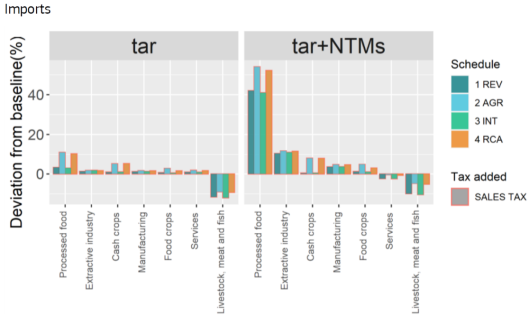
Figure 1. Projected changes in Kenya’s imports following implementation of the AfCFTA.
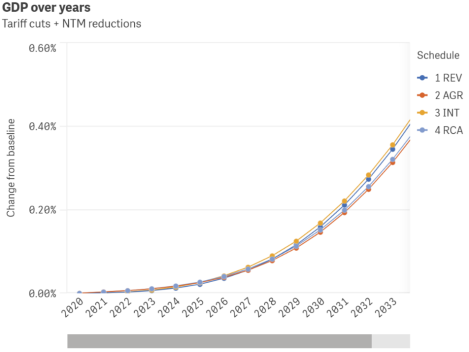
Figure 2. Projected changes in Kenya’s GDP, 2020-2033, following implementation of the AfCFTA.
The AfCFTA has boosted intra-African commerce by minimizing tariff and NTBs on Kenya’s trade with other African nations. Overall, the AfCFTA has enabled Kenya to increase its intra-African investment and trade, especially when the global commercial and trading landscape is becoming increasingly volatile
. Kenya has reaped rewards from the AfCFTA’s influence on trade diversification. For instance, the country’s exports have traditionally revolved around primary – largely raw – commodities and services, with manufactured products occupying a negligible proportion. Economists agree that the makeup of exports affects growth, and that nations whose exports are primarily composed of manufactured goods grow faster compared to those whose manufactured products constitute a small percentage of their exports
. This dynamic is especially prominent in African countries.
In general, the AfCFTA has strengthened the country’s Integrated National Export Development and Promotion Strategy, thus diversifying and expanding its export goods
. Additionally, because manufactured products dominate the country’s intra-African exports, a marked distinction from its shipments of largely raw primary products to the rest of the globe, the AfCFTA puts Kenya in a strong position to accelerate its industrialization
. This is consistent with its Big Four Agenda, Vision 2030, and Industrial Transformation Program. It is especially crucial because the country’s manufacturing value-added (MVA) as a proportion of its GDP has shrunk from 12 percent to 8 percent between 2011 and 2018, despite the manufacturing pillar of the Big Four Agenda having a goal of 20 percent of GDP
.
The wider intra-African trade in intermediate processed goods has also made Kenyan producers and firms more competitive and stimulated their incorporation into African and international value chains
. The bigger continental market created by the AfCFTA, added to trade policies that consider seasonal variations and diverse situations of food security, has increased flexibility in exporting food products from countries with surplus stocks to Kenya whenever it is experiencing shortages. The waning agricultural output of staple crops such as wheat, rice, and maize, coupled with climate change, is increasingly threatening Kenya’s agricultural yields, with adverse effects on food security
. Since most agricultural food commodities are perishable, their trade might be especially responsive to enhancements in logistics and customs clearance durations occasioned by the AfCFTA. The AfCFTA has also improved Kenya’s access to agricultural intermediates and inputs, such as advanced machinery and seed varieties
. This has boosted reliability and yields, thus increasing food security, one of the centerpieces of the Big Four Agenda which seeks to achieve complete food and national security for all citizens.
The AfCFTA has increased the country’s outward FDI by incentivizing firms to venture beyond the local market. Africa represents over 90 percent of gross FDI outflows in Kenya, and the EAC is the chief destination for the country’s intra-African FDI flows
. As a matter of fact, Kenya is one of the top five FDI sources for some EAC Partner States. Still, under the AfCFTA, Kenyan firms can exploit remarkable commercial opportunities, positively impacting sectoral diversification of FDI outflows. For many years, finance was the only fully regionalized Kenyan industry. Even so, it is still dominated by local banks, of which four rank in the top ten EAC companies by market capitalization
.
4.1.2. Egypt
According to
, Egypt’s participation in the AfCFTA has given it access to an expansive market with a US$3.4 trillion GDP and 1.3 billion people. This presents Egyptian firms with an excellent opportunity to diversify their goods, exploit new growth opportunities, and diversify their reach. The AfCFTA’s emphasis on minimizing NTBs and removing tariffs creates a more supportive climate for trade, enabling Egyptian companies to compete on the continental arena more effectively. Geographically, Egypt is strategically situated at the junction of Africa, Asia, and Europe
. As a member of the AfCFTA, this positions it as a perfect center for re-exports. For instance, by leveraging its advanced logistics infrastructure and ports, the country can facilitate the transition of products between the three continents. Asian and European exporters can use it as an entry point into the African market
. On the other hand, African firms can gain from convenient access to merchandise from other continents. With this re-export capacity, Egypt’s trade revenues and volumes can increase significantly, creating job opportunities
.
According to Egyptian Exporters Association (2025), the AfCFTA can encourage foreign investors to access other African markets by building distribution hubs and factories in Egypt to produce and export their goods to 54 African nations with customs exceptions. This will not only create new opportunities for investment partnerships but also strengthen Egypt’s hand as a regional commercial and industrial center serving the common African market (Egyptian Exporters Association, 2025). Egypt’s industries have also become more competitive in African and global markets because they can access African raw materials without duty-free or without tariffs, giving the country a trade surplus with other African states (Egyptian Exporters Association, 2025). The AfCFTA has given Egypt access to regional value chains in automobile, chemicals, clothing and textiles, agriculture, and pharmaceuticals industries
| [15] | Al-Namaky, M. M., Shehata, M., & Sarhan, H. (2024). The impact of implementing the African Free Trade Agreement on agricultural foreign trade between Egypt and the most important African Countries. Journal of the Advances in Agricultural Researches, 29(3), 582-593.
https://doi.org/10.21608/jalexu.2024.319513.1224 |
[15]
.
The AfCFTA augments Egypt’s current benefits under COMESA. It increases access to diverse and new African markets, especially those in West Africa with which Egypt does not have an active preferential trade deal (Egyptian Exporters Association, 2025). Consequently, Egyptian goods have become more competitive in these markets because of the AfCFTA’s customs reliefs. The export opportunities created for Egypt by the AfCFTA are valued at about US$6.7 billion; of this, US$ 4 billion represents unexploited potential (Egyptian Exporters Association, 2025). As the AfCFTA keeps maturing, these opportunities will increase and enhance Egypt’s strategic advantage in terms of economic relationships and market share across the continent (Egyptian Exporters Association, 2025).
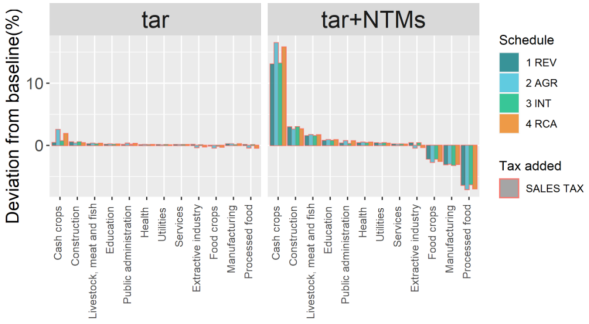
Figure 3. Projected changes in Egypt’s sector output (by activities) following implementation of the AfCFTA.
4.1.3. Morocco
Scholars like
| [9] | Baroudi, Y. E., Elhamzaoui, B., Baouchari, N. E., Hajoui, Y. E., Kharbouche, A., & Otmani, Z. O. Z. (2025). Assessing the trade and welfare impacts of African Continental Free Trade Area (AfCFTA) on Morocco: A combined gravity-CGE analysis. Journal of Applied Economic Sciences (JAES), 20(16), 463.
https://doi.org/10.57017/jaes.v20.3(89).07 |
[9]
argue that the AfCFTA has prompted Morocco to adopt measures to safeguard its livestock and agricultural industries within the confines of the agreement, exempting some merchandise from the AfCFTA. This move has protected the interests of domestic producers while staying true to the letter and spirit of African economic harmonization. Additionally, protecting these vital industries ensures the sustainable growth and stability of the country’s economy in spite of market liberalization. Morocco has also exempted processed seafoods from the AfCFTA framework, signifying their strategic value to its economy and protecting the crucial local fishing sector
| [9] | Baroudi, Y. E., Elhamzaoui, B., Baouchari, N. E., Hajoui, Y. E., Kharbouche, A., & Otmani, Z. O. Z. (2025). Assessing the trade and welfare impacts of African Continental Free Trade Area (AfCFTA) on Morocco: A combined gravity-CGE analysis. Journal of Applied Economic Sciences (JAES), 20(16), 463.
https://doi.org/10.57017/jaes.v20.3(89).07 |
[9]
. This move allows the country to uphold its competitive edge in this segment while participating in intra-African trade. The AfCFTA supports the promotion and valorization of
Made in Africa merchandise, thus promoting the continent’s manufacturing and industrial advancement. This measure, which enables African economic unity, augments regional value chains, and increases intra-African trade, favors Morocco’s local manufacturing sector
| [9] | Baroudi, Y. E., Elhamzaoui, B., Baouchari, N. E., Hajoui, Y. E., Kharbouche, A., & Otmani, Z. O. Z. (2025). Assessing the trade and welfare impacts of African Continental Free Trade Area (AfCFTA) on Morocco: A combined gravity-CGE analysis. Journal of Applied Economic Sciences (JAES), 20(16), 463.
https://doi.org/10.57017/jaes.v20.3(89).07 |
[9]
. The AfCFTA has also given Morocco access to 54 African markets and vice-versa, significantly increasing and diversifying the country’s exports, FDI earnings, and local businesses and industries. For instance, Moroccan firms can now benefit from lower costs and capitalize on novel market opportunities, thanks to the AfCFTA’s removal of tariffs on a broad variety of merchandise
| [9] | Baroudi, Y. E., Elhamzaoui, B., Baouchari, N. E., Hajoui, Y. E., Kharbouche, A., & Otmani, Z. O. Z. (2025). Assessing the trade and welfare impacts of African Continental Free Trade Area (AfCFTA) on Morocco: A combined gravity-CGE analysis. Journal of Applied Economic Sciences (JAES), 20(16), 463.
https://doi.org/10.57017/jaes.v20.3(89).07 |
[9]
. At the same time, Moroccan enterprises have become more competitive on a continental level. These economic opportunities also promote innovation, Morocco’s capacity to manufacture goods adapted to continental markets, and Morocco’s status as a major economic actor in Africa
| [9] | Baroudi, Y. E., Elhamzaoui, B., Baouchari, N. E., Hajoui, Y. E., Kharbouche, A., & Otmani, Z. O. Z. (2025). Assessing the trade and welfare impacts of African Continental Free Trade Area (AfCFTA) on Morocco: A combined gravity-CGE analysis. Journal of Applied Economic Sciences (JAES), 20(16), 463.
https://doi.org/10.57017/jaes.v20.3(89).07 |
[9]
.
According to
| [3] | Allali, S. (2024, June 8-10). An economic assessment of the AfCFTA impact on the Moroccan economy [Conference presentation]. 25th Annual Conference on Global Economic Analysis: Accelerating Economic Transformation, Diversification and Job Creation, Global Trade Analysis Project.
https://www.gtap.agecon.purdue.edu/events/conferences/default.asp |
[3]
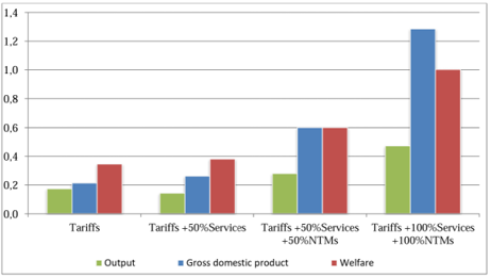
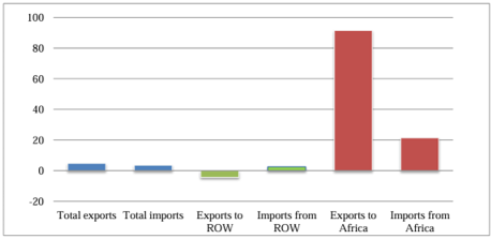
, the AfCFTA has stimulated positive changes in Morocco’s output, welfare, and GDP. Projections show that Morocco’s GDP will expand by US$1.9 billion, or 0.6%, if the AfCFTA reduces tariffs by 50%. A moderate growth is also anticipated in welfare and production, with increases of $0.2 billion (0.6%) and $2.2 billion (0.3%) respectively
| [3] | Allali, S. (2024, June 8-10). An economic assessment of the AfCFTA impact on the Moroccan economy [Conference presentation]. 25th Annual Conference on Global Economic Analysis: Accelerating Economic Transformation, Diversification and Job Creation, Global Trade Analysis Project.
https://www.gtap.agecon.purdue.edu/events/conferences/default.asp |
[3]
. Implementing the AfCFTA should increase Morocco’s gross exports and imports by $4.7 billion and 3.6 percent respectively. Morocco’s service, agribusiness and industrial sectors, especially those involved in professional services, chemicals, transport, textiles, food and beverages, plastics, paper and wood products, and pharmaceuticals, will benefit the most from the country’s trade gains under the AfCFTA
| [3] | Allali, S. (2024, June 8-10). An economic assessment of the AfCFTA impact on the Moroccan economy [Conference presentation]. 25th Annual Conference on Global Economic Analysis: Accelerating Economic Transformation, Diversification and Job Creation, Global Trade Analysis Project.
https://www.gtap.agecon.purdue.edu/events/conferences/default.asp |
[3]
. In other words, the AfCFTA is an opportunity for the country to develop while increasing the presence of its industries across Africa.
Figure 4. Projected changes in Morocco’s key macroeconomic indicators following implementation of the AfCFTA.
Figure 5. Projected changes in Morocco’s exports and imports following implementation of the AfCFTA.
4.1.4. South Africa
According to
| [13] | Abdullahi, A., Ibrahim, A. S., & Chembayil, S. (2025). South Africa as a gateway to Africa: BRICS Cooperation and the African Continental Free Trade Area (AfCFTA). Review of History and Political Science, 11(8), 69-79.
https://doi.org/10.15640/rhps.v12p2 |
[13]
, the AfCFTA allows South African firms to export certain products duty-free or with lower tariffs to various African countries. Also, MNCs whose merchandise originate from South Africa could also gain; in this regard, multinational firms may be encouraged to manufacture and invest in South Africa. The AfCFTA presents excellent opportunities for South African businesses to grow and become more competitive across many sectors, making it a major incentive for the country’s economy
| [13] | Abdullahi, A., Ibrahim, A. S., & Chembayil, S. (2025). South Africa as a gateway to Africa: BRICS Cooperation and the African Continental Free Trade Area (AfCFTA). Review of History and Political Science, 11(8), 69-79.
https://doi.org/10.15640/rhps.v12p2 |
[13]
.
As the country with the most advanced economy in Africa, South Africa is well-positioned to unlock novel opportunities for its tourism sector by implementing the AfCFTA. For example, one of the most enticing elements of the AfCFTA for South Africa’s tourism industry lies in its facilitation of the unrestricted flow of people, which will significantly increase the number of leisure and business travelers across the continent
| [5] | Mutambara, T. E. (2025). South Africa-Africa trade: Implications for South Africa in intra-Africa trade with the African Continental Free Trade Area in place. The Business and Management Review, 13(1).
https://doi.org/10.24052/bmr/v15nu03/art-13 |
[5]
. This unhindered traffic could boost demand for accommodation and hotels, land and air transportation, and much more, hence propelling growth, creating much-needed job opportunities, and generating extra income.
| [5] | Mutambara, T. E. (2025). South Africa-Africa trade: Implications for South Africa in intra-Africa trade with the African Continental Free Trade Area in place. The Business and Management Review, 13(1).
https://doi.org/10.24052/bmr/v15nu03/art-13 |
[5]
argues that as the entry point to southern Africa, South Africa is becoming a center for professionals desiring to experience working regionally. The free flow of people supported by the AfCFTA would inspire Africans to visit South Africa as a work and leisure destination. Professionals and business travelers, lured by the idea of seamless movement, would trigger a spike in tourism-based activities. Collaborative initiatives, conferences, and conventions could become prevalent, further cementing South Africa’s position as a favorite destination for leisure and business
| [5] | Mutambara, T. E. (2025). South Africa-Africa trade: Implications for South Africa in intra-Africa trade with the African Continental Free Trade Area in place. The Business and Management Review, 13(1).
https://doi.org/10.24052/bmr/v15nu03/art-13 |
[5]
.
Intra-African travel could increase revenues from the country’s numerous tourism products. For instance, as professionals sample work opportunities across the continent, they are inclined to prolong their stays to explore the distinct natural, historical, and cultural attractions in South Africa. According to
| [5] | Mutambara, T. E. (2025). South Africa-Africa trade: Implications for South Africa in intra-Africa trade with the African Continental Free Trade Area in place. The Business and Management Review, 13(1).
https://doi.org/10.24052/bmr/v15nu03/art-13 |
[5]
, this will diversify the country’s tourism markets and encourage visitors to stay longer and spend more. Collaboration becomes more appealing with free movement. By promoting cross-border alliances and exploiting neighboring countries’ strengths, South Africa can develop distinct travel bouquets showcasing the variety of experiences the continent offers. From wildlife excursions to cultural festivals, a collaborative approach can enrich the country’s tourism sector and lure a wider range of visitors from across the continent
| [5] | Mutambara, T. E. (2025). South Africa-Africa trade: Implications for South Africa in intra-Africa trade with the African Continental Free Trade Area in place. The Business and Management Review, 13(1).
https://doi.org/10.24052/bmr/v15nu03/art-13 |
[5]
. The AfCFTA would also allow skilled laborers from across Africa to move seamlessly across franchised brands to maintain top-down quality standards and control. This move has considerable benefits for South African businesses in terms of strengthening skills development, improving quality, and furthering the careers of important workers. At the same time, it benefits travelers by meeting or exceeding their travel expectations, persuading them to return many times over
| [5] | Mutambara, T. E. (2025). South Africa-Africa trade: Implications for South Africa in intra-Africa trade with the African Continental Free Trade Area in place. The Business and Management Review, 13(1).
https://doi.org/10.24052/bmr/v15nu03/art-13 |
[5]
.
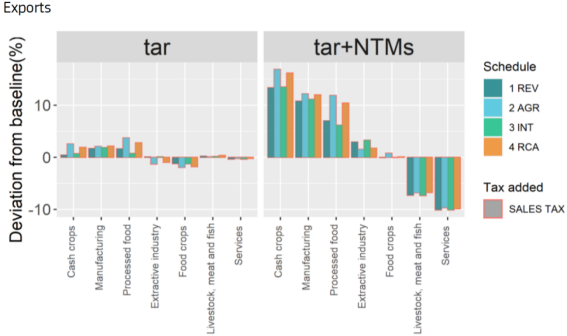
Figure 6. Projected changes in South Africa’s exports following implementation of the AfCFTA.
4.2. Key Legal and Regulatory Challenges in Full Implementation of the AfCFTA
4.2.1. Kenya
According to
, Africa’s investment policy terrain is a
spaghetti bowl of interconnected regional and bilateral pacts with unpredictable provisions. For instance, RECs like the EAC and COMESA, of which Kenya is a member, have recognized this regulatory flaw and partly attempted to resolve it by enacting standard investment regulation and common agreements and laws
. Kenyan companies are hampered by the intricacy of licensing processes, which obstruct their capacity to participate in the AfCFTA GTI effectively
| [11] | Mugwe, M. K. (2022). Effect of African Continental Free Trade Area (AfCFTA) on trade facilitation in East African Community member countries: A Study in Kenya. International Journal of Innovative Research and Development, 11(5).
https://doi.org/10.24940/ijird/2022/v11/i5/may22013 |
[11]
. According to
| [11] | Mugwe, M. K. (2022). Effect of African Continental Free Trade Area (AfCFTA) on trade facilitation in East African Community member countries: A Study in Kenya. International Journal of Innovative Research and Development, 11(5).
https://doi.org/10.24940/ijird/2022/v11/i5/may22013 |
[11]
, poor coordination among entities such as government bureaus and the private sector, added to rampant corruption at customs and clearance points, discourage Kenyan companies from leveraging the AfCFTA and its expanded market.
4.2.2. Egypt
Despite the aforementioned opportunities, Egypt is still grappling with considerable challenges in leveraging its trade capacity
. The first is the lack of an ECA and ECA-supported financing. This hinders the availability of affordable trade finance for exporters, especially SMEs, and limits the country’s capacity to provide competitive credit conditions to potential customers
. According to
| [15] | Al-Namaky, M. M., Shehata, M., & Sarhan, H. (2024). The impact of implementing the African Free Trade Agreement on agricultural foreign trade between Egypt and the most important African Countries. Journal of the Advances in Agricultural Researches, 29(3), 582-593.
https://doi.org/10.21608/jalexu.2024.319513.1224 |
[15]
, national implementation mechanisms are vital to maintaining compliance with trade frameworks like the AfCFTA. They are also fundamental to minimizing trade disputes and promoting a robust investment and trade climate. Nonetheless, Egypt lacks an overarching supervisory body to ensure its adherence to enforcement policies and trade pacts
| [15] | Al-Namaky, M. M., Shehata, M., & Sarhan, H. (2024). The impact of implementing the African Free Trade Agreement on agricultural foreign trade between Egypt and the most important African Countries. Journal of the Advances in Agricultural Researches, 29(3), 582-593.
https://doi.org/10.21608/jalexu.2024.319513.1224 |
[15]
.
4.2.3. Morocco
Despite the actual and promised gains from the AfCFTA, Morocco faces various challenges in fully implementing and benefitting from the framework. These include regulatory standardization and NTBs
| [31] | Taoufik, N., Ouadghiri, K., & Jbali, B. (2023). The African Continental Free Trade Area (AfCFTA): Progress, challenges, and potential benefits for Morocco. African Scientific Journal, 3(18), 054–072. https://doi.org/10.5281/zenodo.8013189 |
[31]
. However, efforts are being made to resolve these complexities via ongoing talks, development of complementary mechanisms, and capacity-building measures. Morocco has formed working groups and technical panels to resolve specific issues, such as investment, rules of origin, intellectual property rights, and trade in services
| [31] | Taoufik, N., Ouadghiri, K., & Jbali, B. (2023). The African Continental Free Trade Area (AfCFTA): Progress, challenges, and potential benefits for Morocco. African Scientific Journal, 3(18), 054–072. https://doi.org/10.5281/zenodo.8013189 |
[31]
. The challenge of regulatory standardization stems from the fact that African nations have diverse development levels, resource capacities, and economic systems
| [31] | Taoufik, N., Ouadghiri, K., & Jbali, B. (2023). The African Continental Free Trade Area (AfCFTA): Progress, challenges, and potential benefits for Morocco. African Scientific Journal, 3(18), 054–072. https://doi.org/10.5281/zenodo.8013189 |
[31]
.
4.2.4. South Africa
Despite its considerable potential, South Africa is experiencing challenges in operationalizing the AfCFTA, mainly in the form of regulatory frameworks and the lack of standardization of trade policies across the continent
| [5] | Mutambara, T. E. (2025). South Africa-Africa trade: Implications for South Africa in intra-Africa trade with the African Continental Free Trade Area in place. The Business and Management Review, 13(1).
https://doi.org/10.24052/bmr/v15nu03/art-13 |
[5]
. There are also concerns regarding potential economic disparities and the need for buffers to secure vulnerable sectors that have complicated negotiations. As a leading actor in the continent’s economy, South Africa must handle these issues with foresight and diplomacy to ensure equitable distribution of the benefits of adoption among partner states
| [5] | Mutambara, T. E. (2025). South Africa-Africa trade: Implications for South Africa in intra-Africa trade with the African Continental Free Trade Area in place. The Business and Management Review, 13(1).
https://doi.org/10.24052/bmr/v15nu03/art-13 |
[5]
.
According to
| [1] | Mhonyera, G., & Meyer, D. F. (2023). The Impact of AfCFTA on welfare and trade: Nigeria and South Africa in light of core export competences. Sustainability, 15(6), 5090.
https://doi.org/10.3390/su15065090 |
[1],
South Africa’s inconsistent, insufficient, and incoherent immigration policy has been the subject of serious concern in terms of its dedication to RI and full implementation of the AfCFTA. The policy encourages the influx of skilled Africans only while shunning their unskilled counterparts. The policy has also grown increasingly unpredictable due to the government’s inadequacy in checking drug trafficking, smuggling, illegal immigrants, and other criminalities, which many South Africans usually associate with migrants. Growing inequality, unemployment, and poverty rates, coupled with the government’s waning ability to provide public goods, have intensified domestic opposition and resentment towards immigration
| [1] | Mhonyera, G., & Meyer, D. F. (2023). The Impact of AfCFTA on welfare and trade: Nigeria and South Africa in light of core export competences. Sustainability, 15(6), 5090.
https://doi.org/10.3390/su15065090 |
[1]
. Consequently, inconsistencies have emerged in South Africa’s economic, regional, and immigration policies, which are increasingly averse to African immigrants, stifling regional goals for the seamless flow of goods and people across national boundaries.
South Africa is SADC’s biggest funder and one of the leading sponsors of the AU and related regional communities. Nonetheless, there are resentments concerning the disproportionality of trade balances between the country and other SADC member states
| [1] | Mhonyera, G., & Meyer, D. F. (2023). The Impact of AfCFTA on welfare and trade: Nigeria and South Africa in light of core export competences. Sustainability, 15(6), 5090.
https://doi.org/10.3390/su15065090 |
[1]
. While the SADC market is inundated with its products, South Africa uses subsidy and tariff regimes to safeguard certain sectors, including automobiles and textiles, from competition from other nations. As a result, it has an edge in its trade ties with many other African economies
| [1] | Mhonyera, G., & Meyer, D. F. (2023). The Impact of AfCFTA on welfare and trade: Nigeria and South Africa in light of core export competences. Sustainability, 15(6), 5090.
https://doi.org/10.3390/su15065090 |
[1]
.
4.3. Implications on the Overall Effectiveness of AfCFTA
Supply chain, production, competitiveness, and integration of micro, small, and medium enterprises (MSMEs), among other constraints hinder full implementation of the AfCFTA. The AfCFTA demands explicit rules of origin to ascertain qualification for preferential treatment
. However, trade mandates in the EAC and its Foreign Affairs ministries are yet to be harmonized. This leads to trade policy conflicts stunting the smooth enforcement of trade frameworks. On top of this, NTBs that hinder seamless flow of products stifle intra-African trade and hamper Kenya’s capacity to fully exploit export opportunities and expand its export markets
.
Egypt’s lack of an oversight authority can occasion unchecked trade violations, blunting the effectiveness of the AfCFTA
| [15] | Al-Namaky, M. M., Shehata, M., & Sarhan, H. (2024). The impact of implementing the African Free Trade Agreement on agricultural foreign trade between Egypt and the most important African Countries. Journal of the Advances in Agricultural Researches, 29(3), 582-593.
https://doi.org/10.21608/jalexu.2024.319513.1224 |
[15]
. To this end, it needs to strengthen its national implementation mechanisms and establish a legal blueprint for dispute resolution that aligns with the AfCFTA Dispute Settlement Protocol. Such a system would instill trust in the trade agreement, ensure fairness and predictability, and enable broader adherence to signed pacts
| [15] | Al-Namaky, M. M., Shehata, M., & Sarhan, H. (2024). The impact of implementing the African Free Trade Agreement on agricultural foreign trade between Egypt and the most important African Countries. Journal of the Advances in Agricultural Researches, 29(3), 582-593.
https://doi.org/10.21608/jalexu.2024.319513.1224 |
[15]
.
According to
| [31] | Taoufik, N., Ouadghiri, K., & Jbali, B. (2023). The African Continental Free Trade Area (AfCFTA): Progress, challenges, and potential benefits for Morocco. African Scientific Journal, 3(18), 054–072. https://doi.org/10.5281/zenodo.8013189 |
[31]
, Morocco’s economic strategies and policies are incongruent with those of other countries and would need to be harmonized to accommodate such variations. NTBs, such as customs inefficiencies, unpredictable regulations, and bureaucratic red tape, have obstructed Morocco’s ability to leverage the AfCFTA.
According to
| [5] | Mutambara, T. E. (2025). South Africa-Africa trade: Implications for South Africa in intra-Africa trade with the African Continental Free Trade Area in place. The Business and Management Review, 13(1).
https://doi.org/10.24052/bmr/v15nu03/art-13 |
[5]
, regulatory and harmonization challenges hinder the country from fully realizing the gains promised by the agreement. For example, South Africa is struggling to fit its national regulations into the agreement’s overarching framework. This process demands extensive talks and compromises to safeguard national interests while facilitating the greater goal of African economic harmony
| [5] | Mutambara, T. E. (2025). South Africa-Africa trade: Implications for South Africa in intra-Africa trade with the African Continental Free Trade Area in place. The Business and Management Review, 13(1).
https://doi.org/10.24052/bmr/v15nu03/art-13 |
[5]
. South African immigration policies and borders are hindrances to the smooth operationalization of the AfCFTA’s objectives. The country borders Namibia, Botswana, Zimbabwe, Swaziland, and Mozambique
| [1] | Mhonyera, G., & Meyer, D. F. (2023). The Impact of AfCFTA on welfare and trade: Nigeria and South Africa in light of core export competences. Sustainability, 15(6), 5090.
https://doi.org/10.3390/su15065090 |
[1]
. However, these borders were defined during the apartheid era and were deliberately shaped to lock South Africans within their country while blocking citizens and goods from other nations from entering the country. Decades after apartheid, the configuration of these borders are largely the same, creating challenges in the flow of people, products, and services across southern African borders
| [1] | Mhonyera, G., & Meyer, D. F. (2023). The Impact of AfCFTA on welfare and trade: Nigeria and South Africa in light of core export competences. Sustainability, 15(6), 5090.
https://doi.org/10.3390/su15065090 |
[1]
. According to
| [1] | Mhonyera, G., & Meyer, D. F. (2023). The Impact of AfCFTA on welfare and trade: Nigeria and South Africa in light of core export competences. Sustainability, 15(6), 5090.
https://doi.org/10.3390/su15065090 |
[1]
, such protectionist policies are the biggest hindrances to the AfCFTA’s successful implementation. In fact, regional economic efforts before the AfCFTA had little successes because of protectionist national economic policies by South Africa and other countries. Protectionism invites retaliation and reciprocation by affected countries, with adverse consequences for all concerned countries and the AfCFTA. For example, South Africa’s agricultural and food exports have also succumbed to other southern African countries’ protectionist policies
| [1] | Mhonyera, G., & Meyer, D. F. (2023). The Impact of AfCFTA on welfare and trade: Nigeria and South Africa in light of core export competences. Sustainability, 15(6), 5090.
https://doi.org/10.3390/su15065090 |
[1]
. Namibia and Botswana have previously blocked the importation of South African farm products, while the Nigerian government deported some South Africans in retaliation for the deportation of its citizens from South Africa due to controversies regarding the yellow fever vaccine. According to
| [1] | Mhonyera, G., & Meyer, D. F. (2023). The Impact of AfCFTA on welfare and trade: Nigeria and South Africa in light of core export competences. Sustainability, 15(6), 5090.
https://doi.org/10.3390/su15065090 |
[1]
, these tensions betray the core purpose and interests of the AfCFTA, which envisions economic and RI and unity, and undermine South Africa’s and other countries’ foreign policy objectives, which are usually crafted to facilitate regional development, peace, and integration. The fact that South Africa conducts most of its trade relations with China, the United States, and Europe show how much its internal legal and regulatory complications frustrate the AfCFTA’s implementation
| [1] | Mhonyera, G., & Meyer, D. F. (2023). The Impact of AfCFTA on welfare and trade: Nigeria and South Africa in light of core export competences. Sustainability, 15(6), 5090.
https://doi.org/10.3390/su15065090 |
[1]
.
4.4. Recommended Strategies for Facilitating AfCFTA Success by the Kenyan Government
1) Invest in logistics, digital, energy, and transport infrastructure to fast-track and streamline trade flows, especially in border areas, and plug connectivity gaps
| [34] | Maliszewska, M., Mensbrugghe, D., Pereira, M., Osorio-Rodarte, I., & Ruta, M. (2020). The African Continental Free Trade Area: Economic and distributional effects.
https://doi.org/10.1596/978-1-4648-1559-1 |
[34]
.
2) Work towards harmonizing trade regulations with other AfCFTA member states to reduce trade barriers and enhance compliance. The government should view the AfCFTA as a vehicle for structural development and wider economic adjustments instead of a silver bullet
| [34] | Maliszewska, M., Mensbrugghe, D., Pereira, M., Osorio-Rodarte, I., & Ruta, M. (2020). The African Continental Free Trade Area: Economic and distributional effects.
https://doi.org/10.1596/978-1-4648-1559-1 |
[34]
.
3) Provide training and financial support for businesses, especially SMEs, to understand and comply with AfCFTA rules, particularly concerning tariffs and trade facilitation, boost local production, and improve skill levels
| [12] | Afefe, S. A. S. (2024). Proposed mechanisms to achieve sustainable development in Egypt through implementation of the African Free Trade Agreement. Journal of Environmental Science. https://doi.org/10.21608/jes.2024.277753.1760 |
[12]
. It should also issue financial support to SMEs to boost local production.
4) Encourage collaboration with the private sector to develop innovative solutions for trade challenges, including financing and logistics
| [12] | Afefe, S. A. S. (2024). Proposed mechanisms to achieve sustainable development in Egypt through implementation of the African Free Trade Agreement. Journal of Environmental Science. https://doi.org/10.21608/jes.2024.277753.1760 |
[12]
.
5) Establish a robust monitoring and evaluation framework to assess the impact of the AfCFTA on trade performance and identify areas for improvement.
5. Discussion
The results lend empirical support to the theoretical hypothesis of the present study, which states that legal-regulatory congruence among member states is the main indicator of the success of RI, and trade volume is perceived as a natural consequence of the congruence. Based on
’s institutional theory, it is apparent how the path-dependent institutional legacies, reflected in the regulatory incongruence, implementation deficit, and protectionism pressures experienced in the four case studies, condition integration outcomes in a manner that cannot be reflected solely by the measures of trade volume. The results of stakeholder meetings are vital to the probability of success of the AfCFTA’s implementation, since they will clarify key concerns like the rules of origin. It is noteworthy that negotiating and ratifying rules of origin is a core component of the practicality of any trade framework. Deficient origin standards create a gap that can be exploited by third-country manufacturers. The AfCFTA plans to remove tariff and NTBs, but succeeding in this quest would require adopting many other interventions, such as augmenting the development and security nexus, alleviating the short-term fiscal adjustment costs, and restoring national development banks
| [34] | Maliszewska, M., Mensbrugghe, D., Pereira, M., Osorio-Rodarte, I., & Ruta, M. (2020). The African Continental Free Trade Area: Economic and distributional effects.
https://doi.org/10.1596/978-1-4648-1559-1 |
[34]
. Enforcing the AfCFTA requires diverse stakeholders to cooperate and coordinate at national, regional, and continental tiers, which poses resource allocation, governance, and institutional capacity issues.
The implementation gap witnessed at the AU level is a good example of the institutional path dependence that this paper has cited as the main challenge to sustainable RI. The disclosure by chairperson Moussa Faki Mahamat that 93 percent of all the decisions made by the AU Commission had not been enforced over 2021-2023 is not just an administrative failure, but a very deep sign of the disconnect between continental ambition and institutional reality
| [34] | Maliszewska, M., Mensbrugghe, D., Pereira, M., Osorio-Rodarte, I., & Ruta, M. (2020). The African Continental Free Trade Area: Economic and distributional effects.
https://doi.org/10.1596/978-1-4648-1559-1 |
[34]
. When the same entity that delivers the AfCFTA attains a 7% enforcement rate, the implementation issues that member states face are bound to be more critical. Analyzed using the institutional theory framework, this gap in implementation shows why the trade volume cannot be an effective indicator of integration success. Even formal commitments to tariff reduction, ratification of agreements and even engagement in GTIs may be experienced with underlying institutional structures being disjointed. As
| [34] | Maliszewska, M., Mensbrugghe, D., Pereira, M., Osorio-Rodarte, I., & Ruta, M. (2020). The African Continental Free Trade Area: Economic and distributional effects.
https://doi.org/10.1596/978-1-4648-1559-1 |
[34]
points out, implementation, in addition to adherence to agreed rules, demands investment in procedural infrastructure, modernization of customs, and regulatory coordination, exactly the legal-regulatory alignment that this paper proposes should become the main measure. The infrastructural problems that limit operational performance in Kenya, Egypt, Morocco, and South Africa are not just technical issues. They mirror institutional failures that can be eliminated only through tariff reduction. In cases where institutional alignment is low, the trade benefits received under the preferential systems are open to the same enforcement failures that the 93% figure of the AU reveals. To be sustainable, this institutional gap, which is naturally concealed by trade volume measures, needs to be bridged.
The AfCFTA may have the potential to considerably enhance welfare, but it is hampered by potential negative distributional implications, such as transitional joblessness and rising income inequality
| [34] | Maliszewska, M., Mensbrugghe, D., Pereira, M., Osorio-Rodarte, I., & Ruta, M. (2020). The African Continental Free Trade Area: Economic and distributional effects.
https://doi.org/10.1596/978-1-4648-1559-1 |
[34]
. This issue warrants urgent attention because the Agreement’s neoliberal orientation will foster greater income disproportionalities in a continent with two of the world’s most unequal countries: Namibia and South Africa
| [34] | Maliszewska, M., Mensbrugghe, D., Pereira, M., Osorio-Rodarte, I., & Ruta, M. (2020). The African Continental Free Trade Area: Economic and distributional effects.
https://doi.org/10.1596/978-1-4648-1559-1 |
[34]
. The Agreement’s heterogeneous membership also obstructs fairness and win-win results. Certain countries and sectors can struggle to adjust to trade liberalization, especially those heavily dependent on protectionist policies or struggle to compete
| [34] | Maliszewska, M., Mensbrugghe, D., Pereira, M., Osorio-Rodarte, I., & Ruta, M. (2020). The African Continental Free Trade Area: Economic and distributional effects.
https://doi.org/10.1596/978-1-4648-1559-1 |
[34]
. For instance, one of the continent’s leading economies, Nigeria, has voiced reservations about becoming a dustbin for finished products
| [34] | Maliszewska, M., Mensbrugghe, D., Pereira, M., Osorio-Rodarte, I., & Ruta, M. (2020). The African Continental Free Trade Area: Economic and distributional effects.
https://doi.org/10.1596/978-1-4648-1559-1 |
[34]
. It has, therefore, lobbied for rules-based integration.
The introduction of the AfCFTA is accompanied by the world moving into the multilateralism and protectionism era. The focus of the agreement on Trade Integrity, which includes transparency, fair prices, and legitimacy, is a different framework that places RI above the benefits of the unilateral gains in this difficult environment
. This makes the AfCFTA a prototype of future trade arrangements, which are more localized but still related to global systems.
The AfCFTA shows calculated institutional compatibility with World Trade Organization (WTO) structures. Its dispute settlement procedures, Phase II talks on intellectual property and investment, and adherence to rules-based trade all reflect WTO patterns
. Although preferential integration clauses do not align with most-favored-nation principles, regional trade agreements under the General Agreement on Tariffs and Trade (GATT) and the General Agreement on Tariffs and Services (GATS) restrictions allow this tension. Notably, the AfCFTA brings WTO compatible structures to the 11 non-member African countries, which could fast-track their accession procedures. This institutional borrowing minimizes friction among firms that operate in continental and global markets.
For MNCs, the AfCFTA will have opportunities and threats.
| [10] | Debrah, Y. A., Olabode, O. E., Olan, F., & Nyuur, R. B. (2024). The African Continental Free Trade Area (AfCFTA): Taking stock and looking ahead for international business research. Journal of International Management, 30(2), Article 101120.
https://doi.org/10.1016/j.intman.2024.101120 |
[10]
observe that African-origin MNCs have the opportunity to grow on the regional level and decrease their reliance on extra-continental FDI, where integration decreases the cost of transactions and uncertainty. Nonetheless, the perceived loss of sovereignty and cultural watering down can provoke the protectionist backlash, which highlights the importance of institutional legitimacy to go alongside the formal integration.
| [25] | Oloruntoba, S. O., & Nshimbi, C. C. (2023). The AfCFTA: Promise for a globally competitive continent and Africa’s development. Journal of Contemporary African Studies, 41(4), 351–359. https://doi.org/10.1080/02589001.2023.2274814 |
[25]
highlight that the AfCFTA allows African economies to participate in global markets beyond mega-deals such as the Regional Comprehensive Economic Partnership (RCEP) or the Trans-Pacific Partnership (TPP), which are exclusionary. However,
| [14] | Fon, R., Getachew, Y. S., & Mol, M. J. (2025). Turning the African Continental Free Trade Area into an international business success story: Lessons from inside and outside Africa. AIB Insights. https://doi.org/10.46697/001c.137462 |
[14]
warn that achieving these benefits will necessitate long-term institutional alignment, capacity-building, and distributional equity considerations.





 Share This Article
 Twitter
 Linked In
 Facebook
 Copy
Copy Download