1. Introduction
The law of torts is an essential element of any civil justice system which is designed to offer remedies to individuals who have experienced injuries due to the wrongful actions of others. It significantly aids in compensating victims and helps to deter negligent behavior from society and ensures accountability in both public and private spheres. Though law of torts is well accepted in many jurisdictions, its application remains regressive in many aspects. Tort law in Bangladesh lacks a comprehensive codified statute, resulting in inconsistent judicial implementations and absence of general awareness regarding its application. However, in recent years, significant number of judicial decisions have contributed to growing recognition of tortious liability in Bangladesh.
This paper intends to explore the recent developments in case law related with tort claims in Bangladesh by focusing on new judicial interpretations, legislative shortcomings and challenges in enforcement. It discusses landmark cases that have played a pivotal role in shaping contemporary tort jurisprudence in Bangladesh and those landmark decisions are Bangladesh Beverage Industries Limited vs Rawshan Aktar and others (2016), Catherine Masud and Others vs. Khushid Miah and Others 10 SCOB [2018] HCD and CCB Foundation v Government of Bangladesh 5 CLR (HCD) 2017, which have significantly influenced contemporary tort jurisprudence. In addition to analyze these case laws, this study compares the application of tort law in Bangladesh with that of others jurisdictions, such as USA, UK and India, where tort law is more vigorously applied. This paper adopts a doctrinal research approach, relying on legal statutes, academic literature, case studies etc. Moreover, empirical study in the form of surveys conducted among legal professionals to assess the public perception on tort law’s recent developments in Bangladesh.
The structure of this paper includes an initial overview on the historical development and significance of tort law and also try to highlight its importance in the civil justice system along with that it reviews the current status of tort application in Bangladesh, including judicial and legislative development. The study then scrutinizes principal case laws that have shaped tort jurisprudence. In the ends, the paper identifies major challenges in regards of the enforcement of tort laws in Bangladesh and propose policy recommendations for strengthening the application of tort law. Finally, his research seeks to contribute to the ongoing discourse on development of tort law in Bangladesh. In due course it advocates for a structured legal framework that ensures effective remedies for victims of civil wrongs while promoting justice and deterrence. This paper initially explores the recent developments in case laws related with tort claims in Bangladesh. The principal objective of this paper is to examine the recent judicial trends, current status of its implementation and challenges regarding the enforcement of tort laws in Bangladesh and also providing some necessary reforms to ensure justice for the victims of tortious actions.
The specific objective of this study has been stated below:
1) To assess the recent trends of judiciary in shaping the tort jurisprudence in Bangladesh and also identify the challenges in enforcing tort claims such as legal ambiguities and procedural impediments.
2) To investigate the possibilities for codifying tort law in Bangladesh and assess the feasibility of enacting legislative and policy reforms to enhance its efficacy and accessibility in the country.
4. Result and Discussion
The law of tort has evolved over the centuries, shaped by the various principles and customs from ancient time to modern legal system. Originally, there was no distinction between various wrongs and there was no compartmentalization like crime, tort or breach of contract etc.
| [5] | Atiyah, P. S. An Introduction to the Law of Tort. 5th Edition. Oxford: Clarendon Press; 1997. |
[5]
. When accidents occur and people suffer injuries, who ought to bear the loss? Tort law offers a complex set of rules to answer this question, but until now philosophers have offered little by way of analysis of these rules
| [7] | Beever, A. Philosophy of Tort Law. 1st Edition. Cambridge: Cambridge University Press; 2010. |
[7]
. After the Norman Conquest, English Common Law Courts developed the write system which included early forms of tortious act like trespass and nuisance. Most part of the law of torts developed through writs
| [6] | Bangia, R. K. Law of Torts. 15th Edition. Faridabad: Allahabad Law Agency; 2012, pp. 6–34. |
[6]
. That time the law was
Ubi remedium ibi jus (Where there is a remedy, there is a right) and more specifically, where there was no remedy by way of a write, there was considered to be no right
| [6] | Bangia, R. K. Law of Torts. 15th Edition. Faridabad: Allahabad Law Agency; 2012, pp. 6–34. |
[6]
. Now the position is that whenever the court is convinced that there is a lawful right of a person which is violated, remedy is provided for the same
| [6] | Bangia, R. K. Law of Torts. 15th Edition. Faridabad: Allahabad Law Agency; 2012, pp. 6–34. |
[6]
. The law of tort is mainly the product of judicial decisions. The courts in England have generally shown favourable attitude towards the recognizing new torts
| [6] | Bangia, R. K. Law of Torts. 15th Edition. Faridabad: Allahabad Law Agency; 2012, pp. 6–34. |
[6]
. The first reported case where the court used the word ‘tort’ in English case called Boulton
vs. Hardy (1597, cro. Elz. 547). Furthermore, in a case called (Weaver v. Ward, 1616) where plaintiff was injured when defendant’s musket without intention fired while soldiers Ward and Weaver were engaged in musket combat. The plaintiff sued the defendant for wrongful acts. This case is considered as the first cases to recognize that an individual could avoid liability if they could prove an injury was accidental and without fault (
Weaver v. Ward, 1616). As part of medieval and early modern development of law of torts, in a case called (Scott
v. Shepherd, 1773) it was established that the ‘proximate cause’ principle, where a person who threw fireworks in a market place was held liable for injuries even though the object passed through multiple hands.
In 19
th and 20
th century which is considered as the rise of modern law of torts where a land mark case called (Ryland v Fletcher, 1868) where introduced the concept of strict liability, held a landowner liable for the damage caused by hazardous activities, however, no negligence was occurred. Another landmark case called
Donghue v. Stevenson (1932) which is widely accepted case in regards of development of tort law, particularly in the area of negligence. In this significant case, UK House of Lords established the well-known ‘Neighbor Principle’ which remain fundamental to determine the liability and the success of the plaintiff’s claim for negligence totally depend on the proof of elements like duty of care, causations and nature of damages
| [19] | Haider, N. (2021). Development of the laws of tortious liability in Bangladesh. Dhaka University Law Journal, Centennial Special Issue, 32(1). |
[19]
. Additionally, Haider also stated that after many debates it can now safely be presumed that the above-mentioned elements of negligence are well accepted among people
| [19] | Haider, N. (2021). Development of the laws of tortious liability in Bangladesh. Dhaka University Law Journal, Centennial Special Issue, 32(1). |
[19]
.
As a final point of the discussion, as regards of the contemporary tort law which is basically developed in 21st century, where law of tort has evolved significantly through landmark cases that have broader its applications and scope. These cases have addressed issues like climate change, public health crises, medical negligence and corporate accountability. In Smith v. Fonterra Cooperative Group Ltd (2024) New Zealand Supreme Court ruled regarding the climate change where against the major greenhouse gas emitters a successful appealed is striking out on climate-based tort claims.
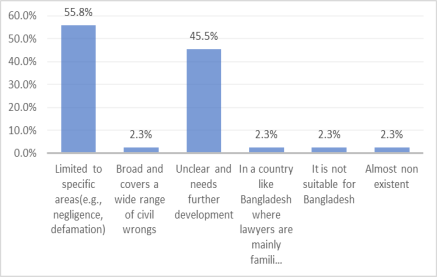
Figure 2. Application of Tort Law in Bangladesh.
The application of tort law is relatively least in compare to other areas of law in Bangladesh. While tort principles exist within the legal system, their practical implementation remain week due to its various challenges. Unlike other branches of law, torts are not administered by any codified law. There is a fundamental misconception regarding the law of torts in Bangladesh that there is no application of tort law in Bangladesh. However, torts are common law offences which means any aggrieved party of any common law country may institute any legal proceedings under the principles of law of torts to avail its remedies
| [1] | Alam, S. (2023). Tort law in Bangladesh: Applications and challenges (1st ed.). Routledge India. |
[1]
. Additionally, The
Constitution of Bangladesh Peoples Republic of Bangladesh, 1972 which contains 153 articles and none of which prohibits one from bringing an action under law of torts
| [1] | Alam, S. (2023). Tort law in Bangladesh: Applications and challenges (1st ed.). Routledge India. |
[1]
.
Law of Torts in Bangladesh, though not codified under any specific statute but it applied through common law principles and various legislative provisions
| [10] | Dolan, J. H., & Akter, S. Law of Torts. 1st Edition, Hira Publication. 2016. |
[10]
. The key areas where the concepts of torts are found as a form of Negligence, Defamation, Vicarious Liability
| [15] | Giliker, P. (2008). Vicarious liability in tort: A comparative perspective. Cambridge University Press. |
[15]
, Nuisance, Trespass, Assault, Consumer protection, Wrongful confinement, Strict Liability, Medical Malpractices and Environmental Tort etc
| [8] | Brennan, C. Tort Law Concentrate: Law Revision and Study Guide. oxford university press, 2021. |
| [14] | Glanville Williams. (2016). Learning the law (14th ed.). Sweet & Maxwell. |
[8, 14]
. We conducted a structured survey among different legal professionals and we observed that the application of tort law in Bangladesh is highly limited to specific areas, with 55.8% respondents stating that it is restricted to specific areas such as negligence, defamation etc. Furthermore, 45.5% respondents believe that tort law remain unclear and need further development. Only 2.3% respondent consider tort law broadly covers a wide range of civil wrongs which indicate that its application is not widespread and a nominal number of respondents believe that it is not suitable or almost nonexistent (2.3%) in Bangladesh.
From theoretical perspective, it may observe that there are two types of tort law in Bangladesh: Private Tort & Public or Constitutional Tort. More particularly, in Bangladesh the private law tort is applied under the common law and civil law jurisdiction
. Concerned author also mentioned that a suit for private law tort can originally be filed in the appropriate civil courts and tribunals
. On the other hand, constitutional tort is applied under the joint effect of Article 44 and Article 102 (1) of the Constitution
. When the state is held accountable for violation of the constitutional rights guaranteed in part III of the Constitution, a writ petition claiming compensation can be filed in the country’s constitutional court holding the state responsible
.
4.1. Legislative Developments on Tortious Liability in Bangladesh
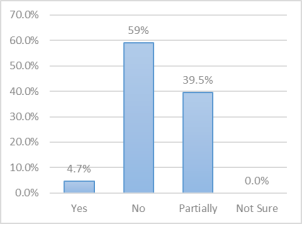
Figure 3. Recognition of Tort Law within the Legal System of Bangladesh.
Apart from the codified legislation, judicial precedents have played a crucial role in the development of law of torts in Bangladesh. Unlike civil and criminal law which have specific codified statutory frameworks, law of torts largely remains unmodified. However, few legislations comprise different tort principles and offers remedies for civil wrongs and also incorporates variety of tortious concepts. Through the survey it is evident that only 4.7% respondents confirmed that tort law is fully recognized in Bangladesh. This designates that although some legal experts recognized the existence of tort principles and they are not commonly codified or successfully applied. A sizable majority (59%) think that Bangladesh tort law is not appropriately acknowledged.
4.1.1The Penal Code, 1860
This particular act is primarily considered as a criminal law statute; however, it intersects with law of tort in some cases as both deals with the wrongful acts which are causing harms to the individuals. While law of torts leads to civil remedies (compensation and injunctions), the Penal Code, 1860
imposes punishments for similar acts. Several provisions from both laws overlapping with each other, such as assault and battery (Section 319-323, 349-352), Defamation (Section 499-500), Criminal Trespass (441-462), Public Nuisance (Sections 268-290), Negligence (Sections 304 A). For instance, assault, defamation, nuisance and trespass may give rise to criminal actions under the penal code and civil damages under law of torts. Similarly, for negligence and nuisance are actionable under tort law, is also punishable offence under the penal code. The key distinctions are lying on the objectives of both laws: law of tort aims to provide the compensation to the victims, whereas criminal law aims to ensure punishment to deter wrongful acts of the wrongdoer of the society. While penal code doesn’t directly codify tort law, many of its provisions have dual applications to determine criminal and civil liability only.
4.1.2. Fatal Accident Act, 1855
This act is enacted with an intention to ensure compensation to individuals for losses resulting from person’s death due to any actionable wrong. The Fatal Accident Act, 1885
, consider as the statutory extension of law of torts. This act mostly aligns with law of torts principles of negligence, vicarious liability and strict liability. This act applicable in Bangladesh, where the legal representatives of deceased may claim damages when death occurred due to any wrongful acts. However, tort law is much more flexible as it provides compensation for emotional distress, which may not always be covered under the Fatal Accident Act, 1885.
4.1.3. Consumer Rights Protection Act, 2009
This act incorporates several provisions that align with the principles of law of torts. However, law of tort primarily provides civil remedies, whereas the said act establishes both civil and criminal liabilities for consumer rights violations. As per section 66 of the of the CRPA Act, 2009
| [32] | The Consumers’ Right Protection Act, 2009, "Laws of Bangladesh". |
[32]
, any affected consumer can claim civil remedies or compensation against a person due to the anti-consumer rights practices but not exceeding five times of the actual amounts assessed.
4.1.4. Bangladesh Labour Act, 2006
The Law of Torts and Bangladesh Labour Act, 2006
both address workplace safety, injuries and employers’ liability but work differently in Bangladesh. The Labour Act provides a legal framework to govern the relationship between the employers and workers for ensuring safety in the workplaces and compensation for injuries occurred due to the accident arising out of the course of employment under section 150 of the said act. However, in law of torts, based on common law principles, allows the injured workers to seek compensation through claims of negligence, vicarious liability and strict liability.
4.1.5. Environment Conservation Act, 1995
The Environment Conservation Act, 1995 (ECA) and tort law both address the environmental harm but function differently in regards of providing remedies. The ECA, 1995
is a statutory law designed to regulate the environment protection, prevent pollution and penalize for violation. In contrast, the law of tort provides civil remedies to the individuals who are affected by the environmental damage.
4.1.6. Code of Civil Procedure 1908
Section 9 of this code
basically deals with civil nature suits which are essentially the subject of this code. Section 91 of the Code addresses the public nuisance and wrongful acts affecting the public at large. Section 95 allows those who are detained in civil prison under section 94 (a) on sufficient grounds may file a suit to recover damages for the harmed they have suffered
. If the civil suit that led to the arrest is unsuccessful and the court determines that there was no probable basis for making such arrest, they may file a suit for damages
.
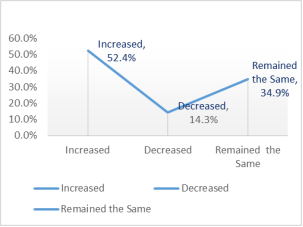
Figure 4. Trends of Tort Cases Over the Last Five Years.
4.2. Recent Trends in Development of Tort Litigations in Bangladesh
The evolvement of tort law in Bangladesh has been largely depend on judicial decisions, as there are no codified laws on governing tortious liability which discussed earlier. Courts have played a significant role to shape tort jurisprudence in areas such as negligence, medical malpractice, environmental liability
| [11] | Dr. Mohiuddin Farooque v. Bangladesh and others, 17 BLD (AD) 1 (1997). |
[11]
, defamation and constitutional torts
. The Appellate Division and the High Court Division of the Supreme Court have given some landmark judgments that have directly advanced the positions of tortious claims within the jurisdiction
| [19] | Haider, N. (2021). Development of the laws of tortious liability in Bangladesh. Dhaka University Law Journal, Centennial Special Issue, 32(1). |
[19]
. Over the last five years, the trends in tort cases in Bangladesh have shown a significant variation and a majority, 52.4% indicate in growing interest in filing tort related litigations which shows that people are more aware about their legal rights and the availability of remedies now a days. However, 14.3% of cases have been decreased due to various legal barriers and challenges in enforcement of tort law. Meanwhile, 34.9% of cases remain constant, reflecting stability in overall litigation trend. Above mentioned figures indicate that number of tort litigation are increasing over the last five years in Bangladesh.
Bangladesh Beverage Industries Limited vs Rawshan Aktar and others (2016) is a key ruling about the context of determining the damages on tortious claims and it’s an instance of an employer being held liable vicariously for his employee who killed a pedestrian while driving a delivery van. The decision on the basis of vicarious liability still remains rare in Bangladesh. More precisely the
Bangladesh Beverage case can mark as a major turning point for tort claims in Bangladesh for not just victims of negligence but for tort claimants in general
| [20] | Huda, T. (2016). Vicarious liability of employers in the law of tort: Deciphering Bangladesh Beverage Industries vs. Rowshan Akhter and others. Bangladesh Journal of Law, 16(2). |
[20]
. Another potentially significant tort case in regards of evolution of tort law in Bangladesh,
Catherine Masud and Others vs. Khushid Miah and Others 10 SCOB HCD. Given the rarity of tort cases in Bangladesh, this case is immensely significant for establishing a precedent for holding responsible a group of people who have enjoyed complete impunity for long time. This case was first initiated by Catherine Masud before the Motor Accident Claims Tribunal, Manikganj under section 128 of the Motor Vehicles Ordinance, 1983 were claiming compensation for herself, for her minor son and deceased mother
. The claimant then files an application under Article 110 of the constitution which allowed cases to be transferred from subordinate court to HCD under certain circumstances
.
Another landmark case called
CCB Foundation v Government of Bangladesh 5 CLR (HCD) 2017, in this case the court was awarded monetary compensation of taka 20 lac against the Bangladesh Railway Board and Bangladesh Fir Service and Civil Defence by using the doctrine of negligence and
res ipsa loquitur egregious carelessness that caused the death of 4 years old child in Dhaka, Shahjhanpur
. It’s a significant precedent for holding public official responsible for the negligence of their employees (Rafi, 2024). Here two crucial components are present: i) The court noticed that, in contrast to Article 300 of the Indian Constitution, the notion of sovereign immunity has no place in our system of government
| [23] | Iqbal, T. A. S. M. (2022). Scope and application of constitutional tort in Bangladesh: An analytical study. Journal of Creative Writing, 6(2). |
[23]
. Due to Article 32, the courts can allow compensation to the victim’s family for violating the right to life ensured by the Constitution & (ii) The court also said that for getting any monetary compensation under public law would not be prevented victims from any private legal claims for reimbursement
| [23] | Iqbal, T. A. S. M. (2022). Scope and application of constitutional tort in Bangladesh: An analytical study. Journal of Creative Writing, 6(2). |
[23]
. In Md. Shahanewas Vs. Government of Bangladesh 18 BLD (HCD) 337
| [16] | Goldberg, J. C. B. (1990). The principle of corrective justice. California Law Review, 77(3), 440-514. |
[16]
) where Court awarded ‘compensatory’ costs of Tk. 20,000/=, on the delinquent police officer for negligently arresting a poor fisherman instead of a convicted person merely because both had similar names, holding that the ‘poor victim should be well compensated’ for his ‘sheer negligence’ (in discharging his public duty) and his ‘immense sufferings’ and loss of earning for 6 months, for having wrongfully been arrested on suspicion of someone else’s guilt
| [25] | Lunney, M., & Oliphant, K. (2013). Tort law: Text and materials (5th ed.). Oxford University Press. |
| [26] | Md. Shahanewas v. Government of Bangladesh, 18 BLD (HCD) 337. |
[25, 26]
In (M. Asafuddowlah v Government of Bangladesh Writ Petition No. 6653 of 2012
| [18] | Harpwood, V. (2000). Principles of tort law. Cavendish Publishing Ltd. |
[18]
) where court stated that “Insofar as it concerns public wrong or public injury or invasion of fundamental rights of an indeterminate number of people, any member of the public, being a citizen, suffering the common injury or common invasion in common with others or any citizen or an indigenous association, as distinguished from a local component of a foreign organisation, espousing that particular cause is a person aggrieved and has the right to invoke the jurisdiction under Article 102”
| [27] | M. Asafuddowlah v. Government of Bangladesh, Writ Petition No. 6653 of 2012. |
[27]
.
Though we have received landmark verdicts on negligence behaviour on the part of the authority, there are number of cases that are pending before the Supreme Court or subordinate courts of Bangladesh. According to the Supreme Court data, the families of road accident victims have filed 311 writ petitions in the High Court, demanding a total of Tk 100 crore compensation from the parties concerned in last five years
. Concerned author also claimed that not a single writ petition has been disposed of so far (Karim & Ahmed, 2023). Almost 49,000 cases filed under the Road Safety Act and the Penal Code 304 (kha) demanding compensation are pending in judicial courts across the country
. After cases seeking compensation settled in the judicial courts, 1,126 appeals are pending in the Appellate Division while 8, 600 are in the High Court
. Only 806 and 672 cases have been settled in judicial courts in 2021 and 2022 respectively while 81 and 114 cases were settled in the High Court in 2021 and 2022 respectively
. Only 44 and 79 cases were settled in the appellate division in 2021 and 2022
.
4.3. A Comparative Analysis with Other Jurisdiction
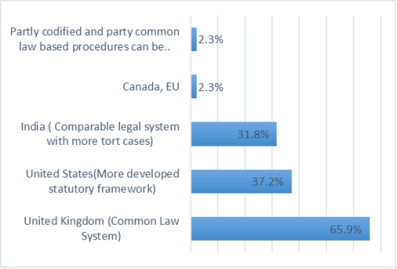
Figure 5. Comparison with other Legal System (UK, US, India, Canada, EU).
The law of torts in Bangladesh remains regressive compared to other jurisdictions like the US, the UK and India. Unlike these countries, where tort law is well-codified and frequently applied. Bangladesh lacks a comprehensive statute on torts and civil wrongs are often addressed under criminal law or constitutional remedies. Here the data highlight the varying influences of tort law across different legal systems around the world. The United Kingdom (UK) with 69.9%, has the most developed common law system, underlining tort law principles. The United States (US) follows with 37.2%, integrating both common law and statutory frameworks. In India, at 31.8% shares a similar legal heritage with UK where judicial decisions play a growing role. This analysis suggests that Bangladesh, with legal similarities to the India and the UK, could enhance its tort law frameworks through structured reforms and increased judicial enforcement.
To compare with other jurisdiction’s tort claims we may refer here two significant cases called
Liebeck v. McDonald's Restaurants (1994), also known as the McDonald's coffee case and
Shih v. Starbucks, also known as The Hot Coffee Cases which are prominently recognized for corporate negligence and product liability. In McDonald’s case, Stella Liebeck, a 79 years old lady suffered severe burns after spilling McDonald’s excessively hot coffee on herself. In that case court found that McDonald was negligent for serving coffee at dangerously high temperature without proper warnings leading to a significant pecuniary damages award
. In Bangladesh product liability claims are rare due to the lack of structured statutes. However, the principles from Liebeck and Starbucks cases can be followed in regards of consumer harms, unsafe products, contaminated foods or medical negligence to develop tort system in Bangladesh. The Liebeck case underscores the need for Bangladesh to establish clear product liability law though we have a separate act called The Consumer Rights Protection Act, 2009 and encourage civil litigation for averting corporate negligence.
6. Necessary Reforms to Improve Tort Law Enforcement in Bangladesh
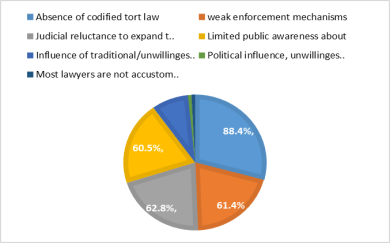
Tort law consider as a crucial means of providing remedies whether in the form of financial damages or injections to avert the recurrence of wrongful acts of individuals. Nevertheless, the enforcement of tort law in Bangladesh encounters numerous obstacles such as the lack of codified legislation, insufficient public awareness and inefficiencies within the judicial system.
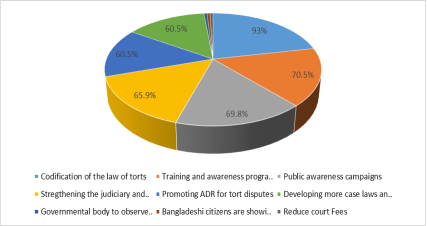
Figure 7. Necessary Reforms to Improve Tort Law Enforcement in Bangladesh.
Throughout the discussion, we may propose some reforms to strengthening the effectiveness of tort law applications and ensure justice for victims of tortious acts. Here key data highlights key requirements to ensure effective enforcement of tort law in Bangladesh. Below is an analysis of these reforms with legal arguments to support their implementations.
Codification of Law of Torts:
1) Majority respondents support for codifying tort law which indicate as a significant legal gap. Currently, law of tort in Bangladesh is mostly based on common law principles, which is leading to inconsistencies in judicial decisions as sometimes it is not possible to cover all types of civil wrongs through common law principles.
2) Codification would provide a structured legal framework’s, to ensure uniformity in judicial precedents.
3) Many countries, including USA, UK and India, have developed statutory provisions for tortious claim, considering as a precedent for Bangladesh.
Training and Awareness Programs and Public Awareness Campaign:
1) A lack of legal acquaintance among legal professionals and public is a major barrier regarding the tort law effective enforcement.
2) Training for judges, advocates, law enforcement officials is needed to enhance the effective application of tort law. Providing training for Judicial and Court officers on how a tort claim they can address and make it easier to understand by the litigants.
3) Public awareness campaign would help citizen to know more about their rights against the tortious activities, leading to increased number of litigations and accountability.
4) Tort law is vital for a civilized society ensuring both private and public accountability for their respective conducts. Tort law is conducive in creating responsible citizens and government. Judicial Administration Training Institute might want to place more focus on tort law in Bangladesh.
Strengthening the Judiciary and Legal System:
1) To ensure development of law of torts a well-functioning judiciary is required.
2) Strengthening the Judiciary, it includes appointing more judges, reducing backlog of civil ligations and ensure special training in areas like negligence, nuisance, defamation, consumer protection, environmental negligence etc.
3) Efficient and effective judicial process may encourage reasonable compensation and prevent prolonged litigation process.
4) If the judiciary of Bangladesh independently does its role in case of implementing all legal provisions regarding Law of Torts, then it’s the matter of time, while the victims will get the benefits of Law of Torts widely.
Promoting Alternative Dispute Resolution (ADR) for Tort Disputes
1) ADR is widely used in civil disputes, and its application in tort law would provide quicker and cost-effective remedies for victims.
2) Renowned ADR mechanisms like arbitration and mediation can expedite tort claims, reducing burden on the civil courts.
Providing More Case Laws and Precedents on Tort Law:
1) Lacking of Judicial precedent on the area of tort law, making it difficult to establish legal principles.
2) More cases on judicial activism would provide clearer legal standards and strengthen tor jurisprudence.
Other Suggested Reforms:
1) Reducing court fees can make tort litigations more accessible to the victims.
2) Establishing governmental body to oversee tort enforcement would ensure more accountability.
3) Encouraging general people’s participation in legal process through legal aid.





 Share This Article
 Twitter
 Linked In
 Facebook
 Copy
Copy Download