
Iron existed in the form of oxides and also, it is mostly abundant as well as the dominant resource of the Earth for the constrictive industries of the world. The iron ore mineralogy of iron is mainly concentrated as hematite, goethite and magnetite oxides minerals. Beside those oxides the siderite, illmenite and many other are common iron ores. The Lege Worke -Dasu blocks of iron found in the Northern and northwestern part of Ethiopian plateau. This research study holds the main objective of determining the mineralogical composition and mineral assemblage of the iron ore mineralization of the Lege Worke - Dasu blocks. The geological field work with lithological mapping, reflected microscope (ore) petrographic study, mineralogical study using (XRD), and geochemistry of major and other elements were the most applied methodologies for this study. The mineralogical study of the Lege Worke - Dasu iron mineralization result shows that the iron ore body samples were characterized in terms of their mineralogical composition. The outcome result indicates that the ore body consists mainly hematite and goethite iron ore minerals are the dominant compositions documented from the polished section and XRD result. The outcome results of analyzed chemistry and ore study from the polished section studies are shows that the layered (laminated) and pisolitic textures of hematite ore, goethite ore compositions are the main outcomes of this research study. In addition to those ore mineralogy kaolinite gangue, anatase minerals are common constituents including quartz as a gangue mineral. Major oxide analyses for systematically selected samples were characterized by SiO2, Al2O3 and Fe2O3 and others. The whole rock chemistry of iron ore and surrounding rock of Lege Worke - Dasu blocks of iron mineralization were used to determine the iron mechanism of the current research area.
| Published in | International Journal of Mineral Processing and Extractive Metallurgy (Volume 11, Issue 3) |
| DOI | 10.11648/j.ijmpem.20261103.12 |
| Page(s) | 57-67 |
| Creative Commons |
This is an Open Access article, distributed under the terms of the Creative Commons Attribution 4.0 International License (http://creativecommons.org/licenses/by/4.0/), which permits unrestricted use, distribution and reproduction in any medium or format, provided the original work is properly cited. |
| Copyright |
Copyright © The Author(s), 2026. Published by Science Publishing Group |
Iron Ore, Geochemical, Mineralogy, Lege Worke – Dasu Iron Blocks
Minerals content in wt% | Iron Ore sample symbols | |||||
|---|---|---|---|---|---|---|
Iron ore minerals | Gangue minerals | MS-B1 | MSB-10 | MS-B5 | MS-DB3 | MS-LW |
Quartz | 1% | 21% | 12% | 12% | 13% | |
Hematite | 40% | 46.5% | 50% | 60% | 30% | |
Goethite | 59% | 8% | 32% | 16% | 57% | |
Magnetite | - | - | 3% | 0.5% | - | |
Kaolinite | - | 23.5% | - | 11% | - | |
Anatas | 1% | - | - | 1% | - | |
MS-B1 | Mekaneselam Block1 |
MS-DB3 | Mekanselam Dasu Block3 |
MS-LW | Mekaneselam Lege Worke |
| [1] | Abbate, E., Bruni, P., Peter, M., Delme, C., Laurenzi, M., Miruts Hagos, Bedri, O., Rook, L., Sagri, M., Libsekal, Y. (2014). The East Africa Oligocene intertrappean beds: Regional distribution, depositional environments and Afro/Arabian mammal dispersals. |
| [2] | Abebe T., Maetti P., Bonini M., Corti G. Innocenti F., Mazzarini F. and Pecksay (2005). Geological map of the northern Main Ethiopian Rift and its implication for the volcano - tectonic evolution of the rift. Geological Socity of America, Map and Chart Series MCH094 1: 200, 000: 20. |
| [3] | Abiy Ayalew, Dejene H/ Mariam, Fekadu Hailu, Ferede Chumburo, Mulugeta H/ Mariam and Temesgen Alemayehu (2015). Geology of Debre Markose map sheet, ministery of mines, Geological Survey of Ethiopia. |
| [4] | Adewole, A. and Emmanuel, T. (2017). Mineralogical and geochemical trends in the residual soils above basement rocks in ore area, southwestern Nigeria. 9 (3). |
| [5] | Adiotomer, E., Innocent, E., and Adaikpoh, E. (2017) Geochemistry of fluvial sediments from Geregue, Southwest Nigeria. Delta state University. |
| [6] | Afify, A., Sanz-montero, M. and Calvo, J. (2018). Differentiation of ironstone type by using rare Earth elements and yttrium geochemistry - a case study from the Bahariya region Egypt. Elsevier Ore geology review. 96: 247-261. |
| [7] | Albarède, F. (2009). Geochemistry to an introduction. Cambridge University Press. |
| [8] | Aleva, G. (1994). Laterites concept, Geology, Morphology and Chemistry. International soil reference and information center (ISRIC), Waganingen, Netherlands, 169. |
| [9] | Armstrong‐Altrin, J. S., Lee, Y. I., Kasper‐Zubillaga, J. J., & Trejo‐Ramírez, E. (2017). Mineralogy and geochemistry of sands along the Manzanillo and El Carrizal beachareas, southernMexico: implications for palaeoweathering, provenance and tectonic setting. Geological Journal. 52(4), 559-582. |
| [10] | Asuke, F., Bello, K.A., Muzzammil, M.A., D.G. Thomas, D.G., Auwal, K. and Yaro, S. A. (2019). Chemical and mineralogical characterization of Gidan Jaja iron ore, Zamfara state, Nigeria. Nigerian Jornal of Technology. 38: (1) 93-98. |
| [11] | Aubry, A. (1986). Observations geologiques sur les pays Danakils, Somalis, le royaume de choa et les pays Gallas - Bull, Soc. Geol.Fr. 14: 201-222; Paris. |
| [12] | Bassam, K. and Tamar, M. (1998). Genesis of the Hussainiyat ironstone deposit, western desert, Iraq. Mineralium deposita 33: 266-282. |
| [13] | Bekker, A., Slack, J. F., Planavsky, N., Krapez, B., Hofmann, A., Konhauser, K. O., & Rouxel, O. J. (2010). Iron formation: the sedimentary product of a complex interplay among mantle, tectonic, oceanic, and biospheric processes. Society of Economic Geology, 105: 467-508. |
| [14] | Bethy. (1973). Correlation of Mesozoic sediments I Northern Yemen and Tigray Northern Ethiopia. American Association of Petroleum Geologist Bulletin. 57: 2440-2446. |
| [15] | Beukes, N., Gutzmer, J. and J. Mukhopadhyay (2003). The geology and genesis of high grade hematite iron ore deposit. Applied Earth Sciences. 112. Provinces) Geological and geophysical prospecting Ljublijana, Yugoslavia, 66p. |
| [16] | Beyth, M. (1972). Paleozoic sedimentary basin of Mekele Outlier, Northen Ethiopia. American Association of Petroleum Geologist Bulletin. 12: 2426-2439. |
| [17] | Bhatia M R and Taylor S R (1981). Trace elmene geochemistry and sedimentary province. A study from the Tasman Geosyncline. Chem. Geol. 33 (115-125). |
| [18] | Bhatia, M. and Crook K. (1986) Trace element characteristics of graywackes and tectonic setting discrimination of sedimentary basins. Contrib. Petrol. 92(2) 181-193. |
| [19] | Bhattacharya, H. N. and Ghosh, K. K. (2012). Field and petrographic aspect of the iron ore mineralization of Gandhamaradn hill, keonjhor, Orissa, and their genetic significance. Jornal Geological Society of India. 79: 497-504. |
| [20] | Binks RM, Fairhead JD. (1992). A plate tectonic setting of Mesozoic rifts of West and central Africa. Tectonophysics. 213: 141-151. |
| [21] | Bosellini A. (1989). The continental margins of Somalia: their structural evolution and sequence stratigraphy. Memorie di Scienze Geologische, Padova 41: 378-458. |
| [22] | Boudulle, M. and Muller, J. P. (1988). Structural characteristics of hematite and Goethite and their relationship with kaolinite in laterite from Cameroon. A TAM study. Bull. Mineral. 111: 149-166. |
| [23] | Breeding, C, Ague, J. and Brocker, M. (2004). Fluid metasedimentary rock interactions in subduction one melange implication for the chemical composition of arc magmas. Geology, 32: 11041-1044. |
| [24] | Bruno, K., Nicholas, A., Henriette, L., Florence, B., Arnaud, P., Yirgu, G., Ayalew, D. Dominique, W., Jerram A., Francine, K., and Claudine, M. (2004). Flood and shield basalts from Ethiopia magmas from the African Super swell. Journal of petrology. 45 (4): 793-834. |
| [25] | Bussert, R. Schrank, E. (2007). Palynological evidence for a latest Carboniferous -Early Permian glaciation in Northern Ethiopia. Journal of African Earth Science. 49: 201-210. |
| [26] | Cannon, R., Simiyu-Sianbu, W. M. N. and Karanja, F. M. (1981). The Prot-India Ocean and a probable Paleozoic/Misozoic triradial rift system in East Africa. Earth planet. Sci. Letts. 52: 419-426. |
| [27] | Chukhrov, F. V. Moscow and USSR (1973). On the genesis problem of thermal sedimentary iron ore deposits. Mineral deposita. 8: 138-147. |
| [28] | Conliffe, J. (2015). Geological Setting and Genesis of High-Grade Iron Ore Deposits in the Eastern Labrador trough, Newfoundland and Labrador. |
| [29] | Conliffe, J. (2016). Geology and geochemistry of high grade iron ore deposit in the Kivivic timmins and ruth lake areas, western Labrador. New found land and Labrador department of natural science. Report of Geological Survey. 1-16. |
| [30] | Conliffe, J., Kerr, A. and Hanchar, D. (2012). Mineral commodity of Newfoundland and laborador, Iron ore Geological Survey Mineral commodities series, Canada. (7): 110. |
| [31] | Cox, R., Lowe, D. and Cullers, R. (1995). The influence of sediment recycling and basement composition on evolution of mud rock chemistry in the southwestern. United states. Geochim Cosmochim Acta. 59: 2919-2940. |
| [32] | Dainelli. G. (1943). Geology of East Africa. 4: Rent Acc. Ital., Centro Studi Africa Orint. Ital.; Roma. Daniel Meshesha and Ryuichi Shino (2007). Crystal contamination and diversity of magma sources in the northwestern Ethiopian volcanic provinces. Mineralogical and Petrological Sciences. 102: 272-290. |
| [33] | Devis, P., Bonhoure, J. and Pourret, O. (2017) Rare Earth element geochemistry in an iron rich nickel laterite from new Calidonia. |
| [34] | Devkota, S. and Paudel, L. P. (2012). Petrology and genesis of the Bhainskati iron ore deposit of Palapa district, western Nepal. Bulletin of the departments of Geology. 15: 63-68. |
| [35] | Maria Margarita Torres Moreno, Rogers Raphael da Rocha, Letícia Hirata Godoy (2013). Major Elements Geochemistry of Sedimentary Rocks from Corumbataí Formation, Santa Gertrudes Ceramic Pole, São Paulo, Brazil. |
| [36] | A. M. Afifya, b, M. E. Sanz-Monteroa, J. P. Calvoa (2018). Differentiation of ironstone types by using rare earth elements and yttrium geochemistry - A case study from the Bahariya region, Egypt, ore geology reviews, 96, 247-261. |
| [37] | Belayneh Digafe (2020). Mineralogy, geochemistry and genesis of mekane selam iron occurrence in tewa area, northern Ethiopia, thesis research, Addis Ababa University. |
| [38] | James, H. L. (1966). Chemistry of the iron-rich sedimentary rocks. U.S. Geol. Survey. 6th edition, 440pp. |
| [39] | GSE (2018). Preliminary report on iron occurrence of Mekane Selam. Technical report. |
| [40] | Getaneh, A., (1991). Lithostratigraphy and environment of deposition of the Late Jurassic -Early Cretaceous sequence of the central part of Northwestern Plateau, Ethiopia. N. Jb. Geol. Paläont. Abh. 182(3): 255-284. |
| [41] | Sahoo, L. Ratha, BK and Nayak, BK (2018). Mineralogical and Geochemical characterization of iron ore deposit of Koira region of Sundargarh district of Odisha. International Journals of multidisciplinary research and development. 5: (4) 194- 199. |
| [42] | Masresha Gebreselasse (2002). Review of Melka Arba iron ore resource. Unpublished report Geological Survey of Ethiopia, 31p. |
APA Style
Tulu, B. D. (2026). Ore Composition of Lege Worke - Dasu Blocks of Iron Mineralization, Northern Ethiopia. International Journal of Mineral Processing and Extractive Metallurgy, 11(3), 57-67. https://doi.org/10.11648/j.ijmpem.20261103.12
ACS Style
Tulu, B. D. Ore Composition of Lege Worke - Dasu Blocks of Iron Mineralization, Northern Ethiopia. Int. J. Miner. Process. Extr. Metall. 2026, 11(3), 57-67. doi: 10.11648/j.ijmpem.20261103.12
@article{10.11648/j.ijmpem.20261103.12,
  author = {Belayneh Digafe Tulu},
  title = {Ore Composition of Lege Worke - Dasu Blocks of Iron Mineralization, Northern Ethiopia},
  journal = {International Journal of Mineral Processing and Extractive Metallurgy},
  volume = {11},
  number = {3},
  pages = {57-67},
  doi = {10.11648/j.ijmpem.20261103.12},
  url = {https://doi.org/10.11648/j.ijmpem.20261103.12},
  eprint = {https://article.sciencepublishinggroup.com/pdf/10.11648.j.ijmpem.20261103.12},
  abstract = {Iron existed in the form of oxides and also, it is mostly abundant as well as the dominant resource of the Earth for the constrictive industries of the world. The iron ore mineralogy of iron is mainly concentrated as hematite, goethite and magnetite oxides minerals. Beside those oxides the siderite, illmenite and many other are common iron ores. The Lege Worke -Dasu blocks of iron found in the Northern and northwestern part of Ethiopian plateau. This research study holds the main objective of determining the mineralogical composition and mineral assemblage of the iron ore mineralization of the Lege Worke - Dasu blocks. The geological field work with lithological mapping, reflected microscope (ore) petrographic study, mineralogical study using (XRD), and geochemistry of major and other elements were the most applied methodologies for this study. The mineralogical study of the Lege Worke - Dasu iron mineralization result shows that the iron ore body samples were characterized in terms of their mineralogical composition. The outcome result indicates that the ore body consists mainly hematite and goethite iron ore minerals are the dominant compositions documented from the polished section and XRD result. The outcome results of analyzed chemistry and ore study from the polished section studies are shows that the layered (laminated) and pisolitic textures of hematite ore, goethite ore compositions are the main outcomes of this research study. In addition to those ore mineralogy kaolinite gangue, anatase minerals are common constituents including quartz as a gangue mineral. Major oxide analyses for systematically selected samples were characterized by SiO2, Al2O3 and Fe2O3 and others. The whole rock chemistry of iron ore and surrounding rock of Lege Worke - Dasu blocks of iron mineralization were used to determine the iron mechanism of the current research area.},
 year = {2026}
}
TY  - JOUR
T1  - Ore Composition of Lege Worke - Dasu Blocks of Iron Mineralization, Northern Ethiopia
AU  - Belayneh Digafe Tulu
Y1  - 2026/07/22
PY  - 2026
N1  - https://doi.org/10.11648/j.ijmpem.20261103.12
DO  - 10.11648/j.ijmpem.20261103.12
T2  - International Journal of Mineral Processing and Extractive Metallurgy
JF  - International Journal of Mineral Processing and Extractive Metallurgy
JO  - International Journal of Mineral Processing and Extractive Metallurgy
SP  - 57
EP  - 67
PB  - Science Publishing Group
SN  - 2575-1859
UR  - https://doi.org/10.11648/j.ijmpem.20261103.12
AB  - Iron existed in the form of oxides and also, it is mostly abundant as well as the dominant resource of the Earth for the constrictive industries of the world. The iron ore mineralogy of iron is mainly concentrated as hematite, goethite and magnetite oxides minerals. Beside those oxides the siderite, illmenite and many other are common iron ores. The Lege Worke -Dasu blocks of iron found in the Northern and northwestern part of Ethiopian plateau. This research study holds the main objective of determining the mineralogical composition and mineral assemblage of the iron ore mineralization of the Lege Worke - Dasu blocks. The geological field work with lithological mapping, reflected microscope (ore) petrographic study, mineralogical study using (XRD), and geochemistry of major and other elements were the most applied methodologies for this study. The mineralogical study of the Lege Worke - Dasu iron mineralization result shows that the iron ore body samples were characterized in terms of their mineralogical composition. The outcome result indicates that the ore body consists mainly hematite and goethite iron ore minerals are the dominant compositions documented from the polished section and XRD result. The outcome results of analyzed chemistry and ore study from the polished section studies are shows that the layered (laminated) and pisolitic textures of hematite ore, goethite ore compositions are the main outcomes of this research study. In addition to those ore mineralogy kaolinite gangue, anatase minerals are common constituents including quartz as a gangue mineral. Major oxide analyses for systematically selected samples were characterized by SiO2, Al2O3 and Fe2O3 and others. The whole rock chemistry of iron ore and surrounding rock of Lege Worke - Dasu blocks of iron mineralization were used to determine the iron mechanism of the current research area.
VL  - 11
IS  - 3
ER  -
Mineral Exploration and Evaluation, Geological Institute of Ethiopia, Addis Ababa, Ethiopia
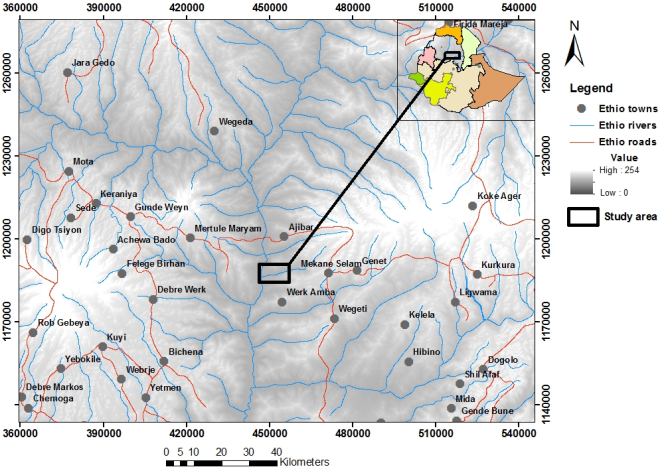
Figure 1. Location and accessibility map of the area.
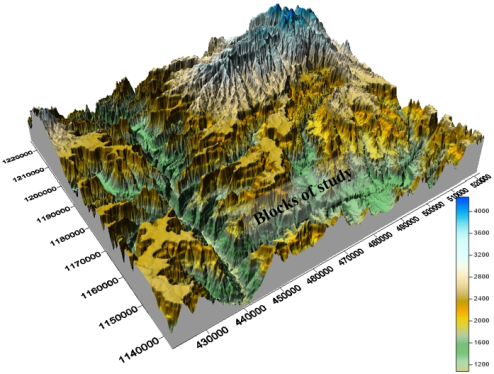
Figure 2. Dem physiographic map of the study and surrounding area.
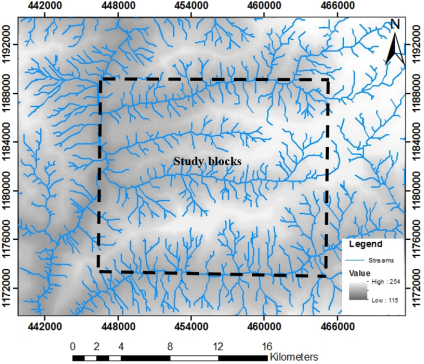
Figure 3. Dranage pattern of the study and surroundings.
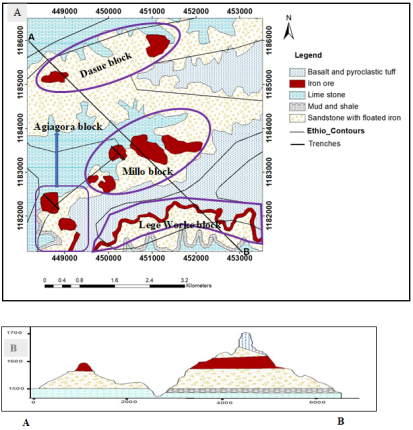
Figure 4. Lithological map of the upper blue nile basin see picture (A) and geologic cross section along A-B see (B). [37].
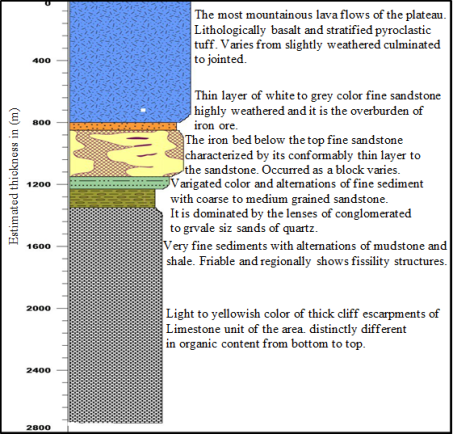
Figure 5. General local stratigraphy of the study area [37].
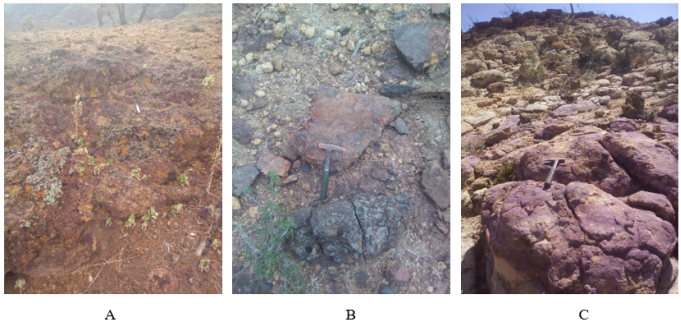
Figure 6. Field photographs of laterite related iron ore body (A), massive type iron ore body and altered - oolitic to fragementations of iron ore body (B) and inter bedded (C) iron ore of the study area.
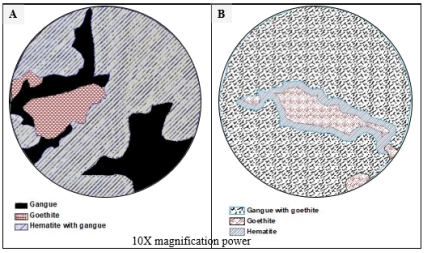
Figure 7. Sketched diagram of MSB13 (A) and MSB16 (B) showing mutual grain boundary and replacement relationship of goethite with hematite and the gangue [37].
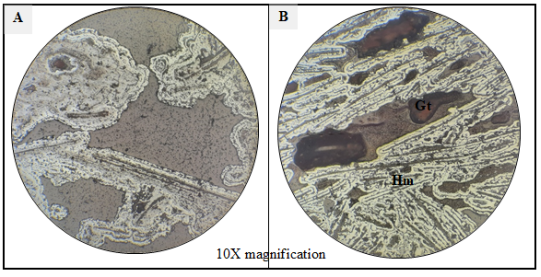
Figure 8. Photomicrographs of platy type of -hematite iron ore crystals seen (MSB2) (A) and (MSB13) (B) oolith texture and botryoidally alteration of goethite ore form and features and interlayered bedded hematite ore iron mineralization [37].
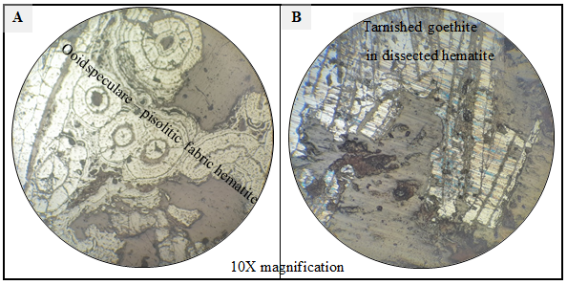
Figure 9. MSB16 ooids (spherical grains) and specular – Pisolitic or pisoliths (pea-sized mineral grains) fabric (A) and acicular or laths crystals fill voids or fractures regular reflections of hematite and bluish tint of goethite iron oxides (B) [37].
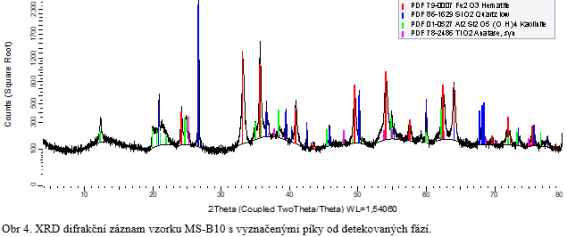
Figure 10. XRD diffraction of iron ore sample denoted by the (MSB-10) characterized by iron ore stratified and bound with the hosted sandstone and intercalated layer of mudstone [37].
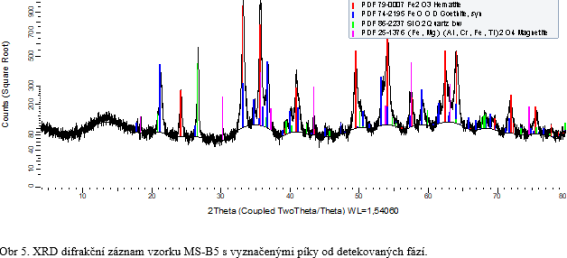
Figure 11. XRD diffractions graphs of iron ore body sample labeled by (MSB-5) interlayered and needle like silica associated with massive iron ore formation [37].
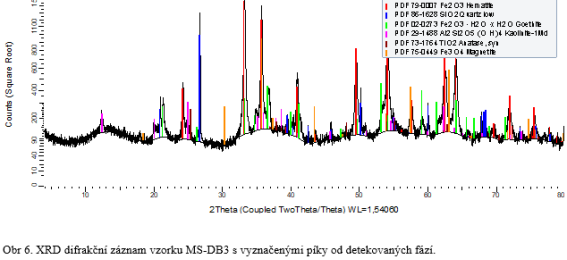
Figure 12. XRD diffraction value for the analyzes iron ore body sample of (MS-DB3) characterized as weathered and consists of secondary minerals fill the open space through precipitation within iron ore [37].

Information



 Share This Article
 Twitter
 Linked In
 Facebook
 Copy
Copy Download