Research Article | | Peer-Reviewed

Clinicians' Perspectives and Preferences in the Management of Allergic Rhinitis in India

Received: 2 July 2026     Accepted: 16 July 2026     Published: 10 August 2026
Views:       Downloads:
Abstract

Objective: To assess expert clinicians' views on the role of montelukast–levocetirizine combination therapy in the management of allergic rhinitis, focusing on its effectiveness, safety, and routine clinical application in Indian healthcare settings. Methodology: This cross-sectional survey employed a structured questionnaire comprising 23 multiple-response items to capture clinicians' perspectives on prescribing practices, therapeutic preferences, clinical experiences, and observations regarding the use of the montelukast–levocetirizine combination for managing allergic rhinitis in routine practice. The collected responses were summarized using descriptive statistical methods. Results: A total of 458 clinicians completed the survey. Among the respondents, 71.83% favored combining an antihistamine with a leukotriene receptor antagonist for the long-term treatment of allergic rhinitis. Levocetirizine was identified as the antihistamine of choice by 93% of participants. Nearly half of the clinicians (47%) preferred the montelukast–levocetirizine combination over antihistamine monotherapy for managing acute allergic rhinitis. Furthermore, 93.67% reported that the combination was effective in relieving morning symptoms, while approximately 78% observed improvements in daytime nasal, nighttime nasal, and daytime ocular symptoms. In patients with coexisting bronchial asthma, 76% of respondents favored the antihistamine-leukotriene receptor antagonist combination. Overall, nearly 67% of clinicians perceived the montelukast-levocetirizine combination as offering greater efficacy, improved tolerability, and sustained long-term therapeutic benefit. Conclusion: The survey findings underscore that antihistamine and leukotriene receptor antagonist combination is the preferred therapeutic approach for AR among clinicians, with levocetirizine being the antihistamine of choice. Most physicians perceive the montelukast and levocetirizine combination to provide effective control of morning, daytime, and nighttime symptoms, along with improved efficacy, tolerability, and sustained clinical benefits.

Published in International Journal of Otorhinolaryngology (Volume 12, Issue 2)
DOI 10.11648/j.ijo.20261202.12
Page(s) 45-51
Creative Commons

This is an Open Access article, distributed under the terms of the Creative Commons Attribution 4.0 International License (http://creativecommons.org/licenses/by/4.0/), which permits unrestricted use, distribution and reproduction in any medium or format, provided the original work is properly cited.

Copyright

Copyright © The Author(s), 2026. Published by Science Publishing Group

Keywords

Allergic Rhinitis, Leukotriene Receptor Antagonist, Antihistamines, Montelukast, Levocetirizine

1. Introduction
Allergic rhinitis (AR) is a chronic inflammatory condition of the nasal mucosa mediated by immunoglobulin E (IgE) following exposure to environmental allergens. The disease typically presents with symptoms such as sneezing, nasal itching, rhinorrhea, nasal obstruction, and ocular manifestations. These persistent symptoms can adversely affect daily activities, sleep quality, work efficiency, academic performance, and overall health-related quality of life . AR is one of the most common chronic respiratory diseases worldwide, affecting more than 400 million individuals, with a reported median prevalence of 18.1% among adults . In India, AR affects approximately 20%–30% of the population and accounts for nearly 55% of all allergic conditions, with a higher prevalence among adolescents than younger children .
AR frequently coexists with asthma, allergic conjunctivitis, and chronic rhinosinusitis. The Allergic Rhinitis and its Impact on Asthma (ARIA) initiative has emphasized the concept of "united airway disease," highlighting the close relationship between upper and lower airway inflammation and the need for integrated management of the disease.
Current management strategies for AR include allergen avoidance, pharmacotherapy, and allergen immunotherapy. Oral second-generation antihistamines remain among the most commonly prescribed agents because of their favorable efficacy and safety profile . Levocetirizine, a selective H1-antihistamine, effectively controls sneezing, rhinorrhea, nasal itching, and ocular symptoms while causing minimal sedation. However, nasal congestion and persistent symptoms may not be adequately controlled with antihistamine monotherapy in many patients .
Leukotriene receptor antagonists play a significant role in the inflammatory cascade of AR by promoting mucosal edema, mucus secretion, and recruitment of inflammatory cells. Montelukast, a selective leukotriene receptor antagonist, has demonstrated efficacy in reducing nasal symptoms and is particularly useful in patients with concomitant asthma . Combining montelukast with levocetirizine offers a complementary mechanism of action by targeting both histamine- and leukotriene-mediated pathways, potentially resulting in improved symptom control, better quality of life, and enhanced patient satisfaction compared with monotherapy in selected patient populations .
Despite the widespread use of montelukast and levocetirizine combination therapy in routine clinical practice, evidence regarding physicians' treatment preferences, perceptions of effectiveness, safety, and utilization patterns remain limited. So, this survey was undertaken to assess clinicians' perspectives on the use of montelukast-levocetirizine combination therapy for allergic rhinitis, with particular emphasis on prescribing practices, clinical utility, therapeutic effectiveness, and safety in routine clinical practice.
2. Materials and Methods
2.1. Study Settings
Between June and December 2025, a cross-sectional survey was undertaken among clinicians involved in the care of patients with allergic rhinitis across major Indian cities. Ethical approval was obtained from the Bangalore Ethics Independent Ethics Committee (ECR/355/Indt/KA/2022), recognized by the Drug Controller General of India, and the survey was conducted in compliance with the approved ethical standards.
2.2. Study Participants
Clinicians actively involved in the management of allergic rhinitis were invited to participate in the survey in March 2025. Overall, 458 clinicians from major cities across different Indian states, ensuring broad geographic representation, agreed to participate and provided the requested information.
2.3. Study Procedure
Clinicians who consented to participate received the CLEAR (Expert Perspectives on Allergic Rhinitis and Role of Levocetirizine and Montelukast) questionnaire booklet. The survey instrument consisted of 23 questions designed to collect information on clinical practice patterns, diagnostic approaches, treatment preferences, treatment behaviors, and physicians' perceptions regarding the effectiveness and safety of therapies used for AR, with a particular focus on montelukast and levocetirizine combination therapy. The questionnaire demonstrated acceptable internal consistency based on split-half reliability (coefficient alpha), although further refinement may improve its reliability in future applications. Criterion validity was evaluated by comparing clinicians' responses with independent assessments conducted by an external reviewer and a statistician. Potential sources of variability, including differences in clinical experience and familiarity with newer therapeutic agents, were acknowledged during the validation process. Participants were informed that they could omit any question if they chose to do so and were requested to complete the questionnaire independently without discussing their responses with colleagues. Written informed consent was obtained from all clinicians prior to their participation in the survey.
2.4. Statistical Analysis
Survey responses were analyzed using descriptive statistical methods. Categorical variables were summarized as counts and percentages, and the results were organized into tables prepared using Microsoft Excel (version 2409, build 16.0.18025.20030) to facilitate clear presentation of the findings.
3. Results
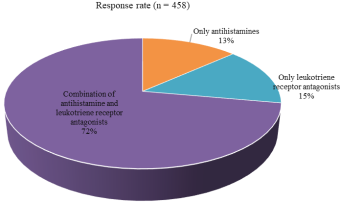
The study comprised 458 respondents, and approximately 44% of them reported that allergic conjunctivitis, sinusitis, middle ear infection, and asthma are the most common concomitant diseases associated with AR. Almost 66% of clinicians agreed that recurrent upper respiratory tract infections are an indicator of undiagnosed AR. Regarding clinical burden, nearly 42% of clinicians reported diagnosing 21-30 AR cases per month on average, while 27.51% diagnosed 31-40 cases monthly. About 52% of clinicians reported clinical history as the most commonly used method for diagnosing AR in routine practice. The majority (71.83%) of participants reported that a combination of antihistamines and leukotriene receptor antagonists is the preferred choice for the long-term management of AR (Figure 1). A significant proportion (92.79%) of clinicians indicated that levocetirizine is the preferred antihistamine for the management of AR (Figure 2).
Figure 1. Distribution of responses on the preferred choice of drugs in the long-term management of AR.
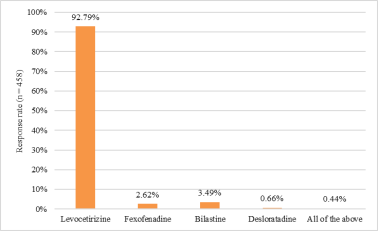
Figure 2. Distribution of responses on the preferred antihistamine for the management of AR.
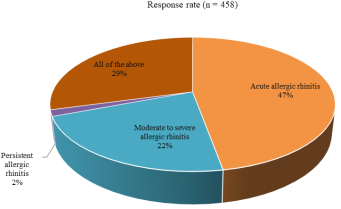
Montelukast is the preferred choice for AR patients, as reported by 51% of the respondents. Nearly 47% of the participants reported AR as the indication for preferring the montelukast + levocetirizine combination over plain antihistamine therapy in patients with acute AR (Figure 3). According to 45% of clinicians, the most compelling advantage of recommending montelukast + levocetirizine is better patient compliance. About 34% of the participants reported that AR is more common among patients aged 31-40 years.
Figure 3. Distribution of responses on the indication for the preference montelukast + levocetirizine combination over plain antihistamine therapy.
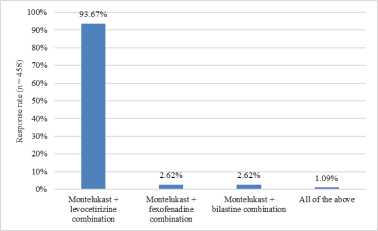
Approximately 49% of clinicians indicated that AR patient visits peak during December, January, and February. The majority (93.67%) of participants reported that montelukast and levocetirizine are the preferred combination therapy for improving morning AR symptoms (Figure 4). Regarding treatment patterns, around 47% of respondents estimated that 26-50% of their AR patients require a combination of montelukast and antihistamines. Approximately 78% of clinicians opined that the combination of montelukast + levocetirizine provides improvements in daytime nasal symptoms, nighttime nasal symptoms, and daytime eye symptoms (Table 1). As indicated by 41% of clinicians, morning symptoms are the most common complaint among patients with AR.
Figure 4. Distribution of responses on the preferred montelukast combination therapy for improvement of morning AR symptoms.

Table 1. Distribution of responses on the improvement of symptoms with the combination of montelukast + levocetirizine.

Opinion

Response rate (n = 458)

Improvements in daytime nasal symptoms

13.1%

Improvements in nighttime nasal symptoms

8.08%

Improvements in daytime eye symptoms

0.87%

All of the above

77.95%

Antihistamines plus leukotriene receptor antagonists are the preferred choice of therapy for patients with bronchial asthma, as reported by 76% of the respondents (Table 2). For patients with AR and asthma, approximately 48% of respondents recommended the montelukast plus levocetirizine combination for 6 weeks. The majority (81.66%) of physicians reported that pollen and dust mites are the most common causes of rhinitis. Almost 67% of participants opined that the advantages of the montelukast and levocetirizine combination observed in routine practice are better efficacy, better tolerability, and a sustained long-term effect (Table 3). More than half (61.79%) of clinicians indicated that they regularly monitor patients for potential side effects or complications of medications.
A significant proportion (92.58%) of participants reported that they had not observed any adverse drug reactions in patients receiving levocetirizine and montelukast for AR. On the global improvement scale, around 61% of respondents rated the efficacy of the levocetirizine plus montelukast combination as producing marked improvement in AR symptoms.
Table 2. Distribution of responses on the preferred choice of therapy for patients with bronchial asthma.

Therapy

Response rate (n = 458)

Antihistamine

9.83%

Antihistamines + leukotriene receptor antagonist

75.76%

Antihistamine + corticosteroid

13.76%

All of the above

0.66%

Table 3. Distribution of responses on the advantages of montelukast and levocetirizine noted in routine practice.

Advantages

Response rate (n = 458)

Better efficacy

25.55%

Better tolerability

3.49%

Sustained long-term effect

4.37%

All of the above

66.59%

4. Discussion
In the present survey, many clinicians identified allergic conjunctivitis, sinusitis, otitis media, and bronchial asthma as the most frequently encountered comorbid conditions among patients with AR. These findings are consistent with previous reports demonstrating that AR frequently coexists with other allergic and respiratory disorders because of shared inflammatory pathways and common underlying atopic mechanisms. The observed coexistence of asthma and AR supports the concept of "united airway disease" proposed by the ARIA initiative, which emphasizes the close pathophysiological relationship between upper and lower airway inflammation and advocates an integrated approach to disease management . Since inflammation of the nasal and bronchial mucosa often occurs concurrently, effective control of AR may contribute to improved asthma outcomes and overall respiratory health.
The survey demonstrates a strong clinician preference for the montelukast–levocetirizine combination in the management of AR, particularly for improving morning symptoms, controlling multiple symptom domains, and managing patients with coexisting asthma. Clinicians perceived the combination as effective, well tolerated, and associated with improved patient compliance, supporting its important role in contemporary AR management. Similar findings were observed in a previous survey conducted by the current authors, in which approximately 84% of clinicians preferred a combination therapy of an antihistamine and a leukotriene receptor antagonist for AR management . Likewise, Deshmukh et al. reported that the majority (53.71%) of clinicians preferred a combination of antihistamines and leukotriene receptor antagonists for the management of AR . These clinician preferences are supported by evidence from a meta-analysis by Seresirikachorn et al., which concluded that the combination of antihistamines and leukotriene receptor antagonists is more effective than antihistamines alone in controlling AR symptoms .
Levocetirizine emerged as the preferred antihistamine for AR among the majority of respondents in the current survey. Previous clinical studies have demonstrated that levocetirizine significantly improves sneezing, rhinorrhea, nasal itching, and nasal congestion compared with placebo, resulting in meaningful reductions in overall symptom burden . Furthermore, the Xyzal in Persistent Rhinitis Trial (XPERT) demonstrated sustained efficacy of levocetirizine in patients with persistent AR, with significant improvements in symptom severity, quality of life, and daily functioning during long-term treatment . A subsequent meta-analysis also reported superior symptom control with levocetirizine compared with loratadine .
The results of the present survey demonstrated a clear preference for the montelukast–levocetirizine combination over antihistamine monotherapy. The survey also indicated that the combination effectively improves morning symptoms of AR. Consistent with these findings, Bylappa and Silvia reported that the combination of montelukast and levocetirizine was superior to monotherapy in the treatment of seasonal AR . Similarly, Ciebiada et al. found that the combination therapy produced greater and more sustained improvement in nasal symptoms than either agent alone in patients with persistent AR . Gupta and Matreja also demonstrated that montelukast plus levocetirizine was highly effective in improving total daytime nasal symptom scores in patients with AR. Patients receiving the combination therapy experienced a faster onset of symptom relief and greater improvement in residual symptoms compared with conventional treatments . Furthermore, Kim et al. concluded that patients treated with the montelukast–levocetirizine combination showed significantly greater reductions in daytime nasal symptom scores and superior improvement across other AR efficacy endpoints compared with those receiving montelukast alone .
Approximately 78% of respondents opined that the montelukast-levocetirizine combination provided improvements in daytime nasal symptoms, nighttime nasal symptoms, and daytime eye symptoms. Consistent with these findings, a meta-analysis by Kim et al. demonstrated that montelukast-levocetirizine combination therapy significantly improved daytime nasal symptoms (SMD = 0.44) compared with antihistamine monotherapy . Similarly, Panchal et al. reported that the combination of montelukast and levocetirizine resulted in significant improvements in daytime nasal symptoms and numerically greater improvements in nighttime nasal and daytime eye symptoms compared with either medication alone . In addition to its benefits in AR symptom control, antihistamines combined with leukotriene receptor antagonists were the preferred treatment option for patients with coexisting bronchial asthma in the present survey. Supporting this observation, Reicin et al. reported that the combination of antihistamines and leukotriene receptor antagonists significantly improved asthma control compared with leukotriene receptor antagonist monotherapy . Furthermore, an observational study found that the majority (77%) of clinicians preferred the montelukast-levocetirizine combination for patients with asthma before initiating inhalation therapy .
Another major observation of the present survey was that clinicians perceived the montelukast–levocetirizine combination to offer several advantages, including better efficacy, improved tolerability, and sustained long-term benefits. These findings are supported by previous studies. Kim et al. reported that combination therapy produced significantly greater improvements in daytime symptoms, rhinorrhea, and nasal congestion compared with monotherapy . Similarly, a meta-analysis by Shao et al. demonstrated significant improvement in nasal symptoms with combination therapy . Panchal et al. further concluded that the combination was safe and generally well tolerated, with adverse event rates comparable to those observed with monotherapy . In addition, Adsule and Misra reported that montelukast–levocetirizine combination therapy was more effective than monotherapy in patients with persistent AR, suggesting sustained long-term therapeutic benefits .
The findings of the present survey are broadly aligned with the recommendations of the Allergic Rhinitis and its Impact on Asthma (ARIA) guidelines, which advocate an individualized, symptom-based approach to the management of allergic rhinitis while recognizing the close association between upper and lower airway disease. ARIA emphasizes optimizing symptom control, improving quality of life, and addressing comorbid conditions such as asthma through integrated management . Although intranasal corticosteroids remain the preferred treatment for moderate-to-severe allergic rhinitis, the observed clinician preference for the montelukast-levocetirizine combination, particularly in patients with concomitant asthma and persistent symptoms, reflects its perceived value as an appropriate therapeutic option in selected clinical scenarios. These findings highlight the relevance of tailoring treatment according to patient characteristics and real-world clinical needs, consistent with current ARIA recommendations.
The primary strength of this survey is its large and geographically diverse sample of clinicians, providing valuable insights into treatment practices and physician perspectives regarding montelukast and levocetirizine combination therapy for AR across India. However, certain limitations should be acknowledged. As the study relied on questionnaire responses from participating clinicians, the findings may be influenced by self-reporting, recall, and response biases. Furthermore, the survey did not account for differences in disease severity, regional variations in clinical practice, or healthcare settings, which may limit the broader applicability and generalizability of the results.
5. Conclusions
Overall, Montelukast-levocetirizine combination therapy is widely preferred by clinicians for the management of AR in routine clinical practice. According to the respondents of the study, combination therapy provides effective control of nasal and ocular symptoms, favorable tolerability, and sustained clinical benefits, particularly in patients with moderate-to-severe disease and those with coexisting allergic airway conditions. The findings of this survey highlight the important role of montelukast-based combination therapy in contemporary AR management and support its continued use in appropriately selected patients.
Abbreviations

AR

Allergic Rhinitis

ADRs

Adverse Drug Reactions

ARIA

Allergic Rhinitis and its Impact on Asthma

H1

Histamine-1

IgE

Immunoglobulin E

LTRA

Leukotriene Receptor Antagonist

SMD

Standardized Mean Difference

Author Contributions
Manjula Suresh: Conceptualization, Methodology, Project administration, Resources, Supervision, Validation, Writing – review & editing
Krishna Kumar Manjunath: Data curation, Formal Analysis, Investigation, Visualization, Writing – original draft, Writing – review & editing
Conflicts of Interest
The authors declare no conflicts of interest.
References
[1] Akhouri, S., House, S. A. Allergic Rhinitis. StatPearls. StatPearls Publishing; 2026. Available from:
[2] Varshney, J., Varshney, H. Allergic Rhinitis: an Overview. Indian Journal of Otolaryngology and Head & Neck Surgery. 2015, 67(2), 143–149.
[3] Nur Husna, S. M., Tan, H. T., Md Shukri, N., Mohd Ashari, N. S., Wong, K. K. Allergic Rhinitis: A Clinical and Pathophysiological Overview. Frontiers in Medicine. 2022, 9, 874114.
[4] Savouré, M., Bousquet, J., Jaakkola, J. J. K., Jaakkola, M. S., Jacquemin, B., Nadif, R. Worldwide prevalence of rhinitis in adults: A review of definitions and temporal evolution. Clinical and Translational Allergy. 2022, 12(3), e12130.
[5] Sundararaman, V., Ponni, A. S. Epidemiology of Allergic Rhinitis in India: A Systematic Review. International Journal of Academic Medicine and Pharmacy. 2023, 5(5), 1408–1413.
[6] Krishna, M. T., Mahesh, P. A., Vedanthan, P. K., Mehta, V., Moitra, S., Christopher, D. J. The Burden of Allergic Diseases in the Indian Subcontinent: Barriers and Challenges. The Lancet Global Health. 2020, 8(4), e478–e479.
[7] Feng, C. H., Miller, M. D., Simon, R. A. The United Allergic Airway: Connections Between Allergic Rhinitis, Asthma, and Chronic Sinusitis. American Journal of Rhinology & Allergy. 2012, 26(3), 187–190.
[8] Lafaurie, K. P., Marenco, L. G., Garay, A. M., Monsalvo, V. L. Comprehensive Update on Allergic Rhinitis from an Otolaryngology Perspective: Clinical, Diagnostic, and Therapeutic Considerations. International Journal of Pharmaceutical Sciences. 2026, 4(1), 781–786.
[9] Recto, M. T., Gabriel, M. T., Kulthanan, K., Tantilipikorn, P., Aw, D. C., Lee, T. H., et al. Selecting Optimal Second-Generation Antihistamines for Allergic Rhinitis and Urticaria in Asia. Clinical and Molecular Allergy. 2017, 15, 19.
[10] Mittal, P. A., Godse, K. V., Patil, S. P. Second-Generation Antihistamines. Indian Journal of Drugs in Dermatology. 2016, 2(1), 3.
[11] Paggiaro, P., Bacci, E. Montelukast in Asthma: A Review of Its Efficacy and Place in Therapy. Therapeutic Advances in Chronic Disease. 2011, 2(1), 47–58.
[12] Kiran, M., Pawaskar, L., Sheikh, S., Waghambare, P. Efficacy and Safety of the Combination of Montelukast and Levocetirizine in Patients with Allergic Rhinitis: A Post-Marketing Surveillance Study. Annals of International Medical and Dental Research. 2021, 7(5), 61–70.
[13] Lagos, J. A., Marshall, G. D. Montelukast in the Management of Allergic Rhinitis. Therapeutics and Clinical Risk Management. 2007, 3(2), 327–332.
[14] Manjula, S., Krishna Kumar, M. Expert Opinion on the Clinical Use of a Combination of Antihistamines with Leukotriene Receptor Antagonists in the Management of Allergic Rhinitis in Indian Settings. International Journal of Otorhinolaryngology and Head and Neck Surgery. 2024, 10(2), 192–196.
[15] Deshmukh, V., Bagrecha, M., Sathe, S., Kadam, S., Gananathan, G., Periera, C., et al. A Perception-Based Survey to Understand the Role of a Combination of Bilastine and Montelukast in the Management of Allergic Rhinitis. Journal of the Association of Chest Physicians. 2025, 13(4), 203–211.
[16] Seresirikachorn, K., Chitsuthipakorn, W., Kanjanawasee, D., Khattiyawittayakun, L., Snidvongs, K. Leukotriene Receptor Antagonist Addition to H1-Antihistamine Is Effective for Treating Allergic Rhinitis: A Systematic Review and Meta-analysis. American Journal of Rhinology & Allergy. 2019, 33(5), 591–600.
[17] Leynadier, F., Mees, K., Arendt, C., Pinelli, M. E. Efficacy and Safety of Levocetirizine in Seasonal Allergic Rhinitis. Acta Oto-Rhino-Laryngologica Belgica. 2001, 55(4), 305–312.
[18] Manjula, S., Krishna Kumar, M. Clinician's Perspectives on Montelukast and Levocetirizine Combination for Managing Allergic Rhinitis and Co-occurring Asthma in the Indian Context: A Questionnaire-Based Survey. Journal of Otorhinolaryngology and Allied Sciences. 2025, 8(1), 16–21.
[19] Mullol, J., Bachert, C., Bousquet, J. Management of Persistent Allergic Rhinitis: Evidence-Based Treatment with Levocetirizine. Therapeutics and Clinical Risk Management. 2005, 1(4), 265–271.
[20] Mösges, R., König, V., Köberlein, J. The Effectiveness of Levocetirizine in Comparison with Loratadine in the Treatment of Allergic Rhinitis: A Meta-analysis. Allergology International. 2011, 60(4), 541–546.
[21] Bylappa, K., R. W. D. S. C. Evaluation of the Efficacy of a Fixed Dose Combination of Montelukast and Levocetirizine Compared to Monotherapy of Montelukast and Levocetirizine in Patients with Seasonal Allergic Rhinitis. International Journal of Otorhinolaryngology and Head and Neck Surgery. 2018, 4(2), 467–472.
[22] Ciebiada, M., Gorska-Ciebiada, M., Barylski, M., Kmiecik, T., Gorski, P. Use of Montelukast Alone or in Combination with Desloratadine or Levocetirizine in Patients with Persistent Allergic Rhinitis. American Journal of Rhinology & Allergy. 2011, 25(1), e1–e6.
[23] Gupta, V., Matreja, P. S. Efficacy of Montelukast and Levocetirizine as Treatment for Allergic Rhinitis. Journal of Allergy & Therapy. 2010, 1(1), 103.
[24] Kim, M. K., Lee, S. Y., Park, H. S., Yoon, H. J., Kim, S. H., Cho, Y. J., et al. A Randomized, Multicenter, Double-blind, Phase III Study to Evaluate the Efficacy on Allergic Rhinitis and Safety of a Combination Therapy of Montelukast and Levocetirizine in Patients with Asthma and Allergic Rhinitis. Clinical Therapeutics. 2018, 40(7), 1096–1107.e1.
[25] Kim, J. S., Stybayeva, G., Hwang, S. H. Comparative Efficacy of Montelukast–Levocetirizine Combination Therapy versus Monotherapy in Allergic Rhinitis: A Systematic Review and Meta-Analysis. International Archives of Allergy and Immunology. 2026, 187(4), 392–405.
[26] Panchal, S., Patil, S., Barkate, H. Evaluation of Efficacy and Safety of Montelukast and Levocetirizine Fixed-Dose Combination Tablet Compared to Individual Tablets in Patients with Seasonal Allergic Rhinitis: A Randomized, Double-Blind, Multicentre, Phase III Trial. International Journal of Otorhinolaryngology and Head and Neck Surgery. 2021, 7(1), 83–90.
[27] Reicin, A., White, R., Weinstein, S. F., Finn, A. F. Jr., Nguyen, H., Peszek, I., et al. Montelukast, a Leukotriene Receptor Antagonist, in Combination with Loratadine, a Histamine Receptor Antagonist, in the Treatment of Chronic Asthma. Archives of Internal Medicine. 2000, 160(16), 2481–2488.
[28] Shao, M., Sun, J., Zheng, Q. Efficacy and Safety of Montelukast–Levocetirizine Combination Therapy in Combined Allergic Rhinitis and Asthma Syndrome: A Systematic Review and Meta-analysis. Journal of Asthma. 2025, 62(3), 376–385.
[29] Adsule, S. M., Misra, D. Long-Term Treatment with Montelukast and Levocetirizine Combination in Persistent Allergic Rhinitis: Review of Recent Evidence. Journal of the Indian Medical Association. 2010, 108(6), 381–382.
[30] Sousa-Pinto, B., Bousquet, J., Vieira, R. J., Schünemann, H. J., Zuberbier, T., Bognanni, A., et al. Allergic Rhinitis and Its Impact on Asthma (ARIA)-EAACI Guidelines 2024–2025 Revision: Part I—Guidelines on Intranasal Treatments. Allergy. 2026, 81(4), 954–976.
Cite This Article
  • APA Style

    Suresh, M., Manjunath, K. K. (2026). Clinicians' Perspectives and Preferences in the Management of Allergic Rhinitis in India. International Journal of Otorhinolaryngology, 12(2), 45-51. https://doi.org/10.11648/j.ijo.20261202.12

    Copy | Download

    ACS Style

    Suresh, M.; Manjunath, K. K. Clinicians' Perspectives and Preferences in the Management of Allergic Rhinitis in India. Int. J. Otorhinolaryngol. 2026, 12(2), 45-51. doi: 10.11648/j.ijo.20261202.12

    Copy | Download

    AMA Style

    Suresh M, Manjunath KK. Clinicians' Perspectives and Preferences in the Management of Allergic Rhinitis in India. Int J Otorhinolaryngol. 2026;12(2):45-51. doi: 10.11648/j.ijo.20261202.12

    Copy | Download

  • @article{10.11648/j.ijo.20261202.12,
      author = {Manjula Suresh and Krishna Kumar Manjunath},
      title = {Clinicians' Perspectives and Preferences in the Management of Allergic Rhinitis in India},
      journal = {International Journal of Otorhinolaryngology},
      volume = {12},
      number = {2},
      pages = {45-51},
      doi = {10.11648/j.ijo.20261202.12},
      url = {https://doi.org/10.11648/j.ijo.20261202.12},
      eprint = {https://article.sciencepublishinggroup.com/pdf/10.11648.j.ijo.20261202.12},
      abstract = {Objective: To assess expert clinicians' views on the role of montelukast–levocetirizine combination therapy in the management of allergic rhinitis, focusing on its effectiveness, safety, and routine clinical application in Indian healthcare settings. Methodology: This cross-sectional survey employed a structured questionnaire comprising 23 multiple-response items to capture clinicians' perspectives on prescribing practices, therapeutic preferences, clinical experiences, and observations regarding the use of the montelukast–levocetirizine combination for managing allergic rhinitis in routine practice. The collected responses were summarized using descriptive statistical methods. Results: A total of 458 clinicians completed the survey. Among the respondents, 71.83% favored combining an antihistamine with a leukotriene receptor antagonist for the long-term treatment of allergic rhinitis. Levocetirizine was identified as the antihistamine of choice by 93% of participants. Nearly half of the clinicians (47%) preferred the montelukast–levocetirizine combination over antihistamine monotherapy for managing acute allergic rhinitis. Furthermore, 93.67% reported that the combination was effective in relieving morning symptoms, while approximately 78% observed improvements in daytime nasal, nighttime nasal, and daytime ocular symptoms. In patients with coexisting bronchial asthma, 76% of respondents favored the antihistamine-leukotriene receptor antagonist combination. Overall, nearly 67% of clinicians perceived the montelukast-levocetirizine combination as offering greater efficacy, improved tolerability, and sustained long-term therapeutic benefit. Conclusion: The survey findings underscore that antihistamine and leukotriene receptor antagonist combination is the preferred therapeutic approach for AR among clinicians, with levocetirizine being the antihistamine of choice. Most physicians perceive the montelukast and levocetirizine combination to provide effective control of morning, daytime, and nighttime symptoms, along with improved efficacy, tolerability, and sustained clinical benefits.},
     year = {2026}
    }
    

    Copy | Download

  • TY  - JOUR
    T1  - Clinicians' Perspectives and Preferences in the Management of Allergic Rhinitis in India
    AU  - Manjula Suresh
    AU  - Krishna Kumar Manjunath
    Y1  - 2026/08/10
    PY  - 2026
    N1  - https://doi.org/10.11648/j.ijo.20261202.12
    DO  - 10.11648/j.ijo.20261202.12
    T2  - International Journal of Otorhinolaryngology
    JF  - International Journal of Otorhinolaryngology
    JO  - International Journal of Otorhinolaryngology
    SP  - 45
    EP  - 51
    PB  - Science Publishing Group
    SN  - 2472-2413
    UR  - https://doi.org/10.11648/j.ijo.20261202.12
    AB  - Objective: To assess expert clinicians' views on the role of montelukast–levocetirizine combination therapy in the management of allergic rhinitis, focusing on its effectiveness, safety, and routine clinical application in Indian healthcare settings. Methodology: This cross-sectional survey employed a structured questionnaire comprising 23 multiple-response items to capture clinicians' perspectives on prescribing practices, therapeutic preferences, clinical experiences, and observations regarding the use of the montelukast–levocetirizine combination for managing allergic rhinitis in routine practice. The collected responses were summarized using descriptive statistical methods. Results: A total of 458 clinicians completed the survey. Among the respondents, 71.83% favored combining an antihistamine with a leukotriene receptor antagonist for the long-term treatment of allergic rhinitis. Levocetirizine was identified as the antihistamine of choice by 93% of participants. Nearly half of the clinicians (47%) preferred the montelukast–levocetirizine combination over antihistamine monotherapy for managing acute allergic rhinitis. Furthermore, 93.67% reported that the combination was effective in relieving morning symptoms, while approximately 78% observed improvements in daytime nasal, nighttime nasal, and daytime ocular symptoms. In patients with coexisting bronchial asthma, 76% of respondents favored the antihistamine-leukotriene receptor antagonist combination. Overall, nearly 67% of clinicians perceived the montelukast-levocetirizine combination as offering greater efficacy, improved tolerability, and sustained long-term therapeutic benefit. Conclusion: The survey findings underscore that antihistamine and leukotriene receptor antagonist combination is the preferred therapeutic approach for AR among clinicians, with levocetirizine being the antihistamine of choice. Most physicians perceive the montelukast and levocetirizine combination to provide effective control of morning, daytime, and nighttime symptoms, along with improved efficacy, tolerability, and sustained clinical benefits.
    VL  - 12
    IS  - 2
    ER  - 

    Copy | Download

Author Information