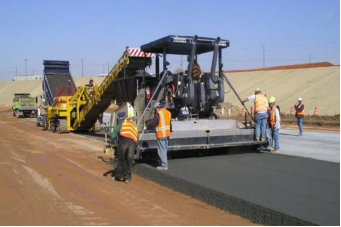
Abstract
Roads are a vital infrastructure that links cities and countries and facilitates trade between countries. The impact of severe climate change is increasing significantly all over the world and influences its effect on vital roads with respect to changes in temperature that induce significant thermal stresses, relative humidity, and extreme floods these days. Different mix designs, field tests, and materials utilized for flexible (Asphalt) and rigid pavement (Concrete) in Egypt and Saudi Arabia will be discussed in detail in this comprehensive review. Acceptable limits for Los Angeles (LA) abrasion to determine abrasion for the aggregates and California Bearing Ratio (CBR) limits for subgrade, sub-base, course base, binder base, and wear surface for roads would be provided. A detailed comparison between the Marshall Mix Design and Superpave Mix Design for the asphalt layer would be illustrated in this study for Egypt and the Kingdom of Saudi Arabia. Various rehabilitation techniques for roads in two different countries are provided according to the climate conditions and limitations in the two countries. Moreover, the mix design for pavement layers in airports for rigid or flexible pavement would be compared with respect to the materials and climatic conditions in the two countries. Road settlement causes and the method of rehabilitation in the two countries will be presented. Finally, it was found that utilizing Styrene-Butadiene-Styrene and nano-clay could improve the rheological properties and rutting resistance of the bitumen in the Egyptian code for urban and rural roads.
Keywords
Flexible Pavement, Rigid Pavement, California Bearing Ratio Test, Marshall Mix Design, Superpave Mix Design,
Road Settlement
1. Introduction
Cracks in highway roads are a critical issue caused by thermal cracking that exceeds the allowable thermal stress
| [1] | Hassan M, Amleh L. Influence of Climate Change on Probability of Carbonation-Induced Corrosion Initiation. Periodica Polytechnica Civil Engineering Journal. 2024; 68: 57-67.
https://doi.org/10.3311/PPci.22101 |
| [2] | Hassan M. Carbonation of Reinforced Concrete Sections Containing Various Supplementary Cementitious Materials: A Review. Journal of Building Material Science. 2025; 7(4): 142-161.
https://doi.org/10.30564/jbms.v7i4.12144 |
| [3] | Hassan M, Amleh L, Othman H. Effect of Different Cement Content and Water-Cement Ratio on Carbonation Depth and Probability of Carbonation-Induced Corrosion for Concrete. Cement Wapno Beton. 2022; 27: 126-143.
https://doi.org/10.32047/cwb.2022.27.2.4 |
| [4] | Hassan M, Amleh L. Influence of Various Crack Widths in RC Bridge Decks on the Initiation of Chloride-Induced Corrosion. Journal of Composites Sciences. 2025; 9: 242.
https://doi.org/10.3390/jcs9050242 |
| [5] | Hassan M, Amleh L, Hussein L. Projection of the Carbonation Depths and its Probability of Corrosion Initiation for the Uncracked and Cracked Concrete. International Review of Civil Engineering (IRECE). 2024; 15: 381-398.
https://doi.org/10.15866/irece.v15i5.24986 |
| [6] | Hassaan M, Elmasry M. I, and El Ashkar N. Structural Health Monitoring for Reinforced Concrete Containment Using Inner Electrical Resistivity Method. Open Journal of Civil Engineering. 2021; 11: 317-341.
https://doi.org/10.4236/ojce.2021.113019 |
| [7] | Hassaan M, Elmasry MI, and El Ashkar NE. Effect of Impact Boeing 707-320 on External RC Containment of Nuclear Power Plant for Different Compressive Strength of Concrete. Saudi Journal of Civil Engineering. 2021; 5(8): 282-304.
https://doi.org/10.36348/sjce.2021.v05i08.004 |
| [8] | Hassan M, Assessment of Temperature Levels on the Probability of Corrosion for RC Decks Made of Various Percentages of Supplementary Cementitious Materials. SSRG International Journal of Civil Engineering, 2025; 12(11): 36-54.
https://doi.org/10.14445/23488352/IJCE-V12I11P104 |
| [9] | Amleh L, Hassan M, Hussein L, Influence of climate change on the probability of chloride-induced corrosion initiation for RC bridge decks made of geopolymer concrete. Sustainability, 2024; 16: 8200. https://doi.org/10.3390/su16188200 |
[1-9]
. Moreover, the presence of cracks threatens the service life and durability of the section members
| [10] | Hassan M, Comparative Assessment of Chloride-Induced Corrosion Probability in RC Decks Using Monte Carlo Simulation and an Approximate Algorithm Method. In: Chee, C. Y., Wang, C. (eds) Proceedings of the 9th International Conference on Materials Engineering and Nanotechnology. ICMEN 2025. Springer Proceedings in Materials, 2026; 122. Springer, Singapore. https://doi.org/10.1007/978-981-92-0755-8_44 |
| [11] | Hassan M, Experimental Evaluation of Damage Propagation in Heavyweight Concrete Members Using the Inner Electrical Resistivity Method, Engineering Research Journal (Shoubra), 2025; 55(2): 130-140.
https://doi.org/10.21608/erjsh.2026.489040.1525 |
| [12] | Hassan M, Influence of Various Relative Humidity and Chloride Concentrations on Probability of Corrosion for Reinforced Concrete Members: A Review, High Technology Letters, 2025, 31(12): 21-34. https://doi.org/10.37896/HTL31.12/128902 |
| [13] | Hassan M, 2025. Evaluating the Durability of RC Bridges Under Climate Scenarios: A Study of Carbonation and Chloride-induced Corrosion. Toronto Metropolitan University. Thesis. https://doi.org/10.32920/30581534.v1 |
[10-13]
. Various researchers studied the impact of maximum temperature on the crack width for flexible pavements in various countries around the world
| [14] | Aker SNA, Zahid A, Beheshti M, Ozer H. Exploring the Root Causes of Wide Thermal Cracks in the Southwestern United States. Infrastructures. 2026; 11(1): 19.
https://doi.org/10.3390/infrastructures11010019 |
| [15] | Tabesh M, Mahmoudzadeh A, Arezoumand S. A reliability-based method for thermal cracking prediction in asphalt concrete. Construction and Building Materials. 2023; 409, 133912. https://doi.org/10.1016/j.conbuildmat.2023.133912 |
| [16] | Raffaniello A, Bauer M, Safiuddin M, El-Hakim M. Traffic and Climate Impacts on Rutting and Thermal Cracking in Flexible and Composite Pavements. Infrastructures. 2022; 7(8): 100.
https://doi.org/10.3390/infrastructures7080100 |
| [17] | Ma R, Li Y, Cheng P, Chen X, Cheng A. Low-Temperature Cracking and Improvement Methods for Asphalt Pavement in Cold Regions: A Review. Buildings. 2024; 14(12): 3802.
https://doi.org/10.3390/buildings14123802 |
[14-17]
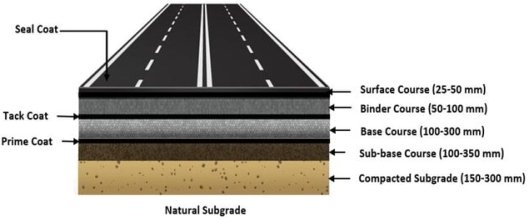
. Roads are engineered as multi-layered systems, as shown in
Table 1. The road structure distributes the traffic loads down to the native soil. Depending on the design, roads are broadly categorized as either flexible (asphalt) or rigid (concrete) pavements. Furthermore, the concrete layer is a rigid mixture of Portland cement, sand, water, and crushed stone. It is highly durable, handles heavier loads without rutting, but is costlier to install and repair.
The core layers for road construction are detailed as follows
| [18] | Daoud LG, Cranmer O, Lee KWW. Life cycle cost analysis to select types of new pavement considering climate change. Case Studies in Construction Materials. 2026; 25, e05606.
https://doi.org/10.1016/j.cscm.2025.e05606 |
[18]
: First is the subgrade
layer
, which is the natural foundation of the road, as shown in
Figure 1 and
Table 1. It must be compacted thoroughly to ensure no settling occurs under the weight of traffic. In situ natural soil or chemically stabilized soil is utilized. Second is the sub-base course that acts as the primary load-distribution and drainage layer. It also prevents underlying soil from pumping up into the upper layers. It is constructed from unbound granular materials, such as sand, gravel, crushed stone, or recycled concrete aggregates. Third is the base course, which provides the main structural support directly beneath the surface. This layer is made of crushed stone, crushed gravel, or treated aggregates (e.g., asphalt-treated or cement-treated bases). Finally, the surface course (wearing course), which is the visible top layer, is shown in
Figure 1 and
Table 1. It provides a smooth, skid-resistant, waterproof surface to protect the base layers from weather and continuous wear. The wearing course layer is made of asphalt concrete (flexible pavements) or Portland cement concrete (rigid pavements)
| [18] | Daoud LG, Cranmer O, Lee KWW. Life cycle cost analysis to select types of new pavement considering climate change. Case Studies in Construction Materials. 2026; 25, e05606.
https://doi.org/10.1016/j.cscm.2025.e05606 |
[18]
.
Figure 1. Geometrical flexible pavement layers with approximate various thicknesses.
Table 1. Comparison of flexible pavements (asphalt) multi-layered structures for most public roadways in Egypt and Saudi Arabia.
Multi-Layered Structures | Egyptian Code for Urban and Rural Roads | Saudi Arabia Code for Roads |
Wearing/Surface Course (Top Layer) | It is made of dense-graded asphalt concrete to provide a smooth, skid-resistant, and waterproof surface. | The layer that directly faces traffic and weather. Dense-graded asphalt concrete is made by combining finely crushed stones, sand, and bitumen. Asphalt binders in Saudi Arabia are carefully formulated to have high stiffness at 50°C to 60°C to prevent rutting, while maintaining flexibility at lower temperatures to prevent thermal cracking. |
Binder Course | An intermediate asphalt layer that distributes loads down to the base course and provides structural stability. | It connects the underlying base course to the top wearing surface. Coarse-graded hot-mix asphalt (HMA) mixed with bitumen, designed to withstand rutting and structural stress from heavy vehicles. |
Base Course | The primary load-bearing layer is usually constructed of crushed stone, gravel, or stabilized materials. It gives the road stiffness and relies on a sprayed prime coat of bitumen to bond with the binder course above. | The principal load-bearing layer provides high structural stability directly beneath the asphalt. High-quality crushed stone or gravel (such as MOT Class A granular base). The aggregate is often mixed with asphalt (bituminous base course) or stabilized with Portland cement to resist heavy commercial traffic. |
Sub-Base Course | A granular layer (gravel, crushed rock) that improves load distribution, provides drainage, and protects the subgrade. | It distributes the load to the subgrade and provides adequate drainage. Granular materials, primarily sandy gravel or crushed stone. The Saudi Ministry of Transport specifies standardized aggregates, frequently categorized as Class B granular materials. Contractors increasingly use foamed asphalt combined with marginal materials (e.g., recycled asphalt pavement) and small percentages of Portland cement to drastically improve structural strength. |
Subgrade (Bottom Layer) | The natural, compacted soil foundation of the roadbed. If the soils (such as clay-heavy soils) are weak, they are chemically stabilized or replaced. | The natural foundation supports the entire road structure. In-situ local soil is treated for stability, often mixed with sand or crushed rock to prevent shifting under extreme loads. It is made of heavily compacted (usually 90% to 95% relative compaction) material in 6 to 12-inch increments. |
Materials Used | Bitumen and Asphalt: Imported and locally refined bitumen serves as the binding agent. It is flexible, easy to repair, and accounts for most paved roads. Aggregates: Crushed limestone, sand, and gravel make up about 95% of the asphalt mix. Recycled Materials: Driven by sustainability goals, it utilizes recycled asphalt pavement and construction and demolition waste in lower pavement layers, offering significant reductions in carbon emission scenarios. | The Kingdom of Saudi Arabia's goal is to utilize recycling (60%) of construction and demolition waste by 2035. Official infrastructure projects are now actively integrating recycled concrete and recycled asphalt pavement into the base and binder layers in the road infrastructure. |
This research aims to find the difference between the various methods for road rehabilitation in Saudi Arabia and Egypt due to the worst weather conditions, especially in the summer season, and the methods for measuring road settlement in both countries. In addition, experimental field tests such as the California bearing ratio and Los Angeles test, etc., for roads' asphalt layers and binder (Bitumen) will be discussed in detail for the acceptable limits between the two countries. A comparison between Marshall and Superpave mix design will be further illustrated. A comparison of asphalt mix design in Egypt and Saudi Arabia will also be included in this research to deduce the raw materials and the optimum percentages of Supplementary Cementitious Materials in rigid pavement mix design. This research will explore the gaps in durability and environmental impact, with respect to integrating modifiers and recycled materials for flexible and rigid pavements in two countries in this review research, especially in the hot, extreme weather.
1.1. Roads Rehabilitation in Saudi Arabia
Road rehabilitation in Saudi Arabia relies on data-driven, systematic procedures aimed at combating extreme heat, heavy axle loads, and foundational wear. Guided by the Saudi Highway Code, the Ministry of Transport uses several core methods to restore the road network as follows.
1.1.1. Pavement Evaluation and Diagnostics
Before any physical repair begins, engineers assess structural integrity using specialized testing technologies such as ground-penetrating radar, which is used to detect internal voids, moisture damage, and layer thickness non-destructively. Moreover, the falling weight deflectometer measures the pavement's structural capacity by simulating the load of heavy vehicles to find weak subgrades. Finally, automated distress surveys use laser profilers and high-resolution cameras to scan surfaces to map rutting, cracking, and potholes.
1.1.2. Primary Techniques for Repair
Depending on the severity of the wear, authorities and contractors deploy targeted techniques such as Cold Milling and resurfacing, the most common method for surface-level distress. Specialized machines grind off the damaged top asphalt layer (which is often recycled) and replace it with a fresh Hot Mix Asphalt (HMA) layer. Moreover, Deep Patching and Reconstruction: For base and subgrade failure, the distressed areas are excavated down to the foundation, stabilized with high-density cement slurry, and completely rebuilt to handle heavy traffic. Furthermore, Crack Sealing and Filling: Routine preventive rehabilitation is applied to block water infiltration, which degrades the foundational layers.
1.1.3. Structural Strengthening and Upgrades
For roads experiencing heavy commercial traffic or geological challenges (like rockfalls in the mountainous Asir region), specialized techniques are used, such as fiber-reinforced polymers and stabilization techniques by mixing the existing subgrade soil with binding agents (like cement or lime) to improve load-bearing capacity before laying new asphalt.
1.1.4. Smart Management Systems
Under the Vision 2030 initiatives, maintenance decisions are increasingly dictated by Pavement Management Systems (PMS). These computer models use historical distress data to predict deterioration, such as the Saudi Arabia Urban Road Network (SAURN) prediction models. This ensures rehabilitation is implemented proactively rather than reactively, extending the lifespan of critical transport arteries.
1.2. Roads Rehabilitation in Egypt
Road rehabilitation in Egypt includes a mix of structural and functional upgrades designed to resist heavy traffic loads and severe climates. The most common methods utilized in the rehabilitation of roads are milling and resurfacing, asphalt overlays, full-depth reclamation, and concrete overlays, all of which are managed through advanced pavement management systems
| [19] | Elsayed E. Rehabilitation of Road Networks inside Inherent Neighborhoods and their Impact on Residents' Urban Quality of Life Case Study: “Heliopolis” Neighborhood-Cairo. Mansoura Engineering Journal. 2021; 46(2): Article 1.
https://doi.org/10.21608/bfemu.2021.175971 |
[19]
.
The main techniques and strategies used to rehabilitate Egypt's road networks are as follows.
1.2.1. Primary Techniques
A standard method where the distressed top layer of asphalt is removed (milled) using specialized machinery (Milling and Resurfacing). Second, asphalt overlays: for pavements with adequate foundational strength but surface wear, single or multiple layers of asphalt are paved over the existing surface. A tack coat is applied first to ensure proper bonding. Third, full-depth reclamation: This involves pulverizing the existing asphalt layer and some of the underlying base material, mixing it with stabilizing agents (like cement or bitumen), and compacting it to create a new robust base. Fourth, concrete overlays it is used primarily on high-traffic, heavy-load freight routes and expressways to provide a longer service life with less maintenance. These can be bonded or unbonded to the existing pavement.
1.2.2. Smart Management and Planning
PMS: Egyptian authorities and researchers utilize PMS software and modeling techniques (like Markov chains and Genetic Algorithms) to predict road deterioration. This helps prioritize repair schedules, optimize budgets, and prevent premature failures
| [20] | Elgamal E, fawzy H, Mohamady A, basha A. Pavement Management System: Condition Assessment, Challenges, and Future Directions. Journal of Contemporary Technology and Applied Engineering. 2025; 3(2): 93-102.
https://doi.org/10.21608/jctae.2025.361183.1044 |
[20]
. Performance-Based Contracting: Contracting strategies are shifting to performance-based models where private contractors are incentivized and penalized based on the long-term condition and serviceability of the roads that are managed.
These rehabilitation strategies play a crucial role in Egypt's Vision 2030, aiming to reduce logistics costs, improve driver safety, and elevate the overall quality of urban life.
2. Research Methodology for Measuring Road Settlement
Measuring road settlement involves tracking both the surface deformation (pavement) and the underlying soil (subgrade) to ensure structural integrity. Treatments should generally be applied in dry weather when the temperature is moderate. Proper adhesion requires a dust-free and completely dry crack. Following the manufacturer's application temperatures for hot-pour sealants is critical to long-term performance. Common techniques range from traditional manual surveying to automated sensors and advanced remote sensing, tailored to specific structural and subsoil needs
| [21] | Wang YY. Analysis of Control Measures for Settlement of Differences on the Problems of Highway Subgrade Widening. Open Journal of Civil Engineering. 2015; 5: 149-153.
http://dx.doi.org/10.4236/ojce.2015.52015 |
[21]
.
The primary methods for measuring road settlement are as follows.
2.1. Geodetic and Surveying Methods
The traditional approach utilizes a digital level and a precise invar staff to record elevation changes of surface markers (such as survey nails or bolts) against stable, off-site benchmarks. Furthermore, automated motorized total stations, including robotic instruments set up at fixed locations, continuously track the 3D coordinates of multiple prisms mounted along the road, offering real-time data.
2.2. Subsurface and Geotechnical Instrumentation
To measure the settlement of pavement layers, some geotechnical instruments are used:
Settlement Plates, which are buried at the subgrade level; these plates feature a vertical riser pipe. Surveying the top of the pipe yields highly accurate measurements of how much the underlying soil has consolidated. Moreover, another technique is liquid-filled tubes (Hydrostatic Profile Gauges) installed horizontally across the roadbed to measure differential settlement profiles and detect uneven sinking. Furthermore, single/multi-point extensometers are devices anchored at varying depths in boreholes that use sensors to measure vertical displacement between the anchors, providing deep soil settlement profiles.
2.3. Remote Sensing and Mobile Mapping
Terrestrial laser scanning uses non-contact 3D laser scanners to map the entire road surface rapidly, generating high-density point clouds that can evaluate sub-centimeter settlements over large sections. Furthermore, Vision-based and mobile systems: Vehicle-mounted optical cameras (often combined with GPS/GNSS systems) utilize image processing, photogrammetry, and computer vision techniques to automatically measure settlement markers.
3. Experimental Tests for Roads' Asphalt Layers
Experimental tests in road construction and asphalt focus on developing durable, crack-resistant, and high-load-bearing pavements. Testing different types of aggregates and modifying bitumen with additives to resist extreme temperature variations in the Gulf region is the most important point for the quality of pavement and the layers beneath the wearing surface.
The general experimental tests for surface layers of the road are as follows:
1) Asphalt Mix Design: Developing recipes that balance aggregate grading and binder content to optimize air voids, stiffness, and rutting resistance.
2) Performance Testing: Evaluating mixtures under simulated stress using methodologies like the Superpave Gyratory Compactor Test, Marshall Stability Test, and Wheel-Tracking Test
| [22] | Hassanien A, Elwardany M. Optimized protocol for performance testing of asphalt mixtures using the dynamic modulus and the cyclic fatigue test. Construction and Building Materials. 2026; 520, 145926.
https://doi.org/10.1016/j.conbuildmat.2026.145926 |
[22]
.
3) Innovative Materials: Experimenting with bitumen modified by polymers, fibers, or recycled waste materials (e.g., cast iron powder or plastics) to enhance flexibility and stability.
4) Intelligent Compaction: Utilizing field testing equipment that provides real-time feedback on temperature and compaction during road laying to ensure structural uniformity.
5) Raw Material Testing: Before any asphalt mixing begins, both aggregates and binders undergo strict quality control to predict field performance:
6) Binder Tests: Include penetration, viscosity, ductility, and softening point tests to measure the hardness and temperature susceptibility of the bitumen.
7) Aggregate Tests: Include crushing, abrasion, impact, and soundness tests to ensure rock durability under traffic loads.
The experimental testing for road construction and asphalt ensures structural integrity, load-bearing capacity, and resistance to environmental stress. Tests are categorized into aggregate evaluation, binder (bitumen) analysis, mix design (such as Marshall or Superpave), and in-situ field evaluations.
3.1. Aggregate and Soil Tests
Aggregates make up roughly 90-95% of the asphalt mix and form the roadbed. Testing determines shape, strength, and durability: the Los Angeles (LA) Abrasion Test is the most common experimental test that measures aggregate toughness and resistance to wear and degradation.
A lower LA value (e.g., < 30%) indicates highly durable, tough aggregates suitable for heavy-duty asphalt pavements and high-strength concrete. However, a higher LA value (e.g., > 40-50%) indicates a weaker aggregate prone to crushing; typically restricted to lower-traffic road bases or rejected for structural applications.
Comparing LA limits between Egypt and Saudi Arabia is as follows:
In Egypt, the maximum loss is 40% for base and subbase, and typically ≤ 30% for surface courses. However, in Saudi Arabia, the maximum loss is 40% for base courses, and ≤ 30%-35% for bituminous concrete surface courses.
California Bearing Ratio (CBR) evaluates the subgrade soil and base course's mechanical strength to ensure a stable foundation, and it is calculated using Equation (
1)
| [23] | Okafor FO, Tugwell OA. Comparative Evaluation of California Bearing Ratio (CBR) of Natural Offshore Sand and Cement Stabilized Offshore Sand as Road Subbase Material in Swampy Region. International Journal of Transportation Engineering and Technology. 2021; 7(1): 29-32.
https://doi.org/10.11648/j.ijtet.20210701.15 |
| [24] | Ahmed ST, Kabir MUl, Zahid CZB, Tareque T, Mirmotalebi S. Improvement of subgrade California Bearing Ratio (CBR) using recycled concrete aggregate and fly ash. Hybrid Advances. 2024; 5, 100153.
https://doi.org/10.1016/j.hybadv.2024.100153 |
| [25] | Hassan J, Alshameri B, Iqbal F. Prediction of California Bearing Ratio (CBR) Using Index Soil Properties and Compaction Parameters of Low Plastic Fine-Grained Soil. Transp. Infrastruct. Geotech. 2022; 9: 764-776.
https://doi.org/10.1007/s40515-021-00197-0 |
[23-25]
.
(1)
For 2.5 mm penetration: the standard stress reached 70 kg/cm2 (1000 psi), and the standard load is equal to 1370 kg (13.44 kN or 3000 lbs). For 5 mm penetration: the standard stress reached 105 kg/cm2 (1500 psi), and the standard load is equal to 2055 kg (20.06 kN or 4500 lbs).
Acceptable CBR limits for roads depend entirely on the pavement layer. For the subgrade (natural soil), an acceptable value is typically 8% to 15%. Subgrades with a CBR below 3% are considered very weak and require mechanical stabilization (geogrids), soil replacement, or the use of geosynthetics or chemical treatment (cement/lime).
Common acceptable limits and standards across the pavement profile include:
Subgrade (Natural Soil / Embankment): Minimum acceptable limit ranges from 3% to 5%, for minor, low-traffic roads. Moreover, for highways and heavy traffic, a minimum acceptable limit of 8% to 10% is heavily recommended. For excellent subgrade, acceptable values are greater than 30%, providing top-notch support and significant cost savings.
Sub-Base Layer: the acceptable Limits range from 20% to 80%. Highway standards usually require a minimum sub-base CBR of 30% to ensure adequate load distribution and drainage.
Base Course: the acceptable limits are typically greater than 80%. This layer requires highly crushed stone or gravel to bear direct wheel loads without rutting.
Comparison of the CBR limits for Egypt and Saudi Arabia is as follows:
In Egypt, the subgrade soils typically require a minimum CBR of 10%-15% at 95% modified AASHTO compaction, depending on traffic volumes. Subbase requires ≥ 30% to 40%, and crushed stone base courses require ≥ 80%. However, in Saudi Arabia, the subgrade generally requires ≥ 5% to 7%. Base courses require a minimum CBR of 80%.
3.2. Binder (Bitumen) Tests
Primary tests that measure consistency, temperature susceptibility, and aging are as follows:
1) Penetration Test: It measures the hardness of bitumen.
2) Softening Point Test: It determines the temperature at which bitumen softens and becomes fluid, indicating its resistance to summer heat.
3) Ductility Test: It measures the flexibility and stretchability of the binder to resist low-temperature cracking.
4) Viscosity Test: It evaluates the resistance to flow, which is critical for proper mixing and compaction temperatures.
5) Rolling Thin Film Oven Test: It simulates the short-term aging and hardening of the asphalt binder during mixing and paving.
3.3. Asphalt Mix Design and Performance Tests
These tests determine how the final combination of aggregates and binder will perform on the road:
The most common method (Marshall Stability and Flow Test) is used for minor roads, driveways, and low-traffic areas; it measures the maximum load a compacted asphalt sample can carry (stability) and its deformation under that load (flow). The advantage of this mix is highly cost-efficient, simple, and requires less expensive equipment. Moreover, the Superpave mix design utilizes a gyratory compactor to simulate real-world field traffic, focusing heavily on volumetric properties and binder grading (Performance Graded). It is the modern standard for highways, interstates, and high-traffic heavy-duty pavements because it dramatically reduces rutting and fatigue cracking. The key difference between Marshall mix design and Superpave mix design is that Marshall is a traditional, empirical method based on impact compaction and historical data, while Superpave is a performance-oriented system that tailors the asphalt mix to specific traffic loads and extreme climatic conditions, as shown in
Table 2.
Indirect Tensile (IDT) Test, it evaluates the fatigue resistance and cracking potential of the pavement under repeated traffic loads.
Table 2. Comparison between Marshall and Superpave mix design.
Feature | Marshall Mix Design | Superpave Mix Design |
Approach | Empirical (based on trial and error and historical lab results). | Performance-based (simulates real-world loads and weather). |
Compaction | Uses a mechanical impact hammer (blows). | Uses a Superpave Gyratory Compactor (SGC) that mimics field kneading action. |
Binder Selection | Marshall typically relies on standard penetration or viscosity grading. | Uses Performance Grading based on precise high/low temperatures. |
Climate and Traffic | Limited adjustment for specific regional climates or massive truck volumes. | Heavily customized for specific traffic volumes and severe climates. |
Aggregate | It relies primarily on grading curves. | Strict specifications on aggregate shape, texture, and size to minimize rutting. |
Rutting and Performance | Less resistance to rutting | Superior resistance to rutting and longer fatigue life under heavy traffic loads |
The typical Superpave mix process is based on the selection of aggregate: Using six standard Nominal Maximum Sizes (e.g., 37.5 mm down to 4.75 mm) based on the asphalt lift thickness. Moreover, volumetric optimization: compacting the mixture using a Superpave Gyratory compactor to simulate field traffic. The target is to achieve 4% air voids at the design number of gyrations. Finally, the job mix formula (JMF) is developed by developing precise proportions for aggregates and binder, detailing voids in mineral aggregate (VMA) and voids filled with asphalt (VFA).
The mix designs for the two countries are as follows: In Egypt, it is typically designed using the Marshall Stability Method (minimum 50 to 75 blows per face depending on traffic). However, in Saudi Arabia: The historically Marshall-based but has heavily transitioned to the Superpave mix design method targeting (Ndesign) gyrations based on the 20-year Equivalent Single Axle Loads.
3.4. Field Quality Control (In-Situ) Tests
Once construction begins, these tests verify that the laid road meets design standards. The common field tests used in the construction field for roads are: nuclear density gauge / Troxler Test; falling weight deflectometer (FWD); and core testing. For comprehensive standards, specifications, and testing protocols, refer to globally recognized guidelines by the American Association of State Highway and Transportation Officials (AASHTO) or ASTM International.
4. Asphalt Failures
Road and asphalt failures typically result from a combination of poor drainage, inadequate subgrade compaction, heavy traffic loads, or poor construction practices. When water seeps beneath the surface, it weakens the foundational soil, which causes cracking and potholes
| [26] | Zhang L, Cao X, Mei X, Fu X, Zhang H. Analysis of Failure Characteristics and Mechanisms of Asphalt Pavements for Municipal Landscape Roads. Coatings. 2026; 16(1): 28.
https://doi.org/10.3390/coatings16010028 |
[26]
.
4.1. Common Failures and Causes
Understanding the specific type of road damage helps identify the root cause:
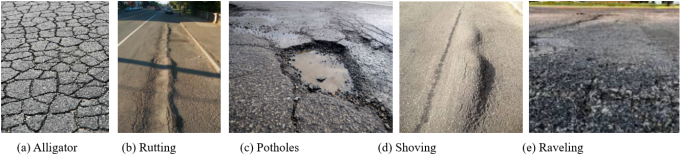
Alligator Cracking: Interconnected cracks resembling a reptile's skin. The structural failure of the base layers is often triggered by heavy vehicles flexing the pavement, as shown in
Figure 2a. Figure 2b shows the rutting of the road, channelized depressions in the wheel tracks. The weak asphalt mixes, inadequate compaction, or vehicles exceeding weight limits. Bowl-shaped holes (Potholes) that go down to the sub-base. Prolonged water intrusion that strips the asphalt binder from the rocks is compounded by freeze-thaw cycles, as shown in
Figure 2c. Moreover, Shoving/Corrugation: Ripples or waves in the asphalt. Asphalt is too soft or unstable, shifting under stopping and starting traffic, as shown in
Figure 2d.
Figure 2e shows raveling: The asphalt surface disintegrates as rocks and sand break loose. Aging bitumen (the binder) or poor compaction leaves too many air voids.
Figure 2. Various failures in existing road pavements.
4.2. General Methods for the Treatment of Cracks in Existing Roads
Heavy-traffic roads require treatments that preserve durability and structural load-bearing capacity safely. For working cracks (>2.5 mm movement), routing and sealing with hot-poured polymer-modified asphalt is preferred. For widespread cracking, heavy-duty mastic asphalt or full-depth patching ensures the road withstands continuous heavy loads.
4.2.1. Crack Sealing and Filling
This is a core preventative maintenance strategy meant to stop water and debris from penetrating the road base.
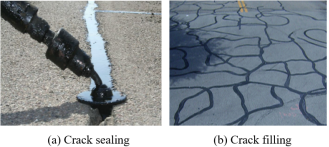
Crack Sealing (Working Cracks) involves routing (widening) the crack to create a uniform reservoir and filling it with a highly elastic, rubberized asphalt sealant. This allows the material to expand and contract with traffic and temperature changes, as shown in
Figure 3a. Active or working cracks that change width with temperature fluctuations (usually >2.5 mm movement)
| [27] | Ponniah JE, and Kennepohl GJ. Crack Sealing in Flexible Pavements: A Life-Cycle Cost Analysis. Transportation Research Record 1529. Transportation Research Board. Washington, D.C., 2007. |
| [28] | Chong GJ. Rout and Seal Cracks in Flexible Pavement - A Cost-Effective Preventative Maintenance Procedure. Transportation Research Record 1268, Transportation Research Board. Washington, D.C., 1990. |
[27, 28]
. The crack is routed (cut into a clean groove), thoroughly cleaned with high-pressure air, and sealed with a flexible, high-quality material like hot-applied rubberized asphalt or polymer-modified bitumen. Therefore, it prevents water infiltration and extends pavement service life by 5 to 7 years. Crack Filling (Non-Working Cracks), for cracks with minimum movement, as shown in
Figure 3b. It requires less intensive preparation compared to sealing. The crack is cleaned of debris and filled with cold-pour bituminous emulsions, asphalt cement, or specialized crack fillers.
Treatment must take place when pavement temperature is 40°C and rising (typically spring or fall). Ensure the crack is completely cleaned and dried using high-pressure air or a heat lance before application.
Figure 3. Crack treatment for existing roads.
4.2.2. Mastic Application
For heavily distressed or alligator-cracked sections that are still structurally sound, mastic treatments are ideal.
A specialized, high-performance mastic (a mix of bitumen, fine aggregates, and polymers) is heated and poured directly onto fatigued areas, leveled with a squeegee, and topped with stone chippings for skid resistance.
4.2.3. Patching and Repair
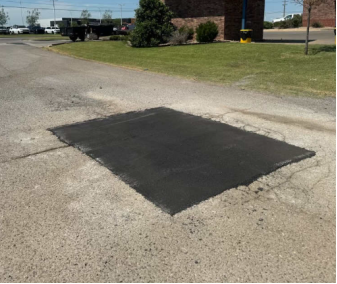
If the crack has worsened into a pothole or severe base failure, simple sealing will not suffice. The damaged asphalt around the crack is cut out, the area is thoroughly cleaned, fresh hot-mix asphalt is placed into the cutout, and it is mechanically compacted to match the surrounding pavement level, as shown in
Figure 4.
Figure 4. Patching and repairing a road pavement.
4.2.4. Overlays and Resurfacing
For roads suffering from extensive, high-severity cracking or widespread structural fatigue, localized treatments are insufficient. This involves applying a new asphalt layer (overlay) over the existing pavement. In many cases, geotextiles or stress-absorbing membrane interlayers are placed beforehand to prevent the old cracks from reflecting through the new layer. Treating traffic road cracks involves cleaning the damaged area and sealing or filling the space to prevent water and debris from penetrating the pavement. Common treatment methods depend on the severity and width of the crack, ranging from simple hot-pour crack sealing to full resurfacing. It often includes milling (removing the top layer of damaged asphalt) and laying a fresh, new layer of asphalt or concrete over the entire area to restore structural strength and create a smooth driving surface.
4.2.5. Base Repair
Cracks caused by a failing or unstable subgrade. It requires stabilizing or entirely replacing the weakened soil or base layers beneath the road before addressing the top asphalt or concrete surface.
5. Comparison of Asphalt Mix Design in Egypt and Saudi Arabia
Asphalt mix design in Egypt is governed by the Egyptian Code for Urban and Rural Roads, which primarily follows the Marshall Stability and Flow methodology. The process is largely based on Hot Mix Asphalt (HMA), determining the optimum asphalt content, targeting standard heavy-traffic mix gradations like mix 4C or mix 3D. The design balances aggregate gradation, asphalt binder content, and air voids to withstand high traffic loads and local temperature variations.
The main materials used in the asphalt mix are aggregates: Typically sourced locally (e.g., limestone or crushed dolomite/basalt from the Suez region). They are separated into coarse aggregates, fine aggregates, and mineral filler (such as cement or hydrated lime). Moreover, asphalt binder: The standard penetration-graded bitumen used in Egypt is typically 60/70 or 40/50, produced by refineries, though the Superpave performance grading (PG) system (e.g., PG 64-10 or PG 70-10) is also used for heavily trafficked highways. In Egypt, PG binders are selected based on the SHRP binder specification system, typically utilizing PG 64-10 or PG 70-10 for typical urban environments, transitioning to modified binders like PG 76-10 for heavy-duty truck traffic and expressways. However, in Saudi Arabia, it relies strictly on AASHTO criteria. Standard surface courses use PG 64-10 or PG 70-10 (AASHTO M 320). For heavy truck traffic, extreme desert heat, and high-axle loads, PG 76-10 or PG 82-10 are explicitly favored or required. Finally, mineral filler: Limestone dust is used to fill microscopic voids and improve the bond with the binder.
5.1. Types of Egyptian Standard Mixes for Asphalt
Roads are classified into specific aggregate gradations and layer types under Egyptian specifications:
Mix 4C (Heavy Traffic / Base Course): A dense, widely used gradation for surface/wearing courses subjected to heavy traffic loads. It generally consists of approximately 19 mm, 9.5 mm crushed stones, crushed sand, natural sand, and filler. It is designed for deep structural binder layers. Mix 3D (Heavy Traffic / Surface Course) is another highly common structural gradation used for heavy-traffic roads, providing a slightly different aggregate interlock ratio. Furthermore, Mix 4B is used for conventional binder/surface courses depending on the design traffic volume.
5.2. Marshall Mix Design in Egyptian Code for Asphalt
Marshall mix designs are created and validated in a laboratory through a structured, iterative process: the aggregates are combined (coarse, fine, and filler) to fall within the Egyptian code of practice grading envelopes for 4C or 3D mixes. Then, the aggregates are heated to 165°C to 180°C and the 60/70 bitumen to around 165°C. After that, the test specimens are compacted using a Marshall hammer with 75 blows per face. Then, measure the bulk specific gravity, air voids (Va), voids in the mineral aggregate (VMA), and voids filled with asphalt (VFA). Finally, soak the specimens in a 60°C water bath for 30 minutes before loading them to measure Marshall Stability and Flow limits.
The optimum binder content is typically found at the percentage that yields 4% air voids. This specific asphalt percentage must satisfy all AASHTO criteria for stability, flow, and void requirements.
Laboratory samples are prepared according to strict temperature and compaction constraints: First is the mixing temperature: aggregates and binder are thoroughly mixed at 150°C to 160°C. Secondly, the compaction: Samples are compacted with a mechanical hammer (usually 75 blows on each side for heavy traffic roads) at a temperature range of 138°C to 149°C.
5.3. Acceptance Criteria
To finalize the optimum bitumen content, the Marshall specimens are tested in a water bath at 60°C to evaluate the following: Marshall Stability: the minimum load resistance (varies based on road classification, typically > 9 kN). The air voids (Va), it must be maintained between 3% and 5% to prevent bleeding and rutting.
5.4. Emerging Trends and Additions
To meet modern durability and environmental goals, Egyptian researchers are integrating modifiers and recycled materials. Common additions include: Reclaimed asphalt pavement (waste materials), crumb rubber from scrap tires, and marble powder waste to replace traditional mineral filler. Styrene-Butadiene-Styrene and nano-clay as modifiers to improve the rheological properties and rutting resistance of the bitumen.
With extreme summer temperatures across Egypt, researchers and engineers frequently enhance standard HMA with modifiers and sustainable alternatives: Reclaimed Asphalt Pavement should be up to 25% to 40% old milled asphalt, which is frequently recycled into new mixes to achieve sustainability. Moreover, additives such as Ethoxylated Nonyl Phenol (NP9) or specific waxes are utilized to lower mixing and compaction temperatures.
5.5. Asphalt Mix Design In Saudi Arabia
Asphalt mix design in Saudi Arabia is highly specialized due to extreme temperatures and heavy axle loads, which demand highly rut-resistant, durable pavements. The Ministry of Transport and Logistics Services (MOTLS) transitioned from traditional Marshall methods to the Superpave System to enhance pavement performance across its road network.
The key pillars of KSA asphalt mix design are as follows:
1) Performance Grade (PG) Binders
| [29] | Wahhab HIA, Asi IM, Al-Dubabe IA, Ali M. F. Development of performance-based bitumen specifications for the Gulf countries. Construction and Building Materials. 1997; 11(1): 15-22. https://doi.org/10.1016/S0950-0618(97)00002-0 |
| [30] | Hailemariam BD, Melaku RS, Esheti SA. Developing Superpave Bitumen Performance Grading in Ethiopia: Adapting to Historical and Future Climate Conditions. Advances in Civil Engineering. 2025, 9914238, 23 pages.
https://doi.org/10.1155/adce/9914238 |
[29, 30]
: Given that maximum seven-day pavement temperatures in the Kingdom can exceed 76°C, selecting the correct PG binder is critical. Saudi Arabia typically specifies grades like PG 64-10 or higher, depending on the region's climate and traffic level.
2) Traffic Level Requirements: Mixes are heavily dependent on 20-year traffic projections measured in Equivalent Single Axle Loads.
3) Aggregate Consensus Properties: Strict criteria are enforced for aggregate angularity, flat and elongated particles, and sand equivalent to ensure stone-on-stone interlock, minimizing high-temperature rutting.
4) Moisture Sensitivity: Many local aggregates are moisture-sensitive; mixes must undergo the Modified Lottman Test (AASHTO T283). A minimum Tensile Strength Ratio (TSR) of 80% is universally required for acceptance.
The key design standard for asphalt mix in Saudi Arabia is based on the primary climatic factor: High summer temperatures (performance grades usually ranging from PG 70-10 to PG 76-22 to prevent thermal cracking and permanent deformation).
The core components of the Asphalt Mix are aggregates (94-96%): Crushed stone or gravel (such as limestone, basalt, or granite) that meets specific Superpave consensus properties like angularity, flat and elongated particle limits, and sand equivalency. In addition, the asphalt binder (4-6%) is often a Polymer-Modified Bitumen for highways experiencing heavy traffic and extreme heat to increase rut resistance.
The specialized asphalt types are as follows:
1) Hot Mix Asphalt: The standard choice for most local road networks, manufactured and laid at elevated temperatures.
2) Stone Mastic Asphalt: Used on high-traffic arterial roads and highways because its stone-on-stone skeleton provides superior rutting resistance under severe loads.
3) Recycled Asphalt Pavement: Increasingly incorporated to align with sustainability guidelines under Vision 2030.
6. Types of Rigid Pavement
Concrete pavements are generally categorized into distinct structural types (such as jointed or continuously reinforced) or by specialized material mixes (like pervious or roller-compacted concrete). The type selected depends on the expected traffic volume, climate, and structural load requirements
.
6.1. Structural Pavement Types
1) Jointed Plain Concrete Pavement: The most common type of concrete road. It contains no steel reinforcement but features contraction joints spaced 12 to 20 feet apart to control cracking. Dowel bars are typically used in the joints to transfer loads between slabs.
2) Jointed Reinforced Concrete Pavement: This type features steel wire mesh or rebar throughout the slabs. The reinforcement allows for longer joint spacing (up to 30 feet or more) by holding any transverse cracks tightly together.
3) Continuously Reinforced Concrete Pavement: A heavy-duty pavement utilizing a continuous mat of longitudinal steel. It has no transverse contraction joints and is designed to handle high-volume, heavy truck traffic with minimal maintenance.
6.2. Specialized Concrete Mixes and Application Types
6.2.1. Roller-Compacted Concrete
A zero-slump, stiff concrete mix that is placed with asphalt pavers and compacted using heavy rollers. It does not require forms or finishing, making it highly economical for industrial yards, parking lots, and heavy-duty roadways, as shown in
Figure 5.
Figure 5. Roller-compacted concrete.
6.2.2. Pervious Concrete
A specialized mix featuring a high void content that allows water to drain directly through the pavement into the soil below. It is heavily used in parking lots, driveways, and pedestrian walkways to manage stormwater runoff.
6.2.3. Pre-Cast Concrete Pavement
Factory-cured concrete slabs that are brought to the site and installed quickly, often overnight. It is ideal for high-traffic highway repairs where lane closures must be minimized.
6.2.4. High-Performance Concrete (HPC)
Tailored for specific performance metrics like extremely high compressive strength or frost resistance. It frequently includes admixtures like air-entraining agents to survive harsh freeze-thaw cycles in cold climates.
Concrete pavements in Saudi Arabia are typically designed to withstand the region's extreme heat and high-salinity soils. The primary types used include Portland Cement Concrete (PCC), High-Strength Concrete, and specialized mixes like Roller-Compacted Concrete and Rapid-Setting Concrete, as shown in
Table 3. In Egypt, concrete pavements rely on rigid Portland cement slabs or asphalt binders. Depending on the road class, traffic load, and local environment, specific concrete types are engineered using local aggregates, standardized OPC cements, and advanced chemical admixtures, as illustrated in
Table 3.
Table 3. Various rigid pavements in two different countries.
Types of Rigid Pavement | Saudi Arabia | Egypt |
Portland Cement Concrete (PCC) | It relies heavily on moderate- or high-sulfate-resistant Portland cement to prevent deterioration from the salts and sulfates present in the soil and groundwater. | Used for heavy-duty rigid pavements, such as main highways, intersections, and airport runways. |
High-Strength Concrete | Utilized for heavy-traffic intersections, airport runways, and port terminals. The compressive strength exceeds 50 MPa by utilizing supplementary cementitious materials like fly ash or silica fume to increase the density of the concrete microstructure and prevent cracking under sustained loads. | It is utilized in rigid pavements, especially (C40/C50). Applied in high-traffic commercial zones and industrial roads. |
Roller-Compacted Concrete (RCC) | A zero-slump concrete mix compacted by heavy vibratory rollers. It is widely used in Saudi Arabia for parking lots, port storage yards, and heavy-duty industrial pavements because it is economical and fast to construct. | Used for industrial yards and heavy-duty logistics hubs. It is placed with a high-density asphalt paver and compacted with rollers, eliminating the need for formwork and finishing. |
Rapid-Setting and Slipform Concrete | Rapid-Setting Concrete: Essential for highway repairs, urban roads, and airport runway maintenance that require minimal traffic disruption. It achieves high early strength, allowing sections to reopen within hours. | Slipform Concrete: Utilized for continuous pouring on major national highway projects. This near-zero slump mix is mechanically laid using slipform pavers. Cemex Egypt Slipform Pavement: Cemex provides engineered, zero-slump ready-mix solutions designed to meet the exact continuous paving specifications for Egypt’s extensive road and highway network. Structural Slipform Systems: Supported by specialized engineering and formwork suppliers in Egypt, such as Acrow Integrated Construction Services and Doka Egypt, which integrate modern climbing slipform equipment with rapid-curing concrete to achieve vertical progress safely and economically. Rapid-Setting Concrete: It is designed to gain structural strength at early ages to allow for quick formwork removal or immediate traffic reopening. Cemex Egypt FastCrete: A flowable, ready-mix concrete specifically designed to guarantee structural strength within 24 to 72 hours, while remaining flowable for up to two hours with a low water-to-cement ratio. Fosroc Adhesives & Grouts: Used for localized repairs and heavy-duty environments. Products like webercem pyracrete or webercem spray RSF are heavily used in Egypt for rapid highway/manhole repairs and marine or tidal zone concrete applications. CTS Rapid Set Products: Distributed in Egypt (often via sole agents like Delta Profloor), these use specialized shrinkage-compensating cement allowing floors and structures to be finished and reopened in just one hour. |
Specialized Concrete | Fiber-Reinforced Concrete: Incorporates micro and macro fibers (steel or synthetic) to replace traditional steel rebar. This limits micro-cracking and helps the slab endure the heavy expansion and contraction cycles caused by temperature swings. | Portland Slag Cement (PSC): This slag-blended concrete is highly resistant to sulfates and chlorides, making it ideal for marine environments like coastal highway projects. Porous (Pervious) Concrete: An environmentally friendly mix with high porosity used for shoulders, sidewalks, and parking lots. |
Aggressive Climate | Enhance standard mixes with Ground Granulated Blast-Furnace Slag (GGBS) and air-entraining admixtures, which reduce the risk of thermal cracking and structural degradation. | Admixtures and Pozzolans: Egyptian civil engineers frequently enhance standard mixes using local silica fume, metakaolin, and superplasticizers to reduce permeability and increase pavement lifespan. CEM I 42.5N or 52.5N: Standardized, high-early-strength ordinary Portland cements were utilized. |
7. Types of Pavements Utilized in Airports
Airports in Saudi Arabia primarily utilize flexible and rigid pavements, often in combination
| [32] | Liu Q, Yi X, Yu B, Falchetto AC, Wang D. A review of high-performance fiber concrete for airport pavements. Journal of Traffic and Transportation Engineering (English Edition). 2025; 12(4): 907-925. https://doi.org/10.1016/j.jtte.2024.06.005 |
[32]
. The selection and combination of these materials depend on their location and specific use within the airfield to safely withstand the extreme heat and heavy aircraft loads, as shown in
Table 4. Airport pavement design in Saudi Arabia is governed by the General Authority of Civil Aviation, utilizing FAA standards, FAARFIELD, and ICAO compliance to withstand extreme summer temperatures, exceeding 70°C, and heavy aircraft wheel loads. The airports in Egypt primarily utilize a combination of flexible and rigid pavements. The selection depends heavily on the specific operational zone of the airfield and the structural demands of the aircraft traffic, as shown in
Table 4. Egyptian airport pavements are engineered primarily using American methodologies such as the AASHTO 1993 guide and FAA design software, which are aligned with the Egyptian Code for Highway Design and Construction and international ICAO standards.
Table 4. Types of airport pavements in two countries.
Types of Pavements | Saudi Arabia | Egypt |
Rigid Pavement (Portland Cement Concrete - PCC) | Heavy-traffic areas like aircraft parking aprons, terminal gates, taxiways, and the touchdown zones of runways. It is highly resistant to heat, fuel spills, and the immense stationary weight of aircraft, which prevents deep deformation. | It is highly durable and possesses high flexural strength, making it ideal for areas that experience heavy, static, or slow-moving loads. It is used for Heavy-duty aircraft parking aprons, gate areas, and taxiway holding bays where airplanes idle, stop, or pivot. It consists of cement concrete slabs over a sub-base course. This design resists deformations (such as rutting) caused by the extreme weight of commercial and cargo aircraft. The concrete slabs are often dowel-jointed (to transfer loads between adjacent slabs) and range in thickness from 30 cm to 50 cm, depending on traffic volume (e.g., Boeing 777). Because of the intense climatic conditions, which suffer severe temperature variations, rigid concrete is increasingly specified for new or rehabilitated aircraft stands to prevent asphalt softening and deformation under extreme heat in summer. |
Flexible Pavement (Hot Mix Asphalt - HMA) | It is utilized in runway central sections, shoulders, and airside service roads. Asphalt offers operational flexibility and faster repair times. It is preferred for active runways because it provides a highly smooth surface that allows continuous motion. | It is the most common surface type for most runways in airports in Egypt. It is preferred for its smooth quality and cost-effectiveness. It is utilized on the main runways and taxiways at major hubs. They feature a multi-layer design, typically comprising HMA as the surface course, supported by stabilized granular base and sub-base layers. |
Composite and Innovative Pavement | Some major facilities use a combination, such as flexible asphalt built over a high-strength concrete base. In cases where old concrete (PCC) runways have failed, Saudi infrastructure projects have utilized rubblization, breaking the old concrete into smaller pieces to form a high-strength base, which is then overlaid with new polymer-modified asphalt. | It is a hybrid design that features a layer of asphalt paving over an existing rigid concrete surface. It is used for rehabilitation projects, such as upgrades to older airfields. Applied in older airports where structural concrete is still sound, but the surface requires milling and replacement with flexible asphalt for improved skid resistance and evenness. |
Airport pavement design in Egypt generally follows standards set by the Federal Aviation Administration or the International Civil Aviation Organization. The design methodology incorporates local subgrade characterization, climatic conditions, and rigorous structural analysis.
The empirical mechanistic approaches: researchers and the Egyptian Code of Practice for roads have increasingly calibrated Mechanistic-Empirical Pavement Design Guide (MEPDG) models using local climatic and material properties. This ensures designs accurately account for high ambient temperatures and rutting in asphalt layers. For civil aviation projects, local authorities and engineering firms typically use FAA-approved software like FAARFIELD (using layered elastic theory) to input local traffic mixes and predict pavement life. Localized weather data are modeled to determine curling stresses in concrete and rutting in asphalt. To manage the large assets of airports, authorities utilize software like Micro Paver along with the Pavement Condition Index, as outlined in ASTM D5340, to forecast repairs and schedule structural rehabilitation.
The design approach for Saudi Arabian airports carefully integrates local climate challenges and heavy-duty structural requirements. The subgrade and base layers require proper stabilization, which is essential for local soils that are chemically stabilized with cement or lime. The sub-base consists of crushed stone to provide a high resilient modulus. The drainage systems are designed to prevent water from weakening the base courses, a significant concern in both coastal and flash-flood-prone regions. In high-temperature asphalt, the modified asphalt binders (e.g., Superpave mix designs) are standard to combat extreme heat, prevent asphalt bleeding, and mitigate rutting.
Moreover, the runways are sawn with trapezoidal transverse grooves to prevent hydroplaning and improve skid resistance during rare but intense rainstorms. The structural capacity of the pavement is evaluated using the Aircraft Classification Number (ACN) and Pavement Classification Number (PCN) method. The pavement thickness, which can reach over 50 cm of combined structural layers for rigid pavements, depending on aircraft tonnage, is computed using the FAARFIELD software program.
8. Climate Adaptation for Flexible Pavement in Different Countries
8.1. Saudi Arabia
Saudi Arabia presents one of the world's most demanding environments for flexible pavements because of extremely high temperatures, intense solar radiation, occasional flash flooding, expansive soils in some regions, heavy freight traffic, and wind-blown sand. These conditions significantly influence pavement performance, maintenance requirements, and life-cycle costs. Research consistently shows that temperature is the dominant climate factor affecting asphalt pavement performance, while flooding and moisture become critical during extreme rainfall events.
8.1.1. Climate Implications for Flexible Pavement
The principal environmental challenges are shown in
Table 5. Research indicates that temperature has a greater long-term effect on pavement deterioration than precipitation in arid climates unless flooding becomes frequent
| [33] | Qiao Y, Dawson AR, Parry T, Flintsch G, Wang W. Flexible Pavements and Climate Change: A Comprehensive Review and Implications. Sustainability. 2020; 12(3): 1057.
https://doi.org/10.3390/su12031057 |
[33]
.
Table 5. Climate Variable impact on flexible pavement in Saudi Arabia.
Climate Factors | Impact on Flexible Pavement |
High temperatures (45-55°C pavement surface often exceeds 70°C) | Asphalt softening, rutting, bleeding, accelerated oxidation |
Large daily temperature variation | Thermal fatigue and surface cracking |
UV radiation | Binder aging and embrittlement |
Flash floods | Loss of subgrade strength, stripping, moisture damage |
Sand accumulation | Surface abrasion, skid resistance reduction, drainage blockage |
8.1.2. Climate Adaptation Strategies for Flexible Pavements
(i). High-Temperature Asphalt Binders
Recommended approaches include the use of higher-performance-grade (PG) binders, polymer-modified bitumen, SBS-modified asphalt, and crumb rubber modification. Their advantages are as follows: reduced rutting, improved fatigue resistance, and longer service life.
(ii). Improved Mix Design
The recommended materials used are stone matrix asphalt (SMA), warm mix asphalt with suitable additives, Fiber-reinforced asphalt, and high-quality crushed aggregates.
These mixes better resist deformation under high pavement temperatures.
8.2. Egypt
Flexible pavements are the most widely used pavement type in Egypt because they are economical to construct, relatively easy to maintain, and well suited to a wide range of traffic conditions. However, Egypt's hot arid climate, high solar radiation, desert environments, occasional flash floods, and increasing climate variability present significant challenges to pavement durability. Rising temperatures associated with climate change are expected to accelerate pavement deterioration, increase maintenance requirements, and raise life-cycle costs. Consequently, climate-resilient pavement design has become an important consideration for highway agencies and engineers.
The climate challenges affecting flexible pavements in Egypt are as follows.
8.2.1. High Temperature
High temperature is the most critical environmental factor affecting flexible pavements in Egypt. Its effects include reducing asphalt stiffness, increasing permanent deformation (rutting), accelerating asphalt binder aging, reducing fatigue life, and increasing susceptibility to heavy axle loads.
Research using Egyptian climatic data demonstrated that rutting is one of the pavement distresses most strongly influenced by high pavement temperatures.
8.2.2. Flash Flooding
Although Egypt receives relatively little annual rainfall, localized heavy storms and flash floods can cause loss of subgrade strength, moisture damage, base course weakening, and premature pothole formation.
These risks are particularly relevant in coastal regions, the Nile Delta, and flood-prone wadis, where drainage deficiencies can accelerate pavement deterioration.
8.2.3. Temperature Fluctuations
Daily and seasonal temperature variations contribute to thermal stresses, asphalt aging, fatigue cracking, and reduction in pavement durability over time.
Repeated heating and cooling cycles gradually weaken asphalt mixtures and shorten pavement service life.
8.3. Climate Adaptation Strategies for Flexible Pavement
8.3.1. High-Performance Asphalt Binders
Recommended materials include:
1) Performance Grade (PG) asphalt binders,
2) Polymer-modified bitumen, and
3) Styrene-Butadiene-Styrene (SBS)-modified asphalt.
These binders improve resistance to rutting, high-temperature deformation, Oxidation, and Fatigue cracking.
8.3.2. Mechanistic-Empirical Pavement Design
Replacing traditional empirical design methods with mechanistic-empirical pavement design allows engineers to account for local climatic conditions, temperature variation, and moisture effects, Traffic loading, and Material properties.
Studies based on Egyptian climatic zones have shown that climate-specific pavement design provides more accurate predictions of rutting, cracking, and pavement roughness than conventional methods.
8.3.3. Stronger Pavement Structures
Structural adaptations include: 1) increased asphalt layer thickness, 2) cement-treated or stabilized base layers, and 3) improved subgrade stabilization.
These measures reduce tensile strain, permanent deformation, and structural fatigue under heavy traffic loading.
8.3.4. Sustainable and Local Materials
Recent Egyptian research has explored sustainable alternatives such as reclaimed asphalt pavement, warm-mix asphalt, recycled aggregates, and palm-fiber soil stabilization.
These materials can improve environmental sustainability while reducing construction costs and enhancing subgrade performance under suitable conditions.
8.4. Economic Benefits of Climate Adaptation
Although climate-resilient pavements require greater initial investment, they provide several long-term economic advantages by reducing maintenance frequency, lowering rehabilitation costs, extending service life, reducing vehicle operating costs, lowering traffic delay costs, and improving infrastructure reliability.
Life-cycle cost analyses consistently show that adaptation measures become economically beneficial when evaluated over the pavement's full design life rather than considering only initial construction costs.
8.5. Recommendations for Resilience of Flexible Pavements Under Climate Conditions
To improve the resilience of flexible pavements under future climate conditions, Egypt and Saudi Arabia should follow the recommendations shown in
Table 6.
Table 6. Recommendations for resilience of flexible pavements under future climate conditions in different countries.
Parameters | Saudi Arabia | Egypt |
Temperature | High-temperature PG or polymer-modified binders. | Use high-temperature-resistant asphalt binders on heavily trafficked highways. |
Mechanistic-empirical pavement | Mechanistic-empirical pavement design using projected climate conditions. | Adopt mechanistic-empirical pavement design calibrated for Egyptian climatic regions. |
LCC | Life-cycle cost analysis rather than lowest initial cost. | Apply life-cycle cost analysis to evaluate climate adaptation alternatives. |
Pavement | Routine pavement monitoring using rutting, cracking, and roughness indices. | Strengthen pavement structures using stabilized base layers where appropriate. |
Materials | Increased use of recycled and low-carbon materials where performance requirements are met. | Promote sustainable materials such as reclaimed asphalt and locally available soil stabilizers where technically suitable. |
9. Conclusions
Acceptable CBR limits for roads depend entirely on the pavement layer. For the subgrade (natural soil), an acceptable value is typically 8% to 15%. Subgrades with a CBR below 3% are considered very weak and require mechanical stabilization (geogrids), soil replacement, or the use of geosynthetics or chemical treatment.
The optimum binder content is typically found at the percentage that yields 4% air voids. This specific asphalt percentage must satisfy all AASHTO criteria for stability, flow, and void requirements.
Marshall mix design has less superior resistance to rutting compared to Superpave mix design.
Superpave mix design has superior resistance to rutting and longer fatigue life under heavy traffic loads.
The sealed crack with a flexible, high-quality material like hot-applied rubberized asphalt or polymer-modified bitumen. Therefore, it extends pavement service life by a range of 5 to 7 years.
A specialized, high-performance mastic (a mix of bitumen, fine aggregates, and polymers) is heated and poured directly onto fatigued areas for skid resistance.
In the Egyptian Authority for Roads, with extreme summer temperatures, Egyptian researchers are integrating modifiers and recycled materials as follows:
1) Reclaimed asphalt pavement, crumb rubber from scrap tires, and marble powder waste as replacements for traditional mineral filler. Up to 25% to 40% of old, milled asphalt is frequently recycled into new mixes to achieve sustainability.
2) It is recommended to utilize Styrene-Butadiene-Styrene and nano-clay to improve the rheological properties and rutting resistance of the bitumen.
3) Additives such as Ethoxylated Nonyl Phenol (NP9) or specific waxes are utilized to lower mixing and compaction temperatures.
Recommendations: It is recommended to utilize hot mix asphalt in the airport runway in Saudi Arabia and Egypt, because asphalt offers operational flexibility and faster repair times. Moreover, it is preferred for active runways as it provides a highly smooth surface.
In the case of composite and innovative pavement, it is recommended in Saudi Arabia to use rubblization in cases where old concrete runways have failed, breaking the old concrete into smaller pieces to form a high-strength base, which is then overlaid with new polymer-modified asphalt.
In the aggressive climate, it is recommended for rigid pavement mixes in Saudi Arabia to utilize GGBS and air-entraining admixtures, which reduce the risk of thermal cracking and structural degradation. Moreover, it is recommended in rigid pavement mixes in Egypt to utilize silica fume or metakaolin as supplementary cementitious materials, with ordinary Portland cement and superplasticizers in the mix to reduce permeability and increase pavement lifespan.
Abbreviations
AASHTO | American Association of State Highway and Transportation Officials |
ACN | Aircraft Classification Number |
CBR | California Bearing Ratio |
GGBS | Ground Granulated Blast-Furnace Slag |
HMA | Hot Mix Asphalt |
HSC | High Strength Concrete |
JMF | Job Mix Formula |
LA | Los Angeles |
LCC | Life Cycle Cost |
MEPDG | Mechanistic-Empirical Pavement Design Guide |
MOT | Ministry of Transport |
MOTLS | Ministry of Transport and Logistics Services |
PCC | Portland Cement Concrete |
PCN | Pavement Classification Number |
PG | Performance Grade |
PMS | Pavement Management Systems |
PSC | Portland Slag Cement |
RCC | Roller-Compacted Concrete |
SBS | Styrene-Butadiene-Styrene |
SGC | Superpave Gyratory Compactor |
SMA | Stone Matrix Asphalt |
TSR | Tensile Strength Ratio |
UV | Ultra Violate |
Va | Air Voids |
VMA | Voids in the Mineral Aggregate |
VFA | Voids Filled with Asphalt |
Author Contributions
Mostafa Hassan: Conceptualization, Data curation, Formal Analysis, Funding acquisition, Investigation, Methodology, Project administration, Resources, Software, Supervision, Validation, Visualization, Writing – original draft, Writing – review & editing
Conflicts of Interest
The author declares no conflict of interest.
References
| [1] |
Hassan M, Amleh L. Influence of Climate Change on Probability of Carbonation-Induced Corrosion Initiation. Periodica Polytechnica Civil Engineering Journal. 2024; 68: 57-67.
https://doi.org/10.3311/PPci.22101
|
| [2] |
Hassan M. Carbonation of Reinforced Concrete Sections Containing Various Supplementary Cementitious Materials: A Review. Journal of Building Material Science. 2025; 7(4): 142-161.
https://doi.org/10.30564/jbms.v7i4.12144
|
| [3] |
Hassan M, Amleh L, Othman H. Effect of Different Cement Content and Water-Cement Ratio on Carbonation Depth and Probability of Carbonation-Induced Corrosion for Concrete. Cement Wapno Beton. 2022; 27: 126-143.
https://doi.org/10.32047/cwb.2022.27.2.4
|
| [4] |
Hassan M, Amleh L. Influence of Various Crack Widths in RC Bridge Decks on the Initiation of Chloride-Induced Corrosion. Journal of Composites Sciences. 2025; 9: 242.
https://doi.org/10.3390/jcs9050242
|
| [5] |
Hassan M, Amleh L, Hussein L. Projection of the Carbonation Depths and its Probability of Corrosion Initiation for the Uncracked and Cracked Concrete. International Review of Civil Engineering (IRECE). 2024; 15: 381-398.
https://doi.org/10.15866/irece.v15i5.24986
|
| [6] |
Hassaan M, Elmasry M. I, and El Ashkar N. Structural Health Monitoring for Reinforced Concrete Containment Using Inner Electrical Resistivity Method. Open Journal of Civil Engineering. 2021; 11: 317-341.
https://doi.org/10.4236/ojce.2021.113019
|
| [7] |
Hassaan M, Elmasry MI, and El Ashkar NE. Effect of Impact Boeing 707-320 on External RC Containment of Nuclear Power Plant for Different Compressive Strength of Concrete. Saudi Journal of Civil Engineering. 2021; 5(8): 282-304.
https://doi.org/10.36348/sjce.2021.v05i08.004
|
| [8] |
Hassan M, Assessment of Temperature Levels on the Probability of Corrosion for RC Decks Made of Various Percentages of Supplementary Cementitious Materials. SSRG International Journal of Civil Engineering, 2025; 12(11): 36-54.
https://doi.org/10.14445/23488352/IJCE-V12I11P104
|
| [9] |
Amleh L, Hassan M, Hussein L, Influence of climate change on the probability of chloride-induced corrosion initiation for RC bridge decks made of geopolymer concrete. Sustainability, 2024; 16: 8200.
https://doi.org/10.3390/su16188200
|
| [10] |
Hassan M, Comparative Assessment of Chloride-Induced Corrosion Probability in RC Decks Using Monte Carlo Simulation and an Approximate Algorithm Method. In: Chee, C. Y., Wang, C. (eds) Proceedings of the 9th International Conference on Materials Engineering and Nanotechnology. ICMEN 2025. Springer Proceedings in Materials, 2026; 122. Springer, Singapore.
https://doi.org/10.1007/978-981-92-0755-8_44
|
| [11] |
Hassan M, Experimental Evaluation of Damage Propagation in Heavyweight Concrete Members Using the Inner Electrical Resistivity Method, Engineering Research Journal (Shoubra), 2025; 55(2): 130-140.
https://doi.org/10.21608/erjsh.2026.489040.1525
|
| [12] |
Hassan M, Influence of Various Relative Humidity and Chloride Concentrations on Probability of Corrosion for Reinforced Concrete Members: A Review, High Technology Letters, 2025, 31(12): 21-34.
https://doi.org/10.37896/HTL31.12/128902
|
| [13] |
Hassan M, 2025. Evaluating the Durability of RC Bridges Under Climate Scenarios: A Study of Carbonation and Chloride-induced Corrosion. Toronto Metropolitan University. Thesis.
https://doi.org/10.32920/30581534.v1
|
| [14] |
Aker SNA, Zahid A, Beheshti M, Ozer H. Exploring the Root Causes of Wide Thermal Cracks in the Southwestern United States. Infrastructures. 2026; 11(1): 19.
https://doi.org/10.3390/infrastructures11010019
|
| [15] |
Tabesh M, Mahmoudzadeh A, Arezoumand S. A reliability-based method for thermal cracking prediction in asphalt concrete. Construction and Building Materials. 2023; 409, 133912.
https://doi.org/10.1016/j.conbuildmat.2023.133912
|
| [16] |
Raffaniello A, Bauer M, Safiuddin M, El-Hakim M. Traffic and Climate Impacts on Rutting and Thermal Cracking in Flexible and Composite Pavements. Infrastructures. 2022; 7(8): 100.
https://doi.org/10.3390/infrastructures7080100
|
| [17] |
Ma R, Li Y, Cheng P, Chen X, Cheng A. Low-Temperature Cracking and Improvement Methods for Asphalt Pavement in Cold Regions: A Review. Buildings. 2024; 14(12): 3802.
https://doi.org/10.3390/buildings14123802
|
| [18] |
Daoud LG, Cranmer O, Lee KWW. Life cycle cost analysis to select types of new pavement considering climate change. Case Studies in Construction Materials. 2026; 25, e05606.
https://doi.org/10.1016/j.cscm.2025.e05606
|
| [19] |
Elsayed E. Rehabilitation of Road Networks inside Inherent Neighborhoods and their Impact on Residents' Urban Quality of Life Case Study: “Heliopolis” Neighborhood-Cairo. Mansoura Engineering Journal. 2021; 46(2): Article 1.
https://doi.org/10.21608/bfemu.2021.175971
|
| [20] |
Elgamal E, fawzy H, Mohamady A, basha A. Pavement Management System: Condition Assessment, Challenges, and Future Directions. Journal of Contemporary Technology and Applied Engineering. 2025; 3(2): 93-102.
https://doi.org/10.21608/jctae.2025.361183.1044
|
| [21] |
Wang YY. Analysis of Control Measures for Settlement of Differences on the Problems of Highway Subgrade Widening. Open Journal of Civil Engineering. 2015; 5: 149-153.
http://dx.doi.org/10.4236/ojce.2015.52015
|
| [22] |
Hassanien A, Elwardany M. Optimized protocol for performance testing of asphalt mixtures using the dynamic modulus and the cyclic fatigue test. Construction and Building Materials. 2026; 520, 145926.
https://doi.org/10.1016/j.conbuildmat.2026.145926
|
| [23] |
Okafor FO, Tugwell OA. Comparative Evaluation of California Bearing Ratio (CBR) of Natural Offshore Sand and Cement Stabilized Offshore Sand as Road Subbase Material in Swampy Region. International Journal of Transportation Engineering and Technology. 2021; 7(1): 29-32.
https://doi.org/10.11648/j.ijtet.20210701.15
|
| [24] |
Ahmed ST, Kabir MUl, Zahid CZB, Tareque T, Mirmotalebi S. Improvement of subgrade California Bearing Ratio (CBR) using recycled concrete aggregate and fly ash. Hybrid Advances. 2024; 5, 100153.
https://doi.org/10.1016/j.hybadv.2024.100153
|
| [25] |
Hassan J, Alshameri B, Iqbal F. Prediction of California Bearing Ratio (CBR) Using Index Soil Properties and Compaction Parameters of Low Plastic Fine-Grained Soil. Transp. Infrastruct. Geotech. 2022; 9: 764-776.
https://doi.org/10.1007/s40515-021-00197-0
|
| [26] |
Zhang L, Cao X, Mei X, Fu X, Zhang H. Analysis of Failure Characteristics and Mechanisms of Asphalt Pavements for Municipal Landscape Roads. Coatings. 2026; 16(1): 28.
https://doi.org/10.3390/coatings16010028
|
| [27] |
Ponniah JE, and Kennepohl GJ. Crack Sealing in Flexible Pavements: A Life-Cycle Cost Analysis. Transportation Research Record 1529. Transportation Research Board. Washington, D.C., 2007.
|
| [28] |
Chong GJ. Rout and Seal Cracks in Flexible Pavement - A Cost-Effective Preventative Maintenance Procedure. Transportation Research Record 1268, Transportation Research Board. Washington, D.C., 1990.
|
| [29] |
Wahhab HIA, Asi IM, Al-Dubabe IA, Ali M. F. Development of performance-based bitumen specifications for the Gulf countries. Construction and Building Materials. 1997; 11(1): 15-22.
https://doi.org/10.1016/S0950-0618(97)00002-0
|
| [30] |
Hailemariam BD, Melaku RS, Esheti SA. Developing Superpave Bitumen Performance Grading in Ethiopia: Adapting to Historical and Future Climate Conditions. Advances in Civil Engineering. 2025, 9914238, 23 pages.
https://doi.org/10.1155/adce/9914238
|
| [31] |
Styer J, Tunstall L, Landis A, Grenfell J. Innovations in pavement design and engineering: A 2023 sustainability review. Heliyon. 2024; 10(13): e33602.
https://doi.org/10.1016/j.heliyon.2024.e33602
|
| [32] |
Liu Q, Yi X, Yu B, Falchetto AC, Wang D. A review of high-performance fiber concrete for airport pavements. Journal of Traffic and Transportation Engineering (English Edition). 2025; 12(4): 907-925.
https://doi.org/10.1016/j.jtte.2024.06.005
|
| [33] |
Qiao Y, Dawson AR, Parry T, Flintsch G, Wang W. Flexible Pavements and Climate Change: A Comprehensive Review and Implications. Sustainability. 2020; 12(3): 1057.
https://doi.org/10.3390/su12031057
|
Cite This Article
-
APA Style
Hassan, M. (2026). Comparison of Field Tests and Methods of Rehabilitation for Flexible and Rigid Pavement Infrastructures in Egypt and Saudi Arabia: A Comprehensive Review. Journal of Civil, Construction and Environmental Engineering, 11(4), 225-241. https://doi.org/10.11648/j.jccee.20261104.17
 Copy
|
Copy
|
 Download
ACS Style
Hassan, M. Comparison of Field Tests and Methods of Rehabilitation for Flexible and Rigid Pavement Infrastructures in Egypt and Saudi Arabia: A Comprehensive Review. J. Civ. Constr. Environ. Eng. 2026, 11(4), 225-241. doi: 10.11648/j.jccee.20261104.17
Copy
|
Download
AMA Style
Hassan M. Comparison of Field Tests and Methods of Rehabilitation for Flexible and Rigid Pavement Infrastructures in Egypt and Saudi Arabia: A Comprehensive Review. J Civ Constr Environ Eng. 2026;11(4):225-241. doi: 10.11648/j.jccee.20261104.17
Copy
|
Download
-
@article{10.11648/j.jccee.20261104.17,
  author = {Mostafa Hassan},
  title = {Comparison of Field Tests and Methods of Rehabilitation for Flexible and Rigid Pavement Infrastructures in Egypt and Saudi Arabia: A Comprehensive Review},
  journal = {Journal of Civil, Construction and Environmental Engineering},
  volume = {11},
  number = {4},
  pages = {225-241},
  doi = {10.11648/j.jccee.20261104.17},
  url = {https://doi.org/10.11648/j.jccee.20261104.17},
  eprint = {https://article.sciencepublishinggroup.com/pdf/10.11648.j.jccee.20261104.17},
  abstract = {Roads are a vital infrastructure that links cities and countries and facilitates trade between countries. The impact of severe climate change is increasing significantly all over the world and influences its effect on vital roads with respect to changes in temperature that induce significant thermal stresses, relative humidity, and extreme floods these days. Different mix designs, field tests, and materials utilized for flexible (Asphalt) and rigid pavement (Concrete) in Egypt and Saudi Arabia will be discussed in detail in this comprehensive review. Acceptable limits for Los Angeles (LA) abrasion to determine abrasion for the aggregates and California Bearing Ratio (CBR) limits for subgrade, sub-base, course base, binder base, and wear surface for roads would be provided. A detailed comparison between the Marshall Mix Design and Superpave Mix Design for the asphalt layer would be illustrated in this study for Egypt and the Kingdom of Saudi Arabia. Various rehabilitation techniques for roads in two different countries are provided according to the climate conditions and limitations in the two countries. Moreover, the mix design for pavement layers in airports for rigid or flexible pavement would be compared with respect to the materials and climatic conditions in the two countries. Road settlement causes and the method of rehabilitation in the two countries will be presented. Finally, it was found that utilizing Styrene-Butadiene-Styrene and nano-clay could improve the rheological properties and rutting resistance of the bitumen in the Egyptian code for urban and rural roads.},
 year = {2026}
}
Copy
|
Download
-
TY  - JOUR
T1  - Comparison of Field Tests and Methods of Rehabilitation for Flexible and Rigid Pavement Infrastructures in Egypt and Saudi Arabia: A Comprehensive Review
AU  - Mostafa Hassan
Y1  - 2026/08/17
PY  - 2026
N1  - https://doi.org/10.11648/j.jccee.20261104.17
DO  - 10.11648/j.jccee.20261104.17
T2  - Journal of Civil, Construction and Environmental Engineering
JF  - Journal of Civil, Construction and Environmental Engineering
JO  - Journal of Civil, Construction and Environmental Engineering
SP  - 225
EP  - 241
PB  - Science Publishing Group
SN  - 2637-3890
UR  - https://doi.org/10.11648/j.jccee.20261104.17
AB  - Roads are a vital infrastructure that links cities and countries and facilitates trade between countries. The impact of severe climate change is increasing significantly all over the world and influences its effect on vital roads with respect to changes in temperature that induce significant thermal stresses, relative humidity, and extreme floods these days. Different mix designs, field tests, and materials utilized for flexible (Asphalt) and rigid pavement (Concrete) in Egypt and Saudi Arabia will be discussed in detail in this comprehensive review. Acceptable limits for Los Angeles (LA) abrasion to determine abrasion for the aggregates and California Bearing Ratio (CBR) limits for subgrade, sub-base, course base, binder base, and wear surface for roads would be provided. A detailed comparison between the Marshall Mix Design and Superpave Mix Design for the asphalt layer would be illustrated in this study for Egypt and the Kingdom of Saudi Arabia. Various rehabilitation techniques for roads in two different countries are provided according to the climate conditions and limitations in the two countries. Moreover, the mix design for pavement layers in airports for rigid or flexible pavement would be compared with respect to the materials and climatic conditions in the two countries. Road settlement causes and the method of rehabilitation in the two countries will be presented. Finally, it was found that utilizing Styrene-Butadiene-Styrene and nano-clay could improve the rheological properties and rutting resistance of the bitumen in the Egyptian code for urban and rural roads.
VL  - 11
IS  - 4
ER  -
Copy
|
Download





 Share This Article
 Twitter
 Linked In
 Facebook