Research Article | | Peer-Reviewed

Factors Affecting Nurses’ Clinical Decision-Making at Adult and Paediatric Emergency and Critical Care Units in Orotta National Referral Hospital in Asmara, Eritrea, 2025

Received: 2 April 2026     Accepted: 20 April 2026     Published: 11 August 2026
Views:       Downloads:
Abstract

Background: Clinical decision-making is essential to the advancement of professional nursing practice. Competent nurses must apply sound decision-making skills to deliver safe and effective care. The decisions made by nurses have a direct and immediate impact on patient outcomes, including survival. Objectives: This study aimed to assess the level of clinical decision-making among nurses and identify the factors influencing it within Adult and Pediatric Emergency and Critical Care Units. Methods: An analytical, quantitative cross-sectional study design was conducted from October 2024 to March 2025 at Orotta National Referral and teaching Hospital. Data were collected using an adapted, predesigned, and pre-tested questionnaire comprising demographic variables and decision-making items. Descriptive statistics, independent samples t-test, and one-way ANOVA with Tukey post-hoc test were used for analysis employing SPSS Version 26.0. Result: clinical decision-making scores ranged from a minimum of 40 to76, with a mean score of 56.58. Using the mid-point of the scores as a cut-off, 45.1% of nurses demonstrated high decision-making performance. Notably, 87% of nurses who refrained from adjusting inotropic infusions without a physician’s order reported that such actions were not permitted. Statistically significant differences in decision-making scores were observed based on sex (p<0.001), professional level (p<0.002) and position held (p<0.01). Conclusion Considerable proportion of nurses exhibited limited clinical decision-making capacity. Implication: Understanding the level and determination of nurses’ clinical decision-making is crucial for enhancing nursing practice and informing organizational policies.

Published in Journal of Family Medicine and Health Care (Volume 12, Issue 3)
DOI 10.11648/j.jfmhc.20261203.11
Page(s) 44-54
Creative Commons

This is an Open Access article, distributed under the terms of the Creative Commons Attribution 4.0 International License (http://creativecommons.org/licenses/by/4.0/), which permits unrestricted use, distribution and reproduction in any medium or format, provided the original work is properly cited.

Copyright

Copyright © The Author(s), 2026. Published by Science Publishing Group

Keywords

Clinical Decision-Making, Nurses’ Practice, Influencing Factors, Emergency Care, Critical Care

1. Introduction
Today, nursing involves a wide range of responsibilities, and nurses must make important decisions that can affect patient outcomes. In critical situations, the ability to think clearly and choose the best course of action is essential for survival and effective care. Clinical decision-making is a critical thinking process that help nurses selects the most appropriate practice to achieve specific goals. When multiple options are available, it is important to evaluate all possibilities and choose the best one based on the situation. Nurses are the largest group in healthcare organizations, and their work is constantly shaped by advances in research and technology, which increase the complexity of nursing care.
The fast-paced and unpredictable nature of the healthcare environment means that nurses must be skilled decision-makers who can respond effectively to patient needs. They need to be able to gather and interpret information, make informed decisions, and carry them out within a team setting. In most hospitals, nurses have varying levels of education and experience, ranging from certificate-level to doctoral or post doctoral degrees.
Studies have examined how differences in education and experience affect clinical decision-making using the Clinical Decision-making Scale, which looks at how confident nurses feel about making decisions and their perception of their decision-making ability. Nurses with less experience tend to be less confident and make fewer decisions compared to those with more experience. It is likely that more experienced nurses are also older and hold higher positions. Those working in higher positions tend to make more decisions than those in lower positions, and there is a lot of variations in how nurses make clinical decisions. Although research has identified several factors that influence decision-making, no single factor is the main driver. Different variables contribute indifferent ways to the variation in decision-making.
A cross-sectional study in the UK, involving 291 participants, found that 94% of nurses make decisions independently .
However, studies in Egypt and Saudi Arabia, using a comparative approach, found that only 51.4% of nurses have clinical decision-making autonomy. Similarly, across-sectional study in Ethiopia, with 251 participants, showed that approximately 53.4% of nurses engage in clinical decision-making. A study in Iran found that factors like age, gender, work experience, and educational level significantly influence clinical decision-making practices. A US study also found statistically significant differences in decision-making based on gender and age.
A study by Bakr in Egyptidentified factors such as clinical experience, competence, education in decision-making (56.0%), situational factors (work environment) (40.7%), and self-confidence (19.8%) as key influences.
Situational factors like workload, interruptions, organizational policies, and procedures can affect the time nurses have to make decisions and take action. According to personnel records, nurses at ONRH have varying levels of training and clinical experience, and they belong to different age groups and hold different positions.
However, their views and experiences regarding the factors that influence their clinical functioning and decision-making have not been explored. Despite their important role in patient care, there is little information on how nurses make decisions in clinical settings. This study aimed to understand the nurses' perspectives on the factors affecting their clinical decision-making and how they approach these decisions. Recognizing these factors is the first step in helping nurses makes better decisions and improve patient care out comes.
To the best of the researcher’s knowledge, no study has been conducted in Eritrea on the factors that influence clinical decision-making among nurses.
Therefore, the purpose of this study was to assess the factors affecting clinical decision-making by nurses at ONRH.
1.1. Objective
1.1.1. Main Objectives
This study aimed to assess the extent of clinical decision-making among nurses and identify the influencing factors within the Adult and Pediatric Emergency and Critical Care Units at Orotta National Referral and Teaching Hospital.
1.1.2. Specific Objectives
To evaluate the frequency and level of clinical decision-making practices among nurses working in the Adult and Pediatric Emergency and Critical Care Units at Orotta National Referral and Teaching Hospital.
To examine the presence of statistically significant relationships between selected independent variables and nurses’ clinical decision-making abilities.
1.2. Research Questions
This research sought to address the following questions:
What is the frequency of clinical decision-making among nurses in the Adult and Pediatric Emergency and Critical Care Units at Orotta National Referral and Teaching Hospital?
Are there statistically significant associations between selected independent variables and nurses’ clinical decision-making practices?
2. Research Methodology
2.1. Study Design
A quantitative, analytical cross-sectional study design was utilized to measure the extent of clinical decision-making among nurses and the factors associated with it.
2.2. Study Area
The research was conducted in the Adult and Pediatric Emergency and Critical Care Units of Orotta National Referral and Teaching Hospital. The hospital employs 435 staff nurses with qualifications ranging from certificate level to master’s degrees. It includes various wards such as medical, surgical, gynecology, maternity, pediatrics, neonatology, and intensive care. ONRH was selected due to its status as the country’s leading public teaching and referral hospital.
2.3. Study Population
The target population comprised all nurses working in the Adult and Pediatric Emergency and Critical Care Units at ONRH during the study period. A total of 80 nurses, ranging from Associate nurses certificate holders to those with Master’s qualifications, were included. A complete enumeration approach was adopted.
Selection Criteria
Inclusion criteria required nurses to have a minimum of six months of work experience and to provide informed consent. Nurses who were not actively working during data collection or declined to participate were excluded.
2.5. Sampling Method and Technique
Given the manageable population size of 80 nurses, no sampling technique was applied; instead, a full enumeration was used. That means no sampling technique was applied.
2.6. Study Tool
Data were collected using a modified version of a pre-validated Clinical Decision-Making Questionnaire. The tool was adapted based on a comprehensive review of relevant literature and previously established scales to suit the local context. The questionnaire consisted of two parts:
Demographic Information: Included variables such as educational qualifications, prior training, and years of experience, job position, age, gender, nursing care modalities, and support status.
Clinical Decision-Making Scale: Comprised 23 items measuring decision-making frequency using a four-point Likert scale (1=Never, 2=Rarely, 3=Sometimes, 4=Always). The total score ranged from 23 to 92. Scores above the average indicated higher decision-making frequency, while scores below suggested limited or no decision-making. A mean score above 2.5 was interpreted as active decision-making; below 2.5 indicated otherwise.
2.7. Data Collection Method
A structured, self-administered questionnaire was distributed to participants. Each nurse received an envelope to seal and return the completed questionnaire to the principal investigator.
2.8. Data Analysis and Presentation
After verifying completeness, data were entered into SPSS Version 26 and cleaned for accuracy. Categorical variables were summarized using frequencies and percentages, while continuous variables were described using means and standard deviations. The dependent variable clinical decision-making was analyzed as a composite score derived from all scale items. Normality was assessed using the Kolmogorov-Smirnov test. Associations between decision-making and independent variables were examined using independent samples t-tests, ANOVA, and Tukey’s post-hoc tests where applicable. Multivariable analysis was conducted based on preliminary results; otherwise, appropriate non-parametric tests were used. Findings were presented using tables and graphs, and statistical significance was set at p<0.05.
3. Results
3.1. Socio-demographic Characteristics of the Nurses
Table 1 presents the socio-demographic profile of the participating nurses. A total of 71 nurses were surveyed at the hospital. The average age was 31.32 years (SD=8.20), with over half (56.34%) aged 30 years or older. Females comprised the majority of respondents (60.56%). Most participants (45.07%) were registered nurses or midwives, followed by health assistants (33.80%). More than three-quarters (77.46%) held staff nurse positions, and 56.34% reported a nurse-to-patient ratio of 1: 3.
Regarding overall work experience, nurses were fairly evenly distributed across three categories: 1–4 years (35.21%), 5–9 years (30.99%), and over 10 years (33.80%). However, considering experience specifically in emergency and critical care, 46.38% had 1–4 years, while only 18.84% had more than 10 years. Additionally, 56.34% of nurses indicated they had previously completed a professional course.
Table 1. Socio-demographiccharacteristicsofthenurses.

Variable

Number

Percentage

Age (M=31.32, SD=8.20)

Less than30

31

43.66

30 or greater

40

56.34

Sex

Male

28

39.44

Female

43

60.56

Nursing qualification

Health Assistant

24

33.8

Registered Nurse/Midwifery

32

45.07

BSc

10

14.08

MSc

5

7.04

Level of appointment

Team leader/Assistant head/head nurse

16

22.54

Staff nurse

55

77.46

Nurse to patient ratio

One to two

5

7.04

One to three

40

56.34

Two to four

2

2.82

Other

24

33.8

Overall years of experience

1to4years

25

35.21

5to9years

22

30.99

Morethan10years

24

33.8

Years of experience in emergency and critical care

1 to 4 years

32

46.38

5 to 9years

24

34.78

More than10 years

13

18.84

Taken Courses

Yes

40

56.34

No

31

43.66

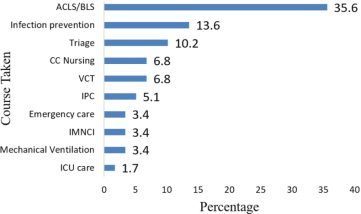
Among the 40 nurses who had taken courses, a total of 59 courses were reported. Figure1 illustrates the top 10 courses. Advanced Cardiac Life Support/Basic Life Support (ACLS/BLS) was the most common (35.6%), followed by infection prevention (13.6%) and triage (10.2%).
Figure 1. Top 10 courses taken by the nurses.
3.2. Clinical Decision-Making of Nurses, Item Wise Analysis
Table 2 outlines the item-wise analysis of nurses’ clinical decision-making practices. A significant proportion of nurses reported never performing certain tasks without physician orders: administering narcotics (73.2%), adjusting inotropic infusions (70.4%), and modifying ventilator settings based on arterial blood gases (67.6%).
Conversely, 69% of nurses consistently inserted peripheral IV lines for emergency drug administration. Other frequently performed tasks included providing discharge in formation (59.2%) and instructing nursing students on critical care procedures (66.2%). High rates were also observed for urinary catheter insertion (94.4%) and collecting blood samples for lab tests.
However, many nurses reported never making decisions related to ventilator weaning (64.8%), performing endotrecheal intubation (84.5%), or extubation (77.5%).
Table 2. Nurses’ clinical decision making.

S.No.

Nurses Clinical Decision-Making

Nevern (%)

Rarelyn (%)

Sometimes n (%)

Always n (%)

1

Administering Narcotics without a medication order

52(73.2)

7(9.9)

11(15.5)

1(1.4)

2

Adjusting an inotropic infusion to stabilize a patient's hemodynamic status without a doctor's order

50(70.4)

4(5.6)

10(14.1)

7(9.9)

3

Adjusting a patient's mechanical ventilator settings after arterial blood gases (ABG)/SPO2 results

48(67.6)

5(7)

4(5.6)

14(19.7)

4

Inserting a peripheral intravenous line into a patient to administer emergency drugs

5(7)

7(9.9)

10(14.1)

49(69)

5

Altering maintenance IV fluids depending on the patient's hydration status

14(19.7)

8(11.3)

18(25.4)

31(43.7)

6

Diagnosing the patient's condition

33(46.5)

7(9.9)

22(31)

9(12.7)

7

Making decisions to change patient medications

46(64.8)

12(16.9)

11(15.5)

2(2.8)

8

Making decisions to admit a patient

43(60.6)

9(12.7)

7(9.9)

12(16.9)

9

Discharging a patient from the unit

57(80.3)

3(4.2)

5(7)

6(8.5)

10

Providing discharge information to the patient and/or family

8(11.3)

2(2.8)

19(26.8)

42(59.2)

11

Discussing patients' condition and prognosis with patient and/or relatives

18(25.4)

10(14.1)

27(38)

16(22.5)

12

Assessing patients’ clinical status

5(7)

6(8.5)

27(38)

33(46.5)

13

Participation in collaborative therapeutic decisions

8(11.3)

13(18.3)

30(42.3)

20(28.2)

14

Obtaining blood samples for laboratory tests

2(2.8)

0(0)

6(8.5)

63(88.7)

15

Evaluating hemodynamic measurements

18(25.4)

14(19.7)

20(28.2)

19(26.8)

16

Insertion of indwelling urinary catheter

0(0)

0(0)

4(5.6)

67(94.4)

17

Performing emergency defibrillation

32(45.1)

12(16.9)

16(22.5)

11(15.5)

18

Decision to wean patients from ventilator

46(64.8)

2(2.8)

7(9.9)

16(22.5)

19

Performance of endotrecheal intubation procedure

60(84.5)

6(8.5)

2(2.8)

3(4.2)

20

Decision to extubate a patient

55(77.5)

4(5.6)

8(11.3)

4(5.6)

21

Participation in medical ward rounds

8(11.3)

8(11.3)

24(33.8)

31(43.7)

22

Teaching nursing students on critical care procedures in the unit

2(2.8)

1(1.4)

21(29.6)

47(66.2)

23

Conducting history taking and performing physical examination

12(16.9)

18(25.4)

24(33.8)

17(23.9)

3.3. Reason for not Making Clinical Decision
For items marked as “never” or “rarely” performed, nurses were asked to explain why clinical decision-making was not exercised. Table 3 summarizes these responses.
Out of 1,633 total responses across the 23 decision-making items, 24.62% cited institutional restrictions, 10.59% noted lack of availability, and 12.55% indicated the task was outside their scope of duty. Overall, 47.76% of responses reflected non-practice of clinical decision-making, while 52.24% indicated varying levels of engagement.
The most common reason for not administering narcotics without a physician’s order (76.3%) was that it was not permitted. Other restricted activities included adjusting inotropic infusions (87%), modifying IV fluids based on hydration status (86.4%), diagnosing conditions (70%), changing medications (63.8%), admitting or discharging patients (63.5% and 63.6%, respectively), assessing clinical status (63.6%), participating in ward rounds (62.5%), and conducting history taking and physical exams (70%).
Tasks not performed due to unavailability included ventilator weaning (72.9%), endotrecheal intubation (59.1%), and extubation (62.7%). Blood sample collection was typically not done because it was considered outside the nurses’ responsibilities.
Table 3. Reasons for not making clinical decision by the nurses for each item.

S. No.

Nurses Clinical Decision Making

Not allowed n (%)

Not available n (%)

Notmy duty n (%)

1

Administering Narcotics without a medication order

45(76.3)

1(1.7)

13(22)

2

Adjusting an inotropic infusion to stabilize a patient's hemodynamic status without a doctor's order

47(87)

0(0)

7(13)

3

Adjusting a patient's mechanical ventilator settings after arterial blood gases (ABG)/SPO2 results

7(13.2)

39(73.6)

7(13.2)

4

Inserting a peripheral intravenous line into a patient to administer emergency drugs

6(50)

2(16.7)

4(33.3)

5

Altering maintenance IV fluids depending on the patient's hydration status

19(86.4)

0(0)

3(13.6)

6

Diagnosing the patient's condition

28(70)

1(2.5)

11(27.5)

7

Making decisions to change patient medications

37(63.8)

0(0)

21(36.2)

8

Making decisions to admit a patient

33(63.5)

0(0)

19(36.5)

9

Discharging a patient from the unit

38(63.3)

1(1.7)

21(35)

10

Providing discharge information to the patient and/or family

5(50)

0(0)

5(50)

11

Discussing patients' condition and prognosis with patient and/or relatives

15(53.6)

0(0)

13(46.4)

12

Assessing patients’ clinical status

7(63.6)

0(0)

4(36.4)

13

Participation in collaborative therapeutic decisions

15(71.4)

0(0)

6(28.6)

14

Obtaining blood samples for laboratory tests

0(0)

0(0)

2(100)

15

Evaluating hemodynamic measurements

20(62.5)

2(6.3)

10(31.3)

16

Insertion of indwelling urinary catheter

0(0)

0(0)

0(0)

17

Performing emergency defibrillation

25(56.8)

14(31.8)

5(11.4)

18

Decision to wean patients from ventilator

7(14.6)

35(72.9)

6(12.5)

19

Performance of endotrecheal intubation procedure

10(15.2)

39(59.1)

17(25.8)

20

Decision to extubate a patient

6(10.2)

37(62.7)

16(27.1)

21

Participation in medical ward rounds

10(62.5)

0(0)

6(37.5)

22

Teaching nursing students on critical care procedures in the unit

1(33.3)

1(33.3)

1(33.3)

23

Conducting history taking and performing physical examination

21(70)

1(3.3)

8(26.7)

3.4. Overall Clinical Decision-Making
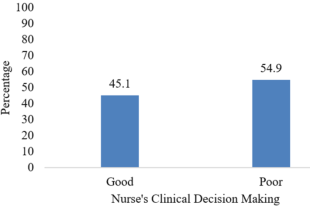
Figure 2 displays the overall clinical decision-making scores based on the 23-item scale. Each item was rated from 1 to 4, yielding a possible total score range of 23 to 94. Actual scores ranged from 40 to 76, with a mean of 56.58 (SD=10.37).
Using the midpoint score of 57.5 as a threshold, 45.1% of nurses were classified as active clinical decision-makers.
Figure 2. Percentage of nurses who practice clinical decision making.
3.5. Factors Affecting Nurses’ Clinical Decision-making
Independent samples t-tests and ANOVA were conducted to identify factors associated with clinical decision-making. Tukey’s post-hoc test was applied for variables with more than two categories showing significant differences. Results are presented in Table 4.
No significant differences were found based on age group (<30 vs. ≥30 years; p=0.748), nurse-to-patient ratio (p=0.164), total years of experience (p=0.435), emergency care experience (p=0.931), nursing care modality (p=0.224), or prior course completion (p=0.167).
However, male nurses demonstrated significantly higher decision-making scores (M=61.75, SD=10.65) than female nurses (M=53.21, SD=8.77; p<0.001). Educational qualification also had a significant impact (p=0.002), with health assistants scoring lower (M=51.21, SD=8.96) compared to BSc nurses (M=65.10, SD=10.49). No significant differences were observed among registered nurses/midwives, BSc. and MSc. holders.
Additionally, nurses in leadership roles (team leaders, assistant heads, and heads) had significantly higher decision-making scores (M=62.38, SD=9.54) compared to staff nurses (M=54.89, SD=10.07).
Table 4. Difference in score of nurses’ clinical decision-making a cross categories of the independent variables.

Variable

Mean(SD)

p-value

TukeyPosthoctest

Age

Less than 30

57.03(9.940

0.748

30 or greater

56.23(10.81)

Sex

Male

61.75(10.65)

<0.001

Female

53.21(8.77)

Nursing qualification

Health Assistant

51.21(8.96)

0.002

HA<BScN

Registered Nurse/Midwifery

57.75(9.15)

BSc

65.10(10.49)

MSc

57.80(12.56)

Level of appointment

Team leader/Assis head/head nurse

62.38(9.54)

0.01

Staff nurse

54.89(10.07)

Nurse to patient ratio

1: 1 or 1: 2

51.14(9.67)

0.164

1: 3

58.40(11.02)

1: 4 or more

55.13(8.95)

Overall years of experience

1 to 4 years

58.04(9.63)

0.435

5 to 9 years

57.32(10.22)

More than 10 years

54.38(11.29)

Years of experience in emergency and critical care

1 to 4 years

57.06(10.98)

0.931

5 to 9 years

57.08(10.69)

More than 10 years

55.85(9.03)

Nursing care modality

Team nursing

57.66(10.63)

0.224

Functional nursing

58.41(11.08)

Total care

52.31(8.93)

Ever taken course

Yes

55.08(9.58)

0.167

No

58.52(11.17)

4. Discussion
4.1. Level of Decision-Making Involvement
Engagement in decision-making reflects a nurses’ sense of control over clinical situations, along with their willingness to accept responsibility for the outcomes of those decisions. To participate meaningfully in decision-making, nurses must have a solid foundation of scientific knowledge and practical experience to ensure their choices are evidence-based and appropriate. Moreover, active involvement in decision-making has been shown to enhance patient outcomes and reduce burnout among nurses.
This study investigated the clinical decision-making practices and influencing factors among nurses in the Adult and Pediatric Emergency and Critical Care Units (APECCUs) at Orotta National Referral and Teaching Hospital. The key finding was that nurses demonstrated relatively low decision-making performance, with only 45.1% actively engaging in clinical decisions.
These results align with findings from Egypt and Saudi Arabia, where clinical decision-making autonomy was reported at 51.4%, and Ethiopia, which showed a rate of 53.4%. However, they contrast with studies from Kenya and the United Kingdom, were decision-making involvement was significantly higher—72% and 94%, respectively.
The limited decision-making observed in this study appears to be influenced by factors such as educational background, gender, lack of institutional support, and job position, as revealed through multi variate analysis.
4.2. Influencing Factors of Nurses' Decision-Making
4.2.1. Education
This study supports the view that educational attainment is positively associated with decision-making capacity. Nurses with higher qualifications tended to perform better in clinical decision-making, likely due to their broader knowledge base. This finding is consistent with prior research, indicating a strong correlation between advanced education and a nurse’s willingness to make decisions. Similar results were observed in Kenya, though they differ from findings in Ethiopia, where only 45% of nurses showed a positive link between education and decision-making.
In this study, 65.10% of nurses identified ongoing education is as a key factor supporting their decision-making. Continuous learning equips nurses to respond promptly to patient needs without relying heavily on external information. Enhancing professional qualifications is therefore essential for empowering nurses to make informed decisions. However, despite their knowledge, many nurses lack the authority to act independently, as highlighted by the barriers reported in this study.
4.2.2. Experience
Although clinical experience is often considered a major contributor to decision-making ability, this study found no significant relationship between years of practice —either overall or in critical care—and decision-making frequency. This finding mirrors results from Kenya, but contrasts with studies from Egypt, which reported positive associations.
It’s possible that the way experience was measured in this study did not fully capture the depth of expertise that enhances decision-making. While experience can build confidence and autonomy, true expertise involves integrating new knowledge with past practice to develop advanced clinical judgment.
4.2.3. Age
Age did not emerge as a significant factor in decision-making in this study. Although it was anticipated that older nurses would have more experience and hold higher positions, the data did not support this assumption. Similar findings were reported in Kenya. It suggested that age alone may not be a reliable predictor of decision-making ability, and further research is needed to clarify its role.
4.2.4. Level of Appointment
Un like previous findings by Kyalo, the current study revealed a strong link between job position and decision-making involvement. Nurses in higher roles were more likely to participate in clinical decisions, which may reflect institutional dynamics where decision-making authority is concentrated among senior staff. This implies that organizational support plays a critical role in enabling nurses to act independently.
4.2.5. Gender
While women have increasingly taken on more responsibilities and demonstrated creativity in clinical decision-making, research on gender differences has produced mixed results. In this study, male nurses though less in number showed higher decision-making performance. This aligns with findings from Kenya but differs from studies by Bjork and Hamilton, which found no gender-based differences.
The higher scores among male nurses may be influenced by gender-related dynamics or institutional biases. However, gender was not a significant factor in individual clinical tasks, suggesting that further investigation is needed to understand its true impact.
4.2.6. Lack of Support
One of the most striking findings was the influence of organizational support on decision-making. Many nurses cited lack of support from supervisors and physicians as a barrier to performing clinical procedures. Nearly half of the responses indicated that decisions were not made due to institutional restrictions (24.62%), lack of resources (10.59%), or role limitations (12.55%). Similar findings were reported in Ethiopia.
Although all nurses are expected to engage in clinical decision-making, many feel unsupported. Physicians often under value nurses’ input and managers may not back them during disagreements. As a result, nurses are confined to routine tasks like monitoring vitals and administering medications, limiting their ability to address patient needs effectively and compromising care outcomes.
5. Conclusion
This study assessed the extent of clinical decision-making and its influencing factors among nurses in the Adult and Pediatric Emergency and Critical Care Units at Orotta National Referral and Teaching Hospital. The findings revealed that a significant proportion of nurses demonstrated low decision-making performance. Targeted efforts should be made to improve decision-making among female nurses, associate nurse participants, and staff nurses. These efforts must address the specific barriers that hinder decision-making within these groups. Enhancing nurses’ decision-making capabilities is essential for achieving better patient outcomes and strengthening health care delivery.
6. Nursing Implication
Despite the critical role of clinical decision-making in nursing, no prior research had been conducted in Eritrea to explore this issue. Understanding how nurses make decisions and the factors that influence those offers valuable insights for both practitioners and health care institutions. This study serves as a foundational step in identifying the barriers and enablers of clinical decision-making among nurses in the Adult and Pediatric Emergency and Critical Care Units at ONRH.
7. Limitation of the Study
This study was subject to several limitations. Comparative analysis was challenging due to the absence of similar research conducted within the country or the specific setting. Additionally, the adapted questionnaire presented certain constraints in capturing the full scope of clinical decision-making.
Not all potential influencing factors were assessed, primarily due to limitations in time and financial resources. Including nurses from all hospital wards was also not feasible for the same reasons.
8. Declaration
We the primary authors hereby declare that, we are the sole authors of this article entitled " Factors Affecting Nurses’ Clinical Decision Making at Adult and Pediatric Emergency and Critical Care Units at Orotta National Referral and Teaching Hospital in Asmara, Eritrea,”. This is our new work and the article or any part thereof has not been submitted for the award of a degree to any other university or institution.
Abbreviations

CC

Critical Care

CCU

Critical Care Unit

ONRH

Orotta National Referral Hospital

ECCN

Emergency and Critical Care Nurses

ECCU

Emergency and Critical Care Unit

NHS

National Health Service

OCMHS

Orotta College of Medicine and Health Sciences

SD

Standard Deviation

BLS

Basic Life Support

ACLS

Advanced Cardiac Life Support

Acknowledgments
First and foremost, we express our deepest gratitude to the Lord for providing strength and comfort throughout this journey. We extend heartfelt thanks to all who supported us, especially our families and friends for their patience and guidance. We also sincerely appreciate the staff of Orotta National Referral and Teaching Hospital, particularly those in the Emergency and ICU units, for their cooperation and valuable time during data collection.
Author Contributions
Hisabu Kidane Gebremedhin: Conceptualization, Data curation, Investigation, Methodology, Project administration, Supervision, Validation, Writing – original draft, Writing – review & editing
Okbamichael Tekle Zewde: Conceptualization, Data curation, Investigation, Methodology, Project administration, Supervision, Validation
Humed Idris Humed: Formal Analysis, Software, Writing – original draft, Resources, Visualization
Mebrahtu Hadgu Redae: Formal Analysis, Software, Writing – original draft, Project administration, Data curation
Samuel Abedom Abay: Formal Analysis, Software, Writing – original draft, Resources, Visualization
Sofonyas Mihreteab Beyene: Formal Analysis, Software, Writing – original draft, Resources, Visualization
Eyasu Habte Tesfamariam: Formal Analysis, Software
Data Availability Statement
All data and materials used in this study are available from the principal authors upon reasonable request.
Conflicts of Interest
This article does not contain any personal or identifiable information, therefore, consent for publication is not applicable.
References
[1] Kyalo, M. A. (2020), Factors Affecting Clinical Descion MakingBy Nurses At The Critical Care Unit In Kenyatta National Hospital, Kenya. July 2020 International Journal of Science and Society 2(3): 135-145.
[2] Hoffman K. (2003), Decision Making In Clinical Nursing: investigating contributing factors; Journal of Advanced Nursing 45(1):53-65 First published: 09 December 2003
[3] Carl Thompson, et al. Nurses decision, irreducible uncertainty and maximizing nurses contribution to patient safety, Health care quarterly Vol 12, August 2009 Healthcare Quarterly 12 Spec No Patient (sp): e178-85
[4] D. Shereen Ragab, et.al, Leadership Styles and Clinical Decision Making Autonomy among Critical Care Nurses: A Comparative Study, 2013, IOSR Journal of Nursing and HealthScience (IOSR-JNHS)Volume1, Issue4, PP71-83.
[5] Gizaw AB, Kidane BB, Negese DT, Negassa EH (2018) Factors Affecting Clinical Decision-Making Practice among Nurses Working in Jimma University Medical Center; Jimma Southwest Ethiopia. Ann Nurs Pract 5(2).
[6] C. Thompson, et. al Do educational interventions improve nurses' clinical decision making and judgment, A systematic review, International Journal of Nursing Studies, 2011, 48, 881–893,
[7] M. Bakr, et.al, Factors influencing decision making and its effect on intern students clinical performance World Applied Programming Vol. 3, No (2), February 2013.
[8] Orotta National Referral and Teachinghospital Statistical Information. (2024).
[9] Kinchen E, Lange B, Newman D. Patient and Provider Decision-Making Experiences: A Qualitative Study. West J Nurs Res. 2021 Aug; 43(8): 713-722.
[10] Nuwagaba, J., Olum, R., Bananyiza, A., Wekha, G., Rutayisire, M., Agaba, K. K., Kiguli, S. (2021). Patients’ Involvement inDecision-Making During Health care in a Developing Country: A Cross-Sectional Study. Patient Preference and Adherence, 15,1133–1140.
[11] Julius Nuwagaba, Ronald Olum, Ali Bananyiza, Godfrey Wekha, Meddy Rutayisire, Keneth Kato Agaba, Patients’ Involvement in Decision-Making During Healthcare in a Developing Country: A Cross-Sectional Study Pages 1133-1140 | Published online: 26 May 2021:
[12] Indah Mei Rahajeng, Faridatul Muslimah the application of clinical judgment and decision making of critical care nurses in intensive care units (ICUs). International Journal of Nursing and Health Services (IJNHS) 2(1): 1-14
[13] Baitus Sholehah, AstiMelani Astari, Rinik EkoKapti Factors Influencing in Clinical Decision Making of Nurse: A Systematic ReviewInternational Journal of Science and Society, Volume2, Issue3, 2020.
[14] Bjørk IT, Hamilton GA. Clinical Decision Making of Nurses Working in Hospital Settings. Nursing Research and Practice 2011.1–8.
Cite This Article
  • APA Style

    Gebremedhin, H. K., Zewde, O. T., Humed, H. I., Redae, M. H., Abay, S. A., et al. (2026). Factors Affecting Nurses’ Clinical Decision-Making at Adult and Paediatric Emergency and Critical Care Units in Orotta National Referral Hospital in Asmara, Eritrea, 2025. Journal of Family Medicine and Health Care, 12(3), 44-54. https://doi.org/10.11648/j.jfmhc.20261203.11

    Copy | Download

    ACS Style

    Gebremedhin, H. K.; Zewde, O. T.; Humed, H. I.; Redae, M. H.; Abay, S. A., et al. Factors Affecting Nurses’ Clinical Decision-Making at Adult and Paediatric Emergency and Critical Care Units in Orotta National Referral Hospital in Asmara, Eritrea, 2025. J. Fam. Med. Health Care 2026, 12(3), 44-54. doi: 10.11648/j.jfmhc.20261203.11

    Copy | Download

    AMA Style

    Gebremedhin HK, Zewde OT, Humed HI, Redae MH, Abay SA, et al. Factors Affecting Nurses’ Clinical Decision-Making at Adult and Paediatric Emergency and Critical Care Units in Orotta National Referral Hospital in Asmara, Eritrea, 2025. J Fam Med Health Care. 2026;12(3):44-54. doi: 10.11648/j.jfmhc.20261203.11

    Copy | Download

  • @article{10.11648/j.jfmhc.20261203.11,
      author = {Hisabu Kidane Gebremedhin and Okbamichael Tekle Zewde and Humed Idris Humed and Mebrahtu Hadgu Redae and Samuel Abedom Abay and Sofonyas Mihreteab Beyene and Eyasu Habte Tesfamariam},
      title = {Factors Affecting Nurses’ Clinical Decision-Making at Adult and Paediatric Emergency and Critical Care Units in Orotta National Referral Hospital in Asmara, Eritrea, 2025},
      journal = {Journal of Family Medicine and Health Care},
      volume = {12},
      number = {3},
      pages = {44-54},
      doi = {10.11648/j.jfmhc.20261203.11},
      url = {https://doi.org/10.11648/j.jfmhc.20261203.11},
      eprint = {https://article.sciencepublishinggroup.com/pdf/10.11648.j.jfmhc.20261203.11},
      abstract = {Background: Clinical decision-making is essential to the advancement of professional nursing practice. Competent nurses must apply sound decision-making skills to deliver safe and effective care. The decisions made by nurses have a direct and immediate impact on patient outcomes, including survival. Objectives: This study aimed to assess the level of clinical decision-making among nurses and identify the factors influencing it within Adult and Pediatric Emergency and Critical Care Units. Methods: An analytical, quantitative cross-sectional study design was conducted from October 2024 to March 2025 at Orotta National Referral and teaching Hospital. Data were collected using an adapted, predesigned, and pre-tested questionnaire comprising demographic variables and decision-making items. Descriptive statistics, independent samples t-test, and one-way ANOVA with Tukey post-hoc test were used for analysis employing SPSS Version 26.0. Result: clinical decision-making scores ranged from a minimum of 40 to76, with a mean score of 56.58. Using the mid-point of the scores as a cut-off, 45.1% of nurses demonstrated high decision-making performance. Notably, 87% of nurses who refrained from adjusting inotropic infusions without a physician’s order reported that such actions were not permitted. Statistically significant differences in decision-making scores were observed based on sex (p<0.001), professional level (p<0.002) and position held (p<0.01). Conclusion Considerable proportion of nurses exhibited limited clinical decision-making capacity. Implication: Understanding the level and determination of nurses’ clinical decision-making is crucial for enhancing nursing practice and informing organizational policies.},
     year = {2026}
    }
    

    Copy | Download

  • TY  - JOUR
    T1  - Factors Affecting Nurses’ Clinical Decision-Making at Adult and Paediatric Emergency and Critical Care Units in Orotta National Referral Hospital in Asmara, Eritrea, 2025
    AU  - Hisabu Kidane Gebremedhin
    AU  - Okbamichael Tekle Zewde
    AU  - Humed Idris Humed
    AU  - Mebrahtu Hadgu Redae
    AU  - Samuel Abedom Abay
    AU  - Sofonyas Mihreteab Beyene
    AU  - Eyasu Habte Tesfamariam
    Y1  - 2026/08/11
    PY  - 2026
    N1  - https://doi.org/10.11648/j.jfmhc.20261203.11
    DO  - 10.11648/j.jfmhc.20261203.11
    T2  - Journal of Family Medicine and Health Care
    JF  - Journal of Family Medicine and Health Care
    JO  - Journal of Family Medicine and Health Care
    SP  - 44
    EP  - 54
    PB  - Science Publishing Group
    SN  - 2469-8342
    UR  - https://doi.org/10.11648/j.jfmhc.20261203.11
    AB  - Background: Clinical decision-making is essential to the advancement of professional nursing practice. Competent nurses must apply sound decision-making skills to deliver safe and effective care. The decisions made by nurses have a direct and immediate impact on patient outcomes, including survival. Objectives: This study aimed to assess the level of clinical decision-making among nurses and identify the factors influencing it within Adult and Pediatric Emergency and Critical Care Units. Methods: An analytical, quantitative cross-sectional study design was conducted from October 2024 to March 2025 at Orotta National Referral and teaching Hospital. Data were collected using an adapted, predesigned, and pre-tested questionnaire comprising demographic variables and decision-making items. Descriptive statistics, independent samples t-test, and one-way ANOVA with Tukey post-hoc test were used for analysis employing SPSS Version 26.0. Result: clinical decision-making scores ranged from a minimum of 40 to76, with a mean score of 56.58. Using the mid-point of the scores as a cut-off, 45.1% of nurses demonstrated high decision-making performance. Notably, 87% of nurses who refrained from adjusting inotropic infusions without a physician’s order reported that such actions were not permitted. Statistically significant differences in decision-making scores were observed based on sex (p<0.001), professional level (p<0.002) and position held (p<0.01). Conclusion Considerable proportion of nurses exhibited limited clinical decision-making capacity. Implication: Understanding the level and determination of nurses’ clinical decision-making is crucial for enhancing nursing practice and informing organizational policies.
    VL  - 12
    IS  - 3
    ER  - 

    Copy | Download

Author Information
  • Department of Nursing, Orotta College of Medicine and Health Sciences, Asmara, Eritrea

  • Department of Nursing, Orotta College of Medicine and Health Sciences, Asmara, Eritrea

  • Department of Nursing, Orotta College of Medicine and Health Sciences, Asmara, Eritrea

  • Department of Nursing, Orotta College of Medicine and Health Sciences, Asmara, Eritrea

  • Department of Nursing, Orotta College of Medicine and Health Sciences, Asmara, Eritrea

  • Department of Nursing, Orotta College of Medicine and Health Sciences, Asmara, Eritrea

  • Department of Nursing, Orotta College of Medicine and Health Sciences, Asmara, Eritrea

  • Abstract
  • Keywords
  • Document Sections

    1. 1. Introduction
    2. 2. Research Methodology
    3. 3. Results
    4. 4. Discussion
    5. 5. Conclusion
    6. 6. Nursing Implication
    7. 7. Limitation of the Study
    8. 8. Declaration
    Show Full Outline
  • Abbreviations
  • Acknowledgments
  • Author Contributions
  • Data Availability Statement
  • Conflicts of Interest
  • References
  • Cite This Article
  • Author Information