1. Introduction
The design, synthesis, and use of materials with at least one dimension in the nanoscale less than 100 nanometers are the main focus of the quickly developing interdisciplinary discipline of nanotechnology
| [1] | Islam, R., Prosad, S., Hasan, I., Hossain, S. Eco-friendly synthesis of zinc oxide nanoparticles using Dillenia indica leaf extract: Characterization and evaluation of biological properties. Hybrid Advances. 2026, 12, 100623.
https://doi.org/10.1016/j.hybadv.2026.100623 |
[1]
. Nanomaterials small size and high surface area-to-volume ratios, which lead to improved reactivity, catalytic activity, and unique optical and electronic features, are largely responsible for their distinctive physical, chemical, and biological properties
| [2] | Kumar, A., Kaur, A., Vir, M., Dhiman, S. Rice bagasse extract-based green synthesis of zinc oxide nanoparticles: characterisation, assessment of anti-skin cancer, antibacterial, and antioxidant properties. Sustainable Chemistry for Climate Action. 2025, 7, 100085.
https://doi.org/10.1016/j.scca.2025.100085 |
[2]
. These characteristics have created new opportunities for the creation of cutting-edge materials and gadgets with uses in biomedical therapies, electronics, sensing, cosmetics, drug delivery, and environmental remediation.
Stability, nontoxicity, and variety of functional characteristics make metal oxide nanoparticles as it gains a lot of interest among different nanomaterials
| [3] | Oselusi, S. O., Sibuyi, N. R. S., Meyer, M., Madiehe, A. M., Silver, A. Phytonanotherapeutic Applications of Plant Extract-Synthesized Silver Nanoparticles in Wound Healing — a Prospective Overview. BioNanoScience. 2024, 14(3), 3455-3475. https://doi.org/10.1007/s12668-024-01535-5 |
[3]
. Because of their semiconducting, piezoelectric, and photocatalytic qualities, zinc oxide nanoparticles in particular are unique and can be used in solar cells, UV light emitters, personal care products, and antimicrobial agents. Because of its high biocompatibility and low toxicity, zinc oxide nanoparticles can be used in biomedical applications such as antioxidant, antibacterial, anticancer, and inflammatory treatments
| [4] | Hasan, T., Alam, A., Hashem, A., Zahin, E. H., Miem, M. Tannery liming sludge as extender in architectural paints: a novel approach. Results in Surfaces and Interfaces. 2026, 25, 100953. https://doi.org/10.1016/j.rsurfi.2026.100953 |
[4]
. Because ZnO nanoparticles have the ability to fight pathogenic microbes, including those that are resistant to drugs and constitute a serious danger to world health, their antibacterial activity is of great interest
| [5] | Acharya, R., Tettey, F., Gupta, A., Raj, K., Niranjan, S. Bioinspired synthesis and characterization of zinc oxide nanoparticles and assessment of their cytotoxicity and antimicrobial efficacy. Discover Applied Sciences. 2024, 6(3), 132. https://doi.org/10.1007/s42452-024-05719-2 |
[5]
.
ZnO nanoparticles are often synthesized using physical and chemical processes such sol-gel, hydrothermal, chemical vapor deposition, and microemulsion techniques
| [6] | Vahidi, A., Vaghari, H., Najian, Y., Najian, M. J. Evaluation of three different green fabrication methods for the synthesis of crystalline ZnO nanoparticles using Pelargonium zonale leaf extract. Chemical Industry & Chemical Engineering Quarterly. 2019, 25(4), 302-308.
https://doi.org/10.2298/CICEQ181126013V |
[6]
. These methods can regulate the size and shape of particles, but they frequently call for high temperatures, costly equipment, and dangerous chemicals, all of which can be harmful to the environment and human health
| [7] | Gulnar, M. Green Synthesis of Zinc Oxide Nanoparticles Using Achillea Wilhelmsii Extract: A Biological Approach. Journal of Nanostructures. 2023, 13(3), 685-692.
https://doi.org/10.22052/JNS.2023.03.009 |
[7]
. As a result, there has been an increasing drive to create green synthesis techniques that use biological entities like plants, bacteria, fungi, and enzymes to create nanoparticles in an economical, scalable, and environmentally benign way.
Because they contain a wide variety of naturally occurring reducing and capping agents, such as proteins, phenolics, flavonoids, and alkaloids, which aid in the bioreduction of metal ions into nanoparticles and stabilize them during nucleation and growth, plants in particular present a promising platform for green synthesis
| [8] | Zolfaghari, M., Yadegar, A., Rezaei, A., Rafieian, F., Kazemi, M. Plant-mediated green synthesis of zinc oxide nanoparticles using Anvillea garcinii extract: Characterization and investigation of their anticancer, antibacterial and antioxidant effects. Industrial Crops and Products. 2026, 242, 122785.
https://doi.org/10.1016/j.indcrop.2026.122785 |
[8]
. Green chemistry principles and sustainability objectives are in line with plant-mediated synthesis, which does away with the need for hazardous chemicals and significant energy inputs
| [9] | Tadesse, G., Murthy, H. C. A., Ravikumar, C. R., Kumar, T. N., Teshome, L., Desalegn, T. In Situ Green Synthesis of Co3O4@ZnO Core-Shell Nanoparticles Using Datura stramonium Leaf Extract: Antibacterial and Antioxidant Studies. Journal of Nanomaterials. 2023, 2023(1), 5019838. https://doi.org/10.1155/2023/5019838 |
[9]
. ZnO nanoparticles with exceptional antibacterial and photocatalytic properties have been successfully synthesized from Ehretia cymosa plant species
| [10] | Ozkan, E., Ozturk, B., Bay, M., Ay, S. B., Perkgoz, N. K. Green Synthesis and Characterization of Zinc Oxide Nanoparticles Using Hedysarum varium Wild. and Its Antibacterial Activities. Süleyman Demirel University Faculty of Arts and Sciences Journal of Science. 2025, 20(2), 194-205.
https://doi.org/10.29233/sdufeffd.1677975 |
[10]
. Ethiopia is home to the understudied medicinal plant Ehretia cymosa, which is a member of the Boraginaceae family. Because of its strong bioactive profile, it has historically been used to treat conditions like fevers, headaches, toothaches, ulcers, and different skin infections
| [11] | Upadhyay, N., Kumar, P., Sharma, B. K. Phyto-synthesis of zinc oxide nanoparticle using Murraya koenigii extract. International Journal of Chemical Studies. 2024, 19(2), 93-98. |
[11]
. Ehretia cymosa has not yet been studied as a bioresource for the environmentally friendly manufacture of metal oxide nanoparticles, despite its wide range of ethnopharmacological uses. This plant's use in the synthesis of nanoparticles offers a unique chance to use its phytochemicals for the production of sustainable nanomaterials
| [12] | Salsabilu, K. Antimalarial Evaluation of Magnesium Nanoparticles of Bioactive Compounds Derived From Crinum Jagus Rhizome. Journal of Pharmaceutical and Biomedical Sciences. 2025, 15(1), 45-52. |
[12]
.
The concerning increase of antibiotic-resistant bacterial infections has accelerated the need to find new antimicrobial treatments
| [13] | Sankar, U., et al. Rice bagasse extract-based green synthesis of zinc oxide nanoparticles: characterisation, assessment of anti-skin cancer, antibacterial, and antioxidant. Next Nanotechnology. 2025, 7, 100194.
https://doi.org/10.1016/j.nxnano.2025.100194 |
[13]
. Green-synthesised nanomaterials have demonstrated improved biocompatibility and inherent antibacterial qualities that can supplement or even outperform traditional antibiotics, providing novel approaches to antimicrobial resistance
. Due to production of reactive oxygen species, the release of Zn
+2 ions, and the breakdown of bacterial cellular membranes, ZnO nanoparticles produced using plant extracts have shown notable efficiency against both gram-positive and gram-negative bacteria.
This article focuses on the environmentally friendly production of ZnO nanoparticles by employing Ehretia cymosa leaf extract in aqueous form as a stabilizing and reducing agent. The study's findings should add to the body of knowledge for next studies on green nanotechnology and provide insights into the effectiveness of ZnO nanoparticles mediated by Ehretia cymosa as sustainable antibacterial agents. Additionally, this research is in line with international efforts to create environmentally safe nanomaterials with useful biomedical uses.
2. Literature Review
2.1. Zinc Oxide Nanoparticles (ZnO NPs)
The distinct physical, chemical, and biological characteristics of metal oxide nanoparticles have made them stand out among the other kinds of nanoparticles as being very promising. The remarkable catalytic activity and enormous surface area of zinc oxide nanoparticles, which are defined as zinc oxide particles with diameters less than 100 nanometers, are noteworthy
| [15] | Abdullah, A., et al. Sustainable Synthesis and Characterization of Zinc Oxide Nanoparticles Using Raphanus sativus Extract and Its Biomedical Applications. Environmental Research. 2022, 214, 113900. https://doi.org/10.1016/j.envres.2022.113900 |
[15]
. Significant interest in both scientific study and industry applications has been sparked by these features. ZnO nanoparticles have been thoroughly investigated for a variety of uses, including as solar energy conversion, chemical sensors, rubber production, and environmental remediation, such as the elimination of arsenic and sulfur from water. They are also used in paints, cosmetics, antimicrobial agents, medicine delivery systems, fiber manufacturing, and luminescence-based technologies
| [16] | Assad, N., Abbas, A., Fayyaz, M., Naeem-ul-hassan, M. Photo-catalytic and biological applications of phyto-functionalized zinc oxide nanoparticles synthesized using a polar extract of Equisetum. RSC Advances. 2024, 14(31), 22344-22358.
https://doi.org/10.1039/D4RA03573A |
[16]
. Because of its inherent semiconducting and piezoelectric qualities, ZnO can be used in transparent electronics, ultraviolet (UV) light emitters, spintronics, catalysts, coatings, and personal care items. In particular, because of their favorable optical and electrical characteristics, ZnO nanoparticles are used in diode lasers, UV light emitters, transparent electrodes for solar cells, and anti-reflection coatings
| [17] | Jasim, M. N., Ismail, H. G., Abdulla, M. D., Naeem, G. A. Green Synthesis, Characterization and Medicinal Applications of Zinc Oxide Nanoparticles. Baghdad Science Journal. 2025, 14(1), 137-143. |
[17]
. Research on the synthesis and use of ZnO nanoparticles is still ongoing due to its eco-friendliness and adaptability, which could improve the sustainability and performance of a variety of biomedical and technical goods.
2.2. Synthesis of ZnO Nano Particles
Physical, chemical, and biological techniques can be used to create zinc oxide nanoparticles (ZnO NPs). Among them, the biological or green synthesis method has drawn more attention as a cost-effective and environmentally friendly substitute for traditional physical and chemical procedures, which frequently require for hazardous chemicals and challenging circumstances
| [18] | Shahid, M., et al. Eucalyptus globulus Labill. Mediated synthesis of ZnO nanoparticles, their Optimization and characterization. Cogent Food & Agriculture. 2024, 10(1), 2293332. https://doi.org/10.1080/23311932.2023.2293332 |
[18]
.
Chemical synthesis techniques are useful for creating nanoparticles with precise size and shape, but because they employ hazardous chemicals, they frequently have negative effects on the environment and biocompatibility. Direct precipitation, homogeneous precipitation, solvothermal and hydrothermal procedures, sonochemical processes, pyrolysis, chemical vapor deposition, reverse micelle approaches, sol-gel techniques, and others are common chemical techniques used for ZnO NP production
| [19] | Vivek, K., et al. Green synthesis and Characterization of Zinc Oxide Nanoparticles Using Ehretia laevis Leaf Extract and Their Biological Evaluation. Asian Journal of Chemistry. 2026, 15(1), 100-109. |
[19]
. Although these techniques offer exact control over the properties of nanoparticles, there are serious concerns to the environment and human health due to the use of harmful precursors and byproducts.
By breaking bulk materials or arranging atoms into nanostructures, physical methods create nanoparticles via mechanical and physical forces. Colloidal dispersion, vapor condensation, amorphous crystallization, physical fragmentation and evaporation, pulsed laser deposition, and sputtering are examples of common physical processes
| [20] | Adeleye, O. A., et al. Green Synthesis of Silver Nanoparticles Using Extracts of Ehretia cymosa and Evaluation of Its Antibacterial Activity in Cream and Ointment Drug Delivery Systems. Journal of Chemistry. 2023, 2023, 2808015.
https://doi.org/10.1155/2023/2808015 |
[20]
. Even though these techniques don't contain any chemical contaminants, they frequently need a lot of energy, expensive equipment, and may not be very scalable.
Green synthesis, on the other hand, minimizes environmental impact and does away with the need for hazardous chemicals by using biological entities like bacteria, fungi, plant extracts, and enzymes as reducing and stabilizing agents. In particular, bioactive compounds such as proteins, alkaloids, flavonoids, and phenolics are used in plant-based green synthesis to help reduce and cap Zn ions into ZnO nanoparticles. The generated ZnO NPs are especially well-suited for biomedical applications since this method improves biocompatibility while also being economical and environmentally safe
| [21] | Alqahtani, O. S., et al. Sustainable green synthesis of zinc oxide nanoparticles utilizing Zingiber officinale peel aqueous extract, characterization, and determination of its anticancer and antimicrobial potential. PLoS ONE. 2025, 20(2), e0334685. https://doi.org/10.1371/journal.pone.0334685 |
[21]
.
2.2.1. Green Synthesis of ZnO Nano Particles
Due to its eco-friendliness and various inherent advantages over conventional chemical and physical processes, green synthesis of nanoparticles has become a very popular and sustainable strategy in recent years. By using biological entities as reducing and stabilizing agents, such as microbes, enzymes, and, most importantly, plants or plant extracts, this biogenic synthesis reduces the usage of dangerous chemicals and conditions
| [22] | Ceesay, I., Pwavodi, P. C. Green synthesis of zinc oxide nanoparticles using ethanolic leaf extract of Olea europaea and its in vitro evaluation on MDA-MB-231 cancer cell lines, antibacterial and antioxidant activities. PLoS ONE. 2025, 20(3), e0339400. https://doi.org/10.1371/journal.pone.0339400 |
[22]
. In addition to its environmental sustainability, the green synthesis pathway is known for its affordability, biocompatibility, and operational safety all of which are very beneficial for environmental and medicinal applications. Because of their inherent semiconductor qualities as well as the bioactive substances from the biological source, zinc oxide nanoparticles produced using environmentally friendly processes have shown strong antibacterial activity
| [23] | Rose, C. M., Sherine, H. B. Antioxidant, antimicrobial, and cytotoxicity evaluation of biosynthesised zinc oxide nanoparticles from Elaeagnus conferta. Research Journal of Pharmacy and Technology. 2025, 18(1), 285-294. |
[23]
.
The amount of bioactive compounds found in plants, including phenols, flavonoids, polyphenolics, alkaloids, proteins, and enzymes, makes them a rich source for the green synthesis of ZnO NPs
| [24] | Oselusi, S. O. Evaluation of the Antimicrobial and Wound Healing efficacy of Extracts from Ehretia species and their Silver Nanoparticles. University of the Western Cape Thesis Repository. 2025, 1-185. |
[24]
. These phytochemicals work well as capping agents, stabilizing and preventing the agglomeration of the nanoparticles, and reducing agents, converting zinc ions into ZnO nanoparticles. This dual function is essential for regulating particle size and shape as well as improving the ZnO NPs' biological efficiency. ZnO nanoparticles have been successfully synthesized in a number of experiments using aqueous extracts from different plant parts, usually leaves, which are rich in phytoconstituents
| [25] | Murugesan, K., Bharathajothi, P., Mani, N., Ranjitha, S., Priya, M. Phytogenic Fabrication of ZnO Nanoparticles using Aerva persica (Burm. f.) Merr.: Assessment of Antioxidant, Anti-Diabetic and Antimicrobial Efficacy. International Journal of Advanced Research in Science, Engineering and Technology. 2025, 12(1), 5357-5369. |
[25]
.
2.2.2. Physical and Chemical Method
Physical Methods: To produce nanoparticles with a limited size distribution, physical synthesis techniques frequently make use of physical energies like heat energy, alternating current (AC) power, and arc discharge. These methods are suited for scale-up because they can produce vast quantities of nanomaterials in a single batch
| [26] | Ravhudzulo, I., Mthana, M. S., Ogwuegbu, M. C., Ramachela, K., Mthiyane, D. M. N. Phytogenic synthesis of zinc oxide nanoparticles using extract of Vachellia erioloba seed and their anticancer and antioxidant activity. Discover Applied Sciences. 2025, 7(2), 148. https://doi.org/10.1007/s42452-025-06728-5 |
[26]
. Evaporation-condensation and laser ablation are important physical techniques. High heat energy and high pressures are usually needed for these methods, which can be energy-intensive and may require expensive, specialized equipment for accurate control and operation.
Chemical Methods: Three basic elements are typically involved in the chemical synthesis of nanoparticles: (i) metal precursors that provide the metal ions; (ii) reducing agents that chemically transform these ions into nanoparticles; and (iii) stabilizing or capping agents that regulate particle size and prevent aggregation.
Sol-gel processes, microemulsion techniques, hydrothermal synthesis, polyol methods, chemical vapor synthesis, and plasma-enhanced chemical vapor deposition are examples of common chemical synthesis pathways. Chemical synthesis methods provide for greater control over particle size and shape, but they frequently use dangerous chemicals that are harmful to the environment and human health. These techniques' sustainability is limited by the production of chemical waste and the usage of hazardous reagents
| [27] | Al-darwesh, M. Y., Ibrahim, S. S., Mohammed, M. A. A review on plant extract mediated green synthesis of zinc oxide nanoparticles and their biomedical applications. Results in Chemistry. 2024, 7, 101368.
https://doi.org/10.1016/j.rechem.2024.101368 |
[27]
. Green synthesis has advantages over chemical and physical methods. On the other hand, green synthesis a biological process that makes use of enzymes, microbes, or plant extracts offers a number of significant benefits. Because it does not require high temperatures, high pressures, costly equipment, or hazardous chemicals, it is safer, more economical, and ecologically friendly. Furthermore, green synthesis is a possible substitute for sustainable nanomaterial production since it is typically easier to scale up for large-scale production
| [28] | Iqbal, J., Abbasi, B. A., Yaseen, T., Zahra, S. A. Green synthesis of zinc oxide nanoparticles using Elaeagnus angustifolia L. leaf extracts and their multiple in vitro biological applications. Scientific Reports. 2021, 11(1), 20388.
https://doi.org/10.1038/s41598-021-99839-z |
[28]
.
2.3. Synthesis of Nanoparticle by Using Plants
Due to their ease of use, effectiveness, and practicality, plant extracts are a desirable option because microbiological techniques of nanoparticle synthesis are typically slow
| [29] | Mohanasundaram, P., A, M. S. Binding properties and biological applications of green synthesized ZnO nanoparticles from neem flower. Biomass Conversion and Biorefinery. 2025, 15(2), 1-13. https://doi.org/10.1007/s13399-025-05210-9 |
[29]
. An affordable and practical option for large-scale production is the use of plants for the synthesis of nanoparticles. Using plant-based techniques, zinc oxide nanoparticles with a variety of morphological characteristics can be produced both extracellularly and intracellularly. Extracts from plant parts, like leaves, roots, and fruits, are usually added to an aqueous solution containing metal ions to start the synthesis process. Natural reducing and stabilizing agents are provided by the biomolecules found in plant extracts, such as sugars, flavonoids, proteins, enzymes, polymers, and organic acids. These compounds facilitate the bioreduction of metal ions into nanoparticles, effectively mediating the formation of metal nanoparticles in an eco-friendly manner
| [30] | Akhras, N., Çelekli, A. Enhanced Antimicrobial Activity of Green-Synthesized Artemisia-ZnO Nanoparticles: A Comparative Study with Pure ZnO Nanoparticles and Plant Extract. Journal of Cluster Science. 2025, 36(1), 1-19.
https://doi.org/10.1007/s10876-025-02710-x |
[30]
.
2.4. Properties of ZnO Nano Particles
Zinc oxide is a highly functional, strategic, and versatile inorganic material with broad applicability across various fields. outstanding attributes of ZnO nanoparticles is their distinctive electrostatic characteristics, which are particularly advantageous for biomedical applications
| [31] | Kaliyamoorthy, T. S., Subramaniyan, V., Renganathan, S., Vijayakumar, S. Sustainable Environmental-Based ZnO Nanoparticles Derived from Pisonia grandis for Future Biological and Environmental Applications. Journal of Inorganic and Organometallic Polymers and Materials. 2022, 32(8), 2980-2991.
https://doi.org/10.1007/s10904-022-02315-w |
[31]
. ZnO nanoparticles possess neutral hydroxyl groups on their surfaces, a feature that critically influences their surface charge behavior. Their nanostructured form offers a large surface area coupled with high catalytic activity, making them exceptionally suited for catalytic reaction processes. Importantly, the synthesis of ZnO nanoparticles lends itself to relatively straightforward control over particle size and size distribution, allowing for tailored properties. A significant functional property of ZnO nanoparticles is their capacity to generate reactive oxygen species, which can induce cell death once the oxidative defense mechanisms of cells are overwhelmed. This ROS generation capability is intrinsically linked to the semiconductor nature of ZnO, where electrons occupy certain energy bands distinct from the continuous electronic states found in metals. These unique electronic properties underpin the promising biological and catalytic activities exhibited by ZnO nanoparticles
| [4] | Hasan, T., Alam, A., Hashem, A., Zahin, E. H., Miem, M. Tannery liming sludge as extender in architectural paints: a novel approach. Results in Surfaces and Interfaces. 2026, 25, 100953. https://doi.org/10.1016/j.rsurfi.2026.100953 |
[4]
.
2.5. Biological Activity of ZnO NPs
Particle morphology, size distribution, surface chemistry, and reactivity in solution are some of the variables that affect the biological activity of zinc oxide nanoparticles (ZnO NPs). Because ZnO NPs are known to be inexpensive and low-toxicity nanomaterials, there has been a lot of interest in using them in biological applications. These uses include anti-inflammatory, antidiabetic, antioxidant, anticancer, and antibacterial properties. ZnO nanoparticles' numerous applications in medical research and technology are further demonstrated by their usage in drug delivery systems and bioimaging
| [25] | Murugesan, K., Bharathajothi, P., Mani, N., Ranjitha, S., Priya, M. Phytogenic Fabrication of ZnO Nanoparticles using Aerva persica (Burm. f.) Merr.: Assessment of Antioxidant, Anti-Diabetic and Antimicrobial Efficacy. International Journal of Advanced Research in Science, Engineering and Technology. 2025, 12(1), 5357-5369. |
[25]
.
2.5.1. Antibacterial Activity of ZnO NPs
Zinc oxide nanoparticles'antibacterial activity is of great interest since these nanomaterials can supplement antibiotics, particularly in situations where antibiotics frequently fail, like fighting biofilms, multidrug-resistant bacteria, and mutants
| [26] | Ravhudzulo, I., Mthana, M. S., Ogwuegbu, M. C., Ramachela, K., Mthiyane, D. M. N. Phytogenic synthesis of zinc oxide nanoparticles using extract of Vachellia erioloba seed and their anticancer and antioxidant activity. Discover Applied Sciences. 2025, 7(2), 148. https://doi.org/10.1007/s42452-025-06728-5 |
[26]
. ZnO nanoparticles' surface area and concentration have a major impact on how well they work as antibacterial agents. Their antibacterial effectiveness is increased by higher concentrations and greater surface areas. ZnO nanoparticles' small size enhances their surface area, which improves their ability to interact with bacterial cells and makes them perfect antibacterial agents
| [27] | Al-darwesh, M. Y., Ibrahim, S. S., Mohammed, M. A. A review on plant extract mediated green synthesis of zinc oxide nanoparticles and their biomedical applications. Results in Chemistry. 2024, 7, 101368.
https://doi.org/10.1016/j.rechem.2024.101368 |
[27]
.
2.5.2. Mechanism of Antibacterial Activity of ZnO NPs
Due to ongoing disputes and the complexity of their mode of action, the antibacterial activity of zinc oxide nanoparticles involves a number of mechanisms that are still incompletely understood. According to available data, the antibacterial effects are mainly mediated through three different pathways: (i) direct physical interaction of ZnO-NPs with the bacterial cell membrane, which results in structural disruption and loss of membrane integrity; (ii) the release of Zn
2⁺ ions, which interfere with cellular processes to exert antimicrobial effects; and (iii) the production of reactive oxygen species (ROS), such as hydrogen peroxide (H
2O
2) and superoxide anions (O
2⁻), which cause oxidative stress and damage intracellular components
| [28] | Iqbal, J., Abbasi, B. A., Yaseen, T., Zahra, S. A. Green synthesis of zinc oxide nanoparticles using Elaeagnus angustifolia L. leaf extracts and their multiple in vitro biological applications. Scientific Reports. 2021, 11(1), 20388.
https://doi.org/10.1038/s41598-021-99839-z |
[28]
. It is crucial to remember that the physicochemical characteristics of ZnO-NPs and the chemical makeup of the surrounding medium, which impact ion dissolution and ROS generation dynamics, have an impact on the antibacterial activity and underlying processes.
Among inorganic photocatalysts, ZnO nanoparticles have higher photocatalytic activity and are more biocompatible and effective than materials like TiO
2. ZnO-NPs experience photo-induced oxidation processes that are marked by increased ROS generation when exposed to ultraviolet (UV) radiation. By penetrating bacterial cells, these reactive species cause oxidative damage that impairs cellular viability and results in microbial inactivation
| [29] | Mohanasundaram, P., A, M. S. Binding properties and biological applications of green synthesized ZnO nanoparticles from neem flower. Biomass Conversion and Biorefinery. 2025, 15(2), 1-13. https://doi.org/10.1007/s13399-025-05210-9 |
[29]
. ZnO-NPs have strong, broad-spectrum antibacterial qualities thanks to the integration of various processes, underscoring their significant potential for use in biomedical and environmental domains.
2.6. Application of ZnO NPs
Because of its special physicochemical characteristics, zinc oxide nanoparticles (ZnO NPs) have a wide range of applications in biological systems. Their nanoscale size permits effective cellular absorption and penetration through tiny capillaries, enabling tailored drug administration and improved therapeutic efficacy. ZnO NPs are useful agents for bioimaging applications due to their unique optical characteristics. Beyond this, they play a crucial role in gene delivery systems and serve as sensitive biosensors in a variety of industries, such as the food industry, environmental monitoring, healthcare, and biological and chemical analyzes
| [30] | Akhras, N., Çelekli, A. Enhanced Antimicrobial Activity of Green-Synthesized Artemisia-ZnO Nanoparticles: A Comparative Study with Pure ZnO Nanoparticles and Plant Extract. Journal of Cluster Science. 2025, 36(1), 1-19.
https://doi.org/10.1007/s10876-025-02710-x |
[30]
. The synthesis of ZnO nanoparticles using Ehretia cymosa leaf extract and their assessment against pathogenic bacteria like Bacillus species, Escherichia coli, and Pseudomonas aeruginosa have not been previously reported, despite the fact that ZnO nanoparticles have been produced using a variety of plant leaf extracts and shown to have effective antibacterial activities. In order to close this gap, this study synthesizes ZnO nanoparticles using environmentally friendly techniques using leaf extract from Ehretia cymosa and evaluates their antibacterial activity against these clinically significant bacterial species.
3. Materials and Methods
3.1. Chemicals and Apparatus
Green synthesis of ZnO nanoparticles using Ehretia cymosa leaf extract and their antibacterial application were carried out using locally collected plant leaves from Adama town. Zinc (II) acetate dihydrate was used as the precursor, distilled water as the medium, ethanol for washing, and sodium hydroxide as the precipitating agent in the synthesis. For bacterial cultivation, nutrient agar was utilized. A drying oven, balance, beakers, volumetric and conical flasks, funnels, filter papers, magnetic stirrer, measuring cylinders, centrifuge, mortar and pestle, sample holder, X-ray diffraction (XRD) apparatus, UV-visible spectrophotometer, and Petri dishes for bacterial growth were among the necessary equipment.
3.2. Methods
3.2.1. Sample Collection and Preparation of Ehretia Cymosa Leaf Extract
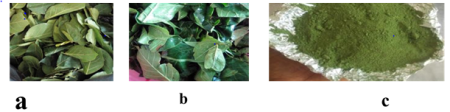
Ehretia cymosa leaves were gathered from Adama town, Kachema, East Shoa Zone, Oromia, Ethiopia. To get rid of dust, pollutants, sediments, pesticides, and parasites, the leaves were thoroughly cleaned two or three times under running tap water and then rinsed with distilled water. After that, they were allowed to air dry in the shade at room temperature. To improve solvent penetration during extraction and decrease particle size, the dried leaves were crushed into a powder. To avoid contamination and air exposure, the powdered samples were packed and kept in sealed containers.
Figure 1. Ehretia cymosa leaves, sample collection and preparation a) Fresh leaves of Ehretia cymosa plant, b) washed leaves, c) powder after grinding.
3.2.2. Extraction of Ehretia Cymosa
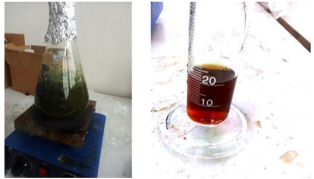
The aqueous extract of Ehretia cymosa was prepared by placing 20 g of finely powdered leaves into a 1000 ml conical flask, and then adding 400 ml of distilled water. The mixture was boiled for 60 minutes at 80 ℃ using a magnetic stirrer. During this process, the color of the solution changed from green to brown, indicating extraction of plant components. After boiling, the extract was cooled to room temperature and filtered using Whatman filter paper to remove plant residues and impurities. The filtered extract was then stored for 24 hours before being used for further experiments.
Figure 2. Extraction of Ehretia cymosa leave.
3.2.3. Synthesis of ZnO NPs Using Aqueous Extract of Ehretia Cymosa Leaf
Zinc oxide nanoparticles (ZnO NPs) were synthesized via a plant-mediated green route using an aqueous leaf extract of Ehretia cymosa as a biological capping and stabilizing agent, paired with a 0.2M} solution of zinc (II) acetate dihydrate [Zn(CH}3{COO)}2H2O] as the precursor. To investigate the influence of precursor-to-extract volumetric ratios on nanoparticle formation, reaction mixtures were prepared at defined ratios (1:1, 1:2, and 1:3{v/v). Precipitation and subsequent oxide formation were induced by the dropwise addition of 0.1{M}sodium hydroxide (NaOH) under continuous magnetic stirring until reaching pH 12. The reaction mixture was stirred for an additional 10 min to facilitate complete nucleation, yielding a characteristic pale-yellow precipitate. The resulting suspensions were allowed to age undisturbed for 24 hr to ensure complete precipitation. Afterwards, the supernatant was decanted, and the solid phase was isolated by centrifugation at 15,000 rpm for 15 min. The collected precipitate was thoroughly washed with distilled water and ethanol to eliminate unreacted precursors and impurities. The purified solid was transferred to a ceramic crucible, dried in an oven at 100℃ for 2h, ground using a mortar and pestle, and subsequently annealed in a muffle furnace at 500℃ to obtain phase-pure, highly crystalline ZnO NPs.
1) 1:2 ratio of ZnO nanoparticle synthesis
Zinc oxide nanoparticles were created by transferring 140 mL of a 0.2 M zinc (II) acetate dihydrate solution to a 600 mL beaker and stirring it magnetically for 10 minutes at room temperature in order to achieve a 1:2 v/v extract-to-precursor ratio. Then, under constant stirring, 70 mL of the aqueous Ehretia cymosa leaf extract was added dropwise. For five hours, the reaction mixture was agitated without any external heating. A 0.1 M sodium hydroxide (NaOH) solution was added dropwise until the reaction mixture reached pH 12 in order to cause precipitation and oxide production. The mixture was then agitated for an additional 10 minutes until a pale-yellow precipitate formed. To guaranty full precipitation, the resultant suspension was left undisturbed for a full day at room temperature. After decanting the supernatant, the solid phase was separated by centrifuging the reaction mixture for 15 minutes at 15,000 rpm. The solid precipitate was repeatedly rinsed with distilled water and then ethanol to remove unreacted precursors and contaminants. A ceramic crucible was used to collect the purified precipitate, which was then dried in an oven at 100°C for two hours, ground with a mortar and pestle, and calcined at 500°C in a muffle furnace. Phase-pure ZnO NPs were produced and kept in sealed containers for later testing and characterization.
2) 1: 3 ratio of ZnO NPs synthesis
A 600 mL beaker containing 150 mL of a 0.2M zinc(II) acetate dihydrate solution was magnetically agitated for 10 min at room temperature in order to synthesis zinc oxide nanoparticles at a 1:3v/v extract-to-precursor ratio. Then, while continuously stirring, 50 mL of the aqueous Ehretia cymosa leaf extract was added dropwise. Without any external heating, the combination was left to react for five hours. Dropwise addition of 0.1M sodium hydroxide (NaOH) was used to induce precursor conversion and oxide precipitation until the reaction mixture reached pH 12. The mixture was then continuously stirred for 10 minutes until a pale-yellow precipitate formed. To guaranty total precipitation, the reaction mixture was left undisturbed for a full day. Centrifugation at 15,000 rpm for 15 minutes was used to collect the solid product after the supernatant was decanted. To get rid of any remaining chemical precursors and phytochemical contaminants, the isolated precipitate was repeatedly cleaned with distilled water and then ethanol. The refined precipitate was moved to a ceramic crucible, dried for two hours at 100°C in an oven, ground with a mortar and pestle, and then calcined at 500°C in a muffle furnace. For later characterization and biological testing, the biosynthesized ZnO NPs were kept in sealed containers.
3) 1: 1 ratio of ZnO NPs synthesis
ZnO NPs were prepared in a 1:1 ratio by adding 70 milliliters of 0.2M zinc (II) acetate solution to a 600 milliliter beaker and using a magnetic stirrer without heat for ten minutes. A magnetic stirrer was used to add 70 milliliters of aqueous extracted plant leaf dropwise after 10 minutes. then continually stirred without heat for five hours. Using a dropper, a 0.1M NaOH solution was added drop by drop until the pH was adjusted to 12 under a continuous magnetic stirrer. The mixture was then agitated for ten minutes. till the raindrops turned a pale yellow hue. To achieve full precipitation, the synthesis was kept for a whole day. Following the decantation of the liquid above the precipitation, the reaction mixture was centrifuged for 15 minutes at 15,000 rpm in order to separate the liquid from the solid. The solid portion was then repeatedly cleaned with distilled water and then ethanol to get rid of the contaminants. The solid precipitate was then gathered on a ceramic crucible and dried for two hours at 100°C in an oven. It was dried, ground on mortar, and burned at 500 degrees in a furnace before being kept in covered containers.
4. Results and Discussion
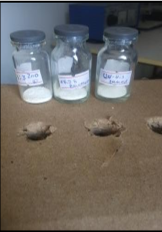
In this work, zinc acetate dihydrate precursor and Ehretia cymosa leaf extract were used in varying volume ratios (1:1, 1:2, and 1:3) to create ZnO nanoparticles. Photos of the produced ZnO nanoparticles are displayed in
Figure 3.
Figure 3. Zno NPs synthesized by (1:1, 1:2, and 1:3) ratio.
4.1. XRD Patterns of Synthesized ZnO Nanoparticles
The crystalline nature, phase purity, and crystal orientation of the biosynthesized zinc oxide nanoparticles (ZnO NPs) were investigated using X-ray diffraction (XRD).
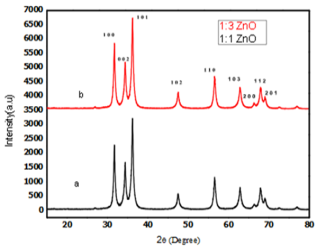
Figure 4 depicts the comparative XRD patterns of {ZnO NPs} synthesized at volumetric precursor-to-extract ratios of 1:1(a) and 1:3 (b). Both diffractograms exhibit well-defined, intense diffraction peaks that match the hexagonal wurtzite structure of zno
| [16] | Assad, N., Abbas, A., Fayyaz, M., Naeem-ul-hassan, M. Photo-catalytic and biological applications of phyto-functionalized zinc oxide nanoparticles synthesized using a polar extract of Equisetum. RSC Advances. 2024, 14(31), 22344-22358.
https://doi.org/10.1039/D4RA03573A |
[16]
.
The distinct diffraction peaks observed at 2theta values correspond to the Miller indices (100), (002), (101), (102), (110), (103), (200), (112), and (201) lattice planes, confirming a highly crystalline, single-phase wurtzite framework without secondary phase impurities or unreacted metallic zinc species. The sharp and intense nature of the diffraction peaks indicates high crystallinity, whereas the slight peak broadening reflects the nanometer-scale dimensions of the synthesized particles. Furthermore, the higher intensity of the (101) reflection relative to other planes confirms a preferential orientation during particle growth. A comparison between the 1:1 and 1:3 v/v ratios shows that increasing the plant extract concentration yields sharper diffraction peaks, suggesting enhanced crystallinity and potential modification of crystallite growth kinetics facilitated by phytochemical capping agents.
Figure 4. XRD diffraction patterns of Zno nanoparticles synthesized using zinc acetate dehydrate and Ehrecia cymosa leaf extract.
The average grain size of the ZnO nanoparticles was calculated from the three most intense peaks using Debye-Scherrer"s formula.
The average grain size of the ZnO nanoparticles was calculated from the three most intense peaks using Debye-Scherrer"s formula. FWHM values and average crystallite sizes of ZnO NPs calculated by Scherer’s Formula for was indicated in
Table 1.
Table 1. FWHM values and average crystallite size.
| 3:1 ZnO NPs | 1: 1 ZnO NPs |
h kl | 2Ɵ | FWHM (degree) | FWHM (degree) |
100 | 31.7568 | 0.4313 | 0.4495 |
002 | 34.4152 | 0.4746 | 0.4706 |
101 | 36.2314 | 0.462 | 0.4777 |
Average crystal size | 18.25 | 17.84 |
The XRD result showed that the average crystallite size of ZnO nanoparticles in 1:1 ratio has a smaller particle size (17.84 nm) than that of the 3:1 (18.25 nm). This difference may be due to the greater amount of leaf extract (50 mL) used in 1:1 ratio during synthesis process resulting in more capping agents that effectively stabilize the synthesized nanoparticles and hindered aggregation.
4.2. Antibacterial Activity Test
The disk diffusion method was used to evaluate the antibacterial activity of ZnO nanoparticles. ZnO nanoparticles have appealing antibacterial qualities because of their larger specific surface area and smaller particle size, which increases their surface reactivity and interaction with bacterial pathogens
| [2] | Kumar, A., Kaur, A., Vir, M., Dhiman, S. Rice bagasse extract-based green synthesis of zinc oxide nanoparticles: characterisation, assessment of anti-skin cancer, antibacterial, and antioxidant properties. Sustainable Chemistry for Climate Action. 2025, 7, 100085.
https://doi.org/10.1016/j.scca.2025.100085 |
[2]
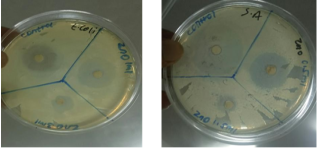
. Because of their tiny size, nanoparticles can easily penetrate the bacterial cell membrane and cause inhibitory processes to take place inside the cell. Zone of inhibition rises with increasing concentration of zinc oxide nanoparticles and decreasing particle size. Additionally shown in the
Table 2 are the zone of inhibition values derived from the experiment.
Table 2. Zone of inhibition (mm) of ZnO Nanoparticles against gram-positive and gram-negative bacterial strains.
| Inhibition zone (mm) |
Sample | Concentration | E.coli | S. aureus |
1:1 ZnO NPs | 0.04 mg/mL | 25 | 26 |
0.01 mg/mL | 10 | 13 |
Positive Control | | 42 | 43 |
Strong antibacterial action against gram-positive (S. aureus) and gram-negative (Escherichia coli) bacterial strains was demonstrated by green manufactured ZnO nanoparticles made from Ehrecia cymosa leaf extract
| [31] | Kaliyamoorthy, T. S., Subramaniyan, V., Renganathan, S., Vijayakumar, S. Sustainable Environmental-Based ZnO Nanoparticles Derived from Pisonia grandis for Future Biological and Environmental Applications. Journal of Inorganic and Organometallic Polymers and Materials. 2022, 32(8), 2980-2991.
https://doi.org/10.1007/s10904-022-02315-w |
[31]
. Gram-positive bacteria were more susceptible to ZnO nanoparticles' antibacterial activity than gram-negative bacteria. The discrepancies in the morphological constitutions of gram-positive and gram-negative bacteria may be the cause of their differing sensitivities
| [1] | Islam, R., Prosad, S., Hasan, I., Hossain, S. Eco-friendly synthesis of zinc oxide nanoparticles using Dillenia indica leaf extract: Characterization and evaluation of biological properties. Hybrid Advances. 2026, 12, 100623.
https://doi.org/10.1016/j.hybadv.2026.100623 |
[1]
. The outer lipopolysaccharide membrane of gram-negative bacteria prevents antibacterial chemicals from penetrating their cell walls. Conversely, gram-positive bacteria are more vulnerable because they only have an exterior peptidoglycan layer, which is ineffective as a permeability barrier.
Figure 5. Zone of inhibition (nm) of ZnO NPs against: a) Escherichia coli. b) staphylococcus.
5. Conclusion and Recommendation
5.1. Conclusion
Using zinc acetate dihydrate as a precursor and an aqueous leaf extract of Ehretia cymosa as a biological capping and stabilizing agent, zinc oxide nanoparticles were effectively produced utilizing a straightforward, environmentally benign, and economical green method. Phase-pure, highly crystalline with a distinctive hexagonal wurtzite structure were proven to form by X-ray diffraction (XRD) research. The average crystallite diameters were 17.84 nm for the 1:1 v/v ratio and 18.25 nm for the 1:3 v/v ratio, depending on the precursor-to-extract volumetric ratio. Both Gram-positive (Staphylococcus aureus) and Gram-negative (Escherichia coli) bacterial strains were significantly inhibited by the biosynthesized {ZnO NPs} in a dose-dependent manner. Because of structural differences in the design of their cell walls, gram-positive bacteria showed increased vulnerability. Generally, Ehretia cymosa leaf extract provides a sustainable, biogenic platform for synthesizing functional ZnO nanomaterials with strong antimicrobial performance.
5.2. Recommendations
Future research should evaluate the phytochemical capping potential of Ehretia cymosa leaf extract for synthesizing other metal and metal oxide nanoparticles (Ag, CuO, TiO2).
Complete morphological, optical, and chemical characterization of the synthesized ZnO NPs should be conducted by UV-Vis Spectroscopy, Fourier-Transform Infrared Spectroscopy (FTIR), Scanning Electron Microscopy (SEM), Transmission Electron Microscopy (TEM), and Energy-Dispersive X-ray Spectroscopy (EDX) is strongly recommended to confirm crystal lattice integrity, surface capping dynamics, particle size distribution, and phase purity.
Systematic profiling of the bio-reducing and stabilizing phytochemical constituents (e.g., flavonoids, polyphenols) present in Ehretia cymosa extract should be conducted to establish the exact reaction mechanism.
In vitro cytotoxicity, antioxidant potential, photocatalytic degradation efficiency, and broader biomedical applications of the green-synthesized ZnO NPs should be investigated.





 Share This Article
 Twitter
 Linked In
 Facebook
 Copy
Copy Download