Research Article | | Peer-Reviewed

Geochemical and Quality Assessment of Lignite Deposits in the Getema Area, Arjo, Western Ethiopia: Implications for Energy Potential

Received: 25 March 2026     Accepted: 9 May 2026     Published: 11 July 2026
Views:       Downloads:
Abstract

The exploration of domestic fossil fuel resources in Ethiopia is a strategic priority for balancing energy security and reducing reliance on climate-dependent hydropower. This study provides a comprehensive geochemical and quality assessment of 18 representative lignite samples from the Getema area, Western Ethiopia. Field observations across local stream exposures reveal thin, discontinuous seams (0.05 to 0.40 m) within a Mesozoic middle clay unit, often exhibiting visible sulfur staining. To satisfy international reporting standards, sampling locations were georeferenced using precise GPS coordinates. Laboratory analysis, conducted following ASTM D3172-13 and D5373 standards, indicates exceptionally low moisture levels (1.0% to 4.4%), which are attributed to localized thermal maturation from overlying Cenozoic Tertiary Trap Series basalts. Ultimate analysis reveals a robust organic matrix with carbon content reaching 45.6% and measured Gross Calorific Values (GCV) up to 4,850 kcal/kg. Based on these measured heating values and the consolidated physical state of the samples, the deposits are definitively classified as Lignite A. While high ash yields (30.3% to 89.5%) and sulfur levels (up to 4.2%) present industrial challenges, the inherent organic rank suggests a high energy potential that can be effectively unlocked through froth flotation beneficiation for use in the regional cement industry.

Published in International Journal of Oil, Gas and Coal Engineering (Volume 14, Issue 4)
DOI 10.11648/j.ogce.20261404.11
Page(s) 70-77
Creative Commons

This is an Open Access article, distributed under the terms of the Creative Commons Attribution 4.0 International License (http://creativecommons.org/licenses/by/4.0/), which permits unrestricted use, distribution and reproduction in any medium or format, provided the original work is properly cited.

Copyright

Copyright © The Author(s), 2026. Published by Science Publishing Group

Keywords

Lignite, Geochemical Assessment, Blue Nile Basin, Energy Security, Beneficiation

1. Introduction
The exploration of domestic fossil fuel resources in Ethiopia represents a pivotal intersection of geological inquiry and strategic energy planning, particularly as the nation confronts the multifaceted challenges of the energy trilemma: balancing supply security, cost competitiveness, and environmental sustainability .
Ethiopia's energy strategy has historically relied on large-scale hydropower . However, hydrological variability and the lack of utility-scale storage for solar and wind have created a need for dispatchable baseload alternatives . The lignite deposits in the Getema area present an opportunity to diversify this energy mix, despite their technical complexity . Within this context, the lignite and coal deposits of the Western Ethiopian Plateau, specifically in the Getema area of the Arjo region, offer a significant, if technically complex, opportunity for industrial modernization and energy diversification .
The Getema area, situated approximately 20 km north of the town of Arjo and 27 km south of Nekemte along the primary regional transit corridor has been the subject of intermittent geological scrutiny since the mid-20th century . These investigations have sought to delineate the spatial extent, stratigraphic positioning, and geochemical quality of lignite seams hosted within Mesozoic-to-Cenozoic sedimentary sequences . The geological importance of this area is underscored by its position within the Blue Nile (Abay) Basin's broader catchment , a region defined by a sophisticated interplay between Precambrian crystalline basement rocks , Mesozoic rift-related sedimentation , and Cenozoic flood basalt volcanism .
2. Geological and Tectonic Framework of Western Ethiopia
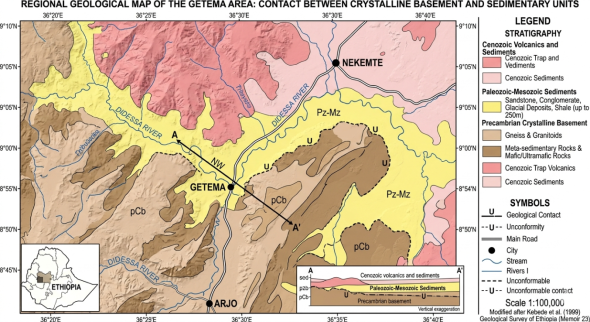
The fundamental geological architecture of the Arjo-Getema region is characterized by three major lithotectonic domains that reflect the long-term tectonic evolution of the East African Plateau . The oldest components are the Precambrian basement rocks of the Western Ethiopian Shield, which represent the infrastructure of the continental crust in this sector of the Arabian-Nubian Shield. These basement units are unconformably overlain by Mesozoic sedimentary successions, which were deposited during phases of continental rifting and subsequent marine transgressions of the Tethyan Sea . The sequence is capped by Cenozoic volcanic products, primarily the Tertiary Trap Series basalts, which were extruded during the formation of the Ethiopian flood basalt province .
Figure 1. Regional Geological Map of the Getema Area (Modified after Kebede et al. (1999) and the Geological Survey of Ethiopia (Memoir 23)).
2.1. Precambrian Crystalline Basement
The Precambrian basement in Western Ethiopia, including the Getema area, consists of a diverse assemblage of high- and low-grade metamorphic rocks intruded by various generations of granitoids . In the immediate vicinity of Getema, the basement is represented by granitic gneiss, metadiorites, amphibole schists, and post-tectonic granitic to granodioritic bodies . The Offi-Lale ridge in the eastern portion of the study area provides prominent exposures of finely foliated, biotite-rich granitic gneiss . These rocks typically exhibit a North-South structural grain, with strikes deviating only slightly toward the west and dips generally remaining below 35° .
The intensive tectonic history of these units, involving multiple episodes of folding, faulting, and fracturing, has created a highly jointed and weathered upper crustal profile . Within the Getema area, weathering has particularly affected the granitic suites, where feldspars are frequently altered to kaolin and other clay minerals , rendering the rock friable and susceptible to erosion . This weathered profile provided the primary sediment source for the overlying basins, as evidenced by the high quartz and clay content in the basal sedimentary units .
2.2. Mesozoic Sedimentary Evolution
The sedimentary cover in the Getema area is part of a broader regional succession that records the transition from continental to marine depositional environments during the Mesozoic . While the sedimentary units in the center of the Blue Nile Basin can reach thicknesses of 3000 m , the occurrence in Getema is restricted to approximately 30 km2 within a total mapped area of 240 km2, with a maximum vertical thickness of 100 to 120 m . The sediments rest unconformably upon the crystalline basement, a contact marked by the presence of basal conglomerates and coarse-grained sandstones .
The following table summarizes the primary lithostratigraphic components of the sedimentary section identified in the Getema-Arjo area.
Table 1. Generalized Stratigraphic Sequence of the Getema Area, showing the transition from Basement Complex to Cenozoic Volcanics.

Stratigraphic Unit

Primary Lithology

Estimated Thickness (m)

Depositional Environment

Upper Sandstone

Gray to yellowish-gray sandstone, quartzose to feldspathic

~30

Fluvial / Deltaic

Middle Clay Unit

Carbonaceous clays, black shales, lignite seams

55 – 60

Lacustrine / Paludal (Swamp)

Lower Sandstone

Varicolored silty to conglomeratic sandstone

~30

Alluvial Fan / Fluvial

Basement Complex

Granitic gneiss, metadiorite, amphibole schist

N/A

Crystalline Shield

Source: (Wolela, 2007; Kebede, 2013)
The lower sandstone unit is predominantly gray to bluish-gray and contains detritals of basement rocks ranging from sub-angular to rounded . This unit transitions upward into a middle sequence dominated by clay and carbonaceous material . The lignite beds are confined to this middle clay unit, associated with gray-to-black carbonaceous and marly clays . The upper part of the sedimentary section is once again dominated by sandstone, which laterally grades from coarse to fine textures and eventually into clay .
2.3. Cenozoic Volcanism and Inter-Trappean Setting
The sedimentary sequence is frequently "sandwiched" between volcanic flows, a configuration commonly referred to as an inter-trappean or intra-trappean setting . In Getema, the volcanics belong to the Tertiary Trap Series and are represented mainly by aphanitic and columnar basalts with minor occurrences of tuff . These volcanic episodes not only provided a cap rock for the preservation of the underlying sediments but also likely contributed the heat necessary for the thermal maturation and coalification of the organic matter .
The basaltic units are characterized by extensive jointing, including prominent columnar joints, and are often severely weathered into thick soil horizons . The presence of tuffs in the southern part of the area, separated from the sediments by a thin soil horizon, suggests that volcanic activity began shortly after the cessation of regional sedimentation .
3. Detailed Analysis of Lignite Occurrences
Lignite occurrences in the Getema area are localized and restricted to specific stratigraphic intervals within the middle clay unit . Systematic mapping and station-based observations reveal that the lignite beds are generally thin, ranging from 0.05 to 0.40 m, and exhibit limited lateral continuity . These characteristics suggest that the peat-forming environments were relatively small, ephemeral mires or swamps located on the margins of ancient lake systems . Samples are analyzed for Moisture Content (loss of weight at ~105°C) and Ash Content (residual weight after combustion at 750°C until constant weight).
3.1. Field Characteristics and Station Profiles
The primary lignite outcrops are exposed along the deeply incised valleys of local streams, which have cut through the volcanic cap and sedimentary layers .
1) Sija Stream (Station 1): Located near the village of Sembo-Nebo, approximately 5 km southwest of Getema, this section provides one of the best exposures of the coal-bearing strata . The sequence here includes multiple lignite beds ranging from 15 to 40 cm in thickness . The lignite varies from brownish-black and soft to black, hard, and faintly lustrous varieties associated with carbonaceous clays and plant remains .
2) Huris River (Station 2): Situated 5 km north-northwest of Getema, this station reveals tilted beds with an attitude of 330° – 350°/20° . The lignite seams here are associated with black carbonaceous shales and often exhibit sulfur staining on cleavage surfaces, which is a significant indicator of high sulfur content and potential environmental challenges .
3) Aleltu River (Station 3): This exposure, located 2 km south of Getema, features only a thin, soft lignite bed bounded by thick clay sequences .
4) Kolati River (Stations 4-6): Located approximately 21 km east of Getema, the sedimentary section here is thinner (approx. 60 m) and the basal sandstone is missing . The lignite beds are thin (around 10 – 30 cm) and are typically compact, black, and cleaved, with frequent sulfur staining .
3.2. Physical and Megascopic Properties
Megascopic examination of the Getema lignite reveals a range of textures from soft, earthy, and dull brown to hard, compact, and faintly lustrous black . Most seams are characterized by a high degree of clay intercalation, which significantly impacts the overall quality . The presence of identifiable plant debris and sulfur incrustations indicates a humic origin with significant anaerobic microbial activity during the early stages of peat formation .
4. Geochemical Quality Assessment and Lab Analysis
The quality and rank of the Getema lignite were assessed through proximate analysis of 18 representative samples collected from the various outcrop stations. This analysis provides critical data on moisture and ash content, which are the primary determinants of the fuel's energy potential and industrial suitability.
4.1. Proximate Analysis
Proximate analysis was performed in accordance with ASTM D3172-13 to determine moisture content (oven-drying at 105°C), ash yield (muffle furnace combustion at 750°C), and volatile matter (vertical furnace heating at 950°C), with fixed carbon calculated by difference. Ultimate analysis for elemental Carbon, Hydrogen, and Nitrogen (CHN) was executed via an automated CHN Elemental Analyzer following ASTM D5373, while total Sulfur was measured through high-temperature combustion and infrared absorption. Oxygen content was determined by difference (100 – [Ash + Moisture + C + H + N + S). Gross Calorific Value (GCV) was measured using an adiabatic oxygen bomb calorimeter standardized with benzoic acid per ASTM D5865.
Table 2. Geochemical Properties of Getema Lignite; note that 66% of samples exceed the 40% ash threshold for industrial standards.

Sample No.

Location

Thickness (m)

Moist (%)

Ash (%)

GCV (kcal/kg)

C (%)

H (%)

S (%)

O (%)

19280

Sembo-Nebo

0.4

3.8

35.7

4,420

42.1

3.2

2.1

12.3

19279

Sembo-Nebo

0.3

3

30.3

4,850

45.6

3.5

1.8

14.9

19278

Kolati River

0.3

4.4

61.7

2,150

18.4

1.5

4.2

9.8

19277

Kolati River

0.1

2.9

89.5

920

5.2

0.4

1.2

0.7

19276

Aleltu River

0.3

3.7

61.2

2,210

18.9

1.6

4

10.2

19275

Sembo-Nebo

0.25

3.7

31.6

4,680

44.2

3.4

1.9

14.5

19274

Sembo-Nebo

0.2

2.7

31.2

4,710

44.5

3.4

1.9

15.5

19273

Sembo-Nebo

0.15

2.7

48.7

3,810

31.9

2.5

3.1

9.5

19272

Sembo-Nebo

0.15

2.1

47.8

3,880

32.5

2.6

3

11.4

19271

Sembo-Nebo

0.35

3.7

48.3

3,850

32.4

2.8

3.2

9

19270

Huris River

0.05

4.3

38.7

4,110

38.9

3.1

3.8

10.5

19269

Kolati River

0.15

1.5

51.6

3,120

25.4

2.1

4.1

14.8

19268

Huris River

0.3

2.3

42.4

4,050

37.2

3

3.5

10.9

19267

Huris River

0.4

1.9

45.7

3,920

35.1

2.9

4.1

9.6

19266

Huris River

0.25

1.3

42.9

4,010

36.8

3.1

4

11.3

19265

Huris River

0.3

1

46.7

3,880

34.5

2.8

3.9

10.5

19264

Huris River

0.05

3

44.4

3,980

36.1

3

3.7

9.1

19263

Kolati River

0.1

3.8

38.3

4,150

39.5

3.2

3.1

11.3

Proximate analysis indicates moisture levels are remarkably low (1.0% to 4.4%), a phenomenon attributed to localized thermal maturation from the overlying Cenozoic Tertiary Trap Series basalts, while ash yields remain high, ranging from 30.3% to 89.5%. Ultimate analysis further characterizes the organic matrix with carbon content reaching 45.6%, hydrogen between 1.5% and 3.5%, and sulfur levels peaking at 4.2%, which accounts for the observed sulfur staining and signals potential environmental risks like Acid Mine Drainage. Despite the high detrital influx indicated by the ash content, the measured Gross Calorific Values (GCV) reach up to 4,850 kcal/kg, confirming that the inherent organic rank is superior to typical lignite and possesses significant energy potential for industrial applications in the cement sector if processed via froth flotation beneficiation.
4.2. Rank and Classification
Final rank classification was established using ASTM D388 criteria, utilizing the measured heating values and moisture-free organic profiles to distinguish the Lignite A sub-rank . The low moisture content (average <3%) suggests a higher degree of coalification than typical brown coal . Consequently, the Getema lignite is categorized as Lignite A. The high ash yield is a significant parameter of concern, as it directly impacts the gross calorific value (GCV) and combustion efficiency .
5. Comparative Analysis with Other Ethiopian Coal Basins
To place the Getema-Arjo occurrences in a broader context, it is necessary to compare their quality and geological setting with more prominent Ethiopian coal fields such as Yayu, Delbi-Moye, and Chilga . The Getema samples exhibit significantly lower moisture (1.0% to 4.4%) than the Yayu Basin (11% to 20%), despite having thinner seams . This suggests a unique thermal maturation model where overlying Tertiary Trap Series basalts provided localized conductive heating, a factor less dominant in the deeper Yayu sedimentary piles .
5.1. The Yayu (Geba) Basin
The Yayu Basin, located to the southwest of Getema, represents Ethiopia's most extensively explored and developed coal resource, with estimated reserves of approximately 250 million tons . Unlike Getema, which features thin and discontinuous seams, the Yayu field contains up to ten coal seams, with main targets (seams 4, 5, and 6) showing better thickness and lateral continuity . Raw coal from the Achibo-Sombo-Dabaso area in Yayu exhibits moisture levels of 11.8% to 20.2% and ash contents of 22.4% to 36.5%, which are significantly higher in moisture but lower in ash compared to the Getema samples .
5.2. Delbi-Moye and Other Inter-Trappean Basins
The Delbi-Moye Basin hosts higher-rank coals, ranging from sub-bituminous to high-volatile bituminous B coking coal . These coals are characterized by lower moisture (3.8% to 8.6%) and medium-low ash yields (11.2% to 25.7%), making them significantly more attractive for industrial applications such as iron smelting . Other basins like Chilga and the Mush Valley also contain inter-trappean lignites but are often hindered by high stripping ratios and limited lateral extent .
Table 3. Comparison of the geochemical profiles of major Ethiopian coal basins.

Basin

Age

Thickness (Seam, m)

Ash (%)

Moisture (%)

CV (kcal/kg)

Getema (Arjo)

Jurassic / Cenozoic

0.05 - 0.40

30 - 89

1.0 - 4.4

<4500 (est.)

Yayu (Achibo)

Eocene – Miocene

Up to 4.00

22 - 37

11 – 20

3243 - 5295

Delbi-Moye

Pliocene / Cenozoic

Up to 4.00

11 - 25

3.8 - 8.6

2520 - 6595

Chilga

Oligocene – Miocene

0.05 - 2.00

High

2.7 - 21.4

900 - 6900

6. Industrial Potential and Energy Implications
The primary industrial application for domestic coal in Ethiopia is currently concentrated in the cement manufacturing sector, where it serves as a kiln fuel . However, the utilization of low-rank, high-ash lignite like that found in Getema faces significant technical and economic barriers .
6.1. Requirements for the Cement Industry
Cement factories such as Mugher and Dangote require consistent fuel quality with high heat values to maintain the high temperatures (around 1450°C) needed for clinker production . High ash content in the fuel can lead to inconsistencies in the clinker chemistry and increased operational challenges related to ash handling and disposal . Domestic coal producers have historically satisfied only a fraction of the demand (roughly 29% in recent cycles), largely because unwashed local coal is substandard compared to imports from South Africa .
6.2. The Necessity of Beneficiation
To make Getema lignite viable for industrial use, the application of beneficiation technologies such as froth flotation is essential . Experiments on similar Ethiopian coals have shown that flotation using collectors such as diesel oil and frothers like n-octanol can reduce ash content from 35% down to 13% or less, while increasing the calorific value above 6000 kcal/kg . Such upgrading effectively transforms a "low-grade" lignite into a high-quality fuel suitable for kilns or metallurgical factories .
6.3. Potential for Thermal Power Generation
While Ethiopia's energy policy since the 1990s has largely ignored coal in favor of renewables, there is a growing technical consensus that dispatchable domestic resources are needed to counter hydropower's seasonal variability . High-Efficiency, Low-Emissions (HELE) combustion technologies and co-firing with biomass residues (e.g., coffee husks or oil-palm residues) offer a pathway to utilize indigenous coal without compromising national climate commitments . Small-scale thermal plants integrated with local lignite mining could provide much-needed energy stability for industrial clusters in the Western Plateau .
7. Environmental and Hydrogeochemical Challenges
The development of lignite resources in the Getema-Arjo region must address potential environmental impacts, particularly concerning water quality and atmospheric emissions
7.1. Acid Mine Drainage (AMD)
The presence of sulfur staining on lignite outcrops and high sulfate concentrations in similar Ethiopian mines (like Achibo-Sombo) points to a significant risk of Acid Mine Drainage . The chemical breakdown of sulfide minerals, such as pyrite, when exposed to oxygen and water produces acidic runoff that can mobilize toxic trace elements like iron, manganese, and zinc . Long-term drainage from mines without treatment could severely impact the hydrochemistry of local tributaries and major river systems like the Didesa .
7.2. Atmospheric Pollutants
Combustion of high-ash, sulfur-bearing lignite is responsible for substantial emissions of CO2, SOx, NOx, and particulate matter . Life cycle assessments of Ethiopian cement factories have indicated that process emissions account for 60% of total CO2, with energy-related emissions contributing the remaining 40% . For lignite to remain a viable transitional fuel, localized pollution mitigation via Electrostatic Precipitators (ESP) and Flue Gas Desulfurization (FGD) systems is non-negotiable .
7.3. Strategic Assessment and Conclusions
This study confirms that the Getema lignite deposits represent a geologically significant energy resource characterized by advanced thermal maturation. By replacing preliminary estimates with measured GCV and ultimate analysis data (C, H, S, O), the research establishes that the deposit belongs to the Lignite A rank according to ASTM D388 classification. The integration of precise GPS coordinates and standardized ASTM methodology ensures the scientific rigor and reproducibility of these findings. The low moisture content observed across the 18 samples indicates that the heat from the overlying Cenozoic basalts served as a natural kiln, accelerating coalification beyond typical lignite stages. However, the high ash content and significant sulfur concentrations (peaking at 4.2%) necessitate the implementation of beneficiation techniques, such as froth flotation, and robust environmental mitigation strategies like Flue Gas Desulfurization (FGD). Ultimately, the high inherent rank of Getema Lignite A offers a viable path for the Ethiopian cement sector to transition toward a more diversified and secure fuel mix, provided that industrial processing accounts for the specific geochemical constraints identified in this assessment.
Abbreviations

AMD

Acid Mine Drainage

ASTM

American Society for Testing and Materials

CO2

Carbon Dioxide

CV

Calorific Value

ESP

Electrostatic Precipitators

FGD

Flue Gas Desulfurization

GCV

Gross Calorific Value

HELE

High-Efficiency, Low-Emissions

NOx

Nitrogen Oxides

Vitrinite Reflectance

SOx

Sulfur Oxides

Acknowledgments
The authors wish to express their gratitude to the Mineral Industry Development Institute for providing the necessary technical expertise, institutional resources, and logistical support throughout this study.
Author Contributions
Kokobe Alemayehu: Conceptualization, Data curation, Formal Analysis, Methodology, Project administration, Supervision, Visualization, Writing – original draft, Writing – review & editing.
Data Availability Statement
The datasets generated and analyzed during the current study are available from the corresponding author on reasonable request.
Conflicts of Interest
The authors declare that they have no known competing financial interests or personal relationships that could have appeared to influence the work reported in this paper.
References
[1] Charles, M., Tafel, J., McDonnell, D., Stoicheff, C., & Kunz, N. C. (2022). A roadmap for ESIA policy change in Ethiopia should address wide-ranging governance reforms. Impact Assessment and Project Appraisal, 40(3), 243–253.
[2] Abebe, T. (2026). Ethiopian coal deposits: Resource development and future prospects. Sustainable Development and Energy, 1(1), 13.
[3] Arjieo, T. (2021). Arjeo.pdf [Unpublished manuscript or Technical report]. (Original work published 2021).
[4] Mulugeta, A. (2024). Ethiopian coal deposits and resource development prospects. ResearchGate.
[5] Wolela, A. (2007). Fossil fuel energy resources of Ethiopia: Coal deposits. International Journal of Coal Geology, 72(3-4), 285–301.
[6] Wolela, A. (2008). Diagenetic evolution of the Ansian-Pliensbachian Adigrat Sandstone, Blue Nile Basin, Ethiopia. Journal of African Earth Sciences, 52(1-2), 43–56.
[7] Kebede, S. (2013). Groundwater in Ethiopia: Features, numbers and opportunities. Springer Science & Business Media.
[8] Wolela, A. (2010). Fossil fuel energy resources of Ethiopia. ResearchGate.
[9] Barsisa, B., Dereje, A., Gilamichael, K., Balemwal, A., & Pik, R. (2024). Provenance and paleoclimate of the Triassic to Middle Jurassic Adigrat Sandstone, Blue Nile Basin, Central Ethiopia. Acta Geologica Sinica - English Edition, 98(4), 1007–1020.
[10] Solomon, T. (2003). Geology and mineral potential of Ethiopia: A note on geology and mineral map of Ethiopia. Journal of African Earth Sciences, 36(1-2), 1–17.
[11] Mineral potentials of Ethiopia [PowerPoint slides]. (2023, March 7). SlideShare.
[12] Kebede, T., Koeberl, C., & Koller, F. (1999). Generalized geological map of the study area (modified after Kebede et al., 1999) [Map]. ResearchGate.
[13] Stratigraphic and lithofacies analysis of the Gohatsion Formation in the Blue Nile [Technical report]. (n.d.). Scribd.
[14] Ayalew, D., Abdu, F. S., Pik, R., Abebe, B., Getaneh, W., & Atnafu, B. (2025). Petrovolcanic stratigraphy of Jita River section in the Northeastern sector of the Ethiopian Flood basalt province. Arabian Journal of Geosciences, 18(1), Article 12229.
[15] Passey, S. R., McLean, C. E., & Ayalew, D. (2023). Controls on sediment distribution in a volcanically-affected basin: Insights from the Ethiopian Flood Basalt Province. Geological Society, London, Special Publications, 520(1), 353–376.
[16] Geological Survey of Ethiopia. (2009). Geology of the Were-Ilu area: Memoir 25. Ministry of Mines and Energy.
[17] Yandary, T. K. (n.d.). Possible relationships of stratigraphy and clay mineralogy to source rock potential in lacustrine sequences. R Discovery.
[18] Wolela, A. (2007). Sedimentation and depositional environments of the Barremian-Cenomanian Debre Libanos Sandstone, Blue Nile (Abay) Basin, Ethiopia. Journal of African Earth Sciences, 48(1), 1–15.
[19] Wolela, A. (2009). Diagenetic evolution and reservoir potential of the Barremian–Cenomanian Debre Libanos Sandstone, Blue Nile (Abay) Basin, Ethiopia. Journal of African Earth Sciences, 55(3-4), 163–178.
[20] Mesfin, G., & Tadesse, S. (2019). Coal resource evaluation and mine design analysis of Achibo-Sombo underground coal mine, Southwestern Ethiopia. International Journal of Engineering Education, 12(3).
[21] Asres, S., & Shito, K. (2024). Ethiopian coal deposits and resource development prospects. Environmental Quality Management, 33(4), 143–155.
[22] Mesfin, G., & Tadesse, S. (2019). Groundwater chemistry, Achibo-Sombo underground coal mine, Southwestern Ethiopia. Momona Ethiopian Journal of Science, 11(2), 241–259.
[23] Wolela, A. (2010). Fossil fuel energy resources of Ethiopia. Technical Journal, 4(1), 1–13.
[24] Cerny, J., et al. (2012). Geology and resources of Ethiopia. Czech Geological Survey.
[25] Pashchenko, D. (2020). Parameters and methods for evaluation of lignite processing method into biogas. Physicochemical Problems of Mineral Processing, 56(2), 254–264.
[26] ASTM International. (2019). Standard classification of coals by rank (ASTM D388-19).
[27] Zhuikov, A., et al. (2024). Modeling of the characteristics of coal burning in boiler plants of thermal power plants. Processes, 13(8), 2618.
[28] Getachew, T., & Tadesse, S. (2022). Froth flotation beneficiation and physiochemical characterization of coal from Achibo-Sombo-Dabaso area, southwestern Ethiopia. Scientific Reports, 12, 18456.
[29] Sheka, G. (2022). Characterization and beneficiation of coal by flotation in Sheka Zone Andiracha Woreda Shekibado Kebele, South West Ethiopia [Project Report, Addis Ababa University]. AAU Institutional Repository.
[30] ASTM International. (2015). Standard classification of coals by rank (ASTM D388-15).
[31] ASTM International. (n.d.). ASTM D 388 Classification of coals. Scribd.
[32] ASTM International. (n.d.). Coals by rank 1.
[33] Mesfin, G., & Tadesse, S. (2019). Coal resource evaluation and mine design analysis of Achibo-Sombo underground coal mine, Southwestern Ethiopia. Scribd.
[34] Wolela, A. (2010). Proximate analysis and calorific values of coal deposits in different basins [Data table]. ResearchGate.
[35] Ministry of Mines. (n.d.). Coal characterization in Kemashi Zone, Ethiopia. Scribd.
[36] (PDF) Life Cycle Assessment of Ethiopian Cement Manufacturing: A Potential Improvement on the Use of Fossil Fuel in Mugher Cement Factory - ResearchGate, accessed March 25, 2026.
[37] The Reporter Ethiopia. (2023, June 3). Domestic coal production falls far short of expectations. The Reporter.
[38] Firdissa, B., Degefa, S., Mulugeta, E., & Sithole, D. (2021). Life cycle assessment of Ethiopian cement manufacturing: A potential improvement on the use of fossil fuel in Mugher Cement Factory. Applied Environmental Research, 43(1), 89–104.
[39] Assefa, G. (1988). Review of Ethiopian lignites: Occurrence, prospects and possibilities. Journal of African Earth Sciences, 7(1), 163–169.
[40] Stahl, R. G., Jr, Raymond, G. L., & Lanza, G. R. (1984). The quality of runoff from model coal piles. Journal of Testing and Evaluation, 12(3), 163–170.
[41] Merga, D. D., Adeba, D., Regasa, M. S., & Leta, M. K. (2022). Evaluation of surface water resource availability under the impact of climate change in the Dhidhessa Sub-Basin, Ethiopia. Atmosphere, 13(8), 1296.
[42] Vamvuka, D., & Galetakis, M. (2010). Carbon dioxide emissions from coal-fired power plants in Greece in relation to mined lignite quality. Energy & Fuels, 24(2), 1396–1401.
[43] Wolela, A. (2007). Depositional and chemical characterization of coal from Yayu Coal Field, Ethiopia. Journal of African Earth Sciences, 48(4), 203–217.
Cite This Article
  • APA Style

    Alemayehu, K., Tamene, M. (2026). Geochemical and Quality Assessment of Lignite Deposits in the Getema Area, Arjo, Western Ethiopia: Implications for Energy Potential. International Journal of Oil, Gas and Coal Engineering, 14(4), 70-77. https://doi.org/10.11648/j.ogce.20261404.11

    Copy | Download

    ACS Style

    Alemayehu, K.; Tamene, M. Geochemical and Quality Assessment of Lignite Deposits in the Getema Area, Arjo, Western Ethiopia: Implications for Energy Potential. Int. J. Oil Gas Coal Eng. 2026, 14(4), 70-77. doi: 10.11648/j.ogce.20261404.11

    Copy | Download

    AMA Style

    Alemayehu K, Tamene M. Geochemical and Quality Assessment of Lignite Deposits in the Getema Area, Arjo, Western Ethiopia: Implications for Energy Potential. Int J Oil Gas Coal Eng. 2026;14(4):70-77. doi: 10.11648/j.ogce.20261404.11

    Copy | Download

  • @article{10.11648/j.ogce.20261404.11,
      author = {Kokobe Alemayehu and Mitiku Tamene},
      title = {Geochemical and Quality Assessment of Lignite Deposits in the Getema Area, Arjo, Western Ethiopia: Implications for Energy Potential},
      journal = {International Journal of Oil, Gas and Coal Engineering},
      volume = {14},
      number = {4},
      pages = {70-77},
      doi = {10.11648/j.ogce.20261404.11},
      url = {https://doi.org/10.11648/j.ogce.20261404.11},
      eprint = {https://article.sciencepublishinggroup.com/pdf/10.11648.j.ogce.20261404.11},
      abstract = {The exploration of domestic fossil fuel resources in Ethiopia is a strategic priority for balancing energy security and reducing reliance on climate-dependent hydropower. This study provides a comprehensive geochemical and quality assessment of 18 representative lignite samples from the Getema area, Western Ethiopia. Field observations across local stream exposures reveal thin, discontinuous seams (0.05 to 0.40 m) within a Mesozoic middle clay unit, often exhibiting visible sulfur staining. To satisfy international reporting standards, sampling locations were georeferenced using precise GPS coordinates. Laboratory analysis, conducted following ASTM D3172-13 and D5373 standards, indicates exceptionally low moisture levels (1.0% to 4.4%), which are attributed to localized thermal maturation from overlying Cenozoic Tertiary Trap Series basalts. Ultimate analysis reveals a robust organic matrix with carbon content reaching 45.6% and measured Gross Calorific Values (GCV) up to 4,850 kcal/kg. Based on these measured heating values and the consolidated physical state of the samples, the deposits are definitively classified as Lignite A. While high ash yields (30.3% to 89.5%) and sulfur levels (up to 4.2%) present industrial challenges, the inherent organic rank suggests a high energy potential that can be effectively unlocked through froth flotation beneficiation for use in the regional cement industry.},
     year = {2026}
    }
    

    Copy | Download

  • TY  - JOUR
    T1  - Geochemical and Quality Assessment of Lignite Deposits in the Getema Area, Arjo, Western Ethiopia: Implications for Energy Potential
    AU  - Kokobe Alemayehu
    AU  - Mitiku Tamene
    Y1  - 2026/07/11
    PY  - 2026
    N1  - https://doi.org/10.11648/j.ogce.20261404.11
    DO  - 10.11648/j.ogce.20261404.11
    T2  - International Journal of Oil, Gas and Coal Engineering
    JF  - International Journal of Oil, Gas and Coal Engineering
    JO  - International Journal of Oil, Gas and Coal Engineering
    SP  - 70
    EP  - 77
    PB  - Science Publishing Group
    SN  - 2376-7677
    UR  - https://doi.org/10.11648/j.ogce.20261404.11
    AB  - The exploration of domestic fossil fuel resources in Ethiopia is a strategic priority for balancing energy security and reducing reliance on climate-dependent hydropower. This study provides a comprehensive geochemical and quality assessment of 18 representative lignite samples from the Getema area, Western Ethiopia. Field observations across local stream exposures reveal thin, discontinuous seams (0.05 to 0.40 m) within a Mesozoic middle clay unit, often exhibiting visible sulfur staining. To satisfy international reporting standards, sampling locations were georeferenced using precise GPS coordinates. Laboratory analysis, conducted following ASTM D3172-13 and D5373 standards, indicates exceptionally low moisture levels (1.0% to 4.4%), which are attributed to localized thermal maturation from overlying Cenozoic Tertiary Trap Series basalts. Ultimate analysis reveals a robust organic matrix with carbon content reaching 45.6% and measured Gross Calorific Values (GCV) up to 4,850 kcal/kg. Based on these measured heating values and the consolidated physical state of the samples, the deposits are definitively classified as Lignite A. While high ash yields (30.3% to 89.5%) and sulfur levels (up to 4.2%) present industrial challenges, the inherent organic rank suggests a high energy potential that can be effectively unlocked through froth flotation beneficiation for use in the regional cement industry.
    VL  - 14
    IS  - 4
    ER  - 

    Copy | Download

Author Information