Research Article | | Peer-Reviewed

Determination of Chlorpyrifos Residues in Organophosphate-Contaminated Soils from Selected Dairy Farms in Kilifi County, Kenya Using Liquid Chromatography-Mass Spectrometry (LC/MS)

Received: 13 June 2026     Accepted: 26 June 2026     Published: 17 July 2026
Views:       Downloads:
Abstract

Organophosphate acaricides are widely used in livestock production to control ticks and tick-borne diseases, but frequent use of chlorpyrifos-based products may contaminate soils through residue accumulation. This study determined chlorpyrifos residues in soils from selected dairy farms in Kilifi County, Kenya. A cross-sectional survey was conducted among Forty four dairy farmers using questionnaires, interviews, and field observations to document acaricide brands, active ingredients, and application frequency. Farms were purposively selected based on reported use of chlorpyrifos-containing acaricides. Forty-four composite soil samples were collected from cattle spraying areas, drainage points, and nearby grazing sites in Kilifi South, Kaloleni and Kilifi North sub-counties. Samples were extracted and analyzed using liquid chromatography–mass spectrometry (LC-MS). Data were analyzed in GenStat using descriptive statistics and one-way ANOVA. Commonly used acaricides included Duodip, Tixfix, Vectoclor, Steladone, and Cynotrix. Most farmers applied acaricides twice weekly. Chlorpyrifos was detected in 24 of 44 samples, representing 54.5%. Mean concentrations differed among sub-counties, with Kilifi South recording the highest level at 18.903±0.114 ppb, followed by Kaloleni at 11.88±0.299 ppb and Kilifi North at 10.496±0.0447 ppb. The findings indicate soil contamination and support routine monitoring, farmer training, and stricter regulation of chlorpyrifos-based acaricides.

Published in Science Journal of Analytical Chemistry (Volume 14, Issue 3)
DOI 10.11648/j.sjac.20261403.11
Page(s) 36-44
Creative Commons

This is an Open Access article, distributed under the terms of the Creative Commons Attribution 4.0 International License (http://creativecommons.org/licenses/by/4.0/), which permits unrestricted use, distribution and reproduction in any medium or format, provided the original work is properly cited.

Copyright

Copyright © The Author(s), 2026. Published by Science Publishing Group

Keywords

Acaricides, Accumulation, Soil, Chlorpyrifos and LC-MS

1. Introduction
Livestock farming is an important economic activity in Kenya, particularly among pastoralist communities whose primary source of income is livestock production. The livestock sector supports the livelihoods of many households and contributes about 42% of agricultural GDP and 10% of the national GDP, respectively . Livestock production has also played an important role in poverty reduction programs by supporting household income, food security, and rural livelihoods. Population growth and urbanization have increased the demand for food, including milk, meat, and other livestock products. Kenya’s urban population increased from 25.7% in 1991 to 31.16% in 2019 . As a result, agricultural production systems are increasingly shifting towards modern and more intensive farming practices to meet the growing demand for food for human consumption and animal feeds for dairy and beef production . Most dairy production takes place in rural areas, which supply milk and milk products to urban consumers. However, the expansion and intensification of livestock production have also increased concerns about food safety, including adulteration and contamination of milk and milk-based products . Ticks remain one of the major constraints to livestock production. They pose several risks to cattle, including transmission of diseases, paralysis or poisoning, physical damage that reduces the quality of hides and skins, and general discomfort to animals . To reduce tick infestation and control tick-borne diseases, acaricides are widely used in livestock farming systems. Acaricides are useful in the management and control of vector-borne diseases in both humans and animals and contribute to improved cattle productivity . However, their extensive and sometimes inappropriate use has raised concerns because of acaricide residues in food products and the environment . Despite stringent regulations, pesticides are still used indiscriminately in several countries, leaving residues in both biotic and abiotic components of ecosystems . Over the past three decades, the use of acaricides based on organophosphates (OPs) and synthetic pyrethroids (SPs) has increased worldwide due to restrictions on the use of organochlorines (OCs), such as dichlorodiphenyl trichloroethane (DDT), hexachlorocyclohexane (HCH), and endosulfan, in the late 1990s . Evidence of this increased use has been shown by the detection of OP and SP residues in plants, livestock feeds, milk and milk derivatives, and human breast milk . The presence of acaricide residues in the food chain has raised concerns about international trade and has become a significant global public health issue . Because many pesticides are lipophilic, they can accumulate in fatty animal tissues. Pollutants stored in animal lipids may also be mobilized during lactation and excreted through milk . The progressive accumulation of acaricides in the environment is considered potentially harmful to ecosystems and to human and animal health . Long-term exposure has been associated with kidney, liver, endocrine, nervous, and immune system disorders, as well as increased risk of cancers of the lungs, breast, cervix, and prostate . Pesticide pollution also affects birds, wildlife, aquatic systems, and domestic animals . Chlorpyrifos (CP), an organophosphate compound, has been widely used as an active ingredient in acaricides for controlling ticks and tick-borne diseases in order to improve cattle productivity . Currently, OP-based acaricides containing CP are among the commonly used tick-control products. However, excessive use may lead to accumulation of CP residues in soil, air, and water, posing a serious public health concern . Chlorpyrifos acts by inhibiting acetylcholinesterase, thereby affecting the central nervous system. It has also been reported to be hepatotoxic, teratogenic, and immunotoxic. Residues of chlorpyrifos in soil and water can alter environmental quality, reduce productivity, and contribute to biodiversity loss . According to evaluations by , the acute reference dose (ARD) of CP for humans was set at 0.1 mg L-1, while the acceptable daily intake (ADI) was estimated at 0–0.01 mg L-1. Chlorpyrifos and its residues have been identified and quantified using gas chromatography (GC) and high-performance liquid chromatography (HPLC). In addition, simple HPLC methods for CP residue analysis in water, dip wash, soil, and spray race residues have been developed and validated in the laboratory . The occurrence of OC residues in animal-based foods such as meat, milk, and their derivatives has been widely reported. However, relatively few studies have documented contamination by other pesticide residues, including OPs and SPs , and very few of these studies have been conducted in Kenya’s livestock-farming regions. Although the toxic effects of acute exposure to OPs in humans and animals are easy to recognize, the effects of long-term exposure to low doses through diet are more difficult to determine . This challenge is worsened by the difficulty of assessing and measuring the health effects of regular consumption of food contaminated with OP residues . Because OP residues in food may be consumed continuously, exposure and risk assessments are necessary to identify possible sources and effects. It is therefore important to determine the levels of contamination in food matrices and production soils in order to prevent human exposure through dietary intake from exceeding permitted health limits . In Kenya, there is limited comprehensive research on the health risks associated with consumption of milk contaminated with OP residues across different cattle-producing regions.
The present study therefore aimed to detect and quantify chlorpyrifos residues in soils collected from livestock-farming areas of Kilifi County, specifically Kilifi North, Kaloleni, and Kilifi South sub-counties, using liquid chromatography–mass spectrometry (LC-MS). The study was justified by the changing and sometime inappropriate use patterns of OP-based acaricides, restrictions on OC use, and limited information on contamination of soils and food products by OP-based acaricides in livestock-producing areas.
2. Materials and Methods
2.1. Sampling Site
Based on data gathered from the local veterinary officers, a cross-sectional study design was used to interview livestock farmers in the three purposefully chosen sub-counties (Kilifi North, Kilifi South, and Kaloleni). Kilifi County is situated at 3°37'49.62" S 39°50'59.71" E on Kenya's coast. A list of farmers' names from each of the chosen sub-counties was created in order to apply the purposive sampling approach. Primary data on the several acaricides used was gathered by questionnaires, casual in-person interviews, and personal observations.
2.2. Sample Collection
After removing the plants and wastes from the soil's surface, soils were sampled at a depth of 0–0.16m using an auger. After mixing, 15g of the soil samples were placed in the plastic zip locks and were appropriately labeled, and kept in the refrigerator ready for analysis. Each sampling point consisted of three soil samples taken at a rooting depth of 160 mm. Composite soil samples were prepared by collecting and thoroughly mixing several sub-samples from each selected sampling site, thereafter labeled appropriately, and a representative portion was taken for LC-MS analysis .
2.3. Sample Preparation
The Quick, Easy, Cheap, Effective, Rugged and Safe (QuEChERS) sample extraction procedure was used . Briefly, a representative portion of each sample was collected and homogenized using a mortar and pestle. Ten grams of the homogenized material were accurately weighed into a 50 mL centrifuge tube. Six millilitres of distilled water and 10 mL of acetonitrile containing 1% acetic acid were added to the tube. Subsequently, 1.5 g of anhydrous sodium acetate (NaAC), 6 g of anhydrous magnesium sulfate (MgSO4), and 1 g of sodium chloride (NaCl) were introduced. The mixture was shaken vigorously for 7 minutes and then centrifuged at 4000 rpm for 5 minutes. For dispersive solid-phase extraction (d-SPE) clean-up, 1 mL of the supernatant was transferred into a 2 mL polypropylene centrifuge tube containing 50 mg of primary secondary amine (PSA) sorbent and 150 mg of anhydrous MgSO4. The tube was shaken for 30 seconds and centrifuged again at 4000 rpm for 5 minutes. The resulting extract was evaporated to dryness and reconstituted in n-hexane prior to LC–MS analysis. For recovery studies and the creation of matrix-matched calibration standards, reference samples that had previously been verified to be free of pesticide residues were used.
2.4. Chromatographic Conditions
A 1290 Infinity II LC system linked to a 6490 Triple Quad MS instrument was used for LC-MS analyses. Agilent Mass Hunter Software was used for data gathering and processing. The following HPLC parameters applied to the LC and MS conditions: An Agilent ZORBAX Eclipse Plus C18 Rapid Resolution HD analytical column (2.1 × 100 mm, 1.8 μm) and a ZORBAX Eclipse Plus C18 guard column (2.1 × 5 mm, 1.8 μm) were used for the chromatographic separation. An Agilent G1316C thermostarted column compartment was used to maintain the chromatographic column's temperature at 40°C. (A) 10 mM ammonium formate solution in water: methanol (98:2, v/v) with 0.1% formic acid; and (B) 10 mM ammonium formate solution in methanol: water (99:1, v/v) with 0.1% formic acid were the mobile phases. An Agilent G4226A auto sampler was used to inject 2 μL.
An Agilent G4220A binary pump system with the following gradient and a flow rate of 0.5 mL/min was used to carry out chromatographic separation: Starting at 100% A (0.00–0.20 min) at 0.10 mL/min, the conditions were gradually increased to 0.50 mL/min at 0.21 min. With a total run length of
15.0 minutes, the gradient was programmed as follows: 50:50 (A:B) at 0.50 minutes, 45:55 at 2.50 minutes, 25:75 at 5.50 minutes, 15:85 at 7.50 minutes, 0:100 at 8.30 minutes (kept until 12.00 minutes), then return to 100% A at 12.10 minutes and held until 14.90 minutes for re-equilibration. The overall run time was 15.0 min.
2.5. Parameters for MS/MS
An Agilent triple quadrupole mass spectrometer with an Agilent Jet Stream (AJS) electrospray source in positive mode was used to accomplish mass spectrometric detection. Triggered multiple reaction monitoring (MRM) mode was used to gather data, with a 650 ms cycle duration and three replications of acquisitions for each transition. The divert valve was timed to send the flow to waste during 0.00–1.00 minutes, switch to the mass spectrometer during 1.00–10.00 minutes, then switch to waste during 10.00 minutes. The run time was 15.00 minutes. Unit resolution (0.7 Da FWHM) was being used by the first and second quadrupoles.
The following source parameters were optimized: 180°C for the gas temperature; 20 L/min for the gas flow; 40 psi for the nebulizer pressure; 225°C for the sheath gas temperature; 11 L/min for the sheath gas flow; 4,500 V for the capillary voltage; and 0 V for the nozzle voltage. The maximum and low iFunnel RF settings were 150 and 60, respectively .
2.6. Data Analysis
Fischer least significance difference was used to examine the various data using mean separation using GenStat Discovery 14th Edition . Analysis of variance (ANOVA) and Turkey's test were used to compare multiple means; P < 0.05 was deemed statistically significant. The mean ± standard error of the mean was used to express the results.
3. Results
3.1. Acaricides Used by the Farmers
Information about the brand names and active ingredients of the acaricides used by the 44 farmers that were visited was collected, as shown in Table 1. Duodip, Steladone, Vectoclor, Cynotrix and Emmaron which are in the organophosphate and synthetic pyrethroids classes were used by 21 farmers, followed by Tixfix and other brand names with Amitraz (12.5%) as the active ingredient were used by 10 farmers. Additional brands were also utilized though in low frequencies (Table 1).
Table 1. List of brand name and active compounds of acaricides used to control ticks in Kilifi South, Kilifi North and Kaloleni Sub- Counties.

Brand Name

Active Compound

Number of farmers using the brand

Kilifi South

Kilifi North

Kaloleni

DUODIP

OPs and synthetic pyrethroids

4

3

1

STELADONE EC

Organophosphate (Chlorfenvinphos)

1

2

2

DALFIX

Alpha-cypermethrin

0

1

0

PYROFIX

Profenofos (organophosphate class)

1

1

0

CYNOTRIX

Chlorpyrifos, cypermethrin

2

0

1

EMMARON

Lufenuron, Emamectin benzoate

0

2

1

TIXFIX E.C

Amitraz 12.5 w/v

2

2

1

VECTOCLOR

Chlorpyrifos, cypermrthrin, cintronella

1

1

3

ACTRAZ

Amitraz 125g/L

1

0

0

DELETE

Deltamethrin 50g/l

0

1

1

DOMINEX

Alphacypermethrin

0

1

1

GRENADE

Cyhalothrin 5%

0

0

1

NOROTRAZ

Amitraz 12.5%

0

1

0

ECTOPOR

Cypermethrin 20g/l

0

1

1

FARMTRAZ

Amitraz 12.5%

0

1

1

MONSTRAZ

Amitraz 12.5%

0

0

1

ALMATIX 125

Amitraz 12.5% w/v

0

1

0

Total

12

17

15

3.2. Detection of Chlorpyrifos in Soil Using LC/MS
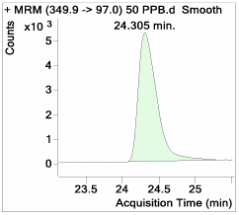
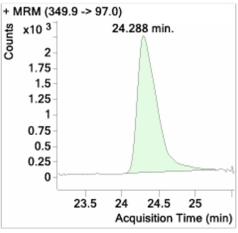
The LC/MS chromatograms of a chlorpyrifos positive soil sample along with the standard are shown in Figures 1 and 2 respectively. A total of 44 farmers were visited, their acaricide brand usage was recorded and composite soil samples were collected from each farmer, Kilifi South (12 samples), Kilifi North (17 samples) and Kaloleni (15 samples) sub- counties (Table 1). Twenty four out of the forty four samples tested positive for Chlorpyrifos (Table 2).
Table 2. Number of samples which tested positive and Negative for Chlorpyrifos from the selected dairy farms in Kilifi North, Kilifi South and Kaloleni Sub-Counties.

Sub-County

Positive samples

Negative samples

Total

Kilifi North

8

9

17

Kilifi south

5

7

12

Kaloleni

10

5

15

Total

24

20

44

Table 3 shows the levels of chlorpyrifos found in the soil samples that were collected. The concentration of Chlorpyrifos ranged from 0.145± 0.014 to 11.315±0.299 ppb, 0.853±0.078 to 10.496 ± 0.447ppb and 9.410± 0.411 to 18.903± 0.114ppb in Kaloleni, Kilifi North and Kilifi South respectively. The concentration of Chlorpyrifos between the sub-Counties and at different sites within the sub-County differed significantly (p<0.05) with Kilifi South Sub- County having the highest concentration of 9.410± 0.411 to 18.903± 0.114ppb.
Table 3. Concentration of Chlorpyrifos (ppb) in Soils collected from Kaloleni, Kilifi North and South Kilifi Sub-Counties.

Kaloleni

Kilifi North

Kilifi South

Samples ID

Concentration

Sample ID

Concentration

Sample ID

Concentration

KA5

5.420ᶦʰ ± 0.513

KN03

1.622ᵏ ± 0.167

KS7

9.410ᶠ ± 0.411

KA14

2.359ʲᵏ ± 0.206

KNB7

6.817ᵍ ± 0.224

KS8

16.755ᵇ ± 0.230

KA12

5.629ʰ ± 0.238

KN1

2.909ʲ ± 0.108

KS3

18.903ᵃ ± 0.114

KA1

11.315ᵈ ± 0.299

KN17

2.536ʲ ± 0.173

KS9

10.812ᵈᵉ ± 0.176

KAB3

10.457ᵉ ± 0.479

KNB6

1.721ᵏ ± 0.128

KS5

14.538ᶜ ± 0.184

KAB5

3.087ʲ ± 0.108

KNB12

4.946ʰᶦ ± 0.055

KAB2

0.145ᵐ ± 0.014

KN13

10.496ᵉ ± 0.447

KAB8

4.768ᶦ ± 0.151

KN10

2.740ʲ ± 0.153

KA3

1.918ᵏ ± 0.102

KN3

0.853ˡᵐ ± 0.078

KA11

0.971ˡ ± 0.136

Mean values (n=3) ± SEM. Values appended by different superscript letters within a row and column are significantly different (p<0.05).
Figure 1. LC/MS Chromatogram for chlorpyrifos standard.
Figure 2. LC/MS chromatogram for chlorpyrifos positive Soil sample.
4. Discussion
4.1. Acaricides Used by the Farmers
Because organophosphorus pesticides are less stable and persistent than organochlorine (OCs) pesticides and because the use of OCs is restricted , they were utilized in place of OCs. Acaricide residue examination of soil from various locations in the three chosen Sub-Counties (Kaloleni, Kilifi North, and Kilifi South) revealed OPs (CP) residue contamination. The presence of OPs residues varied significantly (p<0.05) among the three sub-counties, according to the study. Out of the 44 soil samples that were taken from various locations within the chosen three sub-Counties 24 samples (55%) had detectable CP residues (>limit of detection), and 20 samples (54%) had residues below the limit of detection. While Kaloleni and Kilifi North Sub-Counties had 10 positive samples (66.66%) and 9 positive samples (52.9%), respectively, Kilifi South had CP positive samples (5 samples out of 12 collected samples, 41%) with higher concentrations. This could to be accredited to the fact that Kilifi South is mostly zero grazing system characterized by high usage of the acaricides with most of the farmers using organophosphates containing acaricides. (Table 1). The concentration of CP in soil samples was high in Kilifi South sub-County (18.903± 0.114ppb) followed by Kaloleni sub-County (11.315± 0.299ppb) and finally Kilifi North sub- County (10.496± 0.447ppb).
4.2. Detection of Chlorpyrifos in Soil Using LC/MS
A total of 44 soil samples were sampled from Kaloleni, Kilifi North and Kilifi South Sub-counties and out of the 44 collected soil samples, 54% (24 samples) tested positive for CP, furthermore, the level of CP contamination of the soil samples from Kilifi south was higher as compared to the other two sub-counties as indicated by high concentration of the CP with the highest value at 18.903± 0.114, 11.315± 0.299 and 10.496± 0.447ppb for Kilifi South, Kaloleni and Kilifi North respectively. The LC/MS analysis showed clear peaks for chlorpyrifos in both the standard and the soil sample, with retention times clocking in at 24.305 and 24.288 minutes, respectively (Figures 1 and 2). These nearly identical retention times confirm that the compound in the soil extract is indeed chlorpyrifos, highlighting the analytical reliability thanks to its co-elution with the authentic standard. The signal intensity was significantly higher in the standard, around ~5 × 10³ counts, compared to the soil sample, which was about ~1.75 × 10³ counts. This difference reflects the lower concentration of chlorpyrifos residues found in the environmental matrix . This finding aligns perfectly with the study's goal of evaluating how pesticides persist in the agricultural soils of Kenya's coastal counties. The lower intensity in the soil sample hints at possible degradation or adsorption of chlorpyrifos, which is consistent with known environmental processes like microbial breakdown, leaching, and binding to organic matter . Most importantly, the detection of chlorpyrifos residues highlights its persistence and potential ecological risks, emphasizing the need for ongoing monitoring of organophosphate pesticides in areas where intensive farming is common . The practice of intensive zero and fenced grazing in Kilifi South County could have led to higher levels as compared to the other two sub-counties where the majority of the livestock keepers practice free range system. The undetected (<limit of detection) of CP in collected soil samples may have been caused by the low frequency of Duodip use by the farmers in Kaloleni Sub-County (1 farmer) and Kilifi North Sub-County (3 farmers) compared to the high frequency use in Kilifi South County (4 farmers), as shown in Table 1. In spite of the use of Steladone which is also an OP in Kilifi South sub-County (1 farmer), Kaloleni sub- County (2 farmers) and Kilifi North sub-county (2 farmers), it contains Chlorfenvinphos instead of CP as the active compound.
However, the investigation shows that additional acaricides are used in the three chosen sub-counties to reduce ticks and diseases carried by ticks (Table 1). As a result, positive samples were used to compute the site and/or sample level prevalence. In the sub-counties of Kilifi South, Kilifi North, and Kaloleni, 41%, 66.7%, and 52.9% of soil samples were positive for CP, respectively. Numerous studies conducted worldwide have reported the occurrence of organophosphate pesticide residues, particularly chlorpyrifos, in agricultural soils, indicating their persistence, potential for accumulation, and adverse effects on soil ecosystems and non-target organisms . The persistence of these residues in soil has been attributed to the strong affinity of chlorpyrifos for soil organic matter and soil particles, leading to tight adsorption and reduced mobility . Chlorpyrifos exhibits high adsorption coefficients, especially in soils with high organic carbon content, which enhances its binding to soil particles and organic fractions . This strong binding arises from Chlorpyrifos hydrophobic chemical nature, which favors partitioning into organic phases rather than dissolving in water . The persistence and degradation dynamics of chlorpyrifos in soil are influenced by soil characteristics such as type, moisture content, pH, and the presence of microplastics or amendments like biochar, which can alter microbial activity and degradation rates . Chlorpyrifos bound residues can remain in soil environments, where they may slowly release over time depending on environmental and soil conditions . The detection of chlorpyrifos residues in soils can be a real concern for soil ecosystem health. This pesticide disrupts microbial communities, slows down enzymatic activities, messes with nutrient cycling, and can even lower soil fertility . It's particularly harmful to non-target soil organisms, including essential earthworms and beneficial arthropods, which are vital for maintaining soil structure and functionality . Plus, its mobility in the soil raises the risk of contaminating both surface and groundwater resources, potentially putting aquatic organisms and human populations at risk through different pathways of environmental exposure . Therefore, finding these residues in Kilifi County signals a pressing need for ongoing environmental monitoring, cautious use of acaricides, and the adoption of sustainable tick management approaches.
The adsorption of chlorpyrifos to soil particles-especially in soils with high organic matter reduces its mobility and slows degradation, thereby increasing the likelihood of residues accumulating above MRLs in some samples . Recent studies demonstrate that interactions between chlorpyrifos and soil constituents (such as microplastics) can further alter degradation pathways and persistence outcomes, affecting half-lives and metabolite profiles . The residue pattern of CP observed in soil samples from the three sub-counties in the present study aligns with global findings showing continued detection of CP in agricultural soils where OP-based acaricides are in use. This is consistent with documented use patterns and persistence behavior reported in similar agronomic settings . These findings may reflect shifting pesticide use trends in some regions, with organophosphates being used as alternatives to organochlorines, similar to transitions noted in recent international monitoring and soil studies . The general CP residue pattern in soil samples from the three sub-counties as an acaricide based on OPs in this investigation is consistent with prior studies showing that farmers in these sub-counties employ OPs-based acaricides in addition to other acaricides . As a result, the current findings may point to changing tendencies in the use of OPs as an alternative to OCs, which are also seen in some recent research conducted in other nations, including Egypt and India . This study was one of the first attempts to explore soil contamination for CP in the three sub-counties, despite the fact that other research has been done to determine whether soil samples contain chlorpyrifos . In order to determine the precise concentration, status, and prevalence of OPs-based acaricides in Kilifi County, this study observed contamination that can serve as the foundation for further screening.
5. Conclusion and Recommendation
According to the results, soil samples taken from specific farms in Kilifi South County had the highest levels of chlorpyrifos residues indicating potential soil contamination. The most popular acaricide class in all three sub-counties is OP. Furthermore, it is crucial to note that the farmers in this sub-county employ a zero-grazing method for dairy production and regularly treat their cows with the chemical to keep ticks and tick-borne diseases at bay. However, because most livestock keepers use a free-range system, soil samples from Kilifi North and Kaloleni sub-Counties have the lowest levels of chlorpyrifos contamination. Therefore, in order to prevent environmental contamination from the perspective of environmental safety and health, it is necessary to improve safety procedures during applications and disposal.
Abbreviations

CP

Chlorpyrifos

LC/MS

Liquid Chromatography-Mass Spectrometry

GDP

Gross Domestic Product

Acknowledgments
For their cooperation during the base line survey and sample collection, the authors would like to thank the Kilifi County Veterinary Department for providing field officers, livestock farmers in Kilifi North, Kaloleni, and Kilifi South Sub-Counties. Dickson, Peter and Joseph for providing routes and reliable farmers’ contacts.
Author Contributions
Atego Norbert Adum: Conceptualization, Data curation, Formal Analysis, Resources, Writing – original draft
Gicharu Gibson: Conceptualization, Data curation, Formal Analysis, Methodology, Resources, Supervision, Writing – original draft
Carren Okeri: Conceptualization, Data curation, Formal Analysis, Methodology, Resources, Supervision, Writing – original draft
Peter Makan: Conceptualization, Data curation, Formal Analysis, Resources, Writing – original draft
Conflicts of Interest
The authors declare no conflict of interest.
References
[1] Ahmad, I., Asad, F., Khan, A., Khan, M., Khan, H. U. and Alotaibi, B. S., 2025. Acaricide Chemistry and Modes of Action. In Acaricides Resistance in Ticks: A Global Problem (pp. 49-76). Singapore: Springer Nature Singapore.
[2] Ali, U., Syed, J. H., Malik, R. N., (2022). Environmental fate and ecotoxicological impacts of chlorpyrifos: A review. Environmental Science and Pollution Research, 29, 36425–36449.
[3] Aroniadou-Anderjaska, V., Figueiredo, T. H., de Araujo Furtado, M., Pidoplichko, V. I. and Braga, M. F., 2023. Mechanisms of organophosphate toxicity and the role of acetylcholinesterase inhibition. Toxics, 11(10), p. 866.
[4] Bahta, S., Wanyoike, F., Kirui, L., Mensah, C., Enahoro, D., Karugia, J. and Baltenweck, I., 2023. Livestock sector transformation in Kenya: current state and projections for the future. Food systems transformation in Kenya: lessons from the past and policy options for the future. Part, 1, pp. 51-80.
[5] Bempah, C. K., Buah-Kwofie, A., & Denutsui, D. (2022). Occurrence of pesticide residues in milk and dairy products and associated health risks: A review. Environmental Monitoring and Assessment, 194, 1–18.
[6] Bhandari, A. et al. (2023). Assessment of organophosphate pesticide residues in environmental media of Araromi farm settlement, Osun State, Nigeria. PMC.
[7] Biochar study. (2024). Effect of biochar on soil microbial community, dissipation and uptake of chlorpyrifos and atrazine. Biochar.
[8] Bosu, S., Rajamohan, N., Al Salti, S., Rajasimman, M., & Das, P. (2024). Biodegradation of chlorpyrifos pollution from contaminated environment: Operating variables and mechanism. Environmental Research, 248, 118212.
[9] Caba-Flores, M. D., Martínez-Valenzuela, C., Cardenas-Tueme, M. and Camacho-Morales, A., 2023. Micro problems with macro consequences: accumulation of persistent organic pollutants and microplastics in human breast milk and in human milk substitutes. Environmental Science and Pollution Research, 30(42), pp. 95139-95154.
[10] Chen, L., Qian, Y., Wang, X., Jia, Q., Weng, R., Zhang, X., Li, Y. and Qiu, J., 2024. A nationwide characterization of organochlorine pesticides (OCPs) in livestock and poultry food products across China: Residual levels, origin and the associated health risks. Chemosphere, 364, p. 142999.
[11] Cheng, R., Wang, Q. and Wei, L., 2022. Income growth, employment structure transition and the rise of modern markets: The impact of urbanization on residents’ consumption of dairy products in China. PLoS One, 17(4), p. e0267006.
[12] Dauda, E. and Kuka, T., 2021. Animal health. Agricultural Technology for Colleges, pp. 355-369.
[13] Ding, L., Wang, Y., Ju, H., Tang, D. W. S., Geissen, V., & Yang, X. (2024). Chlorpyrifos degradation and its impacts on phosphorus bioavailability in microplastic-contaminated soil. Ecotoxicology and Environmental Safety, 277, 116378.
[14] European Commission. (2023). EU pesticide database: Maximum residue levels (MRLs) regulation (EC) No 396/2005. Brussels: European Commission.
[15] European Commission. (Regulation (EC) No 396/2005 and updates). Maximum residue levels for pesticides in or on food and feed. (Note: Recent amendments continue to update limits and methods of determination.).
[16] European Food Safety Authority (EFSA). (2019). Peer review of the pesticide risk assessment of the active substance chlorpyrifos. EFSA Journal, 17(5), 5809.
[17] European Food Safety Authority (EFSA). (2023). Pesticide risk assessment and dietary exposure evaluation report. EFSA Journal, 21(7), 1–45.
[18] FAO/WHO. (2024). Chlorpyrifos: Fate and behavior in the environment (Technical report).
[19] Faraj, T. K., El-Saeid, M. H., Najim, M. M. M., & Chieb, M. (2024). The impact of pesticide residues on soil health for sustainable vegetable production in arid areas. Separations, 11(2), 46.
[20] Food and Agriculture Organization & World Health Organization (FAO & WHO). (2022). Pesticide residues in food Joint FAO/WHO Meeting on Pesticide Residues (JMPR) report. Rome: FAO.
[21] Food and Agriculture Organization (FAO). (2022). Guidelines on acaricide use and resistance management in livestock. Rome: FAO.
[22] Food and Agriculture Organization (FAO). (2022). Guidelines on pesticide management and residue monitoring in livestock systems. Rome: FAO.
[23] Food and Agriculture Organization (FAO). (2022). Kenya livestock sector analysis: Contribution to economy and livelihoods. Rome: FAO.
[24] Ghada Salama, Alaa El Gindy & Eman A. Abdel Hameed (2022) The use of experimental design for optimisation of QuEChERS extraction of commonly used pesticides in Egyptian soil and drainage water and their determination by GC/MS, International Journal of Environmental Analytical Chemistry, 102: 16, 4238-4249,
[25] Guo, W., Pan, B., Sakkiah, S., Yavas, G., Ge, W., Zou, W., Tong, W. and Hong, H., 2019. Persistent organic pollutants in food: contamination sources, health effects and detection methods. International journal of environmental research and public health, 16(22), p. 4361.
[26] Kenya National Bureau of Statistics (KNBS). (2023). Economic survey 2023. Nairobi: KNBS.
[27] Khalaf, E. M., Taherian, M., Almalki, S. G., Asban, P., Kareem, A. K., Alhachami, F. R., Almulla, A. F., Romero-Parra, R. M., Jawhar, Z. H., Kiani, F. and Noroozi Manesh, I., 2024. Relationship between exposure to heavy metals on the increased health risk and carcinogenicity of urinary tract (kidney and bladder). Reviews on environmental health, 39(3), pp. 539-549.
[28] Kim, K. H., Kabir, E., & Jahan, S. A. (2021). Exposure to pesticides and associated human health effects. Science of the Total Environment, 575, 525–535.
[29] Kiran, M., Sindhu, R., Raju, N. S., & Supreeth, M. (2025). Recent advances in biological removal of chlorpyrifos from the environment. International Journal of Environmental Research, 19, 187.
[30] Makwarela, T. G., Seoraj-Pillai, N. and Nangammbi, T. C., 2025. Tick control strategies: Critical insights into chemical, biological, physical, and integrated approaches for effective hard tick management. Veterinary sciences, 12(2), p. 114.
[31] Microplastic study. (2024). Chlorpyrifos degradation and its impacts on phosphorus bioavailability in microplastic-contaminated soil. Ecotoxicology and Environmental Safety.
[32] Nyabiba, A. M., 2022. Microbial Degradation of Chlorpyrifos Residues and Their Effects on Calcium Levels in Fresh and Processed Milk in Nakuru County, Kenya (Doctoral dissertation, Kenyatta University).
[33] Ogola, J. O., 2023. Quantification of Organochlorine Pesticide Residue in Water and Sediments of River Kibos-Nyamasaria Kisumu, Kenya (Doctoral dissertation, Kisii University).
[34] Paddy soil study. (2022). Fate of chlorpyrifos bound residues in paddy soils: Release, transformation, and phytoavailability. Environmental International.
[35] Qi, S. Y., Xu, X. L., Ma, W. Z., Deng, S. L., Lian, Z. X. and Yu, K., 2022. Effects of organochlorine pesticide residues in maternal body on infants. Frontiers in Endocrinology, 13, p. 890307.
[36] Sathish Kumar, J. K., Monica, S. S., Vinothkumar, B., Suganthi, A. and Paramasivam, M., 2024. Impact of Pesticide Exposure on Environment and Biodiversity: A Review. Agricultural Reviews, 45(1).
[37] Sawant, C. G., Sharma, L. D. and Sadhukhan, R., 2022. Pesticides, its residues and environment. Pesticide Residues, 11.
[38] Sifuna, D. B., Pembere, A., Lagat, S., Barasa, G., Manda, T., Ngeno, E., Ssebugere, P., Nagawa, C. B., Kyarimpa, C. and Omwoma, S., 2025. Acaricides in agriculture: balancing livestock health and environmental well-being in Trans-Nzoia County, Kenya. Environmental Science and Pollution Research, 32(13), pp. 8070-8083.
[39] Tibebu, A., Tamrat, H. and Bahiru, A., 2024. Impact of food safety on global trade. Veterinary Medicine and Science, 10(5), p. e1585.
[40] Tubb, C. and Seba, T., 2021. Rethinking food and agriculture 2020-2030: the second domestication of plants and animals, the disruption of the cow, and the collapse of industrial livestock farming. Industrial Biotechnology, 17(2), pp. 57-72.
[41] United Nations Environment Programme (UNEP). (2023). Global chemicals outlook II: From legacy to innovative solutions. Nairobi: UNEP.
[42] Wepukhulu, M., Wachira, P., Huria, N., Sifuna, P., Essuman, S., & Asamba, M. (2024). Optimization of growth conditions for chlorpyrifos-degrading bacteria in farm soils in Nakuru County, Kenya. BioMed Research International, 2024, Article 1611871.
[43] Wołejko, E., Łozowicka, B., Jabłońska-Trypuć, A., Pietruszyńska, M., & Wydro, U. (2022). Chlorpyrifos occurrence and toxicological risk assessment: A review. International Journal of Environmental Research & Public Health, 19(19), 12209.
[44] World Bank. (2023). World development indicators: Urban population data for Kenya. Washington, DC: World Bank.
[45] World Health Organization (WHO). (2023). Pesticide residues in food and health risk assessment report. Geneva: WHO.
Cite This Article
  • APA Style

    Adum, A. N., Gibson, G., Okeri, C., Makan, P. (2026). Determination of Chlorpyrifos Residues in Organophosphate-Contaminated Soils from Selected Dairy Farms in Kilifi County, Kenya Using Liquid Chromatography-Mass Spectrometry (LC/MS). Science Journal of Analytical Chemistry, 14(3), 36-44. https://doi.org/10.11648/j.sjac.20261403.11

    Copy | Download

    ACS Style

    Adum, A. N.; Gibson, G.; Okeri, C.; Makan, P. Determination of Chlorpyrifos Residues in Organophosphate-Contaminated Soils from Selected Dairy Farms in Kilifi County, Kenya Using Liquid Chromatography-Mass Spectrometry (LC/MS). Sci. J. Anal. Chem. 2026, 14(3), 36-44. doi: 10.11648/j.sjac.20261403.11

    Copy | Download

    AMA Style

    Adum AN, Gibson G, Okeri C, Makan P. Determination of Chlorpyrifos Residues in Organophosphate-Contaminated Soils from Selected Dairy Farms in Kilifi County, Kenya Using Liquid Chromatography-Mass Spectrometry (LC/MS). Sci J Anal Chem. 2026;14(3):36-44. doi: 10.11648/j.sjac.20261403.11

    Copy | Download

  • @article{10.11648/j.sjac.20261403.11,
      author = {Atego Norbert Adum and Gicharu Gibson and Carren Okeri and Peter Makan},
      title = {Determination of Chlorpyrifos Residues in Organophosphate-Contaminated Soils from Selected Dairy Farms in Kilifi County, Kenya Using Liquid Chromatography-Mass Spectrometry (LC/MS)},
      journal = {Science Journal of Analytical Chemistry},
      volume = {14},
      number = {3},
      pages = {36-44},
      doi = {10.11648/j.sjac.20261403.11},
      url = {https://doi.org/10.11648/j.sjac.20261403.11},
      eprint = {https://article.sciencepublishinggroup.com/pdf/10.11648.j.sjac.20261403.11},
      abstract = {Organophosphate acaricides are widely used in livestock production to control ticks and tick-borne diseases, but frequent use of chlorpyrifos-based products may contaminate soils through residue accumulation. This study determined chlorpyrifos residues in soils from selected dairy farms in Kilifi County, Kenya. A cross-sectional survey was conducted among Forty four dairy farmers using questionnaires, interviews, and field observations to document acaricide brands, active ingredients, and application frequency. Farms were purposively selected based on reported use of chlorpyrifos-containing acaricides. Forty-four composite soil samples were collected from cattle spraying areas, drainage points, and nearby grazing sites in Kilifi South, Kaloleni and Kilifi North sub-counties. Samples were extracted and analyzed using liquid chromatography–mass spectrometry (LC-MS). Data were analyzed in GenStat using descriptive statistics and one-way ANOVA. Commonly used acaricides included Duodip, Tixfix, Vectoclor, Steladone, and Cynotrix. Most farmers applied acaricides twice weekly. Chlorpyrifos was detected in 24 of 44 samples, representing 54.5%. Mean concentrations differed among sub-counties, with Kilifi South recording the highest level at 18.903±0.114 ppb, followed by Kaloleni at 11.88±0.299 ppb and Kilifi North at 10.496±0.0447 ppb. The findings indicate soil contamination and support routine monitoring, farmer training, and stricter regulation of chlorpyrifos-based acaricides.},
     year = {2026}
    }
    

    Copy | Download

  • TY  - JOUR
    T1  - Determination of Chlorpyrifos Residues in Organophosphate-Contaminated Soils from Selected Dairy Farms in Kilifi County, Kenya Using Liquid Chromatography-Mass Spectrometry (LC/MS)
    AU  - Atego Norbert Adum
    AU  - Gicharu Gibson
    AU  - Carren Okeri
    AU  - Peter Makan
    Y1  - 2026/07/17
    PY  - 2026
    N1  - https://doi.org/10.11648/j.sjac.20261403.11
    DO  - 10.11648/j.sjac.20261403.11
    T2  - Science Journal of Analytical Chemistry
    JF  - Science Journal of Analytical Chemistry
    JO  - Science Journal of Analytical Chemistry
    SP  - 36
    EP  - 44
    PB  - Science Publishing Group
    SN  - 2376-8053
    UR  - https://doi.org/10.11648/j.sjac.20261403.11
    AB  - Organophosphate acaricides are widely used in livestock production to control ticks and tick-borne diseases, but frequent use of chlorpyrifos-based products may contaminate soils through residue accumulation. This study determined chlorpyrifos residues in soils from selected dairy farms in Kilifi County, Kenya. A cross-sectional survey was conducted among Forty four dairy farmers using questionnaires, interviews, and field observations to document acaricide brands, active ingredients, and application frequency. Farms were purposively selected based on reported use of chlorpyrifos-containing acaricides. Forty-four composite soil samples were collected from cattle spraying areas, drainage points, and nearby grazing sites in Kilifi South, Kaloleni and Kilifi North sub-counties. Samples were extracted and analyzed using liquid chromatography–mass spectrometry (LC-MS). Data were analyzed in GenStat using descriptive statistics and one-way ANOVA. Commonly used acaricides included Duodip, Tixfix, Vectoclor, Steladone, and Cynotrix. Most farmers applied acaricides twice weekly. Chlorpyrifos was detected in 24 of 44 samples, representing 54.5%. Mean concentrations differed among sub-counties, with Kilifi South recording the highest level at 18.903±0.114 ppb, followed by Kaloleni at 11.88±0.299 ppb and Kilifi North at 10.496±0.0447 ppb. The findings indicate soil contamination and support routine monitoring, farmer training, and stricter regulation of chlorpyrifos-based acaricides.
    VL  - 14
    IS  - 3
    ER  - 

    Copy | Download

Author Information
  • Department of Chemistry and Biological Sciences, Technical University of Mombasa, Mombasa, Kenya

  • Department of Chemistry and Biological Sciences, Technical University of Mombasa, Mombasa, Kenya

  • Department of Chemistry and Biological Sciences, Technical University of Mombasa, Mombasa, Kenya

  • Market Surveillance Directorate, Kenya Bureau of Standards, Mombasa, Kenya

  • Abstract
  • Keywords
  • Document Sections

    1. 1. Introduction
    2. 2. Materials and Methods
    3. 3. Results
    4. 4. Discussion
    5. 5. Conclusion and Recommendation
    Show Full Outline
  • Abbreviations
  • Acknowledgments
  • Author Contributions
  • Conflicts of Interest
  • References
  • Cite This Article
  • Author Information