Abstract
This study appraises the adequacy, functionality, and sustainability of infrastructural facilities at The Polytechnic, Ibadan, while examining their implications for environmental balance and institutional performance. The objectives were to assess the current state of campus infrastructure, identify maintenance and environmental management challenges, evaluate their effects on academic and extracurricular activities. Using stratified, simple random techniques, data were collected from 342 respondents comprising students, lecturers, administrative, and non-academic staff through questionnaires, interviews, and field observations. Descriptive statistics, Chi-square tests, correlation, and regression analyses were employed. Findings reveal considerable infrastructural disparities: classrooms (mean = 3.32) and road networks (mean = 3.49) were moderately adequate, while drainage systems (mean = 1.99), ICT facilities (mean = 2.68), and laboratories (mean = 2.96) were inadequate. The grand mean (2.56) confirmed substandard overall infrastructure, leading to rejection of the null hypothesis. Maintenance practices were inconsistent, with 45.9% reporting infrequent repairs; major constraints included inadequate funding, weak institutional policy, and rising population pressure (χ2 = 142.67, p = 0.000). Environmental management was rated fair, with waste disposal (40.1% ineffective) and poor drainage significantly contributing to environmental hazards. Infrastructure quality showed a strong positive correlation with academic and extracurricular performance (r = 0.368, p < 0.001), while regression analysis indicated that laboratories, libraries, sports facilities, and electricity supply were significant predictors of student outcomes. The study concludes that infrastructural inadequacies and weak environmental sustainability practices undermine institutional effectiveness. Strengthening governance structures, enhancing funding mechanisms, improving maintenance systems, and adopting sustainable environmental practices are critical for promoting campus resilience and improved learning environments.
|
Published in
|
Science Journal of Education (Volume 14, Issue 2)
|
|
DOI
|
10.11648/j.sjedu.20261402.12
|
|
Page(s)
|
39-49 |
|
Creative Commons
|

This is an Open Access article, distributed under the terms of the Creative Commons Attribution 4.0 International License (http://creativecommons.org/licenses/by/4.0/), which permits unrestricted use, distribution and reproduction in any medium or format, provided the original work is properly cited.
|
|
Copyright
|
Copyright © The Author(s), 2026. Published by Science Publishing Group
|
Keywords
Infrastructural Facilities, Environmental Balancing, Campus Sustainability, Academic Performance
1. Introduction
Institutions of higher learning play a pivotal role in fostering intellectual development, innovation, and national progress. Their effectiveness depends largely on the adequacy, quality, and functionality of infrastructure, alongside the institution’s ability to maintain a sustainable, environmentally balanced campus. Functional infrastructure enhances academic activities, research productivity, and the overall well-being of users, while environmental balancing ensures that development occurs in harmony with ecological processes, reducing the institution’s environmental footprint and creating a conducive learning atmosphere
| [23] | Shriberg, M. (2002). Institutional assessment tools for sustainability in higher education. International Journal of Sustainability in Higher Education, 3(3), 254–270. |
| [24] | Ofori-Boadu, V., Mensah, S., and Amponsah, K. (2020). Campus sustainability practices in African universities. Journal of Environmental Education, 15(2), 71–88. |
[23, 24]
. As global higher education embraces sustainability-driven approaches, there is an increasing expectation that campuses integrate infrastructure development with environmentally responsible practices.
Infrastructure in tertiary institutions comprises academic buildings, libraries, laboratories, access roads, hostel facilities, recreational spaces, and administrative structures. High-speed internet, e-learning resources, and smart classrooms are examples of digital infrastructure that has become essential in today's higher education. Around the world, universities that combine sustainable environmental systems with contemporary, well-maintained infrastructure report increased academic achievement, less ecological degradation, and improved institutional reputation
| [20] | Velazquez, L., Munguia, N., Platt, A., and Taddei, J. (2006). Sustainable university model: Assessment of indicators. Journal of Cleaner Production, 14(9-11), 963–972. |
| [22] | World Bank. (2019). Sustainable campus development strategies. Washington, DC: World Bank. |
[20, 22]
. On the other hand, poor infrastructure impairs research capabilities, disrupts instruction, and reduces student engagement.
The state of tertiary institutions' infrastructure continues to be a significant problem in developing nations like Nigeria. Congested classrooms, deteriorating laboratories, overstretched utilities, and unreliable digital systems are the results of rapid population growth, inadequate funding, and a poor maintenance culture. Many institutions still face challenges with infrastructural deterioration, unstable power supplies, ineffective drainage, and insufficient water and sanitation systems, despite the fact that interventions from organizations such as TETFUND have produced isolated improvements
| [16] | Nwosu, C., and Osagie, E. (2022). TETFUND interventions and infrastructural development in Nigerian tertiary institutions. Journal of Educational Policy, 12(1), 40–57. |
[16]
. These gaps in infrastructure have a direct impact on academic performance, restrict opportunities for hands-on learning, and lower the overall efficacy of the institution.
These domestic issues are reflected in the Polytechnic, Ibadan, one of Nigeria's top technical institutions. Since its founding in 1970, the institution has seen substantial growth in both its student body and academic offerings, but infrastructure development has not kept up with this growth. Inadequate workshop equipment, crowded lecture halls, erratic electricity supplies, inadequate drainage systems, a lack of recreational areas, and dispersed waste dumps have all grown to be urgent issues that need immediate attention. The practical training that polytechnic education is renowned for is undermined by the frequent power outages that affect laboratories and workshops. The need for renewable energy alternatives is also highlighted by the fact that a high reliance on generators is unsustainable given the rising cost of fuel.
A modern tertiary institution's ability to function depends equally on environmental balance. Campuses are expected to embrace green technologies, lower waste generation, enhance drainage systems, protect natural landscapes, and encourage sustainable resource use as worries about pollution, climate change, and ecological degradation grow on a global scale
| [15] | Lozano, R. (2010). Diffusion of sustainable development in universities’ curricula. Journal of Cleaner Production, 18(7), 703–711. |
[15]
. In academic settings, good environmental management improves aesthetic quality, lowers health risks, and increases student concentration. The Polytechnic, Ibadan is one of many institutions that lack proper sanitation facilities, organized waste management systems, environmental awareness campaigns, and environmental law enforcement. Poor landscaping techniques, careless trash disposal, and flooding during rainy seasons endanger campus safety and the environment
| [3] | Adeyemi, I., and Yusuf, T. (2020). Environmental management practices in Nigerian polytechnics: Challenges and opportunities. International Journal of Environmental Planning, 11(2), 59–74. |
[3]
.
These difficulties underscore the necessity of an integrated evaluation of the institution's environmental balance and infrastructure. Although general university infrastructure deficiencies have been the subject of Nigerian literature, polytechnics, which have different mandates in technological and vocational training, have received less attention
| [9] | Chukwuma, S. (2017). Environmental sustainability and polytechnic education in Nigeria. International Journal of Technical Education and Sustainability, 8(3), 50–63. |
[9]
. Fewer studies have directly connected environmental sustainability practices on polytechnic campuses with adequate infrastructure. This disparity is important because environmental systems and infrastructure are closely related: inadequate environmental management speeds up the deterioration of infrastructure, while poorly designed infrastructure can exacerbate environmental issues. Long-term institutional sustainability thus requires a comprehensive understanding of this relationship.
Given these shortcomings, the current study intends to evaluate The Polytechnic, Ibadan's infrastructure in terms of environmental balancing in order to create sustainable strategies that will enhance instruction, learning, and campus wellbeing. The goal of the study is to present an evidence-based understanding of the state of infrastructure facilities today, the obstacles to their efficient development and upkeep, and the degree to which academic and extracurricular activities are impacted by infrastructure conditions. Additionally, it assesses how well the institution's environmental management procedures conform to sustainability principles. The study offers insightful information through this integrated assessment that can help direct institutional planning, facilitate the adoption of sustainable campus development techniques, and foster a more robust and healthy learning environment.
Ultimately, improving infrastructure and environmental balancing at The Polytechnic, Ibadan, is not only essential for academic excellence but also crucial for maintaining the institution’s competitiveness in Nigeria’s higher education sector. This study, therefore, serves as a critical step toward informing policy decisions, strengthening institutional governance, and promoting sustainable practices that will benefit students, staff, administrators, and the broader community.
2. Literature Review
Infrastructural facilities are foundational to the effective operation of any society, playing a pivotal role in the development and sustainability of sectors such as education, healthcare, transportation, and industry. In higher education institutions, infrastructural facilities encompass the physical and organizational structures necessary for academic, administrative, and social functions, including classrooms, laboratories, libraries, hostels, administrative buildings, transport networks, water supply systems, and electricity infrastructure
| [1] | Abdullahi, I. (2017). Evaluation of facilities performance on students’ satisfaction in northern Nigerian Universities (Doctoral dissertation, Universiti Tun Hussein Onn Malaysia). |
| [10] | Dime, I. A. (2025). The Influence of the Application of Information and Communication Technologies in Library and Information Practice in Nigeria from 1962-2022. Gloryland International Journal of Library and Information Science and Education (GIJLISE). 2(5). Pp 34-67. |
[1, 10].
The adequacy and efficiency of these facilities directly influence the quality of education, student performance, and institutional reputation.
In educational contexts, "infrastructure" refers broadly to the necessary utilities, services, and physical structures that make it possible for both academic and extracurricular activities to run smoothly. According to Adebayo and Aluko
| [4] | Adebayo, A., and Aluko, F. (2020). Infrastructural development and academic performance in Nigerian universities. Educational Research Journal, 13(1), 40–55. |
[4]
, while poor infrastructure is a significant obstacle to effective learning, well-developed infrastructure improves academic performance, increases student retention, and favorably affects institutional rankings. This viewpoint is consistent with the difficulties seen at The Polytechnic, Ibadan, where inadequate technological and physical resources have impeded the provision of education at its best. Transportation infrastructure, for instance, significantly affects student mobility. It was highlighted that poor road networks and insufficient campus transport systems contribute to absenteeism, lateness, and decreased academic efficiency. Similarly, ICT integration has emerged as a critical factor in institutional efficiency.
The researchers found that automated student records
| [6] | Ajah, I. A., and Chigozie-Okwum, C. C. (2019). ICT and administrative effectiveness of University in Nigeria: A connect between leadership and knowledge. AFRREV STECH: An International Journal of Science and Technology, 8(2), 64-85. |
[6],
online learning platforms, and smart classrooms improve administrative processes and learning outcomes, underscoring the need for modern technological infrastructure at Nigerian polytechnics.
Research identifies several critical categories of higher education infrastructure. Academic facilities such as classrooms, lecture halls, laboratories, and libraries directly influence student engagement and research capacity. Administrative infrastructure, including ICT-enabled offices and faculty management systems, underpins institutional governance and operational efficiency
| [6] | Ajah, I. A., and Chigozie-Okwum, C. C. (2019). ICT and administrative effectiveness of University in Nigeria: A connect between leadership and knowledge. AFRREV STECH: An International Journal of Science and Technology, 8(2), 64-85. |
[6]
. Residential and welfare facilities, such as hostels, are linked to academic performance, with well-maintained accommodations reducing transportation stress and enhancing access to campus resources. Transport and road networks facilitate mobility within and beyond campuses, with deficiencies leading to congestion and restricted access. Utility and environmental facilities, encompassing water supply, electricity, and waste management systems, are integral to sustainable campus operations.
Quality education is contingent upon the availability and adequacy of infrastructural facilities. Beyond mere provision, infrastructure must be relevant to course requirements, sufficient for the student population, and aligned with contemporary academic and industrial demands
| [21] | World Bank. (2018). Global infrastructure outlook for higher education. Washington, DC: World Bank. |
[21]
. Student-friendly environments, including well-ventilated classrooms, recreational spaces, and accessible facilities, have been linked to enhanced motivation, engagement, and academic performance. Regular maintenance is equally critical, as infrastructure deterioration negatively impacts teaching, learning, and safety, emphasizing the need for structured upkeep and sustainable resource management
| [13] | Federal Ministry of Education. (2019). Standards for tertiary institution infrastructure in Nigeria. Abuja: FME Publications. |
[13]
. Compliance with international standards further ensures competitiveness, global collaboration, and accreditation recognition
| [18] | OECD. (2020). Infrastructure and quality education: Policy insights. Paris: OECD Publishing. |
| [19] | UNESCO. (2021). Global standards for tertiary education infrastructure. Paris: UNESCO Publications. |
[18, 19]
.
On the other hand, inadequate infrastructure severely reduces the quality of education. Inadequate labs, packed classrooms, and a lack of educational resources impair student performance and reduce competitiveness in international settings
| [8] | Atobauka, I. S., and Jacob, O. N. (2021). Inadequate infrastructural facilities in Nigerian public universities: causes, effects and ways forwards. American Journal of Social and Humanitarian Research, 2(4), 92-102. |
[8]
. The study of Ejiogu pointed out that while poor research infrastructure limits academic productivity and technological innovation, deteriorating facilities impede the development of critical thinking and practical skills
| [12] | Ejiogu, A. (1997). Research infrastructure and innovation in Nigeria. Ibadan: University Press. |
[12].
As a result, graduates frequently lack practical skills, which lowers their employability and limits their ability to contribute to the development of the country.
Polytechnics in Nigeria face systemic infrastructural challenges, including inadequate funding, poor maintenance, overpopulation, unstable power supply, outdated equipment, bureaucratic delays, and limited public-private partnerships
| [8] | Atobauka, I. S., and Jacob, O. N. (2021). Inadequate infrastructural facilities in Nigerian public universities: causes, effects and ways forwards. American Journal of Social and Humanitarian Research, 2(4), 92-102. |
[8]
. These factors collectively constrain the ability of institutions to provide quality technical education. At The Polytechnic, Ibadan, these challenges manifest in overcrowded lecture halls, insufficient hostel accommodations, outdated laboratories, and unreliable electricity. Addressing these constraints necessitates increased investment, structured maintenance programs, enhanced policy coherence, and collaboration with private sector stakeholders to improve educational outcomes and institutional sustainability.
3. Materials and Methods
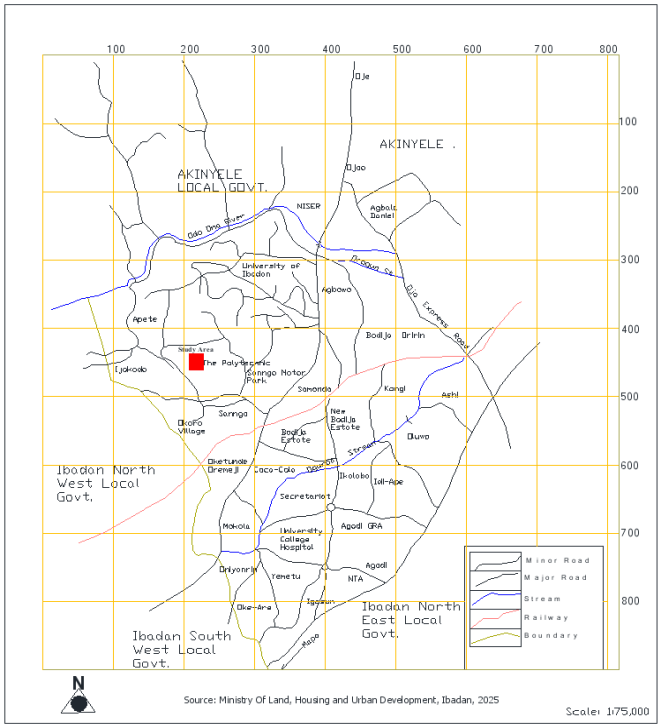
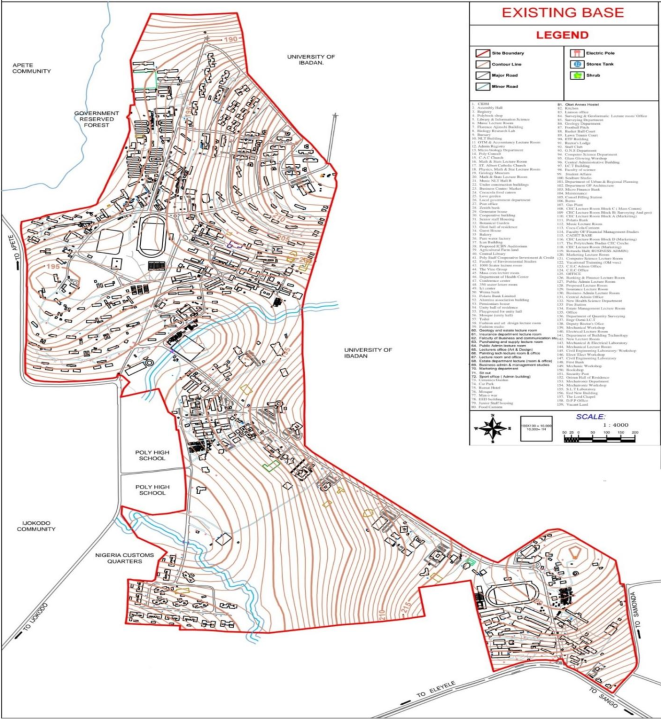
The study was conducted within The Polytechnic, Ibadan, a large tertiary institution located in Ibadan, Oyo State, Nigeria (
Figures 1 and 2). The campus consists of academic buildings, administrative offices, workshops, hostels, recreational spaces, road networks, drainage systems, green areas, and various utilities that collectively support teaching, learning, research, and campus administration. The institution’s diverse physical environment made it an appropriate setting for analysing the condition and distribution of infrastructural facilities and environmental management practices.
Figure 1. The Polytechnic, Ibadan within Ibadan North Local Government.
Figure 2. Base Map of The Polytechnic, Ibadan.
A descriptive survey research design was adopted to enable a systematic examination of the existing infrastructural conditions and their relationship with campus environmental quality. This design allowed the study to explore current realities without manipulating any variables. Primary data were collected through structured questionnaires administered to students, academic staff, administrative personnel, and non-academic workers. The questionnaire captured perceptions of facility adequacy, maintenance effectiveness, environmental quality, and challenges associated with infrastructure utilisation. In addition, key-informant interviews were conducted with facility managers, maintenance supervisors, unit heads, and environmental officers to obtain deeper qualitative insights into the operation, challenges, and sustainability of institutional facilities. Direct field observations were carried out across the campus to assess the physical state of buildings, road surfaces, drainage channels, green areas, water supply points, power systems, and waste management facilities. A standardised observation checklist guided this process to ensure consistency and accuracy. Institutional documents, government publications, project records, and scholarly literature were also consulted to provide secondary data that complemented the primary information.
The study population consisted of students, lecturers, administrative staff, and non-academic personnel within the institution. Based on official records for the 2023/2024 academic session, the population included 15,192 students and 277 academic staff. A scientifically justified sample size of 342 respondents was used. Of this number, 304 were students, representing approximately two percent of the student population, which is considered adequate for large, relatively homogeneous groups. Twenty-eight lecturers were sampled, representing ten percent of the academic staff strength, to ensure sufficient representation of academic personnel whose facility needs differ from those of students. Three administrative staff were included due to their central role in policy and planning, while seven non-academic personnel were selected because of their involvement in sanitation, maintenance, and campus services.
A combination of sampling techniques ensured representativeness and depth. Stratified sampling was used to divide the population into major groups: students, lecturers, administrative staff, and non-academic workers, so that each segment of the campus community was represented. Simple random sampling was then employed to select respondents within the larger strata, particularly students and academic staff, to eliminate selection bias. Purposive sampling was applied for administrative and non-academic staff whose professional responsibilities provided essential insights into campus infrastructure and environmental operations.
All collected data were subjected to both descriptive and inferential statistical analysis. Descriptive statistics such as frequencies, percentages, and mean scores were used to summarise responses regarding facility adequacy, environmental conditions, and maintenance performance. Weighted mean analysis was conducted to quantify the adequacy of various infrastructural components based on Likert-scale responses. Inferential analysis included chi-square tests used to determine whether significant relationships existed between categorical variables, such as respondent groups and their assessment of facility adequacy. Correlation analysis was carried out to explore the strength and direction of relationships between infrastructural conditions and academic or environmental outcomes. Regression analysis was employed to determine the predictive influence of infrastructure quality on student engagement and campus productivity indicators. All statistical analyses were performed using SPSS Version 20, while Microsoft Excel supported data cleaning, coding, and visual representation. GIS-enabled tools available through the Kobo Toolbox platform provided spatial referencing for observed infrastructural elements across the campus. This methodological approach ensured a rigorous and comprehensive appraisal of infrastructural facilities and environmental management practices within The Polytechnic, Ibadan, thereby enhancing the validity and reliability of the study’s findings.
4. Findings and Discussion
Demographic Characteristics of Respondents
The demographic results reflect a representative mix of campus users, comprising 342 respondents drawn from both staff and students. Females accounted for a slightly higher percentage (51.8%) than males (48.2%), while most respondents fell within the 18–34 age bracket, consistent with the youthful profile of tertiary institutions. Students accounted for 88.9% of participants, offering firsthand experiential insights into infrastructural and environmental conditions, whereas staff responses provided administrative and operational perspectives.
Adequacy of Infrastructural Facilities
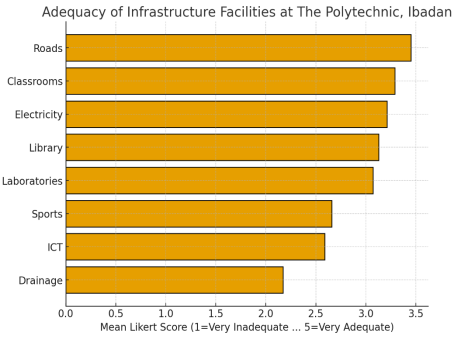
The assessment of infrastructural facilities revealed considerable variation in students’ academic performance across campus utilities. Classrooms and road networks were among the most adequate, with weighted means of 3.32 and 3.49, respectively, suggesting moderate functionality capable of supporting daily academic activities (
Table 1 and
Figure 3). This implies the likelihood of congestion and stress due to the increasing enrollment of students. Electricity supply (mean = 3.17) and library facilities (mean = 3.06) appeared moderately adequate, yet their performance still fell short of optimal standards necessary for a technologically competitive academic environment. Laboratories, sports facilities, and drainage systems were identified as the most inadequate, with drainage scoring the lowest mean of 1.99. The critical state of drainage infrastructure aligns with findings by Ajah, and Chigozie-Okwum, who observed that poor drainage systems in tertiary campuses exacerbate flooding and structural deterioration
| [6] | Ajah, I. A., and Chigozie-Okwum, C. C. (2019). ICT and administrative effectiveness of University in Nigeria: A connect between leadership and knowledge. AFRREV STECH: An International Journal of Science and Technology, 8(2), 64-85. |
[6]
. The grand weighted mean of 2.56 indicates overall infrastructural inadequacy, reinforcing the notion that existing facilities do not sufficiently meet the institution’s academic and welfare demands. This result resonates with broader infrastructural analyses of Nigerian tertiary institutions, where deteriorating physical assets and limited investment remain persistent challenges
| [8] | Atobauka, I. S., and Jacob, O. N. (2021). Inadequate infrastructural facilities in Nigerian public universities: causes, effects and ways forwards. American Journal of Social and Humanitarian Research, 2(4), 92-102. |
[8]
.
Table 1. Adequacy of Campus Facilities for Students’ Needs.
Facilities | Very Adequate (5) | Adequate (4) | Neutral (3) | Inadequate (2) | Very Inadequate (1) | N | ΣF×W | Mean |
Classrooms | 1 | 211 | 22 | 101 | 7 | 342 | 1,134 | 3.320 |
Laboratories | 1 | 116 | 139 | 78 | 8 | 342 | 1,012 | 2.960 |
Library Facilities | 0 | 123 | 146 | 67 | 6 | 342 | 1,047 | 3.060 |
Electricity Supply | 1 | 160 | 99 | 73 | 9 | 342 | 1,085 | 3.170 |
Road Network | 0 | 232 | 34 | 74 | 2 | 342 | 1,192 | 3.490 |
Drainage System | 0 | 15 | 34 | 288 | 5 | 342 | 679 | 1.990 |
Sports and Recreational Spaces | 0 | 107 | 48 | 150 | 37 | 342 | 939 | 2.750 |
ICT Facilities (Internet, e-Learning) | 0 | 73 | 75 | 175 | 19 | 342 | 916 | 2.680 |
Grand Weighted Mean = 2.56
Source: Field Survey, 2025
Figure 3. Adequacy of Infrastructural Facilities at The Polytechnic, Ibadan.
Maintenance Culture and Institutional Commitment
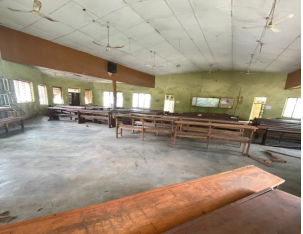
The study revealed a deficient maintenance culture, with 45.9% of respondents reporting that maintenance activities were rarely executed on campus existing facilities (
Figure 4). Only 21.6% indicated regular maintenance despite the existence of an institutional maintenance unit, which was also in a deplorable state (
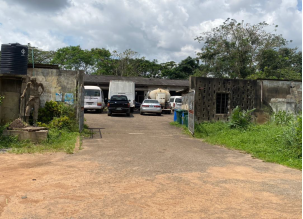
Figure 5). Respondents attributed infrastructural decline mainly to inadequate funding from the government, increasing population pressure, and weak policy implementation.
Figure 4. Condition Classroom.
Figure 5. Works and Maintenance Unit.
These findings support earlier observations by
| [20] | Velazquez, L., Munguia, N., Platt, A., and Taddei, J. (2006). Sustainable university model: Assessment of indicators. Journal of Cleaner Production, 14(9-11), 963–972. |
| [21] | World Bank. (2018). Global infrastructure outlook for higher education. Washington, DC: World Bank. |
[20, 21]
, who emphasized that the absence of structured maintenance policies accelerates infrastructural decay in higher institutions. Poor policy enforcement and inconsistent funding have been widely documented as constraints in Nigerian polytechnic management systems.
The Chi-square test produced a significant result (χ
2 = 142.67; p = 0.000), indicating a strong interrelationship among identified challenges such as insufficient funding, lack of planning, corruption, and weak institutional policies. This interconnectedness aligns with the infrastructure-governance nexus described by
| [5] | Alfakoro, A. S. Y. (2023). Reviewing the Political Economy of Service Delivery and Bureaucracy in Public Universities Administration in Nigeria: A study of Kwara State University, Malete. |
[5]
who argued that governance inefficiencies often amplify infrastructural deficits in educational institutions. The dominance of governance-related factors, particularly lack of planning (62.0%) and weak institutional policy (63.7%), underscores that infrastructural challenges stem more from administrative failures than environmental constraints
| [14] | Hamid, M. Y., Alexander, K., and Baldry, D. (2007). The cause and effects of deferred maintenance on higher education buildings. Journal of the University of Salford, 1(1), 78-88. |
[14]
. Environmental management on campus was also found to be considerably weak. It was revealed that 66.7% of respondents rated the maintenance of green spaces as fair, while 17.0% rated them poor. Waste management was described as inadequate by 40.1% of respondents, indicating inconsistent enforcement of sanitation regulations. These outcomes are consistent with the findings of
| [2] | Abiodun, T., and Ayeni, A. (2019). Waste management challenges in Nigerian tertiary institutions: A case study. Journal of Environmental Management Studies, 8(3), 55–68. |
[2]
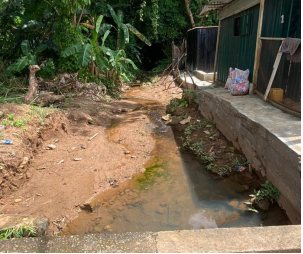
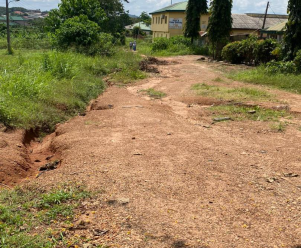
, who highlighted waste mismanagement and deteriorating green spaces as recurring environmental issues in Nigerian campuses. While 57.3% of respondents acknowledged that environmental hazards such as flooding and erosion significantly worsen infrastructural decay (
Figures 6 and 7). The low drainage adequacy score reinforces this, as poor drainage typically magnifies erosion, puddling, and structural wear
| [7] | Ajayi, O., and Fashina, T. (2020). Drainage systems and environmental sustainability in Nigerian tertiary institutions. Journal of Environmental Studies, 6(4), 23–39. |
[7]
.
Figure 6. Drainage Condition at Maintenance Are.
Figure 7. Condition of Road at Middle Belt of the Campus.
These challenges disrupt teaching efficiency, reduce students’ concentration, and impair learning outcomes, similar to the trends identified by
| [17] | Okotoni, C. A., Akinwale, A. S., and Subair, S. T. (2024). Assessment of Students’ Satisfaction with Sports and Recreational Services in Southwestern Nigeria Federal Universities. IJORER: International Journal of Recent Educational Research, 5(5), 1084-1096. |
[17]
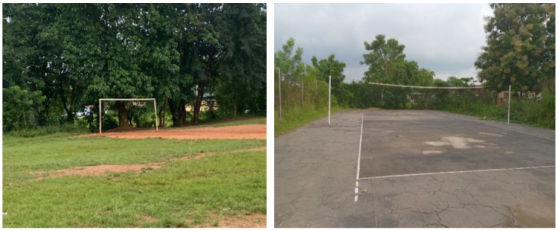
. Extracurricular engagement was also significantly affected by insufficient recreational and sports facilities, with 32.5% of respondents reporting frequent disruptions. Recreational and open spaces form crucial components of student well-being and social development, and their inadequacy has been shown to diminish campus life quality (
Figure 8). The composite mean of 3.67 indicates moderate engagement, yet constraints persist due to poor facility availability.
Figure 8. Condition of Available Recreation Facilities on Campus.
The correlation coefficient (r = 0.712; p < 0.001) demonstrated a strong positive relationship between infrastructural adequacy and academic/extracurricular performance. This finding supports the conclusion that improved infrastructure directly enhances student outcomes.
Influence of Infrastructure on Academic Performance
Regression analysis provided deeper insights into the specific infrastructural elements influencing student performance (
Table 2). However, inadequate classrooms, Laboratory, Electricity supply, and Drainage system exerted significant negative effects on academic outcomes, revealing the adverse consequences of overcrowding and environmental stress. The model explained 36.8% of the variance in academic performance, illustrating the substantial role infrastructure plays in shaping campus learning conditions.
Table 2. Influence of Infrastructure on Academic Performance.
Predictor Variables | B | SE B | Β | t | p |
Classrooms | −0.472 | 0.136 | −0.345 | −3.47 | .001 |
Laboratories | 0.581 | 0.147 | 0.387 | 3.96 | < .001 |
Library Facilities | 0.243 | 0.118 | 0.179 | 2.06 | .041 |
Electricity Supply | 0.312 | 0.095 | 0.249 | 3.28 | .001 |
Road Network | 0.108 | 0.123 | 0.081 | 0.88 | .380 |
Drainage System | −0.596 | 0.132 | −0.436 | −4.52 | < .001 |
Sports/Recreation | 0.216 | 0.098 | 0.169 | 2.20 | .029 |
ICT Facilities | 0.072 | 0.119 | 0.058 | 0.61 | .544 |
R2 = .368 Adjusted R2 = .337 F (8, 175) = 11.87, p < .001
Source: Field Survey, 2025
Influence of Infrastructure on Extracurricular Participation
According to
Table 3, the model predicting extracurricular participation shows that library facilities and recreational spaces emerged as positive predictors, while an unstable electricity supply and inadequate laboratories negatively influenced participation. The model accounted for 40.2% of the variation in extracurricular engagement, highlighting the importance of infrastructure in determining holistic student development. The results provide strong evidence that infrastructural and environmental conditions at The Polytechnic, Ibadan, significantly influence both academic and extracurricular outcomes. These findings reinforce the conclusions of
| [11] | Ebekozien, A., Aigbavboa, C., Hafez, M., Samsurijan, M. S., and Oke, A. E. (2025). Appraising sustainable and resilient physical infrastructure facilities in higher education institutions: the role of smart maintenance management. Facilities. |
[11]
, who emphasized that sustainable infrastructure governance, anchored in improved funding, policy strengthening, and consistent maintenance, is crucial for educational resilience and environmental sustainability in Nigerian tertiary institutions.
Table 3. Influence of Infrastructure on Extracurricular Participation.
Predictor Variables | B | SE B | β | t | p |
Classrooms | −0.104 | 0.144 | −0.069 | −0.72 | .474 |
Laboratories | −0.516 | 0.160 | −0.322 | −3.22 | .002 |
Library Facilities | 0.684 | 0.131 | 0.501 | 5.22 | < .001 |
Electricity Supply | −0.713 | 0.116 | −0.521 | −6.14 | < .001 |
Road Network | −0.052 | 0.120 | −0.039 | −0.43 | .666 |
Drainage System | 0.498 | 0.126 | 0.347 | 3.95 | < .001 |
Sports/Recreation | 0.291 | 0.107 | 0.228 | 2.72 | .007 |
ICT Facilities | 0.056 | 0.122 | 0.041 | 0.46 | .645 |
Source: Field Survey, 2025
5. Conclusion and Recommendations
The study recommends strengthening institutional funding through diversified sources such as Public–Private Partnerships, alumni endowments, and dedicated maintenance budgets. Policy frameworks should be reviewed and enforced through a functional Facilities Management Unit to ensure proactive maintenance. Environmental awareness programmes, student participation in sustainability initiatives, and improved waste management practices are essential for enhancing campus conditions. The adoption of technology-driven maintenance systems, including GIS-based monitoring, will improve efficiency, transparency, and long-term planning. Finally, collaboration with government agencies, professional bodies, and environmental organizations should be intensified to access technical support and promote best practices. The study concludes that infrastructural inadequacies and weak environmental management significantly affect academic and extracurricular activities at The Polytechnic, Ibadan. Addressing these challenges requires improved funding, stronger policy enforcement, community participation through alumni, digital maintenance systems, and external partnerships. Implementing these measures will enhance infrastructural reliability, environmental quality, and overall institutional sustainability.
Abbreviations
GIS | Geographic Information System |
TETFUND | Tertiary Education Trust Fund |
Conflicts of Interest
There was no conflict of Interest.
References
| [1] |
Abdullahi, I. (2017). Evaluation of facilities performance on students’ satisfaction in northern Nigerian Universities (Doctoral dissertation, Universiti Tun Hussein Onn Malaysia).
|
| [2] |
Abiodun, T., and Ayeni, A. (2019). Waste management challenges in Nigerian tertiary institutions: A case study. Journal of Environmental Management Studies, 8(3), 55–68.
|
| [3] |
Adeyemi, I., and Yusuf, T. (2020). Environmental management practices in Nigerian polytechnics: Challenges and opportunities. International Journal of Environmental Planning, 11(2), 59–74.
|
| [4] |
Adebayo, A., and Aluko, F. (2020). Infrastructural development and academic performance in Nigerian universities. Educational Research Journal, 13(1), 40–55.
|
| [5] |
Alfakoro, A. S. Y. (2023). Reviewing the Political Economy of Service Delivery and Bureaucracy in Public Universities Administration in Nigeria: A study of Kwara State University, Malete.
|
| [6] |
Ajah, I. A., and Chigozie-Okwum, C. C. (2019). ICT and administrative effectiveness of University in Nigeria: A connect between leadership and knowledge. AFRREV STECH: An International Journal of Science and Technology, 8(2), 64-85.
|
| [7] |
Ajayi, O., and Fashina, T. (2020). Drainage systems and environmental sustainability in Nigerian tertiary institutions. Journal of Environmental Studies, 6(4), 23–39.
|
| [8] |
Atobauka, I. S., and Jacob, O. N. (2021). Inadequate infrastructural facilities in Nigerian public universities: causes, effects and ways forwards. American Journal of Social and Humanitarian Research, 2(4), 92-102.
|
| [9] |
Chukwuma, S. (2017). Environmental sustainability and polytechnic education in Nigeria. International Journal of Technical Education and Sustainability, 8(3), 50–63.
|
| [10] |
Dime, I. A. (2025). The Influence of the Application of Information and Communication Technologies in Library and Information Practice in Nigeria from 1962-2022. Gloryland International Journal of Library and Information Science and Education (GIJLISE). 2(5). Pp 34-67.
|
| [11] |
Ebekozien, A., Aigbavboa, C., Hafez, M., Samsurijan, M. S., and Oke, A. E. (2025). Appraising sustainable and resilient physical infrastructure facilities in higher education institutions: the role of smart maintenance management. Facilities.
|
| [12] |
Ejiogu, A. (1997). Research infrastructure and innovation in Nigeria. Ibadan: University Press.
|
| [13] |
Federal Ministry of Education. (2019). Standards for tertiary institution infrastructure in Nigeria. Abuja: FME Publications.
|
| [14] |
Hamid, M. Y., Alexander, K., and Baldry, D. (2007). The cause and effects of deferred maintenance on higher education buildings. Journal of the University of Salford, 1(1), 78-88.
|
| [15] |
Lozano, R. (2010). Diffusion of sustainable development in universities’ curricula. Journal of Cleaner Production, 18(7), 703–711.
|
| [16] |
Nwosu, C., and Osagie, E. (2022). TETFUND interventions and infrastructural development in Nigerian tertiary institutions. Journal of Educational Policy, 12(1), 40–57.
|
| [17] |
Okotoni, C. A., Akinwale, A. S., and Subair, S. T. (2024). Assessment of Students’ Satisfaction with Sports and Recreational Services in Southwestern Nigeria Federal Universities. IJORER: International Journal of Recent Educational Research, 5(5), 1084-1096.
|
| [18] |
OECD. (2020). Infrastructure and quality education: Policy insights. Paris: OECD Publishing.
|
| [19] |
UNESCO. (2021). Global standards for tertiary education infrastructure. Paris: UNESCO Publications.
|
| [20] |
Velazquez, L., Munguia, N., Platt, A., and Taddei, J. (2006). Sustainable university model: Assessment of indicators. Journal of Cleaner Production, 14(9-11), 963–972.
|
| [21] |
World Bank. (2018). Global infrastructure outlook for higher education. Washington, DC: World Bank.
|
| [22] |
World Bank. (2019). Sustainable campus development strategies. Washington, DC: World Bank.
|
| [23] |
Shriberg, M. (2002). Institutional assessment tools for sustainability in higher education. International Journal of Sustainability in Higher Education, 3(3), 254–270.
|
| [24] |
Ofori-Boadu, V., Mensah, S., and Amponsah, K. (2020). Campus sustainability practices in African universities. Journal of Environmental Education, 15(2), 71–88.
|
Cite This Article
-
APA Style
Ayorinde, A. J., Esther, A. T., Israel, A. A. (2026). Appraisal of Infrastructural Facilities and Environmental Balancing: Implications on Institutional Students’ Performance. Science Journal of Education, 14(2), 39-49. https://doi.org/10.11648/j.sjedu.20261402.12
 Copy
|
Copy
|
 Download
ACS Style
Ayorinde, A. J.; Esther, A. T.; Israel, A. A. Appraisal of Infrastructural Facilities and Environmental Balancing: Implications on Institutional Students’ Performance. Sci. J. Educ. 2026, 14(2), 39-49. doi: 10.11648/j.sjedu.20261402.12
Copy
|
Download
AMA Style
Ayorinde AJ, Esther AT, Israel AA. Appraisal of Infrastructural Facilities and Environmental Balancing: Implications on Institutional Students’ Performance. Sci J Educ. 2026;14(2):39-49. doi: 10.11648/j.sjedu.20261402.12
Copy
|
Download
-
@article{10.11648/j.sjedu.20261402.12,
  author = {Adejare Jacob Ayorinde and Adebowale-Salawu Temiloluwa Esther and Adeyemi Ayobami Israel},
  title = {Appraisal of Infrastructural Facilities and Environmental Balancing: Implications on Institutional Students’ Performance},
  journal = {Science Journal of Education},
  volume = {14},
  number = {2},
  pages = {39-49},
  doi = {10.11648/j.sjedu.20261402.12},
  url = {https://doi.org/10.11648/j.sjedu.20261402.12},
  eprint = {https://article.sciencepublishinggroup.com/pdf/10.11648.j.sjedu.20261402.12},
  abstract = {This study appraises the adequacy, functionality, and sustainability of infrastructural facilities at The Polytechnic, Ibadan, while examining their implications for environmental balance and institutional performance. The objectives were to assess the current state of campus infrastructure, identify maintenance and environmental management challenges, evaluate their effects on academic and extracurricular activities. Using stratified, simple random techniques, data were collected from 342 respondents comprising students, lecturers, administrative, and non-academic staff through questionnaires, interviews, and field observations. Descriptive statistics, Chi-square tests, correlation, and regression analyses were employed. Findings reveal considerable infrastructural disparities: classrooms (mean = 3.32) and road networks (mean = 3.49) were moderately adequate, while drainage systems (mean = 1.99), ICT facilities (mean = 2.68), and laboratories (mean = 2.96) were inadequate. The grand mean (2.56) confirmed substandard overall infrastructure, leading to rejection of the null hypothesis. Maintenance practices were inconsistent, with 45.9% reporting infrequent repairs; major constraints included inadequate funding, weak institutional policy, and rising population pressure (χ2 = 142.67, p = 0.000). Environmental management was rated fair, with waste disposal (40.1% ineffective) and poor drainage significantly contributing to environmental hazards. Infrastructure quality showed a strong positive correlation with academic and extracurricular performance (r = 0.368, p < 0.001), while regression analysis indicated that laboratories, libraries, sports facilities, and electricity supply were significant predictors of student outcomes. The study concludes that infrastructural inadequacies and weak environmental sustainability practices undermine institutional effectiveness. Strengthening governance structures, enhancing funding mechanisms, improving maintenance systems, and adopting sustainable environmental practices are critical for promoting campus resilience and improved learning environments.},
 year = {2026}
}
Copy
|
Download
-
TY  - JOUR
T1  - Appraisal of Infrastructural Facilities and Environmental Balancing: Implications on Institutional Students’ Performance
AU  - Adejare Jacob Ayorinde
AU  - Adebowale-Salawu Temiloluwa Esther
AU  - Adeyemi Ayobami Israel
Y1  - 2026/05/29
PY  - 2026
N1  - https://doi.org/10.11648/j.sjedu.20261402.12
DO  - 10.11648/j.sjedu.20261402.12
T2  - Science Journal of Education
JF  - Science Journal of Education
JO  - Science Journal of Education
SP  - 39
EP  - 49
PB  - Science Publishing Group
SN  - 2329-0897
UR  - https://doi.org/10.11648/j.sjedu.20261402.12
AB  - This study appraises the adequacy, functionality, and sustainability of infrastructural facilities at The Polytechnic, Ibadan, while examining their implications for environmental balance and institutional performance. The objectives were to assess the current state of campus infrastructure, identify maintenance and environmental management challenges, evaluate their effects on academic and extracurricular activities. Using stratified, simple random techniques, data were collected from 342 respondents comprising students, lecturers, administrative, and non-academic staff through questionnaires, interviews, and field observations. Descriptive statistics, Chi-square tests, correlation, and regression analyses were employed. Findings reveal considerable infrastructural disparities: classrooms (mean = 3.32) and road networks (mean = 3.49) were moderately adequate, while drainage systems (mean = 1.99), ICT facilities (mean = 2.68), and laboratories (mean = 2.96) were inadequate. The grand mean (2.56) confirmed substandard overall infrastructure, leading to rejection of the null hypothesis. Maintenance practices were inconsistent, with 45.9% reporting infrequent repairs; major constraints included inadequate funding, weak institutional policy, and rising population pressure (χ2 = 142.67, p = 0.000). Environmental management was rated fair, with waste disposal (40.1% ineffective) and poor drainage significantly contributing to environmental hazards. Infrastructure quality showed a strong positive correlation with academic and extracurricular performance (r = 0.368, p < 0.001), while regression analysis indicated that laboratories, libraries, sports facilities, and electricity supply were significant predictors of student outcomes. The study concludes that infrastructural inadequacies and weak environmental sustainability practices undermine institutional effectiveness. Strengthening governance structures, enhancing funding mechanisms, improving maintenance systems, and adopting sustainable environmental practices are critical for promoting campus resilience and improved learning environments.
VL  - 14
IS  - 2
ER  -
Copy
|
Download





 Share This Article
 Twitter
 Linked In
 Facebook