Abstract
Approximately 15% of the global population live with physical disabilities, with 80% from low-income countries. In Rwandan, current data show that there are an estimated 8012 children with disabilities. This study aimed to determine factors influencing accessibility of physical and functional rehabilitation services for children with disabilities at Byumba L2TH, Kibuye RH and Ruhengeri L2TH, Rwanda respectively. This cross-sectional mixed-methods study had caretakers of the children with disabilities as target population with sample size of 419. Quantitative, and qualitative data were collected through face-to-face interviews using closed ended questionnaire and KIIs, respectively. Descriptive and inferential statistics analysis, in SPSS v31, and thematic analysis in NVivo v15 software. From results, 28.4% (95% CI: 24.2-32.9) of children adhered to prescribed rehabilitation services. Different enabling factors had significant implications, children from high income families had 4.63 times odds of access than ones from low-income families (AOR = 4.626, 95% CI [2.101-10.187], p < 0.001), traveling 0-5 km distance increased the odds of access compared with high than 5 km by 4.44 times (AOR = 4.447, 95% CI [2.346-8.432], p < 0.001), compared with high transport costs, lower costs increase the access by 6.53 times (AOR = 6.527, 95% CI [3.692-11.538], p < 0.001), affordability of services had 2.67 odds of increase the access (AOR = 4.371, 95% CI [2.462-7.761], p < 0.001). The availability of rehabilitation services was universally accessible (100%), while prosthetic and occupational therapy were severely limited (33.3%). For perceived needs, caretakers emphasized financial support, provision of assistive devices, stigma reduction, improved service delivery, and awareness campaigns. This study suggests the strengthening of community-based rehabilitation, integrating services into primary health care, ensuring affordability, and addressing stigma are essential.
Keywords
Children with Disabilities, Disabilities, Rehabilitation Services, District Hospitals, Rwanda
1. Introduction
The number of people living with physical disabilities worldwide exceeds one billion, accounting for roughly 15% of the total global population, with 80% residing in low-income countries as reported by World Health Organization
| [1] | WHO, “WHO, facts data on disability,” 2023. |
[1]
. However, 50% and more of the population in low- middle-income nations do not receive the necessary rehabilitation services
| [2] | U. N. P. D. UNDP, “Global report on health equity for persons with disabilities,” 2023. |
[2]
.
Although persons living with disabilities have the right to appropriately access standardized health care, the world is significantly far to realize that right for persons with disability
| [3] | UNICEF, “Children with disabilities: Every child has the right to live in an inclusive world.,” 2023. |
[3]
.
For children with disabilities, numerous setbacks, such as financial constraints, affect the availability and use of essential rehabilitation packages, other setbacks include transport, distance to hospital and access to information plays significant role to determine accessibility to physical rehabilitation services
| [4] | M. Shirazikhah et al., “National survey of availability of physical rehabilitation services in Iran: A mixed methods study,” Electron. Physician, vol. 9, no. 11, pp. 5778-5784, Nov. 2017,
https://doi.org/10.19082/5778 |
[4]
. Moreover, factors such as stigma, discrimination and embarrassment have been identified as setbacks to access of health care and rehabilitation services by children with disabilities
| [5] | G. A. Asa, N. K. Fauk, L. Mwanri, and P. R. Ward, “Understanding Barriers to the Access to Healthcare and Rehabilitation Services: A Qualitative Study with Mothers or Female Caregivers of Children with a Disability in Indonesia,” Int. J. Environ. Res. Public. Health, vol. 18, no. 21, p. 11546, Nov. 2021, https://doi.org/10.3390/ijerph182111546 |
[5]
.
Furthermore, familial characteristics, including household constituents, economic resources, and caretakers’ behaviors, significantly shape the usage outcomes for children with disabilities in the subject of accessing clinical rehabilitation care
| [6] | M. Reitzel, L. Letts, B. Di Rezze, and M. Phoenix, “Critically Examining the Person-Environment Relationship and Implications of Intersectionality for Participation in Children’s Rehabilitation Services,” Front. Rehabil. Sci., vol. 2, p. 709977, Sep. 2021, https://doi.org/10.3389/fresc.2021.709977 |
[6]
. Moreover, poor referral pathways, financial constraints, transport considerations and limited standard equipment are thought barriers to the access of therapeutic intervention programs
| [7] | Q. Magaqa, P. Ariana, and S. Polack, “Examining the Availability and Accessibility of Rehabilitation Services in a Rural District of South Africa: A Mixed-Methods Study,” Int. J. Environ. Res. Public. Health, vol. 18, no. 9, p. 4692, Apr. 2021,
https://doi.org/10.3390/ijerph18094692 |
[7]
.
Institutional rehabilitation services for children with disabilities are influenced by factors such as social economic status, family support and social belief system
| [8] | K. Mishra and V. Siddharth, “Factors Influencing Institutional-Based Pediatric Rehabilitation Services among Caregivers of Children with Developmental Delay in Southwestern Rajasthan,” J. Neurosci. Rural Pract., vol. 9, no. 1, pp. 36-41, 2018, https://doi.org/10.4103/jnrp.jnrp_283_17 |
[8]
. Moreover, caretaker’s education levels have been found to influence access to rehabilitation therapy by children with disabilities
| [9] | H. Ahmad and A. Ayyubi, “Influence Caregivers’ Education Level on Access to Rehabilitation Therapy for Children with Disabilities in Mingora City, Pakistan,” J. Med. Nurs. Public Health, vol. 5, no. 1, pp. 13-18, Feb. 2022,
https://doi.org/10.53819/81018102t3030 |
[9]
.
There are 391,775 people with disability in Rwanda, representing 3.4%, and high number of disabilities remains high in rural districts of Gisagara and Karongi, while Muhanga, Rwamagana and Musanze and three Kigali districts are characterized with low number of persons with disabilities
| [10] | NISR, “The fifth Rwanda population and housing census,” 2022. |
[10]
.
In Rwanda, still existence of limited and inconsistent identification strategies for early detection of children with developmental delays
| [11] | R. M. of H. MOH, “A situation assessment of rehabilitation in Rwanda,” 2021. |
[11]
. Physical and functional rehabilitation is available in tertiary and secondary care hospitals. However, at community level, there is lack of clinical rehabilitation interventions at health centers and health posts, with exception of limited Medicalized Health centers across the country
| [11] | R. M. of H. MOH, “A situation assessment of rehabilitation in Rwanda,” 2021. |
[11]
.
Leading to the need to better understand, identify and detect disabilities at early age especially during childhood before it becomes complicated during advanced age and foster effective and efficient use of rehabilitation services offered at rehabilitation centers. The outcome of the study stood as benchmark guiding tool for health policy makers to develop grounded strategies for increasing accessibility of rehabilitation services by children with disabilities in Rwanda.
2. Materials and Methods
2.1. Study Area
Setting described environment for which the study is conducted. Thus, providing comprehensive characterization of physical settings, geographical localization, demographic of residents, temporal context, specific conditions and participants involved
| [12] | J. M. N. Duffy et al., “Standardizing definitions and reporting guidelines for the infertility core outcome set: an international consensus development study,” Fertil. Steril., vol. 115, no. 1, pp. 201-212, Jan. 2021,
https://doi.org/10.1016/j.fertnstert.2020.11.013 |
[12]
. Therefore, this study was conducted from the following rehabilitation units:
Byumba L2TH: Demographically, the hospital is level 2 Teaching Hospital with annual turnover of 58900 patients per year. And the hospital registered 216 children with various physical disabilities and many of children with disabilities are transferred to specialized orthopedic hospitals. Geographically, Byumba L2TH is the Northern Region, very mountainous and serving the population bordering Uganda and highlands of Gicumbi and Burera district.
Ruhengeri L2TH: Demographically, this is a Teaching 2 hospital with annual turnover of 10124 patients and for the last 3 years, the hospital registered 893 children with disabilities, and geographically, the hospital is housed by town of Musanze, the second largest city in the country This hospital serves this volcanic region enclosed by majestic mountains and remote regions with underdeveloped infrastructure and exorbitant transportation expenses, parents and these children must travel to receive rehabilitation therapies.
Kibuye RH: Demographically, the hospital is a Referral hospital with annual turnover of 1818 patients and has registered 672 children with disabilities, the hospital is housed in city of Kibuye, a touristic town in Rwanda surrounded by high mountains and rural sectors with developing infrastructures and expensive transportation costs, children with disabilities and their parents have to travel in the hope to access rehabilitation services.
2.2. Study Design and Period
A descriptive cross-sectional, mixed-method study. With the period span from December 2025 to June 2026.
2.3. Populations
2.3.1. Source Population
The source population are caregivers of children with physical disabilities attending physical and functional rehabilitation services at Byumba L2TH, Ruhengeri L2TH, and Kibuye Referral Hospital.
2.3.2. Study Population
The study population consisted of an estimated 8,029 caregivers of children with disabilities aged above five years who were seeking medicalized physical and functional rehabilitation services at Byumba L2TH, Ruhengeri L2TH, and Kibuye Referral Hospital.
2.4. Inclusion and Exclusion Criteria
2.4.1. Inclusion Criteria
1) Only care takers with children and adolescents (children with disabilities aged).
2) Disabilities included physical disabilities, learning disabilities, sensory disabilities, and intellectual disabilities.
2.4.2. Exclusion Criteria
Excluded are caretakers of children with disabilities critically ill and/or hospitalized and will not assent to the study.
2.5. Sample Size Determination and Technique
2.5.1. Sample Size Calculation
Quantitative sample
The sample size for quantitative part was established using statistical formula developed the Yamane formula for a finite population.
N: population size (8,029), e: margin of error held at 5%
,= 381(2)
Therefore, current study used a sample size of 381 children with disabilities. However, to adjust missing or incomplete responses, 10% of the sample size was added; equivalent approximately 38 people. Thus, 419 children were recruited in this study.
Qualitative sample
4 caretaker representatives were selected from each of the three district hospitals, resulting in a total of 12 KIs. With the guidance of information richness rather than statistical representativeness principle, consistent with qualitative research standards that prioritize depth of insight over sample size.
2.5.2. Sampling Technique and Procedure
The sampling mode was the method applied to select pre-defined sample from the study population for purpose of data collection. After receiving the approval letter from Mt Kenya University, the researcher got the permission from Byumba L2TH, Kibuye RH and Ruhengeri L2TH. Researcher consulted pediatric data base of hospital enrolled into the study to identify children born, who are under medical follow up and cases transferred to specialized hospitals, researcher further consulted district representative of people living with disabilities in Musanze, Gicumbi and Musanze district to orient us to the beneficiaries with children with disabilities. A list of children with disabilities was developed and subjected simple random probability sampling to capture sample size of 419 caretakers. The simple random sampling techniques was the easiest to understand because it only needs one random selection. For the qualitative side, purposive sampling was employed by taking 4 caretaker representatives from each hospital, specifically those with children living with disabilities, to participate in Key Informant Interviews (KIIs).
2.6. Study Variable
2.6.1. Dependent Variable
Access to physical and functional rehabilitation services.
2.6.2. Independent Variable
The independent variables of this study included enabling factors which are occupation, monthly income, distance to hospital, transport cost, affordability of services, referral choice, severity perception, healing belief, equipment availability, and referral delays.
2.7. Operational Definitions
Table 1. Definitions of key terms.
Access to physical and functional rehabilitation | In this study we defined this term as having the opportunity and ability to receive therapeutic services that help children with disabilities regain or improve their physical abilities and function after an illness, injury, or disability . |
Children with disabilities | In this study, we defined children with disabilities as individuals aged 5-17 years with disabilities | [14] | E. National Academies of Sciences et al., “Conceptualizing Childhood Disability,” in Opportunities for Improving Programs and Services for Children with Disabilities, National Academies Press (US), 2018. Accessed: Dec. 15, 2025. [Online]. Available:
https://www.ncbi.nlm.nih.gov/books/NBK518922/ |
[14] |
Disability | Impairments, activity limitations and participation restrictions | [15] | S. Arabi et al., “Utilization of Rehabilitation Services by Disabled People under the Iranian Health Insurance Organization,” Med. J. Islam. Repub. Iran, Feb. 2025,
https://doi.org/10.47176/mjiri.39.65 | | [16] | C. Lillo-Navarro, J. Montilla-Herrador, P. Escolar-Reina, S. L. Oliveira-Sousa, J. A. García-Vidal, and F. Medina-Mirapeix, “Factors Associated with Parents’ Adherence to Different Types of Exercises in Home Programs for Children with Disabilities,” J. Clin. Med., vol. 8, no. 4, p. 456, Apr. 2019,
https://doi.org/10.3390/jcm8040456 | | [17] | E. Yeşilkaya Bennett, “The Role of Educators and Caregivers in Supporting Participation of Children with Disabilities in Educational Decision Making,” J. Child. Stud., pp. 6-23, Dec. 2024, https://doi.org/10.18357/jcs202421794 |
[15-17] |
Physical and rehabilitation service | These are targeted interventions aimed at improving functional ability and cutting down disability through clinical and environmental interaction , 19]. They incorporate Psycho-social and physical growth disabilities. |
Practice | In this study we defined this term as having the opportunity and ability to receive therapeutic services that help children with disabilities regain or improve their physical abilities and function after an illness, injury, or disability . |
Screening | In this study, we defined children with disabilities as individuals aged 5-17 years with disabilities | [14] | E. National Academies of Sciences et al., “Conceptualizing Childhood Disability,” in Opportunities for Improving Programs and Services for Children with Disabilities, National Academies Press (US), 2018. Accessed: Dec. 15, 2025. [Online]. Available:
https://www.ncbi.nlm.nih.gov/books/NBK518922/ |
[14] |
2.8. Data Collection Procedures
Before the commencement of data collection, six data collectors (two from each hospital) underwent training on appropriate data collection techniques and research ethics to ensure methodological rigor. Quantitative data was obtained from a sample of 419 caretakers of children with disabilities using a closed‑ended categorical questionnaire. Qualitative data was gathered through guided interviews with key informants by face‑to‑face, specifically three health care providers from each of the study’s selected district hospitals. All respondents were informed about the purpose of the study, assent procedures, and ethical considerations before participation. Interviews were conducted in Kinyarwanda to facilitate comprehension and later translated into English for analysis. On average, 30 minutes were allocated for administering the quantitative questionnaire, while approximately 45 minutes were devoted to qualitative interviews.
2.9. Data Processing Analysis
Quantitative data were analyzed using SPSS v31. Descriptive statistics, including frequencies and percentages, were computed to summarize adherence to prescribed rehabilitation services and the availability of functional rehabilitation services across hospitals. Inferential statistical analyses were conducted at a significance level of p < 0.05 to examine factors associated with access to rehabilitation services. Chi-square tests assessed associations between categorical variables, while binary logistic regression identified significant predictors of limited access. Effect sizes were reported using Crude Odds Ratios (COR), Adjusted Odds Ratios (AOR), and their corresponding 95% Confidence Intervals (CI). Analysis of Qualitative data used NVivo version 15. Audio recordings of responses were transcribed, coded, and subjected to thematic analysis to identify and interpret recurring themes related to caretaker perceptions and experiences. Tables and figures were used for illustration of findings.
2.10. Ethical Consideration
Ethical approval for this study was obtained from the Mount Kenya University Institutional Review Board (IRB), and permission to conduct the study was granted by the Director General of Hospitals before data collection commenced. Informed consent was obtained from all participants prior to data collection. The English version of the consent form was explained to participants, and any questions were addressed in their mother tongue by the interviewer to ensure full understanding. Participation was voluntary, and confidentiality was maintained throughout the study. No participant names were recorded on the questionnaires, and access to collected data was restricted to the research team. Data were securely stored in locked drawers and password-protected computer folders. The study posed no risk to participants. All collected information was handled in accordance with ethical standards, and questionnaires will be discarded after ten years.
3. Results
3.1. Socio-Demographic Traits of Participants
As illustrated in (
Table 2), comprising 419 child-caretakers’ dyads from three district hospitals in Rwanda. The mean age of children enrolled was 34.00 ± 29.36, where the majority were in range of 13-36 months of age (58.0%), whilst males children constituted a slight majority (54.7%). Nearly all children lived with their biological fathers (93.8%), though delayed growth was documented in nearly one-third of the pediatric population (29.8%). Caretakers were predominantly young adults with a mean age of 31.66 ± 5.24, overwhelmingly female (78.5%), and married (80.0%). The educational profile revealed marked concentration at primary level (76.8%). Biological parenthood characterized (88.3%) of caretaker relationships, and the vast monthly household income was less than 100,000 FRW (82.1%), reflecting considerable economic vulnerability. Occupational patterns underscored the predominance of agriculture (87.1%), painting a portrait of rural, resource-constrained families navigating pediatric disability care within Rwanda's district health system.
Table 2. Socio-demographic traits of participants.
Independent Variable | Frequency (n) | Valid Percentage (%) | (Mean ± SD) |
Children’s Characteristics |
Age of Child | | | |
0-12 months | 79 | 18.9 | |
13-36 months | 243 | 58.0 | 34.00 ± 29.36 months |
48-72 months | 60 | 14.3 | |
84-144 months | 37 | 8.8 | |
Gender of Child | | | |
Female | 190 | 45.3 | |
Male | 229 | 54.7 | |
Living with Biological Mother | | | |
Yes | 377 | 90.0 | |
No | 42 | 10.0 | |
Living with Biological Father | | | |
Yes | 393 | 93.8 | |
No | 26 | 6.2 | |
Delayed Growth | | | |
Yes | 125 | 29.8 | |
No | 294 | 70.2 | |
Caretaker Characteristics |
Age of Caretaker | | | |
18-25 years | 19 | 4.5 | 31.66 ± 5.24 years |
25-32 years | 231 | 55.1 | |
32-39 years | 140 | 33.4 | |
Above 39 years | 29 | 6.9 | |
Gender of Caretaker | | | |
Female | 329 | 78.5 | |
Male | 90 | 21.5 | |
Marital Status | | | |
Single | 48 | 11.5 | |
Married | 335 | 80.0 | |
Divorced | 22 | 5.3 | |
Widow | 14 | 3.3 | |
Literacy Level | | | |
Primary | 322 | 76.8 | |
Post primary | 59 | 14.1 | |
Tertiary | 38 | 9.1 | |
Biological Parent | | | |
Yes | 370 | 88.3 | |
No | 49 | 11.7 | |
Family Monthly Income | | | |
<100,000 FRW | 344 | 82.1 | |
100,000-200,000 FRW | 48 | 11.5 | |
Above 200,000 FRW | 27 | 6.4 | |
Occupation | | | |
Agriculture | 365 | 87.1 | |
Business | 31 | 7.4 | |
Public worker | 6 | 1.4 | |
Others | 17 | 4.1 | |
3.2. The Prevalence of Adherence to Physical and Functional Rehabilitation
The prevalence of adherence to physical and functional rehabilitation was summarized in (
Table 3), the results from analyzed data shows that only (28.4%, 95% CI: 24.2-32.9%), who account for 119 children with disabilities-maintained adherence to prescribed rehabilitation services.
Table 3. The prevalence of children with disabilities who adhere to physical and functional rehabilitation services.
Adherence Status | Frequency (n) | Percent (%) | 95% CI |
Adherent | 119 | 28.4 | 24.2 - 32.9 |
Non adherent | 300 | 71.6 | 67.1 - 75.8 |
Total | 419 | 100.0 | |
3.3. Enabling Factors Associated with Limited Access to Physical and Functional Rehabilitation Services
Multivariate regression analysis was conducted to assess how significant determined enabling factors behave when adjusted for co‑variates. As presented in (
Table 4), family monthly income still was a strong determinant of access. Compared to households earning less than 100,000 FRW, those with incomes between 100,001-200,000 FRW were over four times more likely to have access to rehabilitation services (AOR = 4.626, 95% CI [2.101-10.187], p < 0.001), same but more for households earning more than 200,000 FRW which also demonstrated significantly higher access (AOR = 2.89, 95% CI [1.03-8.12], p = 0.044). Distance to hospital was yet another significant enabling factor, with children residing more than 5 km away had over four times increased odds of limited access compared to those living within 5 km (AOR = 4.45, 95% CI [2.35-8.43], p < 0.001) eve after considering all other factors. Transport cost exerted the strongest effect, as families facing high transport expenses had more than six times of limited access (AOR = 6.53, 95% CI [3.69-11.54], p < 0.001). On the other hand, families perceiving services as affordable being over four times more likely to have access (AOR = 4.37, 95% CI [2.46-7.76], p < 0.001). Equipment availability present with a nuanced effect, where partial availability reduced children with disabilities’ access (AOR = 0.38, 95% CI [0.17-0.84], p = 0.016), whereas full availability markedly increased the access (AOR = 2.67, 95% CI [1.12-6.39], p = 0.027). Altogether, these findings highlight that economic capacity, geographic accessibility, affordability of services, and provision of rehabilitation equipment are the most decisive enabling factors of access to services of rehabilitation in rural Rwandan regions.
Table 4. Enabling factors associated with access to physical and functional rehabilitation services.
Independent Variable | Adherence Status | AOR | 95% CI | p value |
Yes n (%) | No n (%) |
Family Monthly Income | | | | | |
<100,000 FRW | 78 (65.5) | 266 (88.7) | ref | | |
100,001-200,000 FRW | 26 (21.8) | 22 (7.3) | 4.626 | 2.10-10.19 | <0.001 |
Above 200,000 FRW | 15 (12.6) | 12 (4.0) | 2.891 | 1.03-8.12 | 0.044 |
Distance to Hospital | | | | | |
0-5 km | 44 (37.0) | 39 (13.0) | ref | | |
Above 5 km | 75 (63.0) | 261 (87.0) | 4.447 | 2.35-8.43 | <0.001 |
Transport Cost | | | | | |
Low | 71 (59.7) | 68 (22.7) | ref | | |
High | 48 (40.3) | 232 (77.3) | 6.527 | 3.69-11.54 | <0.001 |
Services Affordability | | | | | |
Not Affordable | 59 (49.6) | 243 (81.0) | ref | | |
Affordable | 60 (50.4) | 57 (19.0) | 4.371 | 2.46-7.76 | <0.001 |
Equipment Availability | | | | | |
Not available | 21 (17.6) | 41 (13.7) | ref | | |
Some available | 54 (45.4) | 217 (72.3) | 0.381 | 0.17-0.83 | 0.016 |
All available | 44 (37.0) | 42 (14.0) | 2.673 | 1.12-6.39 | 0.027 |
3.4. Availability of Rehabilitation Services for Children with Disabilities
A cross-rehabilitation units’ assessment was undertaken to map the constellation of rehabilitation services accessible to children with disabilities at Byumba L2TH, Kibuye RH, and Ruhengeri L2TH, assessing eight core therapeutic rehabilitation services, physiotherapy, psychosocial therapy, orthopedic therapy, vision/ophthalmology therapy, prosthetic therapy, speech therapy, nutrition therapy, and occupational therapy (
Table 5).
Table 5. Availability of rehabilitation services for children with disabilities.
Rehabilitation Service | Rehabilitation units | Total Available n (%) |
Byumba L2TH | Kibuye RH | Ruhengeri L2TH |
Physiotherapy | 1 | 1 | 1 | 3 (100%) |
Psychosocial therapy | 1 | 0 | 1 | 2 (66.7%) |
Orthopedic therapy | 1 | 1 | 0 | 2 (66.7%) |
Vision therapy / Ophthalmology | 1 | 1 | 1 | 3 (100%) |
Prosthetic therapy | 0 | 1 | 0 | 1 (33.3%) |
Speech therapy | 0 | 1 | 1 | 2 (66.7%) |
Nutrition therapy | 1 | 1 | 1 | 3 (100%) |
Occupational therapy | 0 | 1 | 0 | 1 (33.3%) |
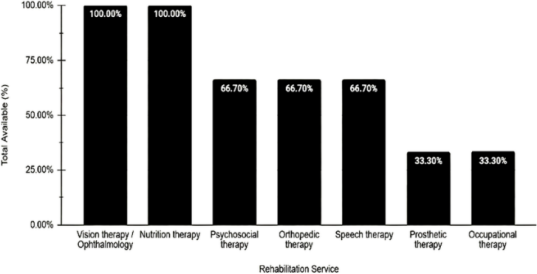
Figure 1. Availability of Rehabilitation for children with disabilities attending Byumba L2TH, Kibuye RH and Ruhengeri L2TH, Rwanda.
As illustrated in the (
Figure 1), Physiotherapy, vision therapy/ophthalmology, and nutrition therapy achieved impressive coverage of 100% availability, being available and accessible from all three facilities. Psychosocial therapy, orthopedic therapy, and speech therapy demonstrated moderate penetration (66.7%), present at Byumba L2TH which offers psychosocial and orthopedic services, Kibuye RH provided all moderately available services, whilst Ruhengeri L2TH delivered speech and psychosocial interventions. The most striking deficiencies emerged in specialized services, prosthetic therapy and occupational therapy registered only 33.3% availability, each confined to Kibuye RH alone, creating concerning service deserts in Gicumbi and Musanze districts and forcing families to traverse considerable distances for prosthetic fittings or occupational rehabilitation, effectively constituting a functional barrier to care, irrespective of individual family social characteristics or caretaking arrangements.
3.5. The Perceived Needs of Caretakers
Through thematic analysis of qualitative interviews conducted across Byumba L2TH, Kibuye RH, and Ruhengeri L2TH hospitals, five key themes emerged that reflect the major barriers and facilitators to rehabilitation access. As a case in point, financial support for access, provision of assistive devices, reducing stigma and discrimination, improving service delivery, awareness and behavior change.
Financial support for access:
Financial anchor was consistently highlighted as a barrier to timely rehabilitation. As children may be from rich or poor households, mainly the availability of financial means or their lack greatly affect the access to rehabilitation. Caretakers explained that the lack of transport fare and hospital fees often delayed or prevented treatment. One parent noted,
“Access to financial means is key for us as caretakers” (Byumba L2TH, Caretaker #1)
“As I understand it, children with disabilities are born into different families, some into poor households and others into well‑off ones. For those born into poor families, getting them to the hospital requires support, either through financial assistance…” (Kibuye RH, Caretaker #1)
Another added, “Sometimes I miss appointments because I cannot afford transport” (Ruhengeri L2TH, Caretaker #1)
These accounts underscore the importance of financial assistance in enabling children from low‑income households to reach rehabilitation services.
“What I think, in order for the children to receive treatment, is that perhaps you could help us with some financial support, because sometimes we find it difficult to come here every week, it becomes hard” (Byumba L2TH, Caretaker #1)
Moreover, Caretakers emphasized the need for organized financial support, suggesting that a community group could establish a fund where those with resources contribute regularly. Such a pooled mechanism would ease the burden of rehabilitation costs and improve consistent access to services. Caretaker from expressed,
“If there could be a certain group that creates a fund, where anyone with means contributes support, it would be even better” (Kibuye RH, Caretaker #4)
Provision of assistive devices:
Caretakers emphasized the need for corrective and supportive devices to aid children’s mobility and functionality. Some reported being denied eligibility, while others described receiving corrective shoes. For example, one caretaker shared,
“No, but I once told the health workers, ‘Do you know that when a child is born with a disability, there is support devices they are supposed to receive?’ They did not give me any answer. I really did tell them.” (Byumba L2TH, Caretaker #3)
While another one affirmed,
“Yes, I was given corrective shoes” (Ruhengeri L2TH, Caretaker #1)
These experiences highlight both gaps and successes in the provision of assistive devices.
Reducing stigma and discrimination:
Stigma emerged as a pervasive challenge, with caretakers recounting ridicules and exclusions from neighbors and even family members. Caretakers explained,
“Neighbors mocked us, saying we gave birth to useless children” (Byumba L2TH, Caretaker #1)
“My husband abandoned me, saying in his family they don’t give birth to impaired children” (Ruhengeri L2TH, Caretaker #4)
Such experiences illustrate how stigma undermines social inclusion and can discourage families from seeking services.
Improving service delivery:
Caretakers expressed frustration with long waiting times, inadequate staffing, and lack of specialized services for children. One participant stated,
“Increase the number of doctors, currently they are too few” (Ruhengeri L2TH, Caretaker #1)
“We arrive in the morning but leave late at night without being treated” (Ruhengeri L2TH, Caretaker #3)
These accounts point to systemic gaps in service delivery that compromise timely and effective rehabilitation.
Awareness and behavior change:
Participants stressed the need for community sensitization to reduce shame and encourage parents to seek care. One caretaker explained,
“There should be awareness campaigns, because many parents hide children with disabilities” (Kibuye RH, Caretaker #2)
“Parents need supportive mindset, not to be ashamed of their children” (Kibuye RH, Caretaker #2)
These reflections highlight the role of awareness in shifting attitudes and promoting early intervention.
4. Discussion
This study establishes that prevalence index for adherence to rehabilitation services among children with disabilities was 28.4%. Consistent with WHO’s epistemological mandate, rehabilitation is an indispensable axis of Universal Health Coverage, necessitating equitable access to efficacious modalities without precipitating financial adversity or catastrophic expenditure. The level of adherence observed aligns closely with findings from Ghana 27.2% and Kampala, Uganda 26.4%, thereby situating Rwanda within the broader sub‑Saharan African context of limited but comparable use
| [18] | H. Vampere, E. Dassah, R. Tawiah, and M. A. Quarm, “Access to rehabilitation services for families of children with disabilities in Ghana,” Rehabil. Adv. Dev. Health Syst., vol. 1, no. 1, p. 11, Dec. 2024, https://doi.org/10.4102/radhs.v1i1.19 |
| [19] | S. Zziwa et al., “Prevalence and factors associated with utilization of rehabilitation services among people with physical disabilities in Kampala, Uganda. A descriptive cross sectional study,” BMC Public Health, vol. 19, no. 1, p. 1742, Dec. 2019,
https://doi.org/10.1186/s12889-019-8076-3 |
[18, 19]
. Conversely, this prevalence is markedly lower than reports from Bangladesh 33.8% and Iran 41%
| [20] | Md. Rafiqul Islam, E. Ali, and R. Howlader, “Factors Influencing the Utilization of Physiotherapy Services Among the Children with Cerebral Palsy at Protibondhi Seba-O-Sahajjo Kendro in Bangladesh,” Int. J. Neurol. Phys. Ther., vol. 7, no. 1, p. 1, 2021, https://doi.org/10.11648/j.ijnpt.20210701.11 |
| [21] | S. Shahabi, C. Kiekens, M. Etemadi, P. Mojgani, A. A. Teymourlouei, and K. B. Lankarani, “Integrating rehabilitation services into primary health care: policy options for Iran,” BMC Health Serv. Res., vol. 22, no. 1, p. 1317, Nov. 2022,
https://doi.org/10.1186/s12913-022-08695-8 |
[20, 21]
, underscoring both regional disparities and the persistent influence of enabling factors and systemic barriers on rehabilitation uptake.
Higher family income significantly increased access. Children from households which makes between 100,001 - 200,000 FRW every month were over four times to pertain access to compared to those earning less than 100,000 FRW (AOR = 4.626, p < 0.001), while those from households earning above 200,000 FRW also has more than twice odds of having access (AOR = 2.891, p = 0.044). This could be because families with higher socio-economic status are better able to afford transport, hospital fees, and associated costs, thereby facilitating consistent attendance. Similar findings were reported in Rwanda, financial stability among caregivers improved participation in family‑centered rehabilitation programs
| [22] | Joanitah Kemigisha et al., “Family-Centred Care among Caregivers of Children with Disabilities in Selected Paediatric Rehabilitation Centres in Rwanda: A Cross-Sectional Study,” Rwanda J. Med. Health Sci., vol. 8, no. 2, pp. 356-368, Aug. 2025, https://doi.org/10.4314/rjmhs.v8i2.16 |
[22]
. Comparable evidence from India and Brazil also highlighted that higher socio-economic quintiles are linked to better utilization of rehabilitation services
| [18] | H. Vampere, E. Dassah, R. Tawiah, and M. A. Quarm, “Access to rehabilitation services for families of children with disabilities in Ghana,” Rehabil. Adv. Dev. Health Syst., vol. 1, no. 1, p. 11, Dec. 2024, https://doi.org/10.4102/radhs.v1i1.19 |
| [23] | M. Da Cunha et al., “Health Care for People with Disabilities in the Unified Health System in Brazil: A Scoping Review,” Int. J. Environ. Res. Public. Health, vol. 19, no. 3, p. 1472, Jan. 2022, https://doi.org/10.3390/ijerph19031472 |
[18, 23]
. On the flip-side, studies in China have shown mixed results, with some reporting that middle‑income households face competing work commitments that reduce adherence
| [24] | S. Cao, N. Yu, Y. Wu, Z. Wang, and J. Mi, “The Educational Level of Rural Labor, Population Urbanization, and Sustainable Economic Growth in China,” Sustainability, vol. 12, no. 12, p. 4860, Jun. 2020, https://doi.org/10.3390/su12124860 |
[24]
. These differences may reflect variations in social protection systems and employment structures across countries. Therefore, strengthening financial support mechanisms, such as community‑based rehabilitation (CBR) subsidies, could reduce inequities in access.
Distance to hospital was strongly associated with adherence, where families with children with disabilities living more than 5 km away have nearly four times higher odds of less access compared to those residing within 5 km. This finding is consistent with the Rwanda Ministry of Health’s 2021 situation assessment, which identified geographic accessibility to be major hindrance to rehabilitation
| [25] | MOH-Rwanda, USAID, and WHO, “A Situation Assessment of Rehabilitation In Republic of Rwanda,” Jan. 2021. |
[25]
. A scoping review of barriers in middle‑ and high‑income countries also confirmed that long travel distances reduce service utilization
| [26] | Y. Xie et al., “Requirements for and Barriers to Rehabilitation Services for Children With Disabilities in Middle- and High-Income Countries: Scoping Review,” Interact. J. Med. Res., vol. 13, no. 1, p. e50047, Aug. 2024, https://doi.org/10.2196/50047 |
[26]
. On the other side, in urban China, there is less impact of distance due to better transport infrastructure
| [24] | S. Cao, N. Yu, Y. Wu, Z. Wang, and J. Mi, “The Educational Level of Rural Labor, Population Urbanization, and Sustainable Economic Growth in China,” Sustainability, vol. 12, no. 12, p. 4860, Jun. 2020, https://doi.org/10.3390/su12124860 |
[24]
. The variation underscores the benefits of setting light on the nature of the settings, in rural Rwanda, poor road networks and limited transport options exacerbate the effect of distance. Therefore, expanding decentralized rehabilitation units and integrating services into primary health care facilities could mitigate this barrier.
High transport costs were associated with more than six times odds of reduced adherence compared to low costs (AOR = 6.527, p < 0.001). This result reflects the economic burden of repeated hospital visits, especially for rural families reliant on public or informal transport. Same as it was documented in Rwanda’s national rehabilitation assessment
| [25] | MOH-Rwanda, USAID, and WHO, “A Situation Assessment of Rehabilitation In Republic of Rwanda,” Jan. 2021. |
[25]
, which emphasized transport costs as a critical barrier. Furthermore, transport expenses was reported as a recurrent theme limiting access in LMICs
| [27] | E. Alonso-Epelde, X. García-Muros, and M. González-Eguino, “Transport poverty indicators: A new framework based on the household budget survey,” Energy Policy, vol. 181, p. 113692, Oct. 2023, https://doi.org/10.1016/j.enpol.2023.113692 |
[27]
. In contrast, studies in South Africa reported that community‑based outreach programs reduced transport barriers by bringing services closer to families
| [28] | S. Mkabile and L. Swartz, “‘I Waited for It until Forever’: Community Barriers to Accessing Intellectual Disability Services for Children and Their Families in Cape Town, South Africa,” Int. J. Environ. Res. Public. Health, vol. 17, no. 22, p. 8504, Nov. 2020, https://doi.org/10.3390/ijerph17228504 |
[28]
. Therefore, policies that subsidize transport or expand mobile rehabilitation services could significantly improve adherence.
Affordability of services was a decisive enabling factor, with families perceiving services as affordable being over four times odds to have access (AOR = 4.371, p < 0.001). The findings which goes in the line with UNICEF’s 2025 report on inclusive interventions, which stressed that financial accessibility is central to equitable rehabilitation
. Similar results were reported in Ghana and Bangladesh, where out‑of‑pocket costs discouraged families from sustained participation
| [18] | H. Vampere, E. Dassah, R. Tawiah, and M. A. Quarm, “Access to rehabilitation services for families of children with disabilities in Ghana,” Rehabil. Adv. Dev. Health Syst., vol. 1, no. 1, p. 11, Dec. 2024, https://doi.org/10.4102/radhs.v1i1.19 |
| [20] | Md. Rafiqul Islam, E. Ali, and R. Howlader, “Factors Influencing the Utilization of Physiotherapy Services Among the Children with Cerebral Palsy at Protibondhi Seba-O-Sahajjo Kendro in Bangladesh,” Int. J. Neurol. Phys. Ther., vol. 7, no. 1, p. 1, 2021, https://doi.org/10.11648/j.ijnpt.20210701.11 |
[18, 20]
. However, in some middle‑income contexts, insurance coverage mitigated affordability concerns
| [26] | Y. Xie et al., “Requirements for and Barriers to Rehabilitation Services for Children With Disabilities in Middle- and High-Income Countries: Scoping Review,” Interact. J. Med. Res., vol. 13, no. 1, p. e50047, Aug. 2024, https://doi.org/10.2196/50047 |
[26]
. The disparity highlights the need for Rwanda to integrate rehabilitation into universal health coverage (UHC) schemes, ensuring that affordability does not remain a barrier.
Equipment availability showed a mixed effect: partial availability reduced access, (AOR = 0.381, p = 0.016), while full availability significantly increased access (AOR = 2.673, p = 0.027). This suggests that inconsistent provision of assistive devices undermines caregiver confidence and continuity of care
| [30] | L. Mduzana, R. Tiwari, N. Lieketseng, and U. Chikte, “Exploring national human resource profile and trends of Prosthetists/Orthotists in South Africa from 2002 to 2018,” Glob. Health Action, vol. 13, no. 1, p. 1792192, Dec. 2020,
https://doi.org/10.1080/16549716.2020.1792192 |
[30]
. Comparable evidence was reported in different settings, which identified shortages of prosthetics and orthotics as a major challenge
| [30] | L. Mduzana, R. Tiwari, N. Lieketseng, and U. Chikte, “Exploring national human resource profile and trends of Prosthetists/Orthotists in South Africa from 2002 to 2018,” Glob. Health Action, vol. 13, no. 1, p. 1792192, Dec. 2020,
https://doi.org/10.1080/16549716.2020.1792192 |
| [31] | D. Desmond and M. MacLachlan, “Psychosocial Issues in the Field of Prosthetics and Orthotics,” JPO J. Prosthet. Orthot., vol. 14, no. 1, p. 19, Mar. 2002. |
[30, 31]
. Emphasized by recent scoping review, the equipment deficits as a global setback to rehabilitation
| [32] | K. Abdi, Z. Foroughi, Z. Najafi, and M. Afshari, “Challenges and solutions to effective stewardship of rehabilitation services: a scoping review,” BMC Health Serv. Res., vol. 25, p. 1211, Sep. 2025, https://doi.org/10.1186/s12913-025-13366-5 |
[32]
. In contrast, studies in higher‑income countries reported better adherence where equipment was consistently available
| [26] | Y. Xie et al., “Requirements for and Barriers to Rehabilitation Services for Children With Disabilities in Middle- and High-Income Countries: Scoping Review,” Interact. J. Med. Res., vol. 13, no. 1, p. e50047, Aug. 2024, https://doi.org/10.2196/50047 |
[26]
. Therefore, addressing supply chain gaps and ensuring equitable distribution of assistive devices could therefore enhance adherence in Rwanda.
Crucially, assessment revealed striking deficiencies in highly specialized services. Both Prosthetic therapy and Occupational therapy recorded the lowest availability at a concerning 33.3%, with each service being exclusively confined to Kibuye RH. This geographic constraint effectively creates severe 'service deserts' in the Gicumbi and Musanze districts. As a result, families requiring prosthetic fittings or occupational rehabilitation are forced to traverse considerable distances. This disparity translates into a significant functional barrier to care, which impacts access regardless of a family's social status or their caretaking capacity. Comparable study in Saudi Arabia highlights similar challenges, where despite the establishment of 38 rehabilitation institutes, accessibility remains uneven, particularly in rural areas, and architectural barriers continue to impede inclusion
| [32] | K. Abdi, Z. Foroughi, Z. Najafi, and M. Afshari, “Challenges and solutions to effective stewardship of rehabilitation services: a scoping review,” BMC Health Serv. Res., vol. 25, p. 1211, Sep. 2025, https://doi.org/10.1186/s12913-025-13366-5 |
[32]
. Another supporting study revealed that, in many LMIC settings, the workforce capacity for specialized rehabilitation remains severely limited, with the most pronounced shortages observed in prosthetic and orthotic disciplines, where the delivery of services has historically been restricted and continues to face critical constraints
| [33] | L. Magnusson, Prosthetic and orthotic services in developing countries. Jönköping: School of Health Sciences, Jönköping University, Sweden, 2024. |
[33]
. Therefore, it is required of the hospitals to formulate an effective strategic framework to achieve sustainable trajectories and benchmarks for sufficient standard rehabilitation services provision.
Through thematic analysis of interviews, we identified five critical perceived needs of caretakers which can shape their experiences in accessing clinical rehabilitation provisions: financial support, assistive device provision, stigma reduction, service delivery enhancement, and awareness building.
The prominence of financial constraints in our data aligns substantially with observations from diverse low-resource settings, where out-of-pocket expenditures and transportation costs constitute formidable access barriers. Caretakers in Kano, Nigeria similarly identified limited financial resources as direct impediments to sustained rehabilitation participation
| [34] | A. Abdullahi and A. Isah, “Caregiver’s perspectives on facilitators and barriers of active participation in cerebral palsy rehabilitation in North West Nigeria: a qualitative study,” BMC Health Serv. Res., vol. 20, p. 615, Jul. 2020,
https://doi.org/10.1186/s12913-020-05487-w |
[34]
, whilst Ghanaian families frequently abandoned facility-based care in favor of lower-cost home management strategies when economic pressures intensified
| [35] | V. Fonzi et al., “The multifaceted care-seeking practices among caregivers of children with cerebral palsy: Perspectives from mothers and providers in Ghana,” PloS One, vol. 16, no. 10, p. e0258650, 2021, https://doi.org/10.1371/journal.pone.0258650 |
[35]
. However, these findings suggest that financial barriers operate not in isolation but through effective interactions with other factors.
For instance, caretakers' articulated needs for appropriate, durable assistive devices resonate with recent documentation of severe infrastructural deficits in Malawi and other settings, where limited equipment and programs constrained functional recovery
| [36] | A. Boubour et al., “‘We can’t handle things we don’t know about’: perceived neurorehabilitation challenges for Malawian paediatric cerebral malaria survivors,” BMC Pediatr., vol. 20, p. 503, Nov. 2020,
https://doi.org/10.1186/s12887-020-02405-1 |
| [37] | C. Khasnabis et al., “Assistive devices,” in Community-Based Rehabilitation: CBR Guidelines, World Health Organization, 2020. Accessed: Dec. 12, 2025. [Online]. Available:
https://www.ncbi.nlm.nih.gov/books/NBK310951/ |
[36, 37]
. Yet whereas our participants emphasized centralized device provision and maintenance systems, several studies advocate community-based solutions and telehealth adjuncts as pragmatic alternatives
| [18] | H. Vampere, E. Dassah, R. Tawiah, and M. A. Quarm, “Access to rehabilitation services for families of children with disabilities in Ghana,” Rehabil. Adv. Dev. Health Syst., vol. 1, no. 1, p. 11, Dec. 2024, https://doi.org/10.4102/radhs.v1i1.19 |
| [38] | U. Dahake, J. P. Tripathy, A. Choudhary, S. Jain, A. Bang, and M. Girish, “Teleconsultation for Children With Developmental Disabilities During the Coronavirus Pandemic: Caregivers’ Experience,” Cureus, vol. 15, no. 11, p. e48816, Nov. 2023,
https://doi.org/10.7759/cureus.48816 |
[18, 38]
. This divergence likely reflects differing assumptions about resource availability and geographic accessibility; indeed, the trade-offs between centralized expertise and distributed access warrant careful consideration in implementation planning. Therefore, hybrid approaches may reconcile these competing priorities.
Caretakers expressed their need for stigma reduction, which resonate with qualitative evidence from Cape Town and Malawi documenting community discrimination, safety concerns, and self-stigmatization that deter service utilization
| [28] | S. Mkabile and L. Swartz, “‘I Waited for It until Forever’: Community Barriers to Accessing Intellectual Disability Services for Children and Their Families in Cape Town, South Africa,” Int. J. Environ. Res. Public. Health, vol. 17, no. 22, p. 8504, Nov. 2020, https://doi.org/10.3390/ijerph17228504 |
| [36] | A. Boubour et al., “‘We can’t handle things we don’t know about’: perceived neurorehabilitation challenges for Malawian paediatric cerebral malaria survivors,” BMC Pediatr., vol. 20, p. 503, Nov. 2020,
https://doi.org/10.1186/s12887-020-02405-1 |
[28, 36]
. Therefore, combining visible inclusion policies with health care provider training and sustained community engagement on awareness campaigns can be beneficial.
Nevertheless, caretakers advised the service delivery enhancement a preference echoing Iranian calls for workforce development and accessible programs
| [21] | S. Shahabi, C. Kiekens, M. Etemadi, P. Mojgani, A. A. Teymourlouei, and K. B. Lankarani, “Integrating rehabilitation services into primary health care: policy options for Iran,” BMC Health Serv. Res., vol. 22, no. 1, p. 1317, Nov. 2022,
https://doi.org/10.1186/s12913-022-08695-8 |
[21]
.
Finally, the imperative for enhanced caretaker behavior change directed education is well-supported by evidence linking literacy levels and health beliefs to rehabilitation engagement
| [18] | H. Vampere, E. Dassah, R. Tawiah, and M. A. Quarm, “Access to rehabilitation services for families of children with disabilities in Ghana,” Rehabil. Adv. Dev. Health Syst., vol. 1, no. 1, p. 11, Dec. 2024, https://doi.org/10.4102/radhs.v1i1.19 |
[18]
. Therefore, these results reinforce that educational interventions must be culturally tailored, delivered through trusted community channels, and paired with tangible supports to translate awareness into sustained behavioral change and improved service adherence.
5. Conclusions
This study found that only 28.4% of children with disabilities adhered to prescribed physical and functional rehabilitation services. Different enabling factors, such as family income, distance to hospital, transport costs, affordability of services, and equipment availability demonstrated viability towards the access of rehabilitation services. Furthermore, the qualitative insights further highlighted the perceived needs of caretakers, including financial support, provision of assistive devices, stigma reduction, improved service delivery, and awareness campaigns. These perspectives emphasize that access is shaped not only by structural determinants but also by social and cultural dynamics.
Overall, the study concludes that strengthening rehabilitation access for children with disabilities in Rwanda requires integrated strategies that address economic inequities, increasing and enlargement of decentralized service delivery, ensure consistent provision of equipment, and foster community awareness. Such measures are essential to bridge existing gaps and advance Rwanda’s disability‑inclusive health agenda within the global framework of Universal Health Coverage.
Abbreviations
AOR | Adjusted Odds Ratios |
Byumba L2TH | Byumba Level 2 Teaching Hospital |
CBR | Community-Based Rehabilitation |
CI | Confidence Intervals |
COR | Crude Odds Ratios |
ECG | Electrocardiogram |
FRW | Rwandan Franc |
IRB | Institutional Review Board |
KII | Key Informant Interview |
KIs | Key Informants |
L2TH | Level 2 Teaching Hospital |
LMICs | Low- and Middle-Income Countries |
MOH | Ministry of Health |
NISR | National Institute of Statistics of Rwanda |
RH | Referral Hospital |
SPSS | Statistical Package for the Social Sciences |
UHC | Universal Health Coverage |
UNICEF | United Nations Children's Fund |
UNPD | United Nations Programme on Disability |
WHO | World Health Organization |
Acknowledgments
We express our gratitude to the caregivers who gave their valuable time and contribute to acquisation of data. Also, we thank the administration of Byumba L2TH, Ruhengeri L2TH, Kibuye RH for granting permission of study conduction, and every practical support provided throughtout its entire course
Author Contributions
Dushime Yvonne Roxanne: Conceptualization, Data curation, Formal Analysis, Writing – original draft
Conflicts of Interest
The authors declare no conflicts of interest.
References
| [1] |
WHO, “WHO, facts data on disability,” 2023.
|
| [2] |
U. N. P. D. UNDP, “Global report on health equity for persons with disabilities,” 2023.
|
| [3] |
UNICEF, “Children with disabilities: Every child has the right to live in an inclusive world.,” 2023.
|
| [4] |
M. Shirazikhah et al., “National survey of availability of physical rehabilitation services in Iran: A mixed methods study,” Electron. Physician, vol. 9, no. 11, pp. 5778-5784, Nov. 2017,
https://doi.org/10.19082/5778
|
| [5] |
G. A. Asa, N. K. Fauk, L. Mwanri, and P. R. Ward, “Understanding Barriers to the Access to Healthcare and Rehabilitation Services: A Qualitative Study with Mothers or Female Caregivers of Children with a Disability in Indonesia,” Int. J. Environ. Res. Public. Health, vol. 18, no. 21, p. 11546, Nov. 2021,
https://doi.org/10.3390/ijerph182111546
|
| [6] |
M. Reitzel, L. Letts, B. Di Rezze, and M. Phoenix, “Critically Examining the Person-Environment Relationship and Implications of Intersectionality for Participation in Children’s Rehabilitation Services,” Front. Rehabil. Sci., vol. 2, p. 709977, Sep. 2021,
https://doi.org/10.3389/fresc.2021.709977
|
| [7] |
Q. Magaqa, P. Ariana, and S. Polack, “Examining the Availability and Accessibility of Rehabilitation Services in a Rural District of South Africa: A Mixed-Methods Study,” Int. J. Environ. Res. Public. Health, vol. 18, no. 9, p. 4692, Apr. 2021,
https://doi.org/10.3390/ijerph18094692
|
| [8] |
K. Mishra and V. Siddharth, “Factors Influencing Institutional-Based Pediatric Rehabilitation Services among Caregivers of Children with Developmental Delay in Southwestern Rajasthan,” J. Neurosci. Rural Pract., vol. 9, no. 1, pp. 36-41, 2018,
https://doi.org/10.4103/jnrp.jnrp_283_17
|
| [9] |
H. Ahmad and A. Ayyubi, “Influence Caregivers’ Education Level on Access to Rehabilitation Therapy for Children with Disabilities in Mingora City, Pakistan,” J. Med. Nurs. Public Health, vol. 5, no. 1, pp. 13-18, Feb. 2022,
https://doi.org/10.53819/81018102t3030
|
| [10] |
NISR, “The fifth Rwanda population and housing census,” 2022.
|
| [11] |
R. M. of H. MOH, “A situation assessment of rehabilitation in Rwanda,” 2021.
|
| [12] |
J. M. N. Duffy et al., “Standardizing definitions and reporting guidelines for the infertility core outcome set: an international consensus development study,” Fertil. Steril., vol. 115, no. 1, pp. 201-212, Jan. 2021,
https://doi.org/10.1016/j.fertnstert.2020.11.013
|
| [13] |
W. H. O. WHO, “Rehabilitation.” Accessed: Dec. 15, 2025. [Online]. Available:
https://www.who.int/news-room/fact-sheets/detail/rehabilitation
|
| [14] |
E. National Academies of Sciences et al., “Conceptualizing Childhood Disability,” in Opportunities for Improving Programs and Services for Children with Disabilities, National Academies Press (US), 2018. Accessed: Dec. 15, 2025. [Online]. Available:
https://www.ncbi.nlm.nih.gov/books/NBK518922/
|
| [15] |
S. Arabi et al., “Utilization of Rehabilitation Services by Disabled People under the Iranian Health Insurance Organization,” Med. J. Islam. Repub. Iran, Feb. 2025,
https://doi.org/10.47176/mjiri.39.65
|
| [16] |
C. Lillo-Navarro, J. Montilla-Herrador, P. Escolar-Reina, S. L. Oliveira-Sousa, J. A. García-Vidal, and F. Medina-Mirapeix, “Factors Associated with Parents’ Adherence to Different Types of Exercises in Home Programs for Children with Disabilities,” J. Clin. Med., vol. 8, no. 4, p. 456, Apr. 2019,
https://doi.org/10.3390/jcm8040456
|
| [17] |
E. Yeşilkaya Bennett, “The Role of Educators and Caregivers in Supporting Participation of Children with Disabilities in Educational Decision Making,” J. Child. Stud., pp. 6-23, Dec. 2024,
https://doi.org/10.18357/jcs202421794
|
| [18] |
H. Vampere, E. Dassah, R. Tawiah, and M. A. Quarm, “Access to rehabilitation services for families of children with disabilities in Ghana,” Rehabil. Adv. Dev. Health Syst., vol. 1, no. 1, p. 11, Dec. 2024,
https://doi.org/10.4102/radhs.v1i1.19
|
| [19] |
S. Zziwa et al., “Prevalence and factors associated with utilization of rehabilitation services among people with physical disabilities in Kampala, Uganda. A descriptive cross sectional study,” BMC Public Health, vol. 19, no. 1, p. 1742, Dec. 2019,
https://doi.org/10.1186/s12889-019-8076-3
|
| [20] |
Md. Rafiqul Islam, E. Ali, and R. Howlader, “Factors Influencing the Utilization of Physiotherapy Services Among the Children with Cerebral Palsy at Protibondhi Seba-O-Sahajjo Kendro in Bangladesh,” Int. J. Neurol. Phys. Ther., vol. 7, no. 1, p. 1, 2021,
https://doi.org/10.11648/j.ijnpt.20210701.11
|
| [21] |
S. Shahabi, C. Kiekens, M. Etemadi, P. Mojgani, A. A. Teymourlouei, and K. B. Lankarani, “Integrating rehabilitation services into primary health care: policy options for Iran,” BMC Health Serv. Res., vol. 22, no. 1, p. 1317, Nov. 2022,
https://doi.org/10.1186/s12913-022-08695-8
|
| [22] |
Joanitah Kemigisha et al., “Family-Centred Care among Caregivers of Children with Disabilities in Selected Paediatric Rehabilitation Centres in Rwanda: A Cross-Sectional Study,” Rwanda J. Med. Health Sci., vol. 8, no. 2, pp. 356-368, Aug. 2025,
https://doi.org/10.4314/rjmhs.v8i2.16
|
| [23] |
M. Da Cunha et al., “Health Care for People with Disabilities in the Unified Health System in Brazil: A Scoping Review,” Int. J. Environ. Res. Public. Health, vol. 19, no. 3, p. 1472, Jan. 2022,
https://doi.org/10.3390/ijerph19031472
|
| [24] |
S. Cao, N. Yu, Y. Wu, Z. Wang, and J. Mi, “The Educational Level of Rural Labor, Population Urbanization, and Sustainable Economic Growth in China,” Sustainability, vol. 12, no. 12, p. 4860, Jun. 2020,
https://doi.org/10.3390/su12124860
|
| [25] |
MOH-Rwanda, USAID, and WHO, “A Situation Assessment of Rehabilitation In Republic of Rwanda,” Jan. 2021.
|
| [26] |
Y. Xie et al., “Requirements for and Barriers to Rehabilitation Services for Children With Disabilities in Middle- and High-Income Countries: Scoping Review,” Interact. J. Med. Res., vol. 13, no. 1, p. e50047, Aug. 2024,
https://doi.org/10.2196/50047
|
| [27] |
E. Alonso-Epelde, X. García-Muros, and M. González-Eguino, “Transport poverty indicators: A new framework based on the household budget survey,” Energy Policy, vol. 181, p. 113692, Oct. 2023,
https://doi.org/10.1016/j.enpol.2023.113692
|
| [28] |
S. Mkabile and L. Swartz, “‘I Waited for It until Forever’: Community Barriers to Accessing Intellectual Disability Services for Children and Their Families in Cape Town, South Africa,” Int. J. Environ. Res. Public. Health, vol. 17, no. 22, p. 8504, Nov. 2020,
https://doi.org/10.3390/ijerph17228504
|
| [29] |
I. UNICEF, “Inclusive interventions for children with disabilities - 2024 update of the evidence and gap map from low- and middle-income countries,” UNICEF, 50121, Florence, Italy, Mar. 2025. [Online]. Available:
https://www.unicef.org/innocenti/media/10816/file/UNICEF-Innocenti-Disability-From-Insight-to-Inclusion-2025.pdf?utm_source=copilot.com
|
| [30] |
L. Mduzana, R. Tiwari, N. Lieketseng, and U. Chikte, “Exploring national human resource profile and trends of Prosthetists/Orthotists in South Africa from 2002 to 2018,” Glob. Health Action, vol. 13, no. 1, p. 1792192, Dec. 2020,
https://doi.org/10.1080/16549716.2020.1792192
|
| [31] |
D. Desmond and M. MacLachlan, “Psychosocial Issues in the Field of Prosthetics and Orthotics,” JPO J. Prosthet. Orthot., vol. 14, no. 1, p. 19, Mar. 2002.
|
| [32] |
K. Abdi, Z. Foroughi, Z. Najafi, and M. Afshari, “Challenges and solutions to effective stewardship of rehabilitation services: a scoping review,” BMC Health Serv. Res., vol. 25, p. 1211, Sep. 2025,
https://doi.org/10.1186/s12913-025-13366-5
|
| [33] |
L. Magnusson, Prosthetic and orthotic services in developing countries. Jönköping: School of Health Sciences, Jönköping University, Sweden, 2024.
|
| [34] |
A. Abdullahi and A. Isah, “Caregiver’s perspectives on facilitators and barriers of active participation in cerebral palsy rehabilitation in North West Nigeria: a qualitative study,” BMC Health Serv. Res., vol. 20, p. 615, Jul. 2020,
https://doi.org/10.1186/s12913-020-05487-w
|
| [35] |
V. Fonzi et al., “The multifaceted care-seeking practices among caregivers of children with cerebral palsy: Perspectives from mothers and providers in Ghana,” PloS One, vol. 16, no. 10, p. e0258650, 2021,
https://doi.org/10.1371/journal.pone.0258650
|
| [36] |
A. Boubour et al., “‘We can’t handle things we don’t know about’: perceived neurorehabilitation challenges for Malawian paediatric cerebral malaria survivors,” BMC Pediatr., vol. 20, p. 503, Nov. 2020,
https://doi.org/10.1186/s12887-020-02405-1
|
| [37] |
C. Khasnabis et al., “Assistive devices,” in Community-Based Rehabilitation: CBR Guidelines, World Health Organization, 2020. Accessed: Dec. 12, 2025. [Online]. Available:
https://www.ncbi.nlm.nih.gov/books/NBK310951/
|
| [38] |
U. Dahake, J. P. Tripathy, A. Choudhary, S. Jain, A. Bang, and M. Girish, “Teleconsultation for Children With Developmental Disabilities During the Coronavirus Pandemic: Caregivers’ Experience,” Cureus, vol. 15, no. 11, p. e48816, Nov. 2023,
https://doi.org/10.7759/cureus.48816
|
Cite This Article
-
APA Style
Roxanne, D. Y. (2026). Factors Associated with Access to Physical and Functional Rehabilitation Services Among Children with Disabilities in Selected District Hospitals in Rwanda, 2026. World Journal of Health Services Research, 1(2), 83-94. https://doi.org/10.11648/j.wjhsr.20260102.12
 Copy
|
 Download
ACS Style
Roxanne, D. Y. Factors Associated with Access to Physical and Functional Rehabilitation Services Among Children with Disabilities in Selected District Hospitals in Rwanda, 2026. World J. Health Serv. Res. 2026, 1(2), 83-94. doi: 10.11648/j.wjhsr.20260102.12
Copy
|
Download
AMA Style
Roxanne DY. Factors Associated with Access to Physical and Functional Rehabilitation Services Among Children with Disabilities in Selected District Hospitals in Rwanda, 2026. World J Health Serv Res. 2026;1(2):83-94. doi: 10.11648/j.wjhsr.20260102.12
Copy
|
Download
-
@article{10.11648/j.wjhsr.20260102.12,
  author = {Dushime Yvonne Roxanne},
  title = {Factors Associated with Access to Physical and Functional Rehabilitation Services Among Children with Disabilities in Selected District Hospitals in Rwanda, 2026},
  journal = {World Journal of Health Services Research},
  volume = {1},
  number = {2},
  pages = {83-94},
  doi = {10.11648/j.wjhsr.20260102.12},
  url = {https://doi.org/10.11648/j.wjhsr.20260102.12},
  eprint = {https://article.sciencepublishinggroup.com/pdf/10.11648.j.wjhsr.20260102.12},
  abstract = {Approximately 15% of the global population live with physical disabilities, with 80% from low-income countries. In Rwandan, current data show that there are an estimated 8012 children with disabilities. This study aimed to determine factors influencing accessibility of physical and functional rehabilitation services for children with disabilities at Byumba L2TH, Kibuye RH and Ruhengeri L2TH, Rwanda respectively. This cross-sectional mixed-methods study had caretakers of the children with disabilities as target population with sample size of 419. Quantitative, and qualitative data were collected through face-to-face interviews using closed ended questionnaire and KIIs, respectively. Descriptive and inferential statistics analysis, in SPSS v31, and thematic analysis in NVivo v15 software. From results, 28.4% (95% CI: 24.2-32.9) of children adhered to prescribed rehabilitation services. Different enabling factors had significant implications, children from high income families had 4.63 times odds of access than ones from low-income families (AOR = 4.626, 95% CI [2.101-10.187], p < 0.001), traveling 0-5 km distance increased the odds of access compared with high than 5 km by 4.44 times (AOR = 4.447, 95% CI [2.346-8.432], p < 0.001), compared with high transport costs, lower costs increase the access by 6.53 times (AOR = 6.527, 95% CI [3.692-11.538], p < 0.001), affordability of services had 2.67 odds of increase the access (AOR = 4.371, 95% CI [2.462-7.761], p < 0.001). The availability of rehabilitation services was universally accessible (100%), while prosthetic and occupational therapy were severely limited (33.3%). For perceived needs, caretakers emphasized financial support, provision of assistive devices, stigma reduction, improved service delivery, and awareness campaigns. This study suggests the strengthening of community-based rehabilitation, integrating services into primary health care, ensuring affordability, and addressing stigma are essential.},
 year = {2026}
}
Copy
|
Download
-
TY  - JOUR
T1  - Factors Associated with Access to Physical and Functional Rehabilitation Services Among Children with Disabilities in Selected District Hospitals in Rwanda, 2026
AU  - Dushime Yvonne Roxanne
Y1  - 2026/10/26
PY  - 2026
N1  - https://doi.org/10.11648/j.wjhsr.20260102.12
DO  - 10.11648/j.wjhsr.20260102.12
T2  - World Journal of Health Services Research
JF  - World Journal of Health Services Research
JO  - World Journal of Health Services Research
SP  - 83
EP  - 94
PB  - Science Publishing Group
UR  - https://doi.org/10.11648/j.wjhsr.20260102.12
AB  - Approximately 15% of the global population live with physical disabilities, with 80% from low-income countries. In Rwandan, current data show that there are an estimated 8012 children with disabilities. This study aimed to determine factors influencing accessibility of physical and functional rehabilitation services for children with disabilities at Byumba L2TH, Kibuye RH and Ruhengeri L2TH, Rwanda respectively. This cross-sectional mixed-methods study had caretakers of the children with disabilities as target population with sample size of 419. Quantitative, and qualitative data were collected through face-to-face interviews using closed ended questionnaire and KIIs, respectively. Descriptive and inferential statistics analysis, in SPSS v31, and thematic analysis in NVivo v15 software. From results, 28.4% (95% CI: 24.2-32.9) of children adhered to prescribed rehabilitation services. Different enabling factors had significant implications, children from high income families had 4.63 times odds of access than ones from low-income families (AOR = 4.626, 95% CI [2.101-10.187], p < 0.001), traveling 0-5 km distance increased the odds of access compared with high than 5 km by 4.44 times (AOR = 4.447, 95% CI [2.346-8.432], p < 0.001), compared with high transport costs, lower costs increase the access by 6.53 times (AOR = 6.527, 95% CI [3.692-11.538], p < 0.001), affordability of services had 2.67 odds of increase the access (AOR = 4.371, 95% CI [2.462-7.761], p < 0.001). The availability of rehabilitation services was universally accessible (100%), while prosthetic and occupational therapy were severely limited (33.3%). For perceived needs, caretakers emphasized financial support, provision of assistive devices, stigma reduction, improved service delivery, and awareness campaigns. This study suggests the strengthening of community-based rehabilitation, integrating services into primary health care, ensuring affordability, and addressing stigma are essential.
VL  - 1
IS  - 2
ER  -
Copy
|
Download





 Share This Article
 Twitter
 Linked In
 Facebook