5. Findings and Discussion
The findings are presented by objective. Each subsection moves from what the studies report to what the pattern means sociologically, and points of disagreement in the evidence are kept in view rather than smoothed over.
5.1. Types and Distribution of Stagnant Water Habitats (RQ1)
5.1.1. The Dominance of Human-made Habitats
In terms of the entire literature reviewed, there is no denying that those artificial habitats where mosquito larvae thrive are common. As for numbers, Kaduna metropolis provides the clearest example, as Agi et al.
| [3] | Agi, M. O., Inegbenosun, C., Inegbenosun, C. O., & Okakah, F. (2026). Assessment of mosquito prevalence and development of integrated control strategies in Kaduna Metropolis, Nigeria. Sahel Journal of Life Sciences FUDMA, 4(1), 659–666. https://doi.org/10.33003/sajols-2026-0401-69 |
[3]
analyzed more than 1,200 breeding sites. The most productive artificial habitat was the one associated with blocked drains: 71.4% of the 412 drains examined were positive, with the mean of 48.2 larvae per dip. Another significant source of larvae in terms of numbers was construction pits (70.8% of the pits examined were positive), which was also important as the place where
Anopheles gambiae comprised 58% of larvae. Discarded tires (68.7% positive), domestic water storage facilities (59.1%) and natural pools (63.5%) came next. Natural pools, in other words, were not the major issue. The same pattern has been reported elsewhere in West Africa. In Accra and Sekondi-Takoradi, Ghana, about 74.5% of
Anopheles habitats were man-made, and drains and construction sites produced about 80% of the An.
gambiae sensu stricto (s.s.) collected
| [27] | Mattah, P. A. D., Futagbi, G., Amekudzi, L. K., Mattah, M. M., de Souza, D. K., Kartey-Attipoe, W. D., Bimi, L., & Wilson, M. D. (2017). Diversity in breeding sites and distribution of Anopheles mosquitoes in selected urban areas of southern Ghana. Parasites & Vectors, 10, Article 25.
https://doi.org/10.1186/s13071-016-1941-3 |
[27]
, which closely mirrors the productivity of construction pits in Kaduna. A review of urban malaria across sub-Saharan Africa likewise found that the
An. gambiae complex is the predominant urban vector and that its larvae have adapted to a wide range of aquatic habitats in cities
| [15] | Doumbe Belisse, P., Kopya, E., Ngadjeu, C. S., Sonhafouo-Chiana, N., Talipouo, A., Djamouko-Djonkam, L., Awono-Ambene, H. P., Wondji, C. S., Njiokou, F., & Antonio-Nkondjio, C. (2021). Urban malaria in sub-Saharan Africa: Dynamic of the vectorial system and the entomological inoculation rate. Malaria Journal, 20, Article 364.
https://doi.org/10.1186/s12936-021-03891-z |
[15]
.
Similar groups of habitats have been found to occur in completely different environments. In the Orugbum-Abali area in the peri-urban region of Port Harcourt, 83% of the drainage channels noted were blocked
| [23] | Jetoluwa, Y. E., Baranu, B., George-Opuda, I., & Cookey, P. E. (2026). Evaluating the relationship between household WASH conditions and malaria infection in Orugbum-Abali community, Port Harcourt, Nigeria. J. Nwashdev, 2(1), 445–464.
https://doi.org/10.66862/wass/NYRJ6557 |
[23]
. In the Michika region of Adamawa State, field observation showed that there was stagnant water around 88% of the locations in Michika I and blocked drainage in 75% of the surveyed areas
| [47] | Umaru, I. J., Asare, S. O., Danjuma, T. L., Akpan, U. M., Akem, I. J., Omanchi, E. O., Salman, J. I., Amoah, K. O., Ahmed, M. U., & Umaru, H. A. (2026). Evaluating public awareness of environmental management strategies for malaria control and prevention: A case study of Michika Local Government Area. African Journal of Clinical Medicine and Pharmacy Research, 3(2), 171–190. https://doi.org/10.58578/AJCMPR.v3i2.9305 |
[47]
. In Port Harcourt, informal dumpsites occur in borrow pits, drainage channels and vacant land and contain exposed waste, plastics and tyres, thus becoming stagnant and collecting rainwater and leachate
| [14] | Dimkpa, G. C., Ogbonda, P. N., Ogba, A. A., Kilay, D. N., Elechi, S. O., & Omodu, H. P.-E. (2025). Unregulated dumpsites, mosquito proliferation, environmental and public health risks in urban settlements. International Journal of Scientific Engineering and Science, 9(8), 69–79. |
[14]
. In the slums of Enugu, residents' exposure was highly correlated with bushes and stagnant water surrounding their housing units
| [33] | Ogbuene, E. B., Enemuo, A. E. S., Odom, I., Duru, M. N., & Ike, C. (2024). Investigating the environmental factors influencing the transmission of malaria in select urban slums in Enugu, Enugu State, Nigeria. Journal of Environmental Management and Safety, 15(3), 170–185. |
[33]
.
5.1.2. Rural and Agrarian Habitats
Rural habitats may also have a social aspect, but it is linked to livelihood and not infrastructure of the urban setting. The presence of larvae was reported in two villages of Oyo State, where structured observations in 40 farmlands found peeled cassava tubers left to soak in the open plastic tanks in half of them, cassava peeling heaps trapping rainwater in nearly equal numbers, trenches in 35%, irrigation in 25%, and fish ponds in fewer
| [34] | Oladepo, O., Tona, G. O., Oshiname, F. O., & Titiloye, M. A. (2010). Malaria knowledge and agricultural practices that promote mosquito breeding in two rural farming communities in Oyo State, Nigeria. Malaria Journal, 9, Article 91.
https://doi.org/10.1186/1475-2875-9-91 |
[34]
. At Ifedore in Ondo State, larvae were found in gullies, pools, waste containers, tires, concrete holes, drainage systems, and even in "more or less permanent breeding sites," such as tracks made by lumber trucks through farms and forests [37, p. 71]. Out of 33 identified breeding sites, only ten were natural permanent or semipermanent sources of water. Most were artificial, shallow, and temporary. A subsequent survey carried out at Akoko, Ondo State found larvae in very shallow waters of up to 0.02 m depth in ponds, gutters and marshes
| [2] | Adeyekun, A. L., Akintayo-Adeyekun, W., Oniya, M. O., Oloyede, S. A., Orodun, D. T., Adewale, I. O., Akinleye, A. O., Oloruntoba, S. O., Makanjuola, B. A., Olowosile, O. A., & Abimbola, F. O. (2025). Ecological factors favouring mosquitoes breeding in Akoko Northwest Local Government Area, Ondo State, Nigeria. Nigerian Journal of Pure and Applied Sciences, 38(1), 5207–5213.
https://doi.org/10.48198/NJPAS/25.A03 |
[2]
.
5.1.3. Proximity, Pollution and Adaptation
There are two other aspects to consider regarding how risks are perceived. First, it is related to the distances between breeding habitats and residences. The breeding habitats of
Anopheles in Ifedore are located at distances of between 0.5 m and 300 m from the closest residence
| [37] | Oniya, M. O., Adeyekun, A. L., & Olusi, T. A. (2019). Ecological factors favouring mosquito breeding in Ifedore local government area of Ondo State, Nigeria. Journal of Ecology and The Natural Environment, 11(6), 68–74.
https://doi.org/10.5897/JENE2019.0756 |
[37]
, while in Akoko the average distance to buildings was even smaller, being 0.36 m in Ikare
| [2] | Adeyekun, A. L., Akintayo-Adeyekun, W., Oniya, M. O., Oloyede, S. A., Orodun, D. T., Adewale, I. O., Akinleye, A. O., Oloruntoba, S. O., Makanjuola, B. A., Olowosile, O. A., & Abimbola, F. O. (2025). Ecological factors favouring mosquitoes breeding in Akoko Northwest Local Government Area, Ondo State, Nigeria. Nigerian Journal of Pure and Applied Sciences, 38(1), 5207–5213.
https://doi.org/10.48198/NJPAS/25.A03 |
[2]
. This means that habitats of mosquitoes are not in distant environments but are situated within the boundaries of compounds, along the streets and right at doorsteps.
Second, it relates to the pollution of urban environments. Entomological textbooks associate
Anopheles with clean and sunny water, which has been the basis of urban environment being considered to be hostile to malaria vectors. However, the evidence gathered in Nigeria contradicts this claim. In Ifedore, the larvae of
Anopheles were discovered in turbid water, not clear one
| [37] | Oniya, M. O., Adeyekun, A. L., & Olusi, T. A. (2019). Ecological factors favouring mosquito breeding in Ifedore local government area of Ondo State, Nigeria. Journal of Ecology and The Natural Environment, 11(6), 68–74.
https://doi.org/10.5897/JENE2019.0756 |
[37]
. An earlier survey of 24 breeding sites in urban Lagos found that more than 85% of
An. gambiae s.s. larvae came from water with low dissolved oxygen (below 3 mg/L), high conductivity and turbidity, and iron, copper and lead concentrations about three times higher than in rural breeding sites
| [6] | Awolola, T. S., Oduola, A. O., Obansa, J. B., Chukwurar, N. J., & Unyimadu, J. P. (2007). Anopheles gambiae s.s. breeding in polluted water bodies in urban Lagos, southwestern Nigeria. Journal of Vector Borne Diseases, 44(4), 241–244. |
| [21] | Hannemann, M. (2015). The Sub-Saharan water crisis: An analysis of its impact on public health in urban and rural Nigeria [Honor Scholar thesis, DePauw University]. Scholarly and Creative Work from DePauw University.
https://scholarship.depauw.edu/studentresearch/30 |
[6, 21]
. The same tolerance has been documented outside Nigeria. In Cape Coast, Ghana,
An. coluzzii bred in faecally contaminated, saline and organically polluted habitats such as choked gutters, tyre tracks and construction-site water holders, although it was absent from anoxic habitats, which held only
Culex | [24] | Kudom, A. A. (2015). Larval ecology of Anopheles coluzzii in Cape Coast, Ghana: Water quality, nature of habitat and implication for larval control. Malaria Journal, 14, Article 447.
https://doi.org/10.1186/s12936-015-0989-4 |
[24]
. In Khartoum, Sudan,
An. arabiensis larvae occupied sewer drains, sewage canals and industrial effluent pools with turbidity about 52 times that of a control irrigation canal, and larvae from these polluted sites were markedly more tolerant of the larvicide temephos
| [9] | Azrag, R. S., & Mohammed, B. H. (2018). Anopheles arabiensis in Sudan: A noticeable tolerance to urban polluted larval habitats associated with resistance to Temephos. Malaria Journal, 17, Article 204. https://doi.org/10.1186/s12936-018-2350-1 |
[9]
.
There have been several reasons suggested for this adaptation. Pollution is not evenly distributed. Moderately polluted and lighted water may still contain sufficient amounts of dissolved oxygen and microbial matter for the
Anopheles larvae to survive and feed, while highly polluted and anoxic sewage water favors
Culex mosquitoes because the larvae of
Culex survive in low-oxygen and high-ammonia levels
| [24] | Kudom, A. A. (2015). Larval ecology of Anopheles coluzzii in Cape Coast, Ghana: Water quality, nature of habitat and implication for larval control. Malaria Journal, 14, Article 447.
https://doi.org/10.1186/s12936-015-0989-4 |
[24]
. Selection is another reason. Larvae living in water contaminated by hydrocarbons, metals, and agricultural chemicals go through many of the same challenges as insecticides do, and urban and agricultural pollutants have been shown to influence the response of mosquitoes to insecticides and resistance mechanism selection
| [32] | Nkya, T. E., Akhouayri, I., Kisinza, W., & David, J.-P. (2013). Impact of environment on mosquito response to pyrethroid insecticides: Facts, evidences and prospects. Insect Biochemistry and Molecular Biology, 43(4), 407–416.
https://doi.org/10.1016/j.ibmb.2012.10.006 |
[32]
. In Nigeria, it means that the drainage ditches and waste pits cannot be considered as a problem of nuisance mosquitoes only because they may serve as breeding places for the
Anopheles mosquitoes.
5.1.4. Ecology of Breeding Habitats: Physical and Chemical Conditions
A number of the reviewed studies have analyzed conditions within breeding sites and provide an explanation of why certain artificial habitats are so productive. At the 33 positive breeding sites in Ifedore, water temperature varied from 20.8 to 32.6 °C, dissolved oxygen concentration from 2.7 to 7.8 mg/L, total dissolved solids concentration from 43 to 1,933 ppm and pH from 5.3 to 8.5; temperature and dissolved oxygen concentration significantly affected larvae of all species, having an inverse relationship and increasing larvae presence with an increase in their concentration
| [37] | Oniya, M. O., Adeyekun, A. L., & Olusi, T. A. (2019). Ecological factors favouring mosquito breeding in Ifedore local government area of Ondo State, Nigeria. Journal of Ecology and The Natural Environment, 11(6), 68–74.
https://doi.org/10.5897/JENE2019.0756 |
[37]
. In the Akoko area, larvae density was positively correlated with dissolved oxygen concentration (r = 0.72) and less with conductivity, total dissolved solids and pH; larvae were concentrated at shallow muddy sites from 0.02 to 0.23 m deep
| [2] | Adeyekun, A. L., Akintayo-Adeyekun, W., Oniya, M. O., Oloyede, S. A., Orodun, D. T., Adewale, I. O., Akinleye, A. O., Oloruntoba, S. O., Makanjuola, B. A., Olowosile, O. A., & Abimbola, F. O. (2025). Ecological factors favouring mosquitoes breeding in Akoko Northwest Local Government Area, Ondo State, Nigeria. Nigerian Journal of Pure and Applied Sciences, 38(1), 5207–5213.
https://doi.org/10.48198/NJPAS/25.A03 |
[2]
. Similar data have been gathered in Ghana where habitats with
An. coluzzii had higher temperature, pH and dissolved oxygen and lower ionized ammonia concentration compared to habitats with only Culex
| [24] | Kudom, A. A. (2015). Larval ecology of Anopheles coluzzii in Cape Coast, Ghana: Water quality, nature of habitat and implication for larval control. Malaria Journal, 14, Article 447.
https://doi.org/10.1186/s12936-015-0989-4 |
[24]
.
These measurements fit what is known of larval biology. Shallow, open water warms quickly in the sun, which shortens larval development and supports the algae and micro-organisms on which larvae feed. This helps explain why freshly dug construction pits, puddles and tyre tracks, which are shallow, sunlit and often turbid, suit
An. gambiae sensu lato (s.l) so well
| [3] | Agi, M. O., Inegbenosun, C., Inegbenosun, C. O., & Okakah, F. (2026). Assessment of mosquito prevalence and development of integrated control strategies in Kaduna Metropolis, Nigeria. Sahel Journal of Life Sciences FUDMA, 4(1), 659–666. https://doi.org/10.33003/sajols-2026-0401-69 |
| [27] | Mattah, P. A. D., Futagbi, G., Amekudzi, L. K., Mattah, M. M., de Souza, D. K., Kartey-Attipoe, W. D., Bimi, L., & Wilson, M. D. (2017). Diversity in breeding sites and distribution of Anopheles mosquitoes in selected urban areas of southern Ghana. Parasites & Vectors, 10, Article 25.
https://doi.org/10.1186/s13071-016-1941-3 |
[3, 27]
. Temporary habitats also hold few predators: in Ifedore, the ten permanent and semi-permanent water bodies were populated by predators such as dragonfly and damselfly nymphs, tadpoles and water spiders, whereas most of the other positive sites were temporary
| [37] | Oniya, M. O., Adeyekun, A. L., & Olusi, T. A. (2019). Ecological factors favouring mosquito breeding in Ifedore local government area of Ondo State, Nigeria. Journal of Ecology and The Natural Environment, 11(6), 68–74.
https://doi.org/10.5897/JENE2019.0756 |
[37]
. Containers and sewage-laden drains, by contrast, are shaded or enriched with organic matter, which favours
Aedes and
Culex. In Kaduna,
Culex quinquefasciatus made up 92% of larvae in blocked drains, while
Aedes aegypti dominated miscellaneous containers
| [3] | Agi, M. O., Inegbenosun, C., Inegbenosun, C. O., & Okakah, F. (2026). Assessment of mosquito prevalence and development of integrated control strategies in Kaduna Metropolis, Nigeria. Sahel Journal of Life Sciences FUDMA, 4(1), 659–666. https://doi.org/10.33003/sajols-2026-0401-69 |
[3]
. Season matters as well. Larval and adult densities in Kaduna and in urban Ghana rose with the onset of rains
| [3] | Agi, M. O., Inegbenosun, C., Inegbenosun, C. O., & Okakah, F. (2026). Assessment of mosquito prevalence and development of integrated control strategies in Kaduna Metropolis, Nigeria. Sahel Journal of Life Sciences FUDMA, 4(1), 659–666. https://doi.org/10.33003/sajols-2026-0401-69 |
| [27] | Mattah, P. A. D., Futagbi, G., Amekudzi, L. K., Mattah, M. M., de Souza, D. K., Kartey-Attipoe, W. D., Bimi, L., & Wilson, M. D. (2017). Diversity in breeding sites and distribution of Anopheles mosquitoes in selected urban areas of southern Ghana. Parasites & Vectors, 10, Article 25.
https://doi.org/10.1186/s13071-016-1941-3 |
[3, 27]
, and malaria transmission in Nigeria typically peaks four to eight weeks after the rains begin
| [29] | Nasir, H. U., Ali, A. A., Mohammed, M. M., Muhammed, H., Gebre, S. T., Miri, N. F., & Usman, M. K. (2026). Climate change, freshwater ecosystem degradation and emerging disease risks in Nigeria: A One Health review of malaria, cholera and schistosomiasis. Asian Journal of Environment & Ecology, 25(7), 163–181. https://doi.org/10.9734/ajee/2026/v25i7968 |
[29]
. Each of these conditions, from depth and sunlight to the timing of water accumulation, is set largely by human activity: by when and how pits are dug, whether drains are cleared before the rains, and how water is stored.
5.1.5. Flood-generated Habitats
Flooding creates a seasonal and regional dimension. The floodplains of the Niger and Benue rivers and the river networks of the Niger Delta result in huge areas of stagnant water that can remain wet for weeks or even months after the floodwaters subside
| [29] | Nasir, H. U., Ali, A. A., Mohammed, M. M., Muhammed, H., Gebre, S. T., Miri, N. F., & Usman, M. K. (2026). Climate change, freshwater ecosystem degradation and emerging disease risks in Nigeria: A One Health review of malaria, cholera and schistosomiasis. Asian Journal of Environment & Ecology, 25(7), 163–181. https://doi.org/10.9734/ajee/2026/v25i7968 |
[29]
. For instance, the 2012 flood flooded about two million hectares of land in 30 states, and led to the displacement of more than 1.5 million people. Additionally, a report indicates an increase of 22%-35% in the cases of malaria above normal in affected states between eight and twelve weeks after the recession of the flood
| [29] | Nasir, H. U., Ali, A. A., Mohammed, M. M., Muhammed, H., Gebre, S. T., Miri, N. F., & Usman, M. K. (2026). Climate change, freshwater ecosystem degradation and emerging disease risks in Nigeria: A One Health review of malaria, cholera and schistosomiasis. Asian Journal of Environment & Ecology, 25(7), 163–181. https://doi.org/10.9734/ajee/2026/v25i7968 |
[29]
. Exposure to flooding cannot be considered minimal either. In the 2025 Annual Flood Outlook released by NIHSA, 1,249 communities in 176 local government areas in 30 states and the Federal Capital Territory were placed under high-risk areas of flooding, which was attributed to rainfall, river overflow, urbanisation, poor urban planning, deforestation and improper waste management
.
5.1.6. Where the Evidence Disagrees
However, not all studies confirm the link between stagnant water and malaria prevalence. In one study among 464 pregnant women in Abeokuta, there were no significant differences in the risk of infection between those who lived near stagnant water and those who did not
| [22] | Idowu, O. A. (2014). Effect of environmental hygiene and water storage on the prevalence of malaria among pregnant women in Abeokuta, Nigeria. Health, 6(1), 90–93.
https://doi.org/10.4236/health.2014.61014 |
[22]
. In Southern Edo, vegetation near houses was an important predictor of malaria, whereas waste dumps and stagnant pools were not
| [38] | Oseghale, E. O., & Chokor, B. A. (2025). Spatial and environmental analysis of malaria occurrence in Southern Edo households. Biological and Environmental Sciences Journal for the Tropics, 22(2), 30–41. https://doi.org/10.4314/bestj.v22i2.3 |
[38]
. Neither bush near the house nor household water source was significantly associated with malaria infection in facility-based study conducted throughout Ondo State
| [36] | Olusi, T. A., Simon-Oke, I. A., Afolabi, O. J., Oladele, O. O., Awosolu, O. B., Oluwafemi, R. B., & Obimakinde, E. T. (2026). Assessment of knowledge attitudes and practices related to socioeconomic and environmental factors on malaria prevalence in Ondo State Nigeria. Discover Public Health, 23, Article 741. https://doi.org/10.1186/s12982-026-02102-x |
[36]
. Finally, in the nationally representative analysis of the 2021 Malaria Indicator Survey, Asifat et al.
| [5] | Asifat, O. A., Adenusi, A., Adebile, T. V., Aderinto, N., Azu, E., Ivey-Waters, A., & Kersey, J. X. (2025). Relationship between unimproved household sanitation facilities and malaria infection among under-five children in Nigeria: Insights from Malaria Indicator Survey 2021. Malaria Journal, 24, Article 103. https://doi.org/10.1186/s12936-025-05340-7 |
[5]
did not find any association between unimproved sanitation and malaria in children under five after controlling for wealth, residence, maternal education and housing materials.
This does not contradict the above-described evidence based on larvae but does have some implication regarding the measurement of exposure. In all four articles, stagnant water or lack of sanitation was viewed as a household level attribute, often provided by the respondent. However, mosquitoes do not care about household level divisions. A household with a well-maintained compound is still exposed to blocked drainage in the next compound, and this was pointed out explicitly by people from Orugbum-Abali whose explanation of cleaning their compound and presence of mosquitoes despite that was caused by the lack of sanitation and drainage in their neighboring areas
| [23] | Jetoluwa, Y. E., Baranu, B., George-Opuda, I., & Cookey, P. E. (2026). Evaluating the relationship between household WASH conditions and malaria infection in Orugbum-Abali community, Port Harcourt, Nigeria. J. Nwashdev, 2(1), 445–464.
https://doi.org/10.66862/wass/NYRJ6557 |
[23]
. Stagnant water is a phenomenon of the level of street or neighborhood. If this variable is measured on the level of the household, its influence is underestimated, and the factors which remain statistically significant (wealth, rurality, and wall construction material) are the ones that reflect the position of the household in the neighborhood.
5.2. Socio-economic, Cultural and Behavioural Factors (RQ2)
5.2.1. Poverty as a Fundamental Cause
There is an evident and pronounced socio-economic gradient of malaria in Nigeria. The prevalence rate among children based on microscopy is 31.3% among the least rich quintile, compared to 5.3% among the most affluent, while 26.7% of the malaria prevalence is seen in the rural environment, compared to 10.5% in the urban setting
| [31] | National Malaria Elimination Programme, National Population Commission, & ICF. (2022). Nigeria Malaria Indicator Survey 2021: Final report. NMEP, NPC, and ICF. |
[31]
. Multivariate analysis done in the same study shows that children in the poorest households had more than three times the odds of infection of children in the richest households (adjusted odds ratio 3.41)
| [5] | Asifat, O. A., Adenusi, A., Adebile, T. V., Aderinto, N., Azu, E., Ivey-Waters, A., & Kersey, J. X. (2025). Relationship between unimproved household sanitation facilities and malaria infection among under-five children in Nigeria: Insights from Malaria Indicator Survey 2021. Malaria Journal, 24, Article 103. https://doi.org/10.1186/s12936-025-05340-7 |
[5]
. Also, children whose houses have walls made of substandard materials have higher odds again. In Ondo State, individuals earning more than ₦50,000 per month have less than half the odds of testing positive than those earning less
| [36] | Olusi, T. A., Simon-Oke, I. A., Afolabi, O. J., Oladele, O. O., Awosolu, O. B., Oluwafemi, R. B., & Obimakinde, E. T. (2026). Assessment of knowledge attitudes and practices related to socioeconomic and environmental factors on malaria prevalence in Ondo State Nigeria. Discover Public Health, 23, Article 741. https://doi.org/10.1186/s12982-026-02102-x |
[36]
. The housing finding is consistent with multi-country evidence: across 21 sub-Saharan African countries, children living in modern houses had 9% to 14% lower odds of malaria infection than those in traditional houses, an effect similar in size to that of sleeping under an insecticide-treated net
| [45] | Tusting, L. S., Bottomley, C., Gibson, H., Kleinschmidt, I., Tatem, A. J., Lindsay, S. W., & Gething, P. W. (2017). Housing improvements and malaria risk in sub-Saharan Africa: A multi-country analysis of survey data. PLoS Medicine, 14(2), Article e1002234. https://doi.org/10.1371/journal.pmed.1002234 |
[45]
.
What is relevant to stagnant water is mechanism. Poverty defines where individuals can afford to settle in a city. The cheap areas in Nigerian cities are usually low, wet, and lacking basic amenities like sewerage systems and roads. Poverty means that an individual cannot afford to buy covered tanks rather than open ones, cannot afford proper waste management facilities but will dispose of wastes on a public dump site, or cannot afford raised floors rather than compounds that tend to accumulate stagnant water. According to Ayub et al.
| [8] | Ayub, A. O., Ibrahim, A., & Abdulkareem, S. B. (2024). Poverty, HIV/AIDS and malaria: A triple burden of disease in Nigeria. Kogi Journal of Sociology, 4(1), 100–117. |
[8]
, malaria and poverty exist in a reciprocal causation cycle, whereby poor sanitation and housing breed malaria, while out-of-pocket health costs (put at 77% in 2017) leave no money for improving the conditions that promote the disease. In the words of Link and Phelan
| [25] | Link, B. G., & Phelan, J. (1995). Social conditions as fundamental causes of disease. Journal of Health and Social Behavior, 35(Extra Issue), 80–94. https://doi.org/10.2307/2626958 |
[25]
, poverty acts as a fundamental cause whereby eliminating one avenue of exposure, for instance, blocked drainage system, creates other avenues.
Interestingly, cost was not the main barrier everywhere. In Port Harcourt, households did not primarily cite money as the reason they avoided formal waste collection. The more important problem was that no convenient municipal service reached them at all
| [14] | Dimkpa, G. C., Ogbonda, P. N., Ogba, A. A., Kilay, D. N., Elechi, S. O., & Omodu, H. P.-E. (2025). Unregulated dumpsites, mosquito proliferation, environmental and public health risks in urban settlements. International Journal of Scientific Engineering and Science, 9(8), 69–79. |
[14]
. Poverty, in this reading, is as much a matter of infrastructural exclusion as of household income.
5.2.2. The Water-storage Paradox
The most unique force driving the literature from Nigeria is perhaps what may be referred to as the water storage paradox. People have to store water due to the inconsistent availability of public water, and water storage provides habitats for larvae. The size of the deficit involved cannot be underestimated. It has been estimated that only 6.9% of Nigerian households have water piped into their dwelling, yard or plot
| [31] | National Malaria Elimination Programme, National Population Commission, & ICF. (2022). Nigeria Malaria Indicator Survey 2021: Final report. NMEP, NPC, and ICF. |
[31]
. Only 43% of households have any water source on their premises
| [31] | National Malaria Elimination Programme, National Population Commission, & ICF. (2022). Nigeria Malaria Indicator Survey 2021: Final report. NMEP, NPC, and ICF. |
[31]
. Water sources include boreholes/tube wells (34%) and protected dug wells in rural areas and sachet water in urban areas
| [31] | National Malaria Elimination Programme, National Population Commission, & ICF. (2022). Nigeria Malaria Indicator Survey 2021: Final report. NMEP, NPC, and ICF. |
[31]
.
It is evident from the results at the community level. For example, in Orugbum-Abali, only 22.5% of the households had access to water through piped water in their premises, while almost 74% of the households retained open water storage facilities in their compounds, with storage being described as a means of coping with irregular supply of water
| [23] | Jetoluwa, Y. E., Baranu, B., George-Opuda, I., & Cookey, P. E. (2026). Evaluating the relationship between household WASH conditions and malaria infection in Orugbum-Abali community, Port Harcourt, Nigeria. J. Nwashdev, 2(1), 445–464.
https://doi.org/10.66862/wass/NYRJ6557 |
[23]
. In Kaduna, larvae were found in nearly six out of ten domestic water storage facilities, with
Anopheles gambiae representing approximately 25% of larvae found in this environment
| [3] | Agi, M. O., Inegbenosun, C., Inegbenosun, C. O., & Okakah, F. (2026). Assessment of mosquito prevalence and development of integrated control strategies in Kaduna Metropolis, Nigeria. Sahel Journal of Life Sciences FUDMA, 4(1), 659–666. https://doi.org/10.33003/sajols-2026-0401-69 |
[3]
.
This paradox is not a necessary one, however, and the findings at Abeokuta illustrate this point well. There, 98.9 percent of the pregnant women surveyed kept water, but storage did not correlate with infection; most of the containers were covered, and the stored water tended to be mostly tap water
| [22] | Idowu, O. A. (2014). Effect of environmental hygiene and water storage on the prevalence of malaria among pregnant women in Abeokuta, Nigeria. Health, 6(1), 90–93.
https://doi.org/10.4236/health.2014.61014 |
[22]
. Storage is a risky practice when certain social conditions hold: when the containers are open, when the water is kept over time due to uncertainty of future provision, and when there are no resources within the household to purchase either lids or larvae-killer. It is precisely because of this interaction between infrastructure failure and household constraint that the paradox exists, an interaction that a political ecology approach is supposed to reveal.
5.2.3. Livelihoods, Gender and the Domestic Economy of Water
Breeding sites in rural settings depend on how people earn a livelihood. Cassava processing provides an obvious case in the corpus. In the Oyo villages investigated by Oladepo et al.
| [34] | Oladepo, O., Tona, G. O., Oshiname, F. O., & Titiloye, M. A. (2010). Malaria knowledge and agricultural practices that promote mosquito breeding in two rural farming communities in Oyo State, Nigeria. Malaria Journal, 9, Article 91.
https://doi.org/10.1186/1475-2875-9-91 |
[34]
, the gender-based division of labour on the farm meant that harvest, processing, and sales were done by women while men cultivated. Soaking tanks, fermentation drainage, and piles of peelings containing water were thus a part of women’s activities. This does not imply that women are responsible for breeding sites but implies that any action to address breeding sites among agricultural water must involve the actual processors and must provide options that do not increase their workload. The same goes for transport: lumber-truck tracks in Ifedore
| [37] | Oniya, M. O., Adeyekun, A. L., & Olusi, T. A. (2019). Ecological factors favouring mosquito breeding in Ifedore local government area of Ondo State, Nigeria. Journal of Ecology and The Natural Environment, 11(6), 68–74.
https://doi.org/10.5897/JENE2019.0756 |
[37]
are a consequence of the extractive economy whose burden falls upon the communities it crosses.
Another daily activity that has its structures is household wastewater. In Orugbum-Abali, roughly 71% of the households dispose of their wastewater from the kitchen into open drains and on the roads
| [23] | Jetoluwa, Y. E., Baranu, B., George-Opuda, I., & Cookey, P. E. (2026). Evaluating the relationship between household WASH conditions and malaria infection in Orugbum-Abali community, Port Harcourt, Nigeria. J. Nwashdev, 2(1), 445–464.
https://doi.org/10.66862/wass/NYRJ6557 |
[23]
. When there is no soakaway or connected drainage facility, this is where the wastewater ends up.
5.2.4. Population Movement and Settlement Density
Migration and settlement pattern in urban areas of Nigeria also affect urban malaria. In Owerri, Orlu and Okigwe, immigrants were more infected with malaria parasites than non-immigrants, especially women and lower socio-economic classes, and this was because the immigrants settle in poorly drained and overcrowded areas
| [46] | Ugonnanyere, C. O., Ajero, C., & Ogomaka, A. I. (2026). Impact of urbanization on malaria infection in selected urban areas of Imo State, Nigeria. JOHS, 4(1), 45–57. |
[46]
. In Kaduna, unplanned settlements showed much higher densities of mosquitoes than planned settlements, and this was ascribed to bad waste management, poor drainage, stagnant water and overcrowded housing
| [3] | Agi, M. O., Inegbenosun, C., Inegbenosun, C. O., & Okakah, F. (2026). Assessment of mosquito prevalence and development of integrated control strategies in Kaduna Metropolis, Nigeria. Sahel Journal of Life Sciences FUDMA, 4(1), 659–666. https://doi.org/10.33003/sajols-2026-0401-69 |
[3]
. Settlement pattern is a social factor that correlates well with larval habitat.
5.3. Institutional and Governance Factors (RQ3)
5.3.1. Planning Failure and the Unplanned City
Not only entomologically but also socially and environmentally there was a disparity between the two types of settlements in Kaduna, with residents of planned communities almost twice as likely to engage in environmental management activities such as drain clearance and waste disposal (58% versus 32%) and be aware of mosquitoes breeding in stagnant water (71% versus 53%)
| [3] | Agi, M. O., Inegbenosun, C., Inegbenosun, C. O., & Okakah, F. (2026). Assessment of mosquito prevalence and development of integrated control strategies in Kaduna Metropolis, Nigeria. Sahel Journal of Life Sciences FUDMA, 4(1), 659–666. https://doi.org/10.33003/sajols-2026-0401-69 |
[3]
. Planning thus affects not just the physical but also the social capacity to manipulate the environment. Similar findings were reported by Ogbuene et al.
| [33] | Ogbuene, E. B., Enemuo, A. E. S., Odom, I., Duru, M. N., & Ike, C. (2024). Investigating the environmental factors influencing the transmission of malaria in select urban slums in Enugu, Enugu State, Nigeria. Journal of Environmental Management and Safety, 15(3), 170–185. |
[33]
in Enugu and an emergency regarding sanitation and hygiene and the upgrading of slums via low-cost housing advocated.
Construction is an especially underappreciated factor. Open construction pits in Kaduna represented some of the most productive sites for
Anopheles | [3] | Agi, M. O., Inegbenosun, C., Inegbenosun, C. O., & Okakah, F. (2026). Assessment of mosquito prevalence and development of integrated control strategies in Kaduna Metropolis, Nigeria. Sahel Journal of Life Sciences FUDMA, 4(1), 659–666. https://doi.org/10.33003/sajols-2026-0401-69 |
[3]
, yet none of the policy documents examined addresses the issue of construction sites or abandoned buildings as sources of vectors. The responsibility for development control lies with the state and local planning authorities, yet this is absent from malaria policy.
5.3.2. Drainage, Waste and the Limits of Municipal Capacity
Institutional assessment carried out in Port Harcourt by Dimkpa et al.
| [14] | Dimkpa, G. C., Ogbonda, P. N., Ogba, A. A., Kilay, D. N., Elechi, S. O., & Omodu, H. P.-E. (2025). Unregulated dumpsites, mosquito proliferation, environmental and public health risks in urban settlements. International Journal of Scientific Engineering and Science, 9(8), 69–79. |
[14]
is particularly frank about weaknesses within the public sector. Waste agencies admitted that they were in charge of municipal solid waste, but the participants refuted assertions that agencies checked unregulated dumpsites, worked with communities, or linked vector control with waste management programs. Only 32% of waste pickers had been provided with any protective gear despite the fact that they showed great willingness to participate in clean-up and recycling campaigns. In Orugbum-Abali, policy non-implementation and community disempowerment were reported as recurring themes along with infrastructural insufficiencies which were mentioned in all focus groups
| [23] | Jetoluwa, Y. E., Baranu, B., George-Opuda, I., & Cookey, P. E. (2026). Evaluating the relationship between household WASH conditions and malaria infection in Orugbum-Abali community, Port Harcourt, Nigeria. J. Nwashdev, 2(1), 445–464.
https://doi.org/10.66862/wass/NYRJ6557 |
[23]
. In Michika, key informants attributed inconsistencies of environmental interventions to insufficient funding and lack of infrastructures
| [47] | Umaru, I. J., Asare, S. O., Danjuma, T. L., Akpan, U. M., Akem, I. J., Omanchi, E. O., Salman, J. I., Amoah, K. O., Ahmed, M. U., & Umaru, H. A. (2026). Evaluating public awareness of environmental management strategies for malaria control and prevention: A case study of Michika Local Government Area. African Journal of Clinical Medicine and Pharmacy Research, 3(2), 171–190. https://doi.org/10.58578/AJCMPR.v3i2.9305 |
[47]
.
5.3.3. A Policy Architecture that Privatises Sanitation
The national policy framework provides an explanation for these gaps. The National Water Sanitation Policy begins by recognizing that all tiers of government have ignored sanitation in the past as compared to the supply of water, which could be attributed to "the popular notion that sanitation is a private household affair"
| [17] | Federal Ministry of Water Resources. (2005). National water sanitation policy. Department of Water Supply and Quality Control, Federal Republic of Nigeria. |
[17]
. According to the National Water Sanitation Policy, water sanitation includes storm water and sullage. The policy demands that all tiers of government provide budgetary allocation annually for sanitation, that the local governments enact sanitation bye-laws, and that states and local governments provide adequate training for Environmental Health Officers to inspect and penalize those who ignore sanitation standards. Furthermore, the policy notes that the compulsory monthly national environmental sanitation exercise lasted from 1983 to 1999. On the face of it, therefore, there are adequate means to manage household and neighborhood stagnant water. From empirical studies, however, this is not the case.
The same trend is evident in the water sector. For instance, the National Water Policy highlighted the existence of about 200 dams with an estimated capacity of 31 billion cubic metres, noting further that a large proportion of the land equipped with formal irrigation structures had fallen into disrepair and required major rehabilitation
| [16] | Federal Ministry of Water Resources. (2004). National water policy. Federal Republic of Nigeria. |
[16]
. Dams and partly defunct irrigation infrastructure are well-known sources of perennial and semi-perennial water, but they are treated as matters of water resource development rather than vector ecology.
5.3.4. Where Malaria Money Goes
Even the budget allocation for the health sector itself reflects the same inclination. Amongst the approximately ₦1.89 trillion budgetary costs allocated to the National Malaria Strategic Plan from 2021 to 2025, long-lasting insecticidal nets constituted 28.1%, indoor residual spraying took up 6.1%, and larval source management took up 0.6%, whereas entomological monitoring made up 0.2%
| [30] | National Malaria Elimination Programme. (2020). National malaria strategic plan 2021–2025. Federal Ministry of Health. |
[30]
. This plan itself acknowledges that in the earlier period, indoor residual spraying and larval source management "were not funded and sparsely implemented"
| [30] | National Malaria Elimination Programme. (2020). National malaria strategic plan 2021–2025. Federal Ministry of Health. |
[30]
. Further, it confined larval source management to the habitats "few, fixed and findable" according to WHO standards and judged it best suited to urban environments and on the condition of prior entomological and geospatial surveillance
| [30] | National Malaria Elimination Programme. (2020). National malaria strategic plan 2021–2025. Federal Ministry of Health. |
| [48] | World Health Organization. (2013). Larval source management: A supplementary measure for malaria vector control. An operational manual.
https://www.who.int/publications/i/item/9789241505604 |
[30, 48]
. These standards are technically sound. However, these are also conditions that by design ensure the habitats that have been described in Section 5.1 do not get the programme's attention.
Comparative evidence suggests that this restriction is too narrow. Reviewing larval source management in Africa, Fillinger and Lindsay
argue that the view of
An. gambiae habitats as too numerous and transient to control is largely a myth: in western Kenya, permanent drains made up 72% of aquatic habitats and puddles only 5%. They report that hand-applied larviciding reduced transmission by 70% to 90% where habitats were well defined, that drainage of breeding sites on the Nigerian coast in 1942 and 1943 cut malaria incidence by 77%, and that the cost of larval source management per person protected each year (US$0.94 to 2.50) was comparable to that of indoor residual spraying and long-lasting nets
. Experience in Dar es Salaam, Tanzania, points in the same direction. After community sensitisation and the cleaning and maintenance of urban drains, the odds of malaria infection in intervention neighbourhoods fell sharply (odds ratio 0.12), but success depended on political will, community participation, funding for initial cleaning and structural repairs, and collaboration across sectors
| [12] | Castro, M. C., Tsuruta, A., Kanamori, S., Kannady, K., & Mkude, S. (2009). Community-based environmental management for malaria control: Evidence from a small-scale intervention in Dar es Salaam, Tanzania. Malaria Journal, 8, Article 57. https://doi.org/10.1186/1475-2875-8-57 |
[12]
. Many of the habitats described in Section 5.1, such as blocked drains and construction pits, are more fixed and findable than programme guidance assumes, while the more transient ones are best removed through drainage, planning and sanitation rather than larviciding.
5.3.5. Insecticide Resistance and the Limits of Chemical Control
Insecticide resistance further strengthens this point. The malaria intervention programme of Nigeria is highly reliant on pyrethroid insecticide nets, but pyrethroid resistance was found widespread in
An. gambiae s.l. in all sentinel sites in all ecological zones through entomological surveillance conducted for the National Malaria Strategic Plan
| [30] | National Malaria Elimination Programme. (2020). National malaria strategic plan 2021–2025. Federal Ministry of Health. |
[30]
. Six surveillance sites in Lagos, Ogun, Edo, Anambra, Kwara, and Niger States showed the resistance to permethrin and deltamethrin in all the six sites with post-exposure mortality ranging from 25% to 87%, with the presence of the knockdown resistance (kdr) mutation in all six sites and higher resistance in Lagos and Ogun sites linked to increased cytochrome P450 and glutathione S-transferase enzyme levels
| [7] | Awolola, T. S., Adeogun, A., Olakiigbe, A. K., Oyeniyi, T., Olukosi, Y. A., Okoh, H., Arowolo, T., Akila, J., Oduola, A., & Amajoh, C. N. (2018). Pyrethroids resistance intensity and resistance mechanisms in Anopheles gambiae from malaria vector surveillance sites in Nigeria. PLoS ONE, 13(12), Article e0205230. https://doi.org/10.1371/journal.pone.0205230 |
[7]
. The increase in malaria cases in Nigeria since 2016 has been partly blamed on insecticide resistance, which decreases the efficacy of nets according to WHO
| [50] | World Health Organization Regional Office for Africa. (2023). Report on malaria in Nigeria 2022. WHO Regional Office for Africa. |
[50]
, while globally, pyrethroid resistance was documented in 48 out of 53 countries monitoring pyrethroid resistance from 2020 to 2024
| [49] | World Health Organization. (2025). World malaria report 2025: Partner briefing. World Health Organization. |
[49]
.
Resistance is linked with habitats in two manners. First, it is partly generated in the same polluted urban and agricultural ecosystems discussed above, where pollution and agricultural pesticides select for the same detoxification systems as mosquitoes' defenses against public health insecticides
| [32] | Nkya, T. E., Akhouayri, I., Kisinza, W., & David, J.-P. (2013). Impact of environment on mosquito response to pyrethroid insecticides: Facts, evidences and prospects. Insect Biochemistry and Molecular Biology, 43(4), 407–416.
https://doi.org/10.1016/j.ibmb.2012.10.006 |
[32]
, and
Anopheles larvae from polluted urban ecosystems in Khartoum exhibited decreased susceptibility to the larvicide temephos
| [9] | Azrag, R. S., & Mohammed, B. H. (2018). Anopheles arabiensis in Sudan: A noticeable tolerance to urban polluted larval habitats associated with resistance to Temephos. Malaria Journal, 17, Article 204. https://doi.org/10.1186/s12936-018-2350-1 |
[9]
. Second, resistance makes ineffective every intervention tool dependent on any chemical, including larviciding. Draining, filling, covering, and clearing the water do not require chemicals. As chemical-based interventions become increasingly ineffective, control of the environmental and social factors giving rise to larval habitats gains greater importance, rather than the opposite. Remarkably, none of the 14 empirical papers in the corpus measured insecticide resistance along with habitat or social factors.
5.3.6. Flood Governance
The domain with the most well-developed technical expertise and the weakest link to malaria is that of flood management. The NIHSA issues yearly forecasts, operates flood warning systems in Jiderebode, Wurobokki, Lokoja and Makurdi, and works with the Nigerian Meteorological Agency (NiMet) and the National Emergency Management Agency (NEMA)
| [44] | Tukur, H. A. (2021). Nigerian Hydrological Services Agency's efforts towards flood mitigation [Conference presentation]. Nigeria Hydrological Services Agency. |
[44]
. They also state their own limitations as being lack of funding, lack of training and manpower and lack of satellite technology
| [44] | Tukur, H. A. (2021). Nigerian Hydrological Services Agency's efforts towards flood mitigation [Conference presentation]. Nigeria Hydrological Services Agency. |
[44]
. Their forecast for 2025 suggested that urban drainage be improved to reduce waterlogging, that zoning take place in flood prone areas and that there be community driven participation
. However, none of the literature reviewed makes a link between the floods calendar and post flood larval surveillance or the timing of the malaria intervention programs, although the interval between floods and increase in malaria incidence is clearly indicated in the literature
| [29] | Nasir, H. U., Ali, A. A., Mohammed, M. M., Muhammed, H., Gebre, S. T., Miri, N. F., & Usman, M. K. (2026). Climate change, freshwater ecosystem degradation and emerging disease risks in Nigeria: A One Health review of malaria, cholera and schistosomiasis. Asian Journal of Environment & Ecology, 25(7), 163–181. https://doi.org/10.9734/ajee/2026/v25i7968 |
[29]
.
5.3.7. Historical Depth
The history of colonization discussed in Section 3.2 adds context to the institutional pattern described above. Initially, when drainage was introduced as a tool for improving colonial public health standards, it was mainly found within European reservations located on high ground, with drainage, and then selectively applied to African zones (as documented by Njoh and summarised in
| [21] | Hannemann, M. (2015). The Sub-Saharan water crisis: An analysis of its impact on public health in urban and rural Nigeria [Honor Scholar thesis, DePauw University]. Scholarly and Creative Work from DePauw University.
https://scholarship.depauw.edu/studentresearch/30 |
[21]
). The current distribution of drained and undrained communities is not simply a direct inheritance of that history, but the fact remains that the rule of political prioritization of infrastructure has stood the test of time. Communities where there are the most blocked drains have the lowest political influence.
5.4. Community Knowledge, Attitudes and Practices (RQ4)
5.4.1. Awareness Has Risen, But Unevenly
From the comparison across the periods, there appears to be an improvement in basic knowledge. The farmers in the Oyo agricultural areas examined in 2010 had only 12.4% who could identify mosquito bites as the cause of malaria
| [34] | Oladepo, O., Tona, G. O., Oshiname, F. O., & Titiloye, M. A. (2010). Malaria knowledge and agricultural practices that promote mosquito breeding in two rural farming communities in Oyo State, Nigeria. Malaria Journal, 9, Article 91.
https://doi.org/10.1186/1475-2875-9-91 |
[34]
. By the 2020s, it can be seen from the studies conducted in Michika and Ondo that majority of the respondents know that mosquitoes transmit malaria, with over 90% of them doing so in Michika
| [36] | Olusi, T. A., Simon-Oke, I. A., Afolabi, O. J., Oladele, O. O., Awosolu, O. B., Oluwafemi, R. B., & Obimakinde, E. T. (2026). Assessment of knowledge attitudes and practices related to socioeconomic and environmental factors on malaria prevalence in Ondo State Nigeria. Discover Public Health, 23, Article 741. https://doi.org/10.1186/s12982-026-02102-x |
| [47] | Umaru, I. J., Asare, S. O., Danjuma, T. L., Akpan, U. M., Akem, I. J., Omanchi, E. O., Salman, J. I., Amoah, K. O., Ahmed, M. U., & Umaru, H. A. (2026). Evaluating public awareness of environmental management strategies for malaria control and prevention: A case study of Michika Local Government Area. African Journal of Clinical Medicine and Pharmacy Research, 3(2), 171–190. https://doi.org/10.58578/AJCMPR.v3i2.9305 |
[36, 47]
. However, misconceptions still abound. For instance, in Michika, some of the people believed that malaria was caused by dirty water and contaminated foods
| [47] | Umaru, I. J., Asare, S. O., Danjuma, T. L., Akpan, U. M., Akem, I. J., Omanchi, E. O., Salman, J. I., Amoah, K. O., Ahmed, M. U., & Umaru, H. A. (2026). Evaluating public awareness of environmental management strategies for malaria control and prevention: A case study of Michika Local Government Area. African Journal of Clinical Medicine and Pharmacy Research, 3(2), 171–190. https://doi.org/10.58578/AJCMPR.v3i2.9305 |
[47]
, while in Ondo, misconceptions about the causes and mode of transmission were found to be significantly associated with infection
| [36] | Olusi, T. A., Simon-Oke, I. A., Afolabi, O. J., Oladele, O. O., Awosolu, O. B., Oluwafemi, R. B., & Obimakinde, E. T. (2026). Assessment of knowledge attitudes and practices related to socioeconomic and environmental factors on malaria prevalence in Ondo State Nigeria. Discover Public Health, 23, Article 741. https://doi.org/10.1186/s12982-026-02102-x |
[36]
. Knowledge that mosquitoes breed specifically in stagnant water is weaker: 62% overall in Kaduna and 53% in its unplanned settlements
| [3] | Agi, M. O., Inegbenosun, C., Inegbenosun, C. O., & Okakah, F. (2026). Assessment of mosquito prevalence and development of integrated control strategies in Kaduna Metropolis, Nigeria. Sahel Journal of Life Sciences FUDMA, 4(1), 659–666. https://doi.org/10.33003/sajols-2026-0401-69 |
[3]
.
5.4.2. The Knowledge-action Gap
A more consistent theme is that knowledge does not lead to environmental action. In Port Harcourt, over 70% of households perceived uncontrolled dumpsites as important breeding areas and malaria breeding ground, but only 45% utilized covered waste baskets, and open dumping was common practice
| [14] | Dimkpa, G. C., Ogbonda, P. N., Ogba, A. A., Kilay, D. N., Elechi, S. O., & Omodu, H. P.-E. (2025). Unregulated dumpsites, mosquito proliferation, environmental and public health risks in urban settlements. International Journal of Scientific Engineering and Science, 9(8), 69–79. |
[14]
. Similarly, in Orugbum-Abali, residents knew that mosquitoes bred in stagnant water, uncovered receptacles and blocked drains, although these factors continued to persist
| [23] | Jetoluwa, Y. E., Baranu, B., George-Opuda, I., & Cookey, P. E. (2026). Evaluating the relationship between household WASH conditions and malaria infection in Orugbum-Abali community, Port Harcourt, Nigeria. J. Nwashdev, 2(1), 445–464.
https://doi.org/10.66862/wass/NYRJ6557 |
[23]
. In Michika, net use was high, while community sanitation was moderately practiced
| [47] | Umaru, I. J., Asare, S. O., Danjuma, T. L., Akpan, U. M., Akem, I. J., Omanchi, E. O., Salman, J. I., Amoah, K. O., Ahmed, M. U., & Umaru, H. A. (2026). Evaluating public awareness of environmental management strategies for malaria control and prevention: A case study of Michika Local Government Area. African Journal of Clinical Medicine and Pharmacy Research, 3(2), 171–190. https://doi.org/10.58578/AJCMPR.v3i2.9305 |
[47]
. Even where there is sanitation practice, the timing may not coincide with the vector’s. For instance, in Ondo State, 64.2% of participants were involved in environmental sanitation activities on a monthly basis, but there was no significant relationship between the frequency of sanitation activity and infection. The authors concluded that monthly sanitation schedule is too lengthy to interrupt the breeding cycle which needs weekly intervention
| [36] | Olusi, T. A., Simon-Oke, I. A., Afolabi, O. J., Oladele, O. O., Awosolu, O. B., Oluwafemi, R. B., & Obimakinde, E. T. (2026). Assessment of knowledge attitudes and practices related to socioeconomic and environmental factors on malaria prevalence in Ondo State Nigeria. Discover Public Health, 23, Article 741. https://doi.org/10.1186/s12982-026-02102-x |
[36]
. Health workers in Omu-Ijebu, Ogun State, similarly identified poor environmental sanitation, breeding sites and poor drainage as causes of childhood malaria despite general awareness of prevention
| [39] | Otujo, C. O., Ogun, A. O., & Odusote, O. I. (2026). Prevalence, causes, and health effects of malaria among children in Omu-Ijebu, Ogun State, Nigeria. International Journal of Science Education, 19(1), 289–300. |
[39]
.
While the literature often tends to perceive the gap in question from the standpoint of a behavioral deficit that can be bridged by increased health education, the facts presented in this review suggest another perspective. Nets are a private good – if a household purchases or obtains a net, it is the one who reaps the benefits. Drain clearing and proper waste disposal are public goods – even though a particular household cleans up its part of the drain, it gets no benefit if the following compound leaves its waste where it is. There is an institutional rather than an attitudinal gap at hand. The Dar es Salaam experience supports this reading: community drain cleaning reduced malaria infection where it was backed by sensitisation, initial public funding and intersectoral collaboration, and faltered where resources and local commitment were weak
| [12] | Castro, M. C., Tsuruta, A., Kanamori, S., Kannady, K., & Mkude, S. (2009). Community-based environmental management for malaria control: Evidence from a small-scale intervention in Dar es Salaam, Tanzania. Malaria Journal, 8, Article 57. https://doi.org/10.1186/1475-2875-8-57 |
[12]
.
5.4.3. Normalisation and Fatalism
Repeated exposure also influences people’s attitudes. Attitude formation through focus group discussions conducted among the residents of unplanned communities in Kaduna yielded the attitude that “mosquitoes are part of life here”
| [3] | Agi, M. O., Inegbenosun, C., Inegbenosun, C. O., & Okakah, F. (2026). Assessment of mosquito prevalence and development of integrated control strategies in Kaduna Metropolis, Nigeria. Sahel Journal of Life Sciences FUDMA, 4(1), 659–666. https://doi.org/10.33003/sajols-2026-0401-69 |
[3]
. In Orugbum-Abali, too, many participants viewed malaria as a common and inevitable aspect of their lives, making them less willing to adopt any preventative measures, since individual efforts appeared futile in light of the larger environment
| [23] | Jetoluwa, Y. E., Baranu, B., George-Opuda, I., & Cookey, P. E. (2026). Evaluating the relationship between household WASH conditions and malaria infection in Orugbum-Abali community, Port Harcourt, Nigeria. J. Nwashdev, 2(1), 445–464.
https://doi.org/10.66862/wass/NYRJ6557 |
[23]
. Such fatalism, however, is not illogical. On the contrary, it reflects reality, which individuals are unable to change with their efforts alone.
5.4.4. Willingness to Act
On the other hand, there is evidence that there exists an inclination toward readiness. People in Port Harcourt agreed that they were willing to alter their behaviors concerning waste despite the time spent and would take part in cleaning drives provided they were given gloves and other protective equipment
| [14] | Dimkpa, G. C., Ogbonda, P. N., Ogba, A. A., Kilay, D. N., Elechi, S. O., & Omodu, H. P.-E. (2025). Unregulated dumpsites, mosquito proliferation, environmental and public health risks in urban settlements. International Journal of Scientific Engineering and Science, 9(8), 69–79. |
[14]
. It is noteworthy that there was a very weak acceptance of punishment for failing to act. Lack of knowledge on how to prevent breeding was the strongest reason for inactivity rather than a lack of concern
| [14] | Dimkpa, G. C., Ogbonda, P. N., Ogba, A. A., Kilay, D. N., Elechi, S. O., & Omodu, H. P.-E. (2025). Unregulated dumpsites, mosquito proliferation, environmental and public health risks in urban settlements. International Journal of Scientific Engineering and Science, 9(8), 69–79. |
[14]
. In brief, there seems to be readiness for organized action among communities.
5.5. Comparison Across Geopolitical Zones
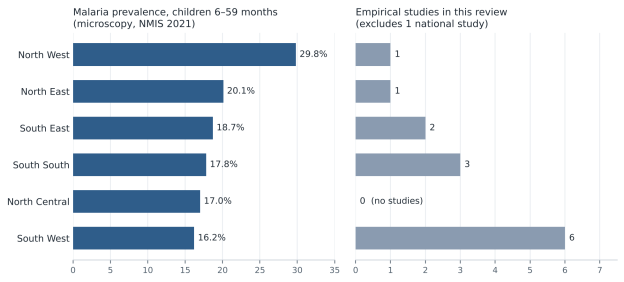
Table 3 sets the empirical evidence against zonal malaria prevalence from the 2021 Malaria Indicator Survey. Two observations stand out.
Table 3. Malaria prevalence and the empirical evidence base by geopolitical zone.
Zone | Prevalence (%) | Empirical studies (states) | Habitats and drivers reported | Main evidence gap |
North West | 29.8 | 1 (Kaduna) | Blocked drains, construction pits and storage containers in unplanned urban settlements; strong rainy-season peaks | Highest burden, thinnest evidence; no rural studies |
North East | 20.1 | 1 (Adamawa) | Stagnant water and blocked drainage; funding and infrastructure gaps; flood-drought cycles | No larval survey data |
North Central | 17.0 | 0 | Floodplain water at the Niger-Benue confluence and along the Benue (hydrological data only) | No community-level empirical study |
South East | 18.7 | 2 (Enugu, Imo) | Stagnant water and bushes in slums; migrant settlement; poor drainage | No larval survey data |
South South | 17.8 | 3 (Edo, Rivers) | Blocked drains, dumpsites in borrow pits, open storage, tidal flooding, vegetation | Concentrated in Port Harcourt |
South West | 16.2 | 6 (Oyo, Ondo, Ogun) | Tyre tracks, gutters, marshes, cassava processing sites; largely covered storage | Mostly Ondo State; little from Lagos |
The first one is that the determinants are cross-cutting across zones but shaped by ecology and economy. In the North West and North East, the habitats reported include urban drains, construction pits, as well as stagnant water and blocked drainage in the semi-urban habitat of Michika, in a climatic setting characterized by high seasonality and alternating floods and droughts
| [29] | Nasir, H. U., Ali, A. A., Mohammed, M. M., Muhammed, H., Gebre, S. T., Miri, N. F., & Usman, M. K. (2026). Climate change, freshwater ecosystem degradation and emerging disease risks in Nigeria: A One Health review of malaria, cholera and schistosomiasis. Asian Journal of Environment & Ecology, 25(7), 163–181. https://doi.org/10.9734/ajee/2026/v25i7968 |
[29]
. In the South South, tidal floods, wetlands, as well as peri-urban settlements, ensure the availability of the habitats throughout the year and have an intensity of transmission of malaria in freshwater swamps and rainforests that is among the highest in the country, where entomological inoculation rate is higher than 200 infective bites per person per year compared to less than 10 in the Sahel
| [29] | Nasir, H. U., Ali, A. A., Mohammed, M. M., Muhammed, H., Gebre, S. T., Miri, N. F., & Usman, M. K. (2026). Climate change, freshwater ecosystem degradation and emerging disease risks in Nigeria: A One Health review of malaria, cholera and schistosomiasis. Asian Journal of Environment & Ecology, 25(7), 163–181. https://doi.org/10.9734/ajee/2026/v25i7968 |
[29]
.
The second observation relates to the evidence itself. Six out of the 14 empirical studies were carried out in the South West region that has the lowest microscopy prevalence rate (16.2%). One was carried out in the North West region that has the highest prevalence rate (29.8%). The North Central region has contributed no empirical studies although the Niger-Benue junction in Lokoja and the Benue flood plain in Makurdi, which are two of the locations used by NIHSA for early warning about floods, fall within this region
| [44] | Tukur, H. A. (2021). Nigerian Hydrological Services Agency's efforts towards flood mitigation [Conference presentation]. Nigeria Hydrological Services Agency. |
[44]
. The evidence pattern follows the pattern of institutions and research funding, not of disease. The gap is all the more striking because entomological surveillance has documented pyrethroid resistance in North Central states such as Benue, Nasarawa and Plateau
| [30] | National Malaria Elimination Programme. (2020). National malaria strategic plan 2021–2025. Federal Ministry of Health. |
[30]
, so vector data exist there even where social and habitat data do not.
Figure 2. Malaria prevalence in children aged 6 to 59 months by geopolitical zone (microscopy) and number of included empirical studies per zone.
5.6. Synthesis: Stagnant Water as a Social Product
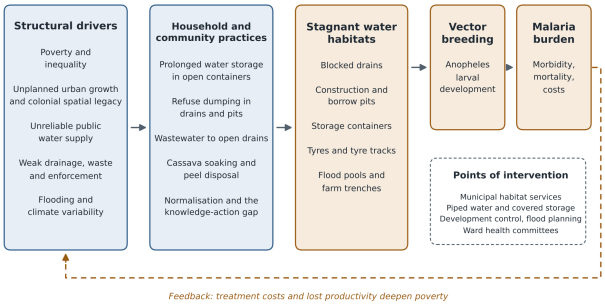
Taken together, the results provide evidence of the framework in
Figure 1 and extend it in three important ways. Firstly, the most significant breeding habitats of
Anopheles in Nigerian communities result from social practices: uncontrolled construction, unmanaged drainage, unreliable water supply, uncollected wastes and livelihoods dependent on intensive water-based processing. Secondly, the breeding habitats operate within a neighbourhood scale, which is the reason why studies focused at household levels might miss them and why behavioural change at household levels will not eliminate them. Thirdly, the institutional response has been slanted towards approaches working against adult vectors and personal protection measures while the instruments which should be used to address breeding habitats have been fragmented among various sectors which do not consider themselves responsible for malaria.
The water-storage paradox incorporates all these aspects. It starts with a systemic flaw in the public water supply system, continues with the practice of water storage by households, results in breeding habitats in compounds and ends up being an inter-sectoral issue falling under the jurisdictions of the water, health sectors and local government institutions.





 Share This Article
 Twitter
 Linked In
 Facebook

 Copy
 Download