Abstract
Lassa fever disproportionately burdens vulnerable West African children, with higher case fatality rates. This study examines the trends and patterns of laboratory-confirmed Lassa fever (LF) positivity among children and key predictors of infection. This study used a retrospective cross-sectional design to analyze national surveillance data on paediatric Lassa fever cases in Nigeria from 2019 to 2024. It included all suspected paediatric Lassa fever cases (8,235 children aged 0–17 years) reported through the NCDC surveillance system, without sampling. Data covered all states and were collected via standardised tools, including RT-PCR confirmation. Analysis involved descriptive statistics and multivariate logistic regression to identify predictors of laboratory-confirmed Lassa fever positivity among children. Analyses were conducted using IBM SPSS Statistics version 28.0. Results: The study showed an overall positivity rate of 10.3% among children tested from 2019 to 2024, with notable annual positivity rates peaking in 2023 (23.9%) and 2020 (22.7%) and a decline in 2021 (13.6%). Age was a strong predictor: children aged 5–12 years (AOR = 1.790, p < 0.001) and adolescents aged 13–17 years (AOR = 2.325, p < 0.001) had higher odds of positivity compared to those aged 0–4 years. Females had slightly higher odds of infection (AOR = 1.205, p = 0.012). Seasonality played a major role: children tested in the first quarter were more than twice as likely to be positive as those tested in the last quarter (AOR = 2.449, p < 0.001). These findings highlight the need for seasonally targeted preparedness, strengthened paediatric surveillance, and context-specific clinical and public health interventions.
|
Published in
|
World Journal of Public Health (Volume 11, Issue 3)
|
|
DOI
|
10.11648/j.wjph.20261103.17
|
|
Page(s)
|
287-296 |
|
Creative Commons
|

This is an Open Access article, distributed under the terms of the Creative Commons Attribution 4.0 International License (http://creativecommons.org/licenses/by/4.0/), which permits unrestricted use, distribution and reproduction in any medium or format, provided the original work is properly cited.
|
|
Copyright
|
Copyright © The Author(s), 2026. Published by Science Publishing Group
|
Keywords
Paediatric, Lassa Fever, Surveillance, Nigeria
1. Introduction
According to the World Health Organization (2024), Lassa fever is an acute viral haemorrhagic illness caused by the Lassa virus, a member of the arenavirus family of viruses. The disease has also become a significant public health challenge, as it is primarily endemic in some West African countries, including Nigeria, Sierra Leone, Liberia, and Guinea, with
Mastomys natalensis acting as the primary reservoir
. LF affects around two million people worldwide each year, resulting in 5,000 to 10,000 deaths, with an estimated 300,000 to 500,000 cases occurring annually in West Africa alone
| [2] | Ogbu, O. I., Ngwa, M. N., & Njoku AI. The economic burden of Lassa fever in Nigeria. Int J Econ Financ Issues 2018; 8: 118–123. |
[2]
. In Nigeria, LF is endemic, with outbreaks occurring annually, particularly during the dry season when human-rodent interactions increase, accounting for an estimated 70-80% of all reported cases globally
. Symptomatic cases typically begin with a gradual onset of fever, malaise, headache, sore throat, and muscle aches and, in severe instances, the disease progresses to affect multiple organs, leading to haemorrhagic symptoms, organ failure, and potentially death
.
Children represent an important population in Lassa fever epidemiology because infection may present differently across age groups, and evidence on disease burden and risk factors in paediatric populations remains limited. Previous studies have reported Lassa fever among children in endemic settings, highlighting the need for age-specific surveillance and epidemiological assessments to better understand infection patterns and guide targeted interventions
| [5] | Chaudhary M, Cutland CL, Bonet M, Gentile A, Jones CE, Marshall HS, et al. Burden of Lassa fever disease in pregnant women and children and options for prevention. Vaccine 2025; 43: 126479. https://doi.org/10.1016/j.vaccine.2024.126479 |
| [6] | Samuels RJ, Moon TD, Starnes JR, Alhasan F, Gbakie M, Goba A, et al. Lassa Fever among Children in Eastern Province, Sierra Leone: A 7-year Retrospective Analysis (2012–2018). Am J Trop Med Hyg 2021; 104: 585–92.
https://doi.org/10.4269/ajtmh.20-0773 |
| [7] | Shaffer, J. G. et al. Lassa fever in post-conflict Sierra Leone. PLoS Negl Trop Dis 2014; 8(3): e2748.
https://doi.org/10.1371/journal.pntd.0002748 |
| [8] | He Z, Bishwajit G, Zou D, Yaya S, Cheng Z, Zhou Y. Burden of Common Childhood Diseases in Relation to Improved Water, Sanitation, and Hygiene (WASH) among Nigerian Children. Int J Environ Res Public Health 2018; 15: 1241.
https://doi.org/10.3390/ijerph15061241 |
[5-8]
. Presently, there are no licensed vaccines available to protect against LF, although several vaccine candidates are in various stages of development
| [9] | Bello OO, Akinajo OR, Odubamowo KH, Oluwasola TAO. Lassa Fever in Pregnancy: Report of 2 Cases Seen at the University College Hospital, Ibadan. Case Rep Obstet Gynecol 2016; 2016: 1–3. https://doi.org/10.1155/2016/9673683 |
[9]
. Preventive measures focus on reducing rodent populations, avoiding contact with rodents, and implementing strict infection control practices in healthcare settings
| [10] | Kayem ND, Okogbenin S, Okoeguale J, Eigbefoh J, Ikheloa J, Eifediyi R, et al. Transplacental transfer of Lassa IgG antibodies in pregnant women in Southern Nigeria: A prospective hospital-based cohort study. PLoS Negl Trop Dis 2023; 17: e0011209.
https://doi.org/10.1371/journal.pntd.0011209 |
[10]
. Various factors have been recognised as increasing the transmission of LF, such as substandard housing and sanitation, restricted healthcare availability, and insufficient food storage practices
| [11] | Tiamiyu AB, Adegbite OA, Freides O, Frndak S, Mohammed SS, Broach E, et al. Seroprevalence and risk factors for Lassa virus infection in South-West and North-Central Nigeria: a community-based cross-sectional study. BMC Infect Dis 2024; 24: 1118. https://doi.org/10.1186/s12879-024-09954-1 |
[11]
.
The period from 2019 to 2024 is analytically significant because it coincided with improvements in Lassa fever surveillance and diagnostic capacity in Nigeria, integration of LF into routine Integrated Disease Surveillance and Response (IDSR) reporting, and health system disruptions associated with the COVID-19 pandemic. These developments may have influenced paediatric case detection and reporting patterns. Therefore, examining surveillance trends, geographic distribution, temporal patterns, and predictors of Lassa fever positivity among children is important for informing targeted prevention, surveillance, and clinical management strategies for strengthening Nigeria’s response to recurrent LF outbreaks.
The study aims to investigate paediatric Lassa fever (0–17 years) in Nigeria by describing its demographic characteristics, temporal trends, and positivity rates, as well as identifying demographic and temporal predictors of laboratory-confirmed Lassa fever positivity between 2019 and 2024.
2. Materials and Methods
2.1. Study Design
This study adopted a retrospective cross-sectional analytical design using routinely collected national surveillance data on suspected paediatric Lassa fever cases reported in Nigeria between January 2019 and December 2024. The design enabled assessment of demographic and temporal factors associated with laboratory-confirmed Lassa fever positivity. Specifically, it aimed to explore paediatric LF cases reported in Nigeria between January 2019 and December 2024. The retrospective nature of the design allowed for the systematic analysis of historical data already collected by the Nigeria Centre for Disease Control (NCDC), enabling the study to track disease trends and identify predictors associated with laboratory-confirmed Lassa fever positivity among children. The retrospective study method was particularly appropriate given the study’s focus on temporal relationships such as how variations in age, sex, and geographic location influenced disease outcomes across the years.
2.2. Study Population
The study population consisted of children aged 0–17 years, consistent with the United Nations definition of paediatric age groups. All suspected Lassa fever cases among this age group reported to the Nigeria Centre for Disease Control (NCDC) between 2019 and 2024 were included. Eligibility criteria required laboratory confirmation of Lassa fever using RT-PCR and documented age within the specified range. No sampling technique was applied, as the study utilised complete population-based surveillance data. Children were categorised into age groups to allow developmental comparisons: 0–4 years (infants, toddlers, and preschool-aged children), 5–12 years (school-aged and preadolescent children), and 13–17 years (adolescents). This stratification allowed for detailed analysis of age-specific differences in LF positivity rates and associated factors. Age categories were defined based on developmental and epidemiological relevance. In particular, adolescents aged 13–17 years represent a distinct risk group, as increased mobility, occupational exposure (e.g., farming, food storage), and delayed care-seeking behaviours may elevate infection risk and worsen outcomes. Disaggregating this group enabled a more precise assessment of age-specific vulnerabilities. Temporal aggregation by epidemiological weeks and quarters was used to capture seasonal patterns linked to climatic influences on rodent populations while reducing random short-term variability.
2.3. Settings
The study was conducted using secondary, de-identified national surveillance data from Nigeria. Data covered all 36 states and the Federal Capital Territory and spanned January 2019 to December 2024. Case reporting occurred through healthcare facilities across the country using the Integrated Disease Surveillance and Response (IDSR) system. Data collection followed routine surveillance procedures, with laboratory confirmation performed at NCDC-accredited reference laboratories during the study period.
2.4. Sample Size
The study size comprised all suspected paediatric Lassa fever cases (8,235) reported nationally between 2019 and 2024. The size was determined by the total number of eligible cases available within the surveillance database during the study period, rather than by prior sample size calculation.
2.5. Variables
The primary outcome variable was laboratory-confirmed Lassa fever status, classified as positive or negative based on RT-PCR testing. Predictor variables included age group, sex, geographic region, and epidemiological quarter. Potential confounders such as demographic and temporal factors were considered in the analysis. Lassa fever positivity served as the main endpoint for regression analyses. Age was analysed as grouped categories (0–4, 5–12, and 13–17 years) to allow developmental comparisons. Temporal variables were analysed using calendar years and epidemiological weeks. Other quantitative variables were summarised using appropriate descriptive statistics and incorporated into regression models as categorical or continuous variables as applicable.
2.6. Inclusion and Exclusion Criteria
The study included all suspected paediatric Lassa fever cases (children aged 0–17 years) reported to the Nigeria Centre for Disease Control (NCDC) between January 2019 and December 2024 who underwent RT-PCR testing for Lassa fever, regardless of whether the test result was positive or negative. No sampling was performed because the complete national surveillance dataset was analysed.
Records were excluded if they involved individuals outside the 0–17-year age range, lacked laboratory RT-PCR test results, had missing age information, or were reported outside the study period. Laboratory-confirmed (RT-PCR-positive) cases constituted the outcome group in the regression analyses, while RT-PCR-negative suspected cases served as the comparison group.
2.7. Data Source and Measurement
Data was obtained from NCDC’s centralised surveillance database. Information was collected using standardised case-based surveillance forms completed at health facilities and entered into the Surveillance Outbreak Response Management and Analysis System (SORMAS). Variables captured included demographic details, clinical presentation, laboratory confirmation, hospitalisation status, and outcomes. Laboratory diagnosis was conducted using reverse transcription polymerase chain reaction (RT-PCR). Data quality was ensured through validation procedures such as double data entry, routine audits, and cross-verification with laboratory and clinical records. All data were de-identified prior to analysis. Data completeness was assessed before analysis. Records with missing information on age, sex, geographic region, or laboratory test results were excluded from relevant analyses. The proportion of missing values for key variables was low (<5%). Complete-case analysis was employed because missingness was minimal and unlikely to substantially influence study findings.
2.8. Bias
Potential sources of bias included underreporting of cases and incomplete clinical documentation inherent in routine surveillance data, and potential detection bias, whereby sicker children were more likely to be tested than those with milder or subclinical illness. These were minimised through the use of laboratory-confirmed cases only and reliance on standardised national surveillance protocols. Data quality assurance procedures implemented by the NCDC further reduced misclassification and reporting bias. NCDC data quality assurance, validation, and routine completeness checks, collectively minimized misclassification, reporting bias, and the impact of missing data on study findings.
2.9. Data Analysis
Descriptive statistics summarised demographic and clinical characteristics. Multivariate logistic regression models were used to identify predictors of positivity, controlling for potential confounders. Crude and adjusted odds ratios with 95% confidence intervals were reported. To minimize confounding, variables identified from previous literature and epidemiological relevance (age group, sex, geographical region, and epidemiological quarter) were included simultaneously in the multivariate logistic regression model irrespective of their statistical significance in the bivariate analysis. Adjusted odds ratios (AORs) with 95% confidence intervals were estimated to determine the independent association between each predictor and laboratory-confirmed Lassa fever positivity while controlling for the influence of the other covariates in the model. This modelling approach reduced the likelihood that the observed associations were attributable to differences in demographic composition or seasonal variation. Multivariate logistic regression was selected because the primary outcome variable (laboratory-confirmed Lassa fever positivity) was dichotomous (positive/negative), making logistic regression the most appropriate statistical approach for estimating the independent effects of multiple predictors simultaneously. Analyses were also stratified by age group, sex, and geographic region to explore subgroup differences in disease patterns and outcomes. Analyses were conducted using available data as recorded in the surveillance database. Cases with missing outcome data were excluded from outcome-specific analyses. Trend and time series analyses were performed to assess the consistency of findings across years and epidemiological periods. All analyses were conducted using IBM SPSS Statistics version 28.0.
2.10. Ethical Approval
Ethical approval for this study was obtained from the National Health Research Ethics Committee of Nigeria. The study utilized secondary data retrieved from the NCDC database. Permission was granted to access and use the data for research purposes. All data were handled in accordance with institutional data protection and confidentiality guidelines, ensuring that no personal identifiers were included and that data were used strictly for academic research purposes.
3. Results
Table 1 presents the study population of 8,235 children aged 0–17 years who were suspected and tested for Lassa fever in Nigeria between 2019 and 2024. The largest proportion was in the 5-12-year age group (40.1%), followed by those aged 0–4 years (33.1%) and the 13–17-year group which represented the smallest proportion (26.3%). Gender distribution showed a slight male predominance, with 54.5% males compared to 45.5% females. Regionally, the South-South region contributed the highest proportion of participants (50.8%), followed by the South-West (22.6%) and North-East (10.5%). The North-West region contributed the least (2.8%), indicating uneven regional representation. When categorized by epidemiological week, most participants presented in the first quarter of the year (41.8%), suggesting a strong early-year clustering of cases. The remaining participants were evenly distributed across mid-year (21.1%) and end-year (21.1%) periods, while the late-year quarter contributed the smallest proportion (16.0%).
Table 1. Sociodemographic characteristics of children aged 0-17 years suspected for LF in Nigeria from 2019-2024.
Variable | Frequency (n=8235) | Percentage (%) |
Age |
0-4 | 2726 | 33.1 |
5-12 | 3340 | 40.6 |
13 - 17 | 2169 | 26.3 |
Gender |
Male | 4487 | 54.5 |
Female | 3748 | 45.5 |
Region |
North Central | 576 | 7.0 |
Northeast | 864 | 10.5 |
Northwest | 228 | 2.8 |
Southeast | 523 | 6.4 |
South south | 4186 | 50.8 |
South-west | 1858 | 22.6 |
Numbers of Cases Per year | | |
2019 | 1,474 | 17.9 |
2020 | 1,496 | 18.2 |
2021 | 1,129 | 13.7 |
2022 | 1,913 | 23.2 |
2023 | 2,178 | 26.4 |
2024 | 45 | 0.5 |
Epi week Category |
Q1 (Early year) | 3439 | 41.8 |
Q2 (Mid-year) | 1736 | 21.1 |
Q3 (Late year) | 1321 | 16.0 |
Q4 (End year) | 1739 | 21.1 |
Figure 1 illustrates the prevalence of Lassa fever among children aged 0–17 years in Nigeria, showing that 10.3% tested positive while 89.7% tested negative.
Figure 1. Prevalence of Lassa Fever among children aged 0-17 years in Nigeria from 2019-2024.
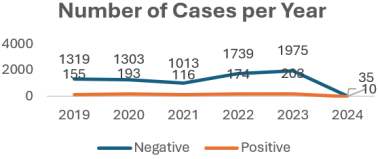
Figure 2 shows fluctuations in paediatric Lassa fever cases between 2019 and 2024. The number of confirmed positive cases increased from 155 in 2019 to 193 in 2020, declined to 116 in 2021, rose again to 174 in 2022, and peaked at 203 in 2023, before dropping sharply to 10 cases in 2024, likely reflecting incomplete surveillance data. Similarly, the number of negative cases increased overall from 1,319 in 2019 to 1,975 in 2023, with a substantial decline to 35 in 2024.
Figure 2. Trend of Lassa Fever Test Results in Nigeria by Epidemiological Year (2019–2024).
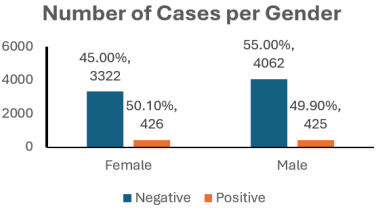
Figure 3. Gender Distribution of Lassa Fever Test Results in Nigeria (2019–2024).
Figure 3 illustrates the gender distribution of Lassa fever test results, showing that females and males had nearly equal positivity rates. Females had a slightly higher positivity proportion (50.1%) compared to males (49.9%), suggesting minimal gender disparity in infection risk.
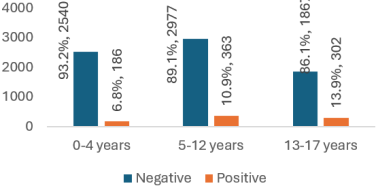
Figure 4 shows the distribution of Lassa fever test results across age groups showing a clear upward trend in positivity with increasing age. Children aged 0–4 years had the lowest positivity rate (6.8%), followed by those aged 5–12 years (10.9%), while adolescents aged 13–17 years recorded the highest positivity rate (13.9%). Conversely, negative results declined with age, from 93.2% in the youngest group to 86.1% among adolescents, indicating that older children were more affected during the study period.
Figure 4. Age Group Distribution of Lassa Fever Test Results in Nigeria (2019–2024).
Multivariate Logistic Regression Analysis of Predictors of Lassa Fever Infection in Nigeria (2019–2024)
Table 2 examined predictors of infection associated with Lassa fever positivity across demographic and temporal variables. Age was a strong predictor of infection. Compared to children aged 0–4 years, those aged 5–12 years had about 1.8 times higher odds of testing positive (AOR = 1.790, 95% CI: 1.48–2.157, p < 0.001). Adolescents aged 13–17 years demonstrated the highest odds of testing positive, with more than twice the likelihood of laboratory-confirmed Lassa fever compared with the reference group 0-4 (AOR = 2.325, 95% CI: 1.913–2.825, p < 0.001). In terms of gender, females had 21% higher odds of testing positive for Lassa fever compared to males (AOR = 1.205, 95% CI: 1.042–1.392, p = 0.012).
Regional differences were observed, with children from the Northwest significantly less likely to test positive compared to the South-South (AOR = 0.428, p = 0.004). Interestingly, the adjusted model showed children in the Southwest had lower odds of positivity (AOR = 0.806, p = 0.020), despite showing higher crude odds in unadjusted analysis, suggesting confounding effects of other variables. Seasonality was a significant predictor, with cases clustering early in the year. Children tested in the first quarter (Q1) were more than twice as likely to be positive compared to those tested in the last quarter (Q4) (AOR = 2.449, p < 0.001), confirming a strong seasonal pattern in transmission.
Table 2. Multivariate Logistic Regression Analysis of Factors Associated with Lassa Fever in Nigeria (2019–2024).
Variable | Lassa fever | COR (95 Cl) | P value | AOR (95 Cl) | P value |
Negative (n=7384) | Positive (n=851) |
Age Category (years) |
0 - 4 | 2540 (93.2) | 186 (6.8) | Ref | - | Ref | - |
5 - 12 | 2977 (89.1) | 363 (10.9) | 1.665 (1.385-2.003) | <0.001* | 1.790 (1.484-2.157) | <0.001* |
13 - 17 | 1867 (86.1) | 302 (13.9) | 2.209 (1.823-2.677) | <0.001* | 2.325 (1.913-2.825) | <0.001* |
Gender |
Male | 4062 (90.5) | 425 (9.5) | Ref | - | Ref | - |
Female | 3322 (88.6) | 426 (11.4) | 1.226 (1.063-1.413) | 0.005* | 1.205 (1.042-1.392) | 0.012* |
Region |
North Central | 519 (90.1) | 57 (9.9) | 1.126 (0.840-1.510) | 0.428 | 1.038 (0.775-1.390) | 0.801 |
Northeast | 767 (88.8) | 97 (11.2) | 1.297 (1.024-1.643) | 0.031* | 1.187 (0.926-1.520) | 0.176 |
Northwest | 214 (93.9) | 14 (6.1) | 0.671 (0.387-1.164) | 0.155 | 0.428 (0.239-0.768) | 0.004* |
Southeast | 466 (89.1) | 57 (10.9) | 1.254 (0.934-1.684) | 0.132 | 0.791 (0.568-1.101) | 0.164 |
Southwest | 1604 (86.3) | 254 (13.7) | 1.624 (1.370-1.924) | <0.001* | 0.806 (0.672-0.967) | 0.020* |
South-south | 3814 (91.1) | 372 (8.9) | Ref | - | Ref | - |
Epi week Category |
Q1 (Early year) | 2905 (84.5) | 534 (15.5) | 2.400 (1.954-2.948) | <0.001* | 2.449 (1.991-3.012) | <0.001* |
Q2 (Mid-year) | 1627 (93.7) | 109 (6.3) | 0.880 (0.674-1.149) | 0.349 | 0.877 (0.671-1.147) | 0.347 |
Q3 (Late year) | 1236 (93.6) | 85 (6.4) | 0.904 (0.679-1.203) | 0.487 | 0.876 (0.675-1.169) | 0.323 |
Q4 (End year) | 1616 (92.9) | 123 (7.1) | Ref | - | Ref | - |
4. Discussion
Lassa fever continues to pose a major public health challenge in Nigeria and across West Africa, with children among the most vulnerable. In recent years, strengthened surveillance and better diagnostic capacity, driven largely by the Nigeria Centre for Disease Control (NCDC), have led to more reported cases and revealed a wider geographic spread
. The epidemiology of Lassa fever is shaped by complex interactions between environmental, socioeconomic, and demographic factors, with seasonal peaks typically observed in the first quarter of the year and certain regions consistently identified as hotspots
| [12] | Dalhat MM, Olayinka A, Meremikwu MM, Dan-Nwafor C, Iniobong A, Ntoimo LF, et al. Epidemiological trends of Lassa fever in Nigeria, 2018–2021. PLoS One 2022; 17: e0279467.
https://doi.org/10.1371/journal.pone.0279467 |
| [14] | Ezenwa-Ahanene A, Salawu AT, Adebowale AS. Descriptive epidemiology of Lassa fever, its trend, seasonality, and mortality predictors in Ebonyi State, South- East, Nigeria, 2018—2022. BMC Public Health 2024; 24: 3470.
https://doi.org/10.1186/s12889-024-20840-y |
[12, 14]
.
The observed prevalence of LF among children aged 0–17 years in Nigeria from 2019–2024, with 10.3% testing positive, is notably higher than some previously reported figures in paediatric populations. A prospective study in an endemic area found a prevalence of 3.5% among febrile children admitted to the hospital, while another hospital-based study reported a prevalence of 1.6% among paediatric admissions
| [15] | Akhuemokhan OC, Ewah-Odiase RO, Akpede N, Ehimuan J, Adomeh DI, Odia I, et al. Prevalence of Lassa Virus Disease (LVD) in Nigerian children with fever or fever and convulsions in an endemic area. PLoS Negl Trop Dis 2017; 11: e0005711.
https://doi.org/10.1371/journal.pntd.0005711 |
| [16] | Akpede G, Odike A, Okokhere P, Olomu SC, Asogun D, Happi C, et al. Prevalence and presentation of Lassa fever in Nigerian children. Int J Infect Dis 2010; 14: e380.
https://doi.org/10.1016/j.ijid.2010.02.465 |
[15, 16]
.
The yearly trend observed in this study demonstrates considerable fluctuations in paediatric Lassa fever cases over the study period. Confirmed positive cases increased from 155 in 2019 to a peak of 203 in 2023, with a temporary decline in 2021 before rising again in 2022 and 2023. A similar trend was observed for suspected negative cases, reflecting variations in testing volume and surveillance activities across the years. The marked reduction in both positive and negative cases in 2024 should be interpreted with caution, as it most likely reflects incomplete surveillance data rather than a true decline in disease occurrence. These findings are consistent with the known year-to-year variability of Lassa fever in Nigeria, which is influenced by seasonal transmission dynamics, surveillance intensity, and public health response efforts. When compared with adult literature, this pattern mirrors national surveillance reports, which show that LF transmission in Nigeria is seasonal and highly variable between years, typically peaking during the dry season when human–rodent contact intensifies and declines with interventions or changes in surveillance intensity
| [17] | Eneh SC, Obi CG, Ephraim Ikpongifono U, Dauda Z, Udoewah SA, Anokwuru CC, et al. The resurgence of Lassa fever in Nigeria: economic impact, challenges, and strategic public health interventions. Front Public Heal 2025; 13.
https://doi.org/10.3389/fpubh.2025.1574459 |
[17]
. The sharp decline in 2024 could also reflect operational challenges in case detection and reporting, or reduced activity in high-burden regions late in the season, issues observed in broader LF surveillance data that suggest underreporting and incomplete case capture are recurrent problems in national LF datasets
. Al-Mustapha et al. similarly reported an overall positivity rate of 14% in their review of Lassa fever in Nigeria between 2020 and 2023, with the highest number of positive cases occurring in 2020
.
The decline in Lassa fever positivity in 2021, followed by a rise in 2022, mirrors national trends observed in Nigeria during this period. National surveillance data and retrospective analyses confirm that 2021 saw a significant drop in Lassa fever positivity rates, with one study reporting the lowest annual positivity at 11% in 2021, compared to higher rates in preceding and subsequent years
. This reduction has been attributed to a combination of factors, including possible changes in environmental conditions, public health interventions, and variations in surveillance intensity or case definitions
. The resurgence in 2022 aligns with a broader pattern of fluctuating LF incidence, as highlighted in multi-year reviews and epidemiological analyses, which note that LF transmission is influenced by seasonal, ecological, and socioeconomic factors
.
Lassa fever positivity showed no meaningful gender difference, with females (50.1%) and males (49.9%) nearly equal. However, positivity increased with age, rising from 6.8% (0–4 years) to 13.9% (13–17 years), indicating higher infection rates among older children. This pattern is consistent with national and regional surveillance data, though most published studies group children into broader age categories. A large national surveillance analysis of LF in Nigeria (2018–2021) found that the proportion of confirmed cases was lowest in the youngest age group (0–9 years), with less than half the number of cases seen in older age groups. The 10–19-year age group contributed a higher proportion of cases than younger children, but still fewer than adults, indicating a trend of increasing positivity with age during childhood and adolescence
.
The finding that children aged 5–12 years have about 1.8 times higher odds of testing positive for Lassa fever compared to those aged 0–4 years (AOR = 1.790, p < 0.001) highlights a clear age-related gradient in Lassa fever risk among children in Nigeria. The robust confidence interval and highly significant p-value (<0.001) underscore the reliability of this association
| [21] | Ochu CL, Ntoimo L, Onoh I, Okonofua F, Meremikwu M, Mba S, et al. Predictors of Lassa fever diagnosis in suspected cases reporting to health facilities in Nigeria. Sci Rep 2023; 13: 6545. https://doi.org/10.1038/s41598-023-33187-y |
[21]
. A large national study analysing over 20,000 suspected Lassa fever cases in Nigeria found that the odds of Lassa fever positivity were lowest in the youngest children (0–4 years) and increased with age, including among children and adolescents. The study specifically noted that the 0–9-year age group had less than half the number of cases seen in older age groups, supporting the trend of increasing risk with age during childhood
| [12] | Dalhat MM, Olayinka A, Meremikwu MM, Dan-Nwafor C, Iniobong A, Ntoimo LF, et al. Epidemiological trends of Lassa fever in Nigeria, 2018–2021. PLoS One 2022; 17: e0279467.
https://doi.org/10.1371/journal.pone.0279467 |
| [21] | Ochu CL, Ntoimo L, Onoh I, Okonofua F, Meremikwu M, Mba S, et al. Predictors of Lassa fever diagnosis in suspected cases reporting to health facilities in Nigeria. Sci Rep 2023; 13: 6545. https://doi.org/10.1038/s41598-023-33187-y |
[12, 21]
.
Adolescents aged 13–17 years demonstrated a significantly elevated risk of testing positive for Lassa fever, with an adjusted odds ratio (AOR) of 2.325: p < 0.001), indicating they are more than twice as likely to test positive compared to the reference group of younger children. These findings may reflect differences in exposure patterns, although the current dataset does not permit direct assessment of behavioral risk factors
| [22] | Alenoghena OI, Ehighalua D, Awunor NS, Yerumoh S. Knowledge and risk factors for Lassa fever amongst students of Federal Polytechnic Auchi, Edo State, Nigeria. J Public Heal Epidemiol 2021; 13: 45–53.
https://doi.org/10.5897/JPHE2021.1305 |
[22]
.
The finding that females had 21% higher odds of testing positive for Lassa fever compared to males (AOR = 1.205: p = 0.012) suggests a modest but statistically significant gender difference in Lassa fever risk. This contrasts with several hospital-based and seroprevalence studies in Nigeria, which generally report no significant association between gender and Lassa fever infection or outcomes
| [23] | Nwafor IE, Ogah OE, Ojide CK, Odeh EC, Abu AM, Chika-Igwenyi NM, et al. Prevalence and outcome of Lassa fever among hospitalized patients in Ebonyi State, Nigeria, 2018–2019. Virus Res 2020; 285: 198000.
https://doi.org/10.1016/j.virusres.2020.198000 |
| [24] | Chimuanya UK, Mariagoretti CO, Barbara OM, Onochie MP, Michael NI, Okechukwu CG. Immunoglobulin G Seroprevalence of Lassa Fever Virus among Individuals Residing along the Banks of River Niger in Anambra State, Nigeria. J Angiother 2022; 6: 696–702.
https://doi.org/10.25163/angiotherapy.626323 |
[23, 24]
. While some adult studies have reported male predominance in LF incidence, likely due to gendered occupational exposures and health-seeking behaviour differences, children may differ because exposure dynamics are primarily household-driven and less shaped by adult roles, hence diminishing sex disparities
. However, a recent large-scale national analysis did observe that certain subgroups of females, such as female farmers, had notably higher odds of testing positive compared to their male counterparts, indicating that occupation and exposure patterns may play a role in gender differences
| [21] | Ochu CL, Ntoimo L, Onoh I, Okonofua F, Meremikwu M, Mba S, et al. Predictors of Lassa fever diagnosis in suspected cases reporting to health facilities in Nigeria. Sci Rep 2023; 13: 6545. https://doi.org/10.1038/s41598-023-33187-y |
[21]
.
The finding that children from the Northwest region of Nigeria were significantly less likely to test positive for Lassa fever than those from the South-South (AOR = 0.428, p = 0.004) underscores important regional disparities in Lassa fever prevalence. However, these regional differences should be interpreted cautiously. Variations in surveillance sensitivity, healthcare-seeking behaviour, laboratory testing capacity, and referral networks across regions may influence the number of suspected cases identified and tested. Areas with stronger surveillance systems and better access to diagnostic facilities may detect and confirm more cases, whereas under-detection may occur in regions with limited diagnostic coverage. Therefore, the observed regional differences may reflect both true epidemiological variation and differences in case ascertainment. When compared with adult populations, multiple studies confirm that LF is consistently more prevalent in the southern regions of Nigeria (particularly in states like Edo, Ondo, and Ebonyi) while the Northwest reports much lower incidence rates
| [12] | Dalhat MM, Olayinka A, Meremikwu MM, Dan-Nwafor C, Iniobong A, Ntoimo LF, et al. Epidemiological trends of Lassa fever in Nigeria, 2018–2021. PLoS One 2022; 17: e0279467.
https://doi.org/10.1371/journal.pone.0279467 |
| [25] | Okoro OA, Bamgboye E, Dan-Nwafor C, Umeokonkwo C, Ilori E, Yashe R, et al. Descriptive epidemiology of lassa fever in nigeria, 2012-2017. Pan Afr Med J 2020; 37: 1–7.
https://doi.org/10.11604/pamj.2020.37.15.21160 |
| [26] | Akafa TA, John AI, Oladele GO, Umaru IJ. Persistent Threat of Lassa Fever in Nigeria: Epidemiology, Challenges, and Strategies for Effective Management. African J Med Surg Public Heal Res 2025; 2: 270–81.
https://doi.org/10.58578/ajmsphr.v2i2.5517 |
[12, 25, 26]
. This pattern is attributed to several factors, including ecological differences that affect the distribution of the primary rodent reservoir (
Mastomys natalensis), variations in climate, and differences in agricultural and food storage practices that influence human-rodent contact
| [27] | Redding DW, Gibb R, Dan-Nwafor CC, Ilori EA, Yashe RU, Oladele SH, et al. Geographical drivers and climate-linked dynamics of Lassa fever in Nigeria. Nat Commun 2021; 12: 5759. https://doi.org/10.1038/s41467-021-25910-y |
| [28] | Happi AN, Olumade TJ, Ogunsanya OA, Sijuwola AE, Ogunleye SC, Oguzie JU, et al. Increased Prevalence of Lassa Fever Virus-Positive Rodents and Diversity of Infected Species Found during Human Lassa Fever Epidemics in Nigeria. Microbiol Spectr 2022; 10.
https://doi.org/10.1128/spectrum.00366-22 |
[27, 28]
. These findings contribute to the theoretical understanding of Lassa fever epidemiology by demonstrating that paediatric infection risk is influenced by the interaction of ecological, environmental, and health-system factors rather than demographic characteristics alone. From a disease ecology perspective, the geographical clustering observed in southern Nigeria reflects favourable environmental conditions for
Mastomys natalensis, while differences in surveillance sensitivity and access to diagnostic services further influence case detection. Consequently, the observed regional variation represents both biological transmission dynamics and variations in public health system performance. This integrated interpretation supports the need for geographically tailored surveillance, rodent control, and preparedness strategies rather than uniform nationwide interventions.
The study found that children in the Southwest had lower odds of testing positive for Lassa fever (AOR = 0.806, p = 0.020) compared to other regions, such as the South-South, and this aligns with national surveillance data showing that Lassa fever is less prevalent in the Southwest than in the southern hotspots of Edo and Ondo states, and the South-South region
| [12] | Dalhat MM, Olayinka A, Meremikwu MM, Dan-Nwafor C, Iniobong A, Ntoimo LF, et al. Epidemiological trends of Lassa fever in Nigeria, 2018–2021. PLoS One 2022; 17: e0279467.
https://doi.org/10.1371/journal.pone.0279467 |
| [25] | Okoro OA, Bamgboye E, Dan-Nwafor C, Umeokonkwo C, Ilori E, Yashe R, et al. Descriptive epidemiology of lassa fever in nigeria, 2012-2017. Pan Afr Med J 2020; 37: 1–7.
https://doi.org/10.11604/pamj.2020.37.15.21160 |
[12, 25]
. Possible causes for this lower risk include ecological differences that affect the distribution and density of the primary rodent reservoir (
Mastomys natalensis), as well as variations in climate, urbanization, and agricultural practices that may reduce human-rodent contact in the Southwest
| [27] | Redding DW, Gibb R, Dan-Nwafor CC, Ilori EA, Yashe RU, Oladele SH, et al. Geographical drivers and climate-linked dynamics of Lassa fever in Nigeria. Nat Commun 2021; 12: 5759. https://doi.org/10.1038/s41467-021-25910-y |
| [29] | Cadmus S, Taiwo OJ, Akinseye V, Cadmus E, Famokun G, Fagbemi S, et al. Ecological correlates and predictors of Lassa fever incidence in Ondo State, Nigeria 2017–2021: an emerging urban trend. Sci Rep 2023; 13: 20855.
https://doi.org/10.1038/s41598-023-47820-3 |
[27, 29]
. Additionally, the Southwest may benefit from better public health infrastructure, more effective rodent control, and higher community awareness, all of which can contribute to lower transmission rates
| [12] | Dalhat MM, Olayinka A, Meremikwu MM, Dan-Nwafor C, Iniobong A, Ntoimo LF, et al. Epidemiological trends of Lassa fever in Nigeria, 2018–2021. PLoS One 2022; 17: e0279467.
https://doi.org/10.1371/journal.pone.0279467 |
| [27] | Redding DW, Gibb R, Dan-Nwafor CC, Ilori EA, Yashe RU, Oladele SH, et al. Geographical drivers and climate-linked dynamics of Lassa fever in Nigeria. Nat Commun 2021; 12: 5759. https://doi.org/10.1038/s41467-021-25910-y |
[12, 27]
. Children tested for Lassa fever in the epidemiological weeks of first quarter (Q1) of the year were more than twice as likely to test positive compared to those tested in the last quarter (Q4) (AOR = 2.449, p < 0.001), reflecting a strong seasonal pattern in Lassa fever transmission. This trend is well-documented in Nigeria, where multiple studies and national surveillance data consistently show that Lassa fever cases peak between December and March, coinciding with the dry season
| [14] | Ezenwa-Ahanene A, Salawu AT, Adebowale AS. Descriptive epidemiology of Lassa fever, its trend, seasonality, and mortality predictors in Ebonyi State, South- East, Nigeria, 2018—2022. BMC Public Health 2024; 24: 3470.
https://doi.org/10.1186/s12889-024-20840-y |
| [30] | McKendrick JQ, Tennant WSD, Tildesley MJ. Modelling seasonality of Lassa fever incidences and vector dynamics in Nigeria. PLoS Negl Trop Dis 2023; 17: e0011543.
https://doi.org/10.1371/journal.pntd.0011543 |
[14, 30]
. The primary cause of this seasonality is linked to the ecology and breeding patterns of the rodent reservoir (
Mastomys natalensis), whose population dynamics and increased human-rodent contact during the dry season drive higher rates of virus spillover to humans
| [30] | McKendrick JQ, Tennant WSD, Tildesley MJ. Modelling seasonality of Lassa fever incidences and vector dynamics in Nigeria. PLoS Negl Trop Dis 2023; 17: e0011543.
https://doi.org/10.1371/journal.pntd.0011543 |
| [31] | Akhmetzhanov AR, Asai Y, Nishiura H. Quantifying the seasonal drivers of transmission for Lassa fever in Nigeria. Philos Trans R Soc B Biol Sci 2019; 374: 20180268.
https://doi.org/10.1098/rstb.2018.0268 |
[30, 31]
.
5. Limitations
This study has several limitations that should be considered when interpreting the findings. First, changes in Lassa fever surveillance and diagnostic capacity across Nigeria during the study period may have influenced case detection rates. Improvements in laboratory infrastructure, case identification, reporting systems, and access to RT-PCR testing could have increased the number of detected cases in some years, making temporal comparisons susceptible to surveillance-related variations rather than reflecting true changes in disease occurrence alone.
Second, the COVID-19 pandemic may have introduced surveillance artifacts, particularly during 2020–2021. Public health resources were substantially redirected toward pandemic response activities, potentially affecting healthcare-seeking behaviour, case investigation, specimen collection, testing practices, and reporting completeness. Consequently, some of the observed fluctuations in Lassa fever positivity and case counts during this period may partially reflect operational disruptions rather than epidemiological changes alone.
Third, the markedly lower number of reported cases in 2024 (45 cases; 0.5%) and the positivity rate which declined to 1.2%, reflect an incomplete surveillance year, as national reporting and data consolidation were still ongoing at the time of data extraction. Therefore, the 2024 figures should be interpreted as provisional and should not be considered indicative of a true decline in paediatric Lassa fever occurrence.
6. Conclusions
The analysis of paediatric Lassa fever surveillance data from 2019 to 2024 presents a clear and actionable epidemiological picture. Lassa fever in children is characterised by a consistent early-year surge, higher positivity rates and increased odds of infection among older children, particularly adolescents aged 13–17 years, while younger children accounted for a larger proportion of those tested. Marked regional heterogeneity was also observed. Regional differences in testing volume and positivity persist even after adjusting for age and season, indicating local variation that cannot be fully explained by temporal effects. These disparities may reflect differences in transmission ecology (including rodent reservoir dynamics), variable diagnostic access, or distinct referral pathways to specialised centres. The quantitative findings provide useful evidence to inform preparedness, surveillance, and pediatric clinical management.
Abbreviations
AOR | Adjusted Odds Ratio |
CI | Confidence Interval |
COR | Crude Odds Ratio |
COVID-19 | Coronavirus Disease 2019 |
IDSR | Integrated Disease Surveillance and Response |
IBM | International Business Machines |
LF | Lassa Fever |
LGA | Local Government Area |
NCDC | Nigeria Centre for Disease Control and Prevention |
ORCID | Open Researcher and Contributor ID |
PLoS | Public Library of Science |
Q1 | First Quarter (January–March) |
Q2 | Second Quarter (April–June) |
Q3 | Third Quarter (July–September) |
Q4 | Fourth Quarter (October–December) |
Ref | Reference Category |
RT-PCR | Reverse Transcription Polymerase Chain Reaction |
SORMAS | Surveillance Outbreak Response Management and Analysis System |
SPSS | Statistical Package for the Social Sciences |
WHO | World Health Organization |
Acknowledgments
The authors sincerely acknowledge the Nigeria Centre for Disease Control (NCDC) for granting access to the surveillance data used in this retrospective cross-sectional study. We also appreciate the contributions of the surveillance and laboratory personnel whose efforts in data collection, management, and reporting made this research possible.
Author Contributions
Islamiyyat Adekemi Olatinwo: Conceptualization, Data curation, Funding acquisition, Investigation, Methodology, Project administration, Writing – original draft
Elizabeth Amuta: Data curation, Investigation, Resources, Validation, Writing – review & editing
Adamu Ishaku Akyala: Investigation, Project administration, Resources, Writing – review & editing
Oladipupo Ipadeola: Conceptualization, Supervision, Validation, Writing – review & editing
Aishat Bukola Usman: Investigation, Writing – original draft
Olaniyi Felix Sanni: Formal Analysis, Methodology, Project administration, Software, Visualization, Writing – review & editing
Data Availability Statement
The data that support the findings of this study are derived from Nigeria's national Lassa fever surveillance system and are held by the Nigeria Centre for Disease Control and Prevention (NCDC). The data are therefore not publicly available. However, access may be granted upon reasonable request and with permission from the Nigeria Centre for Disease Control and Prevention, subject to applicable ethical, legal, and institutional data-sharing requirements.
Conflicts of Interest
The authors declare no conflicts of interest.
References
| [1] |
World Health Organization (WHO). Lassa fever 2024.
https://www.who.int/news-room/fact-sheets/detail/lassa-fever
|
| [2] |
Ogbu, O. I., Ngwa, M. N., & Njoku AI. The economic burden of Lassa fever in Nigeria. Int J Econ Financ Issues 2018; 8: 118–123.
|
| [3] |
Asogun DA, Günther S, Akpede GO, Ihekweazu C, Zumla A. Lassa Fever. Infect Dis Clin North Am 2019; 33: 933–51.
https://doi.org/10.1016/j.idc.2019.08.002
|
| [4] |
Grant DS, Samuels RJ, Garry RF, Schieffelin JS. Lassa Fever Natural History and Clinical Management, 2023, p. 165–92.
https://doi.org/10.1007/82_2023_263
|
| [5] |
Chaudhary M, Cutland CL, Bonet M, Gentile A, Jones CE, Marshall HS, et al. Burden of Lassa fever disease in pregnant women and children and options for prevention. Vaccine 2025; 43: 126479.
https://doi.org/10.1016/j.vaccine.2024.126479
|
| [6] |
Samuels RJ, Moon TD, Starnes JR, Alhasan F, Gbakie M, Goba A, et al. Lassa Fever among Children in Eastern Province, Sierra Leone: A 7-year Retrospective Analysis (2012–2018). Am J Trop Med Hyg 2021; 104: 585–92.
https://doi.org/10.4269/ajtmh.20-0773
|
| [7] |
Shaffer, J. G. et al. Lassa fever in post-conflict Sierra Leone. PLoS Negl Trop Dis 2014; 8(3): e2748.
https://doi.org/10.1371/journal.pntd.0002748
|
| [8] |
He Z, Bishwajit G, Zou D, Yaya S, Cheng Z, Zhou Y. Burden of Common Childhood Diseases in Relation to Improved Water, Sanitation, and Hygiene (WASH) among Nigerian Children. Int J Environ Res Public Health 2018; 15: 1241.
https://doi.org/10.3390/ijerph15061241
|
| [9] |
Bello OO, Akinajo OR, Odubamowo KH, Oluwasola TAO. Lassa Fever in Pregnancy: Report of 2 Cases Seen at the University College Hospital, Ibadan. Case Rep Obstet Gynecol 2016; 2016: 1–3.
https://doi.org/10.1155/2016/9673683
|
| [10] |
Kayem ND, Okogbenin S, Okoeguale J, Eigbefoh J, Ikheloa J, Eifediyi R, et al. Transplacental transfer of Lassa IgG antibodies in pregnant women in Southern Nigeria: A prospective hospital-based cohort study. PLoS Negl Trop Dis 2023; 17: e0011209.
https://doi.org/10.1371/journal.pntd.0011209
|
| [11] |
Tiamiyu AB, Adegbite OA, Freides O, Frndak S, Mohammed SS, Broach E, et al. Seroprevalence and risk factors for Lassa virus infection in South-West and North-Central Nigeria: a community-based cross-sectional study. BMC Infect Dis 2024; 24: 1118.
https://doi.org/10.1186/s12879-024-09954-1
|
| [12] |
Dalhat MM, Olayinka A, Meremikwu MM, Dan-Nwafor C, Iniobong A, Ntoimo LF, et al. Epidemiological trends of Lassa fever in Nigeria, 2018–2021. PLoS One 2022; 17: e0279467.
https://doi.org/10.1371/journal.pone.0279467
|
| [13] |
Grace J-UA, Egoh IJ, Udensi N. Epidemiological trends of Lassa fever in Nigeria from 2015-2021: A review. Ther Adv Infect Dis 2021; 8.
https://doi.org/10.1177/20499361211058252
|
| [14] |
Ezenwa-Ahanene A, Salawu AT, Adebowale AS. Descriptive epidemiology of Lassa fever, its trend, seasonality, and mortality predictors in Ebonyi State, South- East, Nigeria, 2018—2022. BMC Public Health 2024; 24: 3470.
https://doi.org/10.1186/s12889-024-20840-y
|
| [15] |
Akhuemokhan OC, Ewah-Odiase RO, Akpede N, Ehimuan J, Adomeh DI, Odia I, et al. Prevalence of Lassa Virus Disease (LVD) in Nigerian children with fever or fever and convulsions in an endemic area. PLoS Negl Trop Dis 2017; 11: e0005711.
https://doi.org/10.1371/journal.pntd.0005711
|
| [16] |
Akpede G, Odike A, Okokhere P, Olomu SC, Asogun D, Happi C, et al. Prevalence and presentation of Lassa fever in Nigerian children. Int J Infect Dis 2010; 14: e380.
https://doi.org/10.1016/j.ijid.2010.02.465
|
| [17] |
Eneh SC, Obi CG, Ephraim Ikpongifono U, Dauda Z, Udoewah SA, Anokwuru CC, et al. The resurgence of Lassa fever in Nigeria: economic impact, challenges, and strategic public health interventions. Front Public Heal 2025; 13.
https://doi.org/10.3389/fpubh.2025.1574459
|
| [18] |
WHO. Lassa fever - Nigeria 2023.
https://www.who.int/emergencies/disease-outbreak-news/item/2023-DON463?utm_source=chatgpt.com
|
| [19] |
Al-Mustapha AI, Adesiyan IM, Orum TG, Ogundijo OA, Lawal AN, Nzedibe OE, et al. Lassa fever in Nigeria: epidemiology and risk perception. Sci Rep 2024; 14: 27669.
https://doi.org/10.1038/s41598-024-78726-3
|
| [20] |
Dalatu PI, Ibrahim A. An Epidemiological Analysis of Lassa Fever Outbreak in Nigeria from January 2019 to June 2023. Asian J Probab Stat 2023; 23: 1–7.
https://doi.org/10.9734/ajpas/2023/v23i3503
|
| [21] |
Ochu CL, Ntoimo L, Onoh I, Okonofua F, Meremikwu M, Mba S, et al. Predictors of Lassa fever diagnosis in suspected cases reporting to health facilities in Nigeria. Sci Rep 2023; 13: 6545.
https://doi.org/10.1038/s41598-023-33187-y
|
| [22] |
Alenoghena OI, Ehighalua D, Awunor NS, Yerumoh S. Knowledge and risk factors for Lassa fever amongst students of Federal Polytechnic Auchi, Edo State, Nigeria. J Public Heal Epidemiol 2021; 13: 45–53.
https://doi.org/10.5897/JPHE2021.1305
|
| [23] |
Nwafor IE, Ogah OE, Ojide CK, Odeh EC, Abu AM, Chika-Igwenyi NM, et al. Prevalence and outcome of Lassa fever among hospitalized patients in Ebonyi State, Nigeria, 2018–2019. Virus Res 2020; 285: 198000.
https://doi.org/10.1016/j.virusres.2020.198000
|
| [24] |
Chimuanya UK, Mariagoretti CO, Barbara OM, Onochie MP, Michael NI, Okechukwu CG. Immunoglobulin G Seroprevalence of Lassa Fever Virus among Individuals Residing along the Banks of River Niger in Anambra State, Nigeria. J Angiother 2022; 6: 696–702.
https://doi.org/10.25163/angiotherapy.626323
|
| [25] |
Okoro OA, Bamgboye E, Dan-Nwafor C, Umeokonkwo C, Ilori E, Yashe R, et al. Descriptive epidemiology of lassa fever in nigeria, 2012-2017. Pan Afr Med J 2020; 37: 1–7.
https://doi.org/10.11604/pamj.2020.37.15.21160
|
| [26] |
Akafa TA, John AI, Oladele GO, Umaru IJ. Persistent Threat of Lassa Fever in Nigeria: Epidemiology, Challenges, and Strategies for Effective Management. African J Med Surg Public Heal Res 2025; 2: 270–81.
https://doi.org/10.58578/ajmsphr.v2i2.5517
|
| [27] |
Redding DW, Gibb R, Dan-Nwafor CC, Ilori EA, Yashe RU, Oladele SH, et al. Geographical drivers and climate-linked dynamics of Lassa fever in Nigeria. Nat Commun 2021; 12: 5759.
https://doi.org/10.1038/s41467-021-25910-y
|
| [28] |
Happi AN, Olumade TJ, Ogunsanya OA, Sijuwola AE, Ogunleye SC, Oguzie JU, et al. Increased Prevalence of Lassa Fever Virus-Positive Rodents and Diversity of Infected Species Found during Human Lassa Fever Epidemics in Nigeria. Microbiol Spectr 2022; 10.
https://doi.org/10.1128/spectrum.00366-22
|
| [29] |
Cadmus S, Taiwo OJ, Akinseye V, Cadmus E, Famokun G, Fagbemi S, et al. Ecological correlates and predictors of Lassa fever incidence in Ondo State, Nigeria 2017–2021: an emerging urban trend. Sci Rep 2023; 13: 20855.
https://doi.org/10.1038/s41598-023-47820-3
|
| [30] |
McKendrick JQ, Tennant WSD, Tildesley MJ. Modelling seasonality of Lassa fever incidences and vector dynamics in Nigeria. PLoS Negl Trop Dis 2023; 17: e0011543.
https://doi.org/10.1371/journal.pntd.0011543
|
| [31] |
Akhmetzhanov AR, Asai Y, Nishiura H. Quantifying the seasonal drivers of transmission for Lassa fever in Nigeria. Philos Trans R Soc B Biol Sci 2019; 374: 20180268.
https://doi.org/10.1098/rstb.2018.0268
|
Cite This Article
-
APA Style
Olatinwo, I. A., Amuta, E., Akyala, A. I., Ipadeola, O., Usman, A. B., et al. (2026). Trends, Patterns, And Predictors of Lassa Fever Among Children Aged 0–17 Years in Nigeria, 2019–2024. World Journal of Public Health, 11(3), 287-296. https://doi.org/10.11648/j.wjph.20261103.17
 Copy
|
Copy
|
 Download
ACS Style
Olatinwo, I. A.; Amuta, E.; Akyala, A. I.; Ipadeola, O.; Usman, A. B., et al. Trends, Patterns, And Predictors of Lassa Fever Among Children Aged 0–17 Years in Nigeria, 2019–2024. World J. Public Health 2026, 11(3), 287-296. doi: 10.11648/j.wjph.20261103.17
Copy
|
Download
AMA Style
Olatinwo IA, Amuta E, Akyala AI, Ipadeola O, Usman AB, et al. Trends, Patterns, And Predictors of Lassa Fever Among Children Aged 0–17 Years in Nigeria, 2019–2024. World J Public Health. 2026;11(3):287-296. doi: 10.11648/j.wjph.20261103.17
Copy
|
Download
-
@article{10.11648/j.wjph.20261103.17,
  author = {Islamiyyat Adekemi Olatinwo and Elizabeth Amuta and Adamu Ishaku Akyala and Oladipupo Ipadeola and Aishat Bukola Usman and Olaniyi Felix Sanni},
  title = {Trends, Patterns, And Predictors of Lassa Fever Among Children Aged 0–17 Years in Nigeria, 2019–2024},
  journal = {World Journal of Public Health},
  volume = {11},
  number = {3},
  pages = {287-296},
  doi = {10.11648/j.wjph.20261103.17},
  url = {https://doi.org/10.11648/j.wjph.20261103.17},
  eprint = {https://article.sciencepublishinggroup.com/pdf/10.11648.j.wjph.20261103.17},
  abstract = {Lassa fever disproportionately burdens vulnerable West African children, with higher case fatality rates. This study examines the trends and patterns of laboratory-confirmed Lassa fever (LF) positivity among children and key predictors of infection. This study used a retrospective cross-sectional design to analyze national surveillance data on paediatric Lassa fever cases in Nigeria from 2019 to 2024. It included all suspected paediatric Lassa fever cases (8,235 children aged 0–17 years) reported through the NCDC surveillance system, without sampling. Data covered all states and were collected via standardised tools, including RT-PCR confirmation. Analysis involved descriptive statistics and multivariate logistic regression to identify predictors of laboratory-confirmed Lassa fever positivity among children. Analyses were conducted using IBM SPSS Statistics version 28.0. Results: The study showed an overall positivity rate of 10.3% among children tested from 2019 to 2024, with notable annual positivity rates peaking in 2023 (23.9%) and 2020 (22.7%) and a decline in 2021 (13.6%). Age was a strong predictor: children aged 5–12 years (AOR = 1.790, p < 0.001) and adolescents aged 13–17 years (AOR = 2.325, p < 0.001) had higher odds of positivity compared to those aged 0–4 years. Females had slightly higher odds of infection (AOR = 1.205, p = 0.012). Seasonality played a major role: children tested in the first quarter were more than twice as likely to be positive as those tested in the last quarter (AOR = 2.449, p < 0.001). These findings highlight the need for seasonally targeted preparedness, strengthened paediatric surveillance, and context-specific clinical and public health interventions.},
 year = {2026}
}
Copy
|
Download
-
TY  - JOUR
T1  - Trends, Patterns, And Predictors of Lassa Fever Among Children Aged 0–17 Years in Nigeria, 2019–2024
AU  - Islamiyyat Adekemi Olatinwo
AU  - Elizabeth Amuta
AU  - Adamu Ishaku Akyala
AU  - Oladipupo Ipadeola
AU  - Aishat Bukola Usman
AU  - Olaniyi Felix Sanni
Y1  - 2026/08/17
PY  - 2026
N1  - https://doi.org/10.11648/j.wjph.20261103.17
DO  - 10.11648/j.wjph.20261103.17
T2  - World Journal of Public Health
JF  - World Journal of Public Health
JO  - World Journal of Public Health
SP  - 287
EP  - 296
PB  - Science Publishing Group
SN  - 2637-6059
UR  - https://doi.org/10.11648/j.wjph.20261103.17
AB  - Lassa fever disproportionately burdens vulnerable West African children, with higher case fatality rates. This study examines the trends and patterns of laboratory-confirmed Lassa fever (LF) positivity among children and key predictors of infection. This study used a retrospective cross-sectional design to analyze national surveillance data on paediatric Lassa fever cases in Nigeria from 2019 to 2024. It included all suspected paediatric Lassa fever cases (8,235 children aged 0–17 years) reported through the NCDC surveillance system, without sampling. Data covered all states and were collected via standardised tools, including RT-PCR confirmation. Analysis involved descriptive statistics and multivariate logistic regression to identify predictors of laboratory-confirmed Lassa fever positivity among children. Analyses were conducted using IBM SPSS Statistics version 28.0. Results: The study showed an overall positivity rate of 10.3% among children tested from 2019 to 2024, with notable annual positivity rates peaking in 2023 (23.9%) and 2020 (22.7%) and a decline in 2021 (13.6%). Age was a strong predictor: children aged 5–12 years (AOR = 1.790, p < 0.001) and adolescents aged 13–17 years (AOR = 2.325, p < 0.001) had higher odds of positivity compared to those aged 0–4 years. Females had slightly higher odds of infection (AOR = 1.205, p = 0.012). Seasonality played a major role: children tested in the first quarter were more than twice as likely to be positive as those tested in the last quarter (AOR = 2.449, p < 0.001). These findings highlight the need for seasonally targeted preparedness, strengthened paediatric surveillance, and context-specific clinical and public health interventions.
VL  - 11
IS  - 3
ER  -
Copy
|
Download

 ,
Elizabeth Amuta
,
Elizabeth Amuta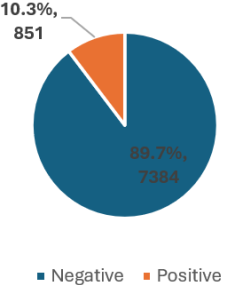



 Share This Article
 Twitter
 Linked In
 Facebook