
This review explores the potential of Charakaukta Vaya Sthapan Mahakashaya, a traditional Ayurvedic formulation, as a targeted nutricosmetic for skin rejuvenation and anti aging. The review synthesizes information from classical Ayurvedic texts and modern research to evaluate the formulation’s composition, pharmacological properties, mechanisms of action, and potential benefits for skin health. The analysis suggests that Vaya Sthapan Mahakashaya, rich in antioxidants and bioactive compounds, may offer a holistic approach to mitigating skin aging by addressing oxidative stress, chronic low grade inflammation, impaired tissue nourishment, and collagen degradation. Individual constituent herbs such as Amrita (Tinospora cordifolia), Dhatri (Emblica officinalis), Abhaya (Terminalia chebula), Mandukparni (Centella asiatica), and Punarnava (Boerhavia diffusa) exhibit immunomodulatory, anti inflammatory, wound healing, and hydrating effects that are relevant to nutricosmetic use. Additionally, their Rasayana properties align with the Ayurvedic concept of Vaya Sthapana (stabilization of aging) through Tridosha balance and Dhatu nourishment. Further research, including well designed preclinical studies and clinical trials, is warranted to validate these findings, define optimal dosage and formulations, and establish the safety and efficacy of Vaya Sthapan Mahakashaya as a standardized nutricosmetic intervention.
| Published in | American Journal of Clinical and Experimental Medicine (Volume 14, Issue 2) |
| DOI | 10.11648/j.ajcem.20261402.12 |
| Page(s) | 34-39 |
| Creative Commons |
This is an Open Access article, distributed under the terms of the Creative Commons Attribution 4.0 International License (http://creativecommons.org/licenses/by/4.0/), which permits unrestricted use, distribution and reproduction in any medium or format, provided the original work is properly cited. |
| Copyright |
Copyright © The Author(s), 2026. Published by Science Publishing Group |
Vaya Sthapan Mahakashaya, Ayurveda, Nutricosmetics, Skin Rejuvenation, Anti-aging, Rasayana
S.no. | Plant name | Botanical name | Family | Pharmacological properties | Used part |
|---|---|---|---|---|---|
1. | Amrita | Tinospora cordifolia | Menispermaceae | Rasa-Tikta, Kashaya Guna-Guru, Snigdha Virya- Ushna Vipaka-Madhura | Kaanda |
2. | Abhaya | Terminalia chebula | Combrataceae | Rasa-Pancharas (Kashaya Pradhan) Guna-Laghu, Ruksha Virya- Ushna Vipaka-Madhura Prabhava-Tridoshhar | Phala |
3. | Dhatri | Emblica officinalis | Euphorbiaceae | Rasa-Pancharas (Amla Pradhan) Guna-Guru, Ruksha Virya-Sheeta Vipaka- Madhura | Phala |
4. | Mukta | Pluchea lanceolata | Asteraceae | Rasa-Tikta Guna- Guru Virya- Ushna Vipaka- Katu Prabhava-Vishaghna | Patra |
5. | Shweta | Clitoria ternatea | Fabaceae | Rasa-Katu, Tikta Guna-Laghu, Ruksha Virya-Sheeta Vipaka-Katu | Patra, Pushpa, Moola |
6. | Jivanti | Leptadenia reticulata | Asclepidaceae | Rasa- Madhura Guna-Laghu, Snigdha Virya- Sheeta Vipaka- Madhura | Moola |
7. | Atirasa | Asparagus racemosus | Liliaceae | Rasa-Madhura, Tikta Guna-Guru, Snigdha Virya- Sheeta Vipaka- Madhura | Kanda |
8. | Mandukparni | Centella asiatica | Umbelliferae | Rasa-Tikta, Kashaya Guna- Laghu Virya- Sheeta Vipaka- Madhura Prabhava-Medhya | Panchanga |
9. | Sthira | Desmodium gangeticum | Fabaceae | Rasa-Madhura, Tikta Guna- Laghu Virya- Ushna Vipaka- Madhura | Panchanga |
10. | Punarnava | Boerhavia diffusa | Nyctaginaceae | Rasa-Madhura, Tikta Guna-Laghu, Ruksha Virya-Ushna Vipaka- Madhura | Moola, Bheeja, Panchanga |
UV | Ultraviolet |
| [1] | Sharma, R. K., & Dash, B. Agnivesh's Charak Samhita. Chaukhamba Sanskrit Samsthan, Varanasi, 2005. |
| [2] | Bhavamishra. Bhavaprakash. Chaukhambha Sanskrit Samsthana, Varanasi, 1997. |
| [3] | Smith, A. B., & Jones, C. D. The Science of Aging. Academic Press, 2010. |
| [4] | Charaka Samhita. Classical Ayurvedic text. |
| [5] | Agnivesha, Charaka, & Dridhabala. (n.d.). The Caraka Samhita of Agnivesa, revised by Caraka and Dridhabala: With introduction by Vaidya-Samrat Sri Satya Narayana Sastri “Padmabhushana” and elaborated Vidyotini Hindi commentary by Pt. Kashinath Sastri and Dr. Gorakha Nath Chaturvedi (Part 2). Varanasi, India: Chaukhamba Bharati Academy. |
| [6] | Narahari Pandita. (2012). Raj Nighantu (S. C. Sankhyadhar, Comp., D. Sankhyadhar, Comp., & K. C. Chunekar, Foreword). Varanasi, India: Chaukhambha Orientalia. |
| [7] | Agnivesha, Charaka, & Dridhabala. (n.d.). The Caraka Samhita of Agnivesa, revised by Caraka and Dridhabala: With introduction by Vaidya-Samrat Sri Satya Narayana Sastri “Padmabhushana” and elaborated Vidyotini Hindi commentary by Pt. Kashinath Sastri and Dr. Gorakha Nath Chaturvedi (Part 1). Varanasi, India: Chaukhamba Bharati AcademySushruta Samhita. Classical Ayurvedic text. |
| [8] | Golechha, M., Sarangal, V., Ojha, S., Bhatia, J., & Arya, D. S. Anti-inflammatory effect of Emblica officinalis in rodent models of inflammation. International Journal of Inflammation, 2014, 2014, 178408. |
| [9] | Sharma, P. V., & Sharma, G. P. (2008). Dhanvantari Nighantu. Varanasi, India: Chaukhamba Orientalia. |
| [10] | Sushruta. (2016). Sushruta Samhita (K. A. D. Shastri, Ed.; Reprint ed.). Chaukhamba Sanskrit Sansthan, Varanasi. |
| [11] | Gautam, M., Saha, S., Bani, S., Kaul, A., Mishra, S., Patil, D., Satti, N. K., Suri, K. A., Gairola, S., & Suresh, K. Immunomodulatory activity of Asparagus racemosus on systemic Th1/Th2 immunity: Implications for its immunoadjuvant potential. Journal of Ethnopharmacology, 2009, 121(2), 241–247. |
| [12] | K. C Chunekar, BhavaprakashNighantu Chaukhambha Sanskrit Samsthana, Varanasi, 1997.,446 |
| [13] | Hidayah, H. N., & Rasyidah, T. I. Effect of Centella asiatica on oxidative stress in rat lung after formaldehyde exposure. Journal of Medical and Bioengineering, 2015, 4(4), 324–328. |
| [14] | Shree Bapalal Vaidya, Nighantu Adarsh, Chaukhambha Bharati Academy,2023 (293-294) |
| [15] | Vaidya, B. G. (2007). Nighantu adarsa (Vol. 1–2). Varanasi, India: Chaukhambha Bharati Academy. |
APA Style
Bisht, M., Uniyal, A., Anita. (2026). Charakaukta Vaya Sthapana Mahakashaya: A Traditional Ayurvedic Formulation as a Targeted Nutricosmetic for Skin Rejuvenation and Anti-aging. American Journal of Clinical and Experimental Medicine, 14(2), 34-39. https://doi.org/10.11648/j.ajcem.20261402.12
ACS Style
Bisht, M.; Uniyal, A.; Anita. Charakaukta Vaya Sthapana Mahakashaya: A Traditional Ayurvedic Formulation as a Targeted Nutricosmetic for Skin Rejuvenation and Anti-aging. Am. J. Clin. Exp. Med. 2026, 14(2), 34-39. doi: 10.11648/j.ajcem.20261402.12
@article{10.11648/j.ajcem.20261402.12,
  author = {Manisha Bisht and Ayushi Uniyal and Anita},
  title = {Charakaukta Vaya Sthapana Mahakashaya: A Traditional Ayurvedic Formulation as a Targeted Nutricosmetic for Skin Rejuvenation and Anti-aging},
  journal = {American Journal of Clinical and Experimental Medicine},
  volume = {14},
  number = {2},
  pages = {34-39},
  doi = {10.11648/j.ajcem.20261402.12},
  url = {https://doi.org/10.11648/j.ajcem.20261402.12},
  eprint = {https://article.sciencepublishinggroup.com/pdf/10.11648.j.ajcem.20261402.12},
  abstract = {This review explores the potential of Charakaukta Vaya Sthapan Mahakashaya, a traditional Ayurvedic formulation, as a targeted nutricosmetic for skin rejuvenation and anti aging. The review synthesizes information from classical Ayurvedic texts and modern research to evaluate the formulation’s composition, pharmacological properties, mechanisms of action, and potential benefits for skin health. The analysis suggests that Vaya Sthapan Mahakashaya, rich in antioxidants and bioactive compounds, may offer a holistic approach to mitigating skin aging by addressing oxidative stress, chronic low grade inflammation, impaired tissue nourishment, and collagen degradation. Individual constituent herbs such as Amrita (Tinospora cordifolia), Dhatri (Emblica officinalis), Abhaya (Terminalia chebula), Mandukparni (Centella asiatica), and Punarnava (Boerhavia diffusa) exhibit immunomodulatory, anti inflammatory, wound healing, and hydrating effects that are relevant to nutricosmetic use. Additionally, their Rasayana properties align with the Ayurvedic concept of Vaya Sthapana (stabilization of aging) through Tridosha balance and Dhatu nourishment. Further research, including well designed preclinical studies and clinical trials, is warranted to validate these findings, define optimal dosage and formulations, and establish the safety and efficacy of Vaya Sthapan Mahakashaya as a standardized nutricosmetic intervention.},
 year = {2026}
}
TY  - JOUR
T1  - Charakaukta Vaya Sthapana Mahakashaya: A Traditional Ayurvedic Formulation as a Targeted Nutricosmetic for Skin Rejuvenation and Anti-aging
AU  - Manisha Bisht
AU  - Ayushi Uniyal
AU  - Anita
Y1  - 2026/07/11
PY  - 2026
N1  - https://doi.org/10.11648/j.ajcem.20261402.12
DO  - 10.11648/j.ajcem.20261402.12
T2  - American Journal of Clinical and Experimental Medicine
JF  - American Journal of Clinical and Experimental Medicine
JO  - American Journal of Clinical and Experimental Medicine
SP  - 34
EP  - 39
PB  - Science Publishing Group
SN  - 2330-8133
UR  - https://doi.org/10.11648/j.ajcem.20261402.12
AB  - This review explores the potential of Charakaukta Vaya Sthapan Mahakashaya, a traditional Ayurvedic formulation, as a targeted nutricosmetic for skin rejuvenation and anti aging. The review synthesizes information from classical Ayurvedic texts and modern research to evaluate the formulation’s composition, pharmacological properties, mechanisms of action, and potential benefits for skin health. The analysis suggests that Vaya Sthapan Mahakashaya, rich in antioxidants and bioactive compounds, may offer a holistic approach to mitigating skin aging by addressing oxidative stress, chronic low grade inflammation, impaired tissue nourishment, and collagen degradation. Individual constituent herbs such as Amrita (Tinospora cordifolia), Dhatri (Emblica officinalis), Abhaya (Terminalia chebula), Mandukparni (Centella asiatica), and Punarnava (Boerhavia diffusa) exhibit immunomodulatory, anti inflammatory, wound healing, and hydrating effects that are relevant to nutricosmetic use. Additionally, their Rasayana properties align with the Ayurvedic concept of Vaya Sthapana (stabilization of aging) through Tridosha balance and Dhatu nourishment. Further research, including well designed preclinical studies and clinical trials, is warranted to validate these findings, define optimal dosage and formulations, and establish the safety and efficacy of Vaya Sthapan Mahakashaya as a standardized nutricosmetic intervention.
VL  - 14
IS  - 2
ER  -
Department of Dravyaguna, Rishikul Ayurvedic Medical College, Haridwar, India
Department of Dravyaguna, Rishikul Ayurvedic Medical College, Haridwar, India
Department of Dravyaguna, Rishikul Ayurvedic Medical College, Haridwar, India
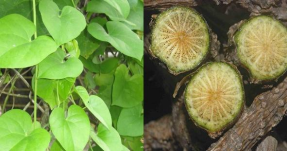
Figure 1. Tinospora cordifolia.
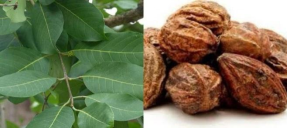
Figure 2. Terminalia chebula.
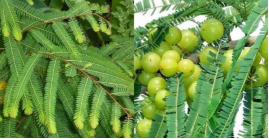
Figure 3. Embelica officinalis.
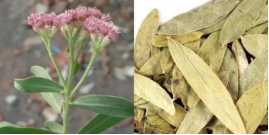
Figure 4. Pluchea lanceolata.
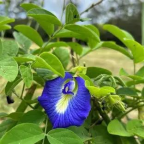
Figure 5. Clitoria ternatea.
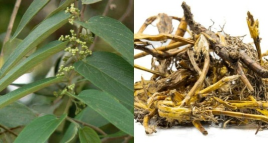
Figure 6. Leptadenia reticulate.
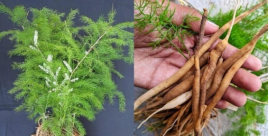
Figure 7. Asparagus racemososus.
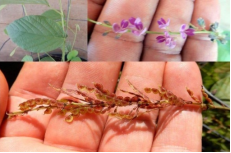
Figure 8. Desmodium gangeticum.
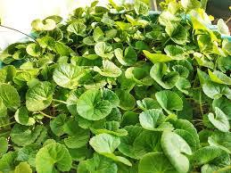
Figure 9. Centella asiatica.
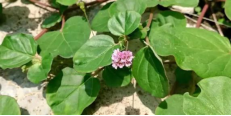
Figure 10. Boerhavia diffusa.

Information



 Share This Article
 Twitter
 Linked In
 Facebook
 Copy
Copy Download