
The transformation of a two-dimensional electron gas in a semiconductor into a quasiparticle gas at low temperature in a strong magnetic field is considered using the quantum fractional Hall effect. Statistical interference effects—bunching and antibunching of quasiparticles—are studied. The dispersion of the number of quasiparticles in a single state and the correlation between the number of quasiparticles in subsystems are detected, and the quasiparticle bunching coefficient is investigated. The correlation increases with decreasing Landau level filling factor, which is determined by the electron concentration. As the filling factor decreases, the bunching coefficient increases at quasiparticle energies exceeding the chemical potential of the gas. When the Landau level filling factor changes from one to zero, the quasiparticles transform from initial fermions (electrons), obeying the Pauli principle, to bosons, which experience mutual interference attraction and maximum bunching. According to the fractional quantum Hall effect, the Landau level filling factor determines the effective charge of a quasiparticle and the effective magnitude of the external magnetic field. In the bosonic state, a gas of quasiparticles has zero effective charge, zero effective external magnetic field and maximum bunching. Therefore, an external electromagnetic field has no effect on the quasiparticle levels, with the exception of the ground state, and does not cause transitions between them in the form of emission, absorption, or reflection of light. Applied to the electron model of the Universe, it can be assumed that Dark Matter is a gas of Hall quasiparticles formed by ordinary electrons in the bosonic state at ultra-low temperatures. The electron model of the Universe can be studied experimentally.
| Published in | American Journal of Modern Physics (Volume 15, Issue 4) |
| DOI | 10.11648/j.ajmp.20261504.11 |
| Page(s) | 115-121 |
| Creative Commons |
This is an Open Access article, distributed under the terms of the Creative Commons Attribution 4.0 International License (http://creativecommons.org/licenses/by/4.0/), which permits unrestricted use, distribution and reproduction in any medium or format, provided the original work is properly cited. |
| Copyright |
Copyright © The Author(s), 2026. Published by Science Publishing Group |
Quasiparticles, Dispersion, Correlation, Bunching, Antibunching, Dark Matter, Big Bang
 . The expression for dispersion is derived from the energy distribution of the mean number of quasiparticles. The correlation of the particle numbers is found by mentally dividing the system into two subsystems and substituting the results into formulas for determining and expressing dispersion. The statistical behavior of a quasiparticle gas is described using the bunching coefficient, which is the correlation between the deviations from the mean number of quasiparticles in the subsystems, averaged over the mean values of the quasiparticle numbers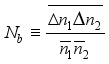
 .
.  T. The electron mean free path is large, the semiconductor thickness is much smaller than the magnetic length
 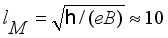 nm, and the electron gas is two-dimensional. Electrons at the Landau level differ in the positions of the center of cyclotron motion with a state degeneracy factor of
 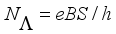 . In the fractional Hall effect with a surface electron density of
  , the electrons are located at the lower level with a filling factor (the population factor of the Landau level)
 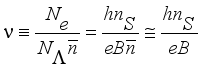 ,(1)
,(1)  is the average population of the state by particles. For an electron gas
  at
at  , where
  is the chemical potential of the gas. At a gas temperature of
  mK, the distance between adjacent levels is large
 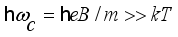 , and thermal transitions of microparticles do not occur. The external magnetic field is formed by a ring current of electrons, coherent at low temperature. To reduce the energy, the gas weakens the external magnetic field, attaching magnetic fluxes with vortices of the wave function phase to the electrons, and the electrons turn into quasiparticles. The vortex carries a quantum of magnetic flux
  . By selecting
  and B, we obtain Abelian quasiparticles with the Laughlin filling factor
 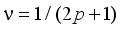 , where the parameter
  . Each electron captures 2p vortices, the quasiparticle receives a magnetic flux
  , and the external field B is weakened to an effective value
  .(2)
.(2)  is a consequence of Landau diamagnetism. Quasiparticles are placed in a weakened external magnetic field, and the filling factor increases to its maximum value
 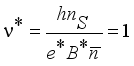 at low temperatures. The fractional Hall effect for electrons transforms into the integer Hall effect for quasiparticles. The concentration of quasiparticles is equal to the concentration of the original electrons, according to the conservation law of lepton charge. From this
 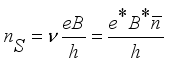 we find
 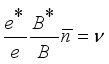 . At the Landau level below the chemical potential
  and at a temperature
 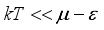 , the statistics of quasiparticles (6) yields
  . Taking into account (2), we obtain the effective charge of the quasiparticle
  .(3)
.(3) 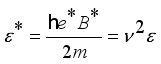 . The conversion of electrons into quasiparticles rotating in cyclotron orbits is accompanied by the release of energy in the form of a pulse of infrared radiation. The circular frequency of the radiation is equal to the cyclotron frequency of quasiparticles
 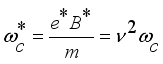 . The energy balance
 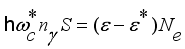 gives the number of photons emitted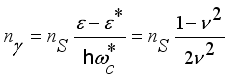
 in an external field
  has an energy
  .(4)
.(4)  reaches a maximum
  .
.  , the average number of quasiparticles in one state
 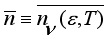 with energy ε in an ideal gas with temperature T is described by fractional statistics
  ,(5)
,(5) 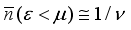 .(6)
.(6) 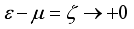 ,
,  , we obtain
  and from (5) when
  we find
  .(7)
.(7) 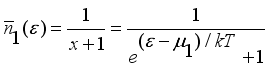 .(8)
.(8)  and (5) gives the Bose – Einstein distribution
 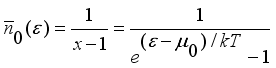 , where
  ,
,  , then at low temperature
 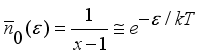 .
.  from (5) we obtain
 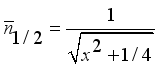 .(9)
.(9) 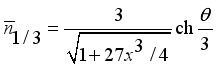 ,
, 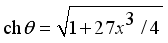 .(10)
.(10) 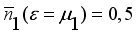 ,
,  ,
,  .(11)
.(11)  . For semions from (9) we obtain
 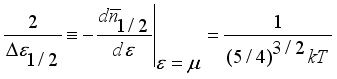 and
and 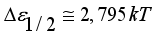 . For anyons we find
 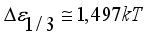 . Therefore, when the filling factor decreases, the transition area narrows.
 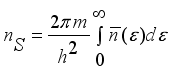 . At low temperature we use (6) and (7), then
 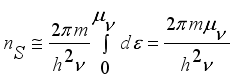 . Taking into account the concentration of quasiparticles
  , we find the chemical potential
 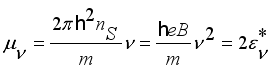 .(12)
.(12)  and ν, we find
 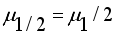 ,
, 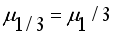 ,
,  . A decrease in chemical potential means a weakening of the repulsion between particles. Distributions (8), (9), (10) are shown in Figure 1.
  .
.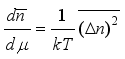 and find from it the dispersion of the number of quasiparticles in one state
  ,(13)
,(13)  is the deviation from the average distribution by state. The first term (13) describes shot noise, the second describes wave packet noise, reaching a maximum at
  . The third term weakens the dispersion due to mutual interference repulsion of quasiparticles, reaching an extremum at
  . At energies much lower and much higher than the values of chemical potential, taking into account (6) and (7), we find
  . The dispersion is significant at
  and increases with weakening of the filling factor:
 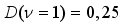 ,
,  ,
,  , therefore, statistical interference effects increase with weakening ν.
  and
and  . We substitute
  and
and  into the definition of dispersion
 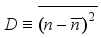 . Using the deviations from the mean
  for subsystems
  , we find the relationship between the dispersions of the numbers of particles in the subsystems
 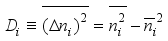 and in the entire system
  ,(14)
,(14)  ,(15)
,(15)  .(16)
.(16)  . The absence of correlation between the subsystems means maximum mutual interference repulsion of the particles, corresponding to
  . When
 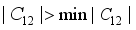 , the particles attract each other.
  into expression (13), compare with (14) and (15), and find
 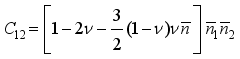 .(17)
.(17)  and
and  , where
  , then the average
 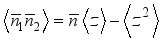 . With equal probability, we find
 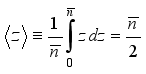 ,
,  ,
,  .(18)
.(18) 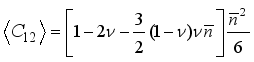 ,(19)
,(19) 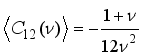 ,
, 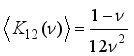 .(20)
.(20)  .
.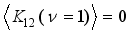 ,
, 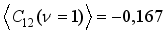 , which corresponds to the mutual interference repulsion of fermions caused by the Pauli principle.
 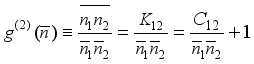 (21)
(21) 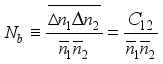 ,(22)
,(22) 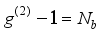 . Definition domains are
 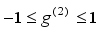 ,
,  . When
  antibunching of quasiparticles takes place, when
  it is bunching.
  from (14), we find a correlation between the fluctuations of the particle numbers
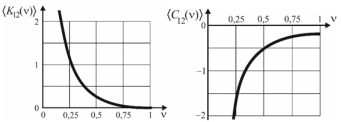
  . From (15), (16) and (18) we obtain the correlation between the numbers of particles
 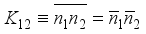 and the average correlation between subsystems
 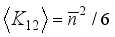 . From (21) and (22) we also find
  and the absence of grouping
  for classical particles.
  we find
  ,
, 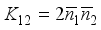 ,
, 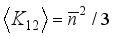 ,
,  . Boson bunching reaches its maximum
  .
.  , then
 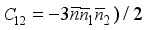 ,
,  ,
, 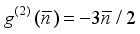 and there is an antibunching
 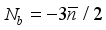 .
. 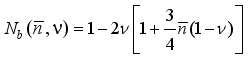 .(23)
.(23)  ,(24)
,(24)  .(25)
.(25) 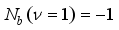 ,
,  ,
,  .
.  :
: 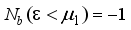 ,
, 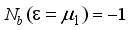 ,
, 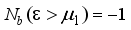 ;
;  :
:  ,
,  ,
, 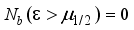 ;
;  :
:  ,
,  ,
,  ;
;  :
:  ,
, 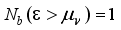 .
.  . Anyons occupy an intermediate position between fermions and bosons. The maximum number of quasiparticles in a single state is obtained from (6)
  .(26)
.(26)  .
.  , then the energy of the system decreases ninefold, and
  photons are emitted per unit area. The correlation between the quasiparticles of the subsystems increases from
 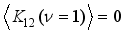 to
to 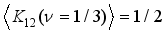 , when
  the correlation between deviations from the average value of the number of quasiparticles changes from
 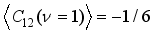 to
to 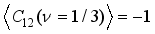 , and the antibunching of quasiparticles changes from
 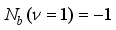 to
to  .
.  leads to a decrease in antibunching, mutual interference of quasiparticles, and an increase in bunching. This means that the diamagnetism of the electron gas is complemented by the paramagnetism of the quasiparticles.
  . The correlation of the edge chiral currents of quasiparticles scattered in quantum dot contacts was studied in the work
  depends on the electron concentration
  . In regions of space with small
  , we obtain
  , and the Hall quasiparticles are bosons with an effective charge (3)
 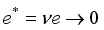 . This means the absence of influence of quasiparticle levels other than the ground state and transitions between them, that is, the complete absence of electromagnetic interactions with quasiparticles in the form of emission, absorption and reflection of light. The quantum bunching of boson quasiparticles with
 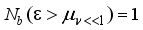 leads to an increase in the density of matter with a completely captured external magnetic field according to (2)
 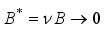 , and external charges creating it. The listed features are inherent in Dark Matter, which should be considered as ordinary matter in the fractional quantum Hall effect in the state of bosons. Dark Matter does not undergo heating during the process of evolution; its original temperature and internal state are preserved.
  caused by gravity, quasiparticles with
  have a non-zero effective electric charge. External heating destroys the Hall state. The quasiparticle explodes, ejecting the trapped magnetic field and external charges, and transforms into an electron. A process of “cosmic inflation” occurs and a massive ejection of matter in the form of jets from areas of increased concentration
  . The chaotic thermal motion of electrons creates chaotic magnetic fields and the release of energy in the form of the Big Bang. We find the released local magnetic energy density from (4)
 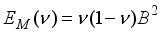 with the maximum value
  . The electron model of the Universe discussed above can be realized experimentally.
 | [1] | Bartolomei H., Kumar M., Bisognin R. et al. Fractional statistics in anyon collisions. Science (2020) 368: 173-177. |
| [2] | Comforti E., Chung Y. C., Helblum M. et al. Bunching of fractionally charged quasiparticles tunnelling through high-potential barriers. Nature (2002) 416: 515-518. |
| [3] | Klitzing von K. The Quantized Hall Effect. Nobel Lecture. Stockholm. 1985. |
| [4] | Krasnopevtsev E. A. Dispersion and Correlation in the Quantum Hall Effect. Horizons in World Physics. Editor Albert Reimer. Volume 314 (2024): 105-117. |
| [5] | Nayak C., Wilczek F. Exclusion statistics: Low-temperature properties, fluctuations, duality, and applications. Phys. Rev. Lett. (1994) 73(20): 2740-2743. |
| [6] | Rajagopal A. K. Neumann entropy associated with the Haldane exclusion statistics. Phys. Rev. Lett. (1995) 74(7): 1048-1051. |
| [7] | Safi I., Devillard P., Martin T. Partition noise and statistics in the fractional quantum Hall effect. Phys. Rev. Lett. (2001) 86(20): 4628-4631. |
| [8] | Stӧrmer Horst L. The fractional quantum Hall effect. The Nobel Foundation. 1999. |
| [9] | Wu Y.-S. Statistical distribution for generalized ideal gas of fractional-statistics particles. Phys. Rev. Lett. (1994) 73(7): 922-925. |
| [10] | Cross-Correlation Investigation of Anyon Statistics in the ν=1/3 and 2/5 Fractional Quantum Hall States. Physical Review X. 2023; 13: 011030. |
| [11] | Fabry-Pérot Interferometry at the ν=2/5 Fractional Quantum Hall State. Physical Review X. 2023; 13: 041012. |
| [12] | Fractional quantization in insulators from Hall to Chern. Nature Physics. 2025; 21: 1702-1713. |
| [13] | Iyengar A. N. Collective Excitation of Bosonic Quantum Hall State. Journal of Low Temperature Physics. 2024; 214: 294. |
| [14] | Kulik L. V., Ваньков А. Б. Birotons and ‘dark hierarchies’ in fractional quantum Hall effect. Известия Российской академии наук. Серия физическая. 2023; 87(2): 163-166. |
APA Style
Krasnopevtsev, E. A. (2026). Bunching and Antibunching of Quasiparticles in the Fractional Quantum Hall Effect. American Journal of Modern Physics, 15(4), 115-121. https://doi.org/10.11648/j.ajmp.20261504.11
ACS Style
Krasnopevtsev, E. A. Bunching and Antibunching of Quasiparticles in the Fractional Quantum Hall Effect. Am. J. Mod. Phys. 2026, 15(4), 115-121. doi: 10.11648/j.ajmp.20261504.11
AMA Style
Krasnopevtsev EA. Bunching and Antibunching of Quasiparticles in the Fractional Quantum Hall Effect. Am J Mod Phys. 2026;15(4):115-121. doi: 10.11648/j.ajmp.20261504.11
@article{10.11648/j.ajmp.20261504.11,
  author = {Eugene Alexandrovich Krasnopevtsev},
  title = {Bunching and Antibunching of Quasiparticles in the Fractional Quantum Hall Effect},
  journal = {American Journal of Modern Physics},
  volume = {15},
  number = {4},
  pages = {115-121},
  doi = {10.11648/j.ajmp.20261504.11},
  url = {https://doi.org/10.11648/j.ajmp.20261504.11},
  eprint = {https://article.sciencepublishinggroup.com/pdf/10.11648.j.ajmp.20261504.11},
  abstract = {The transformation of a two-dimensional electron gas in a semiconductor into a quasiparticle gas at low temperature in a strong magnetic field is considered using the quantum fractional Hall effect. Statistical interference effects—bunching and antibunching of quasiparticles—are studied. The dispersion of the number of quasiparticles in a single state and the correlation between the number of quasiparticles in subsystems are detected, and the quasiparticle bunching coefficient is investigated. The correlation increases with decreasing Landau level filling factor, which is determined by the electron concentration. As the filling factor decreases, the bunching coefficient increases at quasiparticle energies exceeding the chemical potential of the gas. When the Landau level filling factor changes from one to zero, the quasiparticles transform from initial fermions (electrons), obeying the Pauli principle, to bosons, which experience mutual interference attraction and maximum bunching. According to the fractional quantum Hall effect, the Landau level filling factor determines the effective charge of a quasiparticle and the effective magnitude of the external magnetic field. In the bosonic state, a gas of quasiparticles has zero effective charge, zero effective external magnetic field and maximum bunching. Therefore, an external electromagnetic field has no effect on the quasiparticle levels, with the exception of the ground state, and does not cause transitions between them in the form of emission, absorption, or reflection of light. Applied to the electron model of the Universe, it can be assumed that Dark Matter is a gas of Hall quasiparticles formed by ordinary electrons in the bosonic state at ultra-low temperatures. The electron model of the Universe can be studied experimentally.},
 year = {2026}
}
TY  - JOUR
T1  - Bunching and Antibunching of Quasiparticles in the Fractional Quantum Hall Effect
AU  - Eugene Alexandrovich Krasnopevtsev
Y1  - 2026/08/10
PY  - 2026
N1  - https://doi.org/10.11648/j.ajmp.20261504.11
DO  - 10.11648/j.ajmp.20261504.11
T2  - American Journal of Modern Physics
JF  - American Journal of Modern Physics
JO  - American Journal of Modern Physics
SP  - 115
EP  - 121
PB  - Science Publishing Group
SN  - 2326-8891
UR  - https://doi.org/10.11648/j.ajmp.20261504.11
AB  - The transformation of a two-dimensional electron gas in a semiconductor into a quasiparticle gas at low temperature in a strong magnetic field is considered using the quantum fractional Hall effect. Statistical interference effects—bunching and antibunching of quasiparticles—are studied. The dispersion of the number of quasiparticles in a single state and the correlation between the number of quasiparticles in subsystems are detected, and the quasiparticle bunching coefficient is investigated. The correlation increases with decreasing Landau level filling factor, which is determined by the electron concentration. As the filling factor decreases, the bunching coefficient increases at quasiparticle energies exceeding the chemical potential of the gas. When the Landau level filling factor changes from one to zero, the quasiparticles transform from initial fermions (electrons), obeying the Pauli principle, to bosons, which experience mutual interference attraction and maximum bunching. According to the fractional quantum Hall effect, the Landau level filling factor determines the effective charge of a quasiparticle and the effective magnitude of the external magnetic field. In the bosonic state, a gas of quasiparticles has zero effective charge, zero effective external magnetic field and maximum bunching. Therefore, an external electromagnetic field has no effect on the quasiparticle levels, with the exception of the ground state, and does not cause transitions between them in the form of emission, absorption, or reflection of light. Applied to the electron model of the Universe, it can be assumed that Dark Matter is a gas of Hall quasiparticles formed by ordinary electrons in the bosonic state at ultra-low temperatures. The electron model of the Universe can be studied experimentally.
VL  - 15
IS  - 4
ER  -
Independent Scientist, Novosibirsk, Russian Federation

Information



 Share This Article
 Twitter
 Linked In
 Facebook
 . For energy below the level of chemical potential
  at
at  , we obtain
  and from (
 ,
,  , from (
 ,
,  , from (
 we find
  from (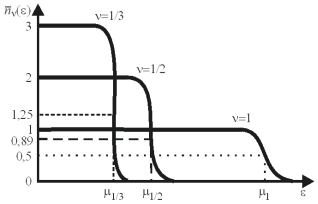
 we use (
 we find,
  .
. 
 we use (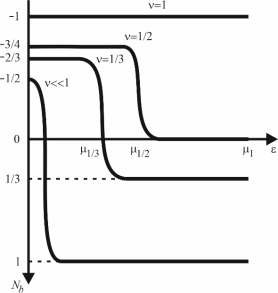
 Copy
Copy Download