
Anti-wetting surfaces, which possess strong water-repellent properties and self-cleaning, anti-fouling, anti-icing, and anti-corrosion characteristics, are of great interest due to their numerous applications across various industrial sectors. For thousands of years, nature has developed highly innovative wetting systems to survive in hostile environments. For example, the surface structures of lotus leaves and gecko feet, with their superhydrophobic and parahydrophobic properties, play a key role in the adhesion of these natural surfaces. This review article examines in detail the theoretical foundations, various fabrication techniques, applications, and challenges associated with anti-wetting surfaces. This literature review analyzes the fundamental principles, focusing on water-repellent surfaces observed in nature, theories of wettability such as Young’s equation, the Wenzel and Cassie-Baxter states, as well as the dynamics of wetting. Various techniques for fabricating anti-wetting surfaces, such as dip-coating, templates, the sol-gel technique, etching, and electropolymerization, are studied, ranging from micro- and/or nanostructuring methods to advanced material coatings, highlighting the evolution of surface engineering. The numerous applications of water-repellent surfaces, ranging from self-cleaning technologies to oil-water separation, are discussed, highlighting their potential contributions in fields such as energy, environmental protection, and anti-icing. Despite their promising properties, water-repellent surfaces also face significant challenges, such as issues of durability and scalability, environmental concerns, and limitations in achieving multifunctionality. By providing a comprehensive overview of the current state of research on anti-wetting surfaces, this review aims to guide future studies and encourage innovations in the development and use of these intriguing surfaces.
| Published in | American Journal of Polymer Science and Technology (Volume 12, Issue 1) |
| DOI | 10.11648/j.ajpst.20261201.12 |
| Page(s) | 17-37 |
| Creative Commons |
This is an Open Access article, distributed under the terms of the Creative Commons Attribution 4.0 International License (http://creativecommons.org/licenses/by/4.0/), which permits unrestricted use, distribution and reproduction in any medium or format, provided the original work is properly cited. |
| Copyright |
Copyright © The Author(s), 2026. Published by Science Publishing Group |
Anti-wetting Surfaces, Fabrication Techniques, Coatings, Wettability Theories, Applications
γ | Surface Energy |
θ | Contact Angle |
θa | Advance Angle |
θr | Retraction Contact Angle |
θγ | Young’s Contact Angle |
θw | Wenzel Contact Angle |
θCB | Cassie-Baxter Contact Angle |
γSV | Surface Tension at Solid-Vapor Interfaces |
γSL | Surface Tension at Solid-Liquid Interfaces |
γLV | Surface Tension at Liquid-Vapor Interfaces |
H | Contact Angle Hysteresis |
PDMS | PolyDiMéthylSiloxane |
PVDF | PolyVinyliDeneFluoride |
r | Roughness Factor |
SAM | Self-Assembled Monolayer |
SEM | Scanning Electron Microscopy |
SiO2 | Silicon Dioxide |
SLIPS | Slippery Liquid-Infused Porous Surfaces |
TEOS | TetraEthyl OrthoSilicate |
TiO2 | Titanium Dioxide |
| [1] | Koch K, Bhushan B, Barthlott W. Multifunctional surface structures of plants: An inspiration for biomimetics. Progress in Materials Science 2009; 54: 137–78. |
| [2] | Barthlott W. The purity of sacred lotus: superhydrophobic self-cleaning plant surfaces and the consequences revisited. Planta 2026; 263: 80. |
| [3] | Cho WK, Choi IS. Fabrication of hairy polymeric films inspired by geckos: wetting and high adhesion properties. Advanced Functional Materials 2008; 18: 1089–96. |
| [4] | Gao H, Wang X, Yao H, Gorb S, Arzt E. Mechanics of hierarchical adhesion structures of geckos. Mechanics of Materials 2005; 37: 275–85. |
| [5] | Cassie ABD, Baxter S. Wettability of porous surfaces. Transactions of the Faraday Society 1944; 40: 546–51. |
| [6] | Fang W, Guo H-Y, Li B, Li Q, Feng X-Q. Revisiting the Critical Condition for the Cassie–Wenzel Transition on Micropillar-Structured Surfaces. Langmuir 2018; 34: 3838–44. |
| [7] | Sethi SK, Manik G. Recent Progress in Super Hydrophobic/Hydrophilic Self-Cleaning Surfaces for Various Industrial Applications: A Review. Polymer-Plastics Technology and Engineering 2018; 57: 1932–52. |
| [8] | Behera A. Self-Cleaning Materials. In: Behera A, editor. Advanced Materials: An Introduction to Modern Materials Science, Cham: Springer International Publishing; 2022, p. 359–94. |
| [9] | Kosasih B, Novareza O, Tieu AK, Zhu H. Friction and anti-wear property of aqueous tri-block copolymer solutions in metal forming. International Journal of Surface Science and Engineering 2014; 8: 109–23. |
| [10] | Jiao Y, Zhang T, Ji J, Guo Y, Wang Z, Tao T, et al. Functional Microtextured Superhydrophobic Surface with Excellent Anti-Wear Resistance and Friction Reduction Properties. Langmuir 2022; 38: 13166–76. |
| [11] | Shen L, Wang B, Wang J, Fu J, Picart C, Ji J. Asymmetric Free-Standing Film with Multifunctional Anti-Bacterial and Self-Cleaning Properties. ACS Appl Mater Interfaces 2012; 4: 4476–83. |
| [12] | Ramos Chagas G, Morán Cruz G, Giraudon-Colas G, Savina F, Meallet-Renault R, Amigoni S, et al. Anti-bacterial and fluorescent properties of hydrophobic electrodeposited non-fluorinated polypyrenes. Applied Surface Science 2018; 452: 352–63. |
| [13] | Zhou S, Wang F, Balachandran S, Li G, Zhang X, Wang R, et al. Facile fabrication of hybrid PA6-decorated TiO 2 fabrics with excellent photocatalytic, anti-bacterial, UV light-shielding, and super hydrophobic properties. RSC Adv 2017; 7: 52375–81. |
| [14] | Yu D, Tian J. Superhydrophobicity: Is it really better than hydrophobicity on anti-corrosion? Colloids and Surfaces A: Physicochemical and Engineering Aspects 2014; 445: 75–8. |
| [15] | Zhang D, Yuan T, Wei G, Wang H, Gao L, Lin T. Preparation of self-healing hydrophobic coating on AA6061 alloy surface and its anti-corrosion property. Journal of Alloys and Compounds 2019; 774: 495–501. |
| [16] | Zhu H, Guo Z. Understanding the separations of oil/water mixtures from immiscible to emulsions on super-wettable surfaces. J Bionic Eng 2016; 13: 1–29. |
| [17] | Lyu P, Zhang X, Jiang X, Shang B, Liu X, Deng Z. One-Step Preparation of Hydrophobic Surfaces Containing Hydrophilic Groups for Efficient Water Harvesting. Langmuir 2021; 37: 9630–6. |
| [18] | Gu J, Gu H, Cao J, Chen S, Li N, Xiong J. Robust hydrophobic polyurethane fibrous membranes with tunable porous structure for waterproof and breathable application. Applied Surface Science 2018; 439: 589–97. |
| [19] | Zhao J, Wang X, Xu Y, He P, Si Y, Liu L, et al. Multifunctional, Waterproof, and Breathable Nanofibrous Textiles Based on Fluorine-Free, All-Water-Based Coatings. ACS Appl Mater Interfaces 2020; 12: 15911–8. |
| [20] | Bandyopadhyay S, Pallavi P, Anil AG, Patra A. Fabrication of porous organic polymers in the form of powder, soluble in organic solvents and nanoparticles: a unique platform for gas adsorption and efficient chemosensing. Polymer Chemistry 2015; 6: 3775–80. |
| [21] | Li Z, Li H, Xia H, Ding X, Luo X, Liu X, et al. Triarylboron‐Linked Conjugated Microporous Polymers: Sensing and Removal of Fluoride Ions. Chemistry A European J 2015; 21: 17355–62. |
| [22] | Shigrekar M, Amdoskar V. A review on recent progress and techniques used for fabricating superhydrophobic coatings derived from biobased materials. RSC Adv 2024; 14: 32668–99. |
| [23] | Bidan G. Composite materials containing electrically conductive polymers: a literature review. J Chim Phys 1989; 86: 45–60. |
| [24] | Darmanin T, Godeau G, Guittard F. Superhydrophobic, superoleophobic and underwater superoleophobic conducting polymer films. Surface Innovations 2018; 6: 181–204. |
| [25] | Hu DL, Chan B, Bush JW. The hydrodynamics of water strider locomotion. Nature 2003; 424: 663–6. |
| [26] | Bixler GD, Bhushan B. Fluid drag reduction and efficient self-cleaning with rice leaf and butterfly wing bioinspired surfaces. Nanoscale 2013; 5: 7685. |
| [27] | Barthwal S, Uniyal S, Barthwal S. Nature-Inspired Superhydrophobic Coating Materials: Drawing Inspiration from Nature for Enhanced Functionality. Micromachines 2024; 15: 391. |
| [28] | Barthlott W, Neinhuis C. Purity of the sacred lotus, or escape from contamination in biological surfaces. Planta 1997; 202: 1–8. |
| [29] | Feng L, Zhang Y, Xi J, Zhu Y, Wang N, Xia F, et al. Petal Effect: A Superhydrophobic State with High Adhesive Force. Langmuir 2008; 24: 4114–9. |
| [30] | Wagner T, Neinhuis C, Barthlott W. Wettability and contaminability of insect wings as a function of their surface sculptures. Acta Zoologica 1996; 77: 213–25. |
| [31] | Oh J, Dana CE, Hong S, Roman JK, Jo KD, Hong JW, et al. Exploring the role of habitat on the wettability of cicada wings. ACS Applied Materials & Interfaces 2017; 9: 27173–84. |
| [32] | Zheng Y, Gao X, Jiang L. Directional adhesion of superhydrophobic butterfly wings. Soft Matter 2007; 3: 178–82. |
| [33] | Liu M, Wang S, Wei Z, Song Y, Jiang L. Bioinspired design of a superoleophobic and low adhesive water/solid interface. Advanced Materials 2009; 21: 665–9. |
| [34] | Wen L, Weaver JC, Lauder GV. Biomimetic shark skin: design, fabrication and hydrodynamic function. Journal of Experimental Biology 2014; 217: 1656–66. |
| [35] | Marmur A. Hydro- hygro- oleo- omni-phobic? Terminology of wettability classification. Soft Matter 2012; 8: 6867. |
| [36] | Zaman Khan M, Militky J, Petru M, Tomková B, Ali A, Tören E, et al. Recent advances in superhydrophobic surfaces for practical applications: A review. European Polymer Journal 2022; 178: 111481. |
| [37] | Nguyen-Tri P, Tran HN, Plamondon CO, Tuduri L, Vo D-VN, Nanda S, et al. Recent progress in the preparation, properties and applications of superhydrophobic nano-based coatings and surfaces: A review. Progress in Organic Coatings 2019; 132: 235–56. |
| [38] | Tuteja A, Choi W, Mabry JM, McKinley GH, Cohen RE. Robust omniphobic surfaces. Proc Natl Acad Sci USA 2008; 105: 18200–5. |
| [39] | Surface chemistry: A close look at hydrophobicity. NPG Asia Mater 2011. |
| [40] | Ura DP, Stachewicz U. The Significance of Electrical Polarity in Electrospinning: A Nanoscale Approach for the Enhancement of the Polymer Fibers’ Properties. Macro Materials & Eng 2022; 307: 2100843. |
| [41] | Young T. III. An essay on the cohesion of fluids. Phil Trans R Soc 1805; 95: 65–87. |
| [42] | Vazirinasab E, Jafari R, Momen G. Application of superhydrophobic coatings as a corrosion barrier: A review. Surface and Coatings Technology 2018; 341: 40–56. |
| [43] | Gao L, McCarthy TJ. Contact Angle Hysteresis Explained. Langmuir 2006; 22: 6234–7. |
| [44] | Guittard F, Amigoni S, Darmanin T. Switchable and reversible wetting properties. Responsive Materials 2026; 4: e70028. |
| [45] | Koch K, Bhushan B, Barthlott W. Diversity of structure, morphology and wetting of plant surfaces. Soft Matter 2008; 4: 1943. |
| [46] | Dettre RH, Johnson Jr RE. Contact angle hysteresis: II. Contact angle measurements on rough surfaces, ACS Publications; 1964. |
| [47] | Ma M, Hill RM. Superhydrophobic surfaces. Current Opinion in Colloid & Interface Science 2006; 11: 193–202. |
| [48] | Roach P, Shirtcliffe NJ, Newton MI. Progess in superhydrophobic surface development. Soft Matter 2008; 4: 224–40. |
| [49] | Xu W, Ning T, Yang X, Lu S. Fabrication of superhydrophobic surfaces on zinc substrates. Applied Surface Science 2011; 257: 4801–6. |
| [50] | Celia E, Darmanin T, Taffin de Givenchy E, Amigoni S, Guittard F. Recent advances in designing superhydrophobic surfaces. Journal of Colloid and Interface Science 2013; 402: 1–18. |
| [51] | Latthe S, Terashima C, Nakata K, Fujishima A. Superhydrophobic Surfaces Developed by Mimicking Hierarchical Surface Morphology of Lotus Leaf. Molecules 2014; 19: 4256–83. |
| [52] | Latthe SS, Sudhagar P, Devadoss A, Kumar AM, Liu S, Terashima C, et al. A mechanically bendable superhydrophobic steel surface with self-cleaning and corrosion-resistant properties. Journal of Materials Chemistry A 2015; 3: 14263–71. |
| [53] | Zhang Y, Zhang Z, Yang J, Yue Y, Zhang H. Fabrication of superhydrophobic surface on stainless steel by two-step chemical etching. Chemical Physics Letters 2022; 797: 139567. |
| [54] | Liu H, Gao S-W, Cai J-S, He C-L, Mao J-J, Zhu T-X, et al. Recent Progress in Fabrication and Applications of Superhydrophobic Coating on Cellulose-Based Substrates. Materials 2016; 9: 124. |
| [55] | Wang Q, Yao X, Liu H, Quere D, Jiang L. Self-removal of condensed water on the legs of water striders. Proceedings of the National Academy of Sciences 2015; 112: 9247–52. |
| [56] | Lee S-J, Kim C-W, Kim C-L. Development of mechanically robust superhydrophobic SUS 316 surfaces through chemical etching and fluorinated self-assembled monolayer. Phys Scr 2026; 101: 165909. |
| [57] | Burdin L, Brulez A-C, Mazurczyk R, Leclercq J-L, Benayoun S. How the Structure and Wettability Properties of Morpho peleides Butterfly Wings Can Be a Source of Inspiration. Biomimetics 2025; 10: 89. |
| [58] | Cheng J, Zhu Y, Zhan F, Wang L. Lotus leaf-inspired thermal insulation and anti-icing topography. RSC Adv 2024; 14: 18798–806. |
| [59] | Lee Y, Ju K-Y, Lee J-K. Stable biomimetic superhydrophobic surfaces fabricated by polymer replication method from hierarchically structured surfaces of Al templates. Langmuir 2010; 26: 14103–10. |
| [60] | Peng C-W, Chang K-C, Weng C-J, Lai M-C, Hsu C-H, Hsu S-C, et al. Nano-casting technique to prepare polyaniline surface with biomimetic superhydrophobic structures for anticorrosion application. Electrochimica Acta 2013; 95: 192–9. |
| [61] | Chen H, Li X, Li D. Superhydrophilic–superhydrophobic patterned surfaces: From simplified fabrication to emerging applications. Nanotechnology and Precision Engineering 2022; 5: 035002. |
| [62] | Zhang X, Wei C, Hao Y-J, Yan Z-W, Yan X, Chen Y, et al. Robust superhydrophobic PVDF membrane constructed by template-assisted strategy via thermally induced phase separation for rapid water-in-oil emulsions separation. Chemical Engineering Science 2023; 282: 119325. |
| [63] | Dai S, Zhu Y, Gu Y, Du Z. Biomimetic fabrication and photoelectric properties of superhydrophobic ZnO nanostructures on flexible PDMS substrates replicated from rose petal. Appl Phys A 2019; 125: 138. |
| [64] | Liu L, Kong G, Zhu Y, Che C. Superhydrophobic graphene aerogel beads for adsorption of oil and organic solvents via a convenient in situ sol-gel method. Colloid and Interface Science Communications 2021; 45: 100518. |
| [65] | Li J, Ding H, Zhang H, Guo C, Hong X, Sun L, et al. Superhydrophobic Methylated Silica Sol for Effective Oil–Water Separation. Materials 2020; 13: 842. |
| [66] | Ceratti DR, Louis B, Paquez X, Faustini M, Grosso D. A new dip coating method to obtain large-surface coatings with a minimum of solution. Advanced Materials 2015; 27: 4958–62. |
| [67] | Gaulding EA, Diroll BT, Goodwin ED, Vrtis ZJ, Kagan CR, Murray CB. Deposition of wafer-scale single-component and binary nanocrystal superlattice thin films via dip-coating. Advanced Materials 2015; 27: 2846–51. |
| [68] | Dey M, Doumenc F, Guerrier B. Numerical simulation of dip-coating in the evaporative regime. The European Physical Journal E 2016; 39: 1–9. |
| [69] | Tang X, Yan X. Dip-coating for fibrous materials: mechanism, methods and applications. J Sol-Gel Sci Technol 2017; 81: 378–404. |
| [70] | Lu Y, Ganguli R, Drewien CA, Anderson MT, Brinker CJ, Gong W, et al. Continuous formation of supported cubic and hexagonal mesoporous films by sol–gel dip-coating. Nature 1997; 389: 364–8. |
| [71] | Almeida RM, Gonçalves MC, Portal S. Sol–gel photonic bandgap materials and structures. Journal of Non-Crystalline Solids 2004; 345: 562–9. |
| [72] | Yeom C, Kim Y. Purification of oily seawater/wastewater using superhydrophobic nano-silica coated mesh and sponge. Journal of Industrial and Engineering Chemistry 2016; 40: 47–53. |
| [73] | Martusciello M, Hervieu C, Di Fonzo D, Lanfranchi A, Lova P, Comoretto D. Dip-Coating Fabrication of All-Polymer Multilayer Photonic Crystals through 3D Printer Conversion. ACS Appl Polym Mater 2025; 7: 4779–86. |
| [74] | Rauh F, Bienek O, Sharp ID, Stutzmann M. Conversion of a 3D printer for versatile automation of dip coating processes. Review of Scientific Instruments 2023; 94: 083901. |
| [75] | Mohilner DM, Adams RN, Argersinger WJ. Investigation of the Kinetics and Mechanism of the Anodic Oxidation of Aniline in Aqueous Sulfuric Acid Solution at a Platinum Electrode. J Am Chem Soc 1962; 84: 3618–22. |
| [76] | Sagisaka M, Darmanin T, Guittard F, Eastoe J. New fluorine-free low surface energy surfactants and surfaces. Journal of Colloid and Interface Science 2025; 690: 137229. |
| [77] | Sabouraud G, Sadki S, Brodie N. The mechanisms of pyrrole electropolymerization. Chem Soc Rev 2000; 29: 283–93. |
| [78] | Pringle JM, Efthimiadis J, Howlett PC, Efthimiadis J, MacFarlane DR, Chaplin AB, et al. Electrochemical synthesis of polypyrrole in ionic liquids. Polymer 2004; 45: 1447–53. |
| [79] | Nobrega MM, Martins VL, Torresi RM, Temperini MLA. One-Step Synthesis, Characterization, and Properties of Emeraldine Salt Nanofibers Containing Gold Nanoparticles. J Phys Chem C 2014; 118: 4267–74. |
| [80] | Ding C, Qian X, Yu G, An X. Dopant effect and characterization of polypyrrole-cellulose composites prepared by in situ polymerization process. Cellulose 2010; 17: 1067–77. |
| [81] | Carquigny S, Segut O, Lakard B, Lallemand F, Fievet P. Effect of electrolyte solvent on the morphology of polypyrrole films: Application to the use of polypyrrole in pH sensors. Synthetic Metals 2008; 158: 453–61. |
| [82] | Osagawara M, Funahashi K, Demura T, Hagiwara T, Iwata K. Enhancement of electrical conductivity of polypyrrole by stretching. Synthetic Metals 1986; 14: 61–9. |
| [83] | Iacovetta D, Tam J, Erb U. Synthesis, structure, and properties of superhydrophobic nickel–PTFE nanocomposite coatings made by electrodeposition. Surface and Coatings Technology 2015; 279: 134–41. |
| [84] | Darmanin T, Klimareva EL, Schewtschenko I, Guittard F, Perepichka IF. Exceptionally Strong Effect of Small Structural Variations in Functionalized 3,4-Phenylenedioxythiophenes on the Surface Nanostructure and Parahydrophobic Properties of Their Electropolymerized Films. Macromolecules 2019; 52: 8088–102. |
| [85] | Diallo D, Drame A, Diouf A, Sene A, Guittard F, Darmanin T. Directional growth of nanotubes on micelles by soft-template electropolymerization with varying hydrophobicity and strong water adhesion. New J Chem 2023; 47: 17685–92. |
| [86] | Diallo D, Diouf A, Drame A, Sene A, Guittard F, Darmanin T. Bioinspired Nanostructures by Soft‐Template Electropolymerization from Di‐Substituted Triphenylamine. ChemistrySelect 2024; 9: e202402736. |
| [87] | Darmanin T, Guittard F. A one-step electrodeposition of homogeneous and vertically aligned nanotubes with parahydrophobic properties (high water adhesion). J Mater Chem A 2016; 4: 3197–203. |
| [88] | Szczepanski CR, M’Jid I, Darmanin T, Godeau G, Guittard F. A template-free approach to nanotube-decorated polymer surfaces using 3, 4-phenylenedioxythiophene (PhEDOT) monomers. J Mater Chem A 2016; 4: 17308–23. |
| [89] | Fradin C, Orange F, Amigoni S, Szczepanski CR, Guittard F, Darmanin T. Micellar formation by soft template electropolymerization in organic solvents. Journal of Colloid and Interface Science 2021; 590: 260–7. |
| [90] | Sow S, Drame A, Thiam E hadji Y, Orange F, Sene A, Dieng SY, et al. Nanotubular structures via templateless electropolymerization using thieno [3] thiophene monomers with various substituents and polar linkers. Progress in Organic Coatings 2020; 138: 105382. |
| [91] | Sane O, Diouf A, Pan M, Cruz GM, Savina F, Meallet-Renault R, et al. Nanotubular structures through templateless electropolymerization using thieno [3] thiophene derivatives with different substituents and water content. Electrochimica Acta 2019; 320: 134594. |
| [92] | Gbilimou A, Darmanin T, Godeau G, Guittard F. A templateless electropolymerization Approach to nanorings using substituted 3, 4-naphthalenedioxythiophene (NaPhDOT) monomers. ChemNanoMat 2018; 4: 140–7. |
| [93] | Chagas GR, Darmanin T, Godeau G, Guittard F. Nanocups and hollow microspheres formed by a one-step and templateless electropolymerization of thieno [3] thiophene derivatives as a function of the substituent. Electrochimica Acta 2018; 269: 462–78. |
| [94] | Kumar Sharma G, Rachel James N. Electrospinning: The Technique and Applications. In: Khan M, Jerold Samuel Chelladurai S, editors. Recent Developments in Nanofibers Research, IntechOpen; 2023. |
| [95] | Venmathi Maran BA, Jeyachandran S, Kimura M. A Review on the Electrospinning of Polymer Nanofibers and Its Biomedical Applications. J Compos Sci 2024; 8: 32. |
| [96] | Zeng Q, Zhou H, Huang J, Guo Z. Review on the recent development of durable superhydrophobic materials for practical applications. Nanoscale 2021; 13: 11734–64. |
| [97] | Bhushan B, Jung YC. Natural and biomimetic artificial surfaces for superhydrophobicity, self-cleaning, low adhesion, and drag reduction. Progress in Materials Science 2011; 56: 1–108. |
| [98] | Xiu Y, Hess DW, Wong CP. A novel method to prepare superhydrophobic, self-cleaning and transparent coatings for biomedical applications. 2007 Proceedings 57th Electronic Components and Technology Conference, IEEE; 2007, p. 1218–23. |
| [99] | Nimittrakoolchai O-U, Supothina S. Deposition of organic-based superhydrophobic films for anti-adhesion and self-cleaning applications. Journal of the European Ceramic Society 2008; 28: 947–52. |
| [100] | Gao N, Yan YY, Chen XY, Mee DJ. Superhydrophobic surfaces with hierarchical structure. Materials Letters 2011; 65: 2902–5. |
| [101] | Najafian H, Manteghi F, Beshkar F, Salavati-Niasari M. Fabrication of nanocomposite photocatalyst CuBi2O4/Bi3ClO4 for removal of acid brown 14 as water pollutant under visible light irradiation. Journal of Hazardous Materials 2019; 361: 210–20. |
| [102] | Wu T, Xu W, Guo K, Xie H, Qu J. Efficient fabrication of lightweight polyethylene foam with robust and durable superhydrophobicity for self-cleaning and anti-icing applications. Chemical Engineering Journal 2021; 407: 127100. |
| [103] | Wang Y, Mao Y, Bi H, Chai Y, Jin Q, Li H, et al. Durable superamphiphobic material via a dual strengthen strategy for anti-icing and luminescent material self-cleaning. Applied Materials Today 2025; 45: 102817. |
| [104] | Wang X, Xue X, Li Y, Yan F, Liu H. A facile fabrication of durable, fluorine-free superhydrophobic cotton fabrics with integrated self-cleaning and anti-icing properties. Colloids and Surfaces A: Physicochemical and Engineering Aspects 2026; 733: 139267. |
| [105] | Sujata M, Madan M, Raghavendra K, Jagannathan N, Bhaumik SK. Unraveling the cause of an aircraft accident. Engineering Failure Analysis 2019; 97: 740–58. |
| [106] | Cao Y, Tan W, Wu Z. Aircraft icing: An ongoing threat to aviation safety. Aerospace Science and Technology 2018; 75: 353–85. |
| [107] | Veerakumar R, Gao L, Liu Y, Hu H. Dynamic ice accretion process and its effects on the aerodynamic drag characteristics of a power transmission cable model. Cold Regions Science and Technology 2020; 169: 102908. |
| [108] | Borrebæk P-OA, Jelle BP, Zhang Z. Avoiding snow and ice accretion on building integrated photovoltaics–Challenges, strategies, and opportunities. Solar Energy Materials and Solar Cells 2020; 206: 110306. |
| [109] | Xi N, Liu Y, Zhang X, Liu N, Fu H, Hang Z, et al. Steady anti-icing coatings on weathering steel fabricated by HVOF spraying. Applied Surface Science 2018; 444: 757–62. |
| [110] | Cao L, Jones AK, Sikka VK, Wu J, Gao D. Anti-icing superhydrophobic coatings. Langmuir 2009; 25: 12444–8. |
| [111] | Appasamy S, Srinivasan H, Mydeen K M, Kumaravel A, Krishnan A, Muthukaruppan A. Cardanol-phthalein cored benzoxazines for superhydrophobic, corrosion resistant, anti-icing and self-cleaning coatings. European Polymer Journal 2026; 253: 114768. |
| [112] | Wang F, Liang C, Yang W, Zhang X. Effects of frost thickness on dynamic defrosting on vertical hydrophobic and superhydrophobic fin surfaces. Energy and Buildings 2020; 223: 110134. |
| [113] | Li Q, Pan J, Wang H, Chen T, Lu X. Scalable Fluorine-Free Superhydrophobic photo-thermal Coating Based on Boron Carbide and Candle Soot for Anti-Icing and photo-thermal De-Icing. Nanoscale 2026; 18: 11992-12008. |
| [114] | Nguyen V-H, Nguyen BD, Pham HT, Lam SS, Vo D-VN, Shokouhimehr M, et al. Anti-icing performance on aluminum surfaces and proposed model for freezing time calculation. Scientific Reports 2021; 11: 3641. |
| [115] | Khammas R, Koivuluoto H. Durable Icephobic Slippery Liquid-Infused Porous Surfaces (SLIPS) Using Flame-and Cold-Spraying. Sustainability 2022; 14: 8422. |
| [116] | Radwan AB, Ibrahim MA, Ismail EH, El Basiony NasserM, El-Hout SI, Zughaier SM, et al. Anticorrosion Properties of Robust and UV-Durable Poly (vinylidene fluoride-co-hexafluoropropylene)/Carbon Nanotubes Superhydrophobic Coating. Ind Eng Chem Res 2024; 63: 1380–95. |
| [117] | Guo X-Y, Zhao L, Li H-N, Yang H-C, Wu J, Liang H-Q, et al. Janus channel of membranes enables concurrent oil and water recovery from emulsions. Science 2024; 386: 654–9. |
| [118] | Dai C, Liu N, Cao Y, Chen Y, Lu F, Feng L. Fast formation of superhydrophobic octadecylphosphonic acid (ODPA) coating for self-cleaning and oil/water separation. Soft Matter 2014; 10: 8116–21. |
| [119] | Zhao T, Zhang D, Yu C, Jiang L. Facile Fabrication of a Polyethylene Mesh for Oil/Water Separation in a Complex Environment. ACS Appl Mater Interfaces 2016; 8: 24186–91. |
| [120] | Zhang Z, Wang H, Liang Y, Li X, Ren L, Cui Z, et al. One-step fabrication of robust superhydrophobic and superoleophilic surfaces with self-cleaning and oil/water separation function. Scientific Reports 2018; 8: 3869. |
| [121] | Tian F, Yang Y, Wang X-L, An W-L, Zhao X, Xu S, et al. From waste epoxy resins to efficient oil/water separation materials via a microwave assisted pore-forming strategy. Mater Horiz 2019; 6: 1733–9. |
| [122] | Woo S, Park HR, Park J, Yi J, Hwang W. Robust and continuous oil/water separation with superhydrophobic glass microfiber membrane by vertical polymerization under harsh conditions. Scientific Reports 2020; 10: 21413. |
| [123] | Ren J, Wang Z, Wu J, Xiao J, Chu Z, Wang Y. Bioinspired heterogeneous gradient-porous biomass aerogels for high-flux oil–water separation and self-healing. Separation and Purification Technology 2026; 397: 138121. |
| [124] | Mekonnen MM, Hoekstra AY. Four billion people facing severe water scarcity. Science Advances 2016; 2: e1500323. |
| [125] | Kim H, Yang S, Rao SR, Narayanan S, Kapustin EA, Furukawa H, et al. Water harvesting from air with metal-organic frameworks powered by natural sunlight. Science 2017; 356: 430–4. |
| [126] | Kim H, Rao SR, Kapustin EA, Zhao L, Yang S, Yaghi OM, et al. Adsorption-based atmospheric water harvesting device for arid climates. Nature Communications 2018; 9: 1191. |
| [127] | Dai X, Sun N, Nielsen SO, Stogin BB, Wang J, Yang S, et al. Hydrophilic directional slippery rough surfaces for water harvesting. Science Advances 2018; 4: eaaq0919. |
| [128] | Zhang S, Huang J, Chen Z, Lai Y. Bioinspired special wettability surfaces: from fundamental research to water harvesting applications. Small 2017; 13: 1602992. |
| [129] | Tian Y, Zhu P, Tang X, Zhou C, Wang J, Kong T, et al. Large-scale water collection of bioinspired cavity-microfibers. Nature Communications 2017; 8: 1080. |
| [130] | Heng X, Xiang M, Lu Z, Luo C. Branched ZnO wire structures for water collection inspired by cacti. ACS Applied Materials & Interfaces 2014; 6: 8032–41. |
| [131] | Bai H, Wang L, Ju J, Sun R, Zheng Y, Jiang L. Efficient water collection on integrative bioinspired surfaces with star-shaped wettability patterns. Advanced Materials 2014; 26: 5025–30. |
| [132] | Song Y, Liu Y, Jiang H, Li S, Kaya C, Stegmaier T, et al. Temperature-tunable wettability on a bioinspired structured graphene surface for fog collection and unidirectional transport. Nanoscale 2018; 10: 3813–22. |
| [133] | Wang M, Liu Q, Zhang H, Wang C, Wang L, Xiang B, et al. Laser direct writing of tree-shaped hierarchical cones on a superhydrophobic film for high-efficiency water collection. ACS Applied Materials & Interfaces 2017; 9: 29248–54. |
| [134] | Bakhtiari N, Azizian S, Jaleh B. Hybrid superhydrophobic/hydrophilic patterns deposited on glass by laser-induced forward transfer method for efficient water harvesting. Journal of Colloid and Interface Science 2022; 625: 383–96. |
| [135] | Gao H, Zhao H, Chang S, Meng Z, Han Z, Liu Y. Multi-biomimetic Double Interlaced Wetting Janus Surface for Efficient Fog Collection. Nano Lett 2024; 24: 7774–82. |
| [136] | Wang Q, Zhang Y, Tian G, Guo Z. An Efficient Fog Collection Origami Janus Membrane for Rapid Directional Water Transport and Omnidirectional Fog Harvesting. ACS Appl Mater Interfaces 2025; 17: 42474–85. |
| [137] | Soriano-Jerez Y, Gallardo-Rodríguez JJ, López-Rosales L, García-Camacho F, Bressy C, Molina-Grima E, et al. Preventing biofouling in microalgal photobioreactors. Bioresource Technology 2024; 407: 131125. |
| [138] | Vinagre PA, Simas T, Cruz E, Pinori E, Svenson J. Marine Biofouling: A European Database for the Marine Renewable Energy Sector. JMSE 2020; 8: 495. |
| [139] | Scardino A, De Nys R, Ison O, O’Connor W, Steinberg P. Microtopography and antifouling properties of the shell surface of the bivalve molluscs Mytilus galloprovincialis and Pinctada imbricata. Biofouling 2003; 19: 221–30. |
| [140] | Firouzjaei MD, Shamsabadi AA, Aktij SA, Seyedpour SF, Sharifian Gh. M, Rahimpour A, et al. Exploiting Synergetic Effects of Graphene Oxide and a Silver-Based Metal–Organic Framework To Enhance Antifouling and Anti-Biofouling Properties of Thin-Film Nanocomposite Membranes. ACS Appl Mater Interfaces 2018; 10: 42967–78. |
| [141] | Peer P, Sedlaříková J, Janalíková M, Kučerová L, Pleva P. Novel Polyvinyl Butyral/Monoacylglycerol Nanofibrous Membrane with Antifouling Activity. Materials 2020; 13: 3662. |
| [142] | Ding Q, Li W, Mei L, Luo S, Tao J, Shi C, et al. Tailoring Advanced Metal‐Based Nanomedicines for Adaptable Nanodynamic Disease Therapies and Theranostics. Advanced Materials 2026; 38: e13609. |
| [143] | Efunnuga A, Efunnuga A, Onivefu AP, Ifijen IH, Maliki M, Omorogbe SO, et al. Nanomedicine Advancements: Vanadium Oxide Nanoparticles as a Game-Changer in Antimicrobial and Anticancer Therapies. BioNanoSci 2024; 14: 3715–56. |
APA Style
Diallo, D., Diouf, D., Drame, A., Diouf, A. (2026). A Review of Recent Advances and Techniques Used in the Fabrication of Coatings on Micro/nanostructured Anti-wetting Surfaces. American Journal of Polymer Science and Technology, 12(1), 17-37. https://doi.org/10.11648/j.ajpst.20261201.12
ACS Style
Diallo, D.; Diouf, D.; Drame, A.; Diouf, A. A Review of Recent Advances and Techniques Used in the Fabrication of Coatings on Micro/nanostructured Anti-wetting Surfaces. Am. J. Polym. Sci. Technol. 2026, 12(1), 17-37. doi: 10.11648/j.ajpst.20261201.12
@article{10.11648/j.ajpst.20261201.12,
  author = {Diawo Diallo and Djibril Diouf and Abdoulaye Drame and Alioune Diouf},
  title = {A Review of Recent Advances and Techniques Used in the Fabrication of Coatings on Micro/nanostructured
Anti-wetting Surfaces},
  journal = {American Journal of Polymer Science and Technology},
  volume = {12},
  number = {1},
  pages = {17-37},
  doi = {10.11648/j.ajpst.20261201.12},
  url = {https://doi.org/10.11648/j.ajpst.20261201.12},
  eprint = {https://article.sciencepublishinggroup.com/pdf/10.11648.j.ajpst.20261201.12},
  abstract = {Anti-wetting surfaces, which possess strong water-repellent properties and self-cleaning, anti-fouling, anti-icing, and anti-corrosion characteristics, are of great interest due to their numerous applications across various industrial sectors. For thousands of years, nature has developed highly innovative wetting systems to survive in hostile environments. For example, the surface structures of lotus leaves and gecko feet, with their superhydrophobic and parahydrophobic properties, play a key role in the adhesion of these natural surfaces. This review article examines in detail the theoretical foundations, various fabrication techniques, applications, and challenges associated with anti-wetting surfaces. This literature review analyzes the fundamental principles, focusing on water-repellent surfaces observed in nature, theories of wettability such as Young’s equation, the Wenzel and Cassie-Baxter states, as well as the dynamics of wetting. Various techniques for fabricating anti-wetting surfaces, such as dip-coating, templates, the sol-gel technique, etching, and electropolymerization, are studied, ranging from micro- and/or nanostructuring methods to advanced material coatings, highlighting the evolution of surface engineering. The numerous applications of water-repellent surfaces, ranging from self-cleaning technologies to oil-water separation, are discussed, highlighting their potential contributions in fields such as energy, environmental protection, and anti-icing. Despite their promising properties, water-repellent surfaces also face significant challenges, such as issues of durability and scalability, environmental concerns, and limitations in achieving multifunctionality. By providing a comprehensive overview of the current state of research on anti-wetting surfaces, this review aims to guide future studies and encourage innovations in the development and use of these intriguing surfaces.},
 year = {2026}
}
TY  - JOUR
T1  - A Review of Recent Advances and Techniques Used in the Fabrication of Coatings on Micro/nanostructured
Anti-wetting Surfaces
AU  - Diawo Diallo
AU  - Djibril Diouf
AU  - Abdoulaye Drame
AU  - Alioune Diouf
Y1  - 2026/06/29
PY  - 2026
N1  - https://doi.org/10.11648/j.ajpst.20261201.12
DO  - 10.11648/j.ajpst.20261201.12
T2  - American Journal of Polymer Science and Technology
JF  - American Journal of Polymer Science and Technology
JO  - American Journal of Polymer Science and Technology
SP  - 17
EP  - 37
PB  - Science Publishing Group
SN  - 2575-5986
UR  - https://doi.org/10.11648/j.ajpst.20261201.12
AB  - Anti-wetting surfaces, which possess strong water-repellent properties and self-cleaning, anti-fouling, anti-icing, and anti-corrosion characteristics, are of great interest due to their numerous applications across various industrial sectors. For thousands of years, nature has developed highly innovative wetting systems to survive in hostile environments. For example, the surface structures of lotus leaves and gecko feet, with their superhydrophobic and parahydrophobic properties, play a key role in the adhesion of these natural surfaces. This review article examines in detail the theoretical foundations, various fabrication techniques, applications, and challenges associated with anti-wetting surfaces. This literature review analyzes the fundamental principles, focusing on water-repellent surfaces observed in nature, theories of wettability such as Young’s equation, the Wenzel and Cassie-Baxter states, as well as the dynamics of wetting. Various techniques for fabricating anti-wetting surfaces, such as dip-coating, templates, the sol-gel technique, etching, and electropolymerization, are studied, ranging from micro- and/or nanostructuring methods to advanced material coatings, highlighting the evolution of surface engineering. The numerous applications of water-repellent surfaces, ranging from self-cleaning technologies to oil-water separation, are discussed, highlighting their potential contributions in fields such as energy, environmental protection, and anti-icing. Despite their promising properties, water-repellent surfaces also face significant challenges, such as issues of durability and scalability, environmental concerns, and limitations in achieving multifunctionality. By providing a comprehensive overview of the current state of research on anti-wetting surfaces, this review aims to guide future studies and encourage innovations in the development and use of these intriguing surfaces.
VL  - 12
IS  - 1
ER  -
Department of Chemistry, University Cheikh Anta Diop, Dakar, Senegal
Department of Chemistry, University Cheikh Anta Diop, Dakar, Senegal
Department of Chemistry, University Cheikh Anta Diop, Dakar, Senegal
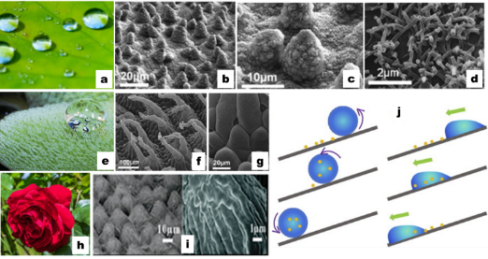
Figure 1. Photographs and SEM images of the Lotus (a, b, c and d) [2]; SEM image of the leaf hairs of the water fern of the genus Salvinia (e, f and g) [1]; Photograph of a rose petal (h), SEM image (i) [29]; Image illustrating the self-cleaning effect of a droplet on a contaminated surface (j) [28].
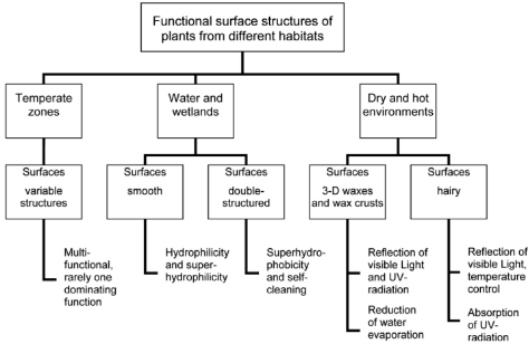
Figure 2. A tree of characteristic surface structures and functions of plants in temperate environments, aquatic and wetland habitats, and deserts [1].
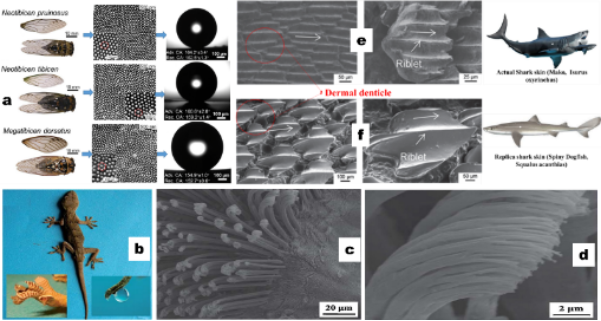
Figure 3. Topography, SEM images, and water wettability of the wings of Neotibicen pruinosus, Neotibicen tibicen, and Megatibicen dorsatus(a) [31]; Photographie d’un gecko ainsi que sa patte (b) et son image MEB à different grossissement (c, d) [4]; Photographs and SEM images of shark skin samples taken from live specimens. Mako (e) and a specimen of a spiny dogfish (f) [34].
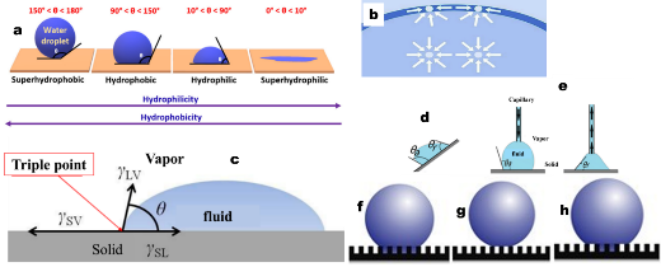
Figure 4. Diagram illustrating various surface wettability’s through contact angle measurements (a) [27]; Surface tension at a liquid-solid interface caused by molecular imbalance (b) [37]; Static contact angle of a liquid droplet at equilibrium on a solid substrate (c); Forward and backward angles of a drop’s movement on an inclined surface (d) and during the expansion and contraction of a drop (e) [38]; Diagram of models of a liquid droplet on a rough surface: (f) Wenzel model; (g) Cassie-Baxter model; (h) Wenzel-Cassie transition state [39].
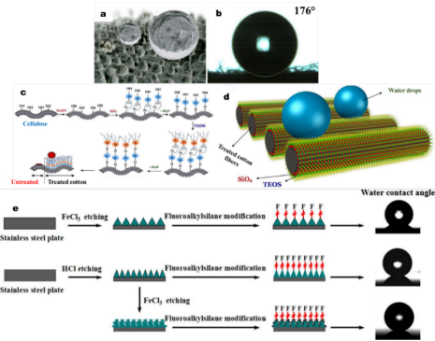
Figure 5. (a) Double lotus-leaf structures; (b) water droplets on superhydrophobic cotton; (c) chemical etching of cotton fibers; (d) schematic illustration of treated cotton fibers [37]; Superhydrophobic surface on stainless steel produced by a two-step chemical etching process [53].
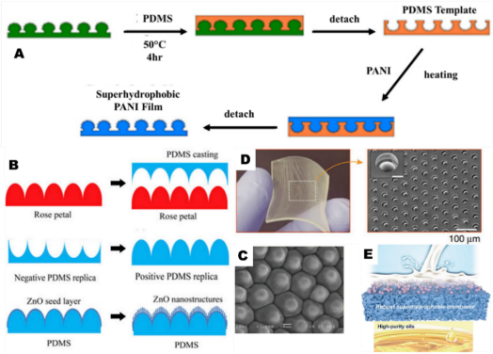
Figure 6. Schematic of the Templat process for fabricating hierarchical structures: (A) Preparation of a superhydrophobic polyaniline (PANI) film using the template replication method [60] (B) Preparing superhydrophobic ZnO on PDMS from rose petal; (C) SEM image and measurement of the water contact angle of the positive PDMS replica; (D) Photograph and SEM image of microcavities exhibiting dome-shaped structures resembling protrusions [61]; (E) Robust polyvinylidene fluoride (PVDF)-based membrane on a stainless steel plate [62].
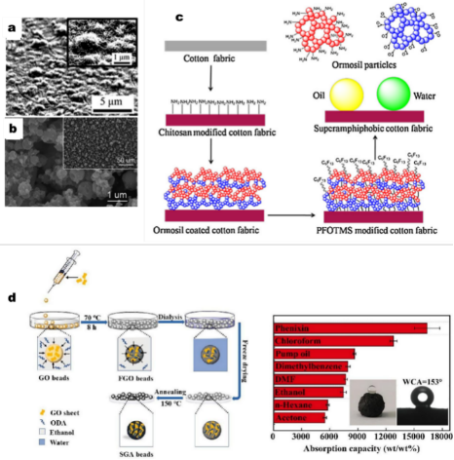
Figure 7. (a) SEM images of films doped with alumina and nanoparticles after immersion in boiling water, (b) Surface microstructure, observed by FE-SEM, taken from the rough, fluorinated SiO₂ layer prepared at a deposition rate of 0.05 µm/h, (c) Schematic of the manufacturing process for superamphiphobic cotton fabrics [37]; (d) Superhydrophobic graphene aerogel beads for the adsorption of hydrocarbons and organic solvents [64].
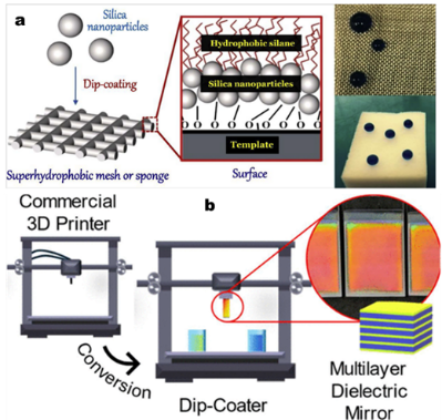
Figure 8. (a) Superhydrophobic coatings based on nano silica and HDTMS, mesh and sponge treated for the separation of oil/water mixtures [37]; (b) Fabrication of fully polymer multilayer photonic crystals thru the conversion of a 3D printer [73].
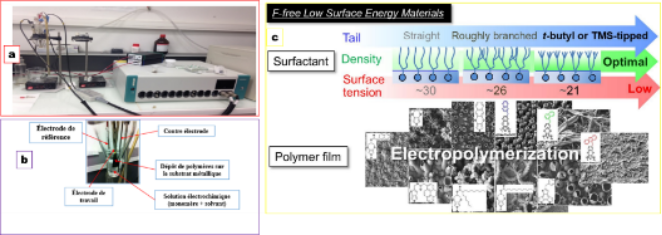
Figure 9. (a) Photograph of the electrodeposition device and (b) of an electrochemical cell; (c) Surfactants and low surface energy surfaces without fluorine [76].
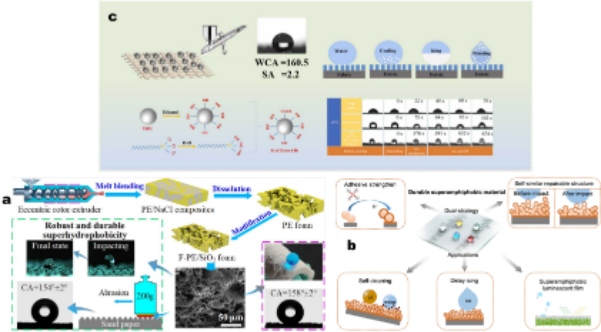
Figure 10. Diagram illustrating a robust and durable superhydrophobic F-PE/SiO2 foam with self-cleaning and anti-frosting behaviors [102]; (b) Durable superamphiphobic material obtained thru a dual strategy [103]; (c) Superhydrophobic, durable, and fluorine-free cotton fabrics [104].
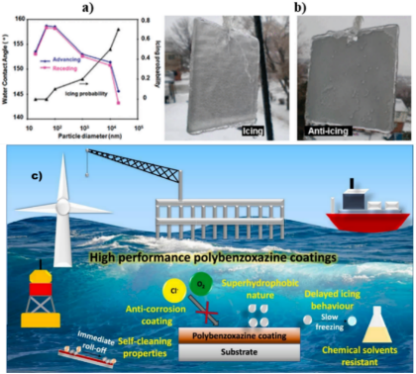
Figure 11. Contact angles with water at the advancing and receding of particle-polymer composites as a function of particle size (a); (b) Testing of anti-icing properties in the case of natural "freezing rain" [110]; (c) Benzoxazines with a cardanol-phthalate core for superhydrophobic, corrosion-resistant, anti-icing, and self-cleaning coatings [111].
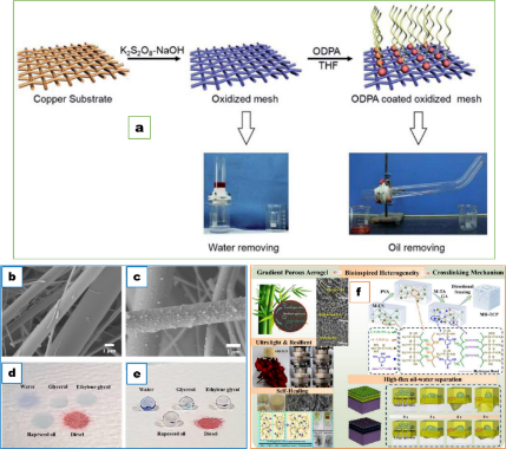
Figure 12. Diagram illustrating the formation of an oil-water separation membrane: (a) ODPA coating on a copper mesh oxidized with alkali [118]; (b, c, d, e) SEM images of the pristine GMF membrane and the modified GMF membrane [122]; (f) Biomass-based heterogeneous aerogels with a porous gradient inspired by biology for high-throughput oil-water separation and self-healing [123].
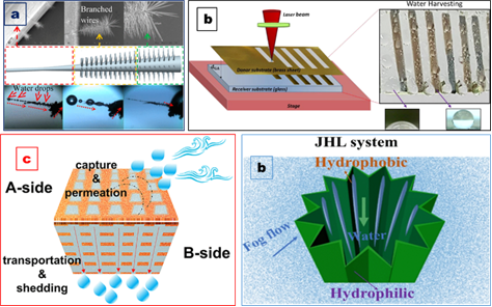
Figure 13. Diagram illustrating the fabrication of a water collection system: (a) Large ZnO wire with small branches collects water [130]; (b) Superhydrophobic/hydrophilic hybrid patterns deposited on glass by the laser-induced direct transfer method [134]; (c) Janus surface with intertwined double structure and multi-biomimetic (Copyright © 2024 American Chemical Soiety) [135]; Janus membrane in origami form effective for fog collection (Copyright © 2025 American Chemical Society) [136].

Information



 Share This Article
 Twitter
 Linked In
 Facebook
 Copy
Copy Download