Abstract
Background: Intimate partner violence (IPV) is a global public health problem that significantly affects women’s physical, reproductive, and mental health. Ethiopia is among the African countries where violence against women remains highly prevalent, posing serious human rights, economic, and health challenges. IPV is closely linked with HIV infection and negatively influences the health outcomes of women living with HIV, potentially affecting the implementation and success of the HIV treatment cascade. This study aimed to assess the magnitude of intimate partner violence and its associated factors among reproductive-age women attending antiretroviral therapy (ART) clinics in Jimma town, Southwest Ethiopia. Methods: A facility-based cross-sectional study was conducted among 360 reproductive-age women attending ART clinics from January 1 to 30, 2023. Both quantitative and qualitative data collection methods were employed. A consecutive sampling technique was used for quantitative data collection, while purposive sampling was applied for qualitative interviews. A pretested structured questionnaire was utilized. Data were entered into EpiData version 3.1 and analyzed using SPSS version 23. Descriptive statistics and logistic regression analyses were performed. Variables with a p-value < 0.05 were considered statistically significant and adjusted odds ratios (AOR) with 95% confidence intervals (CI) were used to identify factors associated with intimate partner violence. Results were presented using text, tables, and figures. Results: The lifetime prevalence of intimate partner violence was 57.8%. Women whose partners consumed alcohol were 3.26 times more likely to experience IPV [AOR = 3.26; 95% CI: 1.92–5.53]. Women whose partners used drugs had 2.50 times higher odds of experiencing IPV [AOR = 2.50; 95% CI: 1.50–4.17]. Having a partner with multiple sexual partners was associated with increased IPV [AOR = 2.57; 95% CI: 1.51–4.35]. Additionally, women with low decision-making autonomy were nearly three times more likely to experience IPV [AOR = 2.92; 95% CI: 1.60–5.34]. Conclusion and Recommendation: The study revealed a high magnitude of intimate partner violence among women living with HIV who are receiving treatment and care. Partner alcohol consumption, drug use, multiple sexual partnerships, and low decision-making autonomy were strongly associated with IPV. Strengthened policies and interventions targeting the prevention and control of intimate partner violence among women living with HIV are urgently needed. Prevention strategies should also actively involve men to ensure sustainable change.
Keywords
Intimate Partner Violence, HIV, Women Living with HIV, Ethiopia
1. Introduction
Intimate partner violence (IPV) is defined by the World Health Organization as behavior by a current or former intimate partner within the context of marriage, cohabitation, or any other formal or informal union that causes physical, sexual, or psychological harm. Such behavior includes acts of physical aggression (e.g., slapping, hitting, kicking, and beating); sexual aggression (e.g., forced intercourse and other forms of sexual coercion); psychological abuse (e.g., intimidation and constant humiliation); and controlling behaviors (also referred to as coercive control), such as isolating a person from family and friends, monitoring movements, restricting access to information or services, and preventing employment outside the home
| [1] | WHO. Violence against women: Geneva, World Health Organisation; Available from: 2017. |
[1]
.
Intimate partner violence has significant negative consequences for women living with HIV (WLWHIV). Evidence shows that IPV is associated with virological failure, lower CD4 cell counts, increased frequency of opportunistic infections, and a higher incidence of episodic illnesses such as pneumonia, bronchitis, and sinusitis. It is also linked to increased mortality risk. These poor health outcomes may result from the negative impact of IPV on women’s engagement in HIV care and treatment
| [2] | Hatcher A, Hatcher AM, Smout EM, Turan JM. Intimate partner violence and engagement in HIV care and treatment among women: a systematic review and meta-analysis. 2015; In 2016. |
[2]
.
Studies indicate that IPV is associated with reduced antiretroviral therapy (ART) utilization, poorer self-reported adherence to ART, and decreased viral suppression. Physical, emotional, or sexual abuse within relationships can diminish partner support, which is an important predictor of ART adherence. Furthermore, IPV is associated with loss of reproductive autonomy, including pregnancy coercion, birth control sabotage, and contraceptive interference by male partners. Such practices may result in unintended pregnancies, increased risk of sexually transmitted infections, and heightened HIV transmission risk among women in sero-discordant relationships
| [3] | Mulrenan C, Colombini M, Howard N, Kikuvi J, Mayhew SH, on behalf of the Integra Initiative. Exploring risk of experiencing intimate partner violence after HIV infection: a qualitative study among women with HIV attending postnatal services in Swaziland. BMJ Open. 2015 May 14; 5(5): e006907–e006907. |
[3]
.
Intimate partner violence is a major global public health problem affecting women’s physical, reproductive, and mental health. In Ethiopia, violence against women remains highly prevalent and is a serious concern not only from a human rights perspective but also from economic and public health standpoints. IPV is closely interconnected with HIV and negatively affects the health outcomes of WLWHIV, potentially undermining the HIV treatment cascade. IPV among WLWHIV is associated with decreased access to healthcare services, poor engagement in HIV care, suboptimal ART adherence, and lower health-related quality of life, which is a strong predictor of mortality.
Although several studies in Ethiopia have attempted to quantify the magnitude of IPV and its associated factors among WLWHIV, most have focused solely on women’s experiences. Comprehensive understanding of IPV requires assessment of both women’s and men’s experiences to design effective interventions. Therefore, this study aims to address existing gaps by examining the prevalence of IPV and its associated factors more comprehensively
| [3] | Mulrenan C, Colombini M, Howard N, Kikuvi J, Mayhew SH, on behalf of the Integra Initiative. Exploring risk of experiencing intimate partner violence after HIV infection: a qualitative study among women with HIV attending postnatal services in Swaziland. BMJ Open. 2015 May 14; 5(5): e006907–e006907. |
| [4] | Shri N, Muhammad T. Association of intimate partner violence and other risk factors with HIV infection among married women in India: evidence from National Family Health Survey 2015–16. BMC Public Health. 2021 Nov 17; 21: 2105. |
[3, 4]
.
Women who experience IPV are at increased risk of acquiring and transmitting HIV. Similarly, women who are HIV-positive are at elevated risk of experiencing IPV. The bidirectional and mutually reinforcing relationship between HIV and IPV exacerbates the impact of each condition, posing a severe threat to women’s quality of life and creating substantial burdens for families and society. Both IPV and HIV/AIDS require integrated and collaborative interventions. The Joint United Nations Programme on HIV/AIDS has established ambitious global targets to scale up HIV treatment by 2030; however, achieving these goals may be compromised if IPV among women remains unaddressed
| [4] | Shri N, Muhammad T. Association of intimate partner violence and other risk factors with HIV infection among married women in India: evidence from National Family Health Survey 2015–16. BMC Public Health. 2021 Nov 17; 21: 2105. |
[4]
.
Global commitments to end inequalities affecting people living with HIV emphasize ensuring that all women can exercise their rights to sexuality and reproductive health free from coercion, discrimination, and violence by 2025. A better understanding of the burden of IPV among women accessing HIV care, as well as its associated factors, is essential for developing and implementing effective, evidence-based IPV prevention interventions. Such efforts are critical to improving the lives of women and their families and to achieving national and global targets for preventing and controlling IPV among WLWHIV
.
Despite existing legal frameworks and policy efforts, gender-based violence continues to persist in Ethiopia. Women living with HIV still face substantial challenges related to violence and discrimination. Therefore, understanding the magnitude and determinants of IPV among WLWHIV is essential for designing effective interventions. The findings of this study will also serve as a reference for future research in this area.
2. Methods and Materials
2.1. Study Area
The study was conducted in all public health facilities providing HIV/AIDS care and treatment services in Jimma, located 354 km southwest of Addis Ababa, the capital city of Ethiopia. Jimma is one of the town administrations in the Oromia Region. According to the 2007 national census, the total population of Jimma town was 182,942, of whom 91,771 were males and 91,171 were females. The main languages spoken in the town are Afan Oromo and Amharic.
At the time of the study, there were six public health facilities (two hospitals and four health centers) and more than 15 private clinics in the town. Antiretroviral therapy (ART) services were provided in five public health facilities: Jimma Medical Center, Shenen Gibe Hospital, Jimma Health Center, Higher 2 Health Center, and Mendera Kochi Health Center. Currently, approximately 5,500 clients are attending ART services in these facilities, of which 3,087 are women of reproductive age living with HIV/AIDS. The study was conducted from January 1 to January 30, 2023.
2.2. Study Design
A facility-based cross-sectional study design was employed using both quantitative and qualitative methods.
2.3. Study Population
Quantitative Study Population: The study population consisted of women of reproductive age (15–49 years) living with HIV who were receiving ART services at public health facilities in Jimma town during the study period and who fulfilled the inclusion criteria.
Qualitative Study Population: Participants for the in-depth interviews were men living with HIV who attended ART clinics for care and treatment follow-up, had a history of intimate relationships, and were identified as perpetrators of intimate partner violence.
2.4. Inclusion and Exclusion Criteria
Inclusion Criteria: Women aged 15–49 years living with HIV. Receiving ART services at public health facilities in Jimma town during the study period
Exclusion Criteria: Women who were seriously ill and unable to participate in the interview. Women with mental illness that impaired their ability to respond
Sample size determination: The sample size is determined for both specific objectives by using Epi Info version 7.2.2.6 with the assumption of confidence level = 95%, margin of error = 5%, total population (N) = 3087, and prevalence 61.3% (25) and by considering population correction and for double population proportion we use power = 80% and ratio = 1:1. The sample size calculated for first objective was 327 with 10% non-response rate the final sample size is 360.
2.5. Data Collection Procedures
A structured questionnaire was used to collect quantitative data. The tool was adapted from the Demographic and Health Survey (DHS) domestic violence module, which is a modified version of the Conflict Tactics Scale developed by Murray A. Straus and is widely used to measure spousal violence within household settings
| [6] | McCloskey LA, Boonzaier F, Steinbrenner SY, Hunter T. Determinants of Intimate Partner Violence in Sub-Saharan Africa: A Review of Prevention and Intervention Programs. Partner Abuse. 2016; 7(3): 277–315. |
[6]
.
The questionnaire was designed to assess exposure to different forms of intimate partner violence (IPV), including physical, sexual, emotional violence, and controlling behaviors by a current intimate partner. The DHS IPV module includes specific acts such as: Physical IPV (e.g., slapping, kicking, beating), Sexual IPV (e.g., forced sexual intercourse or threats to engage in sexual acts), Emotional IPV (e.g., humiliation, insults, intimidation), Controlling behaviors (e.g., restriction of social contact and movement) Each item was answered with “Yes” or “No.” A “Yes” response to any of the questions was considered as exposure to IPV.
For the qualitative component, an interview guide consisting of open-ended, semi-structured, and probing questions was used to conduct in-depth interviews with purposively selected men living with HIV who attended ART clinics for care and treatment follow-up. In-depth interviews allowed participants to discuss their opinions, knowledge, perceptions, and experiences in detail. The discussions focused on their understanding of IPV, personal experiences as perpetrators, and recommendations for preventing IPV within relationships or marriage, as well as observations of others’ experiences.
Each interview lasted approximately 30–60 minutes and was audio-recorded with the participant’s permission to ensure completeness of information. To maintain privacy and encourage open communication, interviews were conducted in a private room within the health facility (
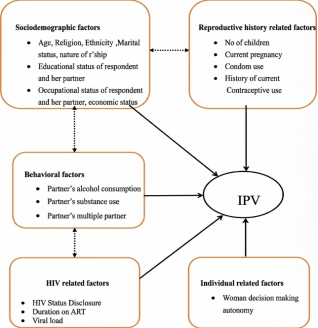
Figure 1).
Figure 1. Conceptual framework for magnitude of IPV and associated factor among reproductive age W LWHIV. (Source: Developed after reviewing different literature 23-31).
2.6. Data Collection Technique
Data were collected by five trained Bachelor’s degree-holder nurses and supervised by two public health officers. Data collectors were assigned to each ART clinic, while supervisors closely regulated and managed the data collection process.
Face-to-face interviews were conducted using the structured questionnaire when eligible women attended ART services. Data collection was carried out after respondents had completed their clinical visit to ensure minimal disruption to service delivery. Supervisors monitored the overall process to ensure adherence to study procedures and data quality standards.
2.7. Data Processing and Analysis
Quantitative Data Analysis: Completed questionnaires were reviewed daily by supervisors and the principal investigator to ensure completeness and consistency. Data were entered into EpiData version 3.1 and exported to SPSS version 23 for analysis. Data cleaning was performed by running frequency distributions for each variable to identify missing values and inconsistencies. Univariate analysis: Measures of central tendency (mean, median) and dispersion (standard deviation) were computed for continuous variables. Descriptive statistics: Frequency distributions and percentages were calculated for categorical variables. Bivariate analysis: Independent variables with a p-value < 0.25 were selected as candidates for multivariable analysis. Multivariable analysis: Forward logistic regression was performed to identify factors independently associated with IPV and to control for potential confounders. Variables with a p-value < 0.05 were considered statistically significant. Adjusted Odds Ratios (AOR) with 95% Confidence Intervals (CI) was reported. Findings were presented using text, tables, and figures.
Qualitative Data Analysis: Qualitative data were analyzed using a thematic analysis approach. Audio recordings and field notes were transcribed verbatim and translated into English. The transcripts were read and re-read thoroughly to ensure familiarity with the data before coding.
The analysis process involved: Systematic coding of meaningful segments of text, grouping similar codes into categories, organizing related categories into themes and Naming and describing the themes.
Interpretation of findings was performed by triangulating qualitative and quantitative results to enhance the credibility and depth of the study.
2.8. Data Quality Assurance
To ensure data quality, the questionnaire was originally prepared in English and translated into Afan Oromo and Amharic by bilingual experts experienced in translation. To ensure consistency, the translated versions were back-translated into English by another independent translator.
Data collectors and supervisors received one-day training covering the study objectives, data collection procedures, and research ethics. A pre-test was conducted among 5% of the study participants at Seka Hospital ART clinic, which has similar characteristics to the study setting. Based on the pre-test findings, necessary modifications were made to standardize and improve the tool. Supervisors closely monitored data collectors throughout the data collection period to ensure accuracy and completeness. For the qualitative component, in-depth interviews were conducted by trained and experienced interviewers. Adequate notes were taken by an experienced note-taker. Participants’ confidentiality was strictly maintained to promote free expression. Indirect questioning techniques (e.g., framing questions in the third person such as “What would he/she do?” instead of “What would you do?”) were used to reduce social desirability bias and encourage honest responses. Interviews were audio-recorded to capture all information accurately. Transcription was performed on the same day as the interview, and translation was carried out carefully to ensure trustworthiness and credibility of the data.
2.9. Dissemination Plan
The findings of the study will be communicated to Jimma University Institute of Health and relevant stakeholders in the study area. Results will also be presented at scientific conferences, seminars, and workshops. Furthermore, efforts will be made to publish the findings in peer-reviewed scientific journals to reach a wider scientific community.
3. Results
3.1. Socio-Demographic Characteristics of Study Participants
A total of 360 women of reproductive age attending ART clinics in Jimma town participated in the study, yielding a 100% response rate. The age of participants ranged from 19 to 49 years, with a mean age of 33.9 years (SD ± 6.8). The majority, 153 (42.5%), were in the 25–34 years age group.
Nearly half of the participants, 157 (43.6%), had attended primary education. Regarding occupation, 107 (29.7%) were daily laborers. Most respondents, 267 (74.2%), were married, and among these, 233 (87.2%) were in monogamous marriages (
Table 1).
Table 1. Sociodemographic characteristics of women living with HIV who come to ART clinic at Jimma town public health institutions, South West Ethiopia, 2023.
Variables | Category | Frequency (%) |
Religion | Orthodox | 149 (41.4) |
Muslim | 126 (35.0) |
Protestant | 84(23.3) |
Catholic | 1(0.3) |
Partner education | No Education | 30 (8.3) |
Primary education | 11 (31.7) |
Secondary (9-12 grades) | 149 (41.4) |
Higher (Above 12) | 67 (18.6 ) |
Partner occupation | Merchant | 64 (17.8) |
Daily laborer | 113 (31.4) |
Government employee | 125 (34.7) |
Private employee | 53 (14.7) |
Student | 2 (0.6) |
Other | 3 (0.8) |
Wealth index | Poorer | 72 (20) |
Poor | 77 (21.4) |
Middle | 67 (18.6) |
Rich | 73 (20.3) |
Richest | 71(19.7) |
3.2. Respondents’ Partner-Related Behavioral Factors
After adjusting for potential confounders in multivariable logistic regression analysis, partner alcohol use, partner drug use, partner multiple sexual partnerships, and women’s decision-making autonomy were significantly associated with intimate partner violence (IPV) at p-value < 0.05. Women whose partners consumed alcohol were 3.26 times more likely to experience IPV compared to those whose partners did not consume alcohol (AOR = 3.26; 95% CI: 1.92–5.53). Women whose partners used drugs were 2.50 times more likely to experience IPV compared to those whose partners did not use drugs (AOR = 2.50; 95% CI: 1.50–4.17). Women whose partners had multiple sexual partners were 2.57 times more likely to experience IPV compared to those whose partners did not (AOR = 2.57; 95% CI: 1.51–4.35). Women with low decision-making autonomy were 2.92 times more likely to experience IPV compared to women with higher autonomy (AOR = 2.92; 95% CI: 1.60–5.34) (
Table 2).
Table 2. Multivariable logistic regression analysis showing factors associated with prevalence of intimate partner violence among women living with HIV who attended, Jimma town ART clinics south west Ethiopia.
Variables | | Experience of violence | AOR(CI) | P-value |
Yes | No |
Parents alcohol use | Yes | 117(56.2%) | 91(43.2%) | 3.26(1.92 -5.53) | 0.000 |
No | 45(29.6%) | 107(70.4%) | 1 | |
Partner‟s drug use | Yes | 109(52.4%) | 99(47.6%) | 2.50(1.50-4.17) | 0.000 |
No | 45(29.6%) | 107(70.4%) | 1 | |
Partner‟s multi-partnership | Yes | 93(44.7%) | 115(55.3%) | 2.57(1.51-4.35) | 0.000 |
No | 35(23%) | 117(77%) | 1 | |
Women decision making autonomy | Low | 135(51.7%) | 126(48.3%) | 2.92(1.60-5.34) | 0.001 |
High | 73(38.1%) | 26(61.9%) | 1 | |
4. Qualitative Findings
4.1. Theme 1: Perceptions of Intimate Partner Violence and Its Occurrence
4.1.1. Perception of Intimate Partner Violence
Most participants defined intimate partner violence as harmful actions committed by a partner against a woman, including hitting, beating, insulting, kicking, or injuring her. The majority did not support IPV and considered it morally and socially unacceptable.
One 50-year-old participant stated:
“There is a man near my home who insults and kicks his wife whenever they quarrel. But it is not a good thing. We hear much news about violence against women. A woman should be respected; God does not like such actions.”
Some participants expressed the belief that marital conflict is inevitable but emphasized that peaceful marriages are possible when wives obey their husbands. A 50-year-old participant said:
“There are couples near my home; the wife always listens and obeys her husband, so they live in peace. I wish my wife would be like that because she does not always obey me.”
4.1.2. Availability of IPV and Perpetrators
Most participants reported that IPV commonly occurs among married couples and those in intimate relationships, with men typically identified as perpetrators.
However, some participants stated that women may also commit violence, often linked to financial stress or communication problems. A 42-year-old participant explained:
“I am a daily laborer and do not get work every day. My wife compares me with others and insults me for not bringing money. Sometimes she throws things at me.”
4.2. Theme 2: Causes of Intimate Partner Violence and Level of Acceptance
4.2.1. Causes of IPV
Participants identified several perceived causes of IPV, including: Lack of mutual respect, Alcohol consumption, Drug use, Multiple sexual partnerships, Financial problems, Poor communication, Women’s decision-making autonomy and Failure to “obey” husbands.
A 44-year-old participant stated: “Violence happens because of lack of respect. My wife insults me when I drink, so I hit her without knowing what I am doing.”
Another participant highlighted infidelity as a cause: “Having multiple partners is not good. My friend divorced because of this.” Substance use was also frequently mentioned as a trigger for aggression and conflict.
4.2.2. Level of Acceptance of IPV
Although participants acknowledged its occurrence, none openly supported IPV. However, some responses reflected norms that justify male dominance in household decision-making.
4.3. Theme 3: Measures to Reduce IPV
Participants suggested the following measures to reduce IPV: Improved communication and problem-solving between couples, Mutual respect and tolerance, Premarital and marital counseling, Involvement of religious and community leaders and Education programs by governmental and non-governmental organizations.
A 48-year-old participant stated: “Couples are advised after problems occur. It is better to educate them before problems arise.” Some participants emphasized counseling women on financial management and discouraging independent decision-making in household matters, reflecting prevailing gender norms.
5. Discussion
The aim of this study was to assess the prevalence of intimate partner violence (IPV) and its associated factors among women attending ART clinics for care and treatment in Jimma town, Southwest Ethiopia. The findings revealed that the prevalence of intimate partner violence was 57%, indicating that IPV is a significant public health problem among women living with HIV in the study area. The prevalence found in this study is comparable with findings from Wolaita Zone, Southern Ethiopia (61.3%). However, it is higher than reports from Fitche Hospital in Central Ethiopia (46%), Adama town in East Shoa Zone (45.5%), Uganda (29%), and Nigeria (24%). The observed differences may be attributed to variations in socio demographic characteristics, study populations, study design, cultural contexts, and sample sizes.
The qualitative findings also supported the quantitative results. Most participants reported that intimate partner violence occurs frequently among couples and has, in some cases, become life-threatening for women. The majority indicated that men are the primary perpetrators of violence, although a few participants acknowledged that women may also perpetrate IPV.
This study identified several factors significantly associated with intimate partner violence. Women whose partners consumed alcohol were 3.2 times more likely to experience violence compared to those whose partners did not consume alcohol. This finding is consistent with studies conducted in Uganda and Wolaita Zone, Southern Ethiopia
| [7] | World Health Organization. Violence against women prevalence estimates, 2018: global, regional and national prevalence estimates for intimate partner violence against women and global and regional prevalence estimates for non-partner sexual violence against women [Internet]. Geneva: World Health Organization; 2021. |
| [8] | Semahegn A, Mengistie B. Domestic violence against women and associated factors in Ethiopia; systematic review. Reproductive Health. 2015 Aug 29; 12(1): 78. |
| [9] | Closson K, Lee M, Gibbs A, Kaida A. When Home is Not a Safe Place: Impacts of Social Distancing Directives on Women Living with HIV. AIDS Behav. 2020 Nov 1; 24(11): 3017–9. |
[7-9]
. Alcohol consumption may impair judgment, increase aggression, and reduce effective communication between partners, thereby increasing the likelihood of violence. Furthermore, alcohol use has been linked to risky sexual behaviors, including engagement with commercial sex workers and reduced condom use.
However, this finding contradicts studies conducted in Nigeria, Fitche town, and Adama town, Ethiopia
| [10] | Meskele M, Khuzwayo N, Taylor M. Mapping the evidence of intimate partner violence among women living with HIV/AIDS in sub-Saharan Africa: a scoping review. BMJ Open. 2021 May 11; 11(5): e041326. |
| [11] | Deribe L, Tilahun T, Admassu B. Determinants of Intimate Partner Violence among HIV Positive Women Attending ART Clinic in Fitche Hospital, Central Ethiopia: An
Institution Based Cross Sectional Study. 2016; 10. |
| [13] | PAPFAR. Ethiopia Country Operational Plan COP 2021 Strategic Direction Summary Final May 26, 2021. |
[10, 11, 13]
, where partner alcohol consumption was not significantly associated with IPV. These discrepancies may be explained by methodological differences, sociocultural variations, and differences in study populations.
The qualitative findings further reinforced this association
| [12] | Goyomsa GG, Albe TA, Debela SA, Kitaw LD. Current intimate partner violence and associated factors among sero-positive women attending Adama town ART Clinics, Central Ethiopia 2019. Int J Equity Health. 2022 Dec; 21(1): 44. |
| [14] | Sileshi Garoma Abeya, Sagni Bobo Barkesa. Adherence to COVID-19 preventive measures and associated factors in Oromia regional state of Ethiopia. |
| [15] | Mitchell J, Wight M, Van Heerden A, Rochat TJ. Intimate partner violence, HIV, and mental health: a triple epidemic of global proportions. International Review of Psychiatry. 2016 Sep 2; 28(5): 452–63. |
[12, 14, 15]
. Some participants reported that alcohol consumption often led to quarrels, loss of respect between partners, and physical violence. Several men admitted that when intoxicated, they became aggressive and sometimes did not fully recall assaulting their wives.
Similarly, women whose partners used abusive drugs were 2.5 times more likely to experience violence compared to those whose partners did not use drugs. This finding aligns with research conducted in Ogun State, Nigeria
| [16] | FHAPCO. HIV Prevention in EthiopiaNational Road Map 2018-2020. In 2018. |
| [17] | Ethiopian reproductive health strategy 2020-2016 RH-strategy-2016.pdf. |
[16, 17]
. Substance abuse may increase aggression and impair self-control, thereby elevating the risk of IPV. However, this result differs from findings in Adama town
| [13] | PAPFAR. Ethiopia Country Operational Plan COP 2021 Strategic Direction Summary Final May 26, 2021. |
[13]
, which may be due to differences in sample size or study design.
Qualitative data supported this finding, as participants reported that drug use altered behavior, increased aggression, and contributed to financial conflicts due to money spent on substances, which further triggered violence.
The study also found that women whose partners had multiple sexual partners were 2.5 times more likely to experience violence compared to those whose partners did not have multiple partners. This finding is consistent with studies from Adama and Wolaita
| [18] | Matseke MG, Ruiter RAC, Rodriguez VJ, Peltzer K, Lee TK, Jean J, et al. Prenatal and Postnatal Intimate Partner Violence and Associated Factors Among HIV-Infected Women in Rural South Africa: A Longitudinal Study. Violence Against Women. 2021 Dec; 27(15–16): 2855–81. |
| [19] | World health organization (WHO). Violence against women. March, 9 2021 GENEVA | NEW YORK. In 2021. |
| [20] | Were E, Curran K, Delany-Moretlwe S, Nakku-Joloba E, Mugo NR, Kiarie J, et al. A prospective study of frequency and correlates of intimate partner violence among African heterosexual HIV serodiscordant couples. AIDS. 2011 Oct 23; 25(16): 2009–18. |
| [21] | Osinde MO, Kaye DK, Kakaire O. Intimate partner violence among women with HIV infection in rural Uganda: critical implications for policy and practice. BMC Womens Health. 2011 Nov 17; 11: 50. |
[18-21]
. Multiple partnerships may create mistrust, jealousy, and relationship conflict, which can escalate into violence. Qualitative findings indicated that lack of trust in relationships reduced affection, increased disputes, and sometimes led to divorce.
Furthermore, women with low decision-making autonomy were 2.9 times more likely to experience IPV compared to women with higher autonomy. This finding contrasts with research conducted in Africa
| [22] | Meskele M, Khuzwayo N, Taylor M. Intimate partner violence against women living with and without HIV, and the associated factors in Wolaita Zone, Southern Ethiopia: A comparative cross-sectional study. PLoS One. 2019 Aug 23; 14(8): e0220919. |
| [23] | Young CR, Kaida A, Kabakyenga J, Muyindike W, Musinguzi N, Martin JN, et al. Prevalence and correlates of physical and sexual intimate partner violence among women living with HIV in Uganda. PLoS One. 2018 Aug 27; 13(8): e0202992. |
| [24] | Women‟s Decision-Making Autonomy and Experience of intimate partner violence in sub-sahars africa.pdf. |
| [25] | Illangasekare S, Burke J, Chander G, Gielen A. The Syndemic Effects of Intimate Partner Violence, HIV/AIDS, and Substance Abuse on Depression among Low-Income Urban Women. J Urban Health. 2013 Oct; 90(5): 934–47. |
[22-25]
, where women’s decision-making autonomy was not significantly associated with IPV. Cultural and methodological differences may explain this inconsistency.
The qualitative findings showed that most household decisions were made by men, and many participants did not accept women making independent decisions which is similar from evidences of low income countries
| [26] | Tina Jiwatram-Negrón, Nabila El-Bassel, Sholpan Primbetova, and Assel Terlikbayeva. Gender-Based Violence Among HIV-Positive Women in Kazakhstan: Prevalence, Types, and Associated Risk and Protective Factors. In Violence Against Women, 24(13), 1570–1590, 2018. |
[26]
. Disagreements frequently arose over women’s involvement in household decision-making, which sometimes resulted in violence.
Overall, this study highlights the multifaceted nature of intimate partner violence among women living with HIV and underscores the need for integrated interventions that address substance use, male sexual behavior, and women’s empowerment within the sociocultural context
| [27] | Colombini M, James C, Ndwiga C, Integra team, Mayhew SH. The risks of partner violence following HIV status disclosure, and health service responses: narratives of women attending reproductive health services in Kenya. Journal of the International AIDS Society. 2016 Jan; 19(1): 20766. |
| [28] | Profiling Domestic Violence – A Multi-Country Study. Calverton, Maryland: ORC Macro. Kishor, Sunita and Kiersten Johnson. 2004. |
| [29] | Abiodun O, Sodeinde K, Bamidele F, Ojinni Y, Adekeye J, Ohiaogu F, et al. Intimate Partner Violence Among Women Accessing HIV-Care Services at Tertiary Hospitals in Ogun State, Nigeria: Implications for Policy and Practice. J Interpers Violence. 2022 Jan; 37(1–2): 58–78. |
[27-29]
.
5.1. Strengths of the Study
One of the main strengths of this study is that it examined variables that were not well addressed in previous studies, particularly women’s decision-making autonomy and the nature of the marital relationship. Including these variables provided a broader understanding of the contextual and relational factors associated with intimate partner violence among women living with HIV.
Another important strength is the use of a mixed-methods approach. The inclusion of male participants through qualitative interviews allowed for deeper exploration of attitudes and experiences related to intimate partner violence. This approach enabled triangulation of findings, thereby enhancing the validity and comprehensiveness of the results obtained from the quantitative survey.
5.2. Limitations of the Study
Despite its strengths, this study has several limitations. First, the cross-sectional study design limits the ability to establish temporal or causal relationships between intimate partner violence and the identified associated factors. The direction of cause-and-effect relationships cannot be definitively determined.
Second, the measurement of intimate partner violence was based on self-reported data, which may introduce information bias, including recall bias and social desirability bias. Although participants were given sufficient time to recall their experiences in order to minimize recall bias, some degree of underreporting or over reporting may have occurred due to the sensitive nature of the topic.
Additionally, since the study was facility-based, it included only women attending ART clinics. Women who had not been tested for HIV and those living with HIV but not enrolled in antiretroviral therapy (ART) were not represented. Therefore, the findings may not be generalizable to all women living with HIV in the community.
6. Recommendations
For Policymakers and Program Planners: Strengthen policies addressing IPV among women living with HIV. Involve men in IPV prevention programs. Promote community mobilization and awareness through religious and community leaders and Empower women to enhance decision-making autonomy.
For Healthcare Providers: Strengthen IPV screening and counseling services and Provide education on healthy relationship skills
For Researchers: Conduct community-based studies. Include women older than 49 years and further explore the relationship between IPV and marital characteristics.
Abbreviations
AIDS | Acquired Immune Deficiency Syndrome |
ACTG | AIDS Clinical Trials Group |
ART | Anti-Retroviral Treatment |
DHS | Demographic Health Survey |
HIV | Human Immune deficiency Virus |
IPV | Intimate Partner Violence |
IRB | Institution Review Board |
MTC | Mother to Child Transmission |
PLWHIV | People Living with HIV |
RH | Reproductive Health |
SNNPR | Southern Nation Nationalities and Peoples Region |
SPSS | Statistical Package for the Social Sciences |
SSA | Sub Saharan Africa |
WHO | World Health Organization |
Acknowledgments
We sincerely thank all study participants and the Institute of Health, Jimma University, for their support.
Authors Contributions
Aderajew Nigusse Teklehaimanot: Conceptualization, Data curation, Investigation, Methodology, Writing – review & editing, original draft
Mihret Mamo: Investigation, Writing – original draft, Writing – review & editing
Funding
This study was funded by Jimma University. The views expressed are those of the authors and do not necessarily reflect those of the funding institution.
Data Availability Statement
All relevant data are included within the article. Additional datasets are available from the corresponding author upon reasonable request.
Conflicts of Interest
The authors declare no competing interests.
References
| [1] |
WHO. Violence against women: Geneva, World Health Organisation; Available from: 2017.
|
| [2] |
Hatcher A, Hatcher AM, Smout EM, Turan JM. Intimate partner violence and engagement in HIV care and treatment among women: a systematic review and meta-analysis. 2015; In 2016.
|
| [3] |
Mulrenan C, Colombini M, Howard N, Kikuvi J, Mayhew SH, on behalf of the Integra Initiative. Exploring risk of experiencing intimate partner violence after HIV infection: a qualitative study among women with HIV attending postnatal services in Swaziland. BMJ Open. 2015 May 14; 5(5): e006907–e006907.
|
| [4] |
Shri N, Muhammad T. Association of intimate partner violence and other risk factors with HIV infection among married women in India: evidence from National Family Health Survey 2015–16. BMC Public Health. 2021 Nov 17; 21: 2105.
|
| [5] |
Dec 02 ARP, 2019. HIV, Intimate Partner Violence (IPV), and Women: An Emerging Policy Landscape [Internet]. KFF. 2019 [cited 2022 May 20]. Available from:
https://www.kff.org/hivaids/issue-brief/hiv-intimate-partner-violence-ipv-and-women-an-emerging-policy-landscape/
|
| [6] |
McCloskey LA, Boonzaier F, Steinbrenner SY, Hunter T. Determinants of Intimate Partner Violence in Sub-Saharan Africa: A Review of Prevention and Intervention Programs. Partner Abuse. 2016; 7(3): 277–315.
|
| [7] |
World Health Organization. Violence against women prevalence estimates, 2018: global, regional and national prevalence estimates for intimate partner violence against women and global and regional prevalence estimates for non-partner sexual violence against women [Internet]. Geneva: World Health Organization; 2021.
|
| [8] |
Semahegn A, Mengistie B. Domestic violence against women and associated factors in Ethiopia; systematic review. Reproductive Health. 2015 Aug 29; 12(1): 78.
|
| [9] |
Closson K, Lee M, Gibbs A, Kaida A. When Home is Not a Safe Place: Impacts of Social Distancing Directives on Women Living with HIV. AIDS Behav. 2020 Nov 1; 24(11): 3017–9.
|
| [10] |
Meskele M, Khuzwayo N, Taylor M. Mapping the evidence of intimate partner violence among women living with HIV/AIDS in sub-Saharan Africa: a scoping review. BMJ Open. 2021 May 11; 11(5): e041326.
|
| [11] |
Deribe L, Tilahun T, Admassu B. Determinants of Intimate Partner Violence among HIV Positive Women Attending ART Clinic in Fitche Hospital, Central Ethiopia: An
Institution Based Cross Sectional Study. 2016; 10.
|
| [12] |
Goyomsa GG, Albe TA, Debela SA, Kitaw LD. Current intimate partner violence and associated factors among sero-positive women attending Adama town ART Clinics, Central Ethiopia 2019. Int J Equity Health. 2022 Dec; 21(1): 44.
|
| [13] |
PAPFAR. Ethiopia Country Operational Plan COP 2021 Strategic Direction Summary Final May 26, 2021.
|
| [14] |
Sileshi Garoma Abeya, Sagni Bobo Barkesa. Adherence to COVID-19 preventive measures and associated factors in Oromia regional state of Ethiopia.
|
| [15] |
Mitchell J, Wight M, Van Heerden A, Rochat TJ. Intimate partner violence, HIV, and mental health: a triple epidemic of global proportions. International Review of Psychiatry. 2016 Sep 2; 28(5): 452–63.
|
| [16] |
FHAPCO. HIV Prevention in EthiopiaNational Road Map 2018-2020. In 2018.
|
| [17] |
Ethiopian reproductive health strategy 2020-2016 RH-strategy-2016.pdf.
|
| [18] |
Matseke MG, Ruiter RAC, Rodriguez VJ, Peltzer K, Lee TK, Jean J, et al. Prenatal and Postnatal Intimate Partner Violence and Associated Factors Among HIV-Infected Women in Rural South Africa: A Longitudinal Study. Violence Against Women. 2021 Dec; 27(15–16): 2855–81.
|
| [19] |
World health organization (WHO). Violence against women. March, 9 2021 GENEVA | NEW YORK. In 2021.
|
| [20] |
Were E, Curran K, Delany-Moretlwe S, Nakku-Joloba E, Mugo NR, Kiarie J, et al. A prospective study of frequency and correlates of intimate partner violence among African heterosexual HIV serodiscordant couples. AIDS. 2011 Oct 23; 25(16): 2009–18.
|
| [21] |
Osinde MO, Kaye DK, Kakaire O. Intimate partner violence among women with HIV infection in rural Uganda: critical implications for policy and practice. BMC Womens Health. 2011 Nov 17; 11: 50.
|
| [22] |
Meskele M, Khuzwayo N, Taylor M. Intimate partner violence against women living with and without HIV, and the associated factors in Wolaita Zone, Southern Ethiopia: A comparative cross-sectional study. PLoS One. 2019 Aug 23; 14(8): e0220919.
|
| [23] |
Young CR, Kaida A, Kabakyenga J, Muyindike W, Musinguzi N, Martin JN, et al. Prevalence and correlates of physical and sexual intimate partner violence among women living with HIV in Uganda. PLoS One. 2018 Aug 27; 13(8): e0202992.
|
| [24] |
Women‟s Decision-Making Autonomy and Experience of intimate partner violence in sub-sahars africa.pdf.
|
| [25] |
Illangasekare S, Burke J, Chander G, Gielen A. The Syndemic Effects of Intimate Partner Violence, HIV/AIDS, and Substance Abuse on Depression among Low-Income Urban Women. J Urban Health. 2013 Oct; 90(5): 934–47.
|
| [26] |
Tina Jiwatram-Negrón, Nabila El-Bassel, Sholpan Primbetova, and Assel Terlikbayeva. Gender-Based Violence Among HIV-Positive Women in Kazakhstan: Prevalence, Types, and Associated Risk and Protective Factors. In Violence Against Women, 24(13), 1570–1590, 2018.
|
| [27] |
Colombini M, James C, Ndwiga C, Integra team, Mayhew SH. The risks of partner violence following HIV status disclosure, and health service responses: narratives of women attending reproductive health services in Kenya. Journal of the International AIDS Society. 2016 Jan; 19(1): 20766.
|
| [28] |
Profiling Domestic Violence – A Multi-Country Study. Calverton, Maryland: ORC Macro. Kishor, Sunita and Kiersten Johnson. 2004.
|
| [29] |
Abiodun O, Sodeinde K, Bamidele F, Ojinni Y, Adekeye J, Ohiaogu F, et al. Intimate Partner Violence Among Women Accessing HIV-Care Services at Tertiary Hospitals in Ogun State, Nigeria: Implications for Policy and Practice. J Interpers Violence. 2022 Jan; 37(1–2): 58–78.
|
Cite This Article
-
APA Style
Teklehaimanot, A. N., Mamo, M. (2026). Nutritional Status and Magnitude of Intimate Partner Violence Among Reproductive Age Attending Antiretro Viral Treatment Clinic in Jimma Town, South West Ethiopia. International Journal of HIV/AIDS Prevention, Education and Behavioural Science, 12(2), 28-36. https://doi.org/10.11648/j.ijhpebs.20261202.12
 Copy
|
 Download
ACS Style
Teklehaimanot, A. N.; Mamo, M. Nutritional Status and Magnitude of Intimate Partner Violence Among Reproductive Age Attending Antiretro Viral Treatment Clinic in Jimma Town, South West Ethiopia. Int. J. HIV/AIDS Prev. Educ. Behav. Sci. 2026, 12(2), 28-36. doi: 10.11648/j.ijhpebs.20261202.12
Copy
|
Download
AMA Style
Teklehaimanot AN, Mamo M. Nutritional Status and Magnitude of Intimate Partner Violence Among Reproductive Age Attending Antiretro Viral Treatment Clinic in Jimma Town, South West Ethiopia. Int J HIV/AIDS Prev Educ Behav Sci. 2026;12(2):28-36. doi: 10.11648/j.ijhpebs.20261202.12
Copy
|
Download
-
@article{10.11648/j.ijhpebs.20261202.12,
  author = {Aderajew Nigusse Teklehaimanot and Mihret Mamo},
  title = {Nutritional Status and Magnitude of Intimate Partner Violence Among Reproductive Age Attending Antiretro Viral Treatment Clinic in Jimma Town, South West Ethiopia},
  journal = {International Journal of HIV/AIDS Prevention, Education and Behavioural Science},
  volume = {12},
  number = {2},
  pages = {28-36},
  doi = {10.11648/j.ijhpebs.20261202.12},
  url = {https://doi.org/10.11648/j.ijhpebs.20261202.12},
  eprint = {https://article.sciencepublishinggroup.com/pdf/10.11648.j.ijhpebs.20261202.12},
  abstract = {Background: Intimate partner violence (IPV) is a global public health problem that significantly affects women’s physical, reproductive, and mental health. Ethiopia is among the African countries where violence against women remains highly prevalent, posing serious human rights, economic, and health challenges. IPV is closely linked with HIV infection and negatively influences the health outcomes of women living with HIV, potentially affecting the implementation and success of the HIV treatment cascade. This study aimed to assess the magnitude of intimate partner violence and its associated factors among reproductive-age women attending antiretroviral therapy (ART) clinics in Jimma town, Southwest Ethiopia. Methods: A facility-based cross-sectional study was conducted among 360 reproductive-age women attending ART clinics from January 1 to 30, 2023. Both quantitative and qualitative data collection methods were employed. A consecutive sampling technique was used for quantitative data collection, while purposive sampling was applied for qualitative interviews. A pretested structured questionnaire was utilized. Data were entered into EpiData version 3.1 and analyzed using SPSS version 23. Descriptive statistics and logistic regression analyses were performed. Variables with a p-value Results: The lifetime prevalence of intimate partner violence was 57.8%. Women whose partners consumed alcohol were 3.26 times more likely to experience IPV [AOR = 3.26; 95% CI: 1.92–5.53]. Women whose partners used drugs had 2.50 times higher odds of experiencing IPV [AOR = 2.50; 95% CI: 1.50–4.17]. Having a partner with multiple sexual partners was associated with increased IPV [AOR = 2.57; 95% CI: 1.51–4.35]. Additionally, women with low decision-making autonomy were nearly three times more likely to experience IPV [AOR = 2.92; 95% CI: 1.60–5.34]. Conclusion and Recommendation: The study revealed a high magnitude of intimate partner violence among women living with HIV who are receiving treatment and care. Partner alcohol consumption, drug use, multiple sexual partnerships, and low decision-making autonomy were strongly associated with IPV. Strengthened policies and interventions targeting the prevention and control of intimate partner violence among women living with HIV are urgently needed. Prevention strategies should also actively involve men to ensure sustainable change.},
 year = {2026}
}
Copy
|
Download
-
TY  - JOUR
T1  - Nutritional Status and Magnitude of Intimate Partner Violence Among Reproductive Age Attending Antiretro Viral Treatment Clinic in Jimma Town, South West Ethiopia
AU  - Aderajew Nigusse Teklehaimanot
AU  - Mihret Mamo
Y1  - 2026/11/25
PY  - 2026
N1  - https://doi.org/10.11648/j.ijhpebs.20261202.12
DO  - 10.11648/j.ijhpebs.20261202.12
T2  - International Journal of HIV/AIDS Prevention, Education and Behavioural Science
JF  - International Journal of HIV/AIDS Prevention, Education and Behavioural Science
JO  - International Journal of HIV/AIDS Prevention, Education and Behavioural Science
SP  - 28
EP  - 36
PB  - Science Publishing Group
SN  - 2575-5765
UR  - https://doi.org/10.11648/j.ijhpebs.20261202.12
AB  - Background: Intimate partner violence (IPV) is a global public health problem that significantly affects women’s physical, reproductive, and mental health. Ethiopia is among the African countries where violence against women remains highly prevalent, posing serious human rights, economic, and health challenges. IPV is closely linked with HIV infection and negatively influences the health outcomes of women living with HIV, potentially affecting the implementation and success of the HIV treatment cascade. This study aimed to assess the magnitude of intimate partner violence and its associated factors among reproductive-age women attending antiretroviral therapy (ART) clinics in Jimma town, Southwest Ethiopia. Methods: A facility-based cross-sectional study was conducted among 360 reproductive-age women attending ART clinics from January 1 to 30, 2023. Both quantitative and qualitative data collection methods were employed. A consecutive sampling technique was used for quantitative data collection, while purposive sampling was applied for qualitative interviews. A pretested structured questionnaire was utilized. Data were entered into EpiData version 3.1 and analyzed using SPSS version 23. Descriptive statistics and logistic regression analyses were performed. Variables with a p-value Results: The lifetime prevalence of intimate partner violence was 57.8%. Women whose partners consumed alcohol were 3.26 times more likely to experience IPV [AOR = 3.26; 95% CI: 1.92–5.53]. Women whose partners used drugs had 2.50 times higher odds of experiencing IPV [AOR = 2.50; 95% CI: 1.50–4.17]. Having a partner with multiple sexual partners was associated with increased IPV [AOR = 2.57; 95% CI: 1.51–4.35]. Additionally, women with low decision-making autonomy were nearly three times more likely to experience IPV [AOR = 2.92; 95% CI: 1.60–5.34]. Conclusion and Recommendation: The study revealed a high magnitude of intimate partner violence among women living with HIV who are receiving treatment and care. Partner alcohol consumption, drug use, multiple sexual partnerships, and low decision-making autonomy were strongly associated with IPV. Strengthened policies and interventions targeting the prevention and control of intimate partner violence among women living with HIV are urgently needed. Prevention strategies should also actively involve men to ensure sustainable change.
VL  - 12
IS  - 2
ER  -
Copy
|
Download





 Share This Article
 Twitter
 Linked In
 Facebook