Research Article | | Peer-Reviewed

Assessment of the Impact of Periodic Markets on Traffic Flow in Akoko South West Local Government Area, Ondo State, Nigeria

Received: 17 January 2026     Accepted: 31 January 2026     Published: 5 June 2026
Views:       Downloads:
Abstract

Periodic markets play a critical role in rural and semi-urban economies in Nigeria, yet their spatial concentration and temporal intensity often generate transport challenges. This study examines the impact of periodic market activities on traffic flow in Akoko South West Local Government Area of Ondo State, Nigeria. The problem addressed is the recurrent traffic congestion experienced on market days, which affects mobility, safety, and accessibility for residents, traders, and road users. The study aims analyse traffic flow conditions during periodic markets and evaluate the extent to which market activities contribute to traffic congestion among others A survey research design was adopted, using structured questionnaires, field observations, and secondary data. A total of 200 respondents comprising traders and transport operators were sampled across selected markets in Akungba, Oka, and Iwaro. Data were analysed using descriptive statistics and chi-square tests. Results show female dominance in market participation (67.5%), with traders constituting the largest occupational group (52.0%). Public vehicles (42.0%) and walking (36.0%) were the dominant transport means. Traffic flow during market days was rated as congested or very congested by 72.5% of respondents, while 84.5% agreed that periodic market activities significantly contribute to traffic congestion. Increased vehicle volume (49.0%), parking problems (35.0%), and pedestrian congestion (16.0%) were identified as major causes. The chi-square result (χ² = 4.57, p < 0.05) confirms a significant relationship between periodic market activities and traffic flow patterns. The study concludes that while periodic markets enhance livelihoods and food distribution, they generate predictable traffic congestion. It recommends integrated market and transport planning, designated parking facilities, strengthened traffic enforcement, improved public transport provision, and sustained public awareness campaigns to improve mobility and safety on market days.

Published in Science Discovery (Volume 14, Issue 4)
DOI 10.11648/j.sd.20261404.15
Page(s) 174-186
Creative Commons

This is an Open Access article, distributed under the terms of the Creative Commons Attribution 4.0 International License (http://creativecommons.org/licenses/by/4.0/), which permits unrestricted use, distribution and reproduction in any medium or format, provided the original work is properly cited.

Copyright

Copyright © The Author(s), 2026. Published by Science Publishing Group

Keywords

Periodic Markets, Traffic Flow, Transport Congestion, Rural–urban Interaction, Akoko South West

1. Introduction
Traffic flow is a crucial aspect of transportation management both in the developed and the developing countries of the world, and thus has significant implications for economic growth and urban development in any geographical location. Traffic flow, a component of transportation system is affected by various factors, such as road geometry, road capacity, traffic volume during peak hours, and driver behavior among others . According to the National Bureau of Statistics (NBS), traffic congestion in Nigeria is estimated to cost the country over N225 billion annually (NBS, 2020), as commuters and road users waste valuable travel time, incurring of other expenses, as well as it influences on air quality, as the levels of particulate matter released from transport means increased, most importantly during peak traffic hours. Over the past decade, the increase in numbers of road users has increased, therefore causing significant changes in traffic patterns, resulting in a range of impacts on the local economy, public safety, most importantly in areas where periodic markets take place. Despite of it impacts, periodic markets remain integral part of traditional economic systems across many developing countries, most importantly in Africa and Asia, where they provide platforms for agricultural trade, social interactions, and cultural exchange . These markets are characterized by their temporary nature and periodicity, which could be daily, weekly, bi-weekly or monthly, depending on the location and the culture of the people. Globally, periodic markets are recognized as engines of both urban and rural development, yet they also present challenges for urban planning and traffic management, especially in areas with limited market and road infrastructure . In countries such as Bangladesh and India, studies have shown that periodic market activities significantly disrupt traffic flow, with congestion intensifying on market days due to increased human and vehicular mobility around the markets . As noted, in Nigeria, periodic markets are central to rural and urban economies, contributing significantly to food distribution, commerce, and livelihoods and rural-urban migration. However, their location, often along major roads, particularly in the urban areas, creates persistent transportation challenges, including traffic congestion and delays around periodic markets, restricted accessibility, especially if there are limited roadways or intersections to handle the additional traffic, and most times accidents, particularly for pedestrians who are forced to share the road with motor vehicles . The National Bureau of Statistics (2020) estimates that traffic congestion costs Nigeria over ₦225 billion annually, highlighting its economic burden. Rapid population growth and motorization have intensified market-induced traffic problems, exacerbated by inadequate infrastructure, roadside trading, and unsafe practices of commercial motorcyclists . While previous studies in Nigeria and beyond have examined periodic markets and traffic impacts , gaps remain in understanding localized effects and management strategies. This study therefore critically investigates how periodic markets influences traffic flow in the study area, with the aim of identifying the effects on road users, underlying causes of congestion and proposing sustainable solutions to enhance mobility, safety, and economic accessibility in Akoko South West Local West LGA, Ondo State.
2. Conceptual, Literature Review and Theoretical Framework
2.1. Concept of Market
The concept of market extends beyond being a mere physical space of exchange; it is a socio-economic system where buyers and sellers interact to facilitate the distribution of goods and services. Geographers interpret markets primarily as spatial locations that shape settlement patterns and regional interactions, while economists emphasize their role in regulating supply, demand, and pricing mechanisms that influence profit-making . Marketing scholars, on the other hand, conceptualize markets in terms of strategies such as pricing, promotion, and distribution designed to satisfy consumer needs and maximize outreach. Markets can be classified into daily, special, or periodic, reflecting their frequency and function in relation to the communities they serve. In rural African contexts, markets are not only centers of trade but also nodes of socialization, knowledge exchange, and cultural integration, making them indispensable for understanding local development and spatial organization.
2.2. Concept of Periodic Market
A periodic market is a form of market system characterized by its occurrence at fixed intervals, often weekly, and it provides a platform for dispersed populations to converge for trade and interaction . Unlike daily markets concentrated in urban centers, periodic markets are typical of rural and semi-urban areas where they help bridge gaps in accessibility to goods and services. These markets are described as atomistic, with numerous small-scale participants; open, as prices are determined through demand and supply; and rational, with actors motivated by profit . Beyond their economic functions, periodic markets in Nigeria are critical for fostering rural development, inter-community cohesion, and cultural exchange. However, they also influence patterns of mobility and transportation, often contributing to traffic generation and shaping travel behavior in their host communities.
2.3. Concept of Traffic
Traffic refers to the organized and unorganized movement of people, vehicles, and goods along various transport routes such as roads, railways, waterways, or airways. It represents the dynamic interaction between transport infrastructure, land use, travel demand, and socio-economic activities that generate mobility . In both urban and rural settings, traffic serves as an indicator of economic vitality and accessibility, but it also presents challenges such as congestion, delays, accidents, and environmental externalities. The study of traffic is therefore central to understanding how markets, particularly periodic markets, affect transportation systems by concentrating large volumes of people and goods within short intervals, often overwhelming local infrastructure and generating complex mobility patterns.
2.4. Concept of Traffic Flow
Traffic flow refers to the systematic study of the movement of vehicles, people, or goods within a transport network, usually expressed in terms of speed, density, and volume over time and space . As a sub-field of traffic engineering, it provides insights into the efficiency and performance of transportation systems by identifying conditions that lead to congestion, bottlenecks, or free-flow situations. Effective traffic flow management is essential for safety, cost reduction, and overall system reliability. In the context of periodic markets, traffic flow analysis becomes particularly relevant, as the periodic influx of traders, buyers, and transport operators generates temporary but significant traffic surges. Understanding these flow dynamics is crucial for developing strategies that balance economic activities with efficient mobility and reduced transport externalities in market towns and rural transport corridors.
2.5. An Overview of Periodic Markets in Nigeria
Periodic markets remain vital to rural and peri-urban economies in Nigeria, serving as nodes for trade, interaction, and cultural exchange. Classic works attribute their persistence to producers’ needs, customary time organization, inertia, and comparative advantage, since periodicity minimizes disruption of production schedules . More recent studies in Nigerian towns confirm that these markets sustain urban–rural linkages, stimulate material flows, and underpin livelihoods (Onitsha and Akure case studies). Thus, beyond being trading spaces, periodic markets are socio-economic institutions shaping settlement, mobility, and local development.
2.6. Periodic Markets, Location and Traffic Generation
The siting of markets, often at road junctions or along major corridors, has direct implications for traffic. Nigerian studies report that market days concentrate large numbers of traders, vehicles, and pedestrians in limited spaces, overwhelming infrastructure. In Akure, Ado-Ekiti, and Benin City, researchers observed increased congestion, delays, and safety risks on market days, often worsened by roadside trading, inadequate parking, and poor road design. The spatial distribution of markets also influences household travel behaviour, creating predictable peaks in transport demand.
2.7. Traffic Flow Dynamics
Traffic flow theory highlights the interaction of speed, volume, and density. On market days, temporary demand surges alter this relationship, producing bottlenecks, stop-and-go movements, and accident risks. Studies across Nigerian rural and semi-urban communities show that informal stalls, ad-hoc parking, and pedestrian spillovers reduce roadway capacity, while mixed flows of motorised and non-motorised users exacerbate inefficiency. Market-day congestion therefore exemplifies how economic activity can disrupt traffic equilibrium if not managed.
2.8. Theoretical Framework
This study adopts the theory of periodic markets , which explains how market periodicity balances production cycles, consumer demand, and transport costs. It is combined with accessibility function, which views accessibility as opportunities weighted by distance and travel impedance. Together, these frameworks explain both the temporal concentration of flows generated by periodic markets and the extent to which transport network structure and accessibility determine whether such flows remain manageable or evolve into congestion. This integrated approach provides a useful lens for examining traffic impacts of periodic markets in Akoko South West.
3. Materials and Method
3.1. Study Area
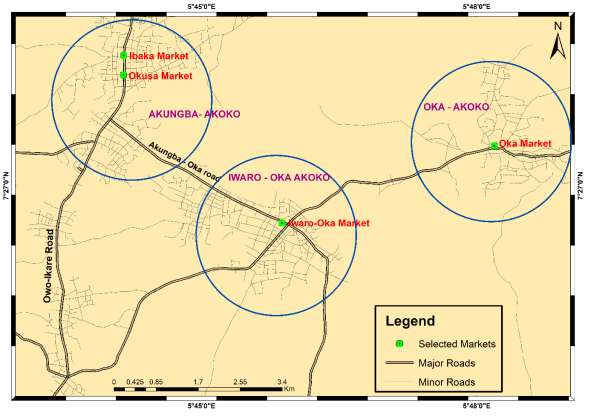
The study was conducted in Akoko South West Local Government Area (LGA), a predominantly rural region located within Ondo State, Nigeria. The LGA’s geography is defined by its coordinates, situated between latitudes 5°31′ and 6°01′ North of the equator and longitudes 7°21′ and 7°31′ East of the Greenwich meridian. Akoko South West LGA is bordered to the west by Emure LGA of Ekiti State, to the east by Akoko South East LGA of Ondo State, to the north by Akoko North East LGA, and to the south by Owo LGA . The LGA headquarters is Oka-Akoko, with other significant towns including Akungba, Iwaro, and Oba-Akoko.
According to the 2006 National Population Census, the LGA had a total population of 228,383. The demographic breakdown at the time showed a youthful population, with 41.8% aged 1–18 years, 54.6% between 19–59 years, and only 3.8% representing the elderly population (60 years and above). The total population was projected to increase significantly, exceeding 250,000 in 2012 and reaching an estimated 398,607 by 2023 . The area’s transportation infrastructure facilitates the movement of people, goods, and services both within the various settlements and across the LGA borders. The road network spans approximately 569 km in total length, encompassing inter-urban, intra-rural, and inter-rural road classifications . Key arterial routes include the major inter-urban roads linking Oka-Akoko (the headquarters) to Ibilo (Edo State) and the road connecting Owo to Ikare Akoko. Other significant state roads link towns such as Oba to Ikun–Iwaro and Akungba to Supare. These are complemented by local government roads that connect the various rural villages and farmsteads.
Source: Author’s Fieldwork, 2026.

Download: Download full-size image

Figure 1. Location Map of the Selected Markets.
3.2. Data and Method of Data Collection
A survey research design was adopted, drawing data from both primary and secondary sources. The target population comprised residents of Akoko South West LGA, with a 2023 projected population of 302,273 (NBS, 2023). Purposive sampling was employed to select three major towns, Akungba, Oka, and Iwaro, based on the presence of periodic markets. Within these towns, random sampling was used to select traders, buyers, and transport operators. A sample size of 100 respondents was drawn: participants in the three-day interval markets of Akungba (Ibaka and Okusa Markets) and the four-day interval markets of Oka and Iwaro. Primary data were collected through field surveys, structured questionnaires, and direct observation of market and traffic conditions. Secondary data were obtained from official population reports and scholarly sources. Descriptive statistics, including percentages, pie charts, and bar charts, were used to analyze socio-economic characteristics and research questions. Inferential statistics, specifically the chi-square test, were applied to test the two stated hypotheses regarding the relationship between periodic markets and traffic flow in the study area.
Table 1. Selected Towns and the population in the study area.

Towns

2006 Population

2026 Projected Population

No of questionnaire Administered

Oka-Akoko

105,800

150,765

64

Akungba-Akoko

25,775

36,729

16

Iwaro-Oka

33,743

48,083

20

Total

165,318

235,577

100

Source: National Population Commission (2006)
4. Results and Discussion
4.1. Socio-economic Characteristics of the Respondents
4.1.1. Gender of the Respondents
Table 2. Gender of the respondents.

Gender

Frequency

Percentage %

Male

65

32.5

Female

135

67.5

Total

200

100

Source: Author’s Fieldwork, 2026
Table 2 above shows the gender of the respondents. 135 were female, representing 67.5%, and 65 were male, representing 32.5%. This simply signifies that female are more involved in market trading (buying and selling) than the male Adekunle and Adeyemi, 2014.
4.1.2. Marital Status of the Respondents
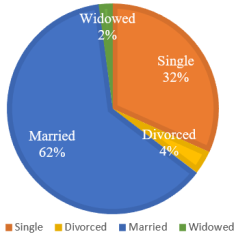
Figure 2 shows the marital status of the respondents. 124 (62.0%) were married, followed by single 64 (32.0%), divorced 8 (4.0%) and widowed 4 (2.0%). The data indicates that most of the respondents were married.
Source: Author’s Fieldwork, 2026

Download: Download full-size image

Figure 2. Marital status of the respondents.
4.1.3. Age Distribution of the Respondents
Table 3. Age distribution of the respondents.

Gender

Frequency

Percentage %

Below 20 years

22

11

21 – 40 years

102

51

41 years and Above

76

38

Total

200

100

Source: Author’s Fieldwork, 2026
Analysis of the age distribution of the respondents was also carried out and the result is presented in Table 3. The majority of the respondents 102 (51.0%) were above 21-40 years old, while by those between 41 years old and above are 76 (38.0%), below 20 years old 22 (11.0%). From the analysis it is observed that larger percentage of the market traders in the study area ranges from age 21-40 years.
4.1.4. Religion of the Respondents
Source: Author’s Fieldwork, 2026

Download: Download full-size image

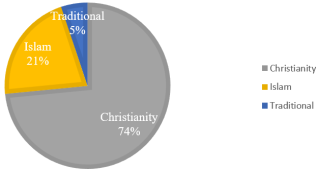
Figure 3. Religion of the respondents.

Figure 3 shows the religious affiliation of the respondents. The data reveals that Christianity is the predominant religion among the respondents, with 86 (74.0%) identifying as Christians. Islam is the second most common religion, with 57 (21.0%) of respondents identifying as Muslims. A smaller percentage of respondents identify as traditionalists 7 (5.0%). The data indicates a predominantly Christian and Muslim population among the respondents, with a smaller percentage identifying with traditional religious practices.
4.1.5. Level of Education of the Respondents
Table 4. Level of education of the respondents.

Level of education

Frequency

Percentage %

No formal education

57

28.5

Primary education

74

37

Secondary education

44

22

Tertiary education

25

12.5

Total

200

100

Source: Author’s Fieldwork, 2026
The education qualification of the respondents in the study area was also carried out and the result is presented in Table 4. Analysis from the table shows that out of 200 respondents, 57 respondents representing (28.5%) had no formal education, 74 respondents representing (37.0%) had primary education, 44 respondents representing (22.0%) had secondary education, and 25 respondents representing (12.5%) had tertiary education. The data indicates that the respondents had a diverse educational background.
4.1.6. Occupation of the Respondents
Table 5. Occupation of the respondents.

Occupation

Frequency

Percentage %

Trader

104

52.0

Farmer

64

32.0

Student

27

13.5

Civil servant

5

2.5

Total

200

100

Source: Author’s Fieldwork, 2026
Table 5 above shows the occupation of the respondents in the study area. The data reveals that out of 200 respondents, the highest percentage of respondents are trader 104 (52.0%), followed by farmer 64 (32%), student 27 (13.5%) and civil servants 5 (2.5%). This indicates a diverse range of occupations among the respondents, with farming and trading being the two major occupation.
4.1.7. Monthly Income of the Respondents
Table 6. Monthly income of the respondents.

Monthly income

Frequency

Percentage %

Below ₦20,000

103

51.5

₦21,000-₦30,000

40

20.0

₦31,000-₦50,000

39

19.0

₦51,000 and above

18

9.0

Total

200

100

Source: Author’s Fieldwork, 2026
From the table shown above, the data shows that majority of the respondents have a monthly income below ₦20,000 103 (51.5%) and ₦21,000-₦30,000 40 (20.0%). A smaller percentage of respondents have a monthly income above ₦51,000 18 (90.0%), while only 39 (19.0%) of respondents have an income between ₦31,000-₦50,000. This signify that the majority of respondents have moderate monthly incomes, with a smaller percentage earning higher incomes. The level of income of the respondents influence the means of transportation.
4.2. Impact of Periodic Market on the Study Area
4.2.1. Goods and Services Supplied in Rural Periodic Markets in Akoko South West L. G. A
Table 7. Kind of produce mostly supplied in the market in Akoko South West L. G. A.

Class of crops/goods

Frequency

Percentage %

Food crops

122

61.0

Cash crops

44

22.0

Manufacture goods

14

7.0

Others

20

10.0

Total

200

100

Source: Author’s Fieldwork, 2026
Table 7 above shows that 61.0% of the products supplied in the market are foods stuffs like, garri, banana, pepper, yam, cocoyam, fish, meat, vegetable among others. Cash crops like cocoa, kolanut, coffee, palm oil and others account for 22%, manufactured goods account for 30% which include cloths, foot wears, beverages, radio, etc., while other special produce and services account for 10%. This shows that rural periodic markets help to create an avenue for farmers and traders to market their products.
Source: Author’s Fieldwork, 2026

Download: Download full-size image

Figure 4. Traders with their goods at Ibaka Market.

4.2.2. Mode of Transportation of the Respondents in Akoko South West L. G. A
Table 8. Mode of transportation of the respondents in Akoko South West L. G. A.

Mode of Transport

Frequency

Percentage %

Walk

72

36.0

Public Vehicles

84

42.0

Private Vehicles

30

15.0

Others

18

7.0

Total

200

100

Source: Author’s Fieldwork, 2026
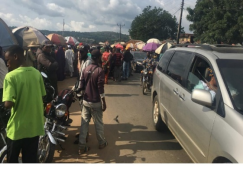
Table 8 above shows the mode of transportation of the respondents, majority of the respondents 57% transport their goods with vehicles, while 36%, 7% account for walk and others respectively. This means that over 50% of the respondents make use of vehicles as a means of transportation, which make it easy to transport people and goods to the market place .
Source: Author’s Fieldwork, 2026

Download: Download full-size image

Figure 5. Traffic flow during Iwaro-Oka Market.
4.3. Traffic Flow and Market Days
4.3.1. Traffic Flow During Market Days
Table 9. Rate the traffic flow during market days.

Traffic flow

Frequency

Percentage %

Very Smooth

13

6.5

Smooth

32

16.0

Neutral

10

5.0

Congested

86

43.0

Very Congested

59

29.5

Total

200

100%

Source: Author’s Fieldwork, 2026
Table 9 above show the rating of traffic flow during market days. The data suggests that the majority of respondents find the traffic flow during market days to be less than ideal, with a significant portion rating it as congested (43.0%) or very congested (29.5%). On the other hand, a relatively small percentage of respondents considered the traffic flow as very smooth (6.5%) or Smooth (16.0%). These findings indicate potential challenges in terms of traffic management during market days, which could impact the accessibility and convenience for both shoppers and vendors. The high percentage of respondents perceiving congestion suggests a need for possible improvements in traffic flow and management strategies during market days to enhance the overall experience for market-goers.
4.3.2. Frequency of Traffic Congestion on Market Days
The Table 10 below shows how frequently respondents experience traffic congestion during market days. The majority of respondents, constituting 51.0%, stated that they always experience traffic congestion on market days, approximately 33.5%, reported that they often encounter traffic congestion on market days. About 13.0% of the respondents mentioned experiencing traffic congestion occasionally, only 2.5% of the respondents reported experiencing traffic congestion rarely on market days. The data reveals that a substantial proportion of respondents consistently face traffic congestion on market days, with more than half of the respondents (51.0%) indicating that they always encounter this problem. This finding suggests that traffic management and infrastructure improvements on market days may be necessary to address the concerns of the local population. Understanding the frequency of traffic congestion is essential for urban planning and traffic management strategies, as it helps identify areas where improvements may be needed to alleviate congestion, enhance transportation efficiency, and improve the overall quality of life for residents during market days (Folashade, 2017).
Table 10. Traffic congestion on market days.

Traffic flow

Frequency

Percentage %

Rarely

5

2.5

Occasionally

26

13.0

Often

67

33.5

Always

102

51.0

Total

200

100

Source: Author’s Fieldwork, 2026
4.3.3. Periodic Market Activities Impact on Traffic Congestion in the Study Area
Table 11 provides valuable insights into how respondents perceive the impact of periodic market activities on traffic congestion in the study area. 70 (35.0%) individuals, strongly agree that periodic market activities have a significant impact on traffic congestion. This category represents individuals who hold a very strong belief that market activities contribute significantly to traffic congestion in the study area, 109 (54.5%) respondents agree that market activities impact traffic congestion, 6 (3.0%) individuals disagree with the idea that market activities impact traffic congestion, 15 (7.5%) respondents strongly disagree with the statement. The data reflects a range of opinions, with the majority of respondents leaning toward agreement with the idea that periodic market activities have an impact on traffic congestion. The combined percentage of those who strongly agree and agree is higher than the combined percentage of those who disagree and strongly disagree, indicating that the prevailing perception among respondents is that market activities influence traffic congestion.
Table 11. Periodic market activities impact on traffic congestion.

Market activities impact

Frequency

Percentage %

Strongly Agree

70

35.0

Agree

109

54.5

Neutral

0

10.5

Disagree

6

3.0

Strongly Disagree

15

7.5

Total

200

100

Source: Author’s Fieldwork, 2026

Download: Download full-size image

Figure 6. Traffic situation during market day in Akungba-Akoko.
4.4. Ways in Which Market Activities Impact Traffic
Source: Author’s Fieldwork, 2026

Download: Download full-size image

Figure 7. Ways in which market activities impact traffic.
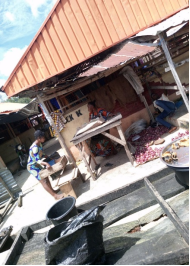
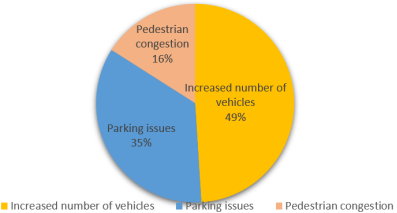
Figure 7 provides insights into the ways in which market activities impact traffic in the study area. Respondents were asked to indicate the specific impacts they observe as a result of market activities. The most frequently selected impact is the increased number of vehicles, with 98 respondents (49.0%) reporting this phenomenon, 70 individuals (35.0%), cited parking issues as a consequence of market activities, 32 respondents (16.0%), noted pedestrian congestion as a result of market activities. The data highlights several ways in which market activities impact traffic in the study area. Notably, the increased number of vehicles and parking issues are frequently observed impacts, which align with the perceptions of traffic congestion expressed by respondents in previous sections of the study. Understanding these specific impacts provides valuable insights for local authorities and event organizers. It indicates the need for targeted traffic management strategies, such as improved parking facilities or transportation options, to mitigate congestion and enhance the overall experience for both market-goers and residents in the area.
4.5. Suggested Solutions to Traffic Flow During Market Days
4.5.1. Measures or Solutions That Will Help Alleviate Traffic Congestion During Market Days
Table 12 below reveals the measures or solutions that respondents believe could help alleviate traffic congestion during market days in the study area. 19 respondents (9.5%), suggested Increase public transportation as a potential solution, 64 respondents (32.0%) view expand parking facilities as a potential solution, 23 individuals (11.5%), suggested improve traffic signaling as a solution, 16 respondents (8.0%), indicated promote non-motorized transport. The most preferred solution, selected by 78 respondents (39.0%), is to enhance law enforcement presence. This suggests that a substantial majority of respondents believe that increased enforcement of traffic rules and regulations could effectively mitigate traffic congestion during market days. The data reflects a range of opinions on measures to alleviate traffic congestion during market days. Notably, enhance law enforcement presence emerged as the most favored solution, indicating a strong belief among respondents that stricter enforcement of traffic rules could be a key strategy. Additionally, the preference for expand parking facilities highlights the importance of addressing parking challenges during market events. While other measures like increase public transportation and improve traffic signaling were less popular, they still garnered some support, suggesting that a combination of strategies may be necessary to effectively manage traffic congestion during market days.
Table 12. Measures or solutions that will help alleviate traffic congestion during market days.

Traffic congestion

Frequency

Percentage %

Implement traffic rerouting

0

0

Increase public transportation

19

9.5

Expand parking facilities

64

32.0

Improve traffic signaling

23

11.5

Promote non-motorized transport

16

8.0

Enhance law enforcement presence

78

39.0

Total

200

100

Source: Author’s Fieldwork, 2026
4.5.2. Local Government Initiatives or Policies Aimed at Managing Traffic During Market Days
Local government initiatives or policies that respondents believe could be effective in managing traffic during market days in the study area is shown in Table 13. 5 individuals (2.5%), suggested road closures, 18 respondents (9.0%), indicated temporary traffic rerouting as an initiative to manage traffic congestion, parking management garnered support from 34 respondents (17.0%), 12 respondents (6.0%), suggested public transportation promotion as an effective policy, 51 individuals (25.5%), viewed traffic police deployment as an effective government initiative, information campaigns emerged as the most favored government initiative, with 80 respondents (40.0%) viewing it as effective. The data reflects a range of opinions on government initiatives or policies aimed at managing traffic during market days. Information campaigns stood out as the most favored option, emphasizing the importance of raising awareness and providing information to the public.
Table 13. Local government initiatives or policies aimed at managing traffic during market days.

Traffic congestion

Frequency

Percentage %

Road closures

5

2.5

Temporary traffic rerouting

18

9.0

Parking management

34

17.0

Public transportation promotion

12

6.0

Traffic police deployment

51

25.5

Information campaigns

80

40.0

Total

200

100

Source: Author’s Fieldwork, 2026

Download: Download full-size image

Figure 8. Traders inside Iwaro-Oka Market.

4.6. Discussion of Findings
The dominance of women in market participation reflects the well-documented gendered structure of informal and retail trade in sub-Saharan Africa. Several studies have shown that women are disproportionately represented in small-scale trading, food vending, and petty commerce due to cultural norms, flexible work arrangements, and limited access to formal employment . In Nigeria, women’s dominance in food marketing and local trade has been linked to their traditional role in household provisioning and income supplementation . The findings therefore reinforce the view that periodic markets function not only as economic spaces but also as gendered livelihood systems.
The predominance of married and economically active respondents supports earlier arguments that informal market participation is closely tied to household survival strategies. According to and , rural and semi-urban households increasingly diversify into non-farm and informal activities, such as market trading, to cope with income insecurity. The age distribution further confirms that periodic markets are sustained primarily by the working-age population, emphasizing their role as employment buffers in regions with limited formal job opportunities.
The low to moderate levels of formal education observed among respondents are consistent with findings by , who argue that informal economic activities tend to absorb individuals with limited formal skills and educational qualifications. In the Nigerian context, similarly found that low educational attainment pushes many individuals into informal trading as an accessible livelihood option. The dominance of traders and farmers among respondents highlights the strong functional linkage between agriculture and periodic markets, where markets serve as nodes connecting rural production systems with urban consumption .
The predominance of food crops and other perishable goods in market trade aligns with studies that describe periodic markets as critical components of food distribution networks in developing countries . The time-sensitive nature of agricultural produce increases the frequency and urgency of travel on market days, thereby intensifying transport demand. This supports the argument by that land-use patterns and economic activity concentrations are key drivers of travel behavior and traffic flows.
The strong association between market days and traffic congestion observed in this study is consistent with transport geography literature, which shows that temporary activity concentrations generate peak travel demands that often exceed local infrastructure capacity In many African cities and towns, roadside trading, informal parking, and pedestrian spill over further reduce effective road capacity, exacerbating congestion and safety risks . The findings therefore reinforce the argument that congestion around markets is not incidental but structurally embedded in the spatial and functional organization of market systems.
Respondents’ emphasis on traffic enforcement, parking provision, and behavioral change reflects the integrated nature of congestion management. According to and , congestion is both a supply-side problem (infrastructure and management) and a demand-side problem (travel behavior and activity timing). Public awareness campaigns, improved regulation, and institutional control are therefore essential complements to physical infrastructure interventions. The study thus supports contemporary views that effective urban and peri-urban transport management requires coordinated planning, enforcement, and public participation.
4.7. Testing of Hypothesis
Ho: There is no significant relationship between the periodic market activities and traffic flow patterns in the study area
H1: There is a significant relationship between the periodic market activities and traffic flow patterns in the study area
Table 14. Observed frequency.

Gender of the respondents

Periodic market activities impact on traffic congestion in the study area

Row Total

Yes

No

Male

21

6

27

Female

158

15

173

Column Total

179

21

200

Expected Frequency (E) = Row total × Column total
Grand total
Table 15. Expected Frequency.

O

E

O-E

O-E2

O-E2E

21

24.17

-3.17

10.05

0.42

6

2.84

3.16

10.05

3.54

158

154.84

3.16

10.05

0.06

15

18.17

-3.17

10.05

0.55

Total

4.57

X2 (Calculated value) = 4.57
Degree of freedom (Df) = (r-1) (c-1) = (2-1) (2-1) = 1
Level of significant = 0.05
Table value = 3.841
DECISION: Since X2 (calculated value) = 4.57 is more than the (table value) = 3.841, therefore H1: There is a significant relationship between the periodic market activities and traffic flow patterns in the study area is “ACCEPTED”. Hence, there is a significant relationship between the periodic market activities and traffic flow patterns in the study area.
5. Conclusion
This study shows that periodic markets are essential for livelihoods, food distribution, and social interaction, especially for women, traders, and farmers. However, these benefits are accompanied by serious and predictable traffic congestion on market days caused by high vehicle volumes, roadside trading, parking problems, and heavy pedestrian movement. The congestion is both a structural and managerial problem, linked to inadequate infrastructure and weak traffic control. Addressing it requires integrated planning that combines improved market layout, designated parking, effective enforcement, better public transport access, and public awareness. Balancing economic functionality with mobility and safety is essential for the sustainable operation of periodic markets.
6. Recommendation
Local authorities should integrate market planning with transport and land-use management to reduce congestion on market days. Designated parking and loading areas should be provided near markets, while roadside trading along major roads should be restricted. Traffic enforcement should be strengthened on market days, supported by clear signage and temporary traffic control measures. Public transport services should be increased during peak market periods to reduce private vehicle use. Continuous public awareness campaigns should educate traders and commuters on proper parking, pedestrian safety, and compliance with traffic regulations to improve overall mobility, safety, and efficiency around periodic markets.
Abbreviations

NBS

National Bureau of Statistics

LGAA

Local Government Area

Naira

Df

Degree of Freedom

X2

Chi-Square

Conflicts of Interest
There is no conflicts of interest.
References
[1] Adebayo, A. A. (2013). Youths’ unemployment and crime in Nigeria: A nexus and implications for national development. International journal of sociology and anthropology, 5(8), 350-357.
[2] Adekunle, O., & Adeyemi, T. (2014). Impact of Periodic Market Location and Timing on Traffic Flow: Evidence from Nigeria. Transportation Planning and Management, 40(2), 145-160.
[3] Aderamo, A. J., & Atomode, T. I. (2011). Traffic congestion at road intersection in Ilorin, Nigeria. Australian Journal of Basic and Applied Sciences, 5(9), 1439-1448.
[4] Adeola, B. (2017). Traffic Flow Challenges in Ibadan, Oyo State, Nigeria. Urban Studies Journal, 32(4), 567-580.
[5] Adewale, A. (2019). The Role of Periodic Markets in Local Economies in Africa. African Economic Review, 43(3), 10-16.
[6] Adeniji, J., & Ajayi, O. (2020). Driver Behavior and Its Impact on Traffic Flow in Akure, Ondo State, Nigeria. Transportation Research Journal, 45(3), 211-225.
[7] Adetoye, F., & Olumide, A. (2016). The Growth of Periodic Markets and Its Impact on Traffic Congestion: A Case Study of Sanga Otta. Journal of Urban Traffic Management, 12(1), 78-92.
[8] Adepoju, A. (2006). Internal and international migration within Africa. Migration in south and Southern Africa: Dynamics and determinants, 26-46.
[9] Ahmed, M., Rahman, A., & Hossain, M. (2010). Effects of Periodic Market Organization on Traffic Flow: A Study from Bangladesh. International Journal of Transportation Research, 25(3), 220-235.
[10] Alao, A. (2018). Markets as Meeting Places: Insights into Market Operators and Participants. Journal of Economic Transactions, 17(3), 220-235.
[11] Aronsen, E. (2017). Atomistic, Open, and Rational Markets: A Comparative Analysis. Economic Markets Journal, 12(2), 165-180.
[12] Bromley, R. J., Symanski, R., & Good, C. M. (1975). The role of periodic markets in the development of rural areas. Economic Geography, 51(4), 333–345.
[13] Bryceson, D. F. (2002). The scramble in Africa: reorienting rural livelihoods. World development, 30(5), 725-739.
[14] Ben, J. (2016). Impact of Poor Road Infrastructure on Rural Communities in Nigeria. Journal of Rural Development, 41(3), 215-230.
[15] Chen, M. A. (2012). The informal economy: Definitions, theories and policies.
[16] Downs, A. (2005). Still stuck in traffic: coping with peak-hour traffic congestion. Rowman & Littlefield.
[17] Emmanuel, T. (2019). Impact of Markets on Traffic Flow: A Study of Sagbama Local Government Area, Bayelsa. Transportation Research Journal, 42(1), 78-94.
[18] Folashade, K. (2017). The Influence of Periodic Markets on Traffic Flow: A Case Study of Ibadan. Journal of Transportation Economics and Policy, 38(3), 220-235.
[19] Gana, K. (2008). Multidisciplinary Perspectives on the Definition of Market: A Comparative Analysis. Interdisciplinary Journal of Market Research, 33(2), 123-140.
[20] Hansen, N. M. (1959). Some neglected factors in the location of industry. Land Economics, 35(2), 173–181.
[21] Karim, M. (2018). Impact of street markets on urban traffic congestion: A case study of Dhaka, Bangladesh. Case Studies on Transport Policy, 6(3), 378-387.
[22] Ogunjimi, A., Abiodun, B., & Olatunji, C. (2015). Impact of Road Geometric Design on Traffic Flow: A Case Study in Nigeria. Journal of Transportation Engineering, 38(4), 432-445.
[23] Olukosi, J. O., & Isitor, S. U. (2014). The Etymology and Definition of Market: Insights from Linguistic and Marketing Perspectives. Journal of Marketing Studies, 9(5), 112-125.
[24] Ogunade, A. O, Ale, A. S, & Akinloye, K. F (2024). An assessment of intra-urban transport infrastructure for Sustainable Development in Oka Akoko, Ondo State, Nigeria. Confluence journal of Environmental Studies vol. 18 (issue 3), pp 1-10.
[25] Park, B. J. (2016). A study on the improvement of traffic management and safety around traditional markets. International Journal of Smart Home, 10(3), 275-280.
[26] Sensei, P. P. (2016). Periodic Markets in Africa: Characteristics, Challenges and Opportunities. International Journal of Business and Economic Development, 4(3), 25-31.
Cite This Article
  • APA Style

    Ogunade, A. O., Owolabi, O. O. (2026). Assessment of the Impact of Periodic Markets on Traffic Flow in Akoko South West Local Government Area, Ondo State, Nigeria. Science Discovery, 14(4), 174-186. https://doi.org/10.11648/j.sd.20261404.15

    Copy | Download

    ACS Style

    Ogunade, A. O.; Owolabi, O. O. Assessment of the Impact of Periodic Markets on Traffic Flow in Akoko South West Local Government Area, Ondo State, Nigeria. Sci. Discov. 2026, 14(4), 174-186. doi: 10.11648/j.sd.20261404.15

    Copy | Download

    AMA Style

    Ogunade AO, Owolabi OO. Assessment of the Impact of Periodic Markets on Traffic Flow in Akoko South West Local Government Area, Ondo State, Nigeria. Sci Discov. 2026;14(4):174-186. doi: 10.11648/j.sd.20261404.15

    Copy | Download

  • @article{10.11648/j.sd.20261404.15,
      author = {Adebola Oluwakayode Ogunade and Oluwaseun Olumide Owolabi},
      title = {Assessment of the Impact of Periodic Markets on Traffic Flow in Akoko South West Local Government Area, Ondo State, Nigeria},
      journal = {Science Discovery},
      volume = {14},
      number = {4},
      pages = {174-186},
      doi = {10.11648/j.sd.20261404.15},
      url = {https://doi.org/10.11648/j.sd.20261404.15},
      eprint = {https://article.sciencepublishinggroup.com/pdf/10.11648.j.sd.20261404.15},
      abstract = {Periodic markets play a critical role in rural and semi-urban economies in Nigeria, yet their spatial concentration and temporal intensity often generate transport challenges. This study examines the impact of periodic market activities on traffic flow in Akoko South West Local Government Area of Ondo State, Nigeria. The problem addressed is the recurrent traffic congestion experienced on market days, which affects mobility, safety, and accessibility for residents, traders, and road users. The study aims analyse traffic flow conditions during periodic markets and evaluate the extent to which market activities contribute to traffic congestion among others A survey research design was adopted, using structured questionnaires, field observations, and secondary data. A total of 200 respondents comprising traders and transport operators were sampled across selected markets in Akungba, Oka, and Iwaro. Data were analysed using descriptive statistics and chi-square tests. Results show female dominance in market participation (67.5%), with traders constituting the largest occupational group (52.0%). Public vehicles (42.0%) and walking (36.0%) were the dominant transport means. Traffic flow during market days was rated as congested or very congested by 72.5% of respondents, while 84.5% agreed that periodic market activities significantly contribute to traffic congestion. Increased vehicle volume (49.0%), parking problems (35.0%), and pedestrian congestion (16.0%) were identified as major causes. The chi-square result (χ² = 4.57, p < 0.05) confirms a significant relationship between periodic market activities and traffic flow patterns. The study concludes that while periodic markets enhance livelihoods and food distribution, they generate predictable traffic congestion. It recommends integrated market and transport planning, designated parking facilities, strengthened traffic enforcement, improved public transport provision, and sustained public awareness campaigns to improve mobility and safety on market days.},
     year = {2026}
    }
    

    Copy | Download

  • TY  - JOUR
    T1  - Assessment of the Impact of Periodic Markets on Traffic Flow in Akoko South West Local Government Area, Ondo State, Nigeria
    AU  - Adebola Oluwakayode Ogunade
    AU  - Oluwaseun Olumide Owolabi
    Y1  - 2026/06/05
    PY  - 2026
    N1  - https://doi.org/10.11648/j.sd.20261404.15
    DO  - 10.11648/j.sd.20261404.15
    T2  - Science Discovery
    JF  - Science Discovery
    JO  - Science Discovery
    SP  - 174
    EP  - 186
    PB  - Science Publishing Group
    SN  - 2331-0650
    UR  - https://doi.org/10.11648/j.sd.20261404.15
    AB  - Periodic markets play a critical role in rural and semi-urban economies in Nigeria, yet their spatial concentration and temporal intensity often generate transport challenges. This study examines the impact of periodic market activities on traffic flow in Akoko South West Local Government Area of Ondo State, Nigeria. The problem addressed is the recurrent traffic congestion experienced on market days, which affects mobility, safety, and accessibility for residents, traders, and road users. The study aims analyse traffic flow conditions during periodic markets and evaluate the extent to which market activities contribute to traffic congestion among others A survey research design was adopted, using structured questionnaires, field observations, and secondary data. A total of 200 respondents comprising traders and transport operators were sampled across selected markets in Akungba, Oka, and Iwaro. Data were analysed using descriptive statistics and chi-square tests. Results show female dominance in market participation (67.5%), with traders constituting the largest occupational group (52.0%). Public vehicles (42.0%) and walking (36.0%) were the dominant transport means. Traffic flow during market days was rated as congested or very congested by 72.5% of respondents, while 84.5% agreed that periodic market activities significantly contribute to traffic congestion. Increased vehicle volume (49.0%), parking problems (35.0%), and pedestrian congestion (16.0%) were identified as major causes. The chi-square result (χ² = 4.57, p < 0.05) confirms a significant relationship between periodic market activities and traffic flow patterns. The study concludes that while periodic markets enhance livelihoods and food distribution, they generate predictable traffic congestion. It recommends integrated market and transport planning, designated parking facilities, strengthened traffic enforcement, improved public transport provision, and sustained public awareness campaigns to improve mobility and safety on market days.
    VL  - 14
    IS  - 4
    ER  - 

    Copy | Download

Author Information
  • Abstract
  • Keywords
  • Document Sections

    1. 1. Introduction
    2. 2. Conceptual, Literature Review and Theoretical Framework
    3. 3. Materials and Method
    4. 4. Results and Discussion
    5. 5. Conclusion
    6. 6. Recommendation
    Show Full Outline
  • Abbreviations
  • Conflicts of Interest
  • References
  • Cite This Article
  • Author Information