
In recent years, the incidence of ischemic strokes in young people worldwide has been increasing, leading to early disability, loss of work capacity, and reduced quality of life. Platelets play an active role in the pathogenesis of ischemic stroke. The main drugs for secondary prevention of ischemic stroke are acetylsalicylic acid (ASA) and clopidogrel (CL). ASA inhibits cyclooxygenase-1 (COX-1), which prevents the production of thromboxane A2 (TXA2), thereby inhibiting platelets, while CL acts by inhibiting ADP, which binds to two protein receptors on platelets (P2Y1 and P2Y12) and leads to platelet aggregation. Effective antiplatelet therapy can significantly reduce the risk of recurrent ischemic stroke. Aim. To identify clinical and genetic factors contributing to the development of laboratory resistance to antiplatelet agents in a patient with a previous ischemic stroke. Materials and methods. The medical history of a patient who had a previous ischemic stroke of unknown origin was studied In Sverdlovsk Regional Clinical Hospital No 1 (SOKB 1). To identify laboratory resistance, we used the optical aggregometry method and a set of genes (ABCB1, CYP2C19*2, CYP2C19*3, CYP2C19*17, ITGA2, ITGB3, PAI-1) that affect the development of high residual platelet reactivity. Results. For the first time, the patient was examined 3 months after the development of an ischemic stroke, against the background of regular ASA intake. Laboratory resistance to this antiplatelet agent was detected using optical aggregometry. Subsequently, against the background of ASA correction, the introduction of clopidogrel (CL) was repeatedly revealed ineffective disaggregation. When analyzing anamnestic data, it was revealed that the development of high residual platelet reactivity could be influenced by the presence of obesity, hypertension, which are present in this patient. Genetic studies have identified mutations in two genes (ABCB1, CYP2C19*2) that may also contribute to the development of laboratory resistance. Conclusions. Conclusions. Effective disaggregation against the background of ASA and CL intake is an important factor in the secondary prevention of ischemic stroke. The study and identification of clinical and genetic risk factors that may affect the development of high residual platelet reactivity remains an important clinical task that requires further study.
| Published in | American Journal of Clinical and Experimental Medicine (Volume 14, Issue 5) |
| DOI | 10.11648/j.ajcem.20261405.12 |
| Page(s) | 112-118 |
| Creative Commons |
This is an Open Access article, distributed under the terms of the Creative Commons Attribution 4.0 International License (http://creativecommons.org/licenses/by/4.0/), which permits unrestricted use, distribution and reproduction in any medium or format, provided the original work is properly cited. |
| Copyright |
Copyright © The Author(s), 2026. Published by Science Publishing Group |
Antiplatelet Therapy, Laboratory Resistance, Ischemic Stroke, Secondary Prevention
| [1] | Go, A, S., Mozaffarian, D., Roger, V, L., Benjamin, E, J., Berry, J. D., Borden, W, B., et al. Heart Disease and Stroke Statistics—2013 Update: A Report From the American Heart Association, Circulation. 2013, 127(1). |
| [2] | Namaganda, P., Nakibuuka, J., Kaddumukasa, M., Katabira, E. Stroke in young adults, stroke types and risk factors: a case control study, BMC Neurological. 2022, 22(1), 335-362. |
| [3] | Shi, H., Tang, M., Wang, T., Yang, L., Lai, X., Chen, Y., et al. Platelet reactivity to adenosine diphosphate and CYP2C19 genotypes are linked with carotid plaques and may predict carotid plaque stability in acute ischemic stroke patients, Neurosciences. 2025, 30(3), 226–36. |
| [4] | Wiśniewski, A. Multifactorial Background for a Low Biological Response to Antiplatelet Agents Used in Stroke Prevention, Medicina. 2021, 57(1), 1-14. |
| [5] | Zhang. J., Chen, Z., Wang, H., Wang, M., Li, C., He, S., et al. Prognostic Analysis and an Appropriate Antiplatelet Strategy for Patients With Percutaneous Coronary Intervention and High Bleeding Risk: Rationale and Protocol for a Multi-Center Cohort Study, Cardiological Discovery. 2024, 1-8. |
| [6] | Parsa-kondelaji, M., Mansouritorghabeh, H. Aspirin and clopidogrel resistance; a neglected gap in stroke and cardiovascular practice in Iran: a systematic review and meta-analysis, Thromboz Journal. 2023, 21(1), 79-91. |
| [7] | Ma, T., Wang, X., Song, Y., Zhang, M. Construction and evaluation of an aspirin resistance risk prediction model for ischemic stroke, BMC Neurological. 2025, 25(244), 1–10. |
| [8] | Wiśniewski, A., Filipska, K. The Phenomenon of Clopidogrel High On-Treatment Platelet Reactivity in Ischemic Stroke Subjects: A Comprehensive Review, International Journal of Molecular Sciences. 2020, 21(17), 1-16. |
| [9] | Kamarova, M., Baig, S., Patel, H., Monks, K., Wasay, M., Ali, A., et al. Antiplatelet Use in Ischemic Stroke, Annals of Pharmacotherapy. 2022, 56(10), 1159–1173. |
| [10] | Kim, J., Shin, B., S., Kim, D., H., Shin, D., I., Ahn, S., H., Kim, J., G., et al. Molecular genomic and epigenomic characteristics related to aspirin and clopidogrel resistance, BMC Medecal Genomics. 2024, 17(1), 1–12. |
| [11] | Krishnan, K., Nguyen, T., N., Appleton, J., P., Law, Z., K., Caulfied, M., Cabrera, C., P., et al. Antiplatelet Resistance: A Review of Concepts, Mechanisms, and Implications for Management in Acute Ischemic Stroke and Transient Ischemic Attack, Stroke Vascular and Interventional Neurology. 2023, 3(3), 1–15. |
| [12] | Kantemirova, B., Zhidovinov, A., Abdullaev, M., Orlova, E., Chernysheva, E., Sultanova, O. Factors influencing the effectiveness of antiplatelet therapy, Archiv Euromedica. 2022, 12(1), 19–25. |
| [13] | Pradhan, A., Bhandari, M., Vishwakarma, P., Sethi, R. Clopidogrel resistance and its relevance: Current concepts, Journal of Family Medicine and Primary Care. 2024, 13(6), 2187–2199. |
| [14] | Gorelick, P., B., Farooq, M., U. Advances in Our Understanding of “Resistance” to Antiplatelet Agents for Prevention of Ischemic Stroke, Stroke Research of Treatment. 2013, 2013, 1–7. |
| [15] | Topçuoglu, M., A., Arsava, E., M., Ay, H. Antiplatelet resistance in stroke, Expert Review of Neurotherrapeutics. 2011, 11(2), 251–263. |
| [16] | Strisciuglio, T., Franco, D., Gioia, G., Biase, C., Morisco, C., Trimarco, B., et al. Impact of genetic polymorphisms on platelet function and response to anti platelet drugs, Cardiovascular Diagnosis and Therapy. 2018, 8(5), 610–620. |
| [17] | Sikora, J., Karczmarska-Wódzka, A., Bugieda, J., Sobczak, P. The Importance of Platelets Response during Antiplatelet Treatment after Ischemic Stroke—Between Benefit and Risk: A Systematic Review, International Journal of Molecular Sciences. 2022, 23(3), 1-15. |
| [18] | Khan, H., Kanny, O., Syed, M., H., Qadura, M. Aspirin Resistance in Vascular Disease: A Review Highlighting the Critical Need for Improved Point-of-Care Testing and Personalized Therapy, International Journal of Molecular Sciences. 2022, 23(19), 1-7. |
| [19] | Batenkova, T., Yu., Volkova, L., I., Kudryavtseva, E., V. Clinical and Genetic Characteristics of Antiplatelet Therapy Resistance After Ischemic Stroke (Literature Review), Ural Medical Journal. 2025, 24(3), 139–156. |
| [20] | Pankert, M., Quilici, J., Loundou, A., D., Verdier, V., Lambert, M., Deharo, P., et al. Impact of Obesity and the Metabolic Syndrome on Response to Clopidogrel or Prasugrel and Bleeding Risk in Patients Treated After Coronary Stenting, The American Journal of Cardiology. 2014, 113(1), 54–59. |
| [21] | Santilli, F., Vazzana, N., Liani, R., Guagnano, M., T., Davì, G. Platelet activation in obesity and metabolic syndrome, Obesity Reviews. 2012, 13(1), 27–42. |
| [22] | Lavanya, S., Babu, D., Dheepthi, D., Dhinakar, E., Vivekanandh, G. Clopidogrel Resistance in Ischemic Stroke Patients, Annals of Indian Academy of Neurology. 2024, 1–5. |
| [23] | Ellithi, M., Baye, J., Wilke, R., A. CYP2C19 Genotype-Guided Antiplatelet Therapy: Promises and Pitfalls, Pharmacogenomics. 2020, 21(12), 889–897. |
| [24] | Kittipanprayoon, S., Vorasayan, P., Chutinet, A., Chariyavilaskul, P., Suwanwela, N., C. The Prevalence of CYP2C19 Polymorphism in Patients with Symptomatic Intracranial Atherosclerosis, Cerebrovascular Diseases Extra. 2025, 1–12. |
| [25] | Lee, C., R., Luzum, J., A., Sangkuhl, K., Gammal, R., S., Sabatine, M., S., Stein, C., M., et al. Clinical Pharmacogenetics Implementation Consortium Guideline for CYP2C19 Genotype and Clopidogrel Therapy: 2022 Update, Clinical Pharmacololigy Therapeutics. 2022, 112(5), 959–967. |
| [26] | Hou, X. Epoxidase inhibitor-aspirin resistance and the relationship with genetic polymorphisms: a review, Journal of International Medical Research. 2024, 52(2), 1–11. |
APA Style
Yurevna, B. T., Ivanovna, V. L. (2026). Laboratory Resistance to Antiplatelet Therapy as Part of Secondary Prevention of Ischemic Stroke in a Young Patient (Clinical Case). American Journal of Clinical and Experimental Medicine, 14(5), 112-118. https://doi.org/10.11648/j.ajcem.20261405.12
ACS Style
Yurevna, B. T.; Ivanovna, V. L. Laboratory Resistance to Antiplatelet Therapy as Part of Secondary Prevention of Ischemic Stroke in a Young Patient (Clinical Case). Am. J. Clin. Exp. Med. 2026, 14(5), 112-118. doi: 10.11648/j.ajcem.20261405.12
@article{10.11648/j.ajcem.20261405.12,
  author = {Batenkova Tatiana Yurevna and Volkova Larisa Ivanovna},
  title = {Laboratory Resistance to Antiplatelet Therapy as Part of Secondary Prevention of Ischemic Stroke in a Young Patient (Clinical Case)},
  journal = {American Journal of Clinical and Experimental Medicine},
  volume = {14},
  number = {5},
  pages = {112-118},
  doi = {10.11648/j.ajcem.20261405.12},
  url = {https://doi.org/10.11648/j.ajcem.20261405.12},
  eprint = {https://article.sciencepublishinggroup.com/pdf/10.11648.j.ajcem.20261405.12},
  abstract = {In recent years, the incidence of ischemic strokes in young people worldwide has been increasing, leading to early disability, loss of work capacity, and reduced quality of life. Platelets play an active role in the pathogenesis of ischemic stroke. The main drugs for secondary prevention of ischemic stroke are acetylsalicylic acid (ASA) and clopidogrel (CL). ASA inhibits cyclooxygenase-1 (COX-1), which prevents the production of thromboxane A2 (TXA2), thereby inhibiting platelets, while CL acts by inhibiting ADP, which binds to two protein receptors on platelets (P2Y1 and P2Y12) and leads to platelet aggregation. Effective antiplatelet therapy can significantly reduce the risk of recurrent ischemic stroke. Aim. To identify clinical and genetic factors contributing to the development of laboratory resistance to antiplatelet agents in a patient with a previous ischemic stroke. Materials and methods. The medical history of a patient who had a previous ischemic stroke of unknown origin was studied In Sverdlovsk Regional Clinical Hospital No 1 (SOKB 1). To identify laboratory resistance, we used the optical aggregometry method and a set of genes (ABCB1, CYP2C19*2, CYP2C19*3, CYP2C19*17, ITGA2, ITGB3, PAI-1) that affect the development of high residual platelet reactivity. Results. For the first time, the patient was examined 3 months after the development of an ischemic stroke, against the background of regular ASA intake. Laboratory resistance to this antiplatelet agent was detected using optical aggregometry. Subsequently, against the background of ASA correction, the introduction of clopidogrel (CL) was repeatedly revealed ineffective disaggregation. When analyzing anamnestic data, it was revealed that the development of high residual platelet reactivity could be influenced by the presence of obesity, hypertension, which are present in this patient. Genetic studies have identified mutations in two genes (ABCB1, CYP2C19*2) that may also contribute to the development of laboratory resistance. Conclusions. Conclusions. Effective disaggregation against the background of ASA and CL intake is an important factor in the secondary prevention of ischemic stroke. The study and identification of clinical and genetic risk factors that may affect the development of high residual platelet reactivity remains an important clinical task that requires further study.},
 year = {2026}
}
TY  - JOUR
T1  - Laboratory Resistance to Antiplatelet Therapy as Part of Secondary Prevention of Ischemic Stroke in a Young Patient (Clinical Case)
AU  - Batenkova Tatiana Yurevna
AU  - Volkova Larisa Ivanovna
Y1  - 2026/09/04
PY  - 2026
N1  - https://doi.org/10.11648/j.ajcem.20261405.12
DO  - 10.11648/j.ajcem.20261405.12
T2  - American Journal of Clinical and Experimental Medicine
JF  - American Journal of Clinical and Experimental Medicine
JO  - American Journal of Clinical and Experimental Medicine
SP  - 112
EP  - 118
PB  - Science Publishing Group
SN  - 2330-8133
UR  - https://doi.org/10.11648/j.ajcem.20261405.12
AB  - In recent years, the incidence of ischemic strokes in young people worldwide has been increasing, leading to early disability, loss of work capacity, and reduced quality of life. Platelets play an active role in the pathogenesis of ischemic stroke. The main drugs for secondary prevention of ischemic stroke are acetylsalicylic acid (ASA) and clopidogrel (CL). ASA inhibits cyclooxygenase-1 (COX-1), which prevents the production of thromboxane A2 (TXA2), thereby inhibiting platelets, while CL acts by inhibiting ADP, which binds to two protein receptors on platelets (P2Y1 and P2Y12) and leads to platelet aggregation. Effective antiplatelet therapy can significantly reduce the risk of recurrent ischemic stroke. Aim. To identify clinical and genetic factors contributing to the development of laboratory resistance to antiplatelet agents in a patient with a previous ischemic stroke. Materials and methods. The medical history of a patient who had a previous ischemic stroke of unknown origin was studied In Sverdlovsk Regional Clinical Hospital No 1 (SOKB 1). To identify laboratory resistance, we used the optical aggregometry method and a set of genes (ABCB1, CYP2C19*2, CYP2C19*3, CYP2C19*17, ITGA2, ITGB3, PAI-1) that affect the development of high residual platelet reactivity. Results. For the first time, the patient was examined 3 months after the development of an ischemic stroke, against the background of regular ASA intake. Laboratory resistance to this antiplatelet agent was detected using optical aggregometry. Subsequently, against the background of ASA correction, the introduction of clopidogrel (CL) was repeatedly revealed ineffective disaggregation. When analyzing anamnestic data, it was revealed that the development of high residual platelet reactivity could be influenced by the presence of obesity, hypertension, which are present in this patient. Genetic studies have identified mutations in two genes (ABCB1, CYP2C19*2) that may also contribute to the development of laboratory resistance. Conclusions. Conclusions. Effective disaggregation against the background of ASA and CL intake is an important factor in the secondary prevention of ischemic stroke. The study and identification of clinical and genetic risk factors that may affect the development of high residual platelet reactivity remains an important clinical task that requires further study.
VL  - 14
IS  - 5
ER  -
Department of Neurology and Neurosurgery, Institute of Clinical Medicine, Ural State Medical University, Ekaterinburg, Russia;Consultative and Diagnostic Polyclinic, Sverdlovsk Regional Clinical Hospital No. 1., Ekaterinburg, Russia
Department of Neurology and Neurosurgery, Institute of Clinical Medicine, Ural State Medical University, Ekaterinburg, Russia
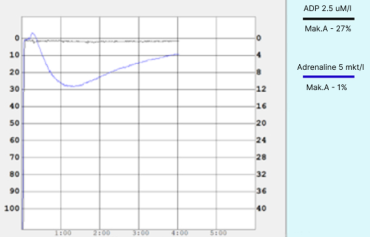
Figure 1. Graph of effective platelet inhibition in the presence of ASA.
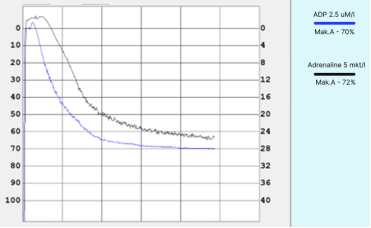
Figure 2. The result of optical aggregometry in the background of ASA 100 mg per day.
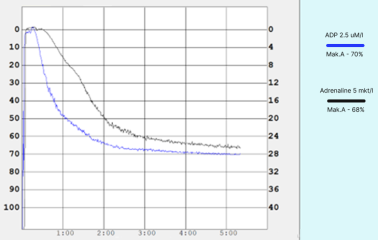
Figure 3. The result of optical aggregometry against the background of ASA 150 mg per day.
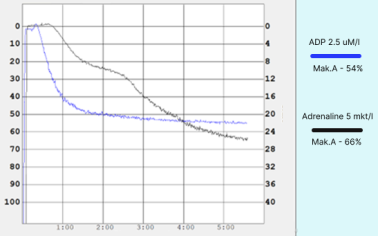
Figure 4. The result of optical aggregometry in the background of taking CL at a dose of 75 mg per day.
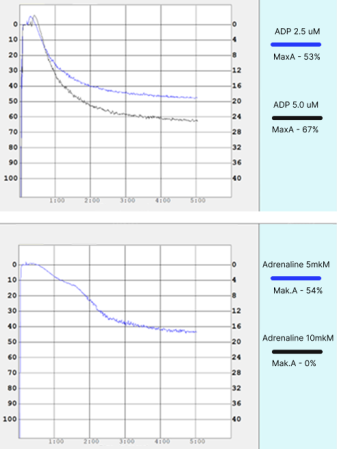
Figure 5. The result of optical aggregometry against the background of taking CL 75 mg per day and ASA 75 mg per day.

Information



 Share This Article
 Twitter
 Linked In
 Facebook
 Copy
Copy Download